openEuler操作系统

Search documents
昇腾CANN完成开源开放
Ke Ji Ri Bao· 2026-02-13 06:52
Core Insights - Huawei's latest developments in the Kunpeng and Ascend ecosystems were revealed at the 2026 New Year media salon, highlighting significant progress in open-source initiatives [1][2] Group 1: Ascend Ecosystem - The number of independent software developer partners for the Ascend ecosystem has exceeded 3,000, with developer numbers reaching 4 million [1] - Over 50 mainstream open-source communities, including Triton, PyTorch, and vLLM, have been integrated for remote support, allowing developers to access the latest technologies [1] - Huawei announced the open-sourcing of the CANN heterogeneous computing architecture in August 2025, focusing on five key areas: technical decoupling, commercial monetization, ecological collaboration, community building, and talent cultivation [1] - More than 60 clients and partners have developed over 420 high-performance operators based on CANN, with various software codes fully open-sourced to the GitCode community [1] Group 2: Kunpeng Ecosystem - The Kunpeng ecosystem has achieved significant adaptation and optimization support for mainstream open-source software in key business scenarios such as big data and databases, with independent software developer partners surpassing 6,800 and developer numbers reaching 3.8 million [2] - Over 20,000 industry solutions have been incubated, and the cumulative installation of the openEuler operating system has exceeded 16 million [2] - The openGauss database open-source project has been downloaded over 5.5 million times, particularly gaining traction in critical industries like finance, telecommunications, government, and the internet [2] - In 2026, Huawei aims to advance the open-source ecosystem through dual tracks of "participating in open-source" and "leading open-source" [2] - The Ascend ecosystem will focus on user experience, performance optimization, and ease of development, while the Kunpeng ecosystem will enhance openEuler's innovations and expand its global market presence [2]
华为谈开源开放:从技术共享到生态共荣 驱动产业协同创新
Zhong Guo Jing Ying Bao· 2026-02-04 06:35
Core Insights - The article emphasizes the importance of open-source initiatives in driving innovation and collaboration within the industry, highlighting Huawei's evolution from using and participating in open-source to leading it since 2010 [1][2] Group 1: Open Source Strategy - Huawei's computing industry has adhered to the principle of "hardware openness, software open-source, enabling partners, and developing talent" since its establishment in 2019, which is seen as a core strategy rather than just a slogan [2] - The company aims to provide not only usable but also high-performance products, leveraging open-source to foster industry collaboration and innovation [2] - Huawei has registered 3.8 million developers in the Kunpeng ecosystem and nearly 4 million in the Ascend ecosystem, collaborating with 9,800 ISV partners to create over 20,000 industry solutions across various sectors [2][3] Group 2: Open Source in General and Intelligent Computing - In the general computing domain, Huawei fills gaps in domestic software through open-source projects like openEuler and openGauss, enhancing collaboration among developers to optimize foundational software [3] - Huawei's open-source journey has evolved through three stages: starting with using open-source, then participating in it, and finally leading it by launching significant projects [3] - The open-source ecosystem significantly reduces the cost of developing foundational software for small and medium enterprises by over 80%, enhancing overall industry efficiency [3] Group 3: Empowering Industry Collaboration - In the intelligent computing sector, the demand for computing power is surging due to the increasing scale of large models and data requirements [4] - Huawei's open-source strategy for CANN aims to address industry pain points by allowing developers to optimize operators based on their specific scenarios, thereby improving computing efficiency [5] - The CANN framework serves as a bridge between hardware and upper-level development tools, facilitating collaboration and innovation in the AI era [5][6] Group 4: Supernode Technology and Open Source - Huawei has fully open-sourced its Lingqu protocol, which is essential for high-bandwidth, low-latency interconnections in supernode operations, aiming to build a complete industry chain in China [6] - The company emphasizes that supernode technology, combined with open-source initiatives, acts as a dual engine for advancing the computing industry [6] - Key features of supernode technology include high bandwidth, low latency, and unified memory addressing, which are crucial for efficient data exchange and overall performance [6]
孟晚舟发布华为2026新年致辞:战略聚焦,以质取胜
Huan Qiu Wang· 2025-12-30 03:05
Core Viewpoint - Huawei's rotating chairman Meng Wanzhou delivered a New Year address reflecting on the company's achievements in 2025 and outlining strategic focuses for 2026, emphasizing resilience, professionalism, and passion in overcoming challenges and creating value [1][3][6]. Achievements in 2025 - Huawei assisted operators in building 5G-A networks, providing high-speed connectivity to 60 million users [5]. - The HarmonyOS ecosystem progressed from "usable" to "user-friendly," with over 36 million devices running HarmonyOS 5.0 and above [5]. - The QianKun Intelligent Driving system was implemented in over 1.4 million passenger vehicles, accumulating nearly 7 billion kilometers of assisted driving [5]. - The Kunpeng and Ascend ecosystems expanded, with 6,800 and over 3,000 partners respectively, and a developer community exceeding 7.8 million [5]. - The openEuler operating system installation surpassed 16 million units [5]. - Huawei produced over 20 trillion kilowatt-hours of green electricity, equivalent to planting 1.45 billion trees, demonstrating its commitment to green and low-carbon initiatives [5]. Strategic Focus for 2026 - The company aims to enhance vertical industry capabilities, focusing on intelligent transformation across various sectors [4][8]. - Huawei plans to build an open-source Kunpeng and Ascend ecosystem to promote accessible AI computing power [4][8]. - The "Water Strategy" will be employed to stimulate pipeline traffic, transitioning from "connectivity" to "intelligent connectivity" [4][8]. - The company will continue to enrich the HarmonyOS ecosystem, enhancing consumer AI experiences [4][8]. - There will be an acceleration in the large-scale implementation of Harmony Intelligent Driving and QianKun Intelligent Driving to create safe and comfortable travel experiences [4][8]. Call to Action - Meng Wanzhou emphasized that past successes do not guarantee future achievements, urging Huawei employees to strive for quality and strengthen organizational capabilities in the face of uncertainties in the intelligent transformation journey [10][11].


鲲鹏展翅 智绘京华 | 鲲鹏开发者创享日·北京站圆满举办
Huan Qiu Wang Zi Xun· 2025-12-17 04:05
Core Insights - The event "Kunpeng Developer Day" in Beijing focused on the theme "Create the Future, Enjoy the Extraordinary," featuring a main forum, two sub-forums, and an interactive exhibition area to foster deep technical exchanges and industry practice sharing among developers from various sectors [1] Group 1: Event Overview - The event was organized by Huawei Technologies Co., Ltd. and hosted by the Beijing Kunpeng Joint Innovation Center, bringing together hundreds of developers from universities, enterprises, and research institutions [1] - Huawei's Vice President Ma Haixu expressed gratitude to developers for their support of the Kunpeng ecosystem, emphasizing their role in driving innovation and collaboration [1] Group 2: Technical Presentations - Peking University's Fan Chun discussed the integration of cloud computing and high-performance computing in AI applications, highlighting the development of the "Hesi Scheduling System" and the "SCOW Computing Platform," which supports over 80 computing centers [3] - Huawei's Li Sicong introduced the Kunpeng Unified Acceleration Library (KUPL), which enhances performance in high-performance applications by 2.7 to 4.6 times compared to traditional hardware, and reported that the openEuler operating system is expected to exceed 16 million installations by the end of 2025 [5] - Tsinghua University's Zong Zan shared advancements in large model inference acceleration on the Kunpeng architecture, achieving significant throughput improvements [7] Group 3: Industry Applications - North控数科's Cheng Xiaopei presented a cloud platform for state-owned enterprises built on Kunpeng technology, which has developed over 140 solutions across various sectors [9] - China Everbright Bank's Shen Jie highlighted the bank's use of Kunpeng's trusted cloud technology to enhance core business system performance, achieving a 36% increase in concurrency and a 27% reduction in latency [11] - Yuxin Technology's Song Tao discussed the end-to-end solutions based on Kunpeng technology, showcasing significant efficiency improvements in data processing for a banking project [13] Group 4: Educational and Collaborative Initiatives - China National Knowledge Infrastructure's Wang Liang shared the implementation of Kunpeng nodes in their research platform, resulting in reduced latency and energy costs [16] - The event featured the launch of the "Kunpeng Partner Co-Development Excellent Solutions" initiative, marking a new phase in collaborative development with over a thousand partners [18] - The Kunpeng Innovation Competition awarded prizes to outstanding teams, encouraging developers to continue exploring Kunpeng technology [20] Group 5: Developer Engagement - The event included technical forums and hands-on training sessions to empower developers with practical skills and knowledge about Kunpeng technology [23] - An interactive exhibition area provided developers with direct access to Kunpeng tools and resources, enhancing their experience and engagement [25] - The successful hosting of the Kunpeng Developer Day is expected to inject new momentum into the Kunpeng ecosystem in Beijing and North China, promoting the deep integration of computing technology into various industries [27]

鲲鹏展翅智绘京华 |鲲鹏开发者创享日·北京站圆满举办
Xin Lang Cai Jing· 2025-12-16 14:04
Core Insights - The event "Kunpeng Developer Sharing Day" was held in Beijing, focusing on the theme "Create the Future, Enjoy the Extraordinary," featuring a main forum, two sub-forums, and an interactive exhibition area to foster deep technical exchanges and industry practice sharing among developers from various sectors [1][30]. Group 1: Event Overview - The event was organized by Huawei Technologies Co., Ltd. and hosted by the Beijing Kunpeng Joint Innovation Center, gathering hundreds of developers from universities, enterprises, and research institutions [1][30]. - Huawei's Vice President, Ma Haixu, expressed gratitude to developers for their support of the Kunpeng ecosystem, emphasizing the importance of developers in driving innovation and collaboration [1][31]. Group 2: Technical Presentations - Peking University's Director of the Computing Center, Fan Chun, discussed the integration of cloud computing and high-performance computing in AI applications, highlighting the "Hesi Scheduling System" and the "SCOW Computing Platform" that supports over 80 computing centers [3][33]. - Huawei's high-performance computing expert, Li Sicong, introduced the unified acceleration library system (KUPL), which enhances performance in various applications, achieving up to 4.6 times improvement in traditional high-performance applications [5][35]. - Tsinghua University's researcher, Zong Zan, shared optimization practices for large model inference acceleration on the Kunpeng platform, achieving significant throughput improvements [7][37]. Group 3: Industry Applications - North Control Data's General Manager, Cheng Xiaopei, presented a cloud platform developed for state-owned enterprises, which has created over 140 solutions across various sectors, including energy and manufacturing [10][39]. - China Everbright Bank's technology manager, Shen Jie, reported a 36% increase in concurrent processing capacity and a 27% reduction in latency through the implementation of Kunpeng's trusted cloud technology [12][41]. - Yuxin Technology's solution director, Song Tao, discussed the end-to-end solutions built on Kunpeng technology, showcasing significant efficiency improvements in data processing for a major bank [14][43]. - China National Knowledge Infrastructure's Deputy Director, Wang Liang, highlighted the reduction in research computing latency by 35% and power costs by 33% through the adoption of Kunpeng nodes [17][44]. Group 4: Ecosystem Development - The event featured the launch of the "Kunpeng Partner Co-Development Excellent Solutions" initiative, marking a new phase in collaborative development with over a thousand partners [19][47]. - The Kunpeng Innovation Competition awarded prizes to outstanding teams, encouraging developers to continue exploring Kunpeng technology [21][49]. - The event included technical forums and hands-on training sessions, providing developers with resources and experiences to effectively utilize Kunpeng technology [24][52].
高端装备制造产业研究周报:智元机器人百公里跨省行走 FIGURE02参与3万辆宝马汽车生产
Xin Lang Cai Jing· 2025-11-28 06:33
Industry Developments - OpenEuler released the world's first operating system for super nodes on November 15 [1] - EverMind team announced the launch of EverMemOS, a world-class long-term memory operating system for AI entities on November 16 [1] - Samsung Electronics announced a plan to invest 450 trillion KRW (approximately 2.2 trillion RMB) in AI infrastructure and R&D over the next five years on November 16 [1] - China Academy of Information and Communications Technology promoted two new proposals: EAI-bench for embodied intelligence system benchmarking and evaluation framework, and technical requirements for data collection systems for remote operation in real scenarios on November 17 [1] - Figure's founder revealed that Figure 02 has participated in the production of 30,000 BMW vehicles, executing welding and setting performance metrics [1] Capital Trends - Yuanli Lingji received hundreds of millions in A+ round financing from Alibaba on November 14 [2] - Jinwo Co., Ltd. raised 721 million RMB through a private placement for the expansion of bearing sleeve production base and forging capacity on November 18 [2] - Zhaomin Technology plans to issue convertible bonds to raise no more than 590 million RMB for precision components and the construction of a production base in Thailand [2] - Xingdong Jiyuan completed nearly 1 billion RMB in A+ round financing [2] Insights of the Week - Embodied intelligence is considered the strongest application of AI, with humanoid robots being a key direction [3] - The ROBO+ track, representing electrification, is expected to reshape the entire automotive industry chain and become a major industry trend [3] - Automotive manufacturers and 3C brands are gaining competitive advantages due to their understanding of demand scenarios and hardware supply chains [3] - Companies like Huawei, ByteDance, and Xiaomi, which possess brain and hardware iteration capabilities, are seen as having the most coherent business logic in humanoid robotics [3] - Tesla's supply chain is expected to quickly enter small-batch production, with a temporary halt followed by a restart [3] - Changes in the Zhiyuan supply chain are focused on the reconstruction of vertical business models, while Huawei's supply chain emphasizes the implementation of downstream vertical application scenarios [3]

科技大厂积极推动AI应用落地,关注科创板50ETF (588080)、软件ETF易方达(562930)投资价值
Mei Ri Jing Ji Xin Wen· 2025-11-18 06:48
Core Insights - The overall market is experiencing adjustments, but AI hardware and software sectors are showing active performance, with the STAR Market 50 Index up by 0.4% and the CSI Software Services Index up by 1.2% as of 13:58 [1] Group 1: Company Developments - Alibaba has officially launched the "Qianwen" project, entering the AI to C market, with the public beta version of the Qianwen App released, directly competing with ChatGPT's latest version 5.1 [1] - Huawei held the OpenEuler Summit 2025 in Beijing, where it introduced a new operating system version that supports super nodes, optimized for high-efficiency operation of AI server clusters [1] Group 2: Industry Trends - Analysts suggest that breakthroughs in AI technology by Alibaba and Huawei will facilitate a critical leap for the software industry from building autonomous capabilities to participating in global competition, accelerating the closure of the AI domestic ecosystem [1] - The AI application-related sectors are expected to benefit from improved AI computing efficiency, with internet giants actively promoting application implementation, indicating potential gains for the software sector [1] Group 3: Investment Opportunities - The STAR Market 50 ETF (588080) tracks the STAR Market 50 Index, which consists of 50 securities with large market capitalization and good liquidity, covering multiple technology sub-sectors, prominently featuring "hard tech" leaders [2] - The E Fund Software ETF (562930) tracks the CSI Software Services Index, composed of 30 stocks involved in software development and services, with over 70% of the industry represented in software development [2] - Investors can leverage these products to capitalize on opportunities arising from enhanced AI computing efficiency and the development of AI applications [2]

软件ETF(515230)领涨超2%,资金持续布局,连续4日净流入超1.3亿元
Mei Ri Jing Ji Xin Wen· 2025-11-17 03:45
Group 1 - The core viewpoint of the article highlights the release of the openEuler operating system designed for supernodes, which features global resource abstraction, unified memory addressing, and device pool management, making it compatible with Huawei's Ascend supernodes and Inspur's "Yuan Nao SD200" products [1] - The openEuler operating system is expected to unleash the computational potential of supernodes and meet the new demands of the AI era, with a projected cumulative installation of 10 million units and a market share of 50% by 2024 [1] - The openEuler community is experiencing continuous growth, which is driving its globalization process [1] Group 2 - The software ETF (515230) tracks the software index (H30202), which selects listed company securities involved in software development, services, and related technology fields to reflect the overall performance of the software industry [1] - The index includes component stocks across various sub-sectors such as application software, system software, and internet services, showcasing the high-tech attributes and growth characteristics of the software industry [1]
共建产业生态 加速全球化 openEuler操作系统大会2025举办
Zhong Guo Jing Ji Wang· 2025-11-17 02:10
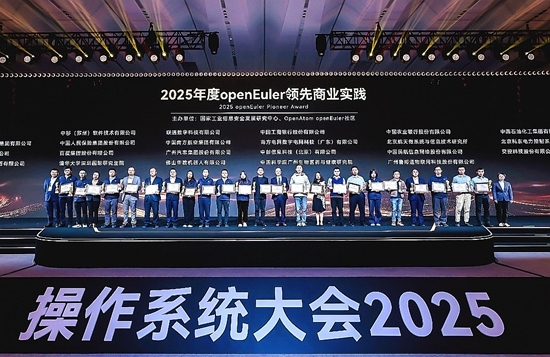
Core Insights - The "Intelligent Leap Without Boundaries, Open Source Towards the Future" Operating System Conference 2025 was successfully held on November 14 in Beijing, aiming to gather global industry forces to accelerate the development of the open-source software ecosystem [1] Group 1: Industry Trends - Basic software is a strategic industry that requires enhanced independent innovation, with the openEuler community becoming one of the most active open-source operating system technology communities globally over the past five years [3] - The future operating systems will connect hardware and applications in the intelligent era, serving as a core foundation for unleashing computing power potential [3] Group 2: Community Growth - The openEuler community has over 2,100 member units, more than 23,000 global contributors, and over 5.5 million users, with an expected installation volume exceeding 16 million sets by the end of 2025 [3] - The community is set to embark on a new five-year development path, launching an operating system for super nodes by the end of 2025 to lead in the AI era and accelerate globalization [3] Group 3: Corporate Collaboration - Huawei's CEO emphasized the need for collaboration with the community to deepen technologies such as AI runtime and cloud deployment, aiming to provide comprehensive solutions for overseas customers [4] - A joint development initiative was announced between the OpenAtom Foundation, Huawei, and China Telecom's Tianyi Cloud to enhance competitiveness in AI and super node technologies [6] Group 4: Global Cooperation - The openEuler community has established close cooperation with 15 global open-source organizations in areas such as AI, cloud, big data, and embedded systems [6] - The conference revealed 23 leading commercial practice projects for openEuler in 2025, including nine large-scale and 14 innovative projects [6]
华为2024年专利许可收入超6亿美元,公开专利3.7万件
Nan Fang Du Shi Bao· 2025-11-12 10:25
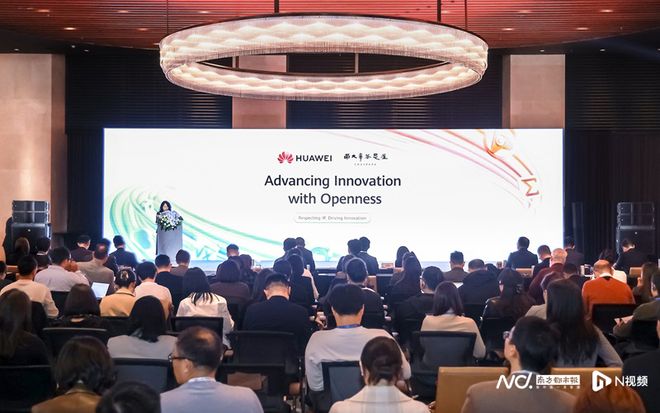
Core Insights - Huawei held its sixth Innovation and Intellectual Property Forum on November 11, focusing on the theme of "Open Innovation" and the importance of intellectual property in driving technological advancement and societal development [1][3] Group 1: Intellectual Property and Innovation - Huawei's Chief Legal Officer emphasized that open innovation is crucial for societal progress and is part of Huawei's core values, highlighting the company's commitment to protecting its own intellectual property while respecting others' rights [1] - In 2024, Huawei's patent licensing revenue is projected to be approximately $630 million, with historical patent licensing fees paid being three times the cumulative licensing income [3] - Huawei has consistently ranked first in the number of international patent applications under the Patent Cooperation Treaty (PCT) since 2014, with 6,600 PCT applications expected in 2024 [3] Group 2: Research and Development Investment - Huawei's R&D expenditure for 2024 is set at 179.7 billion yuan, accounting for 20.8% of total revenue, with expectations to exceed 200 billion yuan in 2025 [3] - Over the past decade, Huawei has invested more than 1,249 billion yuan in R&D, which supports the generation of innovative outcomes [3] - The sixth "Top Ten Inventions" awards highlighted key innovations in areas such as computing and the Harmony operating system, showcasing Huawei's focus on future-oriented technologies [3] Group 3: Patent Licensing and Ecosystem - By the end of 2024, over 2.7 billion 5G devices, 1.2 billion consumer electronics, and 3.2 billion multimedia devices will have received patent licenses from Huawei [4] - 48 Fortune Global 500 companies have directly or indirectly obtained licensing from Huawei, indicating the company's significant role in the global patent ecosystem [4] - The Vice President of Huawei's Intellectual Property Department stated the company's commitment to promoting technology openness through various means, including software open-source and standard contributions [3][4] Group 4: Future Outlook - Huawei aims to enhance the innovation and intellectual property environment through collaboration with industry partners, fostering a supportive atmosphere for intellectual property protection and mutual industry development [4]