
Xiao Fei Ri Bao Wang

Search documents
常温奶“复原乳”退场 乳制品明确品质导向
Xiao Fei Ri Bao Wang· 2025-09-25 08:20
Core Viewpoint - The new regulation implemented by the Ministry of Agriculture and Rural Affairs starting September 16 mandates that sterilized milk (long-life pure milk) can only be produced using raw milk as the sole ingredient, prohibiting the use of reconstituted milk, which has sparked widespread attention in the dairy industry and consumer market [1][2]. Industry Impact - The regulation is expected to benefit consumers by ensuring that long-life milk truly returns to its essence of being made from raw milk, thereby enhancing public trust in dairy products [1][2]. - For companies, the regulation represents a survival of the fittest scenario, as those that previously relied on reconstituted milk to lower costs will need to increase their raw milk procurement, driving demand for raw materials and pushing the industry towards the construction of high-quality milk source bases [1][2]. Challenges - Short-term production costs for long-life milk may rise, potentially leading to price increases for some mid-to-low-end products [2]. - The stability and sufficiency of raw milk supply will be critical in assessing the effectiveness of the new regulation; insufficient supply may force companies to cut production capacity, further concentrating the industry and squeezing the survival space for small and medium-sized dairy enterprises [2]. Long-term Perspective - The regulation is not just an adjustment of raw material standards but a correction of the development logic of China's dairy industry, aiming to solidify market foundations by requiring higher production standards to ensure consumer confidence [2][3]. - The policy encourages companies to accelerate the construction of milk source bases and improve cold chain logistics and processing technology, presenting an opportunity for the dairy industry to transition towards high-quality development [2][3]. Regulatory Enforcement - Effective implementation of the regulation requires a "complementary package" approach, including strict enforcement by regulatory bodies to prevent companies from evading the new rules through ambiguous labeling or concept substitution [2]. - There is a need for increased public education to help consumers understand the differences between reconstituted milk and raw milk, avoiding societal panic over the demonization of reconstituted milk, which is not inherently a problematic food but should be used appropriately in specific contexts [2]. Quality Orientation - The new regulation reflects a decisive shift in dairy regulation towards a quality-oriented approach, responsible for consumer health and an important step towards industry upgrading [3]. - If companies can achieve quality improvement and efficiency under the new regulation, the Chinese dairy industry can break free from the "low-end competition" trap and move towards a new phase where quality and brand trust drive market success [3].
我国首次跻身全球创新指数前十
Xiao Fei Ri Bao Wang· 2025-09-25 08:20
Group 1 - The United Nations World Intellectual Property Organization (WIPO) has reported that China has entered the top ten most innovative economies globally for the first time, surpassing Germany [1] - In 2024, approximately one-quarter of global patent applications will come from China, solidifying its position as the largest source of patents [1] - China ranks first among 36 upper-middle-income economies in terms of innovation capability, with private enterprise financing gaps narrowing [1] Group 2 - China's total research and development expenditure is expected to exceed 3.6 trillion yuan in 2024, making it the second highest globally, with basic research funding reaching 249.7 billion yuan [1] - Over 50,000 high-tech enterprises exist in China, with 524 companies entering the global top 2000 for industrial R&D investment in 2024 [2] - The Chinese government is enhancing tax incentives for R&D, increasing the deductible proportion of R&D expenses from 75% to 100% [2]
上海全球健康创新研究院正式启动
Xiao Fei Ri Bao Wang· 2025-09-25 03:37
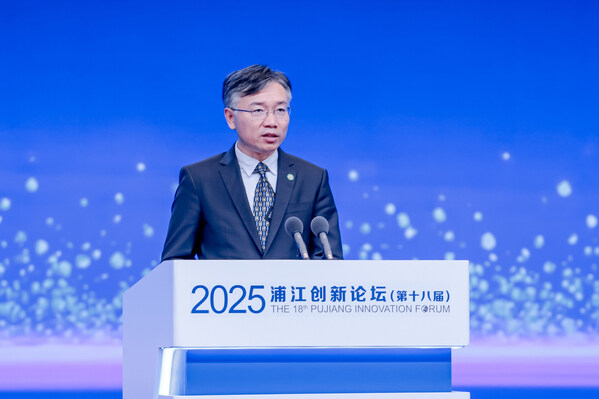
Core Insights - The Shanghai Global Health Innovation Institute (GHII) was officially launched at the 2025 Pujiang Innovation Forum, aiming to become a leading platform for health technology research and promotion [1][4] - The institute is the first of its kind in China focused on global health, targeting infectious diseases and women's and children's health issues, particularly in low- and middle-income countries [4] Group 1 - The institute was initiated by the Shanghai Biomedicine Technology Industry Promotion Center and Shanghai Jiao Tong University School of Medicine [4] - The first director of the institute is Dr. He Ruyi, a well-known expert in the field [1][4] - The launch ceremony was attended by representatives from various organizations, including the Gates Foundation and the Ministry of Science and Technology [4] Group 2 - The initial five-year research funding for the institute is jointly provided by the Shanghai government and the Gates Foundation, with the latter offering project grants and technical support [4] - The institute aims to provide technical support and resources to global partners, facilitating the translation of innovative research outcomes into international markets [4] - The focus on health equity and improving health outcomes in low- and middle-income countries is a key mission of the institute [4]

沈刚教授连续三年入选“全球前2%顶尖科学家榜单”
Xiao Fei Ri Bao Wang· 2025-09-25 03:30
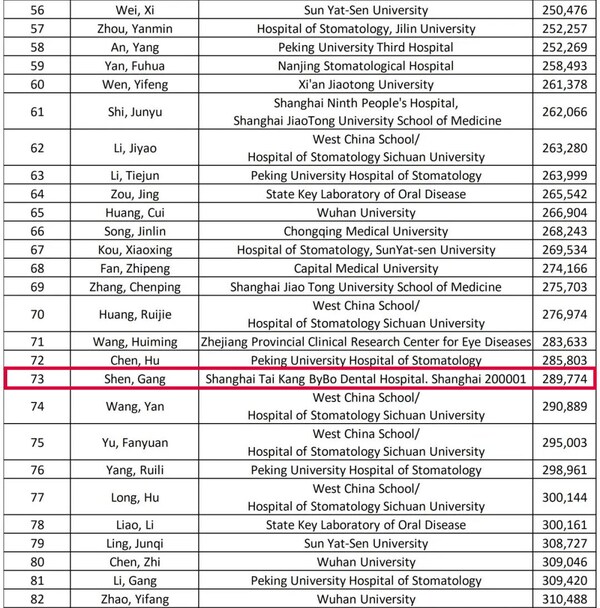
Group 1 - Stanford University released the 2025 World's Top 2% Scientists list based on Elsevier Scopus data, highlighting the international academic influence and innovative research capabilities of Professor Shen Gang, a leading orthodontic expert at Taikang Dental [1][2] - The list recognizes the most influential researchers globally across 22 fields and 174 subfields, evaluating their scientific output and academic impact through various metrics, including citation counts and h-index [2][3] - Professor Shen has been included in the annual list for three consecutive years and has also been recognized in the Lifetime Scientific Impact list, reflecting his sustained contributions to the field of orthodontics [3] Group 2 - Professor Shen has over 30 years of experience in orthodontic teaching, clinical practice, and research, and has published 10 expert reviews in the Shanghai Journal of Stomatology since 2015, summarizing the latest advancements in orthodontic clinical practice [3][4] - He proposed an innovative classification system for malocclusion based on facial shape, significantly improving the diagnostic accuracy for complex malocclusion types, which is applicable to both Chinese populations and has international relevance [4] - In 2019, Professor Shen partnered with Zhengya Dental to translate his research findings into clinical applications, successfully developing the Zhengya GS product line, which has been used in over 100,000 orthodontic cases [4]
五大任务推动轻工业质量数量“双提升”
Xiao Fei Ri Bao Wang· 2025-09-24 03:01
Core Viewpoint - The Ministry of Industry and Information Technology, the Ministry of Commerce, and the State Administration for Market Regulation jointly issued the "Light Industry Stabilization and Growth Work Plan (2025-2026)", outlining development goals and a roadmap for the light industry over the next two years, aimed at stabilizing growth, promoting consumption, and benefiting people's livelihoods [1] Group 1: Development Goals - The light industry aims to achieve multiple "small goals" from 2025 to 2026, including steady growth in key industry scales and stable business operations [1] - Emerging sectors such as smart home products, elderly care, and baby products are expected to grow rapidly [1] - The plan includes the launch of 300 upgraded innovative products and the cultivation of 10 industry clusters with a scale exceeding 100 billion yuan [1] Group 2: Strategic Focus - The plan focuses on five key tasks: strengthening supply, promoting consumption, stabilizing exports, optimizing ecology, and increasing momentum, aiming for a "dual improvement" in quality and quantity within the light industry [1] - The light industry is described as a "basic plate" for people's livelihoods, connecting numerous enterprises and jobs with daily life [1] - The strategy aims to leverage the certainty of high-quality development in the light industry to address uncertainties in both domestic and international environments, supporting the expected growth targets for the industrial economy this year [1]
中国轻工业联合会会长张崇和:秉初心凝力聚智 担使命服务大局
Xiao Fei Ri Bao Wang· 2025-09-24 02:59
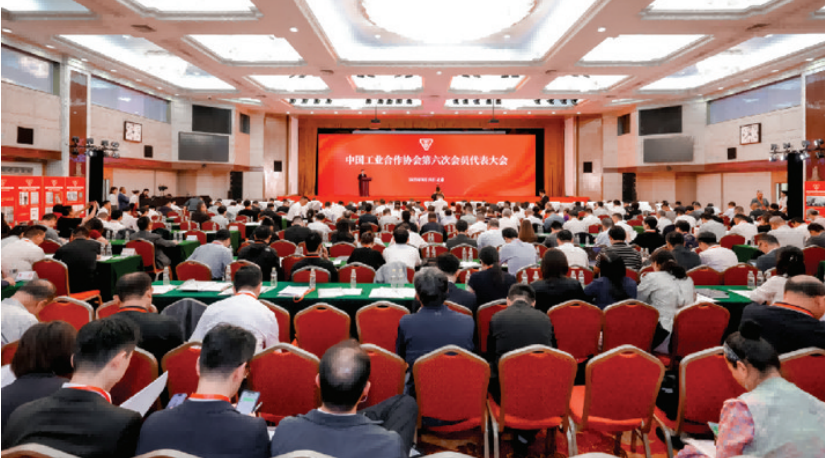
Core Points - The sixth member representative conference of the China Industrial Cooperation Association was held in Beijing on September 19, with significant attendance and participation from key figures in the light industry sector [1][4][9] - Zhang Chonghe, President of the China Light Industry Federation, highlighted the achievements of the previous council and emphasized the importance of guiding entrepreneurs to align with the Party's direction and enhance their sense of responsibility [4][5] Group 1: Leadership and Governance - The sixth council was elected through a secret ballot, with Tian Yuping as the chairperson, Liu Xu as the vice chairperson, and Feng Shuopeng as the secretary-general [4] - Zhang Chonghe outlined four key hopes for the future work of the association, including strengthening Party leadership, enhancing governance capabilities, and maintaining member rights [5][6] Group 2: Service and Collaboration - The association aims to act as a bridge between the government and enterprises, providing comprehensive professional services and enhancing operational efficiency [5][6] - There is a focus on promoting cross-strait exchanges and cooperation with Taiwanese organizations to invigorate economic, technological, and cultural interactions [6] Group 3: Future Directions - The new council, led by Tian Yuping, is committed to improving service quality and fostering collaboration among members to achieve high-quality development in the industry [7] - The conference also featured a summit on digital empowerment and industrial innovation, indicating a forward-looking approach to industry challenges [10]
中国标准推动全球绿色低碳转型
Xiao Fei Ri Bao Wang· 2025-09-24 02:59
Core Points - The article highlights that Ma Dejun, Vice Chairman of the China Battery Industry Association, received the 2025 Lord Kelvin Award, becoming the first Chinese expert to achieve this honor [1] - The Lord Kelvin Award is named after the first chairman of the IEC and is awarded annually to a top expert for long-term contributions in electrical, electronic engineering, and related technologies [1] - Ma Dejun has worked in international standardization for 35 years, achieving breakthroughs in key areas such as household appliances, electrical safety, and assistive living technologies [1] Industry Impact - The award signifies a notable increase in China's influence in global electrical and electronic standard-setting, with international recognition of its contributions [1] - China aims to share its technological innovations and standard practices with the world to promote green and sustainable development in related industries [1] - Recent advancements in standard innovation from China have contributed to global climate governance, including a lithium recovery rate exceeding 90% through directional recycling technology [1] - The implementation of full lifecycle carbon footprint management allows for measurable, reportable, and verifiable battery carbon emissions [1] - The synergy of "standards-products-supply chain" is accelerating the low-carbon transformation of the global battery industry [1] - China plans to lead with high-quality standards and collaborate with global partners to contribute greater wisdom and efforts towards building a community with a shared future for mankind [1]
义乌制造:从“搭车”到“领跑”
Xiao Fei Ri Bao Wang· 2025-09-24 02:59
Core Insights - Yiwu's sports goods and equipment exports reached 6.78 billion yuan in the first seven months of this year, marking a 16.8% year-on-year increase, with exports to the US, Canada, and Mexico totaling 1.88 billion yuan, up 10% [1] - The upcoming 2026 FIFA World Cup is driving Yiwu's economy, as local businesses optimize product strategies across design, category expansion, and intellectual property protection to seize market opportunities [1] - The shift from "manufacturing dividends" to "intelligent manufacturing advantages" reflects Yiwu's adaptation to diverse consumer demands and stricter market regulations [1] Market Customization - There is a significant difference in consumer preferences across countries, with US consumers focusing on functionality and sustainability, Canadian consumers favoring family-oriented leisure sports equipment, and Mexican consumers showing a preference for culturally themed football merchandise [2] - Yiwu merchants are responding to these preferences by offering personalized and localized products, which enhances product value and helps avoid price competition due to product homogeneity [2] Brand and Intellectual Property - The strict intellectual property protections associated with the World Cup necessitate compliance in the design phase to avoid infringement disputes, which is crucial for maintaining export markets and building brand reputation [2] - Transitioning from OEM to self-owned brands is essential for Yiwu to compete on the global stage, emphasizing the need to enhance competitiveness within regulatory frameworks [2] Response to Global Events - Yiwu's ability to quickly respond to global events, such as the World Cup and other major occasions, showcases its flexible market mechanisms and strong supply chain integration, which are vital for navigating economic fluctuations [2] Long-term Transformation - The World Cup economy serves as a temporary surge but also as a long-term transformation opportunity for Yiwu, highlighting the necessity for Chinese SMEs to upgrade their thinking from speed to quality, scale to brand, and manufacturing to intelligent manufacturing [3] - Yiwu's proactive approach positions it as a leader rather than a follower in the global economic landscape, reflecting the vitality of China's private economy [3]
传承工合精神 开创事业新局
Xiao Fei Ri Bao Wang· 2025-09-23 02:43
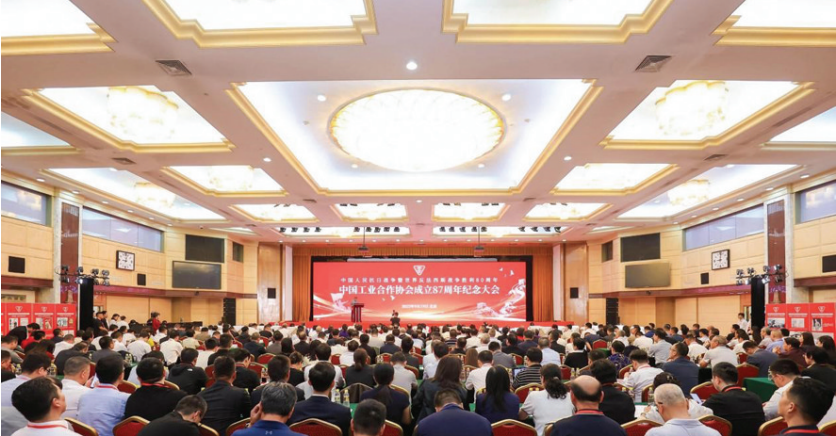
Core Points - The China Industrial Cooperation Association celebrated its 87th anniversary, highlighting its historical contributions and future aspirations [1][2][5] Group 1: Historical Contributions - The association played a significant role during the Anti-Japanese War, establishing over 3,000 industrial cooperatives to provide material support and promote welfare and technical education [2] - The association has continuously innovated its development model over the past 87 years, facilitating cross-ownership, cross-industry, and cross-regional cooperation [2] Group 2: Future Aspirations - The association aims to uphold the leadership of the Communist Party and enhance its service capabilities to better support national development and societal needs [3] - There is a focus on preserving and promoting the spirit of cooperation, which is rooted in patriotism, to inspire future generations and foster high-quality development [3][4] - The association emphasizes strengthening its internal governance and enhancing member engagement to support the united front and collective efforts for national unity [4]
功能寝具行业迎发展转型关键期
Xiao Fei Ri Bao Wang· 2025-09-23 02:43
Core Viewpoint - The increasing sleep issues among the Chinese population, particularly among younger generations, have led to a booming "sleep economy," with the market size expected to exceed 534.9 billion yuan by 2024 [1][2]. Market Demand and Growth - Nearly half (48.5%) of adults in China experience sleep disturbances, with the rate increasing with age [1] - The "sleep economy" market size reached 499.58 billion yuan in 2023, projected to grow at a compound annual growth rate (CAGR) of 8.5% [2] - Sales of sleep-related products, such as split mattresses and smart mattresses, have seen significant growth, with increases of 299% and 82% respectively [3] Industry Innovations - Companies are leveraging technology and cross-industry collaborations to enhance product offerings, such as smart mattresses with multi-dimensional sensors and specialized mattresses for different age groups [2] - The use of advanced materials from aerospace technology in sleep products is an example of innovation in the industry [2] B2B Market Opportunities - The demand for functional bedding is not limited to consumer markets; high-end hotels are shifting focus from luxury hardware to deep experience, enhancing guest satisfaction and increasing revenue [3] - Smart mattresses in elderly care facilities can monitor health conditions, providing timely alerts to family members [3] Industry Challenges - The functional bedding industry faces issues such as product homogeneity and a lack of differentiation in design and features [4] - Smaller companies struggle with high R&D costs, leading to imitation rather than innovation, and some resort to using substandard materials [5] Regulatory and Ethical Concerns - There are concerns about misleading advertising and inadequate after-sales service, which can harm consumer trust and market integrity [5] - Experts suggest that industry associations should establish clear standards and definitions to guide production and marketing practices [6] Recommendations for Improvement - Companies are encouraged to adopt responsible marketing practices, ensuring accurate representation of product capabilities [6] - Establishing efficient after-sales support systems and clear return policies is essential for enhancing consumer confidence [6]
