
全球健康

Search documents
李公明|一周书记:流动的“食物之旅”中的……壮观与奇迹
Xin Lang Cai Jing· 2026-02-19 04:33
Core Insights - The book "Moveable Feasts: The Incredible Journeys of the Things We Eat" by Sarah Murray explores the complex journeys of food from production to consumption, highlighting the economic, social, and political implications of food transportation [3][5][12] Summary by Sections Food Journey and Globalization - The concept of "food miles" and "carbon footprint" is central to the discussion, reflecting the environmental impact of food transportation and the debate over local versus global food sourcing [7][20] - The book emphasizes that food transportation is not merely about the food itself but the intricate systems and technologies that enable these journeys, which have significant historical and cultural implications [11][12] Author's Background and Expertise - Sarah Murray is an experienced journalist and writer with a focus on global issues such as sustainability and social innovation, which lends credibility to her exploration of food transportation in the context of globalization [8][9] - Her firsthand experiences in various countries provide a rich narrative that enhances the understanding of food's journey across borders [9][10] Historical Context and Significance - The book addresses the historical neglect of food transportation in historical narratives, aiming to fill this gap by examining how food logistics have shaped human societies [11][12] - It discusses significant historical events, such as the Berlin Airlift, to illustrate the critical role of food transportation in political contexts [17][19] Environmental and Economic Considerations - The book presents a balanced view on the environmental criticisms of food globalization, arguing that while food miles raise awareness, they do not accurately reflect the complexities of carbon emissions associated with food transport [20][21] - It highlights the economic benefits of global food trade, particularly for farmers in developing countries, and the need for a nuanced understanding of the trade-offs involved [12][20] Technological and Cultural Impacts - The narrative explores the technological advancements in food transportation, from ancient methods to modern logistics, and their impact on food availability and cultural practices [13][16] - It emphasizes the interconnectedness of food, transportation, and societal changes, showcasing how these elements influence each other in the context of globalization [12][21]


盖茨谈再次访华:谈中国创新,谈AI愿景,直面“爱泼斯坦争议”
Di Yi Cai Jing· 2026-02-11 14:34
Core Insights - Bill Gates' recent visit to China highlights his renewed perspective on the country's advancements in agriculture, infectious disease control, and maternal health, which are key focus areas for the Gates Foundation [1][11] - Gates emphasizes China's significant investment in agricultural research and innovation, particularly praising the achievements in hybrid rice technology [3][13] - The Gates Foundation aims to ensure that innovative technologies, especially in artificial intelligence and healthcare, are accessible to impoverished regions globally [7][17] Group 1: Agricultural Innovation - Gates commends China's rapid modernization and its successful agricultural system, noting the impressive results from the development of clonal rice seeds through artificial apomixis [3][13] - The foundation shares a common vision with China to leverage innovation for the benefit of the most vulnerable populations, particularly in Africa [3][13] Group 2: Artificial Intelligence in Education and Healthcare - Gates expresses hope for the development of "AI teachers" that can understand individual learning needs, funded by the foundation through various research teams [6][16] - The foundation is working to collect local language data in Africa to enhance AI applications in healthcare, enabling individuals to receive medical guidance via mobile technology [6][16] Group 3: Global Health Initiatives - The Gates Foundation has co-founded a global health drug research center in Beijing and supports a global health innovation institute in Shanghai [4][14] - Gates acknowledges the ongoing challenges in global health funding and emphasizes the foundation's commitment to addressing these issues through various fundraising efforts [9][18] Group 4: Addressing Controversies - Gates addresses controversies surrounding his past associations, clarifying his limited interactions with Jeffrey Epstein and expressing regret over those connections [8][18] - He emphasizes his focus on innovation and philanthropy, stating his commitment to donating the majority of his wealth through the Gates Foundation over the next 20 years [9][19]


比尔·盖茨再次访华,直面“爱泼斯坦争议”
第一财经· 2026-02-11 14:11
Core Viewpoint - Bill Gates emphasizes the significant advancements in China's agricultural research and innovation, expressing optimism about the country's potential in various fields, including artificial intelligence and global health initiatives [3][4][5]. Group 1: Agricultural Innovation - Gates praises China's rapid modernization and its substantial investment in agricultural research, highlighting the impressive results of the artificial apomixis hybrid rice developed by Chinese scientists [6][5]. - The potential marketization of this technology could allow farmers to produce high-yield crops without the need to purchase hybrid seeds annually, which would significantly benefit agricultural practices [6]. Group 2: Artificial Intelligence and Health - Gates expresses hope for the development of "AI teachers" that can understand individual learning needs, aiming to enhance educational outcomes [10]. - The foundation is funding research teams to leverage AI in healthcare, particularly in Africa, where many individuals lack access to medical professionals [11]. - Gates emphasizes the importance of ensuring that advanced technologies are accessible in developing countries, even before they are widely adopted in wealthier nations [12]. Group 3: Addressing Controversies - Gates addresses controversies surrounding his past associations, particularly with Jeffrey Epstein, clarifying that he never interacted with any victims and expressing regret over his past decisions [13][14]. - He highlights his commitment to philanthropy and innovation, stating that he plans to donate nearly all of his wealth through the Gates Foundation over the next 20 years [15].

全球健康创新融合成果显著前景广阔
Zhong Guo Jin Rong Xin Xi Wang· 2025-09-28 08:53
Group 1 - The concept of "global health" emphasizes breaking down barriers across disciplines, regions, and industries to foster deep collaboration for the well-being of humanity [1] - The 2025 Capital International Medical Conference highlighted the importance of innovative integration across various sectors, including hospital management, finance, pharmaceuticals, biotechnology, medical devices, and digital healthcare [1] - Pascal Garel noted the advantages of China's integrated healthcare system, which has made significant strides in the fusion of finance, technology, and healthcare [1] Group 2 - The development and transformation of biomedicine is characterized by long cycles, high investment, and high risk, which traditional finance typically avoids due to its preference for strong collateral and low risk [2] - Shanghai Pudong Development Bank is restructuring its financial services to focus on future-oriented ecosystems rather than traditional products, aiming to support medical innovation through a comprehensive service system [2] - China Pacific Insurance has seen significant success in integrating medical insurance with commercial insurance, with over 33 million insured individuals under its mutual insurance program [2] Group 3 - The application of digital technologies is revitalizing existing medical practices, with companies like Takeda China and Mindray leveraging AI and big data to improve diagnostic accuracy and efficiency [3] - JD.com is breaking traditional medical service boundaries by providing 24/7 access to top-tier doctors and rapid response times for patient care [3] - Xu Haoyu from Yangtze River Pharmaceutical Group emphasized the potential value of health products that can reverse carotid artery plaques, reflecting traditional Chinese medicine's preventive approach to health [3]
上海全球健康创新研究院正式启动
Xiao Fei Ri Bao Wang· 2025-09-25 03:37
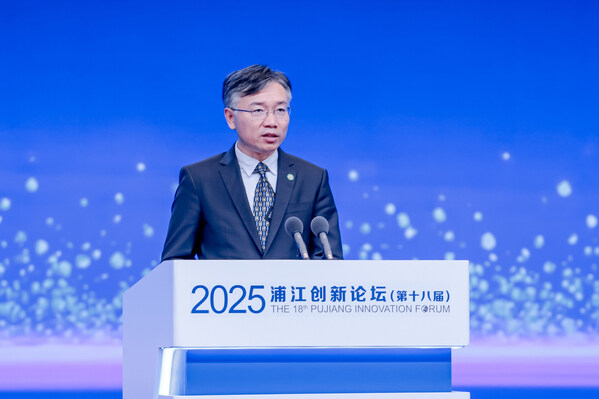
Core Insights - The Shanghai Global Health Innovation Institute (GHII) was officially launched at the 2025 Pujiang Innovation Forum, aiming to become a leading platform for health technology research and promotion [1][4] - The institute is the first of its kind in China focused on global health, targeting infectious diseases and women's and children's health issues, particularly in low- and middle-income countries [4] Group 1 - The institute was initiated by the Shanghai Biomedicine Technology Industry Promotion Center and Shanghai Jiao Tong University School of Medicine [4] - The first director of the institute is Dr. He Ruyi, a well-known expert in the field [1][4] - The launch ceremony was attended by representatives from various organizations, including the Gates Foundation and the Ministry of Science and Technology [4] Group 2 - The initial five-year research funding for the institute is jointly provided by the Shanghai government and the Gates Foundation, with the latter offering project grants and technical support [4] - The institute aims to provide technical support and resources to global partners, facilitating the translation of innovative research outcomes into international markets [4] - The focus on health equity and improving health outcomes in low- and middle-income countries is a key mission of the institute [4]
李强会见比尔·盖茨,拟在全球健康领域全链条开展更多合作项目
GLP1减重宝典· 2025-09-25 03:35
Core Viewpoint - The article discusses the importance of collaboration between China and the Gates Foundation in global health initiatives, emphasizing China's achievements in health and development, and the need for joint efforts to address global challenges [4][5]. Group 1: China’s Health Achievements - China has established the world's largest disease control and medical service systems, showcasing significant progress in health and wellness [4]. - The country is actively participating in global development cooperation, aiming to enhance health outcomes in developing nations through partnerships [4]. Group 2: Collaboration with the Gates Foundation - The Chinese government expresses a desire to strengthen cooperation with the Gates Foundation, particularly in global health projects that benefit developing countries [4]. - The Gates Foundation acknowledges China's advancements in technology, healthcare, and poverty alleviation, and is eager to enhance its relationship with China to tackle global challenges [5]. Group 3: Global Governance and Stability - The article highlights the importance of stable Sino-American relations for global prosperity, suggesting that both nations should work together to improve global governance and address emerging challenges [4]. - The Gates Foundation is willing to facilitate deeper communication and cooperation between the U.S. and China to achieve practical outcomes in global health and development [5].

李强会见美国盖茨基金会主席比尔·盖茨
Xin Hua She· 2025-09-24 23:51
Core Points - The meeting between Chinese Premier Li Qiang and Bill Gates emphasized the importance of global health cooperation and the achievements of China's health system [1][2] - Both parties expressed a desire to strengthen collaboration in global health, particularly in developing countries [1][2] Group 1: China's Achievements and Initiatives - China has established the world's largest disease control and medical service systems, showcasing significant progress in health and wellness [1] - The Chinese government is open to closer cooperation with the Gates Foundation, aiming to implement more projects in the global health sector [1] Group 2: U.S.-China Relations - The meeting highlighted the importance of maintaining healthy and stable U.S.-China relations, which benefit both nations and the world [1] - Bill Gates acknowledged China's remarkable achievements in technology, AI, healthcare, and poverty alleviation, expressing the foundation's eagerness to enhance relations with China [2]
盖茨基金会非洲代表处主任:今年是极具挑战性的一年
2 1 Shi Ji Jing Ji Bao Dao· 2025-07-30 10:50
Core Insights - The Gates Foundation is facing challenges in the African health sector due to reduced foreign aid from the U.S. and European countries, which are reallocating funds to security and refugee costs [1] - The foundation is implementing two strategic initiatives: focusing on innovation to reduce project costs and deploying a $20 million special fund to enhance capacity building in African nations [1] - The foundation plans to invest over $200 billion over the next 20 years and will permanently close by December 31, 2045 [1][2] Group 1 - The foundation has donated over $100 billion in its 25 years, significantly improving global health and reducing mortality rates from diseases in Africa, such as a 90% decrease in measles deaths since 2000 [2] - The foundation's operations are entering a "countdown" phase, raising concerns about the sustainability of health achievements in Africa [2] - The foundation's strategy is based on a strong belief in Africa's development potential, with expectations that many of the fastest-growing economies will emerge from the continent by 2045 [2][3] Group 2 - The foundation is assisting African governments in building analytical capabilities to understand the impact of reduced foreign aid on their health systems [3] - It aims to help these governments develop specific strategies to sustain health achievements and reorganize their service systems to better address challenges [3]
21对话|盖茨基金会非洲代表处主任:今年是极具挑战性的一年
2 1 Shi Ji Jing Ji Bao Dao· 2025-07-30 10:44
Core Insights - The Gates Foundation is facing challenges in the African health sector due to reduced aid from the US and European countries, which are reallocating funds to security and refugee costs [2] - The foundation is implementing two strategic initiatives: focusing on innovation to lower project costs and deploying a $20 million special fund to enhance capacity building in African nations [2][3] - The foundation plans to invest over $200 billion in the next 20 years and aims to close by December 31, 2045, a shift from its previous 20-year closure plan after the deaths of Bill and Melinda Gates [2][3] Group 1 - The Gates Foundation has donated over $100 billion in its 25 years, significantly improving global health and reducing mortality rates from diseases in Africa [3] - The foundation's vaccination programs have led to a 90% decrease in measles mortality rates in Africa since 2000 [3] - The foundation's future actions are driven by confidence in Africa's development, predicting that many of the fastest-growing economies will emerge from the continent [3][4] Group 2 - The foundation is assisting African governments in building analytical capabilities to understand the impact of reduced foreign aid on their health systems [4] - It aims to help these governments develop specific strategies to sustain health outcomes and reorganize their service systems to better address challenges [4]