
Xiao Fei Ri Bao Wang

Search documents
重庆人保小贷正式退出行业 中国人保年内失去3张牌照,金融版图持续收缩
Xiao Fei Ri Bao Wang· 2025-12-10 07:20
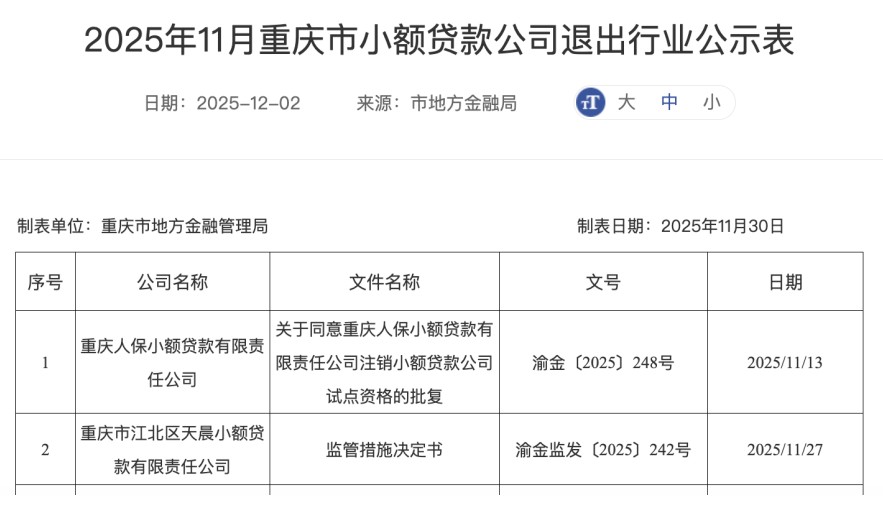
Core Viewpoint - The exit of Chongqing Renbao Microloan Co., Ltd. from the microloan industry signifies a strategic adjustment by China Renbao Group in its internet finance business, reflecting a broader trend of state-owned enterprises reducing their financial operations due to regulatory pressures [1][10]. Group 1: Company Overview - Chongqing Renbao Microloan Co., Ltd. was established in November 2017 with a registered capital of 300 million yuan, allowing it to operate microloan services nationwide [2]. - The company reported a revenue of 54 million yuan and a net profit of 12.76 million yuan in 2022, making it the first subsidiary of Renbao Financial Services to achieve cumulative profitability [4]. - As of September 2023, the company had issued a total of 3.722 billion yuan in self-operated loans, with over 90% of the loans serving agriculture and small enterprises [4]. Group 2: Regulatory Environment - The exit of Renbao Microloan is part of a larger trend influenced by the "retreat from finance" policy initiated by the State-owned Assets Supervision and Administration Commission (SASAC) to mitigate financial risks among state-owned enterprises [5][6]. - In 2023, SASAC issued guidelines to restrict state-owned enterprises from engaging in non-core financial investments, leading to a wave of financial subsidiaries being dissolved or liquidated [5][6]. Group 3: Financial Performance and Challenges - Despite its previous success, Renbao Microloan's exit raises questions about the future of Renbao Financial Services, which has faced continuous losses, including a loss of 237 million yuan in 2024 and 35 million yuan in 2023 [12]. - The overall financial performance of China Renbao Group remains strong, with a net profit of 35.9 billion yuan in the first half of 2023, but the contribution from its financial services segment has been minimal [12].


第二届科利耳格雷姆•克拉克奖学金颁奖
Xiao Fei Ri Bao Wang· 2025-12-06 09:51
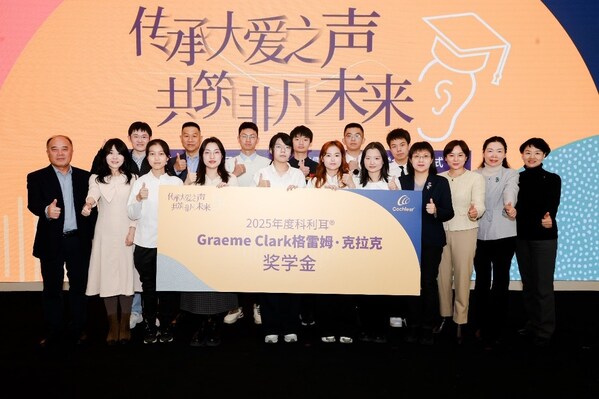
Core Insights - The second Graham Clark Scholarship Award ceremony was held on November 30, 2025, in Beijing, celebrating ten outstanding hearing-impaired students and promoting the spirit of love and support in the hearing health sector [1]. Group 1: Event Overview - The event's theme was "Inheriting the Voice of Great Love, Building an Extraordinary Future," honoring the legacy of Professor Graham Clark, the founder of multi-channel cochlear implants [1]. - Representatives from government, medical institutions, non-profit organizations, and media gathered to witness the awards and engage in discussions on industry hot topics [1]. Group 2: Award Recipients - The ten awardees came from diverse fields such as special education rehabilitation, film studies, plant pathology, and computer technology, showcasing the potential of the hearing-impaired community [1]. - Each recipient demonstrated resilience and a commitment to supporting their peers, aiming to contribute positively to society and advance hearing health initiatives [1]. Group 3: Key Messages from Speakers - Wang Xuezhi, a representative of cochlear implant recipients, shared three key messages emphasizing the unique value of hearing loss experiences, the power of communication and knowledge, and the importance of community support [4]. - Zhou Zerui, the host and first scholarship recipient, summarized his experiences with three keywords: honor, growth, and inheritance, reflecting on the transition from being a recipient to a contributor [7]. Group 4: Policy and System Development - Attendees highlighted the importance of policy support and social collaboration in advancing hearing health, with calls for a comprehensive support system from screening to rehabilitation and employment [8]. - Yang Yang, a member of the National Committee of the Chinese People's Political Consultative Conference, emphasized the need for societal collaboration in promoting awareness and technological support for the hearing-impaired [8]. Group 5: Industry Contributions - Zhou Lijun, Deputy Director of the China Hearing and Language Rehabilitation Research Center, praised the efforts of Cochlear in promoting industry capacity building and supporting the hearing-impaired community [9]. - The center aims to leverage technology to enhance service standards and policy collaboration in the hearing health sector, contributing to the 2030 Healthy China goals [9]. Group 6: Role of Non-Profits and Media - Wang Juan, Chairperson of the Beijing Love's Decibel Public Welfare Foundation, highlighted the role of non-profits in addressing social needs and providing sustainable support for the hearing-impaired community [17]. - Zhang He, Director of the Health Client News Department at People's Daily, stressed the media's responsibility in raising awareness and providing reliable information on hearing health issues [19]. Group 7: Corporate Commitment - Cochlear's General Manager for Greater China, Li Xinyu, articulated the company's mission to help individuals regain their hearing and improve communication, viewing hearing loss as a public health challenge [20]. - The company is committed to providing lifelong support for hearing-impaired individuals and aims to strengthen societal awareness of hearing health through collaboration with various stakeholders [23].
雪山下的自然邀约:迪卡侬亚洲首家户外概念店落地成都来福士
Xiao Fei Ri Bao Wang· 2025-12-02 04:09
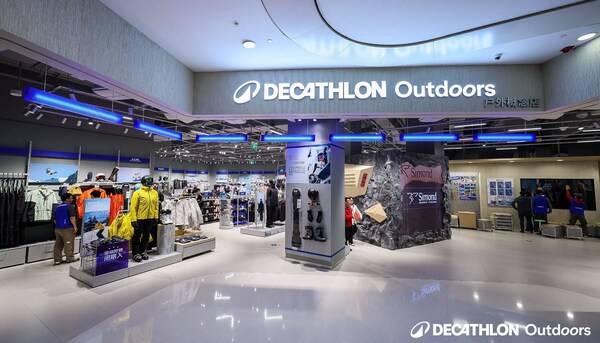
Core Insights - Decathlon has opened its first outdoor concept store in Asia in Chengdu, which serves as a connection point between urban life and outdoor activities, reflecting the city's unique blend of leisure and adventure [1][4][10] Group 1: Store Concept and Design - The store is located in Chengdu Raffles Plaza, strategically positioned at the intersection of urban vibrancy and natural tranquility, creating a "critical point" for outdoor experiences [5] - The design incorporates elements that mimic the nearby Xiling Snow Mountain, creating an immersive outdoor atmosphere within the urban environment [6] - Key features include a "Mountain Lab" for simulating outdoor conditions and a climbing strength testing wall, enhancing customer engagement and experience [6][7] Group 2: Product Offering and Market Strategy - The store offers a wide range of Decathlon's 500 and 900 series professional equipment, catering to various outdoor activities such as hiking, skiing, and climbing, while ensuring affordability and accessibility [7][8] - The launch of the AW25 series Park & Ride 900 Pro all-terrain snowboard exemplifies Decathlon's commitment to developing products tailored to local preferences, enhancing performance and versatility [8] Group 3: Community Engagement and Sustainability - Decathlon aims to foster a sustainable outdoor ecosystem by collaborating with local sports organizations and hosting community events, promoting outdoor activities among the public [9][10] - The partnership with Meishan Sports Industry Development Investment Co., Ltd. focuses on enhancing climbing experiences and promoting safety and accessibility in outdoor sports [9] Group 4: Future Vision - Chengdu is seen as a model for integrating outdoor activities into urban life, with Decathlon planning to expand its outdoor offerings across China, making outdoor experiences more inclusive and accessible [10]
拉动消费 线下市场依然重要
Xiao Fei Ri Bao Wang· 2025-11-26 22:34
Core Insights - The offline traditional consumption market remains significant and is experiencing stronger growth compared to online consumption, indicating a robust market space even in the e-commerce era [1][2][3] Group 1: Offline Consumption Growth - In October, the offline consumption heat index in major cities increased by 17.3% year-on-year, highlighting the potential for offline markets to surpass online markets [1] - The offline consumption heat index for first-tier and second-tier cities grew by 18.9% and 14.5% respectively, while third-tier and below cities saw a remarkable increase of 31.2% [2] Group 2: Consumer Behavior and Market Dynamics - The growth in offline consumption in lower-tier cities is attributed to rapid economic development and rising income levels, enhancing consumer spending capacity and willingness [2] - Consumers in third and fourth-tier cities prioritize the experience and interaction provided by offline shopping, which aligns with their slower-paced lifestyles [2] Group 3: Importance of Offline Markets - Offline retail stores serve as crucial platforms for brand display and image building, allowing consumers to better understand brand culture and product features [2] - The offline market plays a vital role in job creation and local economic development, emphasizing its importance alongside online platforms [2][3] Group 4: Strategic Recommendations - To stimulate consumption potential, it is essential to recognize the importance of offline markets and promote coordinated development between online and offline channels [3][4] - There is a need to explore the unique value and advantages of offline consumption, fostering a blended approach to drive market prosperity and economic growth [4]
健康升级与情绪共鸣激活消费新引擎
Xiao Fei Ri Bao Wang· 2025-11-25 03:43
Group 1: Core Trends in the Consumer Market - The current consumer market is characterized by health-consciousness, youthfulness, and emotional engagement [1][2][8] - The health trend is evident in the dairy and beverage sectors, with brands launching products that emphasize "sugar-free," "low-fat," and "added probiotics or dietary fiber" [1][2] - The rise in health awareness is supported by a report indicating a nearly 13% increase in public knowledge of dairy product nutrition compared to the previous year [1] Group 2: Innovations in Dairy and Beverages - The health trend extends to a broader range of beverages, with products like 100% coconut water and "0 additives" soda water attracting young consumers [2] - New categories of drinks, such as plant-based beverages featuring traditional health ingredients, are emerging and gaining popularity among younger demographics [2] Group 3: Youth-Oriented Product Development - Retail products are increasingly targeting the "Z generation," particularly in the alcoholic beverage sector, where brands are focusing on new flavors, packaging, and experiential marketing [2][5] - Interactive experiences, such as on-site cocktail mixing, are drawing significant interest from young consumers [5] Group 4: Emotional Consumption Trends - Products are increasingly seen as vehicles for emotional expression and comfort, reflecting a deeper consumer trend towards "experience-driven" and "self-indulgent" consumption [8] - The retail sector faces challenges such as digital transformation and product homogenization, necessitating a deeper connection with consumer needs for sustainable growth [8]

新政出台为化妆品产业持续健康发展注入强劲动力
Xiao Fei Ri Bao Wang· 2025-11-25 00:49
Core Viewpoint - The new regulatory reforms introduced by the National Medical Products Administration aim to enhance the quality and competitiveness of the cosmetics industry in China, with a vision for modernization and international alignment by 2035 [2][7]. Group 1: Regulatory Reforms - The "Opinions" document outlines 24 reform proposals and 48 specific measures to improve the cosmetics industry [3]. - Key measures include the establishment of a fast-track approval process for new efficacy cosmetics, allowing international new products to enter the market without prior sales proof, and fostering the silver economy by addressing the needs of the elderly [4][5]. Group 2: Innovation and Market Dynamics - The reforms focus on the front end of the industry value chain, emphasizing innovation, product entry, and market introduction [4]. - The introduction of a dedicated review channel for new efficacy cosmetics is expected to lower R&D costs and provide clear policy guidance for companies [4]. Group 3: Digitalization and Efficiency - New electronic labeling initiatives are set to enhance regulatory digitalization, allowing consumers to access comprehensive product information via QR codes [6]. - Measures to streamline the review process include reducing the review time for high-risk changes from 90 to 60 days and for low-risk changes to 45 days, significantly improving efficiency [6]. Group 4: Quality Management and Market Growth - A three-year action plan will be implemented to enhance the quality management systems of cosmetics companies, particularly benefiting small and medium-sized enterprises [7]. - The Chinese cosmetics market is projected to exceed 1 trillion yuan in transaction value by 2024, with domestic products accounting for over 55.2% of sales [7].
从“买商品”到“享服务” 我国消费市场向“质”升级
Xiao Fei Ri Bao Wang· 2025-11-23 23:57
Group 1: Core Insights - The recent "Double 11" shopping festival highlights a clear path for the upgrade of China's consumer market towards quality, driven by the popularity of smart technology products and service consumption [1][2][4] Group 2: Smart Technology Consumption - Smart technology products have significantly influenced consumer behavior, with over 50% of shopping carts containing such items during the festival [3] - Policies aimed at boosting consumption have led to an 18.2% year-on-year increase in sales of digital electronic products in the first three quarters of the year [3] - The average consumer purchased 4.9 categories of goods, with a notable rise in demand for quality products like digital devices and smart home appliances [4] Group 3: Service Consumption Growth - Service consumption emerged as a new highlight during "Double 11," with hotel orders increasing nearly 8 times and flight bookings up 6.3 times year-on-year [5] - The shift towards a balanced consumption structure between goods and services is evident, with service retail sales growing by 5.2% in the first nine months of the year, outpacing goods retail sales [6][7] Group 4: Emotional and Cultural Consumption - Emotional connection and cultural identity are becoming key drivers of new consumption scenarios, expanding the domestic demand space [8] - The popularity of emotional consumption is reflected in the significant growth of products related to emotional engagement, such as blind boxes and game peripherals, with some categories seeing over 100% week-on-week growth [9] - The integration of traditional aesthetics with modern design is enhancing product competitiveness, as seen in brands that incorporate traditional craftsmanship into contemporary offerings [10]
人保寿险贵州省分公司:上门服务传温情 高效理赔解民忧
Xiao Fei Ri Bao Wang· 2025-11-14 03:10
Core Points - The company has been committed to serving the public since its establishment in November 2010, focusing on economic development and the needs of the people [1] Group 1: Customer Service Initiatives - The company provides home service for clients who are unable to visit in person, exemplified by a case where a customer received assistance at home to claim their policy benefits [2][4] - Over a thousand home service requests have been fulfilled across the province, showcasing the company's dedication to customer service [4] Group 2: Efficient Claims Processing - The company demonstrated its efficient claims processing through a case where a customer received a 100,000 yuan claim payment on the same day of reporting a serious illness [5] - Another customer experienced a claim turnaround of less than 9 minutes from application to payment, highlighting the speed and reliability of the company's services [7] - The company emphasizes the importance of timely support during crises, as illustrated by a case where a 300,000 yuan claim was processed quickly to aid a child's medical treatment [9]

无限极牵头 中英健康与衰老联合实验室青年学术开放基金名单公布:跨学科探索延缓衰老新方向
Xiao Fei Ri Bao Wang· 2025-11-13 03:53
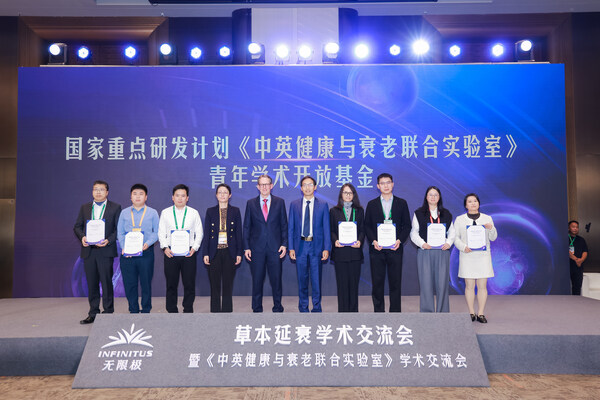
Core Insights - The establishment of the Youth Academic Open Fund by the Sino-British Health and Aging Joint Laboratory marks a significant step in interdisciplinary research focused on "herbal anti-aging" [1][4] Group 1: Research Initiatives - A total of 50 high-quality project applications were received since the fund's recruitment began in March, with 7 innovative research projects selected after a rigorous evaluation process [2] - The selected projects include topics such as the construction of databases for anti-aging natural products, screening of traditional Chinese medicine components, and the development of aging assessment models based on gut microbiota [2][4] Group 2: Collaborative Framework - The Youth Academic Open Fund operates under the Sino-British Health and Aging Joint Laboratory, which is led by Infinitus in collaboration with Cambridge University and South China University of Technology [5] - This laboratory has been approved for a national key research and development program, highlighting its unique position as the only project in the health food sector led by a company among the 35 approved projects [5] Group 3: Future Prospects - There is widespread industry expectation that these innovative research projects will lead to significant advancements in identifying and scientifically validating herbal anti-aging components [5] - Infinitus aims to continue promoting traditional Chinese wellness culture and advancing herbal technology to provide high-quality products and services, contributing to healthier and happier lives for users [5]
从面料到场景 江苏盛泽纺企以创新敲开消费“新大门”
Xiao Fei Ri Bao Wang· 2025-11-12 02:01
Core Insights - The third "China (Shengze) Textile Industry Chain Supply and Demand Matching Order Meeting" showcased numerous local enterprises, highlighting the transformation and upgrading of the textile industry during China's 14th Five-Year Plan period [1] - The event reflects the industry's focus on innovation, aligning with the core goals of "high-end, intelligent, and green" development in the textile sector [1] Group 1: Innovation in Products - The combination of "culture + functionality" has become a core competitive advantage for products, as demonstrated by the introduction of a fabric inspired by ancient Chinese bronze artifacts that also offers UV protection [2] - Companies are enhancing delivery efficiency, with one firm reducing the delivery time for complex fabrics from 45 days to just 7 days without compromising quality [2] - The introduction of ultra-fine fibers and innovative designs is allowing companies to tap into new consumer demands, including products for pets, thus expanding their market reach [2][3] Group 2: Technological Advancements - The use of non-fluorinated waterproof technology represents a significant breakthrough in addressing environmental concerns associated with traditional fluorinated materials [3] - The company’s functional fabrics are designed to withstand severe weather while maintaining breathability, addressing consumer needs for outdoor apparel [3] - The development of military-grade materials for civilian use showcases the industry's commitment to leveraging advanced technology to meet market demands [4] Group 3: Market Diversification - Companies are focusing on differentiated development by offering unique fabric designs, such as a fabric that can display an entire traditional Chinese painting, catering to niche markets [5] - Innovations in color and composition allow for a broader range of personalized products, with one company claiming it can produce 90% of its products with unique designs [5] - The strategy includes collaboration with designers and expansion into various consumer sectors, such as home goods and bags, to enhance market presence [5] Group 4: Ecosystem and Collaboration - The order meeting serves as a critical bridge for transforming laboratory innovations into market-ready products, reflecting the ongoing improvement of the textile industry's innovation ecosystem [6] - Over 100 textile enterprises in Shengze are participating in specialized cultivation programs, indicating a robust support system for technological advancements [6]