
Yang Guang Wang

Search documents
法官在直播间带货卖螃蟹?20多万人次在线围观,南京法院回应
Yang Guang Wang· 2025-11-04 10:32
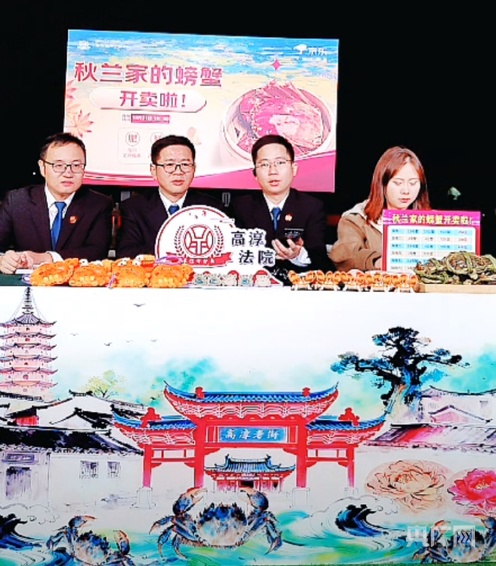
Core Viewpoint - The Nanjing Gaochun District People's Court has innovatively utilized live streaming to conduct a judicial auction of crabs, attracting over 200,000 online viewers, aimed at assisting honest debtors in repaying their debts [1][4]. Group 1: Judicial Auction Details - The live auction took place on October 31, featuring court staff in uniform promoting the sale of crabs, with prices based on official retail guidance [2][4]. - The auction was a response to a family's long-standing debt issues, stemming from a shipping accident and subsequent financial struggles, leading to a "quasi-personal bankruptcy" application [4][5]. Group 2: Objectives and Outcomes - The court aimed to maximize the value of the family's crab harvest while promoting legal awareness and supporting honest debtors [4][5]. - The auction resulted in over 100 sales, generating more than 50,000 yuan, exceeding initial expectations and garnering significant public interest [5][6]. Group 3: Future Considerations - The court is considering the continuation of such live auctions, pending further discussion on suitable cases and conditions [6]. - Legal experts have noted that the court's actions are legally justified and reflect an innovative approach to debt resolution, enhancing public engagement with the judicial process [6][8]. Group 4: Financial Support Initiatives - The Gaochun District People's Court has also launched the "Chunxin Restructuring Loan" in collaboration with local banks to address the challenges faced by honest debtors, integrating judicial review, financial relief, and credit restoration [8].

重点聚焦!新质新造·兵团丨图木舒克高质量发展步履坚实
Yang Guang Wang· 2025-11-04 09:17
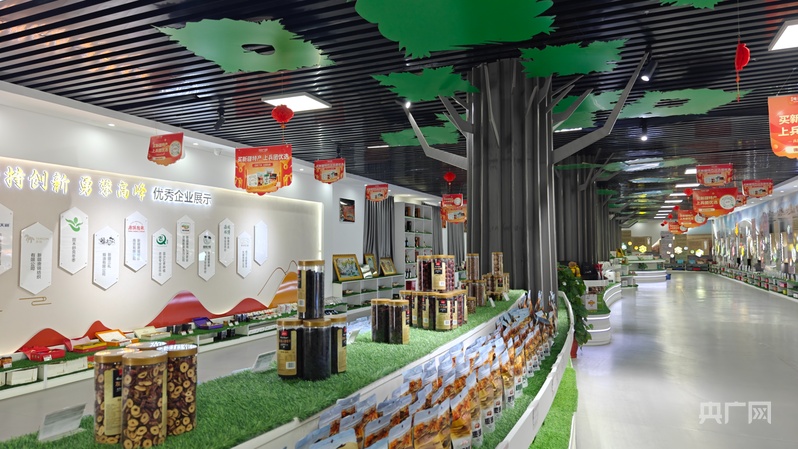
Core Viewpoint - The oil safflower bean industry in Xinjiang's Tumushuke City is transforming desert land into arable land, creating a green miracle and contributing to local economic development through a comprehensive industrial chain [1][10]. Group 1: Agricultural Development - The oil safflower bean has been recognized as the "king of desert crops," with its entire plant being utilized for various products such as oil, flour, and high-quality animal feed [3]. - The introduction of advanced agricultural techniques has significantly increased the yield of oil safflower beans from 100 kg per mu in 2017 to over 600 kg per mu in 2024, with a record yield of 886 kg [3][8]. Group 2: Economic Impact - The automation in processing has improved efficiency, with a production line capable of processing oil safflower beans from raw material to finished product in just 7 minutes [5]. - The local processing company has shifted from selling raw materials to producing finished products, achieving a monthly sales revenue of 1.5 million yuan [6]. Group 3: Environmental Benefits - The cultivation of oil safflower beans has led to a significant increase in annual rainfall from less than 30 mm to 130 mm, and the number of days with winds above level 7 has decreased by one-third [8]. - Soil organic matter content has improved from 0 to between 1.3 and 1.4, and the greening coverage rate has risen to 50% [8]. Group 4: Infrastructure and Investment - The establishment of an e-commerce incubation park aims to promote the scale, branding, and industrialization of the local e-commerce sector, facilitating the distribution of agricultural products [7]. - A complete industrial chain has been developed, including an oil safflower research institute, initial processing plants, deep processing facilities, and a brewery [9].

新质新造·兵团丨图木舒克高质量发展步履坚实
Yang Guang Wang· 2025-11-04 08:44
Core Viewpoint - The oil sand bean industry in Xinjiang's Tumushuke City is transforming the desert into arable land, creating a sustainable green circular economy that benefits local farmers and contributes to ecological restoration [2][8]. Group 1: Agricultural Development - The oil sand bean, known as the "king of desert crops," is being cultivated on 54,000 acres in Xinjiang, with advanced harvesting technology leading to increased efficiency and productivity [1][2]. - The yield of oil sand beans has significantly improved from 100 kg per acre in 2017 to over 600 kg per acre in 2024, with a record yield of 886 kg [2]. Group 2: Economic Impact - The oil sand bean industry has created a comprehensive value chain that includes planting, processing, and ecological restoration, providing a stable income for local farmers [2][8]. - The processing company in Tumushuke has upgraded its equipment, allowing for a production capacity of 10 tons per day and monthly sales reaching 1.5 million yuan [5]. Group 3: Environmental Benefits - The introduction of oil sand beans has led to an increase in annual rainfall from less than 30 mm to 130 mm, a reduction in strong wind days by one-third, and an increase in soil organic matter content from 0 to 1.3-1.4 [8]. - Continuous cultivation of oil sand beans has transformed sandy land into fertile fields, with wheat yields exceeding 400 kg per acre [10]. Group 4: Industry Infrastructure - The establishment of an e-commerce incubation park aims to scale and brand the local agricultural products, facilitating the last mile of e-commerce for local farmers [8]. - A series of projects related to the oil sand bean industry, including research institutes and processing facilities, have been developed, enhancing the overall industry ecosystem [10].
基于六个完整价值观基座 阿里巴巴发布AI向善行动报告
Yang Guang Wang· 2025-11-04 08:43
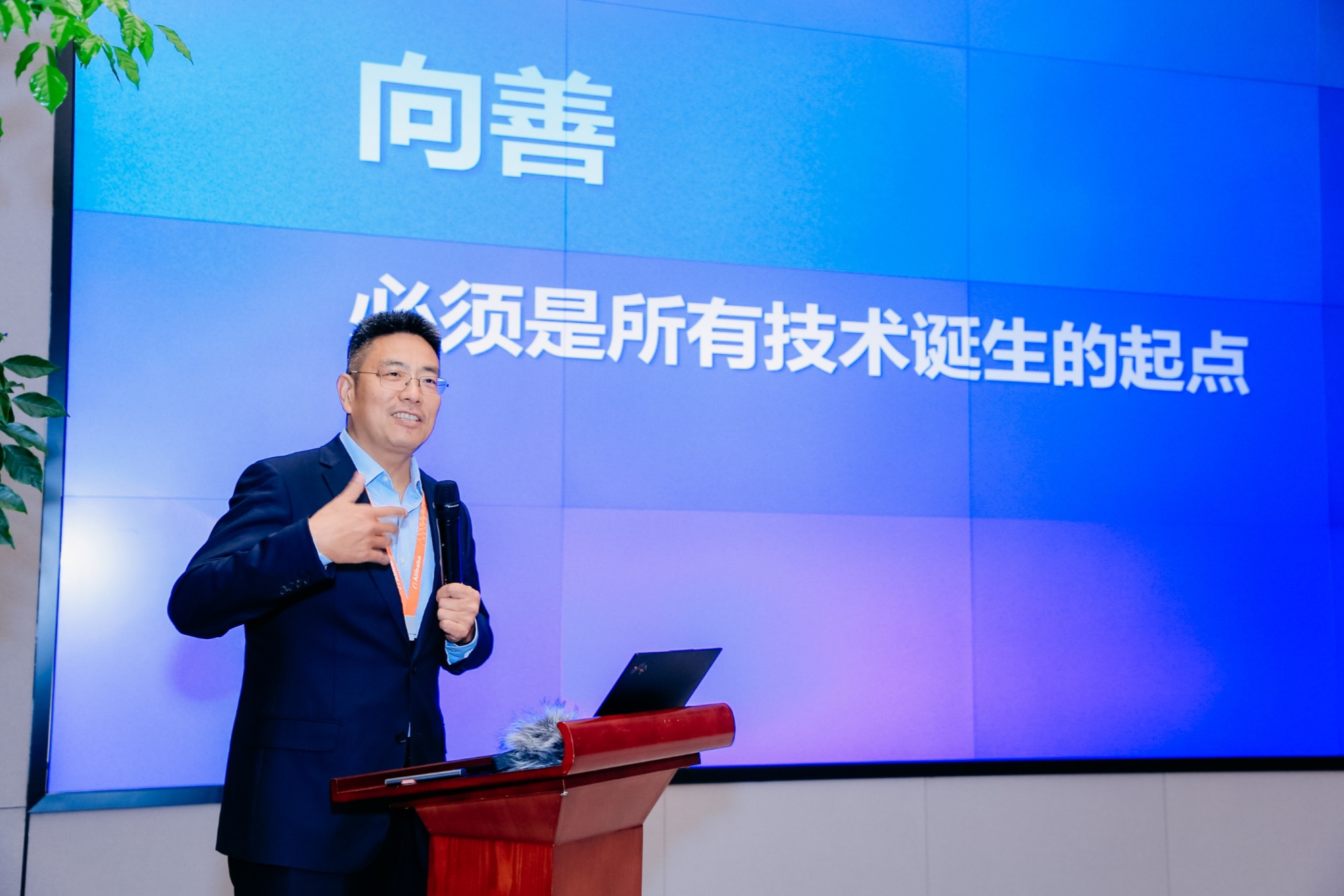
Core Insights - The report titled "Alibaba AI for Good Action Report 2025" emphasizes a human-centered framework for AI development, focusing on six core values: safety, privacy protection, inclusivity, trustworthiness, open governance, and green sustainability [1][5] - The vision of "AI for Good" is presented as a critical test for technological maturity, a driving force for sustainable development, and a bridge for building social trust [1][2] - Alibaba's commitment to ethical AI governance is highlighted, with the establishment of a technology ethics governance committee and guidelines to ensure responsible AI practices [5] Group 1: AI for Good Initiatives - Alibaba's partner Liu Zhenfei discussed various AI initiatives, including the "Reunion" system for combating human trafficking and the "Wheelchair Navigation" system, showcasing the continuity of technology for good [2] - The "Eagle Eye Guardian" warning system, developed in collaboration with the China Academy of Safety Science and Technology, achieved over 1.74 billion warnings during the National Day holiday [2] - The "Blind AI Glasses," created by a developer using Alibaba's cloud model, can identify walking paths and traffic signals, demonstrating practical applications of AI for social good [3] Group 2: Technological and Ethical Considerations - Alibaba Cloud's focus on the relationship between AI computing power and energy efficiency is underscored, with initiatives aimed at achieving carbon neutrality in the AI era [4] - The importance of responsible AI is emphasized, suggesting that ethical considerations should guide innovation rather than hinder it [4] - The report indicates that AI for good can foster a trustworthy social and policy environment, creating a positive feedback loop for value creation and technological refinement [4] Group 3: Broader Implications and Future Directions - The report suggests that AI's development is not binary but involves a spectrum of ethical considerations, necessitating collaboration among government, academia, and industry [8] - Alibaba plans to invest over 380 billion yuan in cloud and AI hardware infrastructure over the next three years, reinforcing its commitment to open-source and scalable AI solutions [8] - Continuous triple-digit growth in AI-related revenue for Alibaba Cloud is noted, alongside its significant market share in global open-source models [8]

万人说新疆丨跨过国门去上班
Yang Guang Wang· 2025-11-04 08:41
Core Viewpoint - The news short film "Crossing Borders to Work" highlights the unique features of the China-Kazakhstan Horgos Cooperation Center and the lives of cross-border workers, showcasing a vibrant and opportunity-filled environment for international trade [1] Group 1: Overview of the Short Film - The film features cross-border workers like Zhang Xiaoan, capturing their busy and fulfilling work and life at the cooperation center [1] - It begins with the preparations of border inspection staff, using rhythmic editing and narration to immerse viewers in the dynamic world of border trade [1] Group 2: Significance of the Cooperation Center - The film illustrates the bustling scenes during peak entry times, emphasizing the cooperation center's role as a crucial platform for international exchange [1]
京蒙合力打造环京蔬菜保供基地 筑牢首都“菜篮子”供应根基
Yang Guang Wang· 2025-11-04 08:19
Core Viewpoint - The collaboration between Beijing and Inner Mongolia aims to establish a stable supply chain for vegetables to Beijing, ensuring both food security for the capital and promoting regional development through the creation of vegetable production bases [1][2]. Group 1: Background and Context - Inner Mongolia is positioned in an ideal agricultural zone for cool-season vegetables due to its ample sunlight, significant temperature variations, and clean soil [2]. - The demand for green, high-quality, and safe vegetables in the Beijing market is increasing as the integration of the Beijing-Tianjin-Hebei region accelerates [2]. Group 2: Key Practices and Achievements - A collaborative mechanism has been established between Beijing and Inner Mongolia, with the issuance of implementation plans and management methods to strengthen top-level design [3]. - A total of nearly 8 million yuan has been invested in the collaboration over two years, resulting in the establishment of 42 vegetable production bases covering 60,000 acres, supplying over 100,000 tons of quality vegetables annually to Beijing [1][3]. - The initiative has created approximately 10,000 jobs, with an average income increase of 10,000 yuan per person [1]. Group 3: Technological Empowerment and Standard Control - The vegetable production bases focus on technological advancement and standard control to enhance quality and efficiency [4]. - Smart agricultural technologies have been implemented, such as a 120 million yuan investment in a smart agriculture park in Ningcheng County, which has improved water and fertilizer management and increased tomato yields [4]. Group 4: Cold Chain Logistics - A comprehensive cold chain logistics system has been established to ensure fresh produce reaches the market quickly, maintaining a freshness retention rate of over 95% [5]. - Various counties have developed integrated systems for seedling cultivation, planting, storage, and sales, ensuring temperature control during transportation [5]. Group 5: Market Integration - A stable and diverse sales network has been created to meet the consumption demands of Beijing, promoting the branding and regular supply of Inner Mongolia's vegetables [6]. - Partnerships with major markets and supermarkets in Beijing have been established to facilitate direct supply of branded agricultural products [6]. Group 6: Inclusive Growth and Farmer Engagement - Innovative mechanisms have been introduced to ensure farmers are deeply involved in the industry and share in the value-added benefits [7]. - Various models have been adopted to enhance farmers' incomes, with some farmers experiencing income growth of over 30% [7]. Group 7: Lessons and Insights - Policy collaboration is essential for the successful establishment of vegetable supply bases, providing necessary support and funding [8]. - The application of smart agricultural technologies is crucial for improving production quality and efficiency [8]. - A complete supply chain from production to sales is vital for ensuring market responsiveness and sustainability [8]. - Establishing effective profit-sharing mechanisms is important for the sustainable development of the agricultural sector [8]. - Market orientation is key to aligning production with consumer preferences, ensuring competitive regional branding [9].
“平等新途保”落地广州黄埔 助力社矫人员顺利就业
Yang Guang Wang· 2025-11-04 05:32
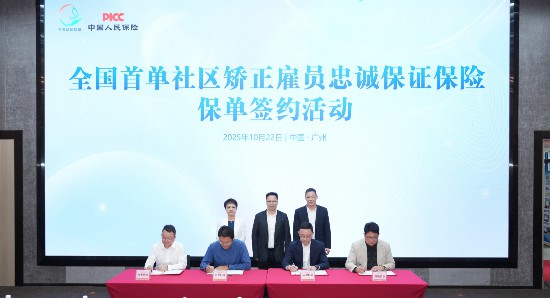
Core Viewpoint - The launch of "Equal New Path Insurance" in Guangzhou Huangpu aims to address the dual challenges of employment difficulties for community correction personnel and hiring concerns for businesses through a market-oriented and legal approach [1][2]. Group 1: Insurance Product Overview - "Equal New Path Insurance" is the first employee loyalty insurance specifically for community correction personnel in China, filling a market gap and providing comprehensive coverage [5]. - The insurance product offers two modes of coverage: named and unnamed insurance, with multiple premium options to cater to different business sizes [3][5]. - The product design includes features that protect sensitive information during claims to avoid "labeling secondary harm" and has a 12-month loss discovery period to cover potential risks [5]. Group 2: Government and Social Impact - The initiative reflects the implementation of the Community Correction Law and represents a significant exploration in modernizing social governance through a collaborative mechanism involving government, market, and social participation [2]. - The project aims to transform community correction personnel from "social marginal individuals" to "value creators" by providing equal employment opportunities and helping them regain dignity and stability in their lives [3]. - Huangpu District plans to optimize the "government-enterprise insurance" collaborative mechanism to promote "Equal New Path Insurance" from a pilot to a demonstration project, providing replicable governance experiences nationwide [5]. Group 3: Business Perspective - Many community correction personnel are willing and capable of working but face employment barriers due to stigma, while businesses are hesitant to hire due to risk concerns [3]. - The insurance product aims to alleviate these concerns, enabling businesses to hire community correction personnel without fear of potential risks [3]. - The initiative has attracted 117 companies to join the "Equal New Path Alliance," covering various market entities, thus promoting social and economic benefits [5].

赵乐际会见斯洛文尼亚国民委员会主席
Yang Guang Wang· 2025-11-04 04:24
洛特里奇表示,斯中坚持相互尊重、团结合作,政治互信不断增强。斯方坚持一个中国原则,高度 赞赏中方提出的系列全球倡议,愿加强双方各领域交流合作,共建"一带一路",共同维护国际公平正 义。 央广网北京11月4日消息 据中央广播电视总台中国之声《新闻和报纸摘要》报道,全国人大常委会 委员长赵乐际3日在北京会见斯洛文尼亚国民委员会主席洛特里奇。 赵乐际表示,中斯建交33年来,始终坚持平等相待、互尊互信、互利共赢。当前中斯关系保持平稳 健康发展,各层级交往密切。中方愿同斯方一道,继续做彼此可以信赖的朋友和伙伴,深化政治互信与 务实合作,推动两国关系向更高水平迈进。中国全国人大愿深化两国立法机构各层级交往,加强治国理 政经验交流,为两国合作营造良好法律环境。赵乐际介绍了中共二十届四中全会情况。 ...
李强同俄罗斯总理共同主持中俄总理第三十次定期会晤
Yang Guang Wang· 2025-11-04 04:24
Group 1 - The core viewpoint of the meeting is the strengthening of the China-Russia comprehensive strategic partnership, emphasizing mutual trust and cooperation in various fields [1][2] - Both parties highlighted the importance of implementing the consensus reached by the heads of state as a primary task, aiming to enhance cooperation mechanisms and increase collaborative investments [2] - The meeting resulted in the signing of the Joint Communiqué of the 30th Regular Meeting of the Prime Ministers of China and Russia, along with agreements in customs and satellite navigation cooperation [2] Group 2 - The meeting marks the 80th anniversary of the victory in the Chinese People's Anti-Japanese War and the Soviet Union's Great Patriotic War, which serves to deepen the friendship between the two nations [1] - The Chinese side expressed willingness to align development strategies with Russia and expand cooperation across various sectors, aiming for a high-level development of bilateral relations [1] - The Russian side acknowledged the successful convening of the 20th Central Committee of the Communist Party of China and expressed readiness to enhance high-level exchanges and cooperation in trade and cultural fields [2]
关键词读懂“十五五”|未来产业,如何塑造中国发展新未来
Yang Guang Wang· 2025-11-04 02:55
Core Insights - The 20th Central Committee's Fourth Plenary Session approved the "Suggestions on Formulating the 15th Five-Year Plan for National Economic and Social Development," emphasizing the exploration of diverse technological routes and business models to drive economic growth through future industries such as quantum technology, biomanufacturing, hydrogen energy, nuclear fusion, brain-computer interfaces, embodied intelligence, and 6G mobile communication [1][2] Group 1: Future Industries and Economic Growth - Future industries are seen as crucial for reshaping China's economic landscape and enhancing its innovation capabilities, with a focus on building a modern industrial system and strengthening the real economy [2][3] - The "three new" economy's contribution to GDP is projected to exceed 18% in 2024, with significant breakthroughs in biomanufacturing and quantum technology indicating strong growth potential for future industries [2] Group 2: Policy and Urban Development - The growth of future industries is supported by policies and urban planning, with the Ministry of Industry and Information Technology proposing mechanisms for investment growth in sectors like brain-computer interfaces and quantum information [4] - Local governments are actively implementing policies to foster future industries, with cities like Beijing, Shanghai, and Guangzhou developing tailored strategies to leverage their unique advantages [4] Group 3: Technological Advancements and Education - Breakthroughs in 6G technology, such as the establishment of the world's first 6G test network, highlight China's leading position in future communication technologies [5] - The development of future industries is transforming the "industry-university-research" model, with universities adjusting their research focus to align with emerging technologies like brain-computer interfaces [6][7] - The demand for interdisciplinary talent that combines technical skills with social understanding is increasing, reflecting the broader impact of future industries on education and daily life [7]