
Zhong Guo Neng Yuan Wang

Search documents
影石的上空“赌局”:一台全景无人机能不能改写行业坐标?
Zhong Guo Neng Yuan Wang· 2025-12-05 09:34
Core Insights - The launch of the Antigravity A1 drone marks a significant innovation in the consumer electronics industry, addressing previously unmet needs and establishing a new technological path in a competitive market [2][9] - The A1 integrates 360° panoramic imaging, immersive flight perspectives, and intuitive controls, fundamentally changing the flying experience and content creation logic [5][10] Product Features - The Antigravity A1 is the first drone to combine 360° panoramic imaging with immersive flight control, allowing users to experience flying in a more intuitive manner [5] - It features a dual-lens 360° imaging system with two 1/1.28-inch sensors capable of recording high-resolution videos at 8K30fps, 5.2K60fps, or 4K100fps [5] - The accompanying Vision flight glasses provide a real-time immersive experience, allowing users to view the flying environment as if it were a real space rather than a screen [5] Market Competition - The competition in the panoramic camera market is intensifying, with DJI's Osmo 360 camera entering the market at a lower price point, prompting Insta 360 to launch its own panoramic drone [7][9] - Reports indicate a significant drop in Insta 360's market share from 85%-92% to 49%, while DJI's share has risen to 43%, highlighting the competitive landscape [8] Financial Comparison - In 2024, DJI's revenue is projected to exceed 80 billion yuan with a net profit of 12 billion yuan, while Insta 360's revenue is only 5.6 billion yuan with a net profit of approximately 1 billion yuan, indicating a substantial disparity in scale [9] - Despite the financial gap, Insta 360 claims that over 70% of its revenue comes from original niche categories, emphasizing its unique market position [9] Strategic Positioning - The Antigravity A1 is seen as a potential breakthrough for Insta 360, aiming to carve out a niche in areas not deeply explored by DJI, focusing on immersive first-person flying experiences [9][10] - The product addresses structural pain points in the drone market, such as the difficulty of capturing high-quality footage while flying, and aims to provide a differentiated experience [10]



具身智能准入机制有望完善,储能出海订单逐步落地 | 投研报告
Zhong Guo Neng Yuan Wang· 2025-12-05 09:08
Group 1: Photovoltaic Industry - The prices of silicon wafers, battery cells, and modules have slightly decreased this week, but overseas market demand remains strong, providing some support for battery cell prices [1] - The upstream price trends are experiencing slight fluctuations, while overseas orders and policy environments continue to be the main driving forces supporting the industry chain [1] - Short-term prices are expected to remain stable due to these factors [1] Group 2: Wind Power - The domestic bidding for wind power projects continues to show high levels of activity, with Mingyang Smart Energy winning a bid for a 700MW wind-solar hydrogen project [2] - Goldwind Technology, Envision Energy, and CRRC Zhuzhou have also secured bids for a total of 1084MW offshore wind turbine procurement from State Power Investment Corporation [2] - The orderly progress of domestic offshore and onshore wind power project bidding indicates a gradual increase in industry prosperity [2] Group 3: Energy Storage - New regulations from the National Development and Reform Commission clarify the profitability model for energy storage, leading to a continuous breakthrough in domestic energy storage orders [3] - Global large-scale energy storage bidding data remains robust, with rising prices for energy storage cells confirming strong downstream demand [3] - The demand for large-scale energy storage is expected to grow non-linearly after reaching an economic inflection point, driven by surging electricity consumption in U.S. data centers and a moderate recovery in European household storage demand [3] Group 4: Power Grid Equipment - The investment in power grid projects reached 482.4 billion yuan in the first ten months of this year, reflecting a year-on-year growth of 7.2% [4] - The fourth round of equipment bidding for the State Grid's ultra-high voltage projects has commenced, with total bid quotations amounting to approximately 16.539 billion yuan [4] Group 5: Electric Vehicles - The chairman of Tianqi Lithium predicts that global lithium demand will reach 2 million tons of lithium carbonate equivalent by 2026, indicating a potential balance in supply and demand [5] - Longpan Technology has signed a major contract worth over 45 billion yuan for lithium iron phosphate cathode materials [5] - NIO reported year-on-year growth in revenue and gross margin, while Li Auto experienced a net loss due to product cycle factors [5] Group 6: Humanoid Robotics - The establishment of an entry and exit mechanism for the humanoid intelligence industry is anticipated, with UBTECH winning a 143 million yuan project and achieving 1.3 billion yuan in orders for its Walker series this year [6] - The launch of new humanoid robot joint module products by Aikexi Intelligence highlights ongoing innovation in the sector [6] - Current recommendations focus on new technology and order targets, as well as domestic potential in body manufacturing [6]
电改步入下半场,机遇与挑战并存 | 投研报告
Zhong Guo Neng Yuan Wang· 2025-12-05 09:08
Core Insights - The report from Cinda Securities highlights that the electricity reform is entering its second phase, with spot market expansion and power market entry becoming the main focus [1][3]. Market Performance Review - The utility sector has underperformed compared to the broader market since early 2025, with a notable lag in cumulative gains. However, the gap has narrowed in Q4 2025 due to a market style shift and improving electricity demand [2]. Electricity Fundamentals Review - The implementation of Document No. "136" marks the full market entry of renewable energy generation in China, leading to a surge in new energy projects in the first half of 2025. The results of incremental bidding vary significantly across regions due to differing local policies [3]. - By November 2025, the provincial electricity spot market achieved near-complete coverage, fulfilling the goals set by Document No. "394" [3]. Industry Outlook - The electricity supply-demand balance is shifting towards a more relaxed phase, with significant implications for spot prices and long-term contracts. The current market structure remains dominated by medium- to long-term transactions, but spot price fluctuations are influencing negotiations [4]. - The investment cycle for power generation may have peaked, with potential opportunities arising from asset consolidation as the industry moves towards the "15th Five-Year Plan" [4]. Investment Opportunities by Power Source - In a context of sufficient electricity supply, energy prices are expected to decline, while auxiliary service prices may rise. Coal power remains a stable investment, while nuclear power is anticipated to grow rapidly, albeit facing price pressures [5][6]. - The report suggests that hydropower's marketization is limited, while nuclear power is expected to see significant growth in installed capacity post-2027 [6]. Investment Strategy - The report recommends focusing on high-dividend assets such as hydropower operators and integrated coal power companies, which are expected to provide stable returns. Companies like Yangtze Power and Guotou Power are highlighted as potential investment targets [7].
中国电力在日照成立海上风电公司
Zhong Guo Neng Yuan Wang· 2025-12-05 07:15
Group 1 - The core point of the article is the establishment of Guodian Power (Rizhao) Offshore Wind Power Co., Ltd., which is fully owned by China Power (02380.HK) through its subsidiary, Shandong Energy Development Co., Ltd. [1] - The new company has a registered capital of 2 billion RMB and its business scope includes wind power generation technology services, offshore wind power system research and development, photovoltaic equipment leasing, solar power technology services, and sales of electric vehicle battery swap facilities [1] - The legal representative of the newly established company is Luo Chaofa [1]

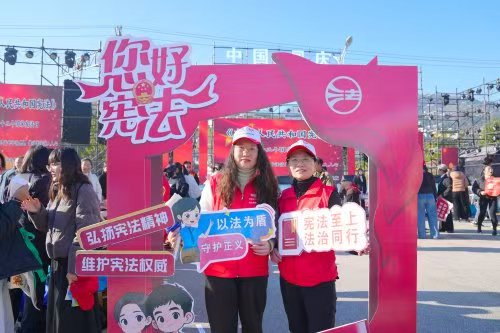
临沧凤庆供电局:以宪为基强法治 电力护航新征程
Zhong Guo Neng Yuan Wang· 2025-12-05 06:21
Core Viewpoint - The Southern Power Grid Yunnan Lincang Fengqing Power Supply Bureau is actively promoting constitutional awareness and legal knowledge related to electricity, aiming to enhance public understanding of energy security and legal compliance in electricity usage during the winter season [1][3]. Group 1: Event Overview - The event coincided with the 12th National Constitution Day and the launch of the 12th National Constitution Publicity Week, utilizing the Walnut Cultural Activity Week as a platform for constitutional promotion [1]. - The activity distributed over 300 promotional materials and answered more than 100 public inquiries, facilitating the public's understanding of constitutional and electricity law knowledge [5]. Group 2: Objectives and Themes - The event focused on three main objectives: 1. To deepen the understanding of the constitution's significance among all staff and integrate legal thinking into the entire process of power grid construction, safety production, and power supply services [3]. 2. To educate the public on relevant constitutional clauses regarding energy security and public services, as well as specialized regulations like the Electricity Law and the Electricity Facility Protection Regulations [3]. 3. To build a legal communication bridge between government, enterprises, and the public, addressing compliance challenges in electricity usage and fostering a culture of respecting and adhering to the law [3]. Group 3: Community Engagement and Services - The Fengqing Power Supply Bureau integrates the social responsibilities conferred by the constitution into the entire electricity service process, ensuring the protection of public electricity usage through legal means [7]. - Volunteer teams have been established to provide services such as electricity consultations, fault inspections, and legal education in rural areas and communities, promoting safe and energy-saving electricity practices [7]. Group 4: Future Plans - The bureau plans to continue embedding constitutional principles into electricity production, management, and public service, enhancing its legal governance capabilities to support high-quality economic and social development in Lincang Fengqing [9].
10月光伏新增装机同比下降38.3%,组件逆变器出口同增环降 | 投研报告
Zhong Guo Neng Yuan Wang· 2025-12-05 02:01
Core Insights - The report highlights a significant decline in domestic photovoltaic (PV) installations in October 2025, with new installations at 12.6GW, representing a year-on-year decrease of 38.3% but a month-on-month increase of 30.4% [1] - Cumulative PV installations from January to October 2025 reached 252.87GW, showing a year-on-year growth of 39.5% [1] - The inverter export value in October 2025 was 4.82 billion yuan, reflecting a year-on-year increase of 3.4% but a month-on-month decline of 5.2% [1] Domestic PV Installations - In October 2025, new domestic PV installations were recorded at 12.6GW, down 38.3% year-on-year and up 30.4% month-on-month [1] - Cumulative new PV installations from January to October 2025 totaled 252.87GW, marking a 39.5% increase compared to the same period last year [1] Component Exports - The export value of PV components in October 2025 was 16.08 billion yuan, up 4.9% year-on-year but down 19.5% month-on-month [1] - Cumulative component exports from January to October 2025 reached 168.26 billion yuan, a decrease of 11.8% year-on-year [1] - The export volume of PV components in October 2025 was 19.4GW, reflecting a year-on-year increase of 3.3% but a month-on-month decrease of 24.3% [1] Inverter Exports - The total inverter export value for the first ten months of 2025 was 53.31 billion yuan, showing a year-on-year increase of 7.2% [2] - In October 2025, the export value of inverters to Europe was 1.7 billion yuan, down 9.8% year-on-year and 9.9% month-on-month [2] - Exports to Asia were 1.5 billion yuan, up 7.1% year-on-year but down 11.5% month-on-month [2] Solar Power Generation - Solar power generation in October 2025 increased by 5.9% year-on-year, with a total output of 39.37 billion kWh [2] - The share of solar power in the total industrial power generation was 4.77%, with a slight decrease of 0.86 percentage points month-on-month [2] - Total power generation in October 2025 was 800.2 billion kWh, reflecting a year-on-year increase of 7.9% [2] Recommended Companies - Companies recommended for investment include Aiko Solar, Longi Green Energy, Daqo New Energy, and others focusing on various segments of the solar industry [3]
突然暴涨!库存告急
Zhong Guo Neng Yuan Wang· 2025-12-05 01:28
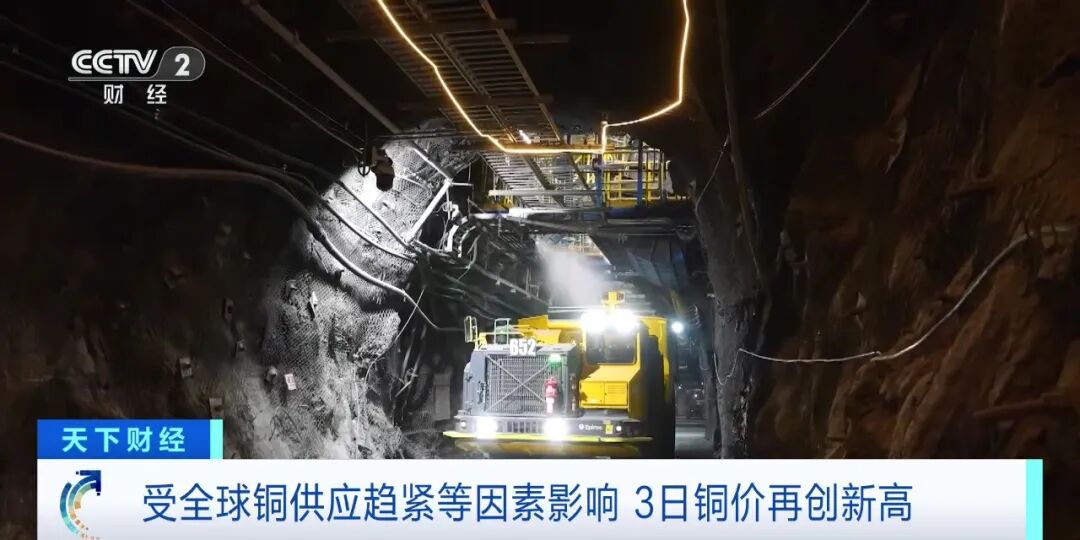
Group 1 - The core viewpoint of the articles highlights that global copper prices have reached historical highs due to tightening supply and concerns over potential tariffs from the U.S. government [1][3] Group 2 - Global copper supply is tightening, with Glencore announcing a reduction in copper production capacity to 850,000 to 875,000 tons for the year, a nearly 40% decrease from 2018 levels [1] - The market anticipates potential tariffs on copper by the Trump administration next year, leading to increased shipments of metals, including copper, to the U.S. to avoid tariffs [1] - There is a strong demand for copper driven by upgrades in electrical grids and power infrastructure, contributing to the rising prices [1] Group 3 - The International Energy Agency projects that even with high production levels, the global copper supply gap will reach 20% by 2035 [3] - Goldman Sachs forecasts that copper prices will enter a new high-price trading phase starting next year [3]
国网江苏电力:以高质量党建引领公司发展新跨越
Zhong Guo Neng Yuan Wang· 2025-12-05 01:04
Core Viewpoint - The implementation of high-quality party building is essential for guiding the high-quality development of State Grid Jiangsu Electric Power Company, as outlined in the recent notification detailing 29 key tasks and 60 specific measures [1][2]. Group 1: High-Quality Development - High-quality development is the primary task for building a modern socialist country, with the company aligning its efforts with the directives from General Secretary Xi Jinping [1]. - The company aims to serve as a model for high-quality party building and development in Jiangsu, responding actively to the decisions of the State Grid Party Group and the Jiangsu provincial government [1][2]. Group 2: Party Building Initiatives - The company is deepening the "Three Full, Three Have, Six Demonstration" party building system and expanding the "Five Transformations" construction path to enhance the quality and scientific level of party building [2]. - The integration of party building with reform and development is crucial for transforming political and organizational advantages into developmental and reform advantages [2]. Group 3: Strategic Implementation - The implementation of the high-quality party building project is a strategic priority for the company, requiring systematic planning and continuous improvement to achieve new developmental milestones [3]. - The company is committed to leveraging the strong leadership of party building to contribute significantly to the national energy sector and the socio-economic development of Jiangsu [3].
“十五五”低碳转型加速,循环经济、低碳能源、国产替代三条主线大有可为 | 投研报告
Zhong Guo Neng Yuan Wang· 2025-12-05 01:01
Core Viewpoint - The environmental protection industry is expected to improve in operational performance and valuation due to policy incentives and market mechanisms during the "14th Five-Year Plan" period, with a focus on recycling economy, green energy, and domestic substitution [2][5]. Group 1: Industry Performance and Valuation - As of December 1, 2025, the Shenwan (2021) environmental protection industry index has increased by 16.67%, ranking 17th among 31 industries [2][3]. - The overall PE of the environmental protection sector is 35.94X, showing a significant increase compared to the first half of 2024 [2][3]. - In the first three quarters of 2025, the total market value of environmental stocks held by funds reached 5.56 billion, accounting for 0.18% of total holdings, primarily focusing on water treatment, waste incineration power generation, and environmental equipment [2][3]. Group 2: Investment Opportunities - Three main investment lines are identified within the environmental protection sector: 1. The recycling economy is expected to release potential, particularly in the fields of recycled plastics and metals. The goal is to achieve an annual utilization of approximately 4.5 billion tons of solid waste by 2030, with a 45% increase in resource output rates compared to 2020 [2][3]. 2. Under the "dual carbon" goals, green energy is anticipated to contribute significantly. The aim is to reduce greenhouse gas emissions by 7%-10% from peak levels by 2035, with a focus on promoting bio-jet fuel and green methanol [3][4]. 3. Domestic substitution and intelligent upgrades are expected to invigorate the sector, particularly in scientific instruments and sanitation equipment, with a notable increase in demand for new energy sanitation vehicles [4][5]. Group 3: Recommended Companies - For the recycling economy, companies such as Yingke Recycling, High Energy Environment, and Fuchun Environmental are recommended [5]. - In the green energy sector, key recommendations include Xingrong Environment, Hongcheng Environment, and Hanlan Environment, with additional attention to Jiaao Environmental and Wangneng Environment [5]. - For domestic substitution, companies like Xuedilong, Juguang Technology, and Puni Testing are highlighted as having significant investment value [5].
煤矿不只产煤,未来还将“反向充电”?矿区绿电替代正加速
Zhong Guo Neng Yuan Wang· 2025-12-05 00:43
Core Insights - The coal mining industry has significant electricity consumption across various production stages, with large mines consuming tens of millions to over a hundred million kilowatt-hours annually [1][2] - The introduction of high-end equipment and the promotion of renewable energy are expected to lead to cleaner and more efficient coal production, enhancing profitability for coal companies [1][4] Electricity Consumption in Coal Production - Coal mining involves substantial electricity usage in processes such as underground transportation, ventilation, and equipment operation, with annual consumption for a mine like Zhongmei Shaanxi Dahuai reaching 82.16 million kilowatt-hours [2][3] - In 2022, the comprehensive electricity consumption for large coal enterprises in China was 23.7 kilowatt-hours per ton of raw coal, marking a 3% increase year-on-year [2] Energy Efficiency and Technological Advancements - Energy-saving transformations in coal mining should focus on low-carbon electricity alternatives, equipment upgrades, and optimized management systems to reduce overall energy consumption [3][4] - Despite an increase in electricity consumption, the comprehensive energy consumption for raw coal production decreased by 12.2% to 7.9 kilograms of standard coal per ton, indicating improvements in energy efficiency [3][4] Transition to Electrification and Automation - The shift towards electrification and automation in coal mining is leading to a transformation in energy consumption patterns, moving from traditional fuel-intensive methods to more electric-driven processes [4][5] - The rise in electricity usage reflects a growing reliance on electric equipment and transportation systems within coal production [4] Renewable Energy Integration - Coal companies are increasingly exploring opportunities in wind and solar energy, with firms like China Shenhua establishing multiple renewable energy companies [4][5] - By the end of 2024, approximately 2 million hectares of land from coal mining subsidence areas will be available for renewable energy projects, facilitating the integration of green electricity into mining operations [5] Challenges in Renewable Energy Adoption - While the transition to renewable energy is underway, the current reliance on green electricity in mining operations remains low, primarily supporting transportation and heating needs [6] - Further optimization of power supply stability and continuity is necessary to meet the high-load demands of mining production [6]
