
Zhong Yang Ji Wei Guo Jia Jian Wei Wang Zhan

Search documents
理论视野丨勇于面对风高浪急甚至惊涛骇浪的重大考验
Zhong Yang Ji Wei Guo Jia Jian Wei Wang Zhan· 2026-01-15 00:04
Group 1 - The core viewpoint emphasizes that China's development during the "14th Five-Year Plan" period is influenced by profound international changes, presenting both strategic opportunities and risks, necessitating a strong sense of confidence and proactive spirit to navigate challenges [2][3][4] - The leadership of the Communist Party of China (CPC) is identified as the fundamental guarantee for overcoming difficulties and risks, with a focus on the importance of unity and strong political will [3][4] - The CPC's commitment to self-revolution and strict governance is highlighted as essential for maintaining its strength and addressing historical challenges, showcasing its unique approach to party building [5][6] Group 2 - The connection with the people is emphasized as a vital source of strength for the CPC, asserting that the party's legitimacy and ability to overcome obstacles stem from its commitment to serving the people [7][8] - China's economic strength is noted as a significant foundation for addressing challenges, with the country now being the second-largest economy globally and possessing a comprehensive industrial system [9][10] - The spirit of struggle is presented as an intrinsic quality of the Chinese nation, with historical context provided to illustrate the importance of perseverance and resilience in achieving national rejuvenation [11][12] Group 3 - Strategic determination and bottom-line thinking are deemed crucial for navigating the complex global landscape, with an emphasis on maintaining focus on national development while addressing external pressures [12][14] - The concept of building a community with a shared future for mankind is introduced as an international initiative, advocating for global cooperation in the face of common challenges [15][16] - The CPC's commitment to fostering a peaceful and prosperous world through collaboration and opposition to unilateral actions is reiterated, highlighting its role in global governance [16][17]

学有所悟丨从抓作风入手推进全面从严治党
Zhong Yang Ji Wei Guo Jia Jian Wei Wang Zhan· 2026-01-15 00:04
Group 1 - The core idea emphasizes the importance of strict party governance and the implementation of the Central Eight Regulations to improve party conduct and combat corruption [1][5] - The Central Commission for Discipline Inspection's report highlights the need for continuous education and responsibility enforcement to maintain long-term effectiveness in party conduct [1][4] - The historical impact of the Central Eight Regulations since their introduction in 2012 is noted, marking a significant change in party governance and public perception [1][3] Group 2 - Xi Jinping's leadership is characterized by personal adherence to the Central Eight Regulations, setting an example for party members and fostering a culture of accountability [2][4] - The report outlines the systematic approach to addressing issues of extravagance and corruption, emphasizing the importance of thorough learning, inspection, and rectification [3][4] - Continuous monitoring and strict enforcement of regulations are crucial in combating corruption and maintaining party integrity, with a focus on transparency and accountability [4][5] Group 3 - The need for long-term strategies to prevent the resurgence of undesirable practices is highlighted, advocating for a combination of immediate reforms and sustainable institutional frameworks [5][6] - The establishment of specific regulations and mechanisms to reduce bureaucratic burdens on grassroots levels is part of the ongoing efforts to improve party conduct [5][6] - The commitment to ongoing improvement in party conduct is framed as a perpetual theme, essential for the success of national modernization and rejuvenation efforts [6]
持续整治形式主义 推动为基层减负
Zhong Yang Ji Wei Guo Jia Jian Wei Wang Zhan· 2026-01-15 00:04
Core Viewpoint - The emphasis on reducing formalism and bureaucratism is crucial for alleviating burdens on grassroots levels and ensuring effective implementation of the Party's directives during the "14th Five-Year Plan" period [1][2][3] Group 1: Key Actions and Strategies - The central meeting highlighted the need to combat formalism and bureaucratism, which are seen as major obstacles to achieving the Party's mission in the new era [1][2] - The focus will be on enhancing political responsibility and historical mission awareness among Party members and officials to ensure practical actions align with the Party's decisions [1][3] - Various regions, such as Tibet and Gansu, are implementing strategies to address the root causes of increased burdens on grassroots, emphasizing the importance of correct performance evaluation and discipline education [2][4] Group 2: Specific Measures and Initiatives - The Hebei Provincial Commission is conducting research to address issues related to digital governance formalism, identifying eight key areas for supervision to improve service efficiency [2][4] - The integration of technology is being prioritized to streamline processes, with initiatives like the "cloud hall" for government services aimed at breaking down data barriers and enhancing data sharing [4] - Continuous efforts will be made to promote effective governance through a closed-loop process that identifies problems, targets solutions, and ensures long-term management [4]
持续深化群众身边不正之风和腐败问题集中整治
Zhong Yang Ji Wei Guo Jia Jian Wei Wang Zhan· 2026-01-15 00:04
Group 1 - The core message emphasizes the need for a steadfast approach to anti-corruption efforts, ensuring that corrupt individuals have no place to hide, and focusing on the eradication of both minor and major corruption [1] - The 2026 key work plan includes the continuous deepening of the rectification of improper conduct and corruption issues that affect the public [1] - The importance of aligning with the spirit of the important speech by General Secretary Xi Jinping is highlighted, with a commitment to fight for the people and address persistent issues of corruption [1] Group 2 - The central role of disciplinary inspection and supervision agencies in addressing improper conduct and corruption is underscored, with a focus on holding responsible parties accountable [2] - Emphasis is placed on addressing common issues and deep-rooted contradictions in various sectors, ensuring that the interests of the public are prioritized [2] - The need for a systematic approach to governance and the establishment of a robust grassroots supervision system is highlighted to maintain public interest [2] Group 3 - The direct impact of corruption on the public is acknowledged, with a call for rigorous investigation into issues that the public despises, ensuring tangible benefits for the people [3] - Continuous national rectification projects are to be implemented, focusing on employment, social security, housing, and healthcare to enhance public welfare [3] - A commitment to maintaining a high-pressure stance against corruption, particularly in areas such as embezzlement and misappropriation, is emphasized [3] Group 4 - The role of disciplinary inspection agencies in achieving visible results from concentrated rectification efforts is stressed, with a focus on impactful cases that resonate with the public [4] - The importance of public participation and supervision in the rectification process is highlighted, along with the need for targeted, project-based solutions to recurring issues [4] - A systematic approach to governance is advocated, addressing the underlying causes of corruption through reforms and enhanced regulatory frameworks [4] Group 5 - The establishment of a collaborative mechanism for supervision and accountability is emphasized, ensuring a collective effort in addressing public concerns [5] - The focus on grassroots corruption, particularly in rural areas, is highlighted, with a commitment to strengthening grassroots supervision capabilities [5] - The need for timely detection of issues and effective corrective measures is underscored to enhance the quality and effectiveness of grassroots disciplinary inspection work [5]
增强巡视监督震慑力穿透力推动力
Zhong Yang Ji Wei Guo Jia Jian Wei Wang Zhan· 2026-01-15 00:04
Core Viewpoint - The article emphasizes the importance of political supervision through inspections, highlighting the need for enhanced effectiveness and comprehensive development in the context of the 20th Central Commission for Discipline Inspection's fifth plenary session [2][3]. Group 1: Inspection Objectives and Strategies - The main task of inspections is to identify issues, focusing on political aspects to drive problem resolution and promote reform and development [3][5]. - Inspections will prioritize the implementation of important speeches and directives from Xi Jinping, particularly targeting key leadership and areas of concern [3][4]. - A comprehensive approach will be adopted, utilizing various inspection methods to thoroughly identify problems and risks [3][4]. Group 2: Coordination and Integration - There will be a focus on strengthening vertical and horizontal coordination in inspections, ensuring that inspections are integrated with other supervisory functions [4][5]. - The establishment of effective mechanisms for collaboration among relevant departments will be prioritized to enhance the overall impact of inspections [4][5]. - The aim is to create a cohesive inspection network that effectively addresses issues at all levels, including grassroots [5][6]. Group 3: Accountability and Rectification - The article stresses the importance of accountability in rectifying issues identified during inspections, with a focus on ensuring genuine and thorough corrections [6]. - A comprehensive management system for rectification will be developed, emphasizing the need for continuous oversight and evaluation of corrective actions [6]. - The implementation of a dual feedback and assessment mechanism will be explored to enhance the effectiveness of the rectification process [6].
深刻把握目标任务 坚决落实全会部署读懂二十届中央纪委五次全会公报中的新论断新部署
Zhong Yang Ji Wei Guo Jia Jian Wei Wang Zhan· 2026-01-15 00:04
Core Points - The Fifth Plenary Session of the 20th Central Commission for Discipline Inspection of the Communist Party of China was held from January 12 to 14, 2026, focusing on the implementation of Xi Jinping's thoughts and the strategic deployment for the upcoming "15th Five-Year Plan" [1][2] - The session emphasized the significant achievements in strict party governance over the past year and outlined tasks for 2026, reinforcing the importance of political supervision and anti-corruption efforts [2][3] Group 1: Political Supervision and Governance - The session highlighted the necessity of effective political supervision to ensure the implementation of major decisions made by the Central Committee, with a focus on specific, precise, and regular oversight [3][4] - The Central Commission reported that over 250,000 violations of the Central Eight Regulations were addressed in 2025, with more than 320,000 individuals receiving criticism or disciplinary action [5][6] Group 2: Anti-Corruption Efforts - The anti-corruption campaign has seen significant results, with 65 senior officials investigated in 2025 and nearly 790,000 cases opened by disciplinary inspection agencies [5][6] - The "Sky Net 2025" operation successfully repatriated 782 fugitives and recovered 23.657 billion yuan in illicit funds [5][6] Group 3: Institutional Reforms and Regulations - The session underscored the importance of institutional governance, emphasizing the need to confine power within a regulatory framework to enhance party discipline and governance [9][10] - Continuous improvement of internal regulations and strict enforcement are deemed essential for maintaining the party's integrity and effectiveness [9][10] Group 4: Future Directions and Responsibilities - The session called for a unified approach among party members to align with the Central Committee's strategic goals, particularly in the context of the "15th Five-Year Plan" [7][8] - Emphasis was placed on the need for party members to enhance their sense of mission and responsibility, ensuring that actions align with the party's objectives [7][8]
书记谈丨推动树立和践行正确政绩观
Zhong Yang Ji Wei Guo Jia Jian Wei Wang Zhan· 2026-01-15 00:04
Core Viewpoint - The articles emphasize the importance of establishing and practicing a correct view of achievements among party members and cadres, which is essential for promoting high-quality development and addressing the needs of the people [2][3][4]. Group 1: Correct View of Achievements - The correct view of achievements reflects the value orientation of party members and cadres, serving as the ideological foundation for their responsibilities and initiatives [2]. - It is crucial to prioritize the people's needs when creating achievements, ensuring that efforts are directed towards benefiting the public rather than personal gain [3][4]. - The articles highlight the need for a practical approach, emphasizing that achievements must be based on real actions and results rather than superficial or exaggerated claims [4][5]. Group 2: Accountability and Responsibility - Party organizations and government bodies must take on primary responsibility and ensure that regulatory departments fulfill their oversight roles to address urgent issues faced by the public [4][5]. - There is a strong emphasis on the need for party members and cadres to adopt a sense of mission and responsibility, viewing their work as a long-term commitment to future generations [4][6]. Group 3: Discipline and Supervision - The articles stress the importance of strict discipline and supervision to maintain a correct view of power and achievements, with a focus on preventing deviations from established norms [5][6]. - It is essential to monitor decision-making processes and correct any ideological deviations to align with the new development philosophy and high-quality growth [5][6]. Group 4: Addressing Corruption and Misconduct - The articles call for a comprehensive approach to address issues of corruption and misconduct, linking them to deviations in the view of achievements and power [8][9]. - There is a need for effective measures to eliminate the conditions that allow corruption to thrive, including strengthening oversight of key decision-making processes [9][10]. Group 5: Education and Self-Discipline - Continuous education and self-discipline among party members and cadres are necessary to foster a correct view of achievements and ensure compliance with regulations [10][11]. - The articles advocate for a balanced approach that combines strict oversight with supportive measures to encourage proactive and responsible behavior among cadres [12].
时代专论丨以更高标准更实举措推进全面从严治党 为实现“十五五”时期目标任务提供坚强保障
Zhong Yang Ji Wei Guo Jia Jian Wei Wang Zhan· 2026-01-15 00:04
Core Viewpoint - The speeches by General Secretary Xi Jinping at the 20th Central Commission for Discipline Inspection's Fifth Plenary Session emphasize the importance of strengthening the Party's leadership and advancing strict governance of the Party and anti-corruption efforts to ensure the successful implementation of the "14th Five-Year Plan" goals [2][4][12]. Group 1: Political Leadership and Governance - The political leadership and governance provided by strict Party discipline are crucial for the prosperity of the Party and the people [3]. - The effectiveness of Party governance directly correlates with the strength of economic and social development [3][4]. - The Party's self-revolution is closely linked to economic and social progress, highlighting the need for effective governance [3][4]. Group 2: Achievements and Innovations - Since the 18th National Congress, the Party has achieved significant theoretical, practical, and institutional innovations that support the development of the Party and the nation [4][6]. - The implementation of the Central Eight Regulations marked the beginning of strict governance, which has led to a notable reduction in long-standing issues within the Party [6][11]. Group 3: Institutional Development - Strengthening the construction of internal regulations and systems is a long-term strategy for strict governance of the Party [7]. - The Party has focused on enhancing the scientific and rigorous nature of its internal regulations to ensure effective governance [7][18]. Group 4: Challenges and Future Directions - The "14th Five-Year Plan" period presents complex challenges that require higher standards and more practical measures for strict governance [8][10]. - The Party must adapt to the evolving external environment and internal challenges to maintain its leadership and governance effectiveness [9][10]. Group 5: Anti-Corruption Efforts - The ongoing anti-corruption campaign is critical, with a focus on eliminating corruption and maintaining a clean political environment [17][19]. - The Party emphasizes a zero-tolerance approach to corruption, ensuring that all forms of corruption are addressed decisively [17][19]. Group 6: Supervision and Accountability - Strengthening supervision and accountability mechanisms is essential for effective governance and ensuring compliance with Party regulations [18][19]. - The Party aims to create a robust supervisory framework that integrates various forms of oversight to enhance governance effectiveness [18][19]. Group 7: Responsibility and Commitment - The commitment to strict governance is a shared responsibility among all Party members and leaders, emphasizing the importance of accountability at all levels [20]. - Leaders are expected to take ownership of governance responsibilities and ensure that strict governance measures are implemented effectively [20].
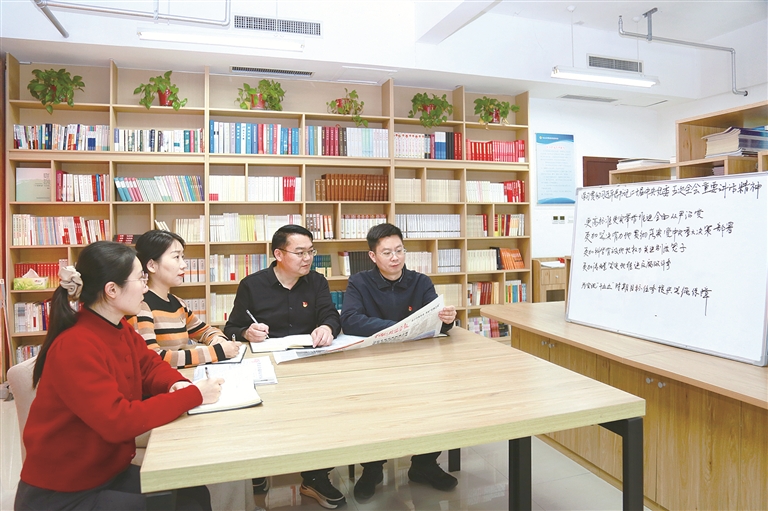
以更高标准更实举措推进全面从严治党与会同志认真学习领会习近平总书记重要讲话精神
Zhong Yang Ji Wei Guo Jia Jian Wei Wang Zhan· 2026-01-15 00:04
与会同志表示,要以习近平总书记重要讲话精神为指引,强化使命意识和奋斗意志,忠诚履职、担当尽 责,紧紧围绕实现党的使命任务,持之以恒强化政治监督,坚定不移正风肃纪反腐,始终做到忠诚干净 担当、敢于善于斗争,为以中国式现代化全面推进强国建设、民族复兴伟业作出更大贡献。 "十五五"时期是基本实现社会主义现代化夯实基础、全面发力的关键时期,全面从严治党面临新的形势 任务。中央纪委五次全会部署2026年各项工作,第一项就是强化政治监督,推动全党凝心聚力实现"十 五五"时期目标任务。 中央纪委国家监委网站 陈昊 文子玉 "'十五五'时期,我国发展战略机遇和风险挑战并存、不确定难预料因素增多,要围绕目标任务做深做 实政治监督,更好发挥全面从严治党政治引领和政治保障作用。"中央纪委委员,陕西省纪委书记、监 委主任王兴宁说,将聚焦"两个维护"健全习近平总书记重要指示批示闭环落实机制,聚焦推动建设现代 化产业体系、因地制宜发展新质生产力、加快高水平科技自立自强等任务要求加强监督检查,把纠治政 绩观偏差问题作为重中之重,突出政治纪律和政治规矩,强化"室组地""纪巡审"协同配合,常态跟踪问 效,及时纠正偏差,打好问题整改硬仗,确保党 ...
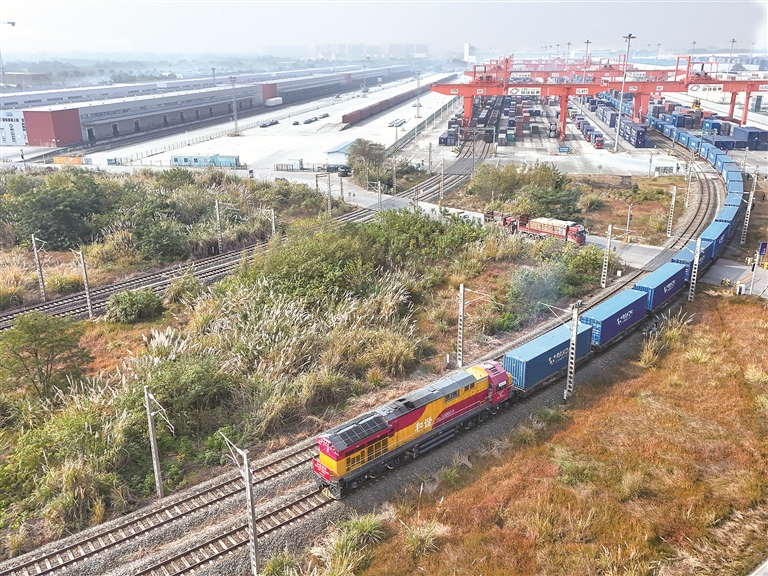
我国进出口连续第9年保持增长贸易强国建设稳步推进
Zhong Yang Ji Wei Guo Jia Jian Wei Wang Zhan· 2026-01-14 13:52
Core Insights - China's foreign trade achieved a total value of 45.47 trillion yuan, marking a growth of 3.8% year-on-year, with exports at 26.99 trillion yuan (up 6.1%) and imports at 18.48 trillion yuan (up 0.5%) [1][2] Trade Performance - The total value of imports and exports reached a historical high, reinforcing China's position as the world's largest trading nation [1][2] - Trade relations expanded to over 240 countries and regions, with growth in trade with more than 190 of them [1][2] - High-tech product exports reached 5.25 trillion yuan, growing by 13.2%, with green products like "new three items" and wind turbine generators seeing increases of 27.1% and 48.7% respectively [1][2] Import Trends - Imports reached a record high of 18.48 trillion yuan, maintaining China's status as the world's second-largest import market for 17 consecutive years [3] - Import growth has been consistent, with a notable acceleration in December, where the growth rate reached 4.4% [3] Economic Resilience - China's foreign trade has shown strong resilience, with a continuous growth streak for nine years, attributed to effective foreign trade policies and a recovering domestic economy [2][4] - The country has established itself as a major trading partner for over 160 countries and regions, increasing trade diversification [4]