Qian Zhan Wang

Search documents
【投资视角】启示2025:中国贵金属材料产业投融资及兼并重组分析(附投融资事件、产业基金和兼并重组等)
Qian Zhan Wang· 2025-05-27 06:13
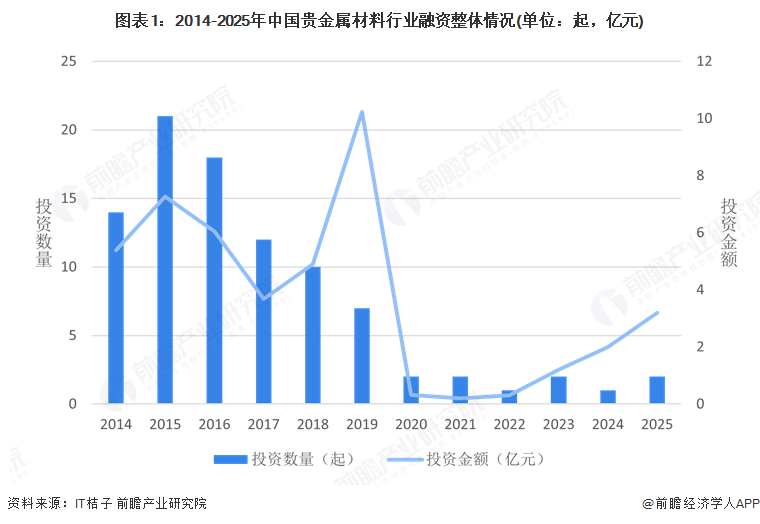
Group 1 - The financing scale of listed companies in the precious metal materials industry is relatively small, but the amount of single financing has shown an upward trend in recent years [1][2] - The number of financing events in the precious metal materials industry has not exceeded two per year in the past five years, but the financing amount has increased from 0.32 billion yuan in 2020 to 2 billion yuan in 2024 [1][2] - As of March 31, 2025, there have been two financing events in the precious metal materials industry, with a cumulative amount of 3.2 billion yuan [1] Group 2 - The average single financing amount from 2014 to 2022 was generally below 50 million yuan, with a notable increase in the last two years, exceeding 150 million yuan in 2024-2025 [2] - The main investment direction in the precious metal materials industry is advanced technology research and development [4] Group 3 - The investment entities in the precious metal materials industry are primarily domestic investment firms, with notable foreign investment activity in precious metal trading platforms [11] - There are two precious metal-related industry funds registered in China, both with management scales of 0-500 million yuan, while funds in downstream application areas are larger, with one managing 5-10 billion yuan [14][15] Group 4 - As of the first quarter of 2025, there are four precious metal materials industrial park projects under construction in China, promoting the development of the precious metal materials industry [20] - The investment amounts for these projects range from 120 million yuan to 601.2 million yuan, with funding primarily from government allocations [21] Group 5 - The mergers and acquisitions in the precious metal materials industry are mainly for horizontal integration, with numerous transactions reported from 2018 to March 2025 [22][24] - The majority of recent mergers and acquisitions involve companies expanding their scale through horizontal integration [22][24]

【衬衫】行业市场规模:2024年中国衬衫行业市场规模约1100亿元 男式衬衫市场占比约59%
Qian Zhan Wang· 2025-05-27 04:10
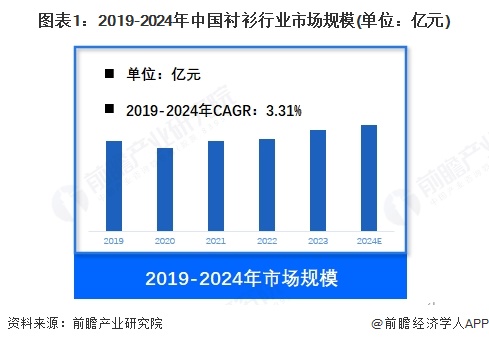
Core Insights - The Chinese shirt industry is projected to reach a market size of approximately 110 billion yuan in 2024, with a compound annual growth rate (CAGR) of 3.31% over the past five years [1][2]. Market Segmentation - The shirt market is primarily divided into men's shirts and women's shirts, with men's shirts focusing on comfort and practicality, while women's shirts emphasize fashion and variety [3]. - In 2024, the men's shirt market and women's shirt and top market are the two largest segments in the Chinese shirt industry, accounting for 59% and 29% of the market share, respectively [3]. Industry Competition - Leading companies in the Chinese shirt industry include Youngor, Seven Wolves, Hongdou, and Jiumuwang, each with distinct product offerings and market positioning: - Youngor is known for high-quality shirts and suits, catering to both business and casual settings [6]. - Seven Wolves is recognized for its fashionable designs and high-quality men's clothing, including shirts and suits [6]. - Hongdou focuses on comfortable and practical casual men's clothing, including shirts and leisure pants [6]. - Jiumuwang is noted for its high-quality shirts and casual wear, serving both business and leisure markets [6].


2025年全球及中国国际集装箱海运及数字化行业发展现状:国际海运服务逐渐进入数字化时代
Qian Zhan Wang· 2025-05-27 03:42
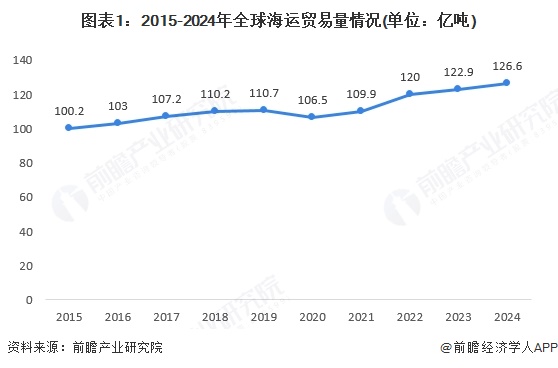
Global Container Shipping Market Analysis - The global shipping trade scale is expected to reach 12.66 billion tons by 2024, showing a stable growth trend after a decline in 2020 due to the pandemic [1] - The share of dry bulk and container ships in global shipping capacity is projected to reach 43% and 14% respectively by 2024 [2] - The global container shipping volume is estimated to be approximately 212 million TEU in 2024, reflecting a year-on-year growth of 5.6% [4] Regional Shipping Insights - In 2024, the East-West routes, North-South routes, and intra-Asian routes are expected to account for 40%, 17%, and 31% of the global container shipping volume respectively [7] China Container Shipping Market Analysis - China's marine cargo volume is projected to reach 4.8 billion tons in 2024, up from 4.577 billion tons in 2023 [10] - The container throughput at Chinese ports is expected to grow to 333 million TEU in 2024, with a historical breakthrough of 300 million TEU in 2023 [13] International Freight Forwarding Market Analysis - The global value added in international freight forwarding is anticipated to decline to $4 trillion in 2024, following a period of increase and subsequent decline due to various market factors [14] Digitalization in Container Shipping - The global international freight service platform market is projected to reach approximately $47.31 billion in 2024, with a significant growth rate expected from 2024 to 2029 [17] - The demand for digital freight forwarding in the maritime sector is estimated to account for about 37.7% of the market in 2024, indicating a growing trend towards digitalization [17] Competitive Landscape of International Freight Service Platforms - The international freight service platform market is categorized into three tiers, with leading companies like China Ocean Shipping, Kuehne+Nagel, and DHL in the first tier, followed by innovative platforms like Meiri Chuxing and Yunquna in the second tier [18]
前瞻全球产业早报:深圳成立首个药械产业出海联合体
Qian Zhan Wang· 2025-05-27 02:17
Group 1 - China's aviation engine "Taihang 2" pure hydrogen gas turbine has achieved a cumulative operation time of over 7000 hours for the first unit and over 5000 hours for the second unit, marking a successful commercialization of the 2MW pure hydrogen gas turbine [2] - The low-altitude economy is driving the popularity of drone pilots, with over 225,000 registered drone pilot licenses in China as of June 2024, and more than 2000 training institutions available [3] - Shenzhen has established its first pharmaceutical and medical device industry overseas joint venture, aiming to create a platform for local companies to connect with global markets [4] Group 2 - China's marine economy has surpassed 10 trillion yuan for the first time, showing a growth of 5.9% compared to the previous year, with the marine engineering equipment manufacturing sector maintaining the largest global market share for seven consecutive years [5] - The first large-scale lithium-sodium hybrid energy storage station in China has been put into operation, with a capacity of 400 MWh and a green energy ratio of 98% [6] - The Yukun high-speed railway's Ningjingli tunnel has been safely completed, contributing to the construction of the railway with 40 tunnels already completed in the Yunnan section [7][8] Group 3 - Yunding Technology has launched an industrial vision intelligent all-in-one machine in collaboration with Ascend, featuring high computing power and supporting over 100 channels of 1080P video processing [9] - A Chinese team has overcome challenges in the large-scale production of third-generation photovoltaic technology, achieving stable mass production of perovskite solar cells [10] - QQ Browser has introduced an AI tool named "AI Gao Kao Tong" to assist students in exam preparation and college application processes [11] Group 4 - Market rumors suggest that Sais Technology's humanoid robot prototype is ready for demonstration, although the company has not confirmed this information [12] - U.S. President Trump has threatened to impose tariffs of 50% on the EU and 25% on Apple, causing declines in Apple stock and U.S. stock futures [13] - Experts have commented on the impracticality of relocating iPhone production to the U.S., citing high costs and potential price increases for consumers [14] Group 5 - Japan's consumer price index for rice has seen a dramatic increase of 98.4% year-on-year in April, marking the highest increase since 1971 [15] - Nissan is considering selling its Yokohama headquarters as part of its restructuring plan, which may incur an additional 60 billion yen (approximately 418 million USD) in costs [16] - Elon Musk praised Google's new AI video generation model, Veo 3, during a developer conference, while also announcing his return to a 24/7 work schedule [17]

【干货】2025年润滑油产业链全景梳理及区域热力地图
Qian Zhan Wang· 2025-05-26 06:27
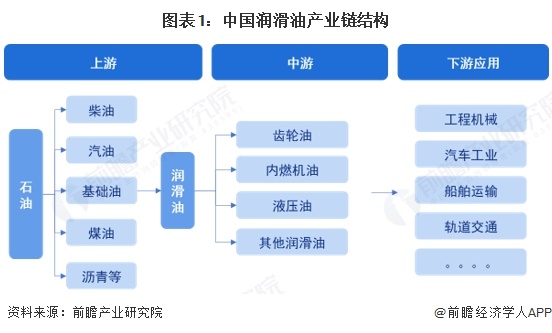
Industry Overview - The lubricating oil industry in China consists of an upstream segment focused on oil extraction, refining base oils, and additive supply, a midstream segment for the production of lubricating oils, and a downstream segment serving various sectors such as engineering machinery, automotive, shipping, and rail transportation [1][3]. Key Companies - Major companies in the upstream segment include China National Petroleum Corporation (CNPC) and China Petroleum & Chemical Corporation (Sinopec), while companies like Longpan Technology and Compton are significant players in the midstream segment [3][9]. - The downstream sector includes automotive manufacturers and engineering machinery companies such as GAC Group and Weichai Power [3]. Regional Distribution - The majority of representative lubricating oil companies are located in eastern coastal regions such as Jiangsu, Zhejiang, and Guangdong, with Beijing housing the highest concentration of these companies [5][6]. Production Capacity - China National Petroleum and Sinopec have the largest production capacities in the lubricating oil sector, each exceeding 1 million tons per year [9][10]. Investment Trends - Recent investment trends in the lubricating oil industry focus on the production of high-end lubricating oils and project upgrades. Sinopec plans to invest RMB 293 billion in 2024 for various upgrading projects, while CNPC has allocated RMB 334.89 billion for similar initiatives [11][13].




2025年中国融资租赁行业商租市场分析:整体市场萎缩,外资企业更具优势【组图】
Qian Zhan Wang· 2025-05-26 05:12
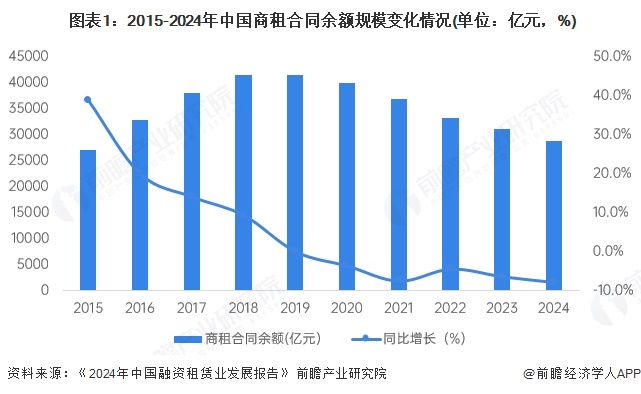
本文核心数据:合同余额;企业数量;投放规模;市场占有率等 ——商租合同余额:2019年以后开始逐年下降 中国商租合同余额在近年来呈现出波动下降的趋势,尤其自2019年以来,余额持续减少,并且增速逐年 放缓。这表明商租市场的需求出现萎缩,可能受到经济放缓、行业调整和市场饱和等因素的影响。尽管 过去几年存在增长,但整体趋势表明,未来商租行业可能面临更大的挑战,企业需加快转型或优化服 务。 ——商租企业数量:企业数量不断下降 转自:前瞻产业研究院 行业主要上市公司:江苏金租(600901.SH)、国银金租(01606.HK)、渤海租赁(000415.SZ)、远东宏信 (03360.HK)、海通恒信(01905.HK)等 中国商租企业数量在过去几年经历了显著增长后,从2022年起出现下降趋势,特别是2023年和2024年上 半年,企业数量持续减少。随着政策的不断变化以及监管不断趋于严格,部分企业退出了市场。进入 2024年,中国租赁业继续处于政策不确定、前景不明朗的大环境下。2024年上半年,全国内资租赁企业 数量没有增加,外资租赁企业数量下降。 ——商租投放规模:近三年连续下降 整体来看,中国商租投放规模呈现先增后 ...
【网络安全】行业市场规模:2024年中国网络安全行业市场规模超950亿元 软件产品占比超过30%
Qian Zhan Wang· 2025-05-26 04:08
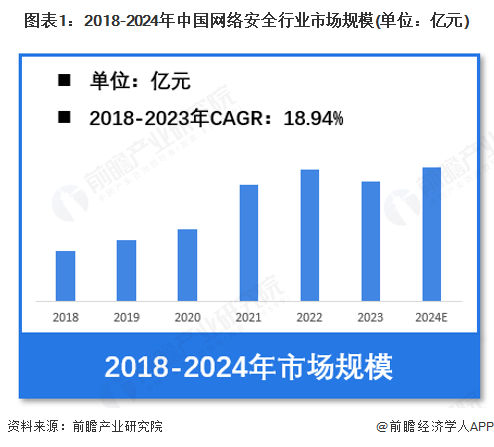
Core Insights - The Chinese cybersecurity industry market size is projected to exceed 95 billion yuan in 2024, following a market size of over 85 billion yuan in 2023, with a compound annual growth rate (CAGR) of 18.94% over the past five years [1][3]. Market Segmentation - The cybersecurity market can be divided into cybersecurity products and cybersecurity services, with cybersecurity software products accounting for over 50% of the market share in 2023, and cybersecurity software products alone making up more than 30% of the overall market size [3]. Industry Competition - The Chinese cybersecurity industry has established several leading domestic companies, including 360, Anheng Information, and Qi An Xin, which have a broad product layout. Popular product areas include firewalls, endpoint management, and vulnerability scanning [5].


重磅!2025年中国及部分省市多模态大模型行业政策汇总及解读(全)政策鼓励多模态大模型应用场景创新
Qian Zhan Wang· 2025-05-26 03:25
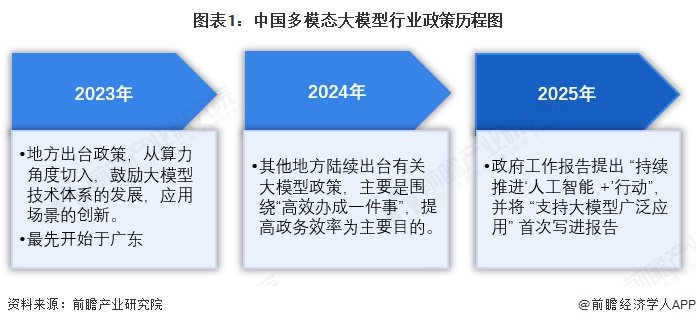
Core Insights - The article discusses the development and support of the multimodal large model industry in China, highlighting various policies and initiatives at both national and local levels aimed at enhancing AI capabilities and applications [1][4][11]. Policy Development Timeline - In 2023, local policies began to emerge, focusing on computational power to encourage the development of large model technology and innovative application scenarios, starting with Guangdong, Beijing, and Shanghai. By 2024, more regions are expected to introduce relevant policies aimed at improving administrative efficiency [1]. - By 2025, government work reports will emphasize the ongoing promotion of the "Artificial Intelligence +" initiative, with a focus on supporting the widespread application of large models [1]. National Policy Summary - The Chinese government has implemented several measures to support the AI industry, particularly multimodal large models, which are seen as crucial products within the AI sector. The State Council has identified embodied intelligence as a future industry, promoting the integration of digital technology with manufacturing and market advantages [4][5]. - Key national policies include the "Guidelines for the Development of Artificial Intelligence Industry" and the "Three-Year Action Plan for Data Elements," which aim to enhance data utilization and promote high-quality economic development through data-driven initiatives [11][13]. Local Policy Highlights - Various provinces have introduced specific policies to support the development of AI large models. For instance, Guangdong aims to develop a comprehensive technology system for large models with trillion-parameter capabilities, while Beijing targets the creation of 3-5 advanced, controllable foundational model products by the end of 2025 [13][15]. - Local initiatives also include the establishment of intelligent computing centers and the promotion of AI applications in various sectors, such as manufacturing, healthcare, and urban governance [13][14]. Key Development Directions - The article outlines that provinces like Guangdong, Beijing, and Shanghai have set ambitious goals for the development of large models, focusing on creating a robust ecosystem for AI innovation and application [15]. - The emphasis is on fostering collaboration between government, industry, and academia to drive advancements in AI technologies and their practical applications across different sectors [15].



预见2025:《2025年中国水下机器人行业全景图谱》(附市场规模、竞争格局和发展趋势等)
Qian Zhan Wang· 2025-05-26 03:11
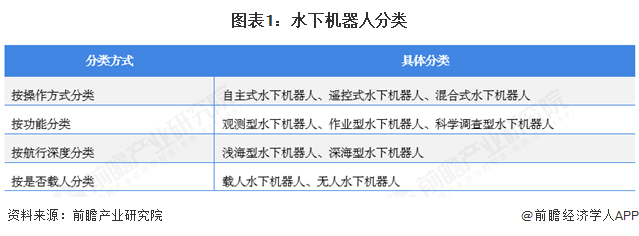
转自:前瞻产业研究院 行业主要上市公司:芯动联科(688582.SH)、申昊科技(300853.SZ)、星网宇达(002829.SZ)、天海防务 (300008.SZ)、亚星锚链(601890.SH)、巨力索具(002342.SZ)等 本文核心数据:中国水下机器人市场规模;中国水下机器人竞争格局 行业概况 1、定义 水下机器人是可潜入水中代替或辅助人类进行水下极限作业的机器人。通过水下目标探测和识别、水下导航 定位、水下通信等高新科学技术,水下机器人可实现水下打捞救援、水下探测、水下资源开采、水下娱乐等 功能。 | 分类方式 | 具体分类 | | --- | --- | | 按操作方式分类 | 自主式水下机器人、遥控式水下机器人、混合式水下机器人 | | 按功能分类 | 观测型水下机器人、作业型水下机器人、科学调查型水下机器人 | | 按航行深度分类 | 浅海型水下机器人、深海型水下机器人 | | 按是否载人分类 | 载人水下机器人、无人水下机器人 | 2、产业链剖析:下游应用场景多元化 水下机器人产业链上游主要是关键零部件和材料的供应商以及核心技术系统研发企业,包括生产单片机、推 进器、声呐、传感器等硬件的 ...


2025年全球纺织发展现状分析:2024年全球纺织行业产值达1.07万亿美元
Qian Zhan Wang· 2025-05-25 05:06
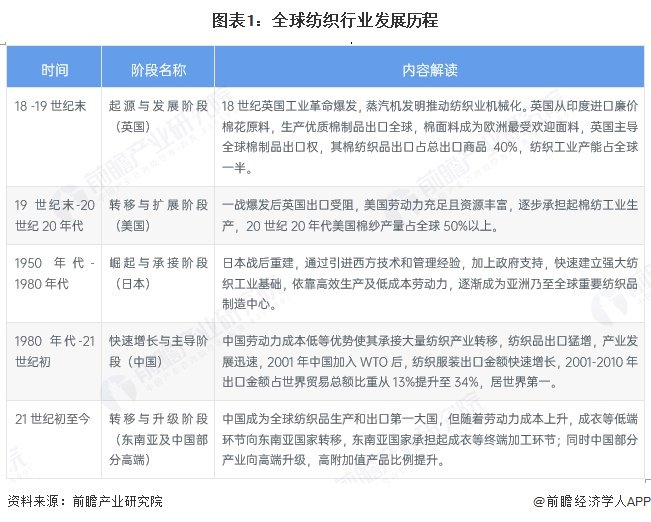
Core Insights - The global textile industry is experiencing a shift towards Southeast Asia, while parts of China's textile sector are upgrading to high-end production [1][4][5] Group 1: Historical Development - The textile industry originated during the 18th century with the British Industrial Revolution, where steam engines significantly increased production efficiency [2] - By the late 19th century, the U.S. began to take over cotton textile production due to labor and resource advantages, with U.S. cotton yarn production exceeding 50% of global output by the 1920s [2] - Japan established a strong textile industry post-World War II through Western technology and government support, becoming a key manufacturing center [2] - China emerged as the world's largest textile producer and exporter in the early 21st century, with textile and apparel exports rising from 13% to 34% of global trade from 2001 to 2010 [2] - Currently, as labor costs rise in China, low-end production is shifting to Southeast Asian countries, while China focuses on high-value products [2][4] Group 2: Market Size and Growth - The global textile industry market value is projected to reach $1.07 trillion in 2024, reflecting a year-on-year growth of approximately 2% [4][5] - The number of companies in the global textile market is estimated at 2.731 million, indicating a significant market presence [5] Group 3: Fiber Production - Global fiber production reached a record high of 124 million tons in 2023, up from 116 million tons in 2022, with polyester fibers accounting for 57% of total fiber production [7] Group 4: Market Structure - The global textile industry exhibits a low concentration level, characterized by a long-tail feature and fragmented competition, with over 3 million registered companies [10] - In the home textile sector, the top three companies hold only 2.31% market share, indicating a highly competitive environment [10] Group 5: Regional Contribution - East Asia dominates the global textile industry, accounting for $717.7 billion, or 66.89% of the total market value [12]