
Guang Xi Ri Bao

Search documents
广西烟火 | 刚柔并济大罗笔
Guang Xi Ri Bao· 2025-12-31 02:19
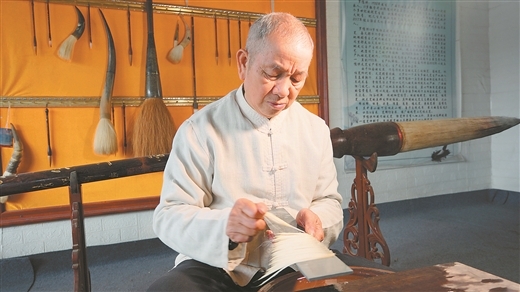
Core Viewpoint - The article highlights the traditional craftsmanship of brush-making in Daluo Village, Nanning, emphasizing the intricate techniques and cultural significance of Chinese brushes, which have been a symbol of Chinese civilization since the Shang Dynasty [5][6]. Group 1: Brush-Making Techniques - The brush-making process involves over 100 steps, including selecting materials, trimming, and assembling, taking more than a month to complete [6][7]. - Key qualities of a good brush are defined as "sharp, even, round, and resilient," which are achieved through meticulous craftsmanship [6][7]. - The "Qifeng" (trimming) and "Gaimao" (modifying hair) techniques are crucial for ensuring the brush's performance and fluidity in writing [7][8]. Group 2: Cultural Heritage and Legacy - Daluo brush-making began in the Qing Dynasty and was recognized as a regional intangible cultural heritage in 2012 [6][8]. - The article describes the dedication of Luo Rugong, a 73-year-old master craftsman, who has been practicing brush-making for 62 years and aims to promote the craft through initiatives like creating the "Gui Bi" brand [8][9]. - The village once thrived with brush-making, but many workshops have closed, leaving only a few artisans like Luo Rugong to preserve this ancient skill [8][9]. Group 3: Personal Journey and Mastery - Luo Rugong's journey includes self-learning calligraphy to enhance his understanding of brush-making, demonstrating the interconnectedness of these two art forms [7][8]. - His craftsmanship is characterized by a deep personal commitment, as he recalls the challenges faced during his apprenticeship, highlighting the dedication required to master this art [7][9].

广西公开2025年中央生态环境保护督察整改总体情况
Guang Xi Ri Bao· 2025-12-31 02:19
Core Viewpoint - The Guangxi Autonomous Region is actively implementing the central ecological environment protection inspection rectification plan, with significant progress made in completing the tasks outlined by the central government [1][2]. Group 1 - The second round of ecological environment protection inspections by the Central Ecological Environment Protection Inspection Team was conducted in Guangxi in 2021, resulting in 39 rectification tasks [1]. - As of December 2025, 29 out of the 39 rectification tasks have been completed, with 10 tasks currently being expedited [1]. - The local government prioritizes the rectification work, integrating it into the annual work reports and ensuring effective implementation of the feedback received from the inspections [1]. Group 2 - Guangxi plans to deepen the study and implementation of Xi Jinping's ecological civilization thought and adhere to the relevant regulations for ecological environment protection [2]. - The region will continue to utilize the special assessment for building a beautiful Guangxi and the leadership's segmented supervision mechanism to enhance pollution prevention and ecological system optimization [2]. - The goal is to promote a harmonious coexistence of political and natural ecologies, thereby strengthening the ecological security barrier in southern China [2].
广西开展社会化展会活动专项整治行动
Guang Xi Ri Bao· 2025-12-31 02:19
12月30日,记者从自治区政府新闻办举行的广西社会化展会活动专项整治行动新闻发布会获悉,广 西将聚焦社会化展会违规办展问题,计划利用三个月左右的时间开展集中整治,通过全链条排查、精准 化整治、长效化监管,严厉打击违规办展、虚假宣传、乱收费等行业乱象,推动全区社会化展会活动安 全、规范、有序举办。 为确保整治行动扎实推进,行动将按照摸底排查、集中整治、整改提高三个阶段分步骤推进。(刘 俊聪) 扫码看发布会实录 本次专项整治行动重点开展5项整治任务:一是整治展会名称使用管理不规范行为,全面排查整治 违规冠以"国家""中国""中华""全国""亚洲""全球""世界""东盟"以及类似含义字样的展会活动。二是整 治虚假夸大宣传行为,包括冒用党政机关等名义办展、仿冒知名展会,误导参展商和消费者,展会规 模、参展商层级、招商承诺、成交预期等宣传与实际严重不符,以及虚构知名企业参展、伪造往届成 果、虚构行业背书等误导行为。三是整治违规收费行为,包括强制捆绑消费、乱收展位费或押金、押金 逾期不退、收费明细不公示、临时加价、价外加价、重复收费、收费不开票等问题。四是整治侵权假冒 违法行为,包括展销假冒伪劣商品、"三无"产品、过期变 ...
千万标箱背后的跃升密码
Guang Xi Ri Bao· 2025-12-31 02:19
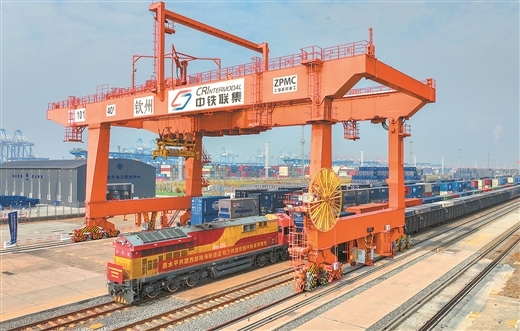
Core Insights - The North Bay Port has achieved significant milestones, including handling its 10 millionth container and launching its 100th container shipping route, marking its entry into the ranks of major container ports [5][10] - The port's container throughput capacity has increased nearly fourfold from 241,000 TEUs in 2017 to 1,104,000 TEUs by 2025, reflecting substantial infrastructure development [5][6] - The port's automation and digital transformation have enhanced operational efficiency, with a 30% improvement in comprehensive operational efficiency due to integrated data systems [7][8] Infrastructure Development - Since 2017, the North Bay Port has constructed and put into operation 18 new berths, with 44 berths now open for use, including 11 new berths added in 2025, setting a historical record [6] - The port's annual throughput capacity has risen from 291 million tons in 2017 to 450 million tons by 2025, showcasing a robust growth trajectory [5][6] - The port's container shipping routes have expanded from 42 in 2017 to 100 currently, with a 58% increase in bulk cargo handling efficiency and a 27% improvement in average shipping times [6] Technological Advancements - The North Bay Port has implemented advanced automation technologies, including remote-controlled operations and automated guided vehicles, significantly improving operational workflows [7][8] - The establishment of a digital platform for real-time data exchange has reduced data processing time from 30 minutes to under 1 minute, enhancing the efficiency of sea-rail intermodal operations [8] Regional Cooperation and Economic Impact - The collaboration between Guangxi and Chongqing has streamlined logistics through the Western Land-Sea New Corridor, reducing transportation times for automotive exports by 7-10 days [10] - The port's sea-rail intermodal services now cover 18 provinces and cities, with a total of 190 routes and over 1,300 types of goods transported, reflecting a significant expansion since 2017 [10][11] - Exports of new energy vehicles, lithium batteries, and photovoltaic products have seen remarkable growth, with increases of 7%, 258%, and 1401% respectively [11]
工业实力大幅跨越 产业能级显著提升
Guang Xi Ri Bao· 2025-12-31 02:19
Group 1 - The core viewpoint of the news is that Guangxi has made significant progress in its industrial economy since the implementation of the "14th Five-Year Plan," establishing itself as a key driver for high-quality economic development [1][2][3] - The total industrial output value is expected to reach 2.7 trillion yuan this year, with a growth of 900 billion yuan over five years, and the industrial added value is projected to exceed 800 billion yuan, representing an increase of over 50% compared to 2020 [1] - The proportion of industrial added value in GDP has surpassed 27%, an increase of nearly 4 percentage points over five years, while industrial tax revenue has risen to 44.4%, up 11 percentage points in the same period [1] Group 2 - The industrial structure has been optimized, with ten pillar industries now established, including non-ferrous metals, steel, and food, with the non-ferrous metals industry expected to exceed 450 billion yuan this year [2] - Emerging industries are growing rapidly, with strategic emerging industries accounting for 23% of the industrial added value, an increase of 7 percentage points over five years, and new product output contributing over 50% to industrial growth [2] - The pace of digital and green transformation has accelerated, with over 5,000 enterprises implementing digital upgrades and 105 national-level green factories established in the past five years [2] Group 3 - The number of large-scale industrial enterprises has increased from 6,500 at the end of 2020 to nearly 11,000, ranking second in the western region and 13th nationwide [3] - The total number of industrial enterprises has grown from 73,000 at the end of 2020 to 120,000, with an average annual increase of about 10,000 [3] - Guangxi aims to focus on ten modern pillar industries during the "15th Five-Year Plan," including non-ferrous metals, advanced steel materials, and artificial intelligence, to build a modern industrial system that reflects its unique characteristics and advantages [3]
陈刚:谋划“十五五”时期社会事业等发展,必须坚持民生为大
Guang Xi Ri Bao· 2025-12-31 01:38
Core Viewpoint - The meeting emphasized the importance of planning for the "14th Five-Year" period in social undertakings, focusing on improving people's livelihoods and aligning with national development strategies [1][2][3] Group 1: Employment and Economic Development - The meeting highlighted the need to implement an employment-first strategy, addressing the opportunities and challenges posed by artificial intelligence, and creating high-quality job opportunities through a modern industrial system and county-level economic development [2] - It was noted that there should be a focus on new employment forms and ensuring employment security for key groups, alongside strengthening labor rights protection [2] Group 2: Health and Social Welfare - The meeting stressed the importance of prioritizing health development, leveraging artificial intelligence, and integrating medical data to enhance healthcare resources and public health systems [2] - It also called for adapting to an aging society by implementing a hybrid management model for elderly care and social welfare, emphasizing digital empowerment and reform [2] Group 3: Trade and Economic Cooperation - The meeting discussed the need to utilize both domestic and international markets, creating new consumption scenarios and models, and developing cross-border e-commerce and new foreign trade formats [2] - It was mentioned that enhancing trade logistics capabilities and strengthening cooperation with ASEAN countries are crucial for economic development [2] Group 4: Strategic Planning and Implementation - The meeting underscored the importance of aligning with national needs and integrating with national development strategies, ensuring that all plans are actionable and feasible [3] - It was emphasized that a coordinated approach across the region is necessary to support the implementation of the "14th Five-Year" plans [3]
广西烟火 | 石上绣花生大千
Guang Xi Ri Bao· 2025-12-30 02:13
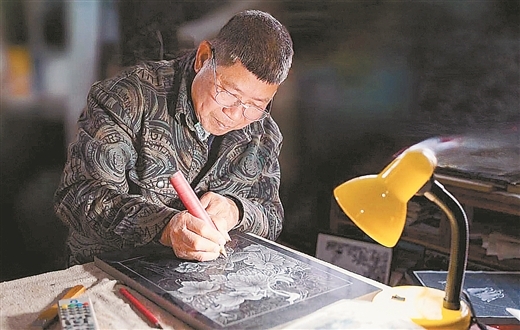
Core Viewpoint - The article highlights the artistry and dedication of Zuo Shiyun, a 68-year-old craftsman specializing in shadow carving, a traditional Chinese art form that has become a representative intangible cultural heritage of Hezhou City. His work not only showcases technical skill but also embodies deep emotional and cultural significance. Group 1: Art Form and Technique - Shadow carving, originating from the Qing Dynasty, utilizes a steel chisel to create images through varying depths and densities of points, resulting in a visual effect akin to black-and-white photography [5][6] - Zuo Shiyun employs a unique gray-green rock from Hezhou, which, when polished, resembles ink and mirror, enhancing the visual appeal of his carvings [5][6] - The technique requires a strong foundation in painting, as the artist must control the force, angle, and density of each chisel stroke to achieve the desired light and shadow effects [5][6] Group 2: Personal Journey and Contributions - Zuo's journey into shadow carving began unexpectedly when he transitioned from geological exploration to studying oil painting, eventually discovering the technique in 1996 [6] - He dedicated 18 years to creating a series of shadow carvings of five sets of Chinese currency, which he views as a tribute to national history and culture [6] - Zuo plans to donate his completed works to a museum, aiming to share this cultural heritage with a broader audience [6] Group 3: Education and Legacy - Zuo teaches shadow carving to children at a local school, emphasizing the importance of passing on this traditional craft to future generations [6][7] - His teaching approach focuses on instilling a sense of joy and appreciation for the art form rather than solely aiming to produce master craftsmen [6][7] - The article concludes with a reflection on the enduring nature of craftsmanship and the cultural significance embedded in Zuo's work, which connects past and present [7]
广西暖冬消费月拉动消费增长
Guang Xi Ri Bao· 2025-12-30 02:13
Core Insights - The "2025 Guangxi Enjoy Winter Consumption Month" series of activities has been launched to stimulate the consumer market through a "government + enterprise + finance" approach, providing citizens with substantial benefits and joy during winter [1][2] Group 1: Consumption Market Performance - In Guangxi, the retail sales of above-designated size units increased by 8.4% from January to November, which is a 1.4 percentage point increase compared to the previous month [1] - The new car sales driven by the automobile purchase subsidy program exceeded 118,000 units, generating over 16.3 billion yuan in sales, making it a key driver of consumption growth [1] - The redemption of shopping and travel consumption vouchers surpassed 750,000, leading to nearly 160 million yuan in goods and oil consumption [1] - Restaurant and accommodation consumption vouchers were redeemed over 510,000 times, directly boosting consumption by 72.35 million yuan [1] Group 2: Product Categories and Sales Growth - Sales of upgraded products such as new energy vehicles, communication equipment, home appliances, cosmetics, and sports entertainment goods increased by 20.7%, 42.6%, 28.5%, 11.5%, and 4.6% respectively [1] - Basic living goods such as daily necessities, tobacco and alcohol, and grain and oil products saw sales growth of 25.7%, 21.5%, and 10.8% respectively [1] Group 3: Future Initiatives - Consumers can access various consumption vouchers through platforms like Cloud Flash Payment, Meituan, Ctrip, Douyin, and One-Key Travel Guangxi, with some cities offering exclusive promotional activities [2] - Guangxi plans to deepen the collaboration between government, banks, and enterprises, promote the integration of commerce, culture, tourism, and sports, and create distinctive promotional consumption activity brands [2] - The region aims to expand new consumption scenarios, develop new business formats, accelerate the construction of commercial circulation facilities, and enhance the level of consumption supply to provide citizens with the benefits of consumption upgrades [2]
广西智慧海洋监管服务平台启动试运行
Guang Xi Ri Bao· 2025-12-30 02:13
Core Viewpoint - The Guangxi Smart Ocean Supervision Service Platform has been launched for trial operation, marking a significant step in the region's digital ocean construction and serving as a crucial support for modernizing marine governance and promoting high-quality development of the marine economy [1] Group 1: Platform Development - The platform is the first provincial-level marine governance information project in China, integrating data from provincial departments and coastal cities [1] - Developed by the Guangxi Academy of Oceanology, the platform has completed hardware procurement, installation, and the development of over 30 billion marine-related data governance tasks and 10 smart ocean application systems [1] - Initial acceptance was achieved on December 5, with plans for final acceptance and official operation by mid-2026 [1] Group 2: Data Integration and Services - The platform integrates data resources across various fields, including marine resources, shipping, fisheries, and disaster prevention, creating a comprehensive regulatory service system covering the Beibu Gulf region [1] - It aims to provide a unified digital foundation for comprehensive marine management, industrial regulation, and ecological protection, injecting a "smart engine" for enhancing the marine economy [1] Group 3: Economic Context and Future Plans - The marine economy in the region is steadily growing, with emerging industries like offshore wind power and deep-sea aquaculture developing rapidly, necessitating more refined marine governance [1] - The trial operation phase will comprehensively test the initial construction results, transitioning the platform from "built" to "usable and effective," and accumulating practical experience for future optimization [1]
再生稻连续两年全年亩产超1000公斤
Guang Xi Ri Bao· 2025-12-30 02:13
Core Insights - The article highlights the transformation of traditional agriculture in Guangxi through the integration of smart farming technologies, particularly in rice production [1][2][3] Group 1: Smart Farming Technologies - The first smart rice farm in Guangxi, Yinnong Farm, utilizes advanced technologies such as Beidou navigation systems for autonomous operations, unmanned rice transplanters, and drones for precise pesticide application [1] - The use of unmanned harvesting machines significantly increases productivity, allowing for the harvesting of dozens of acres in a single day compared to just one or two acres by manual labor [1] Group 2: Yield Achievements - The Yinnong Farm achieved impressive yield results, with early rice yielding 644.4 kg per mu and late rice yielding 407.49 kg per mu, totaling 1,051.89 kg per mu for two seasons [1] - The farm's rice variety "Weiliangyou 8612" has consistently exceeded 1,000 kg per mu for two consecutive years, showcasing the effectiveness of the technology and crop variety [3] Group 3: Future Developments - By 2025, the second phase of Yinnong Farm's construction will expand to 500 mu, with the planting area for "Weiliangyou 8612" increasing from 10 mu in 2024 to 165 mu [3] - The farm employs a fully digital management system for all stages of rice cultivation, including soil monitoring and pest detection, enhancing agricultural efficiency [3] Group 4: Industry Impact - The success of Yinnong Farm has inspired other agricultural cooperatives in the region to adopt smart farming technologies, leading to a broader trend of increased efficiency and productivity in the agricultural sector [3]