Zhong Guo Zi Ran Zi Yuan Bao

Search documents
海南海洋执法开启“智能时代”
Zhong Guo Zi Ran Zi Yuan Bao· 2025-04-29 06:17
Core Viewpoint - The establishment of the Hainan Free Trade Port by the end of this year will transition the island from "within the customs" to "outside the customs," leading to increased demands for marine law enforcement and protection, highlighting the need for the development of new productive forces in marine law enforcement [1][3]. Group 1: New Missions and Challenges - The newly established Hainan Marine and Fishery Supervision Team is responsible for marine and fishery law enforcement, facing challenges such as insufficient coverage, delayed responses, and high risk costs due to reliance on traditional enforcement vessels [3][4]. - The upcoming transition to "outside the customs" will increase the movement of commercial and fishing vessels, putting greater pressure on marine environmental protection and raising the requirements for law enforcement capabilities [3][4]. Group 2: Technological Innovations in Law Enforcement - The evolution of marine equipment technology has led to the emergence of new types of marine targets, such as unmanned platforms and underwater pre-positioned platforms, necessitating a shift in law enforcement methods to address sophisticated illegal activities [4][9]. - The application of unmanned equipment in marine law enforcement is seen as a strategic choice to modernize marine governance and enhance enforcement capabilities [9]. Group 3: Pilot Application Scenarios - Three pilot application scenarios have been proposed for marine law enforcement, including a new model combining drones and unmanned vessels for island enforcement, a rapid verification and response model for undersea cable protection, and a patrol model for fishing ban enforcement using a combination of enforcement vessels and drones [6][7]. Group 4: Strategic Recommendations - To effectively combat illegal marine activities, it is essential to tap into the potential of new productive forces, enhance marine regulatory capabilities, and transition from a labor-intensive to a smart and efficient enforcement model [9].


历经10年,青海北斗卫星导航系统从建设、应用到科普,迈出三大步——从“天边”到“身边”
Zhong Guo Zi Ran Zi Yuan Bao· 2025-04-29 02:08
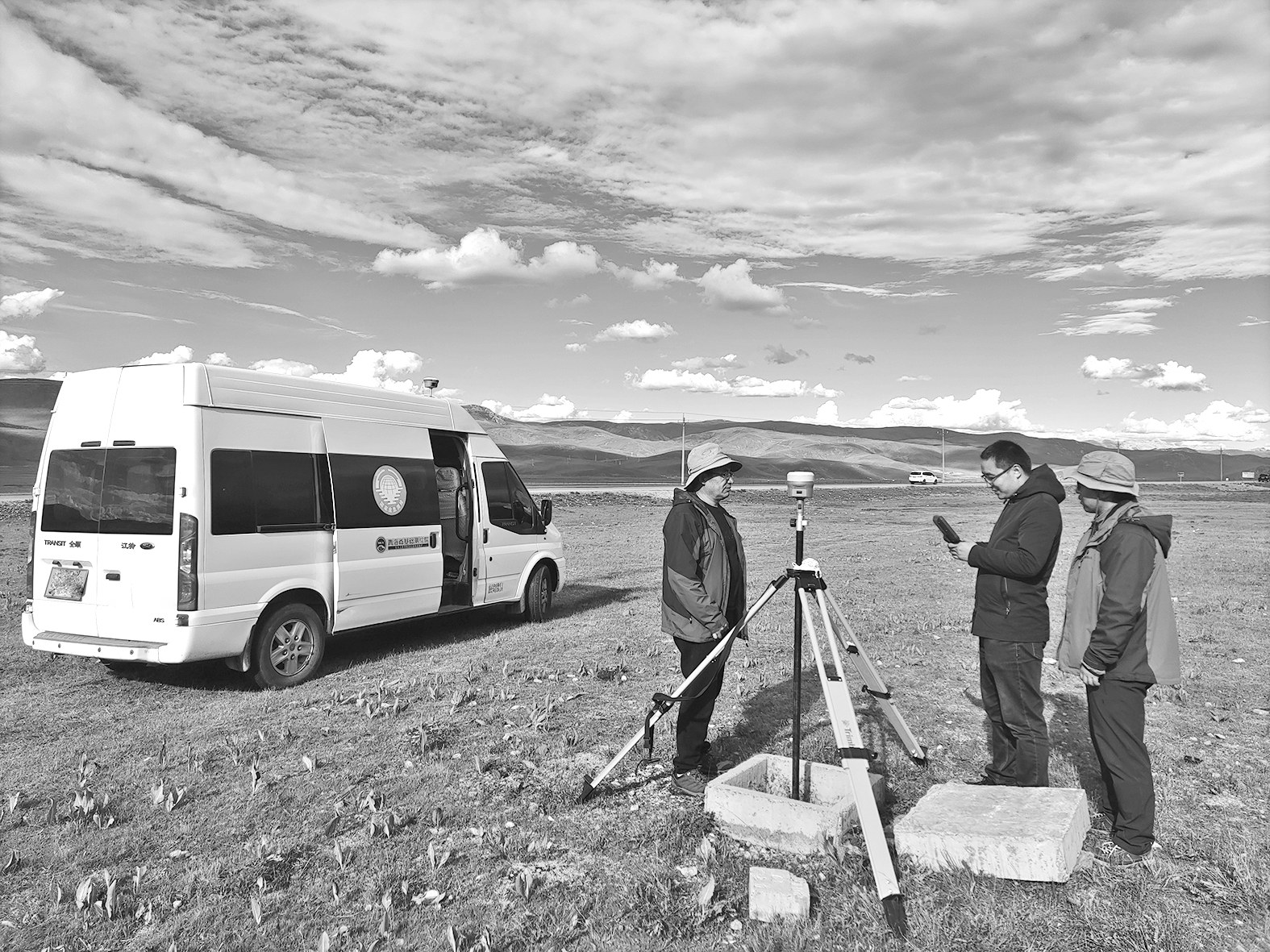
Core Viewpoint - The development of the BeiDou satellite navigation system in Qinghai has made significant progress over the past decade, advancing in three main areas: network construction, application, and popularization [3][16]. Group 1: BeiDou Network Construction - In 2015, the Qinghai Provincial Institute of Basic Surveying and Mapping established a research team to address the urgent need for spatial benchmarks in various sectors, leading to the construction of a BeiDou navigation system [5][6]. - By July 2021, the team completed the establishment of 116 BeiDou satellite navigation positioning reference stations across economically developed areas and major counties in Qinghai, laying the foundation for future applications [6][7]. - The modern surveying benchmark service system in Qinghai has been built around a core of "BeiDou reference station network + digital elevation benchmark model + high-grade gravity network," achieving multiple technological milestones and awards [6][7][8]. Group 2: BeiDou Applications - The BeiDou high-precision benchmark service platform has provided over 2 million spatial benchmark services to 312 enterprises and institutions, replacing traditional control networks and enhancing efficiency [7][10]. - In various applications, such as road construction in Guoluo Prefecture, the integration of BeiDou technology with drones has improved surveying efficiency by over 60% and reduced labor costs by 50% [10][11]. - The BeiDou system has also enhanced meteorological monitoring capabilities in Haidong City, allowing for rapid updates and accurate tracking of weather conditions, thus improving disaster prevention and water resource management [11][12]. Group 3: BeiDou Popularization - The establishment of the Qinghai BeiDou Scientific Popularization Base has facilitated over 80 educational activities, reaching more than 10,000 students and promoting awareness of the BeiDou system [14][19]. - The base aims to cultivate innovation and scientific spirit among students, particularly in remote and ethnic areas, by providing hands-on experiences with BeiDou technology [14][15]. - In 2024, Qinghai's BeiDou team participated in the "15th BeiDou Cup" national youth aerospace technology competition, achieving notable success with multiple awards [14][15].
自动驾驶地图数据智能处理项目启动
Zhong Guo Zi Ran Zi Yuan Bao· 2025-04-29 02:08
Core Viewpoint - The project "Key Technology Research on Intelligent Processing and Innovative Application of Autonomous Driving Map Data" aims to enhance collaboration between ministries and provinces, addressing the needs for rapid and efficient acquisition, updating, and review of geographic information data for intelligent connected vehicles [1][2] Group 1: Project Overview - The project was initiated on January 2025 and involves 14 organizations, including the Ministry of Natural Resources and Mogan Mountain State Capital Holding Group [1] - Key tasks include building rapid review and regulatory capabilities for autonomous driving maps, updating maps from multiple sources, ensuring data security, and enhancing sensor detection capabilities for intelligent connected vehicles [1] Group 2: Industry Implications - The collaboration is seen as a significant step in deepening innovative cooperation between ministries and local governments, leveraging geographic information technology to empower the vehicle networking industry [2] - A dual system of "industry empowerment + safety control" is proposed to balance the convenience of smart travel with national security [2] Group 3: Project Execution Strategy - The project will implement a dynamic assessment and elimination system, establish a shared intellectual property pool, and create a replicable "standard review process + data governance norms" model [2] - The focus will be on addressing industry challenges such as the timeliness of map updates, inconsistent review specifications, and weaknesses in the safety control system for spatiotemporal data [2]
用地图展现绿水青山,自然资源部地理信息管理司负责人解读天地图改版
Zhong Guo Zi Ran Zi Yuan Bao· 2025-04-27 08:33
Core Viewpoint - The recent upgrade of the "Tianditu" (Sky Map) represents a significant transformation from a traditional geographic information service platform to a comprehensive service platform that integrates map services, public education, and natural resource management [1][3]. Group 1: Transformation and Features - The upgraded Tianditu includes new sections titled "Beautiful Nature" and "Beautiful Life," which aggregate specialized geographic information data related to natural resources such as forestry, marine, and geological data [1][2]. - The platform now features 18 specialized topics, including national parks, marine economy, and geological heritage, all integrated on a single geographic base map [1][2]. - Users can access detailed information about specific topics, such as the geographic distribution of national parks and historical data about islands, enhancing the user experience through multimedia content [2][3]. Group 2: User Engagement and Application - As of April 2025, Tianditu has over 1.24 million registered developers and has authorized over 1 million applications, with an average of over 1 billion daily service interface accesses [3][4]. - The platform supports over 5,400 government users and approximately 18,000 enterprises, facilitating the sharing and opening of geographic information resources [3][4]. - Tianditu serves various sectors, including natural resources, water conservancy, and environmental protection, significantly improving government management efficiency [4][5]. Group 3: Data Management and Updates - Tianditu has established a dynamic updating model through collaboration between professional departments and social forces, ensuring the accuracy and timeliness of data resources [5][6]. - The platform has built a network of over 300 county-level nodes, ensuring a unified service system characterized by standardization and rapid updates [6]. - Each year, Tianditu releases new versions and updates its data sets at least once per administrative region, continuously enriching its data resources [6].
印度洋区域环境管理计划研讨会在中国召开
Zhong Guo Zi Ran Zi Yuan Bao· 2025-04-27 07:30
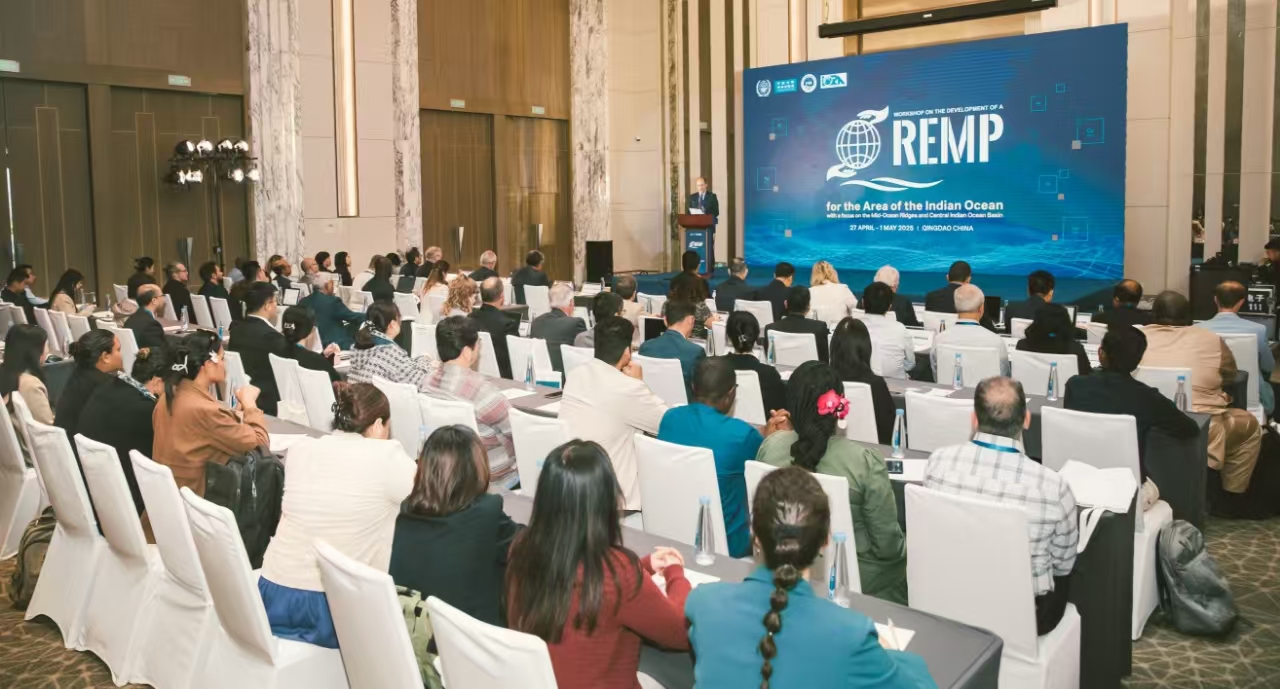
Core Viewpoint - The seminar on the Regional Environmental Management Plan (REMP) for the Indian Ocean, hosted by the International Seabed Authority, aims to discuss sustainable development paths that balance deep-sea mineral resource development and environmental protection [1][2]. Group 1: Seminar Overview - The seminar, lasting five days, features 34 expert representatives from 22 countries, with half of the participants from developing nations [1]. - Discussions will focus on environmental governance issues in the international seabed areas of the Indian Ocean Ridge and the Central Indian Ocean Basin [1]. Group 2: Importance of REMP - The REMP is a crucial initiative by the International Seabed Authority to ensure that resource development is balanced with environmental considerations, marking a significant step from exploration to development [1]. - The Indian Ocean is identified as the last priority area for the establishment of REMP, following the implementation of similar plans in the East Pacific Clarion-Clipperton Zone and the completion of technical work in the North Atlantic and Northwest Pacific regions [1]. Group 3: China's Role and Commitment - China emphasizes the concept of a shared marine destiny and supports global multilateralism, aiming to contribute to the governance of the international seabed under the framework of the International Seabed Authority [2]. - The country advocates for a science-based approach to deep-sea governance and calls for practical cooperation to enhance systematic understanding of the deep sea, promoting coordinated development of deep-sea protection and sustainable utilization [2]. - The seminar reflects China's commitment to fulfilling international responsibilities and contributing to a fair and reasonable international seabed governance order [2].
和人工智能一起驶向大海
Zhong Guo Zi Ran Zi Yuan Bao· 2025-04-27 06:26
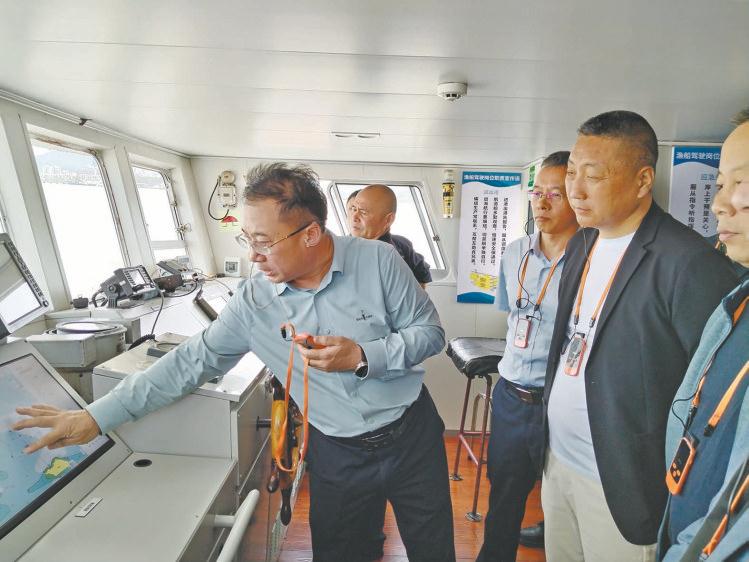
Core Insights - The article discusses the trial of an intelligent auxiliary driving system on the fishing vessel "Zhepu Fishing 68877," aimed at enhancing maritime safety through technology [3][4]. Group 1: Technology and Implementation - The intelligent auxiliary driving system was tested on the fishing vessel "Zhepu Fishing 68877" in Zhoushan, Zhejiang, with a focus on improving safety during navigation [3][4]. - The system provides real-time alerts and automatic controls, such as reducing speed when a potential collision is detected, enhancing the safety of maritime operations [4][5]. - The trial involved over ten experts and fishermen representatives who evaluated the system's performance during the test [4]. Group 2: Safety and Risk Mitigation - Analysis by the China Shipowners Mutual Insurance Association identified high-risk periods for maritime accidents, primarily due to factors like improper avoidance and crew fatigue [3]. - The intelligent driving system is designed to address these safety concerns, particularly during adverse weather conditions or low visibility, thereby reducing the risk of accidents [5]. - Feedback from participants indicated that the system is more user-friendly and responsive compared to traditional alarm systems, which is crucial for enhancing safety [5]. Group 3: Future Developments - The Zhejiang Provincial Marine Economic Development Department plans to expand the pilot program and integrate the intelligent driving system into fishing vessel inspection regulations [5]. - The goal is to promote the application of this technology across the fishing industry, thereby improving overall maritime safety standards [5].
青岛湾海草床生态补偿修复项目启动
Zhong Guo Zi Ran Zi Yuan Bao· 2025-04-27 06:26
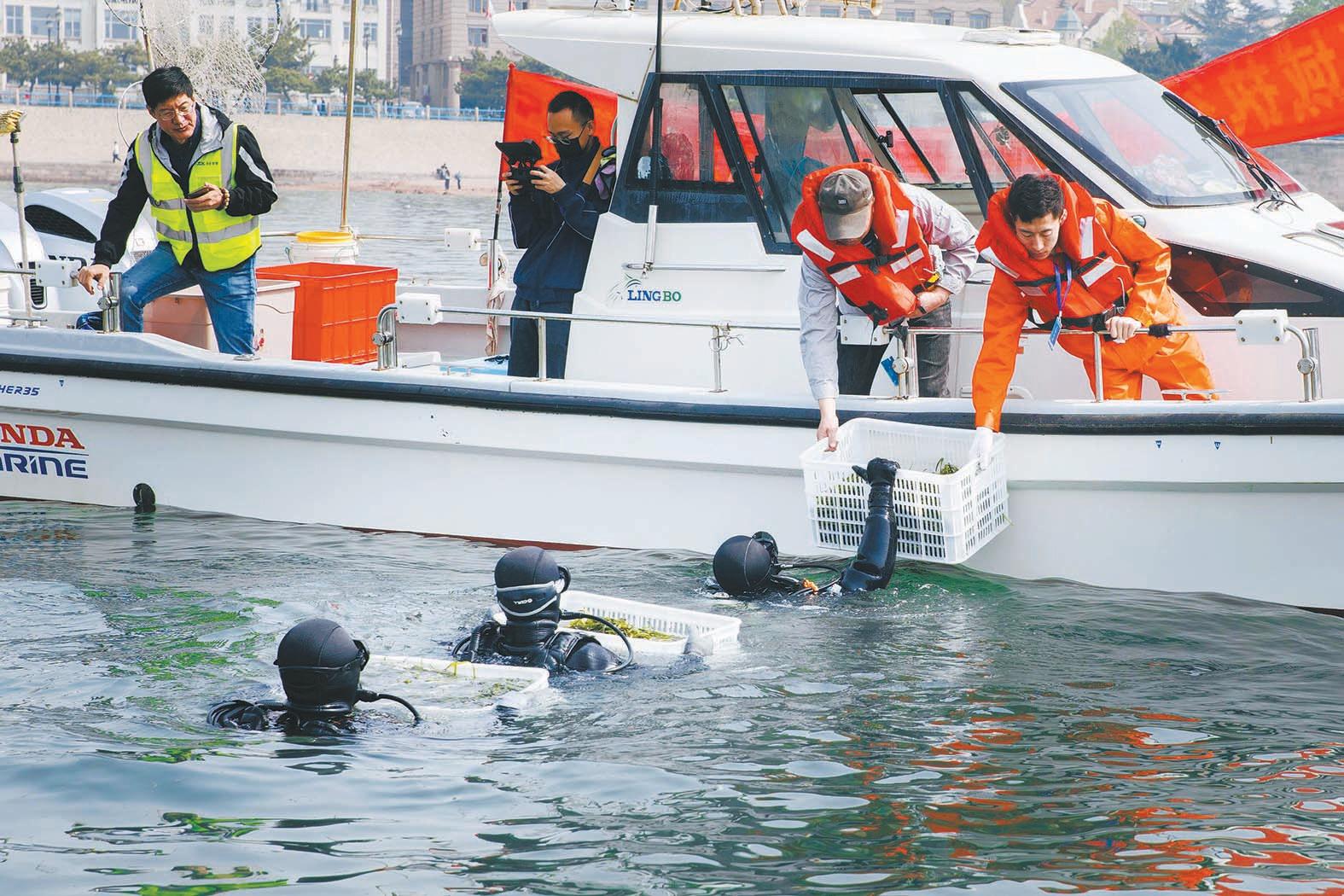
Core Points - The Qingdao Bay seagrass bed ecological compensation and restoration project has officially launched, aiming to enhance marine ecological restoration through legal and scientific collaboration [3][4] - The project will involve the transplantation of nearly 350,000 eelgrass seedlings over an area of 1,750 square meters, contributing to marine biodiversity and carbon sequestration [4] Group 1 - The project is a collaboration between the North Sea Forecast and Disaster Reduction Center, the People's Procuratorate of Qingdao's Shinan District, the People's Court of Qingdao's Shinan District, and the Qingdao Marine Development Bureau [3] - Legal supervision will ensure the project's compliance and support for marine ecological restoration [3] - The initial phase includes quality checks of the seagrass seedlings to ensure they meet ecological restoration standards [3][4] Group 2 - The project aims to establish a diversified funding mechanism for ecological protection and restoration, utilizing public interest litigation compensation funds specifically for seagrass bed restoration [4] - The restoration approach combines carbon sequestration and habitat reconstruction to solidify ecological restoration outcomes [4] - Future initiatives will explore new funding mechanisms that integrate judicial outcomes, ecological restoration, and carbon enhancement [4]
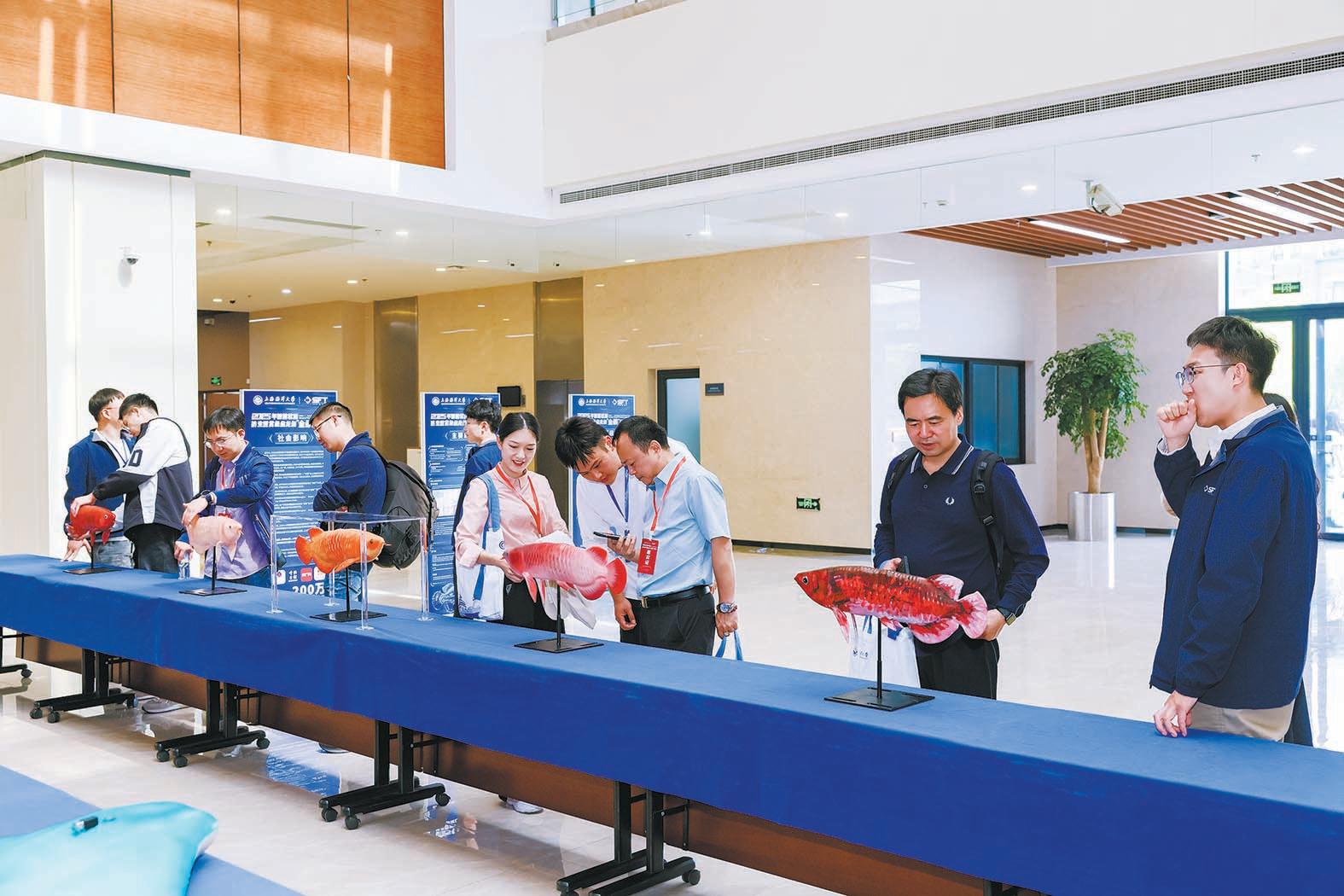
智能软体仿生观赏鱼“金鳞”问世
Zhong Guo Zi Ran Zi Yuan Bao· 2025-04-27 06:26
Core Viewpoint - The launch of the intelligent soft bionic ornamental fish "Jinlin" at Shanghai Ocean University represents a significant advancement in bionic technology, with applications in education, entertainment, and family interaction, serving as a cultural bridge between technology and humanity [2][3] Group 1: Product Features and Technology - "Jinlin" is designed based on the golden dragon fish and incorporates cutting-edge bionic technology, including artificial muscle drives and AI algorithms, allowing it to closely mimic the swimming posture and behavior of real golden dragon fish [2] - The fish features a precise posture control system that enables realistic movements, achieving a lifelike visual effect [2] Group 2: Application and Market Potential - The application scenarios for "Jinlin" are extensive, including aquariums and theme parks, where it enhances the viewing experience and offers unprecedented interactive opportunities for visitors [2] - Experts highlight the broad application prospects of "Jinlin," suggesting potential uses in aquaculture and water environment monitoring, indicating significant commercialization potential [3] Group 3: Industry Impact and Future Development - The development of "Jinlin" is seen as a perfect fusion of aquatic technology and human needs, with plans for collaborative innovation between academia and industry to drive the commercialization of bionic fish technology [3] - The anticipated industrial chain driven by "Jinlin" is expected to create a market scale in the hundreds of billions, injecting new momentum into related industries [3] - The promotion of "Jinlin" in aquariums is expected to reduce the capture of wild fish, contributing positively to biodiversity conservation [3]
划分三个阶段解决五个问题 甘肃有序开展砂石资源专项整治
Zhong Guo Zi Ran Zi Yuan Bao· 2025-04-27 03:53
Core Viewpoint - Gansu Province's Natural Resources Department has issued a "Special Rectification Plan for Sand and Gravel Resources" to enhance management and regulation of sand and gravel resource development and utilization [1][2] Group 1: Five Issues to Address - The plan aims to resolve five key issues, including the improper setting of mining rights outside concentrated mining areas, excessive allocation of mining rights beyond market demand, failure to meet "clean mine" requirements, inadequate processing of mining rights for land and forest use, and insufficient enforcement of ecological restoration and illegal mining practices [1][2] Group 2: Three Stages of Implementation - The implementation is divided into three stages: 1. **Investigation Stage**: Establishing a problem ledger and formulating tailored solutions for each mine 2. **Rectification Stage**: Conducting rectifications according to the plans, enforcing strict planning controls, and adjusting mining areas based on ridge lines 3. **Acceptance Stage**: Local natural resource departments will conduct acceptance checks on sand and gravel mines to ensure compliance with rectification efforts [1][2] Group 3: Three Requirements for Local Departments - Local natural resource departments are required to: 1. Develop work plans tailored to local sand and gravel resource management characteristics 2. Take the lead in coordinating with relevant departments to create a collaborative effort 3. Strictly investigate and penalize illegal activities, ensuring that cases meeting legal criteria are prosecuted [2] Group 4: Goals of the Special Rectification - The overarching goal of the special rectification is to ensure that sand and gravel resource development aligns with mineral resource planning, that concentrated mining areas are rationally set, that mining rights are allocated orderly, that "clean mine" requirements are met, and that green mining practices are fully promoted [2]
世界地球日特别策划|南方海洋实验室:缤纷活动体验海洋
Zhong Guo Zi Ran Zi Yuan Bao· 2025-04-25 06:43
在科学进海岛小学活动中,科普工作者走进万山岛小学,通过《海洋卫士》课程、VR(虚拟现实)深海探秘和手工坊,生动传递红树林保护及海洋生 态知识。 作为粤港澳大湾区海洋环境教育平台,基地长期致力于海洋生态保护事业,通过创新科普形式推动公众参与,助力海洋生态文明建设。此次世界地球 日,基地还受邀参加由中国海洋学会大洋深潜分会及中山大学海洋科学学院主办的第一届全国海洋深潜技术及应用研讨会,分享在海洋环境保护与公众科普 教育方面的实践经验。 未来,基地将持续深化与学校、社区的合作联动,创新海洋环境教育模式,扩大公众参与覆盖面,为珠海市建设"海洋教育示范城市"贡献力量,共同守 护蓝色家园。 4月17日至25日,南方海洋实验室海洋环境教育基地发挥科研平台优势,整合科技设施及专家资源,联合多家机构及教育单位共同举办以"我们的能源、 我们的地球、我们的海洋"为主题的世界地球日科普活动。 活动期间,基地依托珠海海洋科普中心及"珠海云"智能型无人系统母船,打造"科研+教育+体验"三位一体的科普模式,面向公众特别是青少年开展多项 特色活动,传递海洋保护知识,倡导可持续发展理念,推动全社会共同参与海洋环境保护行动。 在"珠海云"智能型 ...