
Zhong Guo Dian Li Bao

Search documents
万里银线 强国脊梁——我国建成世界上规模最大、最复杂的输变电工程
Zhong Guo Dian Li Bao· 2025-12-23 08:21
Core Insights - China's electricity consumption is expected to exceed 10 trillion kilowatt-hours for the first time by 2025, surpassing the total consumption of the EU, Russia, India, and Japan combined for 2024 [1] - The country has built the world's largest and most advanced power transmission network, with a reliability rate of 99.924% [1] Group 1: Development of High Voltage Transmission - The capacity of China's ultra-high voltage (UHV) transmission has increased from 270 million kilowatts at the end of the 13th Five-Year Plan to 340 million kilowatts, a growth of over 25% [2] - The total length of UHV direct current lines has surpassed 40,000 kilometers, marking a 43% increase from the previous period [2] - The UHV alternating current network has expanded significantly, with the length increasing from 12,000 kilometers to over 20,000 kilometers, a growth of over 67% [2] Group 2: Clean Energy Transition - The proportion of clean energy transmitted through UHV direct current channels has risen from less than 40% at the end of the 13th Five-Year Plan to nearly 60% in 2024, with annual clean energy transmission reaching 420 billion kilowatt-hours, a 70% increase [6] - The construction of UHV transmission channels has accelerated, with projects like the first "wind-solar-fire-storage integrated" UHV project and the "desert energy" transmission channel successfully operational [7][8] Group 3: Technological Innovations - China's UHV technology has achieved breakthroughs in various fields, establishing a self-controlled technical standard system [11] - Key technologies have overcome significant challenges, such as high-altitude construction and integrating large hydropower stations [12] - The integration of digital technology has enhanced the efficiency and reliability of the UHV network, with significant improvements in operational decision-making and equipment assessment [12] Group 4: Global Leadership and Export - China has established itself as a global leader in UHV technology, with the unique ±1100 kV UHV direct current transmission technology setting international standards [13] - Successful projects like the Belo Monte UHV project in Brazil demonstrate China's capability to export high-end equipment and technology [13]
广州电力交易中心陈玮:强化监管“治未病”,固牢市场“健康堤”
Zhong Guo Dian Li Bao· 2025-12-23 04:03
随着全国统一电力市场建设以破竹之势快速推进,改革航船已驶入更为辽阔也更为复杂的海域。我们不 仅迈入了触及核心利益与复杂机制的"深水区",也步入了伴随市场规模化运行而风险因素增多的"风险 区",更开拓了在新型电力系统构建中全球尚无成熟经验可循的"无人区"。一些过去在局部或短期试运 行中未曾充分显现的问题,开始逐渐暴露出来。这既包括市场主体在适应新规则时出现的合规意识滞 后、内部管控不足的问题,也涵盖因市场力集中、信息不对称等可能引发的操纵风险与公平性质疑。这 些问题的显现,恰恰是市场从"建起来"到"强起来"、从"试验田"走向"成熟地"过程中不可避免的阵痛与 必经的考验。 二、正视通报:强化监管是为市场健康发展"清障护航" 国家能源局此次通报的五起典型违规案例,涉及发电企业间串通报价、同一集团下属企业集中报价、发 电企业与售电公司串通报价、以及滥用市场力操纵价格等多种类型,覆盖了江西、山东、浙江、江苏等 多个省份的中长期与现货市场。这些问题集中暴露了在市场快速扩容、机制深刻转型的过程中,部分经 营主体市场意识、规则意识、合规意识的欠缺。我们必须清醒认识到: 强化监管"治未病",固牢市场"健康堤" 广州电力交易中心 ...
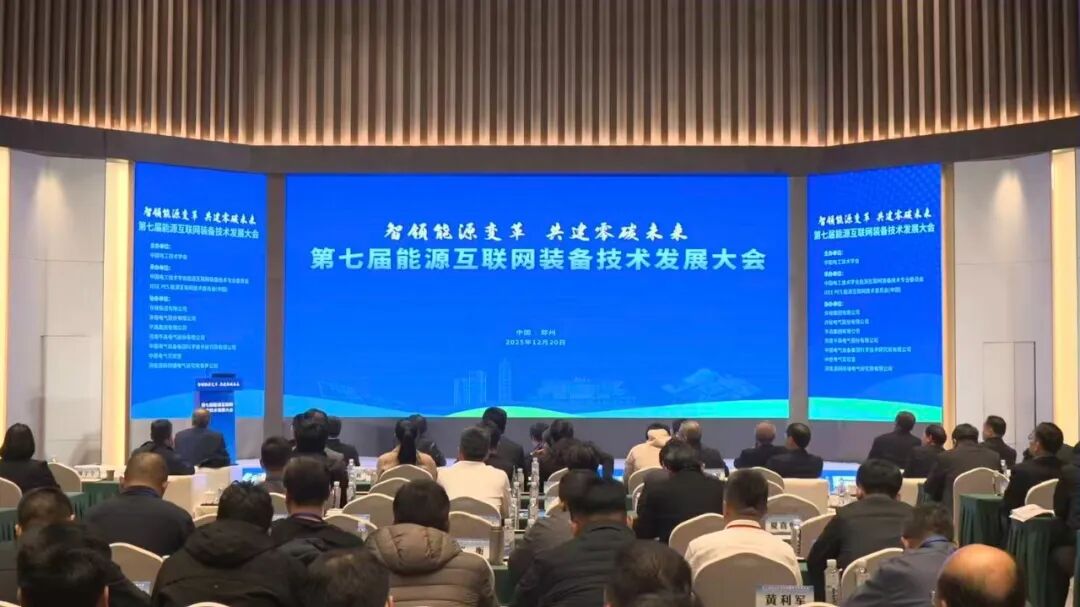
第七届能源互联网装备技术发展大会召开
Zhong Guo Dian Li Bao· 2025-12-23 04:03
Core Insights - The conference focused on building a clean, low-carbon, safe, and efficient new energy system, aligning with the national "dual carbon" goals, and aimed to promote energy technology innovation and industry collaboration [1][6]. Group 1: Conference Overview - The event gathered over 200 representatives from renowned universities, research institutions, state-owned enterprises, and energy equipment companies to discuss the theme "Leading Energy Transformation, Building a Zero-Carbon Future" [2]. - Keynote speeches were delivered by distinguished guests, emphasizing the importance of intelligence and greenness in the energy sector [2]. Group 2: Key Presentations - Academician Qiu Aici presented on the application of new technologies in energy resource development, detailing research on electromagnetic-driven fusion devices [3]. - Tsinghua University’s Vice President Zeng Rong discussed innovations in direct current grid equipment, introducing a new converter solution aimed at industrialization and cost reduction [3]. - Professor Rong Mingzhe from Xi'an Jiaotong University shared advancements in high-voltage direct current interruption technology, which has applications in both civilian and defense sectors [3]. Group 3: Technological Innovations - The conference featured reports on various technological advancements, including a flexible direct current injection testing method and a multi-parameter monitoring system for large-scale lithium battery storage [4]. - The integration of green technologies in power switch equipment was highlighted, focusing on lifecycle sustainability and smart applications [4][5]. Group 4: Industry Contributions - The conference showcased significant technological achievements from companies like Xuchang Electric and Pinggao Group, focusing on zero-carbon goals and energy efficiency solutions [5]. - The event also emphasized the importance of collaboration between academia and industry to drive innovation and meet market demands [2][5].


广州电力交易中心陈玮:强化监管“治未病” 固牢市场“健康堤”
Zhong Guo Dian Li Bao· 2025-12-23 03:45
Core Viewpoint - The National Energy Administration's recent announcement regarding five typical violations in the electricity market reflects a strong commitment to regulating market order and promoting the healthy development of the industry, aiming for a transparent and standardized market environment [1] Group 1: Achievements in Electricity Market Construction - 2025 marks a milestone year in China's electricity market reform, with significant progress made under the goal of establishing a national unified electricity market system [2] - A foundational rule system has been established, forming a multi-layered, multi-category, and multi-functional national unified electricity market [2] - Key developments include the approval of the "Cross-Grid Operating Area Normalized Trading Mechanism" and the launch of continuous settlement trials in the southern regional electricity market [2] Group 2: Challenges and Risks in Market Reform - The rapid advancement of the unified electricity market has led to more complex challenges, including issues related to compliance awareness and internal controls among market participants [3] - Problems such as collusion in pricing and market manipulation have begun to surface, highlighting the need for a transition from a "built" market to a "mature" market [3] Group 3: Regulatory Measures and Their Importance - The five typical violations reported by the National Energy Administration include collusion in pricing among power generation companies and abuse of market power, affecting multiple provinces [4] - Regulatory measures are essential for maintaining market order and preventing systemic risks, with the aim of ensuring fair competition and protecting market integrity [5] - The announcement serves as a warning to all market participants to adhere to established rules and avoid unethical practices [5] Group 4: Collaborative Efforts for Market Integrity - All stakeholders are encouraged to strengthen compliance and internal management systems to foster a culture of integrity and adherence to market rules [6][7] - The establishment of a healthy market culture requires collaboration among regulatory bodies, industry self-regulatory organizations, and market participants [7] - The recent announcement is viewed as a necessary "check-up" for the national unified electricity market, emphasizing the importance of continuous improvement and vigilance against violations [8]
AI+能源,如何“+”出新未来?
Zhong Guo Dian Li Bao· 2025-12-23 03:18
Core Insights - The digital transformation of China's energy and power industry has progressed from "direction exploration" to "system practice" under the guidance of the "dual carbon" goals and the strong drive for a new power system [1] - Experts emphasize the need for collaboration among government, industry, academia, research, and application sectors to overcome challenges in data, algorithms, computing power, talent, standards, and more [1] Group 1: Digital Transformation and AI Integration - Digital technologies have deeply integrated into every aspect of the energy sector, transitioning from reliance on "human resources" to "data intelligence" [3] - Major energy companies like China Huadian and Three Gorges Group have established comprehensive digital systems covering the entire lifecycle from construction to intelligent operation and maintenance [3] - AI applications in the power grid have evolved from basic inspections to complex decision-making processes, enhancing reliability management and power prediction accuracy [4] Group 2: Challenges in AI and Data Utilization - The energy sector faces structural and foundational challenges in AI integration, particularly regarding data sharing mechanisms, standardization, and model reliability [6] - Data quality issues persist, with high-value data being scarce and costly to label, hindering the depth of AI applications [6][7] - The fragmented development of AI technologies leads to resource redundancy and barriers within the industry, limiting overall efficiency and sustainable growth [7] Group 3: Future Directions and Ecosystem Development - A systematic approach is needed to transition AI in the energy sector from "empowerment" to "enabling," focusing on innovation and ecosystem support [9] - The National Development and Reform Commission and the National Energy Administration aim to promote the deep application of over five professional large models and explore numerous empowering scenarios by 2027 [9] - Building an open and collaborative industrial ecosystem and standard system is essential for supporting technology implementation and promotion [9] Group 4: Talent Development and Policy Support - The energy sector requires a significant number of skilled professionals, with a projected talent gap exceeding 1 million in the renewable energy field [10] - Strategies such as industry-academia cooperation and establishing training bases are necessary to address the talent shortage [10] - Policies must be refined to encourage innovation and establish clear safety boundaries and ethical standards for AI applications in the energy sector [10]
全国最长,横跨7省13市,投运!
Zhong Guo Dian Li Bao· 2025-12-22 22:18
Industry News - China National Offshore Oil Corporation (CNOOC) announced that the Bohai Oilfield, the largest offshore oilfield in China, is expected to achieve a cumulative production of over 40 million tons of oil and gas equivalent by 2025, marking a historical high and providing solid support for national energy security and high-quality economic development [3][4]. - The State Council's Work Safety Committee dispatched teams to conduct inspections on illegal mining activities across 12 key regions in China, focusing on the closure and remediation of abandoned mines [4]. - The Ministry of Industry and Information Technology and the Ministry of Ecology and Environment issued a notice to collect typical cases of industrial green and low-carbon initiatives, including "waste-free parks" and "waste-free enterprises" [4]. Company News - The first two units of the Nanning Pumped Storage Power Station, the first pumped storage power station in Guangxi and a major project under the 14th Five-Year Plan, have been successfully put into operation, with a total investment of approximately 8 billion yuan [7][8]. - China General Nuclear Power Group announced that the first concrete pouring for the nuclear island of the second unit of the Guangdong Lufeng Nuclear Power Project has been completed, marking the official start of the main construction [5]. Local News - The world's first methanol dual-fuel intelligent super-large oil tanker, "Kai Tuo," was successfully delivered in Dalian, China, featuring a methanol dual-fuel main engine that significantly reduces carbon dioxide emissions by up to 92% compared to conventional fuels [9]. - The longest heavy-duty truck charging and swapping corridor in China has commenced commercial operations, spanning 2,243 kilometers across seven provinces and cities [9]. - The first 500 kV cross-river transmission tower in Anhui was demolished, marking the completion of its historical mission to make way for new national power projects [11]. - Heilongjiang's electricity export transaction volume for 2026 reached a record high of 14.668 billion kilowatt-hours, with green electricity exports also hitting a historical peak of 3.431 billion kilowatt-hours, representing a year-on-year increase of 19.3% [13]. International News - Japan's largest nuclear power plant, the Kashiwazaki-Kariwa Nuclear Power Station, has received approval to restart operations after being shut down since 2012 due to the Fukushima disaster [14].


从“强制造”到“造生态”:政策市场协同发力推动广东新型储能提速发展
Zhong Guo Dian Li Bao· 2025-12-22 07:45
12月11日,"从政策驱动到市场拉动:打开广东新型储能内需新空间"研讨会在广州召开。来自科研院 所、电网公司、电力交易中心、产业界的专家学者齐聚一堂,围绕广东新型储能产业发展的挑战与机 遇、市场机制创新、出海路径拓展等核心议题展开深度研讨,认为应以"政策驱动+市场赋能+内外需协 同"突破发展瓶颈,推动广东储能产业从"制造先行"迈向"打造生态体系"。 以下为研讨会主要内容和与会专家观点摘要: 自"双碳"目标提出以来,中国能源体系加快向绿色低碳转型迈进,新型储能作为构建新型电力系统的关 键支撑环节,在提升电力系统灵活性、安全性与可再生能源消纳能力方面,发挥着日益重要的作用。 中国能源研究会双碳产业合作分会副秘书长汤泰:习近平主席在联合国气候变化峰会上提出"2035年风 电和太阳能发电总装机容量力争达到36亿千瓦"的目标,为我国能源事业高质量发展擘画了宏伟蓝图、 明确了行动方向。要推动如此体量的新能源成为系统的可信容量,储能的关键作用不可或缺。未来新型 电力系统的构成,很大程度将取决于"储能+新能源"的协同能够解决多少问题,为系统提供多少有效支 撑。 北京市朝阳区环友科学技术研究中心秘书长张頔:广东拥有完备的储能产 ...
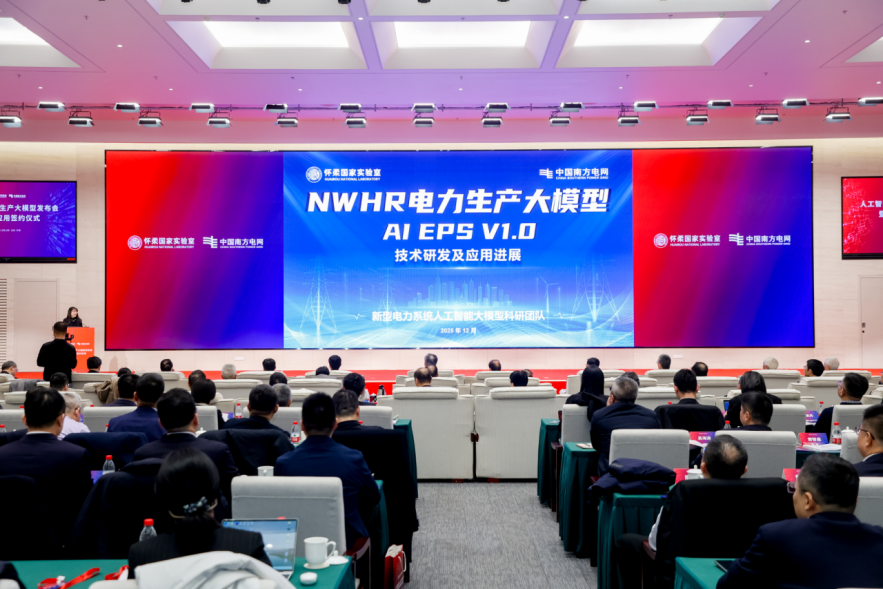
驱动新型电力系统“透明运行”!首个原生电力大模型发布!
Zhong Guo Dian Li Bao· 2025-12-22 07:45
Core Viewpoint - The NWHR Electric Production Model (AI EPS V1.0) has been launched, representing a significant innovation in the electric power system, designed specifically for the unique characteristics of the power industry [2][4]. Group 1: Model Development and Features - The NWHR model is the world's first original electric power model innovated from the underlying architecture, aimed at achieving "transparent operation" in the new electric power system [2]. - The model integrates measurement data, physical laws, and operational regulations at three levels, achieving deep fusion and coordination [4]. - Key technological innovations include real-time perception of the grid, deep understanding and effective application of physical laws, and enhanced risk assessment capabilities [6]. Group 2: Practical Applications and Impact - The NWHR model has been successfully trialed at the Dali Power Supply Bureau of Southern Power Grid, reducing scheduling time from hours to minutes [6]. - The model is expected to increase green electricity generation by over 120 million kilowatt-hours annually and reduce carbon dioxide emissions by approximately 60,000 tons per year [6]. - The development team plans to iteratively optimize the NWHR model during the 14th Five-Year Plan period, focusing on the technical evolution from city-level to provincial and regional grids [6].
人工智能重构全球能源秩序底层逻辑
Zhong Guo Dian Li Bao· 2025-12-22 06:28
Core Insights - The rapid evolution of artificial intelligence (AI) is reshaping the global energy landscape, transitioning from a resource-based order to one centered on data, algorithms, and computing power [2][4] - AI's capabilities are significantly enhancing operational efficiency in the energy sector, with examples such as improved forecasting accuracy and reduced exploration times [2][4] Group 1: AI's Impact on Energy - AI's iteration cycle has accelerated, with parameter scales increasing tenfold every nine months, leading to cognitive abilities that surpass human capabilities in certain areas [1] - AI is enabling real-time predictions for renewable energy sources, drastically reducing operational inefficiencies, such as lowering wind power curtailment rates to below 3% [2] - Major energy companies are developing large-scale AI models to enhance system efficiency and transform operational paradigms [2] Group 2: Economic Implications of Computing Power - Computing power is becoming synonymous with economic output, with a return of 3 to 4 times for every unit invested in computing power [3] - The competition in the energy sector is shifting from asset-heavy investments to a focus on algorithmic efficiency and density [3] Group 3: Global Power Dynamics - The control of AI algorithms is concentrated, with the U.S. holding 85% of global AI frameworks, while Europe and China dominate in specific energy technologies and manufacturing capacities [4] - The future energy order will be defined by those who can integrate energy and computing power effectively, potentially relegating traditional energy producers to mere "energy subcontractors" [4] Group 4: Challenges in AI Adoption - The energy sector faces significant challenges in harnessing AI, including high computing power demands leading to increased energy consumption and carbon emissions [4] - Data silos hinder the training and effectiveness of AI models, with less than 30% data sharing across the energy system [5] - Supply chain security is a concern, particularly regarding reliance on foreign technology for AI hardware and software [6] Group 5: Strategic Pathways for Advancement - To overcome existing challenges, the industry must focus on creating a unified data and computing ecosystem, enhancing collaboration between computing resources and renewable energy [7] - Establishing a secure and trustworthy energy data-sharing environment is crucial, necessitating standardized data protocols and advanced technologies for data privacy [8] - Strengthening domestic capabilities in AI technology and reducing dependency on foreign systems is essential for long-term sustainability [8]
湖北实现首个10千伏山区微电网“黑启动”
Zhong Guo Dian Li Bao· 2025-12-22 05:31
Core Viewpoint - The successful "black start" test of a 10 kV rural distribution network in Hubei marks a significant technological breakthrough for enhancing grid resilience and smart energy transformation in rural areas [1][2] Group 1: Test Details - The "black start" command was executed in less than 100 milliseconds, restoring power to the previously disconnected area [1] - The test site, Hejiagou Village, has faced challenges due to a long supply radius of 14.23 kilometers since the 10 kV line was put into operation in 1987, leading to low voltage issues affecting residents [1] - The test demonstrated the ability of the distribution network to autonomously restore power and stabilize voltage and frequency after a complete outage [1] Group 2: Technological Advancements - The recent test is a continuation of Hubei Electric Power's exploration of grid-forming energy storage technology, achieving a significant improvement in power restoration speed from 33 minutes in June to milliseconds [2] - The previous test in Shayang validated the feasibility of grid-forming energy storage at the transmission level, while the recent test extends this capability to the distribution network, marking a transition from merely supplying electricity to providing high-quality electricity [2] - The test confirmed the technical feasibility of microgrid systems to operate independently and stabilize voltage under fault conditions [2]