
能源清洁低碳转型

Search documents
锦西石化:将全会精神转化为行动实践
Zhong Guo Hua Gong Bao· 2026-02-25 02:06
Group 1 - The core message of the articles emphasizes the commitment of Jinxin Petrochemical to transform the spirit of the 20th Central Committee into practical actions for building a green and intelligent new energy system and becoming a model for sustainable development [1][2] - Jinxin Petrochemical has established an "online + offline" learning matrix to facilitate the understanding of the "14th Five-Year Plan" and the important speeches of General Secretary Xi Jinping, ensuring comprehensive training for party members and cadres [1] - The company actively promotes the core significance of the Central Committee's spirit through a "visual + all-media" communication matrix, producing thematic promotional videos to make the content more accessible to all employees [1] Group 2 - Jinxin Petrochemical is closely integrating the spirit of the Central Committee with the construction of a new energy system and high-quality development, focusing on the requirement for "promoting clean and low-carbon energy transformation" [2] - The company has completed five key energy-saving projects, including enhancing heating furnace efficiency and low-temperature heat recovery, and plans to develop green methanol and waste plastic recycling projects during the "14th Five-Year Plan" [2] - The company is committed to building a customized 5G network across the plant and aims to establish a comprehensive environmental protection facility system, including wastewater treatment and VOCs governance, in line with the "dual carbon" goals [2]
中国电气装备集团旗下的7家上市企业在细分领域的专业优势明显!
Sou Hu Cai Jing· 2026-02-24 05:57
Core Viewpoint - China Electrical Equipment Group Co., Ltd. is a key state-owned enterprise responsible for domestic power equipment replacement and energy transition, formed through the restructuring of several companies in 2021 [1] Group 1: Company Overview - China Electrical Equipment Group is headquartered in Shanghai and includes seven listed companies, covering the entire industrial chain in the power transmission and distribution equipment sector [1] - The group plays a significant role in national strategic tasks such as the localization of power equipment and the transition to clean and low-carbon energy [1] Group 2: Key Companies - China XD Electric (stock code: 601179) specializes in R&D and manufacturing of high, ultra-high, and extra-high voltage transmission and distribution equipment, being the only domestic company capable of producing complete sets of transmission and transformation equipment [3] - XJ Electric (stock code: 000400) is a leader in extra-high voltage converter valves and DC control protection systems, with a market share exceeding 40% for converter valves and 30-40% for control protection systems [5] - Pinggao Group (stock code: 600312) is a leading enterprise in the extra-high voltage AC switch sector, focusing on the R&D and manufacturing of gas-insulated switchgear (GIS) across voltage levels from 500kV to 1100kV [7] - Baoguang Co., Ltd. (stock code: 600379) is a leading manufacturer of vacuum circuit breakers and has a global market share of 23.5%-32.7% in vacuum interrupters, exporting to over 40 countries [9] - Xihua Institute (stock code: 688334) is the only national third-party testing and certification institution in the high-voltage electrical field, providing unique advantages in technical authority and standard-setting [11] - Baobian Electric (stock code: 600550) specializes in high-voltage, large-capacity transformers, with a strong market presence in the ultra-high voltage and nuclear power sectors [13] - Hongsheng Huayuan (stock code: 601096) focuses on the R&D, production, and sales of transmission line towers, covering all voltage levels including extra-high voltage [14] Group 3: Industry Position and Potential - The seven listed companies under China Electrical Equipment Group are industry leaders, with China XD Electric having the highest market capitalization and revenue [16] - XJ Electric is recognized for its strong supporting capabilities in the power equipment sector, while Pinggao Group is a key player in the high-voltage switch industry [16] - Baobian Electric is one of the largest specialized manufacturers of transmission and transformation equipment in China, indicating a robust industrial cluster with significant growth potential in the context of power grid construction cycles [16]


美丽中国先行区建设视角下的能源转型问题
Zhong Guo Neng Yuan Wang· 2026-02-06 07:57
Core Viewpoint - The construction of beautiful China pilot zones is a key part of building a demonstration model for beautiful China, serving as an important tool for advancing the initiative and a crucial support for establishing a new framework for beautiful China construction [1] Group 1: Action Plans and Goals - By December 2025, China will implement action plans for beautiful China pilot zones in key regions such as Beijing-Tianjin-Hebei, the Yangtze River Delta, and the Guangdong-Hong Kong-Macao Greater Bay Area, outlining goals and action roadmaps for energy clean and low-carbon transformation [1][2] - The Beijing-Tianjin-Hebei region aims to optimize energy structure and establish a low-carbon transformation pilot zone, while the Yangtze River Delta will create a new energy system that promotes mutual support and sharing [1][2] - The Guangdong-Hong Kong-Macao Greater Bay Area is focused on building a clean and low-carbon energy system, contributing to the development of a green and low-carbon bay area [1][2] Group 2: Implementation Pathways - Different regions have distinct focuses for energy clean and low-carbon transformation, with Beijing-Tianjin-Hebei targeting a reduction in coal consumption and an increase in renewable energy share [2] - The Yangtze River Delta emphasizes internal and external collaboration, promoting wind power and green energy projects while controlling coal consumption [2] - The Guangdong-Hong Kong-Macao Greater Bay Area is leveraging its open frontiers to develop offshore wind power and green hydrogen industries, aiming for zero-emission transport corridors and zero-carbon airports [2] Group 3: Systematic Engineering Approach - The construction of beautiful China pilot zones is a systematic project that integrates energy production and consumption revolutions, focusing on sustainable development, ecological quality improvement, and carbon neutrality [2][3] - The approach includes exploring differentiated energy transformation paths based on regional characteristics and resource endowments [3] Group 4: Energy Equipment Manufacturing - The transition to clean and low-carbon energy creates market demand for traditional clean energy technologies and promotes the development of new technologies and products [4] - Emphasis is placed on developing advanced energy equipment and new energy sources, including green hydrogen and sustainable aviation fuels [4] Group 5: Infrastructure Development - There is a need to enhance energy infrastructure with a focus on environmental and carbon emission evaluations, aiming to build a modernized power grid and smart microgrids [5] - The development of charging, hydrogen refueling, and other infrastructure for new energy vehicles is essential for supporting the transition [5] Group 6: Pollution Reduction and Carbon Management - Implementing coal consumption reduction and exploring fossil energy substitution mechanisms are critical for managing total fossil energy consumption [6] - The goal is to achieve 100% green energy in certain sectors and establish recycling systems for solar panels and batteries to reduce carbon footprints [6] Group 7: Institutional Innovation - Optimizing the operation mechanisms of coal power and enhancing the synergy between operational indicators and pollution reduction are necessary for effective energy transition [7] - The establishment of a carbon footprint management system and the promotion of green finance are vital for supporting clean energy investments [7]
我国为什么被外媒称为世界首个重要“电力国家”?
Ren Min Ri Bao· 2026-01-31 23:37
Core Insights - China has emerged as the world's first significant "power nation," playing a crucial role in the global energy transition and setting a benchmark for clean energy development [1][3][4] Group 1: Electricity Consumption and Production - China's electricity consumption is projected to exceed 10 trillion kilowatt-hours by 2025, nearly doubling from approximately 5.5 trillion kilowatt-hours in 2015, making it more than twice the size of the United States' consumption [2][3] - By the end of 2025, China's cumulative installed capacity of wind and solar power is expected to surpass 1.8 billion kilowatts, equivalent to about 82 Three Gorges power stations [1][2] Group 2: Energy Transition and Policy - The transition to a clean energy system in China is guided by scientific planning, with significant investments in ultra-high voltage projects and the establishment of a unified national electricity market [2][3] - Over 95% of China's coal-fired power plants have ultra-low emissions, and more than 50% can perform deep peak regulation, contributing to the world's largest clean coal power supply system [3] Group 3: Global Impact and Technological Leadership - China supplies 70% of the world's wind power equipment and 80% of solar photovoltaic components, with its renewable energy products being exported to over 200 countries [4] - The country is actively promoting technology sharing and international standards in the renewable energy sector, addressing global energy challenges and providing affordable energy transition options for developing nations [4]
张智刚董事长会见哈萨克斯坦电网公司董事会主席纳比·艾特扎诺夫
Sou Hu Cai Jing· 2026-01-26 14:56
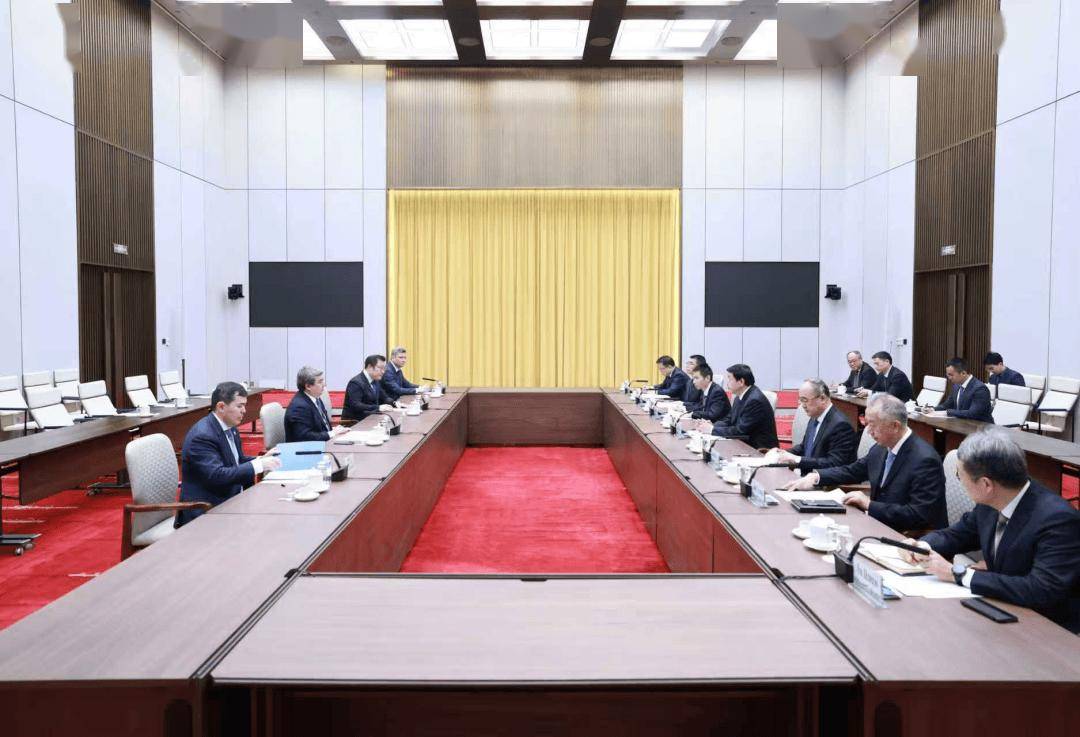
Group 1 - The meeting between the Chairman of State Grid Corporation of China, Zhang Zhigang, and the Chairman of Kazakhstan Electricity Grid Operating Company, Nurbek Aitzhanov, highlights the importance of China and Kazakhstan as key partners in the Belt and Road Initiative [1][3] - Both parties acknowledged the shared challenges of transitioning to clean and low-carbon energy and expressed commitment to enhance cooperation in areas of mutual interest, adhering to a win-win philosophy [3] - The meeting included participation from the company's Vice General Manager, Pan Jingdong, along with relevant department and unit heads from both sides [3]

山东一线报道 |“超碳一号”,年可发电1.2亿度
Xin Hua Wang· 2026-01-24 02:17
Core Viewpoint - The "Supercritical Carbon Dioxide Working Fluid High-Efficiency Power Generation Technology" is being promoted by leading steel and chemical companies in Shandong, aiming to accelerate green, low-carbon, and high-quality development [1][2]. Group 1: Technology and Development - The "Supercarbon No. 1" is the world's first commercial supercritical carbon dioxide power generation unit, achieving full industry chain autonomy and has operated safely for 1500 hours without faults [1]. - This technology represents a significant transformation in steam power generation, leading Western countries by at least five years [1]. - The technology offers higher efficiency, a more compact system, flexible response, and environmental friendliness, aligning with the green transformation needs of traditional industries in Shandong [1]. Group 2: Economic Impact - The investment payback period for "Supercarbon No. 1" is approximately five years, with an expected annual power generation of 120 million kWh and annual revenue exceeding 70 million yuan, while saving around 20,000 tons of standard coal annually [2]. - The technology can be widely applied in industries such as steel, coking, and cement, effectively converting heat sources generated during production into electricity [2]. Group 3: Industry Collaboration and Future Plans - Several companies, including Shandong Steel Group and Shandong Hengxin Group, have signed agreements to construct supercritical carbon dioxide power generation units by 2026 [2]. - Shandong Hengxin Group plans to integrate this technology into a new gas-steam combined cycle power generation system, while Shandong Steel Group will apply it in a new sintering machine at its Rizhao premium steel base [2]. Group 4: Policy and Strategic Importance - Shandong is focusing on becoming a pioneer in green, low-carbon, and high-quality development, emphasizing the importance of energy technology transformation and the need for a clean, low-carbon energy transition [3]. - The development of "Supercarbon No. 1" reflects the integration of technological and industrial innovation, positioning the company as a leader in green low-carbon technology engineering [3].

华自科技:公司自主研发多能物联核心技术
Zheng Quan Ri Bao Wang· 2026-01-12 13:15
Core Viewpoint - The company, Huazi Technology, has developed core technologies for multi-energy IoT and created an integrated platform for energy sources, networks, loads, and storage, contributing to the clean and low-carbon energy transition [1] Group 1: Company Developments - Huazi Technology has independently developed several core hardware and software products, including an integrated platform for energy sources, networks, loads, and storage, multi-energy IoT coordinators, commercial liquid-cooled energy storage cabinets, and energy storage inverters [1] - The company provides comprehensive energy solutions to users, having implemented multiple integrated projects for energy sources, networks, loads, and storage [1]

北京空气质量全面达标 优质能源占比达99.7%
Zhong Guo Neng Yuan Wang· 2026-01-04 09:53
Group 1 - The core viewpoint of the articles highlights Beijing's significant improvements in air quality, with PM2.5 annual average concentration expected to reach 27.0 micrograms per cubic meter by 2025, marking a breakthrough below 30 [1] - The proportion of days with good air quality is projected to exceed 80%, reaching 85.2% [1] - Multiple air quality indicators have achieved the best levels since monitoring began, indicating comprehensive compliance with air quality standards [1] Group 2 - The clean and low-carbon transition in the energy sector is crucial for reducing pollutant emissions and improving air quality [3] - During the 14th Five-Year Plan period, Beijing has made significant progress in energy structure optimization, with energy consumption per unit of GDP reduced to 0.163 tons of standard coal, which is 36% of the national average [3] - The share of high-quality energy in total energy consumption has reached 99.7%, with coal consumption dropping to 0.3%, and the city has achieved coal-free status in its plains [3] Group 3 - Renewable energy development has seen both quantitative and qualitative improvements, with the share of renewable energy consumption expected to reach 18% by 2025, an increase of 7.6 percentage points from 2020 [4] - The import and consumption of green electricity from outside the city have doubled during the 14th Five-Year Plan, with expectations to exceed 40 billion kilowatt-hours by 2025, accounting for over 35% of total electricity consumption [4] - The upcoming 15th Five-Year Plan will continue to accelerate the green and low-carbon transition in energy consumption, aiming for a shift from energy consumption control to carbon emission control [4]
雁淮直流8年累计向长三角地区输送电能超3000亿千瓦时
Xin Hua Wang· 2025-12-23 08:40
Core Insights - The Yanmen Pass-Huai'an ±800 kV UHVDC project has delivered a total of 300.16 billion kWh of electricity since its operation began in June 2017, meeting the annual electricity needs of over 100 million households and supporting high-quality economic development in the Yangtze River Delta region [1] Group 1 - The Yanmen-Huai'an UHVDC project is a key transmission channel under China's air pollution prevention action plan, connecting the North China energy base with the East China load center [1] - The project spans 1,119 kilometers with a maximum transmission capacity of 8 million kW, significantly contributing to the clean energy supply [1] - From January to November this year, the project transmitted 51 billion kWh of electricity, accounting for 37% of Shanxi Province's total electricity exports [1] Group 2 - During the peak summer period, the Yanmen-Huai'an UHVDC operated at full capacity for 40 days, setting a new record for the same period since its commissioning [1] - Over 30% of the electricity transmitted, amounting to more than 300 billion kWh, comes from renewable sources such as wind and solar energy, highlighting the project's role in promoting clean energy transition and supporting China's dual carbon goals [1]
让清洁能源点亮绿色经济
Zhong Guo Jing Ji Wang· 2025-12-17 20:56
Core Viewpoint - China has established the world's largest clean energy supply system, supporting economic growth while reducing energy intensity significantly [1][2]. Group 1: Clean Energy Development - From 2012 to 2024, China's energy consumption grew at an average rate of 3.4%, contributing to an average economic growth of 6.1%, with a cumulative energy intensity reduction of 27.1% [1]. - The Central Economic Work Conference emphasized accelerating the construction of a new energy system and expanding green electricity applications [1]. - The implementation opinions recently issued aim to create new application scenarios in the clean energy sector, promoting a low-carbon transition in the energy industry [1]. Group 2: International Context - The global agenda for clean and low-carbon energy transition has gained momentum, with nearly 200 countries agreeing to a "fossil fuel phase-out" at the 2023 UN Climate Change Conference [1]. - A target was set to triple global renewable energy capacity and double the rate of energy efficiency improvement by 2030 [1]. - As of May 2024, 151 countries have proposed carbon neutrality goals [1]. Group 3: Challenges and Solutions - Despite significant progress in renewable energy, challenges remain, such as the mismatch between renewable energy expansion and grid construction, leading to issues like "curtailment" of wind and solar power [2]. - There is a need to enhance the capacity for renewable energy consumption and reduce coal consumption to meet carbon peak targets by 2030 [2]. - A comprehensive approach is required to improve the adaptability of new power systems to renewable energy and enhance grid acceptance capabilities [2]. Group 4: Application and Innovation - There is a push to expand clean energy application scenarios, particularly in resource-rich areas, by strengthening the collaboration of upstream and downstream industries [3]. - Traditional industries are encouraged to innovate processes to increase flexibility in energy use across various applications [3]. - Emphasis is placed on technological innovation in renewable energy, including advancements in photovoltaic and wind power technologies, as well as energy storage solutions [3].