Zhong Guo Dian Li Bao

Search documents
“十四五”成就综述·电网篇丨我国建成世界规模最大、最复杂输变电工程
Zhong Guo Dian Li Bao· 2025-12-19 02:56
Core Insights - China's electricity consumption is projected to exceed 10 trillion kilowatt-hours by 2025, surpassing the total consumption of the EU, Russia, India, and Japan combined for 2024 [1] - The country has established the world's largest and most advanced power transmission network, with a reliability rate of 99.924% [1] Group 1: Power Transmission Capacity - During the "14th Five-Year Plan," China's ultra-high voltage (UHV) construction accelerated, increasing cross-province and cross-region transmission capacity from 270 million kilowatts at the end of the "13th Five-Year Plan" to 340 million kilowatts, a growth of over 25% [2] - The total length of UHV direct current lines has surpassed 40,000 kilometers, a 43% increase from the 28,000 kilometers during the "13th Five-Year Plan" [2] - The length of UHV alternating current lines has increased by over 67%, from 12,000 kilometers to over 20,000 kilometers [2] Group 2: Electricity Demand and Load - In the summer of 2025, China's electricity load reached a historical peak, with the total electricity consumption exceeding 1 trillion kilowatt-hours for two consecutive months [3] - The peak load reached 1.508 billion kilowatts, setting a new record [3] Group 3: Green Energy Transition - The proportion of clean energy transmitted through cross-regional UHV direct current channels increased from less than 40% at the end of the "13th Five-Year Plan" to nearly 60% by 2024, with annual clean energy transmission reaching 420 billion kilowatt-hours, a 70% increase [4] - New UHV projects have been developed to facilitate the transmission of renewable energy, including the first integrated UHV project for wind, solar, and storage [4] Group 4: Technological Advancements - China's UHV technology has achieved breakthroughs in various fields, establishing a self-controlled technical standard system and creating 26 world-first achievements [6] - Key technologies have overcome significant challenges, such as high altitude and severe weather conditions, enhancing the country's position as a global leader in UHV technology [6] - The integration of digital technology has improved the efficiency and reliability of the power grid, with significant advancements in operational decision-making and equipment assessment [7] Group 5: Global Influence - China's UHV technology is being exported globally, exemplified by the successful operation of UHV projects in Brazil, which has facilitated the export of clean hydropower over long distances [7] - The development of a comprehensive energy security network supports China's modernization and green development goals [7]
光伏行业“破内卷”治理将进入攻坚期
Zhong Guo Dian Li Bao· 2025-12-19 02:35
Core Insights - The "2025 Photovoltaic Industry Annual Conference" was held in Xi'an, focusing on "breaking the internal competition dilemma and promoting high-quality sustainable development" [1] - The conference gathered over a thousand representatives from government departments, industry experts, and companies to discuss the development path of the photovoltaic industry during a critical transition period [1][2] - The industry is facing challenges such as supply-demand imbalance, low-price competition, and international trade barriers, with a call for enhanced capacity regulation and technological standard upgrades [1][2] Group 1 - The Ministry of Industry and Information Technology emphasized that 2026 will mark a critical period for industry governance, requiring stronger capacity control and collaboration across the supply chain [1] - The honorary chairman of the China Photovoltaic Industry Association highlighted the need for the industry to shift from scale expansion to value creation through technological innovation and self-discipline [1][2] - Industry leaders, including representatives from Longi Green Energy and JA Solar, urged a move away from low-price competition towards a focus on quality and value [2] Group 2 - The conference included discussions on supply chain support, innovative applications, and overseas markets, providing policy guidance and technical direction for the industry as it transitions into the "15th Five-Year Plan" [2] - The photovoltaic industry is expected to undergo a significant transformation from price competition to value co-creation [2]


广东揭晓新能源机制电价首次竞价 电价体系向“市场主导”迈出关键一步
Zhong Guo Dian Li Bao· 2025-12-19 00:34
Core Insights - The auction for renewable energy prices in Guangdong has successfully established a clearing price of 0.36 yuan per kilowatt-hour, marking a significant step towards a market-driven pricing system for renewable energy in the province [1][2]. Group 1: Auction Results - The auction attracted participation from tens of thousands of distributed photovoltaic projects, with 11,588 projects selected, totaling a registered capacity of 5.24 million kilowatts, all clearing at the price of 0.36 yuan per kilowatt-hour [2]. - The auction was conducted within a price range set by the Guangdong Provincial Development and Reform Commission and the Energy Bureau, with an upper limit of 0.40 yuan per kilowatt-hour and a lower limit of 0.20 yuan per kilowatt-hour [2]. Group 2: Competitive Mechanism - The introduction of a "competitive effectiveness coefficient" in the auction process aims to enhance competition and price discovery, with the coefficient set at 1.2 to adjust the clearing scale based on actual market demand [3]. - The Guangdong power grid has streamlined the integration process for renewable energy projects, ensuring data accuracy and facilitating smooth transactions in the auction [3]. Group 3: Market Dynamics - The new pricing mechanism is expected to drive the renewable energy industry in Guangdong towards improved technology and cost structures, as the competition intensifies among market participants [4]. - Starting November 1, 2025, the Guangdong electricity spot market will allow for a price range with a lower limit of -50 yuan per megawatt-hour and an upper limit of 1,800 yuan per megawatt-hour, enhancing the reflection of supply and demand dynamics [4][5].
疆电网新能源发电出力攀升至4017万千瓦 创历史新高
Zhong Guo Dian Li Bao· 2025-12-19 00:34
Core Insights - Xinjiang's new energy generation capacity reached a historical high of 40.17 million kilowatts, accounting for 58.3% of the total power output, indicating the increasing importance of new energy in the power supply system [1] - By the end of November, Xinjiang's new energy installed capacity reached 143 million kilowatts, a year-on-year increase of 64.6%, representing 60% of the total installed capacity [1] - The Tianshan North Gobi Energy Base, China's first "desert energy" export base, is nearing full capacity integration, capable of delivering 36 billion kilowatt-hours of green electricity annually to the Sichuan-Chongqing region [1] - The National Energy Investment Corporation's Tieliketai Wind Power Project has begun generating power, expected to reduce carbon dioxide emissions by approximately 930,000 tons annually [1] - Infrastructure development is accelerating, with the construction of the third AC transmission channel, which will enhance Xinjiang's external transmission capacity to about 4.8 million kilowatts [1] Industry Developments - State Grid Xinjiang Electric Power Company is enhancing the high-quality consumption of new energy by optimizing power generation and adjusting coal-fired power plants to operate at a minimum output of 20% of their rated capacity [2] - The company has improved the matching potential between external delivery curves and new energy generation curves, activating various adjustment resources including hydropower, thermal power, energy storage, and pumped storage [2] - Xinjiang's new energy generation reached 134.57 billion kilowatt-hours, reflecting a year-on-year growth of 21.4% [2]
中国华能助力高标准建设海南自贸港
Zhong Guo Dian Li Bao· 2025-12-18 08:05
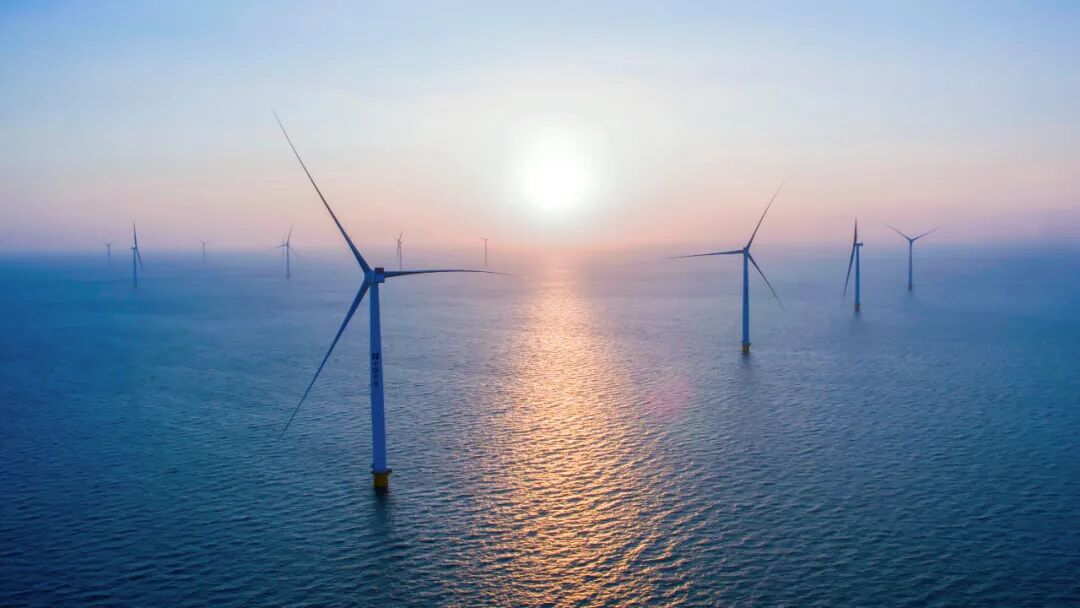
Core Viewpoint - China Huaneng Group is committed to supporting the construction of Hainan Free Trade Port by ensuring energy security and stability, contributing to the region's economic development and green energy transition [2][3][4]. Group 1: Investment and Infrastructure Development - China Huaneng has invested over 70 billion yuan in Hainan, establishing a comprehensive development framework that includes power generation, heating, trading, insurance, and securities [2]. - The company has a total installed capacity of over 5.42 million kilowatts in Hainan, holding the largest market share in the province, with annual electricity generation accounting for about one-third of the province's total [2][3]. - Since Hainan's establishment, China Huaneng's cumulative electricity generation has accounted for over 54% of the province's total electricity consumption [2]. Group 2: Energy Security and Emergency Response - China Huaneng plays a crucial role in ensuring energy security for Hainan, providing 40% of the electricity during peak demand and extreme weather events [3]. - The company has actively participated in disaster relief efforts, donating 3 million yuan to support post-disaster reconstruction in Hainan [3]. Group 3: Green Energy Initiatives - During the 14th Five-Year Plan, China Huaneng's installed capacity in Hainan increased from 2.4 million kilowatts to 5.42 million kilowatts, with the proportion of low-carbon clean energy rising from 14.2% to 62% [4]. - The company has launched the Huaneng Lingao Offshore Wind Power Project, which has a total installed capacity of 600,000 kilowatts and is expected to generate approximately 1.85 billion kilowatt-hours of clean electricity annually [4][6]. Group 4: Technological Innovation - China Huaneng has implemented the world's first 2000 tons/year gas turbine carbon capture verification device at its Yangpu Thermal Power Plant, achieving international leading efficiency [11]. - The company has developed a smart control center for renewable energy, enhancing operational efficiency and monitoring capabilities across multiple sites [13]. Group 5: Collaborative Development and New Industries - China Huaneng is actively planning new industry layouts in Hainan, focusing on "energy+" multi-industry ecosystems, including virtual power plants and zero-carbon parks [14]. - The company has established a supply chain platform and an international energy trading center, facilitating nearly 2.4 trillion yuan in transactions, which supports Hainan's development as a regional energy trading hub [14]. Group 6: Social Responsibility and Community Engagement - China Huaneng has invested nearly 22 million yuan in poverty alleviation and rural revitalization efforts in Hainan, achieving significant milestones in community support [15]. - The company emphasizes the importance of a favorable business environment in Hainan, which has facilitated the rapid implementation of projects [15].

用电负荷“亿时代”的底气
Zhong Guo Dian Li Bao· 2025-12-18 07:39
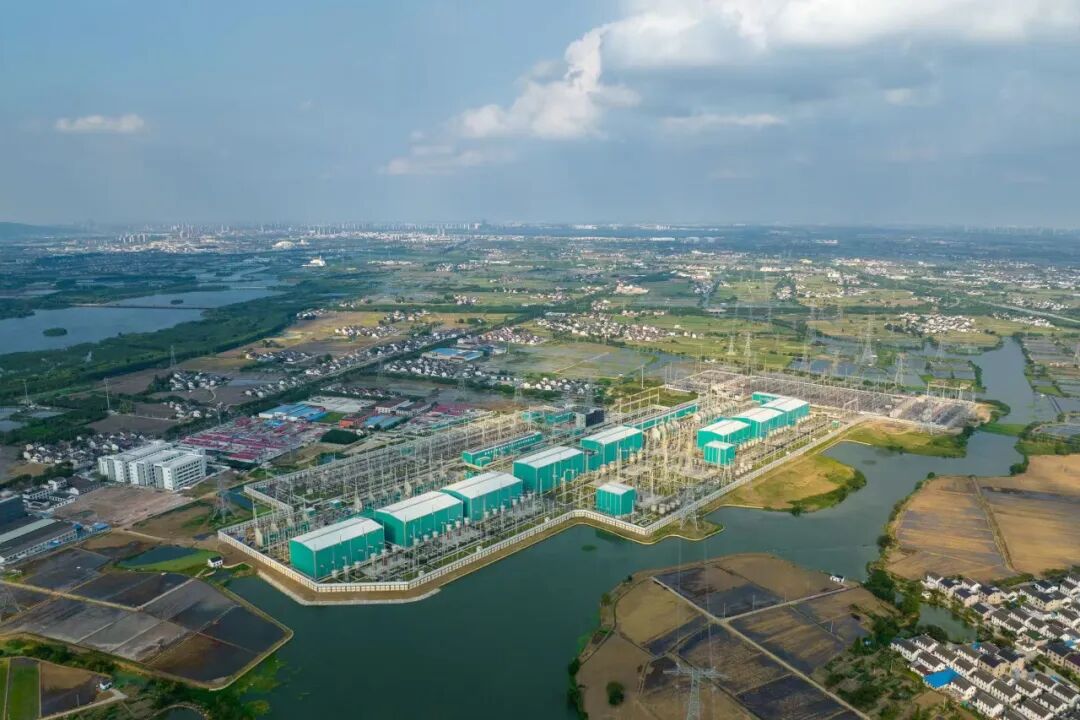
Core Viewpoint - The article highlights the significant advancements and innovations in Jiangsu's power grid construction, particularly through the "Yangzhou-Zhenjiang DC Transmission Project" and other high-voltage direct current (HVDC) projects, which enhance the capacity and efficiency of energy transmission in the region [1][3][5]. Group 1: Project Developments - The "Yangzhou-Zhenjiang ±200 kV DC Transmission Project" is nearing completion, with the Lingkou converter station in the final stages of installation and testing, aiming for operation by February 2026 [1]. - The "Baihetan-Jiangsu ±800 kV HVDC Transmission Project" has successfully integrated conventional and flexible DC technologies, delivering over 30 billion kWh of clean energy annually to Jiangsu, significantly increasing the share of clean energy in the grid [3][5]. - The "Yucheng Converter Station," the world's first HVDC hybrid cascade converter station, has implemented 14 innovative technologies, enhancing power distribution efficiency and enabling flexible power supply adjustments [4]. Group 2: Capacity Enhancements - The construction of the "Taizhou Fengcheng to Wuxi Meili 500 kV Transmission Project" has increased the cross-river transmission capacity to 6.6 million kW, facilitating the transfer of approximately 28.9 billion kWh of clean energy annually from the northern to the southern banks of the Yangtze River [7][11]. - The overall cross-river transmission capacity has been raised from 18.5 million kW to 25 million kW through various projects, enhancing the ability to accept external clean energy [11]. Group 3: Technological Innovations - The "Yangzhou-Zhenjiang DC Transmission Project" is the first in China to convert AC transmission to DC, increasing the transmission capacity from 500-600 kW to 3.6 million kW, nearly a sixfold increase [10]. - The introduction of "embedded" DC transmission technology addresses the challenges of high demand and saturated grid conditions in densely populated areas [8]. Group 4: Future Directions - The company aims to continue enhancing the power grid's capacity and efficiency, supporting the integration of renewable energy sources and ensuring stable power supply as Jiangsu enters a new era of high electricity demand [12][15].
“十四五”能源成就·油气篇 | 我国油气行业进入量效齐增与绿色开发新阶段
Zhong Guo Dian Li Bao· 2025-12-18 06:36
Core Insights - The article highlights the significant advancements in China's oil and gas industry, marking a new phase of simultaneous growth in quantity and quality, alongside a transition towards green development [2][4][30]. Group 1: Quantity Growth - Domestic crude oil production has surpassed 200 million tons, reaching a historical high, while natural gas production has achieved a continuous increase of over 10 billion cubic meters for nine consecutive years [2][13]. - The industry has added 10 new oil fields with over 1 billion tons and 19 gas fields with over 100 billion cubic meters in the past five years, with geological reserves increasing by approximately 43% for oil and 40% for gas compared to the previous five-year plan [2][11]. Group 2: Quality Improvement - Key technologies have seen systematic breakthroughs, transitioning from traditional extraction methods to a focus on technology-driven, clean, and low-carbon development [2][15]. - The exploration approach has evolved from random attempts to systematic evaluations of underground resources, enhancing the understanding of oil and gas systems [21]. Group 3: Technological Advancements - The industry has made significant strides in autonomous technology, with the successful development of deep-water oil and gas fields, exemplified by the "Deep Sea No. 1" project, which showcases China's capabilities in design, construction, and operation [9][10]. - Advanced drilling technologies, such as automated drilling rigs capable of reaching depths of 12,000 meters, have been developed to tackle complex geological challenges [22]. Group 4: Green Development - The integration of renewable energy sources into oil and gas production has been emphasized, with initiatives like the construction of green low-carbon production systems in oil fields [31]. - Carbon capture, utilization, and storage (CCUS) technologies have been implemented to reduce emissions, with significant projects underway that demonstrate the potential for carbon reduction while enhancing production [34]. Group 5: Future Outlook - The oil and gas industry is positioned for sustainable growth, with a focus on self-reliance and technological independence, ensuring energy security amid global challenges [4][18]. - The ongoing efforts to enhance production efficiency and explore unconventional resources, such as shale oil, are expected to play a crucial role in meeting future energy demands [27][28].
中国华电连续三年入选世界品牌500强
Zhong Guo Dian Li Bao· 2025-12-18 02:53
据中国华电12月17日消息,世界品牌实验室(World Brand Lab)在香港举行发布会,发布 2025年度(第二十二届)世界品牌500强排行榜。中国华电位列第338位,较去年大幅上升27 位,连续三年蝉联这一极具全球影响力的品牌荣誉,彰显了能源央企在全球品牌版图中的强劲成 长势头。 索比光伏网 https://news.solarbe.com/202512/18/50014958.html ...

国网官宣:首条深入川藏腹地特高压工程投运
Zhong Guo Dian Li Bao· 2025-12-18 02:47
Core Viewpoint - The State Grid announced the successful commissioning of the Jinshang-Hubei ±800 kV UHVDC transmission project, marking a significant advancement in clean energy transmission and enhancing national energy security [1][2]. Group 1: Project Overview - The Jinshang-Hubei project is the first UHVDC transmission project to penetrate the Tibetan Plateau, facilitating the cross-regional optimization of clean energy [1]. - The project spans approximately 1900 kilometers, starting from the upper reaches of the Jinsha River and passing through Tibet, Sichuan, Chongqing, and Hubei [1]. - It utilizes ±800 kV rated voltage and an 8 million kW rated capacity, featuring a dual converter station setup to enhance operational flexibility [1]. Group 2: Environmental Impact - The project is expected to deliver approximately 40 billion kWh of clean electricity annually, equivalent to replacing about 12 million tons of standard coal and reducing carbon dioxide emissions by around 30 million tons [2]. - It will promote the large-scale development of integrated water, wind, and solar energy bases in the upper reaches of the Jinsha River, optimizing the energy structure at the sending end [2]. Group 3: Infrastructure and Capacity - The State Grid has completed a total of 42 UHV projects, achieving a cross-regional transmission capacity of 370 million kW [2]. - The project contributes to the formation of a robust UHVAC backbone network across East, North, Central, and Southwest China, integrating advanced dispatch control systems and electricity market trading platforms [2].
务求实效 推动“人工智能+能源”走深走实——三论学习贯彻2026年全国能源工作会议精神
Zhong Guo Dian Li Bao· 2025-12-18 00:54
Core Viewpoint - The integration of artificial intelligence (AI) with the energy sector presents unprecedented opportunities, emphasizing the need for strategic positioning to enhance high-quality development in the energy industry [2]. Group 1: AI and Energy Integration - The 2026 National Energy Work Conference highlights the importance of AI in driving new productivity in the energy sector during the 14th Five-Year Plan period [2]. - The integration of AI and energy is expected to create significant multiplier effects, leading to unprecedented development prospects [2]. - Over 30 large models in the energy sector have been developed by major companies such as China National Petroleum Corporation and State Grid, showcasing the practical applications of AI in various energy fields [3]. Group 2: Practical Implementation and Collaboration - The National Development and Reform Commission and the National Energy Administration have issued guidelines for promoting AI in energy, focusing on applications in power grids, renewable energy, and new business models [3]. - The collaboration between AI and energy requires a deep understanding of their interdependent development, with AI reshaping energy operations and enhancing efficiency [3][4]. - Key areas for collaboration include planning, operational stability, and the integration of green energy with data centers, ensuring a stable and quality power supply [4]. Group 3: Future Outlook - The advancement of energy technology is accelerating, with the potential for AI and energy integration to yield significant benefits as pilot projects and standards are developed [5]. - Future scenarios may include the establishment of "green computing clusters" near renewable energy bases, enhancing local energy consumption and value [5]. - The energy revolution and the rise of intelligent technologies are expected to create a robust and smart energy system, contributing to sustainable economic and social development [5].