
New York Post

Search documents
UPS to slash 20,000 jobs on weak Amazon deliveries over Trump tariff turmoil
New York Post· 2025-04-29 14:32
Core Viewpoint - United Parcel Service (UPS) plans to cut 20,000 jobs and close 73 buildings due to weakened demand from Amazon and the impact of tariffs, expecting to save $3.5 billion this year [1][3]. Group 1: Job Cuts and Cost Savings - UPS announced a reduction of 20,000 jobs as part of its strategy to manage costs amid declining demand [1][5]. - The company anticipates saving $3.5 billion this year through these job cuts and the closure of 73 leased and owned buildings by the end of June [1][3]. Group 2: Financial Projections and Economic Environment - UPS projects expenses between $400 million to $600 million in 2025 related to separation benefits and lease costs [2]. - The company is not updating its full-year forecast due to economic uncertainty but is implementing cost-reduction measures [3][7]. - UPS reported first-quarter revenue of $21.5 billion, exceeding expectations, with revenue in its US segments growing 1.4% to $14.46 billion despite overall volume declines [13][14]. Group 3: Impact of Tariffs and Market Dynamics - The company is facing reduced deliveries from Amazon, which accounted for 11.8% of its revenue last year, and is also impacted by tariffs affecting trade with China [4][7]. - The tariffs, including a 145% rate on Chinese goods, are expected to slow trade and affect parcel delivery firms as consumers reduce purchases from overseas [7][12].



IBM joins Apple, Nvidia with pledge to invest $150B in US for computer manufacturing
New York Post· 2025-04-28 16:35
Core Viewpoint - IBM plans to invest $150 billion in the US over the next five years, focusing on quantum computer production and supporting local manufacturing initiatives [1][3] Investment Commitment - The investment includes over $30 billion specifically for expanding US manufacturing of quantum computers and mainframes, which are essential for handling large data and critical applications [3] - This announcement aligns with similar commitments from other tech giants like Nvidia and Apple, each pledging approximately $500 billion in the US over the next four years [1][6] Industry Context - Analysts interpret these spending commitments as strategic moves to appease the Trump administration amid concerns over tariffs that could disrupt supply chains and increase costs for the technology sector [2][4] - Recent advancements in quantum computing, such as new chips from Google's Alphabet, have heightened interest in the field, although there is uncertainty regarding the timeline for practical applications [5][8] Financial Overview - IBM reported cash and cash equivalents of $14.8 billion as of December 31, with capital expenditures of $1.13 billion last year and total expenses amounting to $29.75 billion [9]

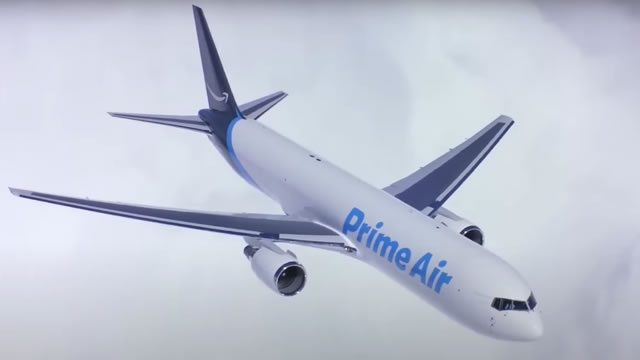
Amazon sellers opt out of Prime Day sales event as Trump tariffs squeeze profit margins: report
New York Post· 2025-04-28 15:29
Core Insights - Amazon sellers are opting out of Prime Day due to uncertainty over President Trump's tariffs, particularly the 145% tariff on products manufactured in China, which significantly impacts profit margins [1][5][17] - Analysts express concern for third-party sellers, indicating they will be the most affected by the current tariff environment [2] Group 1: Seller Participation and Impact - Many merchants, especially those manufacturing in China, are choosing to skip Prime Day, with some citing that the tariffs will more than double their costs, making participation financially unfeasible [3][4] - The chief executive of Bogg Bag has halted production and is shifting manufacturing to Cambodia and Vietnam, which currently face lower tariffs [4][7] - Participation in Prime Day is optional for Amazon vendors, but the event typically requires sellers to offer significant discounts, which can squeeze profit margins [7][9] Group 2: Financial Implications - Amazon takes a 15% commission on each sale, with additional fees for promotional features, leaving sellers with a profit margin of only 15% to 20% [9] - The uncertainty surrounding tariff pricing adjustments is causing many sellers to reconsider their discount strategies for Prime Day [10][14] - Last year's Prime Day saw sales seven times higher than an average day, but ongoing tariffs may eliminate the feasibility of discounting for many sellers [15][17] Group 3: Market Dynamics - Nearly 62% of units sold on Amazon in the fourth quarter of the previous year were from third-party sellers, highlighting their significant role in Amazon's marketplace [17] - The tariffs are expected to negatively impact Amazon's sales with first-party partners as well, as many of these products are also manufactured in China [17]

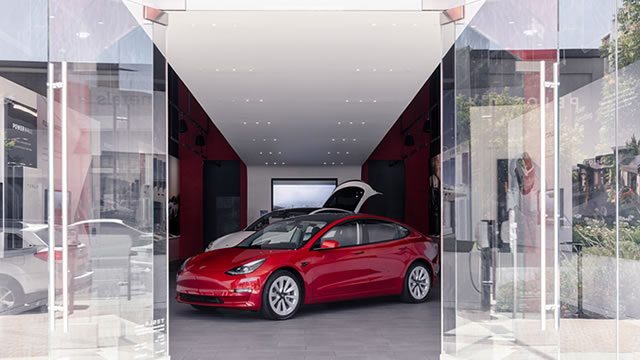
Tesla urges Canadian customers to buy pre-tariff priced inventory ‘while supplies last'
New York Post· 2025-04-28 15:18
Core Insights - Tesla is encouraging Canadian customers to purchase vehicles at pre-tariff prices as it prepares to increase prices due to ongoing tariffs from the Trump administration [1][4] - The company is facing a challenging sales environment, with a significant decline in vehicle deliveries and net profit [6][9] Price Changes - Tesla is raising prices by as much as 22% in Canada, with specific models seeing substantial increases; for instance, the Cybertruck's all-wheel drive edition has risen by C$25,000 ($18,000) [5][8] - The long-range Model 3 sedan's price increased by 16% to C$79,990 ($57,855), while the long-range Model Y SUV is now 21% more expensive at C$84,990 ($61,471) [5] Tariff Impact - President Trump's 25% tariffs on imported cars and parts remain in effect, despite a temporary pause on most tariffs [2] - Canada has retaliated with its own 25% tariff on US car imports, further complicating the market for Tesla [2] Sales Performance - Tesla's vehicle deliveries fell by 13% in the first quarter, and the company's net profit dropped by 71% during the same period [6] - The company is experiencing a sales slump, attributed to various factors including an aging car lineup and increased competition from rivals like BYD [9] Operational Challenges - Tesla has faced protests and arson attacks at its dealerships, contributing to its public relations challenges [9] - The company is somewhat insulated from tariffs due to domestic manufacturing but still relies on certain imported parts, particularly from China [11]

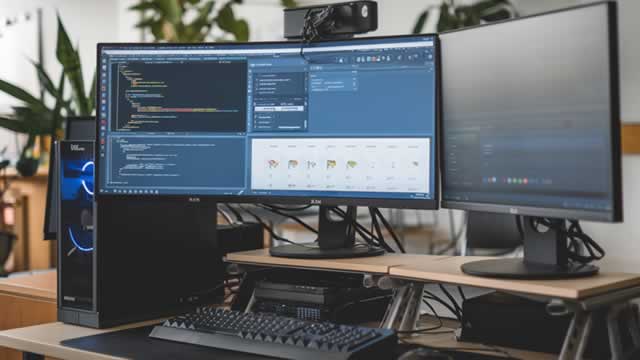
DeepMind UK staff to unionize and challenge deals with Israel links, FT reports
New York Post· 2025-04-27 19:40
Core Viewpoint - Google DeepMind staff in Britain are planning to unionize in response to the company's decision to sell its AI technologies to defense groups linked to the Israeli government [1][3][5] Group 1: Employee Actions - Approximately 300 London-based employees of Google DeepMind are seeking to join the Communication Workers Union (CWU) to challenge the company's actions [1] - The unionization effort has been prompted by employee disquiet over reports of Google selling cloud services and AI technology to the Israeli Ministry of Defense [3][5] Group 2: Company Background - Google has faced previous controversies regarding its ties to Israel, including the dismissal of 28 employees last year who protested against a cloud contract with the Israeli government [6]


Shein, Temu hike prices to offset 120% Trump tariff slated to take effect next week
New York Post· 2025-04-25 19:14
Core Viewpoint - The recent executive order by President Trump to end the de minimis exemption has led to significant price increases for products from Chinese retailers Shein and Temu, affecting low-value items previously imported without tariffs [6][10]. Price Adjustments - Shein and Temu have raised prices on various products to offset the new 120% tariff, with specific examples showing a 91% increase for a bathing suit set on Shein and a 13% increase for patio chairs on Temu [2][4]. - Price fluctuations were noted, with some items, like a smart ring on Temu, being cheaper despite the overall trend of price hikes [4]. Impact of Tariffs - The end of the de minimis rule will require U.S. customs to scrutinize an additional 1 million packages daily, which may help prevent dangerous products from entering the market [7]. - Low-income Americans, who rely heavily on affordable options from Shein and Temu, will be disproportionately affected, as they spent significantly more of their income on apparel compared to wealthier households [8][9].


DoorDash offers $3.6B for rival Deliveroo in bid to beef up Europe operations
New York Post· 2025-04-25 19:06
Group 1 - Deliveroo received a proposal from DoorDash to acquire all its shares for £2.7 billion ($3.60 billion) [1] - DoorDash must make a firm offer by May 23 [1] - Deliveroo's shares have declined nearly 50% since their 2021 debut due to stagnating demand for online food delivery post-pandemic [1][5] Group 2 - Deliveroo exited the Hong Kong market, selling assets to Delivery Hero's foodpanda, as the operations were loss-making and accounted for about 5% of overall transactions [2] - Previous interest from DoorDash in acquiring Deliveroo was reported last year, but talks ended over valuation disagreements [2][3] - A potential deal would enhance DoorDash's presence in Europe, following its acquisition of Wolt Enterprises in 2021 for approximately $8 billion [4]


Chinese electric car giant BYD's profit doubles as it continues to cruise past rival, Elon Musk's Tesla
New York Post· 2025-04-25 17:36
Core Insights - BYD's profits doubled to $1.3 billion in Q1, significantly outperforming Tesla [1][8] - BYD's quarterly revenue increased by 36% to 170.36 billion yuan (approximately $23.51 billion) [1] - Tesla's quarterly profit fell 71% to $409 million, with revenue dropping 9% to $19.34 billion [2] Company Performance - BYD's total sales of electric vehicles and plug-in hybrids surged by 60% to nearly 1 million units in Q1 [2] - Tesla's vehicle shipments decreased by 13% to 336,681 units during the same period [2] - BYD aims to export 800,000 vehicles internationally this year as part of a projected total sales of 5.5 million units [3] Competitive Landscape - BYD is emerging as a significant competitor to US automakers, including Tesla and the Big 3 (Ford, GM, Stellantis), due to its rapid expansion in markets like Europe, Mexico, and South America [4] - BYD has introduced innovations such as five-minute charging for its EVs and an autonomous driving system named "God's Eye" [6][10] - Despite BYD's advancements, Tesla is still perceived to have an advantage in software capabilities [6] Market Positioning - BYD manufactures up to 80% of its car components in-house, which helps mitigate the impact of tariffs imposed by the US and China [6] - BYD does not currently sell vehicles in the US market due to high tariffs on Chinese-made EVs [6]

Google's Waymo self-driving robotaxis could be put on sale for people looking to own the vehicle
New York Post· 2025-04-25 17:17
Core Insights - Waymo's self-driving robotaxis may become available for personal ownership in the future, as stated by Alphabet CEO Sundar Pichai, although no timeline or pricing details were provided [1][3] - Waymo currently operates a fleet of 700 vehicles, primarily in San Francisco, and completes over 250,000 fully autonomous paid rides each week [3][4] - The robotaxis are expanding their presence in cities like San Francisco, Phoenix, Los Angeles, and Austin, with future plans to enter Atlanta, Miami, and Washington, DC [3][4] Company Operations - Waymo does not manufacture its vehicles but partners with major automakers such as Hyundai, Jaguar, and Zeekr, as well as companies like Uber and Moove for vehicle financing [4][8] - The technology behind Waymo's robotaxis relies on a combination of cameras and LiDAR sensors to create detailed maps of the road [4] Competitive Landscape - Tesla plans to launch a pilot robotaxi program in June, utilizing only cameras and AI, which allows for lower costs compared to Waymo's approach [5][6] - Elon Musk claims that Tesla's costs are significantly lower, estimating that Teslas cost about 20% to 25% of what a Waymo vehicle costs [5][6] - Analysts have expressed skepticism about Tesla's ability to roll out its robotaxi service widely due to challenges with its self-driving technology in complex scenarios [7]

Apple to shift most US iPhone production to India by 2026 to avoid China tariffs: reports
New York Post· 2025-04-25 15:00
Group 1 - Apple plans to shift most of its iPhone production for the US market to India by the end of 2026 to avoid high tariffs on Chinese imports [1][4] - The company has already increased manufacturing capacity in India and is accelerating these plans due to deteriorating US-China trade relations, despite higher manufacturing costs in India [1][4] - The number of iPhones produced in India is expected to double to over 80 million units per year, while currently, about 80% of the 60 million iPhones sold in the US are made in China [4] Group 2 - Apple is in urgent discussions with manufacturing partners Foxconn and Tata to support its production shift to India, with plans to build two additional factories [2] - The US has imposed a 145% tariff on Chinese goods, while tariffs for India and Vietnam are 26% and 46% respectively, although the US administration has paused these tariffs for 90 days during negotiations [5] - In response to tariff concerns, Apple airlifted 600 tons of iPhones (approximately 1.5 million units) from India to the US to build up its domestic inventory [6]

