New York Post

Search documents
Bed Bath & Beyond says it won't open stores in California: ‘Overregulated, expensive and risky'
New York Post· 2025-08-20 20:55
Core Viewpoint - Bed Bath & Beyond has decided not to open stores or operate in California due to the state's stringent regulations and high costs, which the company claims create an unsustainable business environment [1][2][3]. Group 1: Business Decisions - The company will focus solely on e-commerce and delivery services in California, citing a commitment to shareholders and practical business practices [2]. - Bed Bath & Beyond has recently launched a return to retail after filing for bankruptcy and closing hundreds of stores two years ago [2]. - The company plans to open five new "neighborhood" stores, each 15,000 square feet, this year as part of a pilot program [9][10]. Group 2: Regulatory Environment - Marcus Lemonis criticized California's regulations, stating they lead to higher taxes, fees, and wages that many businesses cannot sustain [2][3]. - The minimum wage in California, particularly for the fast-food industry, has been raised to as high as $20, which Lemonis argues is unmanageable for businesses [3]. Group 3: Partnerships and Investments - Beyond Inc., the current owner of Bed Bath & Beyond, has made a $25 million investment in Kirkland's Inc., which has become the exclusive operator for new smaller-format Bed Bath & Beyond stores [5][6]. - The partnership aims to create a more efficient retail model with lower fixed costs, focusing on assortment, space management, and merchandising [9].


Pop Mart shares surge 12% after CEO says mini Labubus could launch as soon as this week
New York Post· 2025-08-20 20:46
Core Insights - Pop Mart's shares surged nearly 12% following the announcement of mini Labubu dolls, reaching a closing price of $40.75, the highest since its IPO in 2020 [1][3] - The company is on track to meet its revenue goal of 20 billion yuan ($2.78 billion) and anticipates achieving $4.18 billion this year [3][4] - Pop Mart's profit increased nearly 400% in the first half of the year, with net profit reported at $636 million, significantly exceeding estimates [4][10] Revenue and Growth - Revenue for Pop Mart skyrocketed 204.4% to approximately $1.93 billion, compared to a 62% growth in the same period last year [10] - The Americas region experienced a remarkable revenue increase of 1,142% year-over-year in the first half of this year [3] - The company plans to open 10 additional stores in the US by the end of the year, expanding its current footprint of about 40 stores [4] Market Position and Trends - Pop Mart's market capitalization has exceeded $46 billion, significantly larger than Mattel's $5.7 billion [5] - The popularity of Labubu dolls has been driven by the "blind box" sales strategy, creating a viral unboxing trend on social media [5][6] - Resale values for Labubu dolls can reach hundreds or thousands of dollars, indicating strong demand and market interest [8] Challenges and Competition - The rise in popularity has led to the emergence of counterfeit products, known as "Lafufus," which pose safety risks [9] - US regulators have issued warnings regarding the safety of these knockoffs, highlighting potential choking hazards for children [9]

Target's stock plunges 7% as new CEO pick disappoints Wall Street: ‘There won't be change when change is needed'
New York Post· 2025-08-20 18:33
Core Viewpoint - Target's stock dropped 7% after the announcement of Michael Fiddelke, a longtime insider, as the new CEO, disappointing investors who expected an external retail expert to lead the struggling company [1][5][6] Company Leadership Transition - Michael Fiddelke, the 49-year-old chief operating officer, will take over as CEO on February 1, replacing Brian Cornell, who has led the company for a decade and will transition to the role of executive chairman [1][2] - Cornell expressed confidence in Fiddelke's ability to lead Target forward [2] Investor Sentiment - Investors were hoping for an external candidate to revitalize the company, which has faced declining sales and lost market share to competitors like Walmart [4][6] - The stock price reflects concerns that necessary changes will not occur under Fiddelke's leadership [6][7] Sales Performance - Target has reported a persistent slump in sales, with same-store sales declining by 1.9% compared to the previous year [13] - Customer transactions fell by 1.3%, and the average spending per transaction decreased by 0.6% [14] - Despite these challenges, Target's second-quarter earnings exceeded Wall Street estimates, although sales and traffic continued to decline [13][16] Strategic Priorities - Fiddelke outlined three main priorities: enhancing stylish product offerings, improving customer experience consistency, and leveraging technology for efficiency [10] - The company aims to recover its position in the home goods category, which has suffered due to a focus on core items at the expense of fashion and design leadership [18][19]

Sony hikes price of PlayStation gaming console by $50 as Trump tariffs bite
New York Post· 2025-08-20 17:32
Core Viewpoint - Sony is increasing the price of its PlayStation 5 consoles by $50 due to the financial impact of Trump's tariffs on Japanese electronics, which cost the company $685 million annually [1][4][12] Price Increase Details - The price hike affects all three PlayStation models: the standard console will rise to $549.99, the Digital Edition to $499.99, and the Pro version to $749.99 [3][8] - The increase is a direct result of a 25% tariff imposed on major electronics and tech items from Japan, which began on August 1 [3][12] Economic Context - Sony acknowledged the challenging economic environment and the necessity to pass on some of the increased import costs to consumers [2][5] - The tariffs are part of a broader trade agreement aimed at encouraging domestic manufacturing, which industry experts believe is unrealistic for complex electronics [4][9] Industry Impact - The price increase follows similar actions by competitors Microsoft and Nintendo, indicating a trend across the gaming industry due to tariff pressures [9] - The tariffs have created a cascading effect across the electronics industry, leading to price increases for various tech products, including computers and televisions [12] Supply Chain Challenges - The supply chains for PlayStation components are significantly more expensive due to the tariffs, making price increases unavoidable [7][12] - Relocating production to the U.S. is deemed impractical in the short term, meaning consumers will continue to face higher prices as a result of the trade war [9]


McDonald's to slash combo meal prices— despite clashing with franchisees over surging costs
New York Post· 2025-08-20 15:26
Core Insights - McDonald's is reducing combo meal prices to restore its affordable image amid customer complaints about rising menu costs [3][4][11] - The company has reached an agreement with US franchisees to keep the prices of eight popular combos 15% below the total of individual item prices [1][2] - The average price of a large Big Mac meal is currently $10.53, with some locations charging as much as $18.99 [12] Pricing Strategy - Starting in early September, discounts will be applied to combos including Big Mac, Quarter Pounder with Cheese, Chicken McNuggets, and breakfast sandwiches [4][7] - McDonald's will reintroduce Extra Value Meals, with specific prices set at $5 for Sausage Egg McMuffin and $8 for Big Mac meal [7] - Franchisees are required to maintain these discounts through early next year [7] Market Context - The fast-food chain is responding to a broader trend of declining restaurant traffic, which has dropped 1.7% this year, with fast-food chains seeing a 2.7% decline [15] - The price of Big Mac combo meals has increased by 27% from 2019 to 2024, contributing to customer concerns about affordability [15] - McDonald's is also collaborating with franchisees on a marketing campaign to promote the new pricing deals [16]


Target CEO Brian Cornell steps down after 10 years as retailer fights to reverse sliding sales
New York Post· 2025-08-20 11:09
Company Leadership Transition - Target CEO Brian Cornell will step down next year after over a decade, as the company undertakes a turnaround effort to reignite growth and reverse declining sales [1] - Michael Fiddelke, the current COO, has been elected to succeed Cornell and will join the Board of Directors on February 1 [1][13] Executive Background - Cornell, 66, is concluding a three-year commitment made in 2022, during which Target's board removed the mandatory retirement age of 65 to allow him to lead during a critical period [2] - Fiddelke, 49, has been with Target for 20 years and has held various leadership roles across merchandising, finance, operations, and human resources [2] Business Performance - In the latest fiscal quarter, Target reported $25.2 billion in sales, a decrease of just under 1% year-over-year [5][16] - Sales at stores open at least a year fell nearly 2%, with in-store sales dropping more than 3%, while online sales grew a little over 4% [10] Profit and Sales Forecast - The company's profit for the quarter was $1.3 billion, down about 19% from the previous year [10] - Target expects a low-single digit decline in sales for fiscal 2025, revised down from a previous forecast of net sales growth of about 1% [15] Strategic Initiatives - To achieve long-term profitable growth, Target announced a new multi-year growth initiative called the Enterprise Acceleration Office, aimed at enhancing speed, adaptability, innovation, and resilience [14]
Google lands major nuclear energy deal to power it's massive AI data centers with 50 megawatt capacity
New York Post· 2025-08-20 00:07
Core Insights - Google, Kairos Power, and the Tennessee Valley Authority (TVA) have entered into an agreement to supply 50 megawatts of nuclear power to data centers in Tennessee and Alabama, addressing the rising energy demand in the U.S. and promoting next-generation nuclear power [1][9] - This deal represents the first deployment of Kairos's Hermes 2 Plant and is part of a broader agreement to deliver a total of 500 megawatts by 2035 [2][9] - The collaboration aims to create a partnership among energy customers, utilities, and technology developers to meet the growing energy needs with reliable and affordable capacity [3][5] Company-Specific Developments - The Hermes 2 Plant in Oak Ridge will increase its output from 28 to 50 megawatts starting in 2030, contributing to the overall energy supply for Google's data centers [2] - Google has previously signed agreements to procure nuclear power from multiple small modular reactors, which will be located in relevant service territories to provide clean energy to its data centers [2][3] - The initial phase of the collaboration will focus on procuring clean energy attributes from the plant through TVA, ensuring that Google's data centers are powered by locally sourced clean energy [5] Industry Context - The demand for electricity from U.S. data centers, driven by generative artificial intelligence, is pushing power consumption to new highs, necessitating the need for next-generation nuclear power [6][10] - A report from GridStrategies projects that U.S. electricity demand will increase by 15.8% by 2029, influenced by data centers, manufacturing, and electrification [10] - The International Energy Agency anticipates a 130% increase in electricity use by U.S. data centers between 2024 and 2030, highlighting the urgency for sustainable energy solutions [11]

Delta, United Airlines sued for charging extra for windowless ‘window seats'
New York Post· 2025-08-19 22:58
Core Viewpoint - Delta Air Lines and United Airlines are facing proposed class action lawsuits from passengers who claim they were misled into paying extra for "window" seats that do not actually have windows due to design issues in certain aircraft models [1][4]. Group 1: Lawsuit Details - The lawsuits were filed in federal courts in San Francisco and Brooklyn, seeking millions of dollars in damages for over 1 million passengers at each airline [1]. - Passengers allege that Delta and United do not indicate the absence of windows for certain seats during the booking process, unlike competitors such as Alaska Airlines and American Airlines [3][4]. - The complaints highlight that passengers choose window seats for various reasons, including alleviating fear of flying, keeping children occupied, and enjoying the view [3]. Group 2: Aircraft Specifications - The lawsuits specify that certain Boeing 737, Boeing 757, and Airbus A321 aircraft have seats that are designed to have windows but lack them due to the placement of air conditioning ducts, electrical conduits, or other components [2][6]. Group 3: Revenue Implications - Ancillary revenue from services such as seat selection, baggage fees, and cabin upgrades is crucial for airlines to generate additional cash while maintaining lower base fares [5][8]. Group 4: Legal Representation - The Delta lawsuit is led by Nicholas Meyer, while the United lawsuit is represented by Marc Brenman and Aviva Copaken [8]. - One plaintiff reported receiving refunds for some windowless seats but not for others, indicating potential inconsistencies in the airlines' handling of these complaints [8]. Group 5: Third-Party Information - Passengers can utilize third-party websites like SeatGuru to assess the pros and cons of specific seats, including those without windows [9]. - Legal representatives argue that reliance on third-party reviews does not absolve Delta and United from misrepresenting their products [9].


Home Depot warns it may raise prices because of Trump's tariffs
New York Post· 2025-08-19 20:10
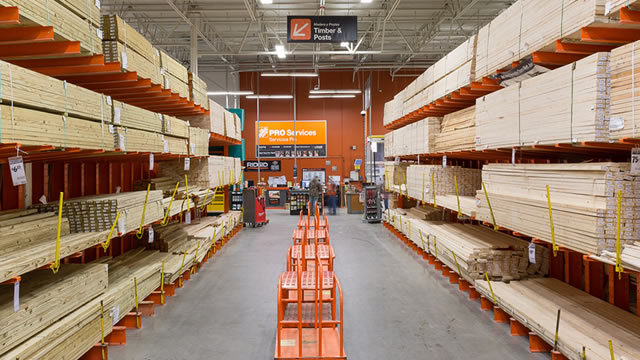
Core Viewpoint - Home Depot is considering raising prices on select merchandise to offset the costs associated with tariffs imposed by the Trump administration, marking a shift from its previous stance against trade-related price adjustments [1][12]. Pricing Strategy - The company indicated that price changes would be limited to specific product categories and characterized as measured rather than sweeping [1][3]. - CFO Richard McPhail confirmed that certain items would see price modifications in response to import duties [2][17]. Consumer Behavior - Home Depot reported mixed consumer behavior, with comparable store sales increasing by 1% while customer visits declined by 0.9% [4][11]. - The decline in customer visits is attributed to economic headwinds and elevated interest rates, leading homeowners to delay significant remodeling projects [3][9]. Market Dynamics - The residential real estate market's challenges have negatively impacted Home Depot's performance, as elevated property values and economic uncertainty have reduced demand for renovations [7][10]. - Despite home equity values doubling since 2019, homeowners are reluctant to take on debt for major improvement projects, even with favorable collateral values [10]. Strategic Focus - To counteract the decline in do-it-yourself demand, Home Depot is intensifying efforts to capture the professional contractor market, including expanded bulk purchasing options and enhanced support services [13][14]. - The company recently agreed to acquire building materials supplier GMS for $4.3 billion, reinforcing its commitment to serving professional builders [13][14]. Supply Chain Considerations - Approximately half of Home Depot's merchandise is sourced from domestic suppliers, which protects those products from international trade duties [4][16]. - The company aims to maintain a price leadership position in home improvement while managing the overall cost of projects for customers [17].

Nvidia developing more powerful AI chip to sell in China: report
New York Post· 2025-08-19 18:23
Core Viewpoint - Nvidia is developing a new AI chip for China, named B30A, which is more powerful than the H20 model currently allowed for sale in the region, but less advanced than the blocked Blackwell B300 design [1][2]. Group 1: Chip Development and Specifications - The B30A chip is expected to deliver about half of the raw computing power of the B300, aligning with President Trump's indication of allowing a chip that is "30 to 50% off" in terms of power [2]. - Nvidia aims to send samples of the new B30A chip to Chinese clients for testing as early as next month [4][10]. Group 2: Regulatory and Market Context - Nvidia's spokesperson stated that the company evaluates various products for its roadmap to compete within government regulations, ensuring all offerings have the necessary approvals [5]. - There are ongoing national security concerns regarding the sale of AI chips to China, which may affect Nvidia's ability to receive regulatory approval for the new chip [8]. Group 3: Financial and Market Share Considerations - Nvidia's revenue from China accounted for approximately 13% of its total revenue in the past financial year, highlighting the importance of the Chinese market for the company [11]. - An unprecedented deal was announced where Nvidia and AMD would give the US government 15% of their revenue from sales in China in exchange for permission to resume sales of the H20 model [6].