Founder Park

Search documents
2025 ToC AI产品:仅有3%用户愿意付费,29%的父母每天使用
Founder Park· 2025-06-30 11:47
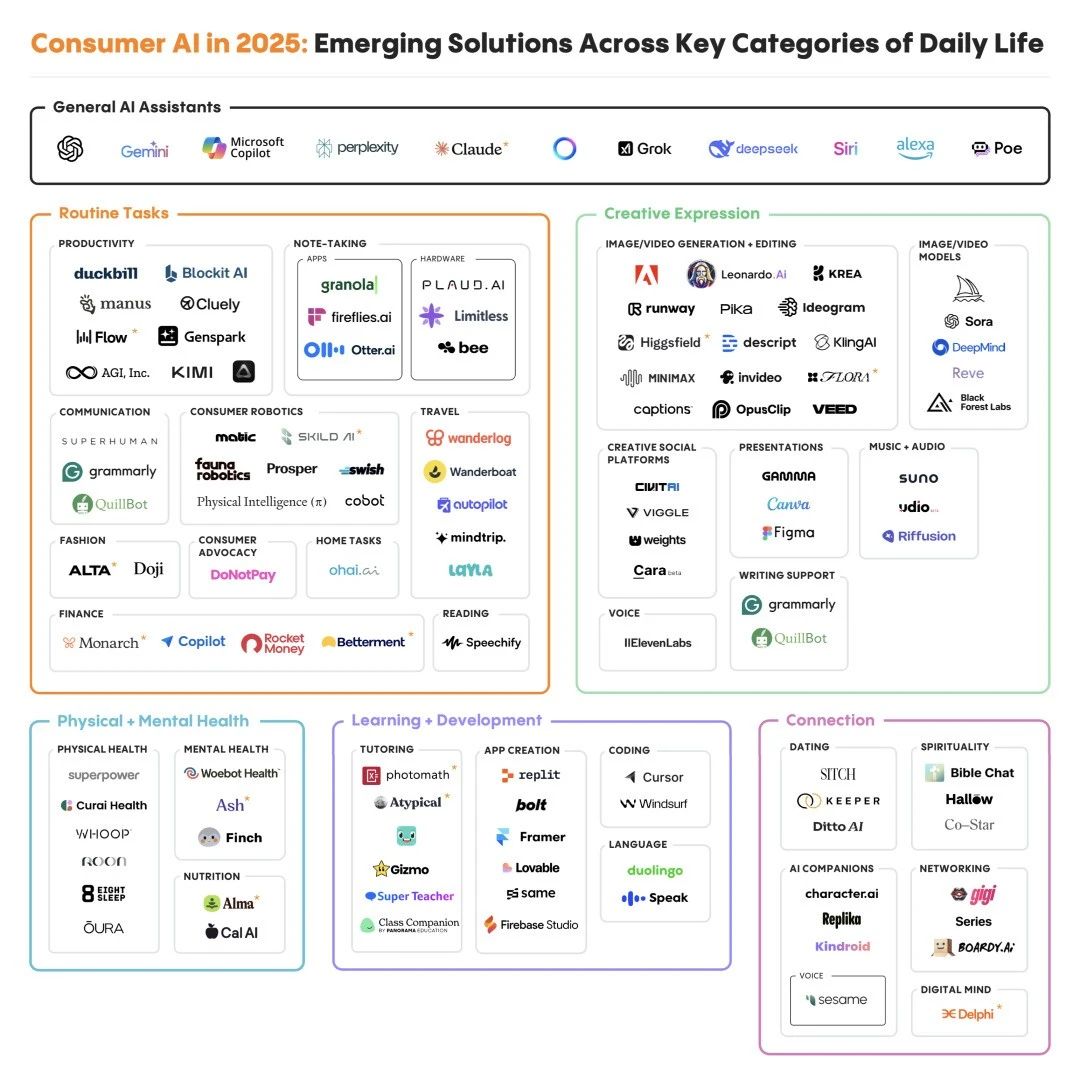
Core Insights - The report by Menlo Ventures reveals that over 61% of American adults have used AI in the past six months, indicating a significant shift in consumer behavior towards AI integration in daily life [5][6][10] - Despite the high usage rates, only 3% of users are willing to pay for AI services, leaving a substantial market gap of $420 billion [6][13] - The report identifies key opportunities in personalized scenarios where AI penetration is still low, suggesting a focus for entrepreneurs [3][9] Market Overview - The consumer AI market has grown to a $12 billion industry within just two and a half years since the launch of ChatGPT [10][13] - With an estimated 1.7 to 1.8 billion global users, the market potential is vast, but the current revenue generation is significantly lagging behind potential [6][13] - The report highlights that 81% of the revenue in the consumer AI market is captured by general AI assistants, with ChatGPT alone accounting for approximately 70% of consumer spending [41][43] User Demographics - The report reveals unexpected user demographics, with millennials (ages 29-44) being the heaviest users of AI, contrary to the assumption that younger generations would dominate [16][19] - Parents are identified as "super users," with 79% having used AI, and 29% using it daily, significantly higher than non-parents [25][30] - High-income households show a higher AI usage rate, with 74% of families earning over $100,000 using AI compared to 53% of those earning under $50,000 [20][21] Usage Patterns - AI is predominantly used for routine tasks, with email writing being the most common application at 19% of users, followed by task management and research [50][51] - The report indicates that while AI is widely used, the depth of adoption in specific tasks remains shallow, suggesting that there is room for growth in specialized applications [52][55] - AI's role in creative expression is significant, with over 51% of creators using AI for writing, and 38% for presentations, indicating a strong market for creative AI tools [59][63] Opportunities for Growth - The report identifies five key areas where AI can create value: routine tasks, health management, learning and development, interpersonal connections, and creative expression [44][46] - There is a notable gap in AI adoption in health management, with only 20% of those seeking health information using AI, highlighting a potential market opportunity [71][72] - The report emphasizes the need for AI tools that can effectively address high-friction, high-trust tasks, as these areas present significant opportunities for specialized AI solutions [76][80] Future Trends - The report predicts a shift towards professional tools becoming mainstream, moving away from general assistants [86] - It anticipates that AI will evolve from task-oriented tools to comprehensive workflow automation, enhancing user experience [86] - The emergence of voice AI and physical AI in homes is expected to further integrate AI into daily life, creating new market opportunities [86]



Gemini 2.5 Pro 负责人:最强百万上下文,做好了能解锁很多应用场景
Founder Park· 2025-06-30 11:47
Core Insights - The article discusses the advancements and implications of long-context models, particularly focusing on Google's Gemini series, which offers a significant advantage with its million-token context capability [1][3][35] - It emphasizes the importance of understanding the differences between in-weights memory and in-context memory, highlighting that in-context memory is easier to modify and update [5][6] - The article predicts that while the current million-token context models are not yet perfect, the pursuit of larger contexts without achieving quality improvements is not meaningful [5][34] Group 1: Long Context Models - The Gemini 2.5 Pro model allows for comprehensive project traversal and reading, providing a unique experience compared to other models [1] - The future of long-context models is expected to see a shift towards million-token contexts becoming standard, which will revolutionize applications in coding and other areas [3][35] - Current limitations include the need for real-time interaction, which necessitates shorter contexts, while longer contexts are better for tasks that allow for longer wait times [5][11] Group 2: Memory Types - Understanding the distinction between in-weights memory and in-context memory is crucial, as the latter allows for more dynamic updates [6][7] - In-context memory is essential for incorporating personal and rare knowledge that may not be present in the model's pre-trained weights [7][8] - The competition for model attention among different information sources can limit the effectiveness of short-context models [5][8] Group 3: RAG and Long Context - RAG (Retrieval-Augmented Generation) will not be obsolete; instead, it will work in conjunction with long-context models to enhance information retrieval from vast knowledge bases [10][11] - RAG is necessary for applications with extensive knowledge bases, as it helps retrieve relevant context before processing by the model [10][11] - The collaboration between RAG and long-context models is expected to improve recall rates and allow for more comprehensive information processing [11][12] Group 4: Implications for Developers - Developers are encouraged to utilize context caching to reduce processing time and costs when interacting with long-context models [20][21] - It is advised to avoid including irrelevant information in the context, as it can negatively impact the model's performance in multi-key information retrieval tasks [23][24] - The article suggests that developers should strategically place questions at the end of the context to maximize caching benefits [22][24] Group 5: Future Directions - The article predicts that achieving near-perfect quality in million-token contexts will unlock new application scenarios that are currently unimaginable [34][35] - The cost of implementing longer contexts is a significant barrier, but advancements in technology are expected to lower these costs over time [30][31] - The potential for achieving ten-million-token contexts is acknowledged, but it will require substantial breakthroughs in deep learning [35][36]

百度开源文心4.5系列10款模型,多项评测结果超DeepSeek-V3
Founder Park· 2025-06-30 06:22
文章转载自「智东西」 今日,百度正式开源 文心大模型4.5系列 模型。 文心4.5系列开源 模型共10款,涵 盖了激活参数规模分别为47B和3B的混合专家 (MoE)模型(最大的模型总参数量为424B),以及0.3B的稠 密参数模型。 预训练权重和推理代码完全开源。 目前,文心大模型4.5开源系列已可在飞桨星河社区、 Hugging Face 等平台下载部署使用,同时开源模型API服务也可在百度智能云千帆大模型平 台使用。 用户 可在文心一言( https://yiyan.baidu.com )即刻体验最新开源能力。 超 8000 人的「AI 产品市集」社群!不错过每一款有价值的 AI 应用。 邀请从业者、开发人员和创业者,飞书扫码加群: 进群后,你有机会得到: 01 Hugging Face:https://huggingface.co/baidu/models 飞桨星河社区:https://aistudio.baidu.com/modelsoverview GitHub:https://github.com/PaddlePaddle/ERNIE 技术报告:https://yiyan.baidu.com/b ...


火山引擎加速器「开放麦」路演项目一览,2025最值得做的AI创业在这里
Founder Park· 2025-06-27 10:32
Core Viewpoint - The event showcased nearly 30 startups demonstrating their AI technologies, indicating that AI entrepreneurship has moved beyond mere algorithm demonstrations to a phase of validating technology, scenarios, and costs [3][10]. Group 1: Event Overview - The "AI Product Marketplace" community has over 8000 members, focusing on valuable AI applications [4]. - The event featured a "Demo Booth & AI Open Mic," where entrepreneurs shared their stories and innovations in an interactive environment [5][10]. - The V-START accelerator, in collaboration with NVIDIA, aims to connect startups with industry leaders and provide comprehensive support for high-potential companies [7][10]. Group 2: Startup Highlights - Sentence Interaction developed an AI employee platform that integrates with major social media for enhanced human-machine collaboration [11]. - TTC (True Talents Connect) focuses on AI-driven recruitment solutions and has established branches in 13 cities [13]. - ChatExcel simplifies data analysis through a chat interface, making it accessible for users of all skill levels [15]. - POOK's Agent enhances educational interactions using generative AI [17]. - RockFlow's Bobby provides novice investors with complete investment strategies [35]. - VITURE aims to be a leading brand in consumer XR glasses, with its latest model showcasing exceptional display quality [37]. Group 3: Industry Trends - The event highlighted the shift towards practical applications of AI, with startups demonstrating tangible products and solutions across various sectors, including education, finance, and healthcare [3][10]. - The integration of AI into traditional industries is seen as a key driver for innovation and efficiency [10][48]. - The collaboration between startups and established companies is essential for advancing AI technologies and achieving market penetration [7][10].
下一站AI创业主线:别卷模型了,把这件事干成才重要
Founder Park· 2025-06-27 10:32
Core Insights - The article emphasizes the shift in AI entrepreneurship from a focus on technology to a focus on delivery, highlighting the emergence of "Agents" as a central narrative in innovation [2][3] - It discusses the evolving investment logic and business models, moving from traditional SaaS subscription models to usage-based and outcome-based payment structures [4][49] Group 1: The Rise of Agents - Agents are becoming the focal point of innovation, with large companies developing general Agents while smaller companies can capitalize on specific, often overlooked, vertical applications that have clear budgets and pain points [3][15] - The concept of "Job To Be Done" is crucial in the AI era, shifting the focus from technology to the specific tasks that need to be accomplished [15][39] Group 2: Investment Trends and Business Models - Investment logic is transitioning from a monthly user fee model to a pay-per-use or pay-for-results model, indicating a new consensus where payment is based on completed tasks rather than potential capabilities [4][49] - The article highlights the potential for vertical Agents to generate significant annual recurring revenue (ARR) by focusing on specific industry needs, contrasting with the higher barriers to entry for general Agents [31][42] Group 3: Multi-Modal Technology and Its Implications - Multi-modal technology is advancing rapidly, with significant applications already in areas like text-to-image and voice generation, although challenges remain in achieving seamless integration across different modalities [11][12] - The future of multi-modal applications is promising, particularly if breakthroughs in understanding and generating capabilities can be achieved [13][19] Group 4: Infrastructure Opportunities for Agents - The development of Agents is expected to create new infrastructure needs, including memory modules, execution environments, and decision-making capabilities, which will support the functionality of Agents [45][46] - There is a growing recognition that as the number of Agents increases, specialized infrastructure will be necessary to ensure their effective operation and integration [43][45] Group 5: Globalization and Market Dynamics - The article suggests that entrepreneurs should aim for global markets from the outset, avoiding the trap of starting locally and expanding gradually, which can limit growth potential [68][69] - The current investment climate is characterized by both excitement and caution, with investors recognizing the potential for significant returns while also being wary of overvaluation in the market [61][62]

李志飞:1 个人、2 天做出 AI 时代的「飞书」,真正的 Founder Mode
Founder Park· 2025-06-26 11:03
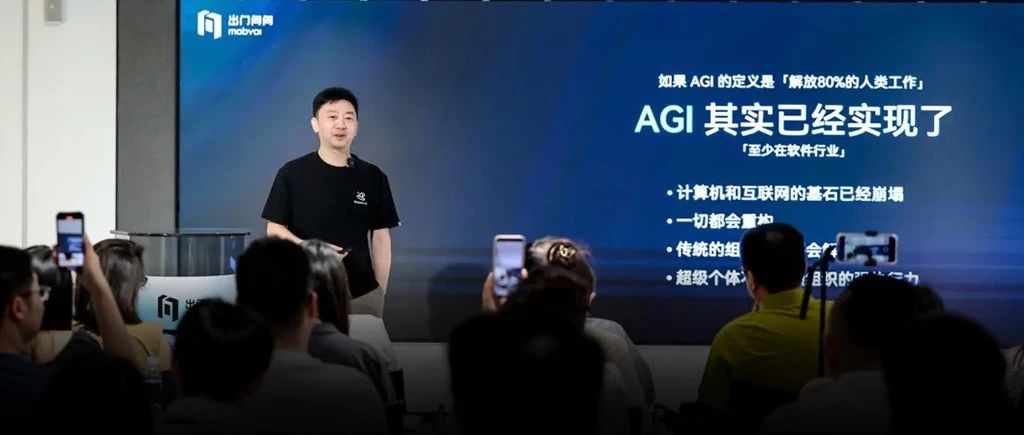
Core Viewpoint - The article discusses the launch of "TicNote," a product combining AI software and hardware by the company "出门问问" (DuerOS). The founder, Li Zhifei, shares his personal journey and insights on the evolution of AI and its implications for software development and organizational collaboration [1][6][11]. Group 1: Product Development and Innovation - Li Zhifei set an ambitious goal to develop a new collaboration platform for AI-native organizations within a short timeframe, highlighting the limitations of traditional tools in an AI-dominated environment [11][12]. - The development process was significantly expedited by leveraging AI tools, allowing a single individual to create a complex system in just two days, which traditionally would require a large team over several months [17][18][22]. - The resulting prototype included essential features such as private messaging, group chats, and file uploads, demonstrating the potential of AI to enhance productivity and streamline workflows [17][18]. Group 2: AI's Impact on Software Development - The article introduces a new paradigm for software development, encapsulated in the phrase "Use AI's AI to make AI," emphasizing the role of AI in automating coding and project management tasks [7][8]. - Li Zhifei's experience illustrates how AI can drastically reduce the time and resources needed for software development, enabling rapid prototyping and deployment of applications [19][20][23]. - The ability to generate complex code and automate tasks traditionally performed by multiple team members showcases the transformative potential of AI in the tech industry [22][23]. Group 3: The Future of AI and AGI - The discussion touches on the concept of self-evolving AI systems, where agents can learn from their experiences and adapt their strategies without human intervention, marking a significant step towards achieving AGI [24][45]. - Li Zhifei emphasizes the importance of recursive structures in AI agents, allowing them to break down complex tasks into manageable sub-tasks, thereby enhancing their problem-solving capabilities [41][42]. - The article concludes with a renewed belief in the potential of AI and AGI, suggesting that innovative thinking and technological capability can enable smaller companies to participate in the AGI development process [46][52].
一文读懂 Deep Research:竞争核心、技术难题与演进方向
Founder Park· 2025-06-26 11:03
Core Insights - The article discusses the emergence and evolution of "Deep Research" systems in the AI Agent exploration wave, highlighting the rapid development and competition among major players like Google, OpenAI, and Anthropic since late 2024 [1][2] - A comprehensive survey from Zhejiang University provides a framework for understanding and evaluating the current landscape of deep research systems, emphasizing the shift from model capability to system architecture and application adaptability as the main competitive focus [1][2] Group 1: Current Landscape and System Comparisons - The ecosystem of deep research systems is characterized by significant diversity, with different systems focusing on various technical implementations, design philosophies, and target applications [3] - Key differences among systems are evident in their foundational models and reasoning efficiency, with commercial giants leveraging proprietary models for superior performance in handling complex reasoning tasks [4] - Systems also differ in tool integration and environmental adaptability, showcasing a spectrum from comprehensive platforms to specialized tools [5] Group 2: Application Scenarios and Performance Metrics - In academic research, systems like OpenAI/DeepResearch excel due to their rigorous citation and methodology analysis capabilities, while in enterprise decision-making, systems like Gemini/DeepResearch thrive on data integration and actionable insights [8] - Performance metrics reveal that leading commercial systems maintain an edge in complex cognitive ability benchmarks, although specialized evaluations highlight the strengths of various systems in specific tasks [9][10] Group 3: Implementation Challenges and Technical Solutions - The implementation of deep research systems involves strategic trade-offs across architecture design, operational efficiency, and functional integration [12] - Core challenges include managing hallucination control, privacy protection, and ensuring interpretability, with solutions focusing on source grounding, data isolation, and transparent reasoning processes [15] Group 4: Evaluation Frameworks - The evaluation of deep research systems is evolving from single metrics to a multi-dimensional framework that assesses functionality, performance, and contextual applicability [16] - Functional evaluations focus on task completion capabilities and information retrieval quality, while non-functional assessments consider performance efficiency and user experience [17][18] Group 5: Future Directions in Reasoning Architecture - Future advancements in deep research systems are expected to address limitations in context window size, enabling more comprehensive analysis of large-scale research materials [22][23] - The integration of causal reasoning capabilities and advanced uncertainty modeling will enhance the systems' applicability in complex fields like medicine and social sciences [27][30] - The development of hybrid architectures that combine neural networks with symbolic reasoning is anticipated to improve reliability and interpretability [25][26]
2025 AI Cloud 100 China榜单发布:6个赛道,34家新上榜,DeepSeek、Manus上榜
Founder Park· 2025-06-25 11:23
Core Insights - The article discusses the release of the 2025 AI Cloud 100 China list, highlighting significant advancements in the GenAI sector and the economic impact of AI-driven cloud companies [3][5][9]. Group 1: AI Cloud 100 China List - The 2025 AI Cloud 100 China list focuses on cloud companies that have successfully commercialized GenAI, with 38 companies reporting that over 50% of their revenue is driven by GenAI [5][9]. - A total of 34 new companies made the list this year, with two of them achieving top 10 rankings for the first time: DeepSeek and 百图生科 [9][10]. - The number of unicorns on the list is 33, slightly down from the previous year, with an average valuation of 12.5 billion yuan, lower than last year's 13.9 billion yuan [10][61]. Group 2: Industry Trends and Financing - Global AI financing saw a remarkable increase of 79.6% year-on-year, with AI financing now accounting for 37% of total financing, up from 21% [21][22]. - Despite a decline in total financing in China, significant investments continue to flow into AIGC, autonomous driving, and AI applications [24][26]. - Major tech companies in both the US and China are ramping up investments in AI Cloud, with Amazon, Alphabet, and Microsoft projected to spend $250 billion in 2025, a 33% increase from the previous year [26][29]. Group 3: Future Trends in AI Cloud - The report identifies five key trends for AI Cloud development by 2025, including the transition from Copilot to Autopilot applications, the rise of Ambient intelligence, and the emergence of Result as a Service (RaaS) [46][48][53]. - The shift towards edge AI is expected to create new application opportunities as AI-integrated devices become more prevalent [55]. - The report emphasizes the importance of high-quality data in advancing embodied intelligence applications [57]. Group 4: Sector Analysis - The AI for Productivity sector has the highest number of companies on the list, totaling 31, while the AI infrastructure sector boasts the highest valuations [63]. - Companies with GenAI revenue exceeding 50% have significantly increased, indicating a strong trend towards AI-driven business models [65].

TRAE 如何思考 AI Coding :未来的 AI IDE,是构建真正的「AI 工程师」
Founder Park· 2025-06-25 10:19
Core Viewpoint - The article discusses the increasing interest and development in AI coding tools, emphasizing the evolution of programming languages and the potential of AI to transform software development processes [1][8][10]. Group 1: AI Coding Landscape - More players are entering the AI coding space, from low-code platforms for general users to IDEs for professional programmers [1][2]. - TRAE, as the first AI Native IDE in China, aims to integrate AI into the entire software development workflow, proposing an "AI + tools" model [3][5]. Group 2: Evolution of Programming Languages - The development of programming languages has been a process of abstraction and simplification, evolving from machine and assembly languages to high-level languages like C, Java, and Python [9][10]. - The number of global developers has grown exponentially, from around one million in the 1990s to over 100 million registered developers on GitHub by 2023 [10]. Group 3: TRAE's AI IDE Features - TRAE's AI IDE combines product, engineering, and model capabilities to enhance developer efficiency and foster innovation [11][13]. - The IDE features include code completion (referred to as "cue") and natural language programming, allowing developers to interact with AI in a conversational manner [17][19]. Group 4: User Experience and Adoption - TRAE has achieved over one million monthly active users and generated over 60 billion lines of code, indicating strong user engagement and adoption [24]. - The article highlights a case study of a non-technical product manager who successfully developed an app using various AI tools, showcasing the potential for AI to empower users without coding backgrounds [25][29]. Group 5: Future Development and Integration - The future vision for TRAE includes creating a unified workspace where AI can manage various tools and tasks, enhancing collaboration between users and AI [31][32]. - The company aims to evolve from "AI writing code" to "AI doing development," focusing on integrating tools into a cohesive AI-driven environment [32].

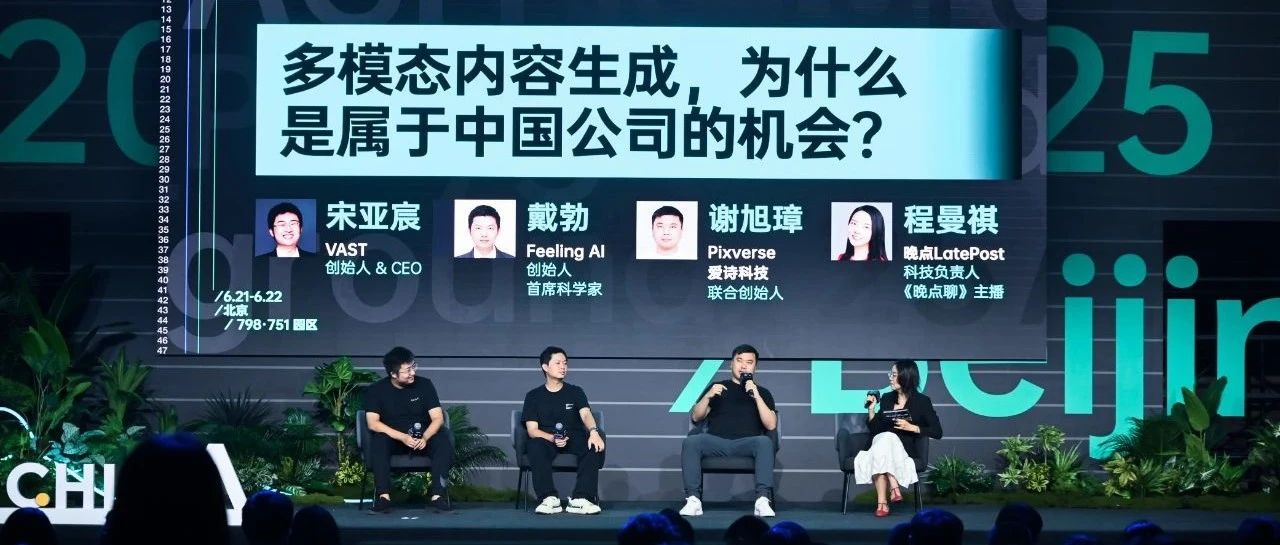
多模态内容生成的机会,为什么属于中国公司?
Founder Park· 2025-06-24 11:53
Core Viewpoint - The article emphasizes that Chinese startups are gaining a leading edge in the multimodal content generation field, particularly in video and 3D creation, contrasting with the U.S. dominance in large language models [1][3]. Group 1: Advantages of Chinese Startups - Chinese teams have accumulated significant experience in video technology, with products like Douyin and Kuaishou laying a strong foundation for video generation [3][7]. - The flexibility of organizational structures in Chinese startups fosters innovation, allowing them to adapt quickly to market needs [3][4]. - The multimodal field remains open for innovation, with rich application scenarios and a strong talent pool in China providing fertile ground for technological advancements [3][8]. Group 2: Competition with Major Players - Startups maintain strategic focus and seek niche opportunities despite competition from giants like Alibaba and Tencent, who are entering the space with open-source models [4][9]. - The competition with large companies is seen as a rite of passage for startups, pushing them to mature and refine their strategies [10][11]. - Startups are leveraging their early investments in core technologies to stay ahead of larger competitors who are now trying to catch up [9][11]. Group 3: Future Trends and Innovations - The article discusses the potential for technology to lower the barriers for content creation, enabling more ordinary users to participate in multimodal content generation [5][37]. - Key trends include the unification of generation and understanding in multimodal models, which enhances controllability and consistency in outputs [14][15]. - Real-time generation capabilities are advancing, with companies like Pixverse achieving near real-time video generation speeds, which could lead to new application scenarios [17][18]. Group 4: User Engagement and Market Dynamics - The shift towards user-generated content (UGC) is highlighted, with startups aiming to create tools that simplify the content creation process for everyday users [21][22]. - The market for short video creation remains vast, with a significant portion of users yet to engage in content creation, presenting growth opportunities for startups [23][24]. - Startups are focusing on developing professional-grade tools that cater to both professional and semi-professional users, ensuring a robust ecosystem for content creation [25][26]. Group 5: Goals and Challenges Ahead - Companies aim to achieve high-quality real-time video generation models and expand their user base significantly in the coming year [37]. - The challenge lies in creating accessible tools for 3D content creation, with aspirations to democratize the process for a broader audience [37].