思宇MedTech

Search documents
全球首款获批!抗感染碘涂层全髋关节
思宇MedTech· 2025-10-05 16:01
Core Insights - Zimmer Biomet's iTaperloc Complete and iG7 hip systems have received approval from Japan's PMDA, marking them as the first orthopedic implants equipped with an anti-infection iodine coating technology [2] - The rise of periprosthetic joint infection (PJI) poses significant clinical challenges, affecting 1-2% of primary replacement patients and up to 5-10% in revision surgeries, leading to severe complications and high treatment costs [3] - The iodine coating technology offers a novel approach to combat PJI by utilizing iodine's natural antibacterial properties, which can inhibit bacterial adhesion and biofilm formation without inducing antibiotic resistance [4][5] Group 1: Clinical Challenges of PJI - PJI is a serious complication of joint replacement surgeries, with a mortality rate comparable to breast cancer for hip joint infections, highlighting its life-threatening nature [3] - The economic burden of PJI treatment can reach $50,000 to $100,000 per case in developed countries, encompassing multiple surgeries and long-term rehabilitation [3] - The increasing prevalence of antibiotic-resistant strains, such as MRSA, complicates traditional infection control measures, necessitating innovative solutions [3] Group 2: Iodine Coating Technology - The iodine coating is applied through advanced anodization and electrophoresis, creating a controlled release mechanism that continuously releases iodine during the critical postoperative infection window [4][5] - In vitro studies show over 90% inhibition of Staphylococcus aureus, and animal studies indicate a reduction in infection rates by 50% or more with iodine-coated implants [5] - The technology simplifies surgical procedures without altering existing protocols, providing enhanced infection protection [6] Group 3: Regulatory and Market Outlook - Following approval in Japan, Zimmer Biomet is pursuing regulatory approval for the iodine coating technology in other markets, including the FDA and EU, which will require additional clinical data [7] - Successful entry into these markets will validate the global applicability of the technology and support further clinical research [7] Group 4: Future Trends in Orthopedic Infection Control - The introduction of iodine coating reflects a shift towards non-antibiotic, anti-biofilm strategies in orthopedic implants, with potential expansions into knee joints, spinal fixation, and trauma repair devices [8] - Future developments may integrate iodine coating with smart monitoring systems to detect infection markers in real-time, enhancing preventive measures [8] - The ongoing research may lead to multi-layer protective systems that further reduce PJI incidence, influencing clinical guidelines towards a preventive approach [8]



医疗器械创新揭秘:医生的“好点子”如何成为现实?
思宇MedTech· 2025-10-04 14:33
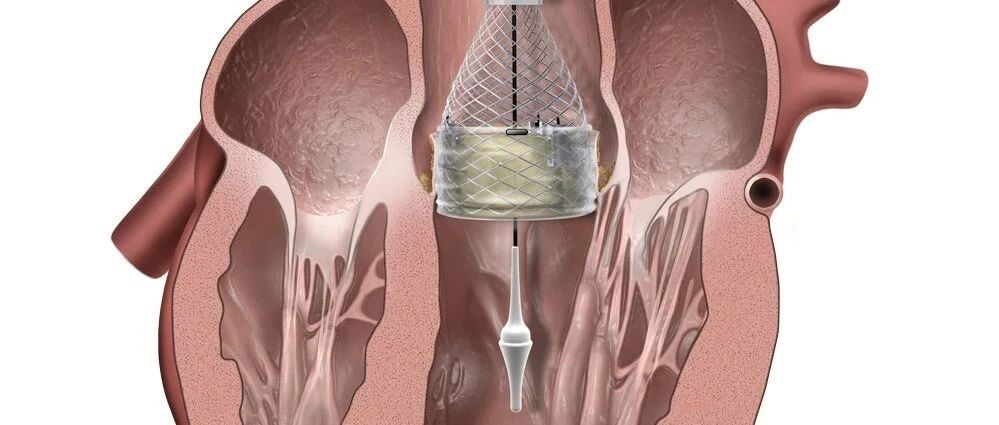
Core Viewpoint - The article emphasizes the importance of transforming clinical inspirations from doctors into tangible medical devices, highlighting the complex journey from idea to marketable product and the critical role doctors play in this innovation process [1][16]. Group 1: Sources of Inspiration - Clinical inspirations often arise from high-risk procedures, inadequate instruments, or improvised solutions during surgery, serving as the starting point for innovation [2]. - Examples include TAVR (Transcatheter Aortic Valve Replacement), which illustrates how a simple idea can evolve into a complex engineering challenge [4]. Group 2: Pathway from Idea to Product - The transition from concept to product involves a regulatory and engineering process, where early involvement of doctors in defining needs can enhance innovation efficiency [5]. - Common scenarios prompting innovation include high-risk steps that consume significant physician attention and energy, situations where existing instruments are insufficient, and improvised solutions during procedures [5]. Group 3: Challenges in Hardware Development - Hardware innovation requires precision manufacturing, reliability testing, and adherence to strict safety standards, often exceeding the intuitive understanding of physicians [7]. - Small modifications in design can necessitate comprehensive system redesigns, complicating the development process [7][10]. Group 4: Software and Algorithm Challenges - Medical software and AI algorithms must not only function but also be verifiable and traceable, maintaining stability across various clinical scenarios [12]. - The approval process for AI systems, such as IDx-DR, requires extensive validation to demonstrate consistent performance across diverse populations and settings [14]. Group 5: Role of Doctors in Innovation - Doctors should not only propose ideas but also translate clinical challenges into engineering requirements that can be executed and validated by engineers [15]. - An example is the development of the SpineAssist system, where a physician's precise definition of the problem led to a successful engineering solution [15]. Group 6: Conclusion - The journey from a doctor's idea to a medical device is lengthy and interdisciplinary, requiring rigorous validation for both hardware and software, as well as adherence to regulatory standards [16]. - Understanding these challenges encourages doctors to engage effectively in the innovation process by articulating clinical problems in engineering terms [16].
非植入式脑机接口+苹果Vision Pro
思宇MedTech· 2025-10-04 14:33
Core Viewpoint - Cognixion has initiated a clinical study to explore the integration of its non-invasive brain-computer interface (BCI) based on EEG with Apple Vision Pro, aiming to provide a new natural interaction method for patients without surgery [2][8] Product and Technology Features - Cognixion's Axon-R platform is a wearable, non-invasive neural interface device that captures and decodes brain activity through advanced EEG measurement and feedback [4] - The study combines Cognixion's platform with Apple Vision Pro's spatial computing and assistive features, emphasizing a "non-surgical, wearable, and everyday" approach, making it easier to promote in clinical and home settings [4][10] Clinical Research Design - The clinical study has begun recruitment and will continue until April 2026, with plans to conduct pivotal clinical trials and apply for FDA approval in 2026 after feasibility studies [5] Interaction and Application - The study aims to validate natural communication capabilities through the combination of EEG signals and eye-tracking, assessing the technology's value in mobile device control, entertainment, education, and work [6] - The focus is on exploring applications for patients with ALS, spinal cord injuries, post-stroke speech disorders, and traumatic brain injuries [6] Company and Collaboration Background - Cognixion, based in Santa Barbara, California, is a startup focused on neural interfaces and assistive technologies, aiming to make brain-computer interfaces accessible as wearable everyday devices [7] Industry Trends - The integration of non-invasive BCI technology with mainstream consumer electronics, represented by Cognixion's collaboration with Apple Vision Pro, signifies a new trend in the BCI market [8] - The opportunity for non-invasive BCI is highlighted as it provides a lower barrier solution compared to implantable BCIs, which are still in early clinical stages [10] - The trend towards multi-modal integration, combining EEG signals with eye-tracking and head posture, is seen as a significant development direction for future BCI technologies [10]


西门子医疗分拆背后:从GPS三巨头看工业与医疗的“分分合合”
思宇MedTech· 2025-10-03 14:54
Core Viewpoint - Siemens AG is considering a direct spinoff of its majority stake in Siemens Healthineers, which could significantly impact the global medical technology industry [2][4]. Group 1: Company Overview - Siemens Healthineers is currently valued at approximately €52 billion and has a revenue of about €22.36 billion for the fiscal year 2024 [3][11]. - The company operates in four main segments: Imaging, Diagnostics, Radiation Therapy, and Advanced Therapies, providing a comprehensive medical technology product system [13]. Group 2: Competitive Landscape - Siemens Healthineers, GE HealthCare, and Philips are recognized as the "GPS" giants in the global medical technology sector, each following different strategic paths [7][8]. - GE HealthCare has completed its independent listing in 2023, while Philips has undergone a long-term transformation to focus solely on medical technology [7][11]. Group 3: Financial Performance - Siemens Healthineers reported a slight revenue growth, with Imaging being the primary revenue contributor at approximately €13.2 billion [17]. - The company faces refinancing pressures due to its €13.9 billion debt, with about €9.4 billion provided by the parent company, which may require refinancing if the control structure changes [18]. Group 4: Strategic Insights - The article emphasizes the importance of patience and strategic foresight in the medical technology sector, highlighting that companies must be "friends of time" to succeed [5][36]. - The historical evolution of Siemens, GE, and Philips illustrates the shift from industrial conglomerates to independent medical technology firms, driven by market demands and capital considerations [31][34]. Group 5: Implications for Chinese Enterprises - Chinese companies entering the medical technology field should consider the lessons from the GPS giants, particularly regarding the potential benefits of independence and the need for long-term investment [38][40]. - The article suggests that as the medical business grows, it may become a drag on the parent group's capital operations, indicating a need for strategic separation [39].



融资1.1亿!皮肤癌早筛
思宇MedTech· 2025-10-03 14:54
Core Insights - DermaSensor has completed a $16 million Series B funding round, bringing its total funding to $43 million, with participation from existing investors and new strategic partners [2][3][13] - The funding will be used to drive commercialization, support new R&D pipelines, and strengthen clinical evidence [3][13] Company Overview - DermaSensor specializes in a wireless handheld skin cancer detection device aimed at outpatient, grassroots, and initial screening scenarios [5] - The device combines spectroscopy and artificial intelligence, making it one of the first FDA-approved real-time AI skin cancer detection systems [6][11] - The technology is based on Elastic Scattering Spectroscopy (ESS), allowing the device to collect scattering signals at cellular and subcellular levels [7] Clinical Impact - Since its U.S. launch in mid-2024, the device has completed over 20,000 skin lesion scans, significantly reducing the skin cancer misdiagnosis rate by approximately 50% [12] - It has helped identify around 2,000 suspected skin cancer lesions, facilitating patient referrals for further diagnosis and treatment [12] Market Potential - The successful funding round amidst a tightening investment environment highlights the market's confidence in the "smart early screening" sector [13][17] - The device is designed to complement dermatologists rather than replace them, creating a model of "smart prediction—expert diagnosis" that enhances overall diagnostic efficiency [17] Future Plans - The company plans to expand three R&D pipelines based on existing hardware and strengthen real-world data and evidence-based research to accelerate global market penetration [13]

健康险新政!或将成为创新器械“第二张门票”?
思宇MedTech· 2025-10-02 02:45
Core Insights - The article discusses the new guidelines issued by the National Financial Supervision Administration aimed at promoting high-quality development in health insurance, emphasizing the integration of new medical technologies, drugs, and devices into commercial insurance coverage by 2030 [2][14]. Group 1: Overview of the Health Insurance Landscape - China's medical security system is structured into three layers: basic medical insurance, personal out-of-pocket expenses, and commercial health insurance [3]. - As of the end of 2024, the basic medical insurance covers 1.327 billion people, maintaining a coverage rate of 95% [4]. - The total income of the basic medical insurance fund is 3.49 trillion yuan, with expenditures of 2.98 trillion yuan, resulting in a cumulative balance of 3.86 trillion yuan [5]. - The payment levels for employee medical insurance cover approximately 85% of inpatient costs, while resident medical insurance covers about 69% [6]. - Basic medical insurance is the primary payment pool but has strict entry mechanisms for innovative drugs and devices due to sustainability concerns [7]. Group 2: Personal Out-of-Pocket Expenses - Despite broad coverage, patients still face significant out-of-pocket expenses for high-value medical consumables and innovative devices [8]. - Medical assistance covers 79.16 million people with expenditures of 79.2 billion yuan, but its scale is limited [9]. Group 3: Commercial Health Insurance - In 2024, the total premium income for commercial health insurance reached 977.4 billion yuan, accounting for about 17% of the national insurance market [10]. - The claims expenditure was 405.2 billion yuan, representing around 5% of the total resident medical expenses of approximately 850 billion yuan [10]. - The growth of products like "惠民保" and "百万医疗险" is expanding coverage for specific diseases and rare conditions, although overall coverage remains weak [11]. - Commercial insurance is becoming an important supplement between basic medical insurance and personal payments, facilitating the entry of innovative devices into the payment system [12]. Group 4: Policy Implications - The new guidelines signal an expansion of payment coverage, innovative payment methods, and deeper industry collaboration [14]. - The inclusion of new devices in insurance coverage indicates that commercial health insurance will no longer be limited to traditional disease coverage [18]. - The exploration of "pay-for-performance" models provides new collaboration opportunities for medical device companies [19]. - Group health insurance may become an efficient funding channel, while individual health insurance is emerging as a primary means for covering specific diseases and rare devices [20][21]. Group 5: Market Challenges - The low claims payout levels and insufficient coverage perception pose challenges for commercial health insurance [24]. - The imbalance in product structure leads to inadequate coverage for chronic disease populations, which are key users of innovative devices [27]. - There is a lack of data sharing among the three medical sectors, making it difficult for insurance companies to obtain real-world efficacy evidence for accurate pricing [28]. Group 6: Insights for the Medical Device Industry - Commercial insurance is positioned as a "pre-payment" avenue for innovative devices, allowing for a pathway of "insurance coverage first, data accumulation, then entry into basic medical insurance" [30]. - Data will be a crucial bargaining chip in collaborations with commercial insurance, emphasizing the need for real-world evidence to demonstrate product efficacy [31]. - Group insurance and "惠民保" are identified as key entry points for promoting device applications [32]. Group 7: Future Outlook - The high-quality development of health insurance represents a transformation in the insurance industry and a rebalancing of China's medical security system [33]. - The evolving payment structure will significantly impact the clinical implementation and market penetration of innovative devices [34].

新成立学院!首都医科大学响应医工交叉大趋势
思宇MedTech· 2025-10-01 03:18
Core Viewpoint - The establishment of the Capital Medical University Medical Technology College represents a strategic integration of resources, aiming to enhance clinical capabilities and technological innovation in response to evolving healthcare trends [1][7]. Group 1: Trends in Medical Technology - Trend 1: Medical technology is shifting from a supportive role to a leading role, driving precision medicine. Advanced technology platforms are essential for precise disease prediction, diagnosis, treatment, and rehabilitation [4]. - Trend 2: Deep "medical-engineering integration" is becoming a necessary path for innovation. The new college will serve as a platform for collaboration between clinical needs and engineering principles, potentially leading to breakthroughs in high-end medical equipment and AI-assisted diagnosis [5]. - Trend 3: The demand for high-quality, interdisciplinary talent is increasing. The college aims to address the talent gap by developing a systematic and high-level training system for future medical technology experts [6]. Group 2: Institutional Overview - Capital Medical University, established in 1960, is a key medical institution supported by the Beijing government and national health authorities, with over 16,000 full-time students [10]. - The university boasts a robust clinical platform with 21 affiliated hospitals, providing over 20,000 beds, which facilitates extensive case studies and clinical training [10][11]. - The institution has a strong faculty, including seven academicians from the Chinese Academy of Sciences and the Chinese Academy of Engineering, and has achieved significant academic recognition with multiple national key disciplines [11].

国产医疗器械的时代,来了!
思宇MedTech· 2025-10-01 03:18
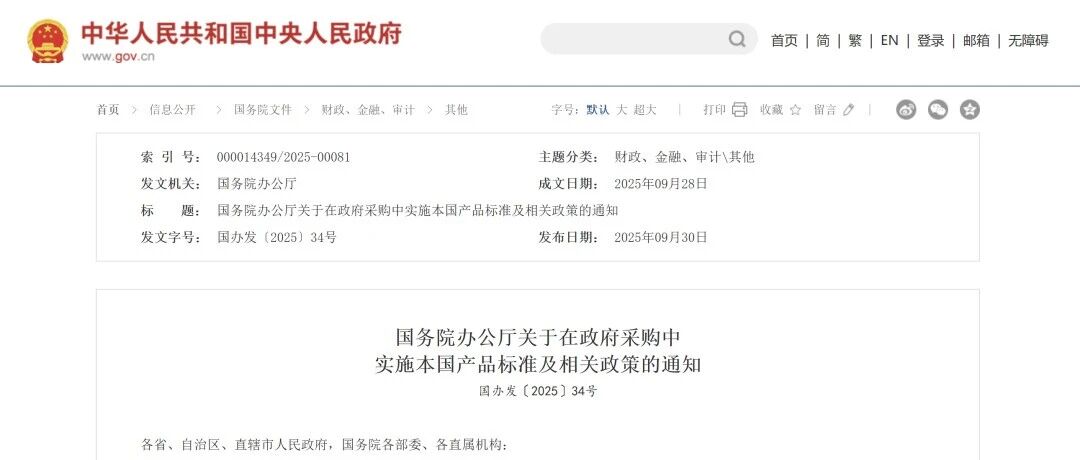
Core Insights - The article discusses the implementation of domestic product standards in government procurement, marking a significant shift towards prioritizing domestic products in China [2][3][42] - The new policy establishes quantifiable standards and verification mechanisms for domestic products, moving from encouragement to mandatory compliance [2][3][42] Policy Overview - The State Council issued a notification that will take effect on January 1, 2026, emphasizing the need for domestic products in government procurement [2][5] - The policy aims to enhance the resilience of the medical device supply chain and ensure national security amid global uncertainties [3][42] Domestic Product Standards - Domestic products must meet three criteria: 1. Products must undergo a transformation in China from raw materials to finished goods [9][10] 2. The cost of components produced in China must meet a specified percentage of the total product cost [9][10] 3. Key components and processes must be completed within China for certain products [9][10][11] Support for Domestic Products - Domestic products will receive a 20% price evaluation discount in government procurement, enhancing their competitiveness [12][13] - If a supplier's products meet the domestic standards, all products in a procurement package can benefit from this discount [12][13] Implementation and Compliance - Suppliers must submit a declaration confirming their products meet domestic standards, which will be crucial for participating in government procurement [25][27] - The article outlines the importance of compliance and transparency in supply chains to avoid penalties for false declarations [27][28] Strategic Implications for Companies - Foreign companies must adapt their strategies, either by localizing production or retreating to private and self-pay markets [30][31][32] - Domestic companies are encouraged to leverage the policy to expand their market share and invest in key components and technologies [34][35] Future Outlook - The next 5-10 years are seen as a critical window for companies to adjust to the new standards and enhance their competitive positions [42][44] - The policy is expected to reshape the market landscape, creating a clear divide between companies that can meet the new standards and those that cannot [44][46]
“港澳药械通”让患者在家门口治肝癌!暨大附一院完成大湾区首例钇 90 玻璃微球手术
思宇MedTech· 2025-09-30 05:03
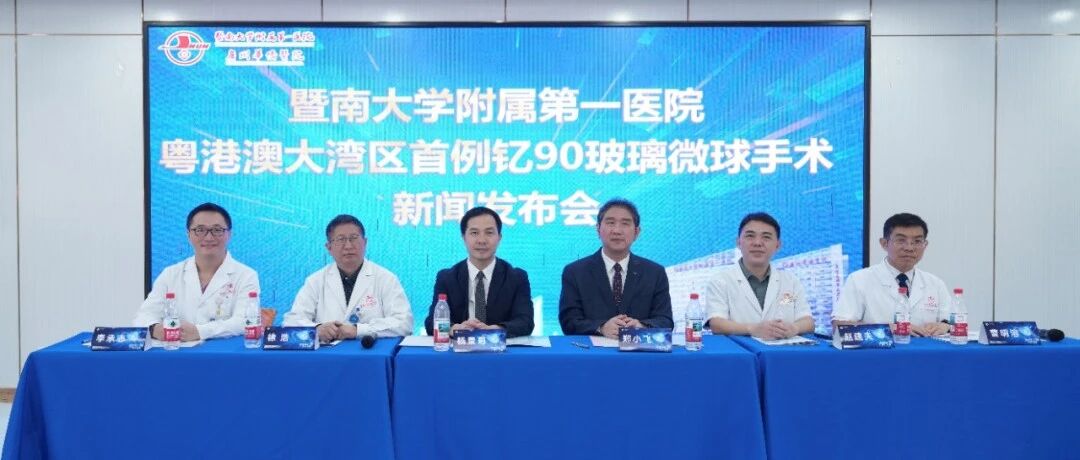
Core Viewpoint - The successful implementation of the Y90 glass microsphere system at Jinan University First Affiliated Hospital marks a significant advancement in the treatment of primary liver cancer in the Guangdong-Hong Kong-Macao Greater Bay Area, showcasing the potential for innovative, minimally invasive therapies to improve patient outcomes [1][5]. Summary by Sections Patient Background and Treatment Decision - A patient with primary liver cancer, previously experiencing dizziness, headaches, and high blood pressure, was evaluated by a multidisciplinary team. Traditional surgical options were deemed high-risk for recurrence, leading to the recommendation of Y90 glass microsphere therapy for better long-term outcomes [2][3]. Clinical Context of Liver Cancer in China - China bears the highest burden of liver cancer globally, accounting for 42.4% of cases. Over 367,700 new cases are reported annually, with 70%-80% of patients unable to undergo direct surgical resection at initial treatment. The five-year survival rate for domestic liver cancer patients is only 14.1% [3]. Y90 Glass Microsphere Technology - The Y90 glass microsphere is the first radioactive tumor treatment device approved in the Greater Bay Area and the first globally to receive FDA approval for primary liver cancer treatment. It combines targeted radiation therapy with minimally invasive techniques, allowing for personalized treatment plans [5][9]. Surgical Procedure and Benefits - The procedure utilized advanced imaging and intervention techniques, allowing for the injection of millions of Y90 microspheres directly into the tumor's blood supply. This method minimizes damage to surrounding healthy tissue and reduces side effects compared to traditional therapies [8]. Safety and Efficacy - The Y90 microspheres have a short half-life, releasing most of their radiation within two weeks and ceasing after 28 days. This minimizes long-term radiation exposure risks, enabling patients to return to normal life quickly post-treatment [8]. Future Prospects - Jinan University First Affiliated Hospital plans to establish a Y90 center in 2024, aiming to integrate multidisciplinary advantages and provide cutting-edge treatment options for liver cancer patients in the Greater Bay Area and nationwide [8]. Clinical Outcomes - Internationally, Y90 glass microspheres have been used for over 20 years, treating more than 200,000 cases. Studies indicate that patients receiving this treatment can achieve significant tumor reduction, with a median survival of 12.5 years and a three-year survival rate of 93% for those who subsequently undergo liver transplantation or surgical resection [9].
强国有“镜”!3D软镜破局,国产内镜从封锁到领跑
思宇MedTech· 2025-09-30 05:03
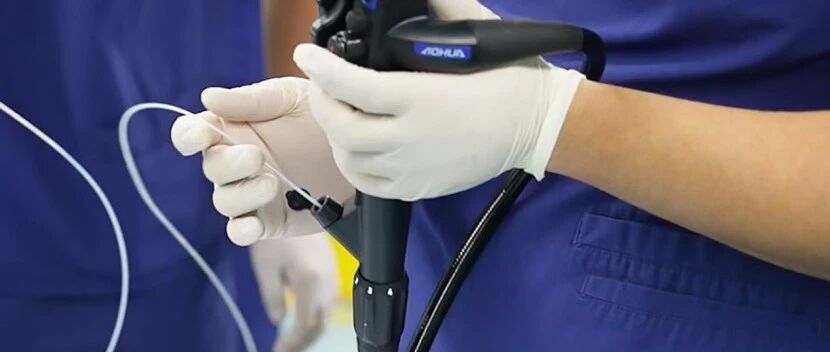
Core Viewpoint - The article discusses the challenges and advancements in the high-end endoscope market, highlighting the shift from reliance on foreign brands to the emergence of domestic companies in China, particularly in the development of 3D endoscopes. Group 1: Domestic Breakthroughs - Domestic endoscope companies are moving beyond mere replacement of foreign products to developing their own core components, imaging algorithms, and clinical applications, gradually building their technological capabilities [2] - The transition from electronic endoscopes to 4K technology has been marked by significant breakthroughs in optical structure, image processing chips, and color restoration algorithms [2] - The complete supply chain for core modules such as light sources, image processing chips, and lens materials is increasingly being replaced domestically, leading to a significant reduction in supply chain costs and making high-end technology commercially viable [2] - There is a growing clinical demand for early cancer screening, intraoperative localization, and complex cavity treatments, which necessitates advanced spatial judgment and identification of small lesions, making 3D spatial imaging a necessity [2] - Policy support and funding, as outlined in the "14th Five-Year Plan for Medical Equipment Industry Development," are encouraging domestic medical device companies to innovate [2] Group 2: Technical Challenges - Transitioning from 2D to 3D imaging involves a comprehensive technical challenge across optics, electronics, algorithms, and materials, where each detail's breakthrough is crucial for the clinical application of 3D soft endoscopes [4] - In optical design, achieving dual optical path imaging in a compact head end while ensuring uniform light transmission and precise focusing is essential [4] - High-performance, low-power imaging chips are required to handle real-time processing and transmission of multiple signals [5] - Software algorithms must be developed for high-speed 3D image reconstruction and real-time fusion to ensure that imaging during surgical operations is free from delays and distortions [6] Group 3: Benchmark for Domestic Breakthroughs - Aohua Endoscopy represents a benchmark for domestic endoscope companies, showcasing the transition from follower to innovator, with its 3D ultra-high-definition soft endoscope system AQ-400 marking a significant milestone [9] - The product iteration path from the launch of the AQ-100 in 2013 to the upcoming AQ-400 in 2025 illustrates the continuous breakthroughs in domestic innovation [11] - The success of the 3D soft endoscope transcends being just a new product; it signifies a shift from merely filling gaps to creating new standards, redefining "precise diagnosis and treatment" in endoscopy [13] - The narrative of domestic endoscopes has evolved from being locked out of the market to leading innovation with 3D technology, challenging the notion that high-end endoscopes must be imported [13] - As 3D technology becomes more widespread and more domestic innovations are realized, "Made in China" is expected to occupy a more central position in the global high-end medical device sector [13]