投资界

Search documents
中国富豪为什么爱汇丰
投资界· 2025-07-25 07:32
Core Viewpoint - The article discusses the ongoing inheritance dispute within the Zong family, particularly focusing on the legal battle involving the heirs of China's former richest man, Zong Qinghou, and the implications for HSBC, the bank involved in managing the family's wealth [4][6]. Group 1: HSBC's Position and Strategy - HSBC is a major player in Hong Kong's banking sector, being one of the three major note-issuing banks and has a long history dating back 160 years [6][8]. - The bank's stock has seen a significant increase, rising from below 60 HKD in August 2024 to nearly 100 HKD, with a market capitalization exceeding 1.7 trillion HKD [6][8]. - HSBC's recent strategy has focused on cost reduction and concentrating resources in the most profitable regions, leading to a series of asset sales in various countries while expanding operations in India [7][8]. Group 2: Profitability and Business Segmentation - In 2024, HSBC's Hong Kong subsidiary generated a pre-tax profit of 20.47 billion USD, accounting for 63.4% of the bank's total pre-tax profit of 32.31 billion USD [8][9]. - The bank's wealth management segment has shown higher profitability compared to its investment banking division, with a profit margin of 44.4% versus 40.8% for investment banking [10]. - HSBC has restructured its business segments to give more autonomy to its most profitable regions, particularly Hong Kong and the UK, allowing for comprehensive service offerings to high-net-worth clients [13][14]. Group 3: Client Strategy and Market Position - HSBC's client strategy focuses on high-net-worth individuals, offering premium services that require significant asset thresholds, effectively filtering out lower-value clients [15][16]. - The bank's long-standing reputation and established creditworthiness attract wealthy clients, particularly those who have experienced market volatility [18]. - HSBC's ownership structure is highly diversified, with major shareholders including BlackRock and Ping An Asset Management, indicating a professional management approach rather than family control [19][20]. Group 4: Leadership and Succession Challenges - The current chairman, Mark Tucker, is set to leave HSBC, and the search for a successor has faced challenges, with many potential candidates declining offers [27][28]. - The leadership transition reflects the complexities of managing a large financial institution with a global footprint, particularly in balancing Western and Asian market interests [28].


37岁理工男,估值1000亿
投资界· 2025-07-25 07:32
Core Viewpoint - Surge AI, a hidden unicorn in the AI sector, has initiated its first round of financing, aiming to raise $1 billion with a valuation reaching $15 billion (approximately 100 billion RMB) [1][7]. Company Overview - Founded in 2020 by Edwin Chen, a Chinese entrepreneur with a background in mathematics, linguistics, and computer science from MIT, Surge AI has achieved over $1 billion in annual revenue within five years without external financing [2][3][5]. - Surge AI specializes in data annotation, focusing on complex tasks that require significant time investment, and charges 2 to 5 times more than competitors like Scale AI [6][7]. Market Position and Growth - Surge AI has collaborated with major companies such as OpenAI, Google, Microsoft, and Meta, surpassing Scale AI's revenue of $870 million during the same period [7][10]. - The global data annotation market is experiencing explosive growth, with a compound annual growth rate of 29.1%, driven by increasing demand for high-quality data across various sectors [11]. Talent Acquisition in AI - The article highlights a trend of major tech companies aggressively recruiting top Chinese AI talent, indicating a significant shift in the AI landscape towards Chinese professionals [13][15]. - Notable figures include Ruoming Pang, who was offered a $200 million annual salary by Meta, and other prominent AI researchers from leading institutions joining major firms like Nvidia [13][14][15].

一个医药IPO大涨100%
投资界· 2025-07-25 07:32
Core Viewpoint - The article highlights the resurgence of the biopharmaceutical sector, particularly focusing on the successful IPO of Nanjing Weilizhibo Biotechnology Co., Ltd. on the Hong Kong Stock Exchange, marking a significant milestone for the company and the industry as a whole [3][15]. Company Overview - Nanjing Weilizhibo, founded 13 years ago by two key figures, Kang Xiaoqiang and Lai Shoupeng, has a strong background in biopharmaceutical research and development, having previously worked at major companies like Eli Lilly [3][4][6]. - The company specializes in clinical-stage biopharmaceuticals, focusing on treatments for cancer, autoimmune diseases, and other major illnesses, with a pipeline of 12 products, 6 of which are in clinical stages [6][8]. Financial Performance - In 2023, Weilizhibo reported revenue of 8.865 million RMB, with significant net losses of 362.249 million RMB, 301.216 million RMB, and 75.367 million RMB for the years 2023, 2024, and the first three months of 2025, respectively [7][8]. - The company's R&D expenditures were substantial, amounting to 230.858 million RMB in 2023, contributing to its financial losses [8]. Investment and Funding - Weilizhibo has undergone multiple funding rounds, raising significant capital from various venture capital and private equity firms, with a total of 8 financing rounds leading up to its IPO [11][12]. - The company has established partnerships for drug development, including a notable collaboration with BeiGene, which involved a licensing deal worth up to 772 million USD, although this partnership has since ended [8][11]. Industry Trends - The biopharmaceutical sector is experiencing a revival, particularly with the reopening of the IPO market for medical companies on the STAR Market, which has seen successful listings of companies like Heyuan Bio and Beixin Life [16][17]. - The Hong Kong Stock Exchange has also seen a surge in biopharmaceutical IPOs, with several companies successfully listing in the first half of the year, indicating a robust market environment for medical enterprises [17].
存100万,我提前退休
投资界· 2025-07-25 07:32
Core Viewpoint - The article discusses the challenges young people face in saving money for retirement, highlighting that while average savings are increasing, many individuals struggle to meet even basic savings goals [2][3][4]. Group 1: Savings Trends - The average household savings in China surpassed 100,000 yuan for the first time, reaching 107,000 yuan in 2024, with a total increase of 14.26 trillion yuan [4]. - The growth rate of household savings has consistently outpaced the growth rate of disposable income, indicating that people are saving faster than they are earning [5][6]. - In major cities like Beijing and Shanghai, average savings are significantly higher, with Beijing at 325,000 yuan and Shanghai at 250,000 yuan [8]. Group 2: Young People's Savings Challenges - A survey revealed that 53.7% of young people in second-tier cities and above have savings below 100,000 yuan, with 12.2% having no savings at all [9]. - Despite the low savings rates, many young people aspire to save for goals like buying a home or retiring early [12][15]. - The majority of young people believe they need between 500,000 to 2 million yuan to retire comfortably, with 27.6% choosing the 100,000 to 200,000 yuan range [16][17]. Group 3: Retirement Savings Calculations - The article introduces the "4% rule," suggesting that having savings equal to 25 times annual expenses can allow for retirement through investment returns [20][21]. - For example, if annual expenses are 40,000 yuan, one would need 1 million yuan saved to retire comfortably [21]. - The required savings for retirement varies by city, with the highest being 1.42 million yuan in Hangzhou and the lowest at 770,000 yuan in Harbin [25][26]. Group 4: Realities of Saving for Retirement - The article emphasizes that achieving significant savings by age 30 is extremely difficult for most young people due to various life expenses and financial pressures [29]. - A study indicates that only 25% of young people can stick to their savings plans, with major life events often derailing their financial goals [32]. - The average monthly expenses for young people are heavily influenced by housing costs, which consume a large portion of their income [34]. Group 5: Long-Term Savings Outlook - Calculations show that in cities like Nanjing, it would take about 32 years to save enough for retirement, while in Kunming, it could take up to 89 years [35]. - The article suggests that working in high-income cities and retiring in lower-cost areas could significantly reduce the time needed to save for retirement [38]. - Living in rural areas post-retirement could also be a viable option, requiring significantly less savings [39].

今天,成都宣布千亿基金
投资界· 2025-07-24 08:10
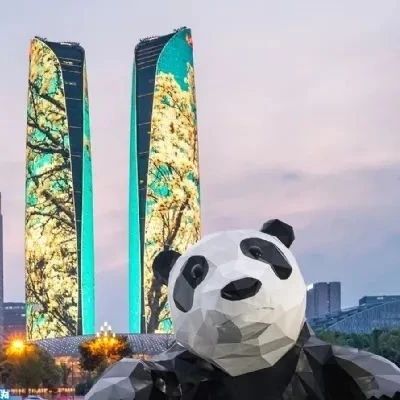
Core Viewpoint - Chengdu has launched its first future industry fund with an initial scale of 112 billion yuan, targeting ten future industry sectors, marking the beginning of the Chengdu government investment fund 2.0 era [2][3][10]. Fund Overview - The future industry fund has a total scale exceeding 100 billion yuan, representing a significant move in Chengdu's future industry development strategy [5]. - The fund is managed by Chengdu Industrial Investment Group and Chengdu Financial Holdings Group, which have established a comprehensive investment system covering various stages of fund investment [6][7]. - The fund aims to strengthen its investment capabilities in early-stage, small, new, and hard technology projects [7]. Investment Focus - The future industry fund will focus on the "9+9+10" modern industrial system, emphasizing sectors such as humanoid robots, flying cars, intelligent perception, and next-generation mobile communications [8]. Signing and Collaboration - During the launch event, multiple investment sub-funds and projects were signed, with a total signing amount of approximately 4 billion yuan and an overall intended signing amount of about 80 billion yuan [9]. - Chengdu High-tech Zone has collaborated with several well-known investment institutions and universities to promote investment in ten future industry incubation parks [9]. Industry Landscape - Chengdu is evolving from a leisure city to a hub for hard technology, with significant developments in low-altitude economy and a growing number of low-altitude economic enterprises [13]. - The city has established various industry funds, including a 300 billion yuan industry fund launched in April, which has attracted numerous venture capital and private equity firms [13]. Future Prospects - The future industry fund is seen as a strategic move to attract young talent and foster innovation, with a focus on creating a world-class future industry cluster in Chengdu [14].
山东夫妇,操刀一笔百亿并购
投资界· 2025-07-24 08:10
Core Viewpoint - The article highlights the significant acquisition by GoerTek, which plans to acquire two precision manufacturing companies for approximately HKD 10.4 billion, marking its largest acquisition to date. This move is seen as a reflection of the current merger and acquisition trend in the market [1][2][3]. Group 1: Acquisition Details - GoerTek has reached a preliminary agreement to acquire all shares of Mia Precision Technology and Changhong Industrial, both subsidiaries of Hong Kong Lianfeng, for about HKD 10.4 billion [3]. - The acquisition aims to enhance GoerTek's vertical integration capabilities and strengthen its competitiveness in the precision component sector, driven by increasing demands from AI and smart hardware [4]. - The combined revenue of Mia Precision and Changhong is projected to be approximately HKD 9.11 billion in 2024, which would represent nearly 10% of GoerTek's total revenue if the acquisition is completed [5]. Group 2: Company Background - GoerTek was founded by a couple from Shandong, Jiang Bin and Hu Shuangmei, who started with a microphone factory over 20 years ago and have since grown the company into a global leader in acoustic and smart hardware, achieving annual revenues exceeding CNY 100 billion [1][8]. - The company has a history of significant growth, particularly after becoming a key supplier for Apple, which contributed to its rapid revenue increase, surpassing CNY 10 billion in 2013 [10]. Group 3: Industry Trends - The article notes a surge in merger and acquisition activities, with over 2,000 disclosed transactions in the first half of the year, totaling more than CNY 1.4 trillion, indicating a robust market for M&A [12][13]. - Major companies are actively seeking strategic acquisitions to enhance their capabilities and market positions, as seen in recent high-profile deals across various sectors, including technology and pharmaceuticals [14][15].


神秘的信托
投资界· 2025-07-24 08:10
Core Viewpoint - The article discusses the complexities and implications of trust funds in the context of inheritance, using the recent family dispute of Wahaha founder Zong Qinghou as a case study. It emphasizes how trusts can transform inheritance into a different financial structure, potentially avoiding legal disputes over estate division. Group 1: Trusts and Inheritance - Trusts can prevent wealth from being classified as "inheritance," thus avoiding traditional inheritance disputes [9][18] - The essence of a trust is the separation of ownership, control, and income rights, allowing for a more secure transfer of wealth [20][22] - Trusts provide three layers of risk isolation: protecting the grantor's assets from personal liabilities, shielding beneficiaries from their own financial issues, and ensuring that the trust's assets are independent of the trustee's financial status [31][36][37] Group 2: Potential Issues with Trusts - Trusts can fail due to human factors, such as improper establishment or excessive control retained by the grantor, which can lead to legal challenges [39][44] - The legitimacy of a trust can be questioned if it is established with questionable funds or without proper consent from all parties involved [40][41] - The article raises doubts about the validity of the trust in the Zong family case, suggesting it may not have been legally established, as indicated by the lack of action against the trust institution [50][55] Group 3: Broader Implications - The article highlights the fragility of verbal agreements and the importance of clear legal definitions in financial arrangements to prevent disputes [59] - It points out the destructive nature of information asymmetry in business systems, emphasizing the need for transparency [60] - The blurring of personal and corporate assets can undermine the legitimacy of financial arrangements, making it crucial to maintain clear boundaries [61]

董明珠对手去IPO了
投资界· 2025-07-23 07:48
Core Viewpoint - AUX Electric Co., Ltd. (AUX) has completed its listing application for the Hong Kong Stock Exchange, marking a significant step for the company founded by grassroots entrepreneur Zheng Jianjiang, known for his aggressive pricing strategies in the air conditioning market [4][5][6]. Company Background - Zheng Jianjiang, born in 1961 in Ningbo, started his career as a car repairman and later ventured into the air conditioning industry by founding AUX in 1994, adopting a low-price strategy that earned him the nickname "price butcher" [7][9]. - AUX's market entry strategy involved pricing its air conditioners approximately 60% lower than imported brands and 30% lower than domestic competitors, allowing the company to quickly rise to the fourth position in the domestic market within five years [9][10]. Financial Performance - AUX's revenue for the years 2022 to 2024 is projected to be RMB 19.53 billion, RMB 24.83 billion, and RMB 29.76 billion, with adjusted net profits of RMB 1.45 billion, RMB 2.51 billion, and RMB 2.93 billion respectively [15][16]. - The company has seen significant growth in its air conditioning sales, with volumes increasing from 10.2 million units in 2021 to 17.1 million units in 2024, making it the fifth largest air conditioning provider globally with a market share of 7.1% [17]. Market Strategy - AUX has expanded its international presence, entering markets in Brazil, Indonesia, Malaysia, Thailand, the United States, and Vietnam, with overseas sales contributing nearly half of its revenue by 2025 [17][20]. - The company plans to use the funds raised from its IPO to enhance global research and development, upgrade its smart manufacturing systems, and strengthen its sales and distribution channels [20][21]. Competitive Landscape - Despite AUX's growth, it still lags behind major competitors like Gree and Midea, which reported revenues of RMB 190.2 billion, RMB 205 billion, and RMB 345.7 billion, RMB 373.7 billion, respectively, during the same period [17]. - The company faces challenges such as rising raw material costs and ongoing patent disputes, which could impact its competitive pricing strategy [17][19].

深圳高校大爆发
投资界· 2025-07-23 07:48
以下文章来源于深圳客 ,作者圳长 深圳客 . 全球视角 | 深圳立场 | 思想容器 | 生活蓝本 这座曾被称为"大学洼地"的城市,这些年高歌猛进疯狂建大学。从录取分数线来看,深圳的大学已经集体跻身"一流"。 但是高企的分数线,是否意味着深圳已经成为中国重要的高等教育人才输出地?深圳的大学是否可以支撑起深圳繁盛产业的学与研? 究竟是深圳的大学足够优秀还是自带深圳城市的"光环"? "深式办学"。 作者 | 圳长 来源 | 深圳客 (ID: szhenke ) "高考600分,读不了深圳TOP5大学"。 考生们查分数线时发现,深圳的大学已经让人"高攀不起"。 中国高校版图 "深势力"崛起 这座没有本土985/211的年轻城市,如今的大学录取分数线,已经不是你想上就能上的了。 | | 北京理工(珠海) 667 哈工大 (深圳) 660/615 | | --- | --- | | 第一梯度(620以上) | 香港中文(深圳) 668 香港科技(广州) 645/ | | 物理排位1.5W内特控线上80分 历史620分以上/排位2500内 | 北师大(珠海) 621/ 630 南方科技 新增本科批 | | | 中山大学 6 ...
115亿,今年上海最大融资诞生
投资界· 2025-07-23 07:48
Core Viewpoint - The establishment of China Fusion Energy Co., Ltd. marks a significant step towards commercializing nuclear fusion energy, with substantial backing from major investors totaling 11.49 billion yuan [2][4][5]. Group 1: Company Overview - China Fusion Energy Co., Ltd. was officially established on July 22, 2023, in Shanghai, with a mission to achieve commercial application of fusion energy, often referred to as "artificial sun" [2][4]. - The company is backed by seven major investors, including China National Nuclear Corporation and China Nuclear Power, indicating strong institutional support [4][6]. - The company aims to develop fusion energy through a phased approach involving pilot experimental reactors, demonstration reactors, and commercial reactors [4][10]. Group 2: Investment Details - The total investment of 11.49 billion yuan positions China Fusion Energy Co., Ltd. as a new unicorn in Shanghai, with a valuation exceeding 10 billion yuan [4][5]. - Major investors include China National Nuclear Corporation (40.29 billion yuan), China Nuclear Power (10 billion yuan), and Kunlun Capital (30 billion yuan), among others [5][6]. - The investment reflects a strategic move by these companies to capitalize on the potential of nuclear fusion as a future energy source [6][11]. Group 3: Industry Context - Nuclear fusion is seen as a "ultimate energy" source due to its potential for zero-cost, zero-pollution, and unlimited availability, which could revolutionize human production and lifestyle [9][10]. - The global interest in nuclear fusion is growing, with several companies in China, such as NeoFusion and Energy Singularity, also securing significant funding for fusion technology [9][10]. - Shanghai is positioning itself as a hub for future industries, with a focus on innovative technologies, including nuclear energy, supported by government initiatives and funding [10][11].