芯世相

Search documents
【仪测高下】聊一聊TDR测试中曲线上飘现象
芯世相· 2025-10-23 11:41
Core Viewpoint - The rapid development of PCIe 6.0 and upcoming PCIe 7.0 technologies is leading to significant increases in transmission rates, from 112 Gbps to 224 Gbps, with future applications potentially reaching 448 Gbps. This increase in speed brings challenges related to signal integrity (SI), making TDR (Time Domain Reflectometry) testing a crucial tool for engineers to address these issues [1][26]. Group 1: TDR Testing and Signal Integrity - TDR testing is essential for measuring transmission line impedance and identifying signal path issues, providing engineers with a key method to tackle high-speed signal integrity challenges [1][26]. - Traditional TDR testing methods involve using step signal sources and oscilloscopes, while modern approaches increasingly utilize vector network analyzers for TDR measurements [2][26]. - Observations during TDR testing show that impedance curves tend to increase over time, with a notable rise of approximately 7 ohms from 0.11 ns to 3.45 ns, regardless of whether single-ended or differential testing is conducted [2][23]. Group 2: Impedance Rise Phenomenon - The phenomenon of impedance rise is attributed to transmission line losses, primarily caused by conductor resistance, which increases the slope of the impedance rise [26]. - The RLGC model is used to describe transmission line characteristics, where R represents series resistance, L represents series inductance, G represents parallel conductance, and C represents parallel capacitance [6][10]. - The characteristic impedance of a transmission line can be derived from the telegrapher's equations, indicating that TDR measurements reflect this characteristic impedance [7][8]. Group 3: Practical Measurements and Results - Measurements on a PCB differential line showed a DC resistance of approximately 2.4 ohms for the signal line and 0.3 ohms for the ground, totaling 2.7 ohms, with a differential resistance of 5.4 ohms [18][23]. - The TDR testing results indicated a rise of 3.6 ohms and 3.3 ohms for single-ended impedance, and 7.1 and 7.2 ohms for differential impedance, which aligns closely with the calculated DC resistance values [23][26]. - Standards such as those from the Open Alliance provide guidelines for correcting TDR impedance results, emphasizing the importance of addressing the impedance rise phenomenon in practical applications [23][25].


刚刚,安世发布致客户信
芯世相· 2025-10-23 05:43
Core Viewpoint - Nexperia China entities emphasize their commitment to customer interests and legal compliance while facing challenges from Nexperia Netherlands management, which is allegedly spreading misinformation about product compliance and quality standards [1][2]. Group 1: Company Operations - Nexperia China operates legally and independently, prioritizing customer interests and ensuring supply chain stability amid complex external conditions [2][3]. - The company assures that all products manufactured and delivered in China comply with local laws and meet established technical and quality standards [3][4]. Group 2: Management and Communication - The current management at Nexperia Netherlands is accused of disregarding the rights of Nexperia China and attempting to disrupt its operations by spreading false information [1][2]. - Nexperia China commits to communicating any changes in product supply, production processes, or technical standards to customers in a timely manner [3][4].

10份料单更新!出售安世、TI、美光等芯片
芯世相· 2025-10-22 06:13
Core Insights - The article discusses the challenges of managing excess inventory in the semiconductor industry, highlighting the financial burden of storage and capital costs associated with unsold materials [1] - It promotes a service called "Chip Superman," which has served 21,000 users and offers rapid transaction completion for inventory clearance [8] Group 1: Inventory Management - Excess inventory of 100,000 units incurs monthly storage and capital costs of at least 5,000, leading to a potential loss of 30,000 if held for six months [1] - The article emphasizes the difficulty in promoting and selling excess materials, suggesting that companies can seek assistance from Chip Superman for better pricing and sales [1][9] Group 2: Inventory Offerings - A list of available surplus materials is provided, including various models from brands like NEXPERIA, TI, and ADI, with quantities ranging from 2,000 to 100,000 units [4] - The total inventory value is reported to exceed 100 million, with 5 million chips in stock across over 1,000 models and 100 brands [7] Group 3: Purchase Requests - The article includes a request for specific components, indicating demand for certain models from brands like ON and ADI, with quantities ranging from 7,500 to 30,000 [5] Group 4: Service Features - Chip Superman operates a 1,600 square meter smart storage facility, ensuring quality control for each item and facilitating quick transactions [7][8]

TI最新业绩出炉,现货市场咋样了?
芯世相· 2025-10-22 06:13
Core Viewpoint - Texas Instruments (TI) reported a strong third-quarter performance with revenue growth across all end markets, indicating a continued recovery in the semiconductor market [3][4][10]. Financial Performance - TI's Q3 revenue reached $4.74 billion, a 7% increase quarter-over-quarter and a 14% increase year-over-year [4][5]. - Operating profit for Q3 was $1.66 billion, up 7% from the previous year, while net income was $1.36 billion, showing minimal change [5]. - The earnings per share increased by 1% to $1.48 [5]. Business Segments - The Analog segment saw a revenue increase of 16% year-over-year, while Embedded Processing grew by 9% [5][6]. - The "Other" business segment also experienced an 11% increase compared to the previous year [5][6]. Market Performance - The industrial market grew approximately 25% year-over-year, while the automotive market saw a median growth rate with a 10% quarter-over-quarter increase [9]. - Personal electronics experienced low single-digit growth year-over-year, while enterprise systems and communication equipment markets grew by approximately 35% and 45%, respectively [9]. - Data centers, although a small part of TI's revenue, showed over 50% growth year-to-date, becoming the fastest-growing market for TI [10]. Inventory and Market Outlook - TI's inventory management has improved, with inventory levels at $4.8 billion and a reduction in inventory turnover days to 215 days [10]. - For Q4, TI expects revenue to be between $4.22 billion and $4.58 billion, with a median estimate of $4.4 billion, slightly below analyst expectations [10]. - The overall semiconductor market recovery is ongoing, but growth rates are slowing due to macroeconomic uncertainties [12]. Capital Expenditure and Production Capacity - TI plans to invest approximately $50 billion in capital expenditures from 2023 to 2025, with a focus on maintaining high levels of in-house production capacity [12]. - The company aims to achieve over 70% flexible 12-inch wafer capacity by the end of FY2025 to ensure margin stability [12]. Current Market Environment - The semiconductor spot market remains subdued, with recent events causing temporary fluctuations in demand and pricing [14]. - Following the resolution of supply chain issues, the market is stabilizing, with customers adopting a more cautious approach [14].


为什么芯片会加速停产,该怎么办?
芯世相· 2025-10-21 07:17
Group 1 - The article discusses the lifecycle of semiconductor products, highlighting that the lifecycle has been shortening over the years, with current estimates suggesting it may be as short as 2 years [5][7][17] - It emphasizes the importance of understanding the lifecycle of semiconductors to develop appropriate strategies for managing supply and demand [8] - The article references a report from the Japan Economic Federation that shows the relationship between development lead times and product lifecycles across various sectors, indicating that semiconductor lifecycles are significantly shorter than those of the end products that use them [5][7] Group 2 - Factors influencing the lifecycle of semiconductors include the outsourcing of manufacturing processes and industry consolidation through mergers and acquisitions [9][14] - The trend of outsourcing has led to increased risks, as companies may prioritize higher-margin products, making it difficult to sustain production of older semiconductor products [14][16] - The article provides data on semiconductor mergers from 2010 to 2019, illustrating the frequency of consolidation activities and their potential impact on product lifecycles [15] Group 3 - The article outlines the process of discontinuing semiconductor products, detailing the timeline from the end-of-life (EOL) notification to final delivery, which typically spans 1 to 2 years [20][21] - It discusses the challenges companies face in determining safe inventory levels during product discontinuation, leading many to over-order to mitigate risks [20][23] - Recommendations are provided for companies to purchase from original semiconductor manufacturers or authorized distributors to avoid issues related to counterfeit components and supply shortages [23][24] Group 4 - The article concludes that proactive management of semiconductor product discontinuation can reduce production interruption risks and address issues related to counterfeit components [24] - It stresses the need for reliable and cost-effective solutions to mitigate potential failures and compatibility issues arising from the use of alternative components [24]
13份料单更新!出售HRS、安世、Murata等芯片
芯世相· 2025-10-21 07:17
Core Insights - The article discusses the challenges of managing excess inventory in the semiconductor industry, highlighting the financial burden of storage and capital costs associated with unsold materials [1] - It promotes a service called "Chip Superman," which has served 21,000 users and offers rapid inventory clearance solutions [7] Group 1: Inventory Management - Excess inventory of 100,000 units incurs monthly storage and capital costs of at least 5,000, leading to a potential loss of 30,000 after six months [1] - The article emphasizes the difficulty in promoting and selling excess materials, suggesting that companies can seek assistance from Chip Superman for better pricing and faster sales [8] Group 2: Inventory Offerings - A list of available surplus materials is provided, including various brands and models, with quantities ranging from 500 to 600,000 units [4] - The article also includes a request for specific components, indicating ongoing demand in the market [5] Group 3: Company Capabilities - Chip Superman operates a 1,600 square meter smart storage facility with over 1,000 models and 50 million chips in stock, valued at over 100 million [6] - The company has an independent laboratory in Shenzhen for quality control, ensuring that each item undergoes inspection [6]

艾睿风波,竟然“帮TI 清了波库存”?
芯世相· 2025-10-20 09:06
Core Viewpoint - The article discusses the recent developments regarding Arrow Electronics, specifically its removal from the U.S. Entity List by the Bureau of Industry and Security (BIS), and the implications for the semiconductor market, particularly for Texas Instruments (TI) [3][4][5]. Group 1: Company Developments - Arrow Electronics has been notified by the BIS that several of its subsidiaries in mainland China and Hong Kong have been removed from the Entity List, which will be officially published in the Federal Register soon [3][4]. - The removal allows Arrow and its partners to export and re-export certain controlled items without the usual licensing requirements until February 14, 2026, or until the official announcement is made [4][5]. - The initial listing of Arrow on the Entity List was due to its involvement in procuring U.S.-made electronic components for organizations in Iran, which were used in drones [7]. Group 2: Market Impact - Following Arrow's listing on the Entity List, there was a significant impact on the supply chain, leading to increased demand for TI products as Arrow was a key distributor for TI [9][10]. - The revenue for Arrow in 2022 was reported at $27.9 billion, a 16% decline year-over-year, while its competitor, WPG Holdings, surpassed it with $29.3 billion in revenue [9]. - The market has seen fluctuations in pricing for TI products, with reports of price increases for certain materials, although some market participants noted a lack of significant price changes [10][11]. - After Arrow's removal from the Entity List, the market has become more cautious, with customers adopting a wait-and-see approach rather than rushing to place orders [10][11].


11份料单更新!出售安世、罗姆、三星等芯片
芯世相· 2025-10-20 09:06
Core Insights - The article discusses the challenges of managing excess inventory in the semiconductor industry, highlighting the financial burden of storage and capital costs associated with unsold materials [1] - It emphasizes the services provided by Chip Superman, which has served 21,000 users and offers rapid transaction completion for inventory clearance [8] Inventory Management - A significant amount of obsolete materials is held in inventory, with monthly storage and capital costs estimated at least 5,000, leading to a potential loss of 30,000 after six months [1] - Chip Superman has a smart warehouse covering 1,600 square meters, with over 1,000 stock models and a total inventory value exceeding 100 million [7] Sales and Promotions - The company is actively promoting discounted sales of various semiconductor components, including a wide range of brands and models available for immediate purchase [4][5] - The article lists specific components available for sale, including quantities and specifications, indicating a robust inventory management strategy [4][5] Market Demand - There is a call for purchasing specific semiconductor components, indicating ongoing demand in the market [6] - The article suggests that companies struggling to sell their inventory or seeking better prices can utilize Chip Superman's platform for assistance [9]

拆解小米SU7逆变器:这几个设计非常亮眼
芯世相· 2025-10-18 01:07
Core Insights - The article focuses on the disassembly and analysis of the inverter used in the Xiaomi SU7 electric vehicle, highlighting its importance as a core component of the vehicle's power drive system [5][9]. Group 1: Key Parameters and Supplier Information - The inverter supports a maximum stable speed of 21,000 RPM and operates on a 400V system with an output power of 220KW [9]. - The core supplier for the inverter is UAES (United Automotive Electronics), a joint venture between a parent company and a Chinese enterprise [9]. Group 2: Disassembly Process and Component Analysis - The inverter features a protective cover and a well-organized layout for the DC side terminals, ensuring safety in high-voltage environments through specialized sealing materials [11]. - The signal system is designed with a focus on electromagnetic compatibility (EMC), utilizing soft materials to absorb noise and featuring a gate drive circuit with an Infineon MCU and an Allegro current sensor [18][19]. - The power circuit includes three 2-in-1 silicon carbide (SiC) modules, a CLC filter circuit for input current stabilization, and a current sensor for real-time monitoring [21]. - The cooling system employs a water-cooling mechanism designed by Bosch, ensuring efficient heat dissipation for the power module and capacitors [25]. Group 3: Key Design Highlights - Noise control is achieved through the use of soft materials in the signal system and optimized wiring in the power circuit to minimize electromagnetic interference [29]. - The inverter is lightweight (approximately 10kg) due to the extensive use of flat transformers and compact packaging of the SiC modules [29]. - A multi-layer cooling design addresses the heat generation of power devices and capacitors, suitable for the 220KW high power output requirement [29]. - Structural stability is enhanced through laser welding at critical connection points and the use of large bolt specifications [29].

昂瑞微过会,从此射频PA上市之路或关闭
芯世相· 2025-10-18 01:07
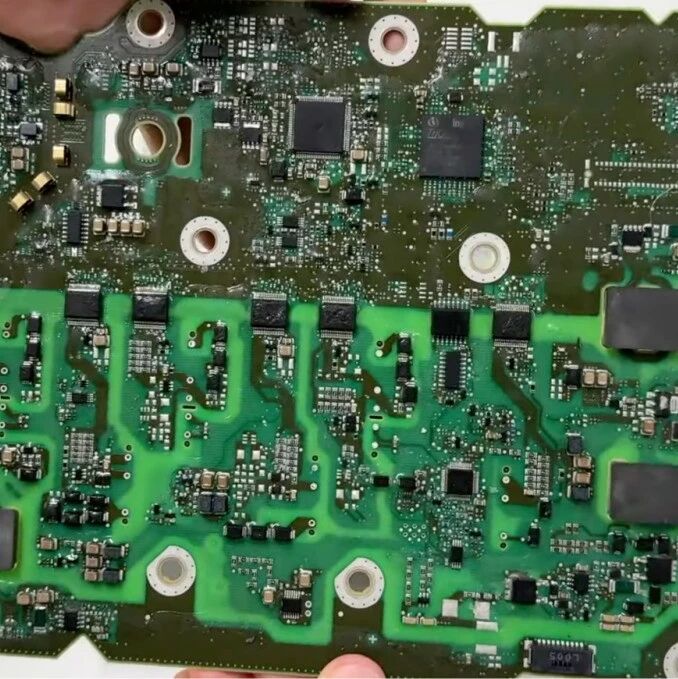
Core Viewpoint - The successful approval of Angrui Micro on the Sci-Tech Innovation Board signifies a major and profound impact on the domestic RF front-end industry, setting a high bar for future IPOs in this sector [4]. Group 1: Company Overview - Angrui Micro has established itself as a leading company in the low-power Bluetooth chip sector, evolving from its initial focus on 2G CMOS PA to 5G L-PAMiD technology [4]. - The company has achieved significant sales scale, with annual sales exceeding 2 billion RMB [4]. Group 2: Industry Implications - The approval of Angrui Micro's IPO indicates that the threshold for future RF PA companies seeking to list on the Sci-Tech Innovation Board will be higher, making it more challenging for new entrants [4][6]. - The current landscape includes six companies in the RF PA sector, including Angrui Micro, which will lead to overlapping products but with distinct focuses [6]. - The future profitability of these companies will depend on their technology, products, and quality customer base [6].