行家说储能

Search documents
比阳光电源晚20年,储能赛道闯入重磅玩家
行家说储能· 2025-11-14 11:35
Core Viewpoint - Longi Green Energy has officially entered the energy storage sector by acquiring approximately 61.9998% voting rights in Jingkong Energy, marking a significant strategic shift for the company [2][3]. Group 1: Strategic Shift - Longi Green Energy, previously the only major photovoltaic company not involved in energy storage, has made a decisive entry into the market, indicating a clear strategic pivot [3]. - The company had focused on hydrogen energy from 2021 to 2024 but has shifted its attention to energy storage due to the slow commercialization of hydrogen and the anticipated surge in energy storage demand by 2025 [3][4]. - Longi recognizes the integration of photovoltaic and energy storage as a necessary path for large-scale development, addressing the challenges of intermittent solar energy [3][4]. Group 2: Market Context and Competition - The energy storage market is becoming increasingly competitive, with various players including state-owned enterprises, battery leaders, and technology giants entering the field [10]. - Longi's acquisition of Jingkong Energy allows it to leverage existing technology and market presence, avoiding the time costs associated with starting from scratch [10][11]. - Jingkong Energy specializes in lithium-ion battery storage systems and has established a global supply chain and delivery system, with a production capacity of 31GWh [11]. Group 3: Financial Aspects - The estimated valuation for Jingkong Energy is between 1.5 billion to 2 billion yuan (approximately 15-20 million) [7][11]. - Jingkong Energy has attracted attention from various investors, including industry players and state-backed institutions, indicating a robust financial backing [11][12]. Group 4: Future Outlook - Longi's entry into energy storage is seen as a critical move to complete its photovoltaic and storage integration strategy, with the potential for technological synergies to enhance its competitive position [11]. - The company aims to capitalize on the growing demand for energy storage solutions as the grid's capacity becomes increasingly strained [9][10].


产品即话语权?储能年度角逐来了
行家说储能· 2025-11-13 04:05
Core Viewpoint - The article emphasizes the rapid iteration of new energy storage technologies, shifting the industry focus from quantity expansion to quality breakthroughs, with product strength becoming a core capability for companies to compete for industry influence [2]. Group 1: Annual Impact Product Award - The 2025 Energy Storage Industry Aurora Award has established the "Annual Impact Product Award" to recognize products with technological innovation and industry influence, serving as a benchmark in the industry [2]. - Several energy storage companies have already participated in the application for the award, with a list of applicants to be updated in batches [3]. Group 2: Participating Companies and Products - Chuangneng New Energy: New generation 588Ah energy storage battery with energy density of 190Wh/kg and cycle life exceeding 12,000 times [5][7]. - Desay Battery: Active safety cell with a new type of sensor that accurately captures internal temperature and pressure changes [8][10]. - Yilan Technology: Monet series 215kW modular PCS, adaptable to various application scenarios with a wide DC voltage input range [11][13]. - Times Tianyuan: 1.25MW/1.565MW centralized energy storage inverter designed for modern energy storage needs, enhancing grid stability [14][16]. - Jinko Energy: Blue Whale SunTera 5MWh liquid-cooled energy storage system, suitable for peak shaving and frequency regulation [17][19]. - Electric Liquid Storage: V-Titan1 stacked all-vanadium flow energy storage system with an energy efficiency of over 72.9% [20][22]. - Hemai Co., Ltd.: HoyPrime integrated container energy storage system, achieving a 15% cost reduction in project construction [23][25]. - Penghui Energy: "Qingtian 520" integrated energy storage cabinet with an overall energy efficiency of 90% [26][28]. - Dongfang Rising: eTron 5MWh liquid-cooled energy storage system, addressing thermal management issues in high-power applications [29][31]. - Gaote Electronics: "ETANK" 5S integrated liquid-cooled energy storage system solution with a rated power of 125kW [32][34]. - Zhejiang Saiwei: Saiwei S2 energy storage system with a system efficiency of 92.9% [35][37]. - Pano Technology: Integrated management cloud platform for energy storage, enhancing energy optimization services [38][40]. - Simple IoT: Simple EMMS energy storage cloud platform with high stability and efficiency [45][47]. - Huayuxin: "Four-dimensional" intelligent cloud platform supporting various energy storage scenarios [48][50]. - Yuanhang Koi: 324Ah large-capacity cell with a lifespan of 10 years and a cost reduction of 5% compared to market products [51][53].

超9.4GWh!远信储能、阿特斯再获储能大单
行家说储能· 2025-11-13 04:05
行家说储能 昨日,行家说储能 报 道了" 超200GWh大单!海博思创与宁德时代签重要合作"( 点这里 ),今日又有两家储能企业最新订单消息。 据行家说储能获悉,远信储能、阿特斯先后官宣拿下GWh级储能项目合作,合计规模超9.4GWh。其中,远信储能的储能项目合作量达 7.56GWh,主要位于 智利及其他潜力市场;阿特斯则拿下加拿大约1.86GWh的单体储能项目。 项目 ▋ 远信储能:拿下 1.89GW/7.56GWh储能 近日,远信储能与拉美知名能源开发企业签署战略合作协议,双方将在智利及其他潜力市场共同推进储能项目的开发、建设与运营。 据协议,远信储能将作为首席技术与服务伙伴,为 1.89GW/7.56GWh 的储能项目提供一体化解决方案与全生命周期支持。未来,双方还将在技术标准、供 应链布局、质量管控与投融资架构等方面深化战略协同,构建长期稳定的合作机制。 ☆ 点击 星标 , 第一时间掌握前沿趋势 图为:远信储能与拉美知名能源开发企业签署战略合作协议,源于远信储能 该订单是远信储能2025年公开披露的首个拉美地区项目。当前,拉美储能市场正迎来高速增长,据伍德麦肯兹预测,至2034年该地区储能总规模预计将 ...


超200GWh大单!海博思创与宁德时代签重要合作
行家说储能· 2025-11-12 10:13
Core Viewpoint - The strategic cooperation agreement between Haibosichuang and CATL aims to secure a stable supply of battery cells for energy storage, reflecting the growing demand in the energy storage sector [2][4]. Group 1: Strategic Cooperation Agreement - Haibosichuang has signed a strategic cooperation agreement with CATL for the period from 2026 to 2035, with a commitment to purchase no less than 200 GWh of electricity from CATL between 2026 and 2028 [2]. - The agreement includes annual updates on cooperation goals and the signing of corresponding memorandums for the next three years [2]. - The procurement will primarily focus on energy storage battery cells and systems, given that 99.77% of Haibosichuang's revenue comes from energy storage systems [2]. Group 2: Supply Chain and Competitive Advantage - CATL will provide Haibosichuang with priority supply and competitive pricing under equal market conditions, with specific details to be outlined in a separate procurement agreement [2]. - The collaboration aims to integrate core advantages from both companies, exploring innovative business models, including the establishment of energy storage project industrial funds and a comprehensive management platform [4]. - This partnership is expected to enhance supply chain stability, maintain industry leadership, and improve overall competitiveness and profitability for Haibosichuang [4]. Group 3: Market Position and Future Orders - Haibosichuang's largest battery supplier is CATL, with the supply ratio decreasing from 87% to 37% recently, while also expanding partnerships with other leading battery manufacturers [4]. - In the first half of 2025, Haibosichuang anticipates shipping and recognizing revenue from approximately 9.5 GWh of projects [5]. - The company has a substantial order scale in the independent energy storage sector, with a domestic reserve of about 30 GWh to meet a future delivery target of 50 GWh [5].


超260MWh!10大工商业储能项目新进展
行家说储能· 2025-11-12 10:13
Core Viewpoint - The National Energy Administration's recent guidelines aim to enhance energy efficiency and reduce costs in key industries by promoting the integration of energy storage facilities, particularly in sectors like petrochemicals, chemicals, steel, and non-ferrous metals [2][3]. Group 1: Policy Impact - The implementation of the new policy is expected to significantly drive the deployment of energy storage facilities in key industries, creating new development opportunities in the commercial energy storage market [3]. - A total of 10 companies, including CATL, Sungrow, and others, have made progress on commercial energy storage projects, with a cumulative scale exceeding 267 MWh [3]. Group 2: Company Projects - CATL has successfully connected an 89.44 MWh user-side energy storage project with Green Electric Storage, enhancing its market presence and operational capabilities [5][7]. - Sungrow and Zhonghuan New Energy have launched a 10 MW/20 MWh user-side energy storage station, projected to save approximately 81,000 yuan annually in electricity costs [10]. - Haibo Shichuang has completed a 28.5 MW/100 MWh user-side energy storage project, utilizing a liquid cooling system to optimize energy costs and enhance power stability [13]. - Hongzheng Energy has implemented a 1.875 MW/3.915 MWh commercial energy storage project, designed to improve energy efficiency across multiple factory sites [16]. - Pylon Technologies has deployed a 1 MWh energy storage system for a European steel plant, ensuring reliable power supply for high-energy production lines [19]. - New Energy has initiated a 1.8 MWh user-side energy storage project with Xiamen Meisu New Material Technology, featuring an integrated solution for efficient installation [22]. - Saibo Energy has begun construction on a 1 MW/2.088 MWh energy storage project, aimed at reducing electricity costs and enhancing power reliability [25]. - Tiensun Smart Energy has successfully connected a 20 MWh energy storage project for Cangzhou Four Star Glass, contributing to energy savings and carbon reduction [28]. - Hangwei Energy has completed a 5 MW/10 MWh energy storage station, the first of its kind in Jiangyou City, focusing on efficient energy management [31]. - Zhongneng Lianjian has finalized a 9.5 MW/18.39 MWh user-side energy storage project, enhancing energy utilization efficiency and supporting green development [34].


锂价涨超7%!储能价格会跟涨吗?
行家说储能· 2025-11-11 09:22
Core Viewpoint - The recent surge in lithium carbonate prices is primarily driven by unexpected growth in energy storage demand, indicating a strong market trend in the energy storage industry [3][7]. Group 1: Lithium Carbonate Price Trends - As of November 10, the price of battery-grade lithium carbonate increased by 3,050 CNY/ton, averaging 83,900 CNY/ton, with the main contract rising over 7%, reaching a three-month high [2]. - From mid-October, the average price of battery-grade lithium carbonate rebounded from 73,000 CNY/ton on October 15 to 81,000 CNY/ton on November 3, before slightly decreasing and then rising again to 80,750 CNY/ton on November 10, reflecting a month-on-month increase of 350 CNY/ton [4]. Group 2: Energy Storage Demand and Supply Dynamics - The current price rebound is attributed to strong demand from the new energy vehicle battery sector and the energy storage market, alongside expectations of supply tightening due to winter production cuts in salt lakes and ongoing inventory depletion [7]. - Morgan Stanley has raised its forecast for energy storage battery production for the fiscal years 2025 and 2026 by 50% and 43%, respectively, predicting a shift to a "shortage scenario" for medium to long-term energy storage demand, with expected shipments reaching 1,630 GWh by 2030 [7]. Group 3: Energy Storage Cell Pricing - The prices for 314Ah and 280Ah energy storage cells remain high, with the average price for 314Ah cells in October at 0.3076 CNY/Wh, a 0.39% increase from September, and stabilizing around 0.308 CNY/Wh in November [7]. - The 280Ah energy storage cell prices have remained stable between 0.274 and 0.332 CNY/Wh, averaging 0.303 CNY/Wh [7]. Group 4: Energy Storage System Pricing - The average price for centralized energy storage PCS (1752kW) has remained stable since August 29, with a range of 0.062 to 0.069 CNY/W and an average of 0.0666 CNY/W [11]. - The average bid price for 2-hour energy storage systems in October was 0.5767 CNY/Wh, a month-on-month increase of 7.19%, while the 4-hour systems saw an 18.44% increase to 0.6017 CNY/Wh, driven by multiple project bids [20]. Group 5: Cost Pressures and Market Dynamics - Energy storage system integrators are facing upward cost pressures, with cell prices rising by 0.04 to 0.05 CNY/Wh since late 2024, although leading integrators have managed to limit price increases through long-term procurement strategies [21]. - The average price for commercial energy storage cabinets decreased slightly from 0.65 CNY/Wh in September to 0.63 CNY/Wh in October, reflecting increased competition and a shift in investment strategies due to changes in provincial time-of-use pricing policies [23].
1.36GWh!远景能源再获储能大单
行家说储能· 2025-11-11 09:22
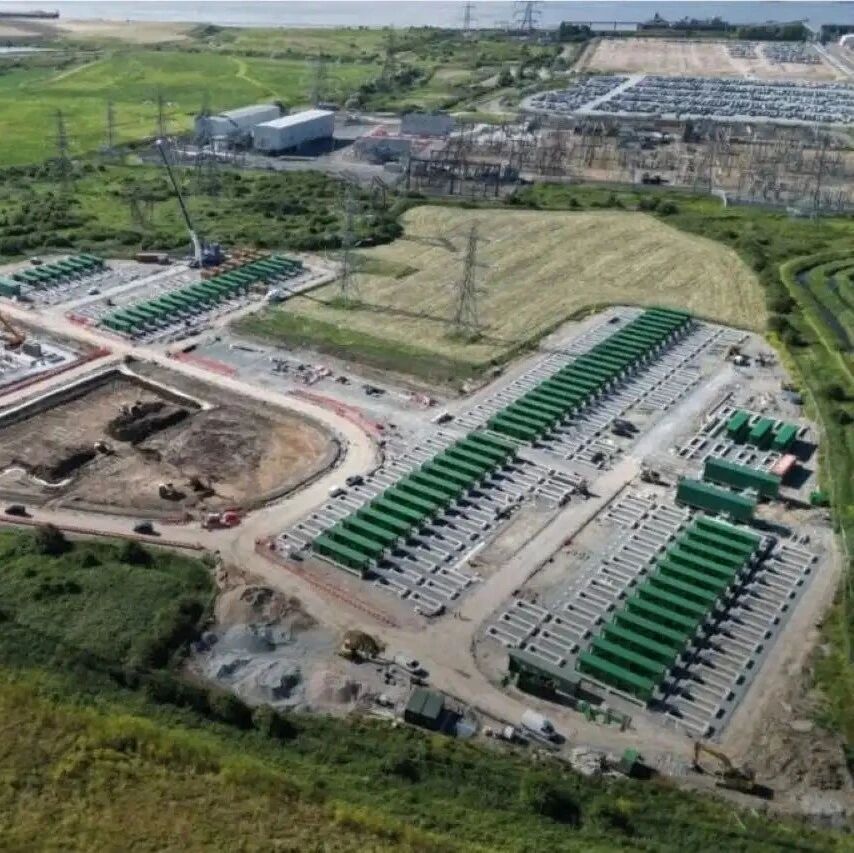
Core Insights - Envision Energy has partnered with Statera Energy to provide a battery energy storage system (BESS) for the 680MW/1360MWh Carrington Storage Project in the UK [1][3] - The project has secured £235 million (approximately 2.195 billion RMB) in financing and is expected to be operational by the end of 2026, supplying power for up to 2 hours to around 2.2 million households [3] - Envision's storage system utilizes AI model technology for real-time grid monitoring, ensuring grid stability with high renewable energy penetration [3] Company Overview - Statera Energy, established in 2015, currently operates or has projects under construction totaling 2.1GW of battery storage systems, including the 300MW Thurrock Storage Project [5] - Envision Energy is actively engaged in the European market, with energy transition projects across the UK, France, Spain, and other regions, having secured 14 storage-related collaborations/orders in 2025, with over 2.6GWh in Europe [5][6] Market Trends - As of October 2025, nearly 4GWh of grid-side storage system projects have been approved in the UK, with nearly 22GWh currently under construction, marking October as the month with the highest BESS approval capacity since July [5] - Envision Energy has secured multiple storage orders in the UK, including significant projects like the 300MW/624MWh Cellarhead storage project and others [5]
大力推进储能建设!两部门重磅发文
行家说储能· 2025-11-10 10:14
Core Viewpoint - The article emphasizes the importance of energy storage in the development of a new energy system in China, highlighting its transition from a mere tool for renewable energy consumption to a core component of energy flexibility and system support [3][4]. Group 1: Policy Guidance - The National Development and Reform Commission and the National Energy Administration released guidelines aimed at establishing a multi-level renewable energy consumption and regulation system by 2030, ensuring that new electricity demand is primarily met by renewable energy generation [2][10]. - By 2035, a new power system capable of accommodating a high proportion of renewable energy is expected to be established, further enhancing the renewable energy consumption regulation system [2][10]. Group 2: Energy Storage Development - The guidelines create a clear value positioning and profit model for the new energy storage industry, promoting its strategic elevation as a key element in the energy system [3]. - The document encourages the integration of source, grid, load, and storage, as well as the development of new business models for nearby renewable energy consumption [3][4]. Group 3: Technological Innovation - The white paper on carbon peak and carbon neutrality emphasizes the importance of energy storage as a foundational element for the new power system, advocating for the diversified application of various storage technologies such as lithium-ion batteries and compressed air storage [4][19]. - The article discusses the need for advanced, safe, and efficient new energy storage technologies to enhance the utilization of renewable energy [5][19]. Group 4: Market Mechanisms - The guidelines propose the establishment of a unified national electricity market to facilitate the consumption of renewable energy, including the development of market rules that support the participation of distributed energy resources and storage [17][18]. - It is suggested to innovate pricing mechanisms to encourage the consumption of renewable energy and improve the flexibility of cross-regional electricity transmission pricing [18][20]. Group 5: Implementation and Monitoring - The article outlines the responsibilities of various stakeholders, including the National Development and Reform Commission and provincial energy departments, in ensuring the effective implementation of renewable energy consumption strategies [20][21]. - A monitoring and regulatory framework is proposed to track the progress of renewable energy utilization and ensure compliance with established targets [21].

涉及37GWh!海辰储能等4企再拓产能
行家说储能· 2025-11-10 10:14
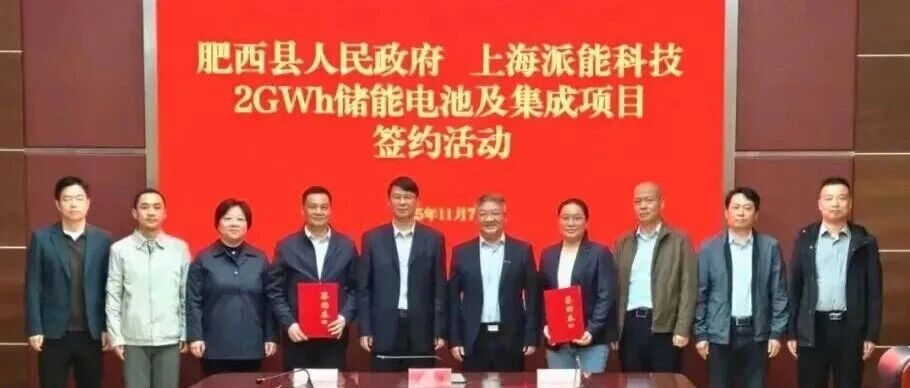
Core Insights - The energy storage industry is accelerating its capacity expansion with significant developments from multiple companies in the sector [3][4][6][7][10][13]. Group 1: Company Developments - Haicheng Energy Storage has officially commenced the construction of its Southwest Intelligent Manufacturing Center and R&D Center in Chongqing, which is part of a larger project with a total investment of 130 billion yuan, aiming for a production capacity of 56GWh for next-generation lithium batteries and 22GWh for energy storage modules [4][6]. - Pylon Technologies has signed an agreement to establish a 2GWh energy storage battery and integration project in Hefei, with a total investment of 1 billion yuan, indicating a strategic shift towards enhancing its energy storage capabilities [7][9]. - Feimao Energy Technology has launched its new energy technology expansion base, which, combined with its existing battery pack base, will increase its annual production capacity to 35GWh [10][12]. - Xinpeng Co., Ltd. has entered into an investment cooperation agreement with Jabil to develop large battery storage systems, with a total project investment of approximately 1.5 million USD [13][14]. Group 2: Financial Performance - Pylon Technologies reported a revenue of 2.013 billion yuan for the first three quarters of 2025, marking a year-on-year increase of 42.52%, with net profit reaching 48 million yuan, up 28.05% [9]. - The company has seen significant growth in its commercial energy storage business, which now accounts for 20% of its overall revenue, and over 60% of its orders are from international markets [9]. Group 3: Capacity Expansion Plans - Haicheng Energy Storage plans to reach a design capacity of 100GWh for energy storage batteries by the end of 2026, with its U.S. factory expected to commence production in July 2025 [6]. - Feimao is investing 5 billion yuan to build a green energy storage intelligent manufacturing base in Tianjin, targeting a production capacity of 96GWh per year [12].

储能年度影响力大奖,花落谁家?
行家说储能· 2025-11-07 10:36
Core Viewpoint - The new energy storage industry is entering a high-speed development phase by 2025, driven by strong global market demand, with a shift in competitive focus towards globalization, digital integration, safety compliance, and lifecycle services [2]. Group 1: Industry Overview - The energy storage industry is experiencing a new growth cycle, with companies focusing on building core capabilities rather than just expanding production capacity [2]. - The "Annual Influence Enterprise Award" is established to recognize companies excelling in globalization, digitalization, and safety [2]. Group 2: Participating Companies - Multiple energy storage companies have applied for the "Annual Influence Enterprise Award," with a list of candidates being published [3]. - The participating companies include: - Trina Storage: Recognized as a safety pioneer, achieving significant safety standards and testing [4]. - Jinko Storage: A global benchmark with a target of 6GWh shipments in 2025, with 80% of orders from overseas [4]. - Weiheng Intelligent: Noted for its digital energy management systems, achieving significant operational efficiency improvements [4]. - Chuangneng New Energy: Projecting over 100GWh in new orders for 2025, with a total effective capacity exceeding 110GWh [4]. - Huashu Electric: Focused on diverse project distribution across multiple provinces [4]. - Yuanxin Storage and Xinjuneng: Both recognized for their comprehensive energy operation capabilities [4]. - Wolong Storage: Anticipating a 70% increase in overseas orders by 2024 [4]. - Astech Energy: Building a digital energy ecosystem with a focus on smart hardware and AI [4]. - Pengcheng Unlimited: Notable for its extensive quality control measures in production [4]. - Huayuxin: Achieving significant project applications in Brazil [4]. - Gaote Electronics: Innovating battery management systems with enhanced safety features [4]. - Yilankao: Projecting significant shipments of PCS units in 2025 [4]. - Times Tianyuan: Focused on power electronics technology and energy storage solutions [4]. Group 3: Company Highlights - Trina Storage has established a comprehensive production ecosystem and has secured over 10GWh in overseas orders, with a projected shipment of 8-10GWh in 2025 [5][6]. - Jinko Storage has developed a global marketing network and aims for a significant increase in overseas business, with a target of 6GWh in shipments for 2025 [6]. - Weiheng Intelligent has integrated AI into its energy management systems, achieving operational efficiency improvements of 5-10% [7]. - Chuangneng New Energy is expanding its production capacity significantly, with plans for over 500GWh in total capacity [8]. - Huashu Electric has developed a wide range of energy storage products and is expanding into international markets [9]. - Yuanxin Storage has established a comprehensive capability across the energy storage value chain, with a production capacity of 20GWh [10]. - Xinjuneng is focusing on customized energy storage solutions for commercial applications [11][12]. - Wolong Storage has achieved significant project deliveries and is expanding its production capacity [13][14]. - Astech Energy is building a smart energy management ecosystem with significant project achievements in various markets [16][17]. - Pengcheng Unlimited is leveraging advanced quality control in its production processes [18]. - Huayuxin has launched innovative energy solutions and is expanding its global footprint [19]. - Gaote Electronics has introduced advanced battery management systems with enhanced safety features [20]. - Yilankao is focusing on flexible energy storage solutions for commercial applications [21]. - Times Tianyuan is innovating in power electronics and energy storage technologies [22][23]. - Yuntian Shuneng is developing integrated energy storage solutions with significant cost and space savings [24]. - Hemai Co. has launched a new high-power energy storage inverter with industry-leading efficiency [25][26].