QYResearch

Search documents
以数据见证专业:QYResearch行业数据引用案例精选(2025年11月)
QYResearch· 2025-11-28 06:03
Core Viewpoint - The article discusses various industries and companies that are leveraging QYResearch's market reports to inform their strategic decisions and investments, highlighting significant growth projections across multiple sectors. Group 1: Aerospace and Defense - The global aerospace testing and certification services market is projected to reach $7.432 billion in 2025 and grow to $12.112 billion by 2031, with a compound annual growth rate (CAGR) of 8.50% from 2025 to 2031 [2] - Chengdu Sicor Microelectronics Co., Ltd. has referenced QYResearch's report on this market [2] Group 2: Optical Components - The global aspheric optical lens market is expected to grow to $14.92 billion by 2031, indicating a strong market outlook [3] - Sichuan Junyi Digital Technology Co., Ltd. has utilized QYResearch's report on this sector [3] Group 3: Advanced Materials - The global metamaterials market is anticipated to reach $30 billion by 2030, with a dominant market share held by Guangqi Technology Co., Ltd. in the domestic military electromagnetic metamaterials sector [3] - QYResearch forecasts a rapid growth rate for this market [3] Group 4: Semiconductor and Electronics - The precursor market is characterized by high purity and specific physical and chemical properties, with significant growth expected in the semiconductor industry [4] - QYResearch's report indicates that the global electrochemical energy storage battery market will see substantial growth, particularly in China [8] Group 5: Software and IT Services - Chinese software outsourcing companies face challenges due to rising export costs and supply chain restructuring, as highlighted in QYResearch's report [7] - Suzhou Industrial Park Lingzhi Software Co., Ltd. is looking to reduce its reliance on Japanese business through acquisitions [7] Group 6: Robotics - The global robotics market is projected to grow from $27.64 billion in 2024 to $81.56 billion by 2031, with a CAGR of approximately 18% [15] - Companies are actively investing in this sector to capitalize on the expanding market opportunities [15] Group 7: Healthcare and Biotechnology - The global organoid market is expected to grow from $0.67 billion in 2024 to $2.15 billion by 2031, with a CAGR of 18.4% [9] - The report emphasizes the transformative potential of organoid technology in precision medicine [9] Group 8: Energy and Storage - The global balcony energy storage market is projected to reach $15 billion by 2031, with a CAGR of 21.1% driven by new application scenarios [35] - This growth reflects the increasing demand for high-value energy solutions [35] Group 9: Consumer Electronics - The global high-speed ionic hair dryer market is dominated by brands like Panasonic and Xiaomi, with significant market research backing from QYResearch [11] - The report indicates a competitive landscape in the consumer electronics sector [11] Group 10: Agriculture - The global amino acid fertilizer market is expected to grow from $0.55 billion in 2024 to $0.948 billion by 2031, with a CAGR of 8.2% [27] - This growth is supported by increasing demand for sustainable agricultural practices [27]


行业聚焦:全球紫外气体分析仪行业头部企业市场份额及排名情况(附厂商名单)
QYResearch· 2025-11-27 02:08
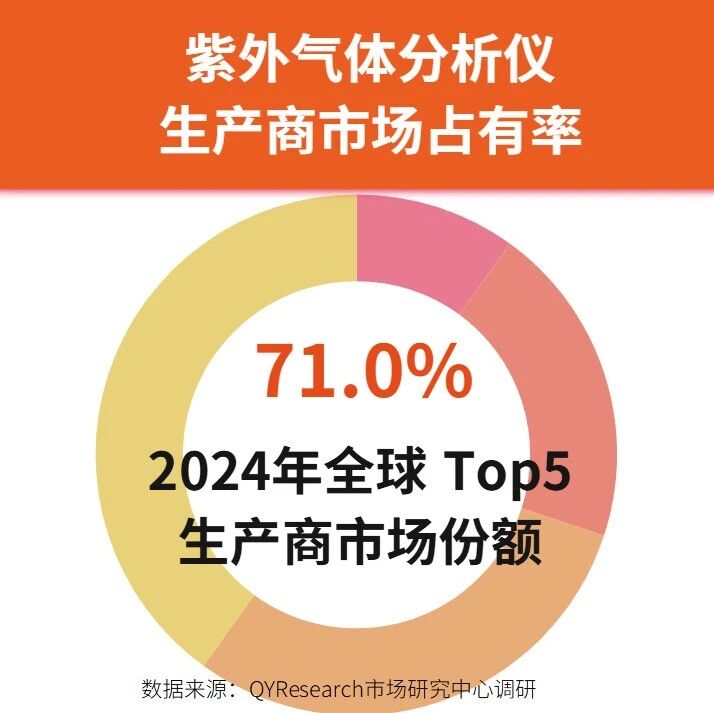
Core Viewpoint - The ultraviolet gas analyzer market is projected to reach USD 380 million by 2031, with a compound annual growth rate (CAGR) of 2.5% over the coming years [3]. Market Overview - The global ultraviolet gas analyzer market is primarily driven by regulatory requirements and industrial upgrades, focusing on continuous and traceable emissions monitoring [14]. - Major manufacturers in the ultraviolet gas analyzer market include Siemens, ABB, Emerson, AMETEK, HORIBA, and others, with the top ten companies holding approximately 71.0% of the market share in 2024 [6]. Product Segmentation - Desktop models dominate the product segmentation, accounting for about 91.6% of the market share [8]. Application Segmentation - The power generation sector is the largest application area, representing approximately 26.0% of the demand [11]. Market Opportunities and Drivers - The growth in the ultraviolet gas analyzer market is supported by increased regulatory demands for accurate measurement of pollutants like SO₂, NOx, NH₃, HCl, and HF, particularly in industries such as power, steel, cement, petrochemicals, and waste incineration [14]. Market Challenges - Key challenges include the high lifecycle costs due to complex operating conditions, competition from alternative technologies, and varying certification and data transmission standards across regions [16]. Downstream Demand Trends - There is a trend towards systematization, combination, and platformization in downstream demand, with large owners preferring integrated solutions that bundle ultraviolet analysis with sampling, automatic calibration, and remote diagnostics [18].
客户说好才是真的好:倾听来自行业领军企业的真诚推荐
QYResearch· 2025-11-27 02:08
Core Viewpoint - QYResearch has gained significant recognition from leading clients in various industries due to its solid data research capabilities and high-quality customer service [2] Group 1: Client Testimonials in the Pharmaceutical Industry - A leading pharmaceutical company praised QYResearch's report on analgesic raw materials for its professional depth, data accuracy, and industry insights, which helped in decision-making regarding raw material supply and product planning [5][6] - The client transitioned from a trial purchase to repeated orders, indicating a shift from "attempt" to "dependence" on QYResearch's research quality and service efficiency [5][6] Group 2: Client Testimonials in the Automotive Electronics Industry - A well-known company in the automotive electronics sector quickly confirmed its order for a report on CMS electronic rearview mirrors after a brief and efficient communication, highlighting the precision of QYResearch's analysis [8] - The report provided a comprehensive overview of the industry structure, key technologies, and market expansion, significantly speeding up the client's decision-making process [8] Group 3: Core Advantages of QYResearch - QYResearch has been tracking and accumulating data across over 30 industries since its establishment in 2007, ensuring the reliability and scientific accuracy of its research [9] - The company offers both standardized industry reports and customized research services, allowing for flexible combinations based on client needs [10] - QYResearch emphasizes rapid communication and timely delivery, ensuring clients receive clear and accurate solutions quickly, which builds long-term trust [11] Group 4: Client Conversion Pathway - The client conversion process at QYResearch is structured into three stages: experience, recognition, and trust, leading to long-term partnerships based on genuine satisfaction [13] Group 5: Future Commitments - QYResearch commits to maintaining original research and deep data accumulation, optimizing service experiences, and expanding global perspectives to support Chinese enterprises in international markets [15] Group 6: Industry Positioning - QYResearch, established in 2007, has evolved into a globally recognized consulting firm providing detailed industry research services across various high-tech sectors, including electronics, chemicals, and healthcare [17]

全球与中国采血针市场现状及未来发展趋势
QYResearch· 2025-11-27 02:08
Core Viewpoint - The blood collection needle industry is experiencing steady growth driven by chronic disease management, home testing, and blood testing demands from medical institutions. The market is characterized by a dual-track development trend with stable hospital demand and rapid growth in home testing [6]. Industry Current Status - **Market Size and Growth**: The Chinese blood collection needle market has maintained robust growth, with a projected market size of USD 181.17 million in 2024, expected to reach USD 316.39 million by 2031, increasing its global market share from 10.83% to 15.38% [15]. - **Competitive Landscape**: The industry is fragmented with many small to medium enterprises dominating, while a few large companies hold significant brand influence. Domestic firms excel in cost control and production capacity but lag in high-end products and safety designs compared to international brands [6]. - **Technological Level and Product Structure**: The technology primarily focuses on standard and low-pain needles, with advancements in miniaturization and automation. However, high-end safety products still fall short of international standards [6]. - **Regulatory Environment**: Stricter regulations on disposable medical supplies are emerging, with requirements for NMPA registration, ISO certification, and environmental considerations becoming entry barriers for companies [6]. - **Downstream Customer Structure**: Hospitals and primary healthcare institutions are the main customers, emphasizing safety and consistency. The rapid growth of home testing users demands convenience and low pain, leading to diverse customer needs [6]. - **Supply Chain and Raw Material Status**: Key raw materials include medical-grade stainless steel, PP, and silicone. While domestic supply is sufficient for low-end materials, high-precision components still rely on imports, affecting production stability and cost control [6]. Development Trends - **Low Pain and Minimally Invasive Trends**: There is a growing demand for low-pain and minimally invasive designs, particularly for home testing and among vulnerable populations like children and the elderly. Innovations in needle tip technology are enhancing user comfort [9]. - **Automation and Safety Product Proliferation**: Safety needles with features like automatic retraction are becoming mainstream, driven by increased demand from healthcare institutions and regulatory support [9]. - **Home Testing and Health Management Market Expansion**: The market for home testing is rapidly growing, with blood collection needles being central to diabetes and chronic disease management. Integration with wearable devices and smart health solutions is anticipated [9]. - **High-End Product Technology Upgrades**: Companies are focusing on developing differentiated and high-end products, including smart blood collection devices with traceability and data management features, to meet the evolving needs of healthcare providers [9]. Future Outlook - The future of blood collection needles is expected to be more intelligent, safe, and personalized, aligning with the global healthcare system's emphasis on preventive medicine and home testing. The industry will likely see innovations in needle design and automation to enhance patient comfort and reduce infection risks [18][21]. - Regulatory trends will push for innovations in material selection and sterilization processes, with a growing emphasis on environmentally friendly practices [22]. - Competitive dynamics will shift towards technological innovation, product safety, and sustainability, with leading companies leveraging mergers and collaborations to enhance their market position [23].

行业聚焦:全球自给式真空装载机行业头部企业市场份额及排名情况(附厂商名单)
QYResearch· 2025-11-27 02:08
Industry Chain Analysis - The self-contained vacuum loader integrates vacuum suction and material transportation, widely used in industries such as plastic processing, pharmaceuticals, food, chemicals, and electronics for automatic conveying of granular or powdered materials [3] - The industry chain consists of three main segments: upstream raw material supply, midstream equipment manufacturing and integration, and downstream application industries [3] - Upstream suppliers include vacuum pumps, motors, filtration systems, stainless steel or aluminum hoppers, control systems, pneumatic components, and electronic sensors, with vacuum pumps being critical for performance and energy consumption [3] - Midstream focuses on equipment manufacturing and system integration, with manufacturers enhancing automation and energy efficiency through modular design and intelligent control [3] - Downstream applications are concentrated in plastic injection, extrusion, blow molding production lines, and pharmaceutical and food packaging, forming a complete raw material automation delivery system [4] Development Trends, Opportunities, and Challenges - The self-contained vacuum loader industry is transitioning from traditional mechanization to intelligent and green solutions, with five key trends: intelligent control upgrades, energy-saving optimizations, system integration, lightweight and modular design, and digital operation services [9] - Intelligent upgrades involve the use of sensor networks and PLC systems for automated delivery and remote diagnostics, improving operational efficiency and reducing downtime risks [9] - Energy efficiency is a focus, as vacuum pump systems account for about 70% of total machine power, leading to trends in variable frequency control and energy recovery systems [9] - The rise of the plastic recycling industry presents new demand growth, while strict hygiene requirements in pharmaceuticals and food packaging continue to drive market demand [10] - Challenges include intensified market competition, price pressures, and inadequate after-sales service systems [10] Downstream Industry Analysis - The downstream industries for self-contained vacuum loaders are diverse, with significant demand in plastic processing and pharmaceutical and food packaging sectors, where the plastic industry accounts for over 60% of total demand [12] - In the pharmaceutical sector, vacuum loaders are used for the automatic transport of powders and capsules, adhering to GMP standards with features like anti-static and easy cleaning [12] - The food industry emphasizes hygiene and safety standards for transporting powdered ingredients, while the chemical and electronics industries require high-purity powder transport with low noise and no residue [12] Entry Barriers - The self-contained vacuum loader industry has multiple entry barriers, including technological, customer trust, brand loyalty, capital, and standardization barriers [14] - Technological barriers arise from the need for expertise in vacuum fluid mechanics, noise control, and intelligent control algorithms, particularly in high-end markets [15] - Customer trust and brand loyalty are critical, as established brands dominate the high-end market, making it difficult for new entrants to gain credibility [15] - Capital barriers exist due to the need for precision manufacturing equipment and compliance with international standards such as CE, UL, and ISO9001 [16]

行业聚焦:全球探针卡用陶瓷基板行业头部企业市场份额及排名情况(附厂商名单)
QYResearch· 2025-11-26 01:49
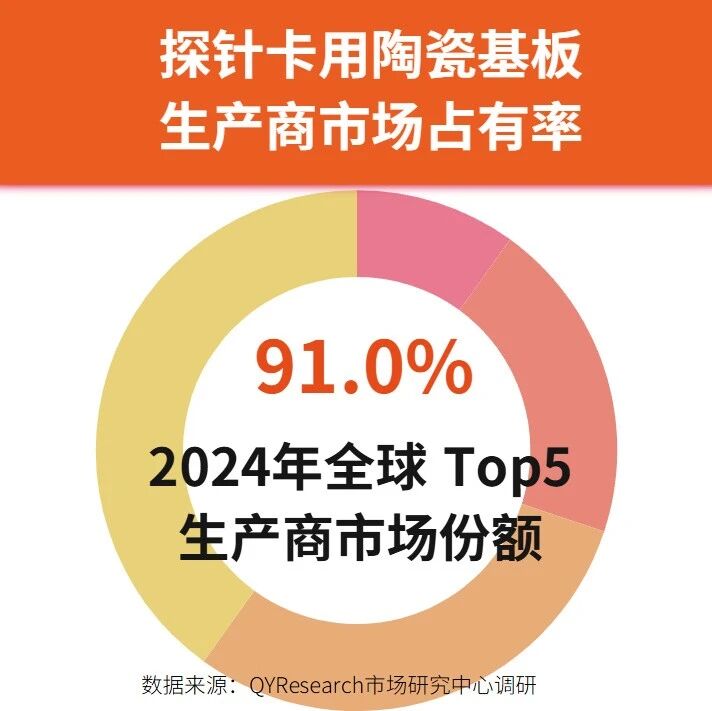
Core Viewpoint - The global market for ceramic substrates used in probe cards is projected to reach $280 million by 2031, with a compound annual growth rate (CAGR) of 8.6% over the coming years [4]. Market Overview - The ceramic substrate market for probe cards is characterized by high rigidity, high insulation, and low thermal expansion, essential for wafer electrical testing [2]. - Major manufacturers include Kyocera, SEMCNS Co., Ltd, Niterra (NTK), and IMTech Plus, with the top three companies holding approximately 91.0% market share in 2024 [7]. - The 300mm semiconductor test probe card substrates dominate the market, expected to account for 89.42% of the market share by 2031, up from 83.96% in 2024 [9]. Application and Demand - NAND flash memory is the primary demand source, representing about 45.5% of the market share [11]. - North America is the largest consumer market, projected to hold 29.06% of the sales market share in 2024, followed by Japan and South Korea [13]. - The domestic market in China is expected to grow rapidly due to localization and self-research efforts, with a CAGR of approximately 17.00% from 2025 to 2031 [13]. Market Drivers - The rise of AI/HPC and 5G/IoT is driving the need for increased wafer testing parallelism and I/O density, leading to advancements in ceramic substrates [15]. - Structural demand and technological upgrades are supported by government initiatives for key material localization and supply chain security [15]. Future Trends - Higher testing density is anticipated due to advancements in integrated circuit technology, necessitating substrates that support more probes [21]. - Miniaturization and high integration are expected to enhance testing efficiency and reduce space requirements [22]. - Multi-functional integration may include features like temperature monitoring and automatic adjustments for improved testing stability [23]. - New materials, including composite substrates, are likely to emerge to enhance thermal management and reduce production costs [24]. - Automation and smart technology integration will improve testing accuracy and efficiency [25]. - Cost optimization and domestic production are becoming increasingly important as the industry shifts towards localization [26].
全球与中国IG541气体灭火系统市场现状及未来发展趋势
QYResearch· 2025-11-26 01:49
Core Viewpoint - The IG541 gas fire extinguishing system is gaining traction as a green and environmentally friendly alternative to traditional fire extinguishing agents, driven by regulatory support and increasing demand in high-value sectors such as data centers and energy facilities [6][21]. Group 1: Product Definition and Application - The IG541 gas fire extinguishing system utilizes a mixture of nitrogen (52%), argon (40%), and carbon dioxide (8%) to effectively extinguish fires by reducing oxygen levels in enclosed spaces [2]. - It is designed for both standalone and combined distribution systems, suitable for protecting critical areas such as data centers, communication rooms, and archives [4]. Group 2: Industry Current Status - Since the Montreal Protocol mandated the phasing out of halon extinguishing agents, IG541 has emerged as a viable replacement, supported by national standards like GB25972 [6]. - The market for IG541 systems is expanding due to its non-toxic and residue-free properties, making it ideal for high-value applications [6]. - Major competitors include international brands like Minimax and Honeywell, as well as domestic players like Shanghai Jindun, which are gaining market share through improved reliability and project execution [6][19]. Group 3: Development Trends - The application of IG541 systems is expected to extend into new industries such as smart manufacturing and renewable energy, driven by heightened safety requirements [9]. - Future developments will integrate IG541 systems with smart fire safety platforms, enhancing monitoring and response capabilities through IoT and big data [9]. - The industry is likely to see increased concentration as stricter standards emerge, favoring companies with comprehensive R&D and quality control capabilities [9]. Group 4: Market Size Overview - The global market for IG541 gas fire extinguishing systems is projected to reach $335 million by 2031, with a CAGR of 4.80% from 2025 to 2031 [14]. - China is anticipated to dominate the market, accounting for approximately 39.89% of global sales by 2031, with a CAGR of 5.82% during the same period [14]. - The independent extinguishing system segment is expected to hold a significant market share, projected to reach 65.70% by 2031 [15]. Group 5: Industry Drivers - Regulatory pressures to replace halon and HFCs are driving demand for IG541 as an environmentally friendly alternative [21]. - The expansion of cloud computing and data centers is creating stable market growth for IG541 systems in high-reliability scenarios [21]. - Increasing customer reliance on comprehensive service offerings is pushing companies to enhance their operational and maintenance services, improving profit margins [21].

行业聚焦:全球水分活度分析设备行业头部企业市场份额及排名情况(附厂商名单)
QYResearch· 2025-11-26 01:49
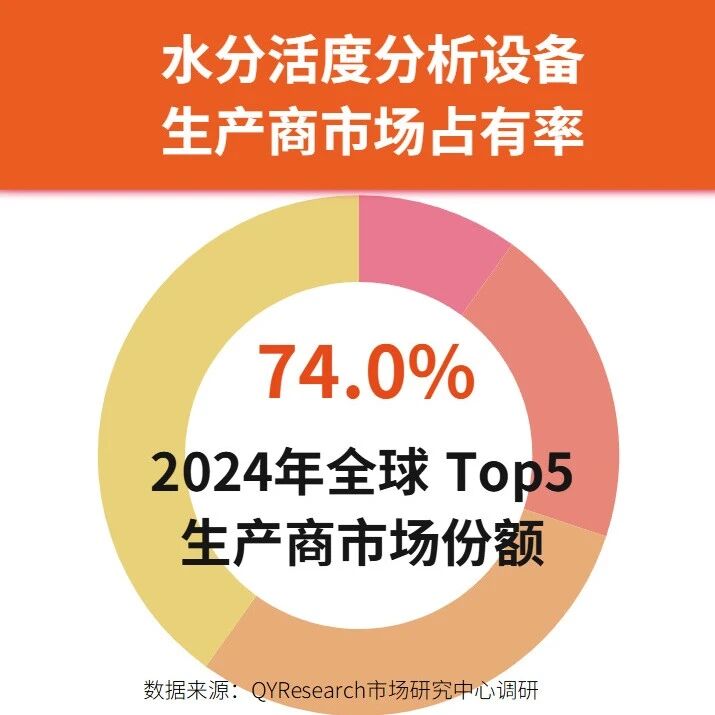
水分活度分析设备主要反映食品中处于平衡状态的自由水的量,食品的稳定性和微生物繁殖的可能性以及什么能引 起食品品质的变化,常用化学、酶促和物理变化来衡量微生物耐受干燥的能力。通过测定食品的水分活度,选择合 理的包装和贮存方法,可以减少防腐剂的使用,判断食品、粮食、果蔬的保质期。 水分活度分析设备全球市场规模情况 据 QYResearch 调研团队最新报告"全球水分活度分析设备市场报告 2025-2031 "显示,预计 2031 年全球水分活度分析设备 市场规模将达到 0.4 亿美元,未来几年年复合增长率 CAGR 为 4.3% 。 根据 QYResearch 头部企业研究中心调研,全球范围内水分活度分析设备生产商主要包括 AquaLab (Addium) 、深圳冠亚、 Novasina 、 Rotronic (Process Sensing Technologies) 、 SIBATA SCIENTIFIC TECHNOLOGY 、 Steroglass 、上海智理科学仪 器、 Driesen + Kern GmbH 、 Freund Corporation 、 humimeter (Schaller Mess ...
揭秘QYResearch的“数据炼金术”:从海量信息到黄金洞察
QYResearch· 2025-11-26 01:49
Core Viewpoint - QYResearch aims to transform chaotic market information into actionable insights through a systematic research methodology that emphasizes data verification and iterative analysis [3][5]. Group 1: Research Methodology - The research methodology of QYResearch integrates both top-down and bottom-up approaches to ensure comprehensive market understanding and avoid biases [7][8]. - The top-down approach assesses market capacity and growth constraints by analyzing macroeconomic trends, industry policies, and competitive strategies [7]. - The bottom-up approach focuses on micro-level data from key companies and market segments to validate macro-level findings, ensuring that conclusions are grounded in reality [8]. Group 2: Data Sources - QYResearch combines secondary data (such as company reports and industry statistics) with primary data (gathered through structured interviews) to create a robust evidence system [9][10]. - Secondary data provides a broad market overview but may have limitations such as delays and discrepancies, which QYResearch addresses by refining and validating this data [9]. - Primary data is crucial for capturing real-time market dynamics and trends, and QYResearch employs cross-validation principles to ensure the reliability of this information [10]. Group 3: Analytical Models - QYResearch develops predictive models and scenario analyses based on historical data and industry logic to forecast market changes over the next 3-5 years [11][12]. - The company emphasizes that models are tools for understanding potential market scenarios rather than definitive answers, requiring continuous questioning of underlying assumptions [12]. - Insights derived from data analysis help identify industry turning points and opportunities, ensuring that reports are not just data compilations but also provide strategic value [12][13]. Group 4: Commitment to Clients - QYResearch is dedicated to providing clients with a solid research foundation that aids in critical decision-making regarding market opportunities and risks [14][15]. - The company plans to enhance its research network, optimize data processing tools, and improve cross-industry analytical capabilities to better serve client needs [14]. - Continuous adaptation to client demands in research topics and report structures is a priority for QYResearch, ensuring that the company remains responsive to market changes [14].

全球与中国路面平地机市场现状及未来发展趋势
QYResearch· 2025-11-25 02:49
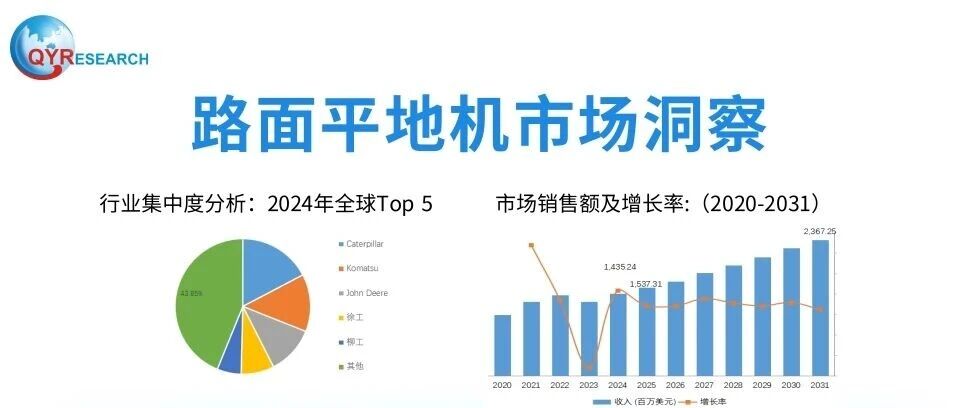
Core Insights - The road grader industry in China is experiencing a strong recovery in 2024 after a brief decline in 2023, driven by infrastructure projects and agricultural development [2][14] - The global market is characterized by high concentration, with major players like Caterpillar, Komatsu, and John Deere dominating alongside rising domestic companies in China [3][16] - Key technological trends include automation, green energy solutions, and product diversification, with a focus on enhancing efficiency and meeting environmental standards [4][6][19] Industry Current Status - The Chinese market is rebounding due to increased demand from road construction, urban renewal, and high-standard farmland projects, alongside robust export growth fueled by the Belt and Road Initiative [2][14] - The global market for road graders is projected to reach $1,435.24 million in sales by 2024, with a compound annual growth rate (CAGR) of 7.46% expected from 2025 to 2031 [12] Competitive Landscape - The global market is dominated by major manufacturers such as Caterpillar, Komatsu, and John Deere, which together hold approximately 42.52% of the market share [16] - Chinese companies like XCMG and SANY are emerging as strong competitors, particularly in the high-end and mid-range markets [3][16] Technological Development Trends - Automation and smart technology are central to the evolution of road graders, with advancements in AI, remote monitoring, and GPS systems enhancing operational efficiency [4][5] - The industry is shifting towards electric and hydrogen-powered solutions to meet stricter environmental regulations, with manufacturers focusing on low-emission technologies [6][19] Market Opportunities and Drivers - Environmental policies are driving the demand for equipment upgrades, with cities implementing bans on high-emission machinery [17] - Domestic infrastructure projects and strong overseas demand are expected to boost sales, particularly for companies that have upgraded their technology to meet international standards [18] Policy Analysis - Policies are being implemented to phase out older, high-emission equipment, with cities like Beijing planning to ban non-compliant machinery by the end of 2026 [25] - Support for electric and hydrogen-powered equipment is being encouraged through subsidies and tax incentives in various regions [25]