QYResearch

Search documents
全球与中国船舶阀门与执行器市场现状及未来发展趋势
QYResearch· 2025-12-02 04:37
Industry Overview - The ship valve and actuator industry is crucial for modern ship propulsion systems, power devices, fluid pipelines, and safety control systems [2] - The global shipping industry is experiencing strong demand for new ship orders, particularly for high-value vessels like LNG carriers and large container ships, driven by energy transition and supply chain restructuring [3] - There is a significant demand for energy-saving and environmentally friendly retrofitting of existing fleets due to stringent environmental regulations from the International Maritime Organization (IMO) [3] Domestic Replacement Progress - Under the "Marine Power" and "Manufacturing Power" strategies, there is a national policy focus on ensuring the safety and controllability of the shipbuilding industry's supply chain, creating unprecedented opportunities for domestic enterprises [4] - Domestic leading companies have made significant breakthroughs in key technologies such as material science, precision manufacturing, and intelligent control, achieving performance and reliability levels comparable to international standards [4] Challenges from Raw Material Fluctuations - The overall supply chain remains stable, but there are risks due to price fluctuations in raw materials like carbon steel and stainless steel, which directly impact production costs [5] Development Trends - Material and process upgrades are necessary to meet the extreme conditions of clean energy vessels, leading to the use of high-performance special alloys and innovative manufacturing processes [6] - Product design is trending towards modularity and integration to facilitate modern shipbuilding's segmented construction and rapid installation needs [7] - The rise of smart ships is driving the transition of valves and actuators towards intelligent solutions, enhancing operational safety and efficiency [8] Market Size and Growth - According to QYResearch, the global ship valve and actuator market is projected to reach $2.411 billion in sales by 2024 and $3.130 billion by 2031, with a CAGR of 3.88% from 2025 to 2031 [10] - China is the largest consumer market, expected to hold 54.59% of the market share in 2024, followed by Europe at 14.84% [13] - China is also a significant production region, with a projected market share of 65.45% in 2024, expected to grow to 68.65% by 2031 [13] Opportunities and Driving Factors - The green transformation of the global shipping industry and stricter environmental regulations are creating upgrade demands for valves and actuators [16] - The recovery of the shipbuilding market, driven by the demand for container ships and energy transport vessels, is providing a stable market foundation [17] - National policies are supporting the domestic production of high-end ship valves and actuators, breaking the long-standing monopoly of international brands [18] - The increasing size and complexity of modern ships are raising reliability requirements for key equipment, favoring advanced materials and high-end products [19]


行业聚焦:全球工业高性能润滑脂行业头部企业市场份额及排名情况(附厂商名单)
QYResearch· 2025-12-02 04:37
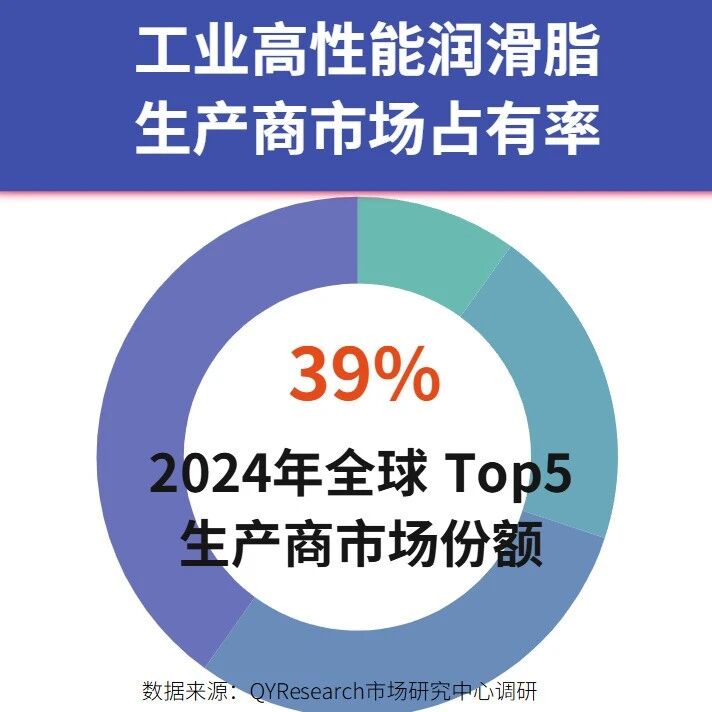
Core Viewpoint - The industrial high-performance grease market is experiencing steady growth driven by increasing demand for efficient and long-lasting equipment across various industries such as manufacturing, mining, and power generation. The need for high-performance grease arises from the inability of traditional lubricants to meet the complex lubrication requirements in harsh operating conditions [3][13]. Market Overview - The global industrial high-performance grease market is projected to reach USD 294 million by 2030, with a compound annual growth rate (CAGR) of 5.6% in the coming years [3]. - The market is characterized by a competitive landscape dominated by leading manufacturers who continuously enhance product performance and adapt to different industrial environments [3][11]. Industry Chain Upstream - The upstream segment includes the supply of raw materials and additives, which are crucial for determining the core performance of greases. Key components include base oils (70%-95%), thickeners (5%-20%), and functional additives (1%-10%) [6][7]. Midstream - The midstream segment focuses on research, formulation, and manufacturing, characterized by high technical barriers. This segment involves precise formulation development and complex production processes to meet specific performance criteria [8]. Downstream - The downstream segment is where value realization occurs through diverse distribution channels, including authorized dealers and direct sales teams. It emphasizes the importance of technical services, transforming suppliers into lubrication solution partners [9]. Future Trends - The industry is evolving towards high performance, sustainability, and smart solutions. Upstream efforts are directed at developing biodegradable base oils and multifunctional additives, while midstream focuses on the application of nanolubricants and long-life formulations [10][12]. - Digital services are becoming a core competitive advantage, enabling real-time monitoring and predictive maintenance of grease conditions through IoT integration [10]. Competitive Landscape - The market exhibits a structure characterized by high technical barriers and stable concentration, with international giants dominating the high-end market. Emerging regional brands are rapidly gaining market share in cost-sensitive areas [11][12]. - The demand for high-performance, environmentally friendly, and specialized products is expected to drive competition in the market [12][13].
行业聚焦:全球光学设计软件行业头部企业市场份额及排名情况(附厂商名单)
QYResearch· 2025-12-02 04:37
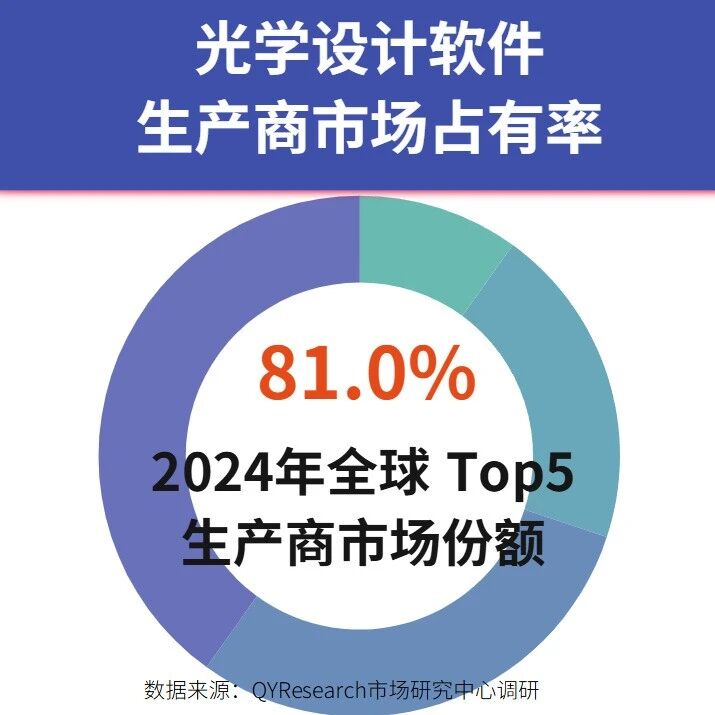
Core Insights - The global optical design software market is projected to reach $400 million by 2031, with a compound annual growth rate (CAGR) of 8.6% in the coming years [5]. - The market is characterized by a strong presence of leading manufacturers, with the top five companies holding approximately 81.0% of the market share in 2024 [9]. - The primary product type is locally deployed software, accounting for about 85.9% of the market, while optical instruments represent the main application area, capturing around 65.1% of the demand [12][14]. Market Trends - The optical design software industry is increasingly integrating with the optoelectronic sector, driven by the rapid growth in demand for high-performance optical systems in emerging fields such as 5G communication, autonomous driving, AR/VR, and biomedical imaging [17]. - Multi-physics simulation and system-level design are becoming mainstream, as future optical systems require integration of optical, thermal, structural, and electrical simulations [18]. - The adoption of intelligent and automated design optimization is accelerating, with AI technologies enabling features like automatic layout and parameter optimization, significantly reducing product development cycles [19]. - Cloud collaboration and ecosystem development are evolving, with a shift from local installations to cloud-based solutions that support multi-user collaboration and on-demand payment models [21]. Key Drivers - The demand for optical design software is expanding from traditional optical systems to comprehensive optoelectronic system designs, influenced by advancements in autonomous driving, AR/VR, and other high-tech applications [22]. - Multi-physics coupling and cross-platform collaboration are becoming standard, as applications in high-power lasers and aerospace require integrated design processes that assess the impact of various physical factors on imaging quality [23]. - The industry is increasingly leveraging intelligent optimization and automation to enhance efficiency in complex design scenarios, allowing engineers to focus on defining requirements and evaluating solutions [24]. - The transition to cloud-based deployment and the establishment of integrated service ecosystems are being driven by the need for localized support and collaboration across different regions [25]. Market Challenges - The optical design software market is characterized by high entry barriers and strong user loyalty, making it difficult for new entrants to compete with established players [26]. - There is a scarcity of skilled talent capable of utilizing optical design software effectively, which limits software utilization rates and affects renewal intentions [27]. - Localized demands coexist with competition from international giants, creating challenges for domestic software providers in meeting both global standards and local expectations [28]. - Issues related to software piracy and the need for ecosystem development are pressuring profit margins, as customers increasingly seek comprehensive solutions that combine software with databases and support services [29].
行业聚焦:全球分立器件引线框架行业头部企业市场份额及排名情况(附厂商名单)
QYResearch· 2025-12-01 04:22
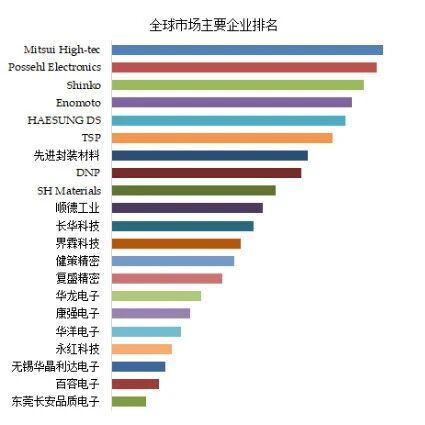
Core Viewpoint - The discrete device lead frame market is driven by strong demand from high-growth end applications such as electric vehicles, photovoltaic energy storage, 5G communication, and industrial control, maintaining a stable growth momentum. The market is expected to grow from USD 931 million in 2024 to USD 1.25 billion by 2031, with a compound annual growth rate (CAGR) of 4.3% from 2025 to 2031 [4][10]. Market Overview - The lead frame is a critical structure and conductive component for discrete semiconductor devices, made primarily from copper alloys or iron-nickel alloys, and is essential for the performance and reliability of these devices [2]. - The Asia-Pacific region, particularly China, has become a core market and production center, with domestic companies accelerating import substitution through enhanced technical capabilities [4][10]. Industry Development Trends - High precision and high-density upgrades are being driven by the miniaturization and high integration of semiconductor devices, requiring breakthroughs in precision stamping, etching, and plating technologies [9]. - Material innovation is shifting towards high-performance copper and silver alloys, with environmental regulations promoting the use of lead-free and halogen-free materials [9]. - Smart manufacturing and industry integration are being adopted widely, enhancing production efficiency and stability through automated production lines equipped with AI visual inspection and manufacturing execution systems [9]. Industry Opportunities - The rapid development of downstream applications such as electric vehicles and 5G communication devices is significantly increasing the demand for discrete semiconductors, with the share of lead frame demand in the electric vehicle sector expected to grow from 27% in 2024 to 35% by 2030 [10]. - National policies supporting the development of key semiconductor materials are creating substantial market space for domestic companies to replace imported products [10]. - The global semiconductor supply chain restructuring is leading to capacity shifts towards the Asia-Pacific region, providing new market opportunities for Chinese companies through mergers, acquisitions, and joint ventures [10]. Industry Challenges - High technical and process barriers exist, requiring precise molds and complex chemical processing, making it difficult for new entrants to achieve breakthroughs quickly [11]. - Domestic companies are heavily reliant on imported high-purity copper alloys and advanced stamping equipment, which limits technological progress [11]. - High customer certification thresholds create long validation cycles for suppliers, making it challenging for new suppliers to enter the market [11]. Industry Chain Analysis - The upstream includes raw materials such as copper, copper-based alloys, and precious metals, with key suppliers being international giants and domestic producers focusing on mid-to-low-end copper alloy production [13]. - The core manufacturing processes involve precision rolling, mold manufacturing, forming, plating, and quality inspection, with copper-based alloy frames being the mainstream product [13]. - The downstream applications include automotive electronics, industrial control, and emerging fields like 5G communication and IoT, driven by the commercialization of advanced packaging technologies and domestic substitution policies [13].
行业聚焦:全球陡坡输送机行业头部企业市场份额及排名情况(附厂商名单)
QYResearch· 2025-12-01 04:22
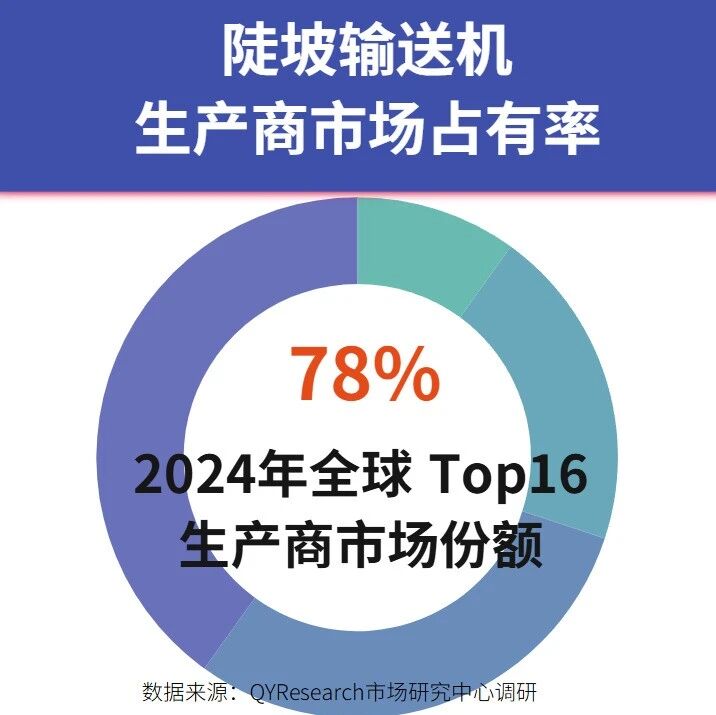
陡坡输送机是一种专门用于散装物料输送的系统,其设计目的是以极高的倾斜角度(通常为 30 ° 至 90 °,远大于传统皮带输 送机)输送松散、颗粒状或块状物料。通过集成工程化的皮带结构、侧壁、挡板或夹层皮带机构,它能够在紧凑的占地面积 内实现物料的连续垂直或近乎垂直的提升。 行业发展趋势:随着矿山、建材、冶金、港口及大型基建项目对高落差、高强度连续输送需求的快速增长,陡坡输送机正呈 现由 "传统补充型设备"向"核心物料提升方案"加速演变的趋势。行业的整体技术路线从常规皮带系统逐步升级至防滑性能更 强的波状挡边带、钢丝绳芯带及智能张紧控制系统,使得输送倾角由 35 °– 45 °提升到 70 °– 90 °区间,大幅缩小输送占地,明 显降低土建成本。在能源效率方面,采用永磁同步电机、能量回馈变频器和多点驱动技术,使单位能耗下降 20% – 30% ,符 合低碳矿山建设方向。数字化方面,行业普遍引入基于振动监测、皮带磨损识别、驱动组预测性维护的智能运维系统,使设 备可用率提升、非计划停机减少。 陡坡输送机全球市场总体规模 根据 QYResearch 最新调研报告显示,预计 2 031 年全球 陡坡输送机 市场规模将 ...
全球与中国超纯铁市场现状及未来发展趋势预测报告
QYResearch· 2025-12-01 04:22
超纯铁,又称高纯铁,是通过电解净化、真空熔炼等先进的精炼工艺生产的,其碳、硫、氧和金属杂质含量极低。超纯铁,通常缩写 为 UPI ,是一种高度精炼的铁,其特点是杂质含量极低。 该纯度水平通常超过 99.9% ,某些等级高达 99.9999% (六个九纯度)。 目前,我国大规模工业化生产的纯铁纯度为 99.0% ~ 99.9% ( 2N ~ 3N )。龙凤山铸业已实现高纯生铁和超高纯生铁的工业化生产 并用于高端装备制造。上海大学与龙凤山铸业经过多年合作,在开发 4N 级高纯铁方面已取得了重要进展—— 2021 年首次制备出公 斤级 4N7 高纯铁, 2023 年实现产业化制备 4N 级电解纯铁, 2 024 年制备出纯度为 99.9992% ( 5N 级)的超纯铁。 5N 级超纯铁的 制备一直是世界级的科技难题,之前仅有发达国家日本和美国在实验室制备出 5N 级超纯铁。报告统计范围主要为 4 N 级和 5 N 级 超 纯铁 。 超纯铁行业目前现状分析 | 发展现状 | 描述 | | --- | --- | | 多领域推动产业扩张 | 近年来,随着新能源、半导体、精密仪器、航空航天等高端制造领域的快速发展,超纯铁 ...

溯源与交叉验证:每一个数据,QYResearch都力求找到原始出处
QYResearch· 2025-12-01 04:22
在当今商业环境中,数据已成为驱动决策的核心要素。然而,泛滥的二手信息、相互矛盾的市场报告以及来源不明的 "行业共识"正让企业管理者面临前所未有的"数据迷 雾"。冗余、矛盾 ,甚至 被污染的数据充斥市场,使得许多决策建立在流沙之上。我们深知,一个基于二手甚至三手数据的误判,足以让企业付出数百万的代价,或让投资者错 失一个时代性的机遇。在 QYResearch,我们信奉一个朴素而坚定的原则:真相,只存在于源头。 因此, "溯源"与"交叉验证"不仅是我们工作报告上的术语,更是刻入每一位分析 师骨髓的工作准则。 一、 溯源: 确保数据的纯度 数据溯源的第一步,是对信息进行分层与筛选。 QYResearch将数据分为三个层级: 一手信源:包括上市公司财报、招股书、政府统计公报、海关数据、学术论文、专利文件等原始记录。这些信息未经转述或加工,是构建研究框架的基 石。 二手信源:如行业报告、媒体报道、券商分析等对原始数据的引用与解读。这类信息需谨慎对待,必须反向追溯至其原始出处。 现场信源:通过访谈、调研获取的产业链一线反馈,包括企业高管、技术专家、渠道商与终端用户的直接洞察。 在市场研究领域,数据的价值不仅在于其本身,更 ...

行业聚焦:全球PES中空纤维膜组件行业头部企业市场份额及排名情况(附厂商名单)
QYResearch· 2025-11-28 06:03
Core Insights - The PES hollow fiber membrane module is a specialized separation device that utilizes porous polyethersulfone (PES) hollow fiber membranes, integrated with pressure-resistant shells and sealing components, to effectively separate, purify, or concentrate target substances due to its excellent chemical stability, heat resistance, and natural hydrophilicity [2] Market Overview - The global PES hollow fiber membrane module market is projected to reach USD 2.65 billion by 2031, with a compound annual growth rate (CAGR) of 5.3% over the coming years [3] Key Manufacturers - Major global manufacturers of PES hollow fiber membrane modules include Sartorius AG, Repligen Corporation, Daicen Membrane Systems Ltd., Cobetter, and several others, primarily concentrated in East Asia due to strong petrochemical and polymer industries [6] Industry Chain Analysis - The industry chain consists of upstream raw material suppliers (PES resin, functional additives), equipment manufacturers (membrane production and assembly equipment), midstream membrane processing, and downstream applications in water treatment, biopharmaceuticals, and food and beverage sectors [7] Policy Analysis - China's "14th Five-Year Plan" mandates a 30% increase in municipal wastewater reuse capacity by 2025, promoting the use of PES hollow fiber membranes in advanced treatment processes [8] - The EU's REACH regulation expands the mandatory disclosure of PES membrane material additives, impacting upstream material development costs and production complexity [8][10] Industry Trends - High-performance surface modifications are being adopted to enhance long-term anti-fouling properties, extending cleaning cycles by 20-30% and reducing operational costs [11] - Manufacturers are developing customized PES membrane components for specific applications, such as ultra-precision pore sizes for biopharmaceuticals and high-flux components for water treatment [11] - The industry is transitioning towards circular economy principles, focusing on recyclable module designs and materials [11] Development Opportunities - The expansion of municipal wastewater reuse infrastructure is creating opportunities for high-throughput PES modules essential for meeting purification standards [11] - The rapid growth of the biopharmaceutical market, exceeding USD 100 billion, necessitates high-purity PES components for sterile filtration [11] - New regulations requiring the removal of microplastics in water treatment are driving demand for PES modules capable of achieving ≥ 95% removal rates [11] Challenges - The supply chain for raw materials is concentrated among a few global suppliers, leading to limited flexibility and vulnerability to price fluctuations [12] - High R&D and production costs for advanced PES modules create barriers for smaller manufacturers [12] - Diverse regulatory and certification requirements across markets increase management costs and complicate operations [12]

“避免了数千万的投资失误!”——客户眼中的QYResearch价值
QYResearch· 2025-11-28 06:03
在硬科技创业的浪潮中,最危险的往往不是没有机会,而是在看似完美的机会背后,隐藏着足以 吞噬一切的陷阱。近日,一位来自国内某领先精密部件制造商的 CEO ,在非公开场合向我们分享了 一次关键的决策经历。他坦言: " 在人形机器人的核心部件上,一份来自 QYResearch 的报告,让 我们在最后关头刹车,守住了公司赖以生存的上亿资金。 " 风口上的战略豪赌 2023 年下半年,人形机器人赛道热度飙升,成为了资本和产业界瞩目的焦点。这家以技术见长的 公司,凭借其在工业精密传动领域深厚的积累,内部自然将 " 进军人形机器人关节(精密减速器) " 视为不容错过的历史机遇。 一个雄心勃勃的计划被提上日程:投入巨资,建设全新的高性能减速器专用产线,目标直指人形 机器人的核心关节市场。 " 我们的技术底子很好,团队士气高涨,内部论证几乎是一边倒的乐观。 " 这位 CEO 回忆道, " 上亿的投资,将决定公司未来的生死。在签字前的最后一刻,我问自己:我们 看到的,是全部的事实吗?我们是否在用自己的经验,去揣测一个完全陌生的战场? " 这份最后的审慎,促使他紧急联系了 QYResearch ,委托我们针对 人形机器人精密减速器 ...

全球与中国半导体底部填充胶市场现状及未来发展趋势2025版
QYResearch· 2025-11-28 06:03
Core Viewpoint - The semiconductor underfill market is experiencing significant growth driven by the increasing demand for high reliability and miniaturization in electronic products, particularly in sectors like consumer electronics, automotive electronics, and industrial control systems [5][10][14]. Group 1: Product Definition and Scope - Semiconductor underfill is a critical material used in the packaging process, filling the gap between chips and substrates to enhance reliability under thermal and mechanical stress [4]. - The primary functions of underfill include thermal management, structural strength enhancement, and improved mechanical performance of the packaging [4]. Group 2: Industry Background and Development History - The underfill industry began in the late 1980s, evolving from basic epoxy materials to advanced formulations that address the challenges of modern semiconductor packaging [6][7]. - The market has matured significantly since the mid-2000s, with a notable expansion in applications due to the rise of smartphones and wearable devices [7]. Group 3: Current Industry Status - The demand for underfill materials is primarily driven by consumer electronics, automotive electronics, and industrial control systems, with a notable shift towards high-performance and environmentally friendly materials [10][11]. - The industry is characterized by a complex competitive landscape, with international firms dominating high-end markets while local companies are gradually increasing their market share [18][19]. Group 4: Development Trends - Future trends indicate a focus on high-performance, environmentally friendly, and intelligent materials, with significant growth potential in emerging markets such as automotive electronics and 5G communication [11][12]. - Innovations in materials and processes, including low CTE and high thermal conductivity materials, are expected to meet the stringent requirements of next-generation applications [19][20]. Group 5: Market Size and Growth Forecast - The global semiconductor underfill market is projected to grow at a CAGR of 10.48%, reaching USD 721 million by 2024 and exceeding USD 1.443 billion by 2031, with China expected to account for 24.72% of the global market share by 2031 [14][17]. Group 6: Regional Market Dynamics - The Asia-Pacific region, particularly China, is becoming a major growth driver, contributing 29.28% of global consumption by 2024, while high-end markets remain dominated by international players [17]. Group 7: Competitive Landscape and Challenges - The market is marked by a dichotomy of high-end monopolies and mid-to-low-end competition, with leading firms maintaining a technological edge through continuous R&D investments [18]. - Geopolitical factors and supply chain security are increasingly influencing competition, necessitating local firms to innovate and adapt to maintain market access [21].