Z Potentials

Search documents
独家|半年7轮亿元融资,深圳VC巨头押注全球端到端VLA领跑者
Z Potentials· 2025-09-01 03:32
Core Insights - The article highlights a significant financing round for AI² Robotics, led by Shenzhen Capital Group, with over 100 million yuan investment, marking the seventh multi-hundred million financing round in six months, indicating strong market confidence in the company's technology and commercialization progress [2][4]. Group 1: Financing and Investment - AI² Robotics has completed a new round of Series A financing, with Shenzhen Capital Group as the lead investor, contributing over 100 million yuan [2]. - The company has successfully raised funds in seven rounds over the past six months, showcasing an unprecedented pace and scale in the industry [2]. - The latest financing round attracted participation from various cautious investors known for their stringent assessments of hard technology and commercialization, including existing shareholders and new industry capital from Huaxi Biological and a large retail enterprise [4]. Group 2: Technological Advancements - AI² Robotics is recognized as one of the earliest companies in China to propose end-to-end VLA (Vision-Language-Action) technology, having launched the world's first comprehensive VLA large model (GOVLA) in April [2]. - The GOVLA model surpasses conventional VLA models by enhancing perception and full-body trajectory control capabilities, and it is the first to integrate a fast-slow system in an end-to-end large model [2]. - Following the launch of GOVLA, the company collaborated with Peking University to release the open-source version FiS-VLA, which outperformed the international benchmark π0 by 30% in comprehensive performance evaluations [2]. Group 3: Business Strategy and Market Position - AI² Robotics emphasizes a "smart-driven, business closed-loop" approach, utilizing its self-developed robot AlphaBot to implement large models in real-world scenarios, creating a feedback loop that enhances GOVLA's iterations [4]. - The company has established itself as the only domestic entity capable of large-scale deployment across multiple sectors, including industrial, biotechnology, and public services [4]. - The funds from the latest financing round will be allocated to the continuous iteration of the GOVLA model and AlphaBot series robots, as well as expanding production lines and global market outreach [4].


速递|Meta的143亿美元豪赌生变:Scale AI数据质量遭质疑,两者蜜月期现裂痕
Z Potentials· 2025-08-31 03:54
Core Viewpoint - The partnership between Meta and Scale AI is showing signs of strain, despite Meta's significant investment of $14.3 billion in June and the hiring of Scale AI's CEO and executives to manage Meta's Super Intelligence Lab (MSL) [2][3]. Group 1: Personnel Changes - Ruben Meyer, a former executive from Scale AI, left Meta just two months after joining, raising questions about the integration of Scale AI's leadership into Meta's core AI team [3]. - There are indications of dissatisfaction among new hires from OpenAI and Scale AI regarding Meta's bureaucratic environment, leading to departures from the company [7][9]. Group 2: Shifts in Collaboration - Meta's TBD Labs is reportedly collaborating with third-party data labeling suppliers beyond Scale AI, including competitors Mercor and Surge, suggesting a diversification of data sources despite the initial heavy investment in Scale AI [4][5]. - Scale AI's data quality has been questioned by Meta's researchers, who prefer working with other suppliers, indicating potential issues with Scale AI's offerings [4][5]. Group 3: Market Dynamics - Following the loss of clients like OpenAI and Google, Scale AI laid off 200 employees from its data labeling department, attributing this to changes in market demand [6]. - Scale AI's business model, which initially relied on low-cost labor for data labeling, is being challenged as the complexity of AI models increases, necessitating expertise from specialized professionals [4][6]. Group 4: Meta's AI Strategy - Meta is aggressively pursuing top AI talent and has made several acquisitions, including AI voice startups, to bolster its capabilities in the competitive AI landscape [8][9]. - The company is investing heavily in infrastructure, with a $50 billion data center project in Louisiana to support its AI ambitions [9]. Group 5: Future Developments - MSL is reportedly working on the next generation of AI models, with a target launch by the end of the year [10].


Z Event|¥1万奖金,我们决定用一场黑客松来验证 Vibe Coding 是自嗨还是真有用?
Z Potentials· 2025-08-31 03:54
Group 1 - The event is a 24-hour Vibe Coding hackathon organized by VibeFriends and SegmentFault, aiming to foster creativity and innovation in coding [1][3]. - A total of 33 teams will participate, with over 20 industry experts and 200 target users involved in the voting process to ensure the products developed are genuinely useful [4][6]. - Participants will receive various supports, including exposure on Xiaohongshu, mentorship from AI entrepreneurs and experts, and continuous supply of food and drinks [7][8]. Group 2 - Prizes include ¥10,000 for the first place, ¥5,000 for the second place, and ¥3,000 for the third place, along with smaller awards for community popularity [8]. - The hackathon encourages participants to explore creative solutions such as tools to save token consumption and automated task lists during development [4][6]. - The event is set to take place in Beijing on September 13, 2025, with a call for teams of 1-3 members to register [13].

速递|医生专属ChatGPT估值两个月翻倍!OpenEvidence估值60亿美元,90%毛利率
Z Potentials· 2025-08-30 04:18
OpenEvidence 运营的一款类似 ChatGPT 的产品,专为医生提供健康信息查询服务。据知情人士透露,这家成立仅三年的初创公司正在考虑多份投资要约, 估值高达 60 亿美元,几乎是其一个月前私募融资估值的两倍。 知情人士之一表示,融资谈判仍处于早期阶段。若交易达成,公司很可能筹集超过 1 亿美元资金。这一融资意向出现之际, ChatGPT 创造者 OpenAI 正着 手开发医疗健康领域相关产品 ,其他健康类人工智能初创公司也正逐步将其产品推向医生及其他医疗专业人员市场。 图片来源: OpenEvidence OpenEvidence 首席执行官兼联合创始人 Daniel Nadler 曾将一家 AI 初创公司以数亿美元价格出售给金融研究公司标普全球。他目前的创业项目为执业医师 提供聊天机器人服务,用于解答疑问或分析同行评审的研究报告。 图片来源: youtube 创始人 Daniel Nadler 这家总部位于马萨诸塞州剑桥的公司向制药公司出售其聊天机器人上的广告位,其模式类似于谷歌在搜索引擎上销售广告。 据参与交易的一位人士透露,该公司目前年化广告收入超过 5000 万美元,这意味着其月收入超过 ...

Z Event|¥1万奖金,我们决定用一场黑客松来验证 Vibe Coding 是自嗨还是真有用?
Z Potentials· 2025-08-30 04:18
Group 1 - The event is a 24-hour hackathon called Vibe Coding, co-hosted by VibeFriends and SegmentFault, aimed at optimizing Vibe Coding through user-driven product development [1][3]. - A total of 33 teams will participate, with over 20 industry experts and 200 target users involved in the voting process to ensure the products developed are genuinely useful [4][6]. - Participants will receive various supports, including model tokens valued at hundreds of yuan, exposure on Xiaohongshu, mentorship from AI entrepreneurs and experts, and continuous supply of food and drinks [7][8]. Group 2 - Awards include a first prize of ¥10,000, a second prize of ¥5,000, and a community popularity award of ¥3,000 for the third place, along with smaller prizes for other participants [8]. - The event is scheduled for September 13, 2025, in Beijing, with a call for teams of 1-3 members and 200 special observers [13]. - The event is supported by strategic partners such as Xiaohongshu and various technology partners, indicating a strong collaborative effort within the tech community [15][16].

速递|30亿美元总融资破纪录!AI巨头押注核聚变,英伟达谷歌参投CFS装置明年点火
Z Potentials· 2025-08-30 04:18
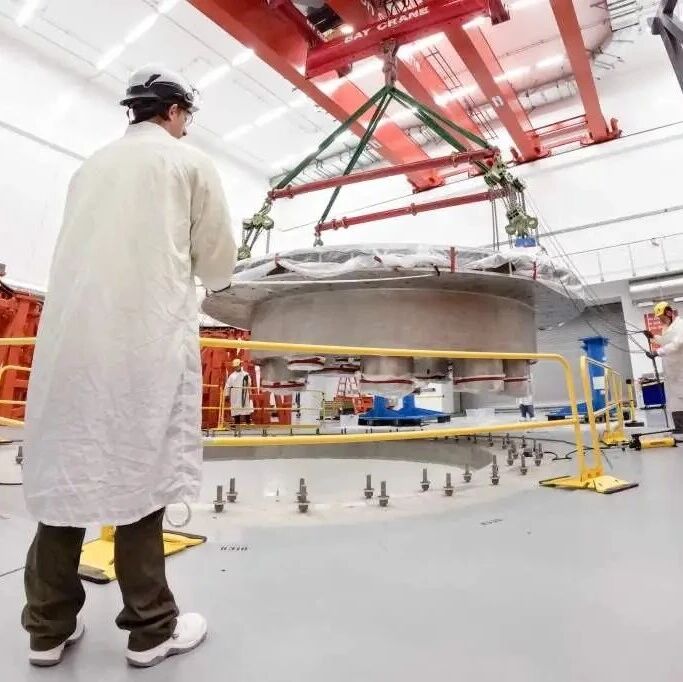
Core Viewpoint - Commonwealth Fusion Systems (CFS) has raised $863 million from various investors, including Nvidia and Google, to advance nuclear fusion technology towards commercialization [1][6]. Funding and Investment - CFS has raised nearly $3 billion to date, leading all nuclear fusion startups, with a previous funding round of $1.8 billion in 2021 [1]. - The recent funding round saw participation from a wide array of investors, with no single lead investor, and included both existing and new investors [6][7]. - Notable existing investors that increased their stakes include Breakthrough Energy Ventures, Emerson Collective, and Google, while new investors include Brevan Howard and Morgan Stanley [6]. Project Development - CFS is constructing a prototype reactor named Sparc in the Boston suburbs, expected to be operational by late next year, aiming for scientific breakeven by 2027 [2][3]. - Sparc is crucial for CFS's success, as it will help validate scientific principles and provide essential cost data for future projects [3][7]. - Following Sparc, CFS plans to build a commercial-scale power plant named Arc in Virginia, with construction expected to begin around 2027 or 2028, contingent on Sparc's performance [3][7]. Technology and Design - Both Sparc and Arc utilize a tokamak design, which employs superconducting magnets to confine and compress plasma for nuclear fusion [4]. - The technology is recognized in the scientific community, but there are uncertainties regarding its practical performance [5]. Strategic Partnerships - CFS has signed an agreement with Google to purchase 200 megawatts of power from the Arc project, indicating strategic partnerships that may benefit supply chain development [7]. - The construction costs for Arc are anticipated to be high, potentially reaching billions, and the company is still determining the financing structure for this project [7].
喝点VC|a16z最新洞察:搜索经济,2万亿谷歌的软肋—AI将率先侵蚀三大中间消费领域且推进速度会超出预期
Z Potentials· 2025-08-30 04:18
Core Insights - The article discusses the impact of AI on consumer behavior and the potential risks and opportunities for companies like Google, Amazon, and Shopify in the evolving digital landscape [2][3][17]. Group 1: Search Economy and Google's Position - The essence of the search economy is defined by the asymmetry between queries driven by curiosity and those with purchase intent, which is why Google has a high market value compared to non-profit entities like Wikipedia [2][3]. - Even with a 95% drop in search volume, Google can maintain revenue growth by retaining high-value commercial queries, but the concern is whether these queries are shifting to AI platforms like ChatGPT [3][4]. - AI is primarily affecting low-value searches that lack commercial intent, and the real revenue threat will arise when AI starts to replace high-intent commercial searches [4][5]. Group 2: Consumer Behavior Categories - Consumer behavior can be categorized into five types based on decision-making levels: impulse buys, routine essentials, lifestyle purchases, functional purchases, and life purchases [5][6]. - AI is expected to disrupt the middle three categories (routine essentials, lifestyle purchases, functional purchases) more rapidly than anticipated, while some searches will be immune to AI disruption [5][6][20]. Group 3: AI's Role in Consumer Behavior - AI will influence consumer behavior differently across categories, with its impact varying from limited roles in impulse purchases to significant assistance in life purchases [9][10][11][15]. - For impulse purchases, AI can enhance advertising precision, while for routine essentials, AI can automate purchasing decisions based on price monitoring [10][11]. - In lifestyle and functional purchases, AI can assist in product recommendations and comparisons, potentially acting as a personal shopping assistant [13][15]. Group 4: Competitive Landscape - Amazon and Shopify face similar risks as Google but are closer to the transaction endpoint, relying on consumer intent and transaction behavior [17][18]. - Amazon has built a comprehensive ecosystem that includes search, logistics, and customer loyalty, while Shopify empowers direct-to-consumer brands through its platform [17][18]. Group 5: Key Breakthroughs Needed for AI - For AI agents to reach their full potential, several breakthroughs are necessary, including improved data quality, standardized API interfaces, identity memory systems, and embedded data capture [20][21]. - Without these foundational changes, AI will remain a sophisticated information aggregator rather than a true commercial agent [21].


速递|为AI加上“审计轨迹”:Maisa AI种子轮融2500万美元,解决企业级应用95%失败率痛点
Z Potentials· 2025-08-29 03:52
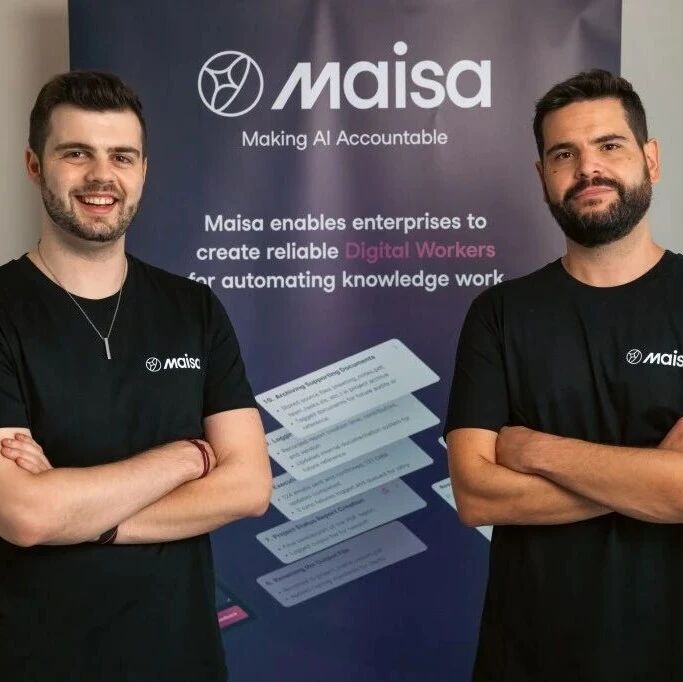
Core Insights - The failure rate of generative AI pilot projects in enterprises is as high as 95%, prompting companies to explore autonomous AI systems that can learn continuously and accept supervision [2] - Maisa AI, a one-year-old startup, focuses on creating accountable agents for enterprise automation rather than opaque black-box solutions [3] Funding and Product Development - Maisa AI has secured $25 million in seed funding led by European venture capital firm Creandum and has launched Maisa Studio, a model-agnostic self-service platform for deploying digital workers trained through natural language [4] - The company differentiates itself by developing a process called "workchain," which emphasizes the execution of tasks to obtain responses rather than merely generating responses [4][5] Technology and Solutions - Maisa AI has developed a system called HALP (Human Augmented Language Model Processing) that allows digital workers to outline execution steps while simultaneously querying user needs [5] - The startup also created a Knowledge Processing Unit (KPU) to limit the generation of hallucinations, enhancing the reliability and accountability of AI applications in critical business areas [9] Market Positioning and Strategy - Maisa aims to position itself as a more advanced robotic process automation (RPA) solution, enhancing productivity without relying on rigid predefined rules or extensive manual programming [9] - The company is targeting enterprise clients, including a major bank and firms in the automotive and energy sectors, and offers both secure cloud and on-premises deployment options [9] Growth Plans - To support its scaling goals, Maisa plans to expand its team from 35 to 65 employees by Q1 2026 and anticipates rapid growth as it begins servicing clients on its waiting list [11] - The startup's dual headquarters in Valencia and San Francisco reflects its commitment to establishing a foothold in the U.S. market, supported by its recent funding rounds [10]
速递|无代码设计工具挑战Figma:Framer获1亿融资估值20亿美元,ARR破5000万美元
Z Potentials· 2025-08-29 03:52
Core Viewpoint - Framer, a Dutch company specializing in web design automation tools, has raised $100 million in a funding round led by existing investors Meritech Capital Partners and Atomico, achieving a valuation of $2 billion [2][3]. Group 1: Company Overview - Framer was founded in 2014 by two designers who previously sold their company Sofa to Facebook. Initially, it provided website design prototyping tools and quickly expanded to include web publishing and no-code development services [3]. - The company positions its services as a simplified alternative to Figma and Squarespace, offering tools for creating web animations, tracking marketing campaigns, and one-stop publishing [3]. Group 2: Financial Performance - Framer's annual recurring revenue has surpassed $50 million, with expectations to double by 2026 [3]. - The company has 500,000 monthly active users, primarily from other software startups, but is aiming to attract larger enterprises [5]. Group 3: Market Context - The tech investment landscape is seeing a surge in interest for startups offering no-code or low-code solutions, particularly those leveraging generative AI models from companies like OpenAI [3]. - Notably, the AI programming assistant Cursor's manufacturer Anysphere achieved a valuation of $9.9 billion with an annualized revenue of $500 million, indicating high valuations in the sector despite varying revenue scales [4]. Group 4: Investment Trends - European tech investors are investing larger amounts in startups compared to their American counterparts, with over 80% of venture capital deals in the first half of the year exceeding €10 million (approximately $11.7 million) [5].

深度|OpenAI Agent团队:未来属于单一的、无所不知的超级Agent,而不是功能割裂的工具集合,所有技能都存在着正向迁移
Z Potentials· 2025-08-29 03:52
Core Insights - The article discusses the integration of OpenAI's Deep Research and Operator projects to create a powerful AI Agent capable of executing complex tasks for up to one hour [2][5][6] - The new Agent combines the strengths of both previous models, allowing for efficient text browsing and flexible graphical user interface (GUI) interactions [6][10] - The Agent is designed to be open-ended, encouraging users to explore various applications and use cases that may not have been anticipated by the developers [7][14] Integration of Deep Research and Operator - The collaboration between the Deep Research and Operator teams led to the development of a new Agent that can perform tasks requiring significant human effort [5][9] - The Agent has access to a virtual computer, enabling it to utilize various tools such as a text browser, GUI browser, and terminal for executing tasks [6][10] - The combination of these tools allows the Agent to perform complex tasks more efficiently and flexibly than either of the previous models alone [6][11] Agent's Capabilities and Use Cases - The Agent can handle a variety of tasks, including generating long research reports, making online purchases, and creating presentations [14][19] - Users can interact with the Agent in real-time, providing corrections and clarifications as needed, which enhances its collaborative capabilities [22][23] - The Agent's ability to run tasks autonomously for extended periods marks a significant advancement in AI capabilities [19][20] Training and Development - The Agent is trained using reinforcement learning, allowing it to learn how to effectively use the various tools at its disposal [24][25] - The training process involves simulating real-world interactions, which helps the model understand when to switch between tools [24][26] - The development team emphasizes the importance of safety measures to mitigate risks associated with the Agent's capabilities [27][28] Future Directions - The team is excited about the potential for the Agent to discover new capabilities and applications as users interact with it [40][49] - There is a focus on enhancing the Agent's performance across a wide range of tasks, aiming for a more versatile and capable model [49][50] - The future may see the emergence of specialized sub-Agents tailored for specific tasks, while maintaining the core functionality of a single, comprehensive Agent [43][44]