WitsView睿智显示

Search documents
16.87亿,北方华创取得OLED设备企业9.48%股份
WitsView睿智显示· 2025-06-06 07:56
Core Viewpoint - Northern Huachuang Technology Group Co., Ltd. has completed the transfer of shares in Shenyang Xinyuan Microelectronics Equipment Co., Ltd., acquiring 9.48% of its total shares, indicating a strategic investment in the semiconductor equipment sector [1][3]. Group 1: Share Acquisition Details - Northern Huachuang acquired 19,064,915 shares of Xinyuan Micro at a price of 88.48 yuan per share, totaling approximately 1.69 billion yuan (16.87 billion) [1]. - The share transfer agreement was signed on March 10, 2025, with the transaction reflecting Northern Huachuang's commitment to expanding its presence in the semiconductor equipment market [1]. Group 2: Company Performance - In 2024, Xinyuan Micro reported total revenue of 1.77 billion yuan, a year-on-year increase of 3.09%, while net profit attributable to the parent company was 211 million yuan, down 15.85% [3]. - The company's non-recurring net profit was 81.75 million yuan, showing a significant decline of 56.32% year-on-year, indicating potential challenges in profitability [3]. Group 3: Industry Positioning - Both Northern Huachuang and Xinyuan Micro operate in the integrated circuit equipment industry, with complementary product offerings that could enhance collaborative synergies [3]. - Northern Huachuang's main products include etching, thin film deposition, and other core process equipment, while Xinyuan Micro specializes in coating and developing equipment, highlighting their strategic alignment [3]. Group 4: Future Plans - Shenyang Zhongke Tiansheng Automation Technology Co., Ltd. currently holds 8.41% of Xinyuan Micro's shares and plans to transfer its entire stake through public solicitation, which may present further acquisition opportunities for Northern Huachuang [4][5]. - Northern Huachuang intends to actively participate in public bidding to increase its stake in Xinyuan Micro and gain control over the company [5].


台积电进军Micro LED,什么信号?
WitsView睿智显示· 2025-06-06 07:56
以下文章来源于LEDinside ,作者陈佳纯 TrendForce集邦咨询旗下光电研究处。研究领域包括MicroLED、MiniLED、照明、显示屏、紫外线(UV LED)、红外线 (IR LED/VCSEL)、化合物半导体等,提供以上各领域的产业研究报告及资讯。 近期,全球半导体制造龙头台积电宣布与美国初创公司Avicena达成合作, 双方将 共同生产基于 Micro LED的光互连产品, 旨在 通过先进的光通信技术替代传统的电连接方式,为日益增长的图 形处理器(GPU)高通信需求提供低成本、高能效的数据传输解决方案。 此举在业界引发高度关注 , 除了标志着台积电进军Micro LED领域之外,有可能成 为Micro LED在光通信这一新兴领域应用前景 的 有力背书,也 可望 激励更广泛的产业链参与者加大在相 关技术研发和商业化上的投入,从而加速整个生态系统的成熟。 更 深一层观察 , 台积电押注Micro LED传递着两大信号:一是反映了 Micro LED技术正逐步超 越传统显示应用的范畴, 朝向光通信应用等非显示应用延伸的趋势;二是体现了台厂在当前竞争 格局下选择扬长避短,错位竞争,实现"换道超车" ...

狂奔的惠科:IPO加速,项目投资超400亿
WitsView睿智显示· 2025-06-05 09:34
Core Viewpoint - Huike has completed its IPO guidance, indicating its readiness to reinitiate the IPO process, which will provide broader financing channels and enhance its competitiveness in technology development and market expansion [7]. Group 1: Company Overview - Huike, established in December 2001, specializes in the semiconductor display sector, focusing on the research and manufacturing of semiconductor display panels and smart display terminals [1]. - The company has developed various technologies, including a-Si TFT-LCD, Oxide TFT, Oxide RGB OLED, Oxide LCD, and Mini LED [1]. - Huike operates four G8.6 generation panel production lines and seven display terminal production bases, along with facilities for display module production and accessories [1]. Group 2: Financial Performance - From 2019 to 2021, Huike's revenue increased from 10.577 billion to 35.709 billion, while its net profit shifted from a loss of 1.277 billion to a profit of 5.406 billion [1]. Group 3: Previous IPO Attempts - Huike previously submitted an IPO application in 2022, aiming to raise 9.5 billion for various projects, including OLED device upgrades and Mini LED production line expansions [2]. - The company withdrew its IPO application in August 2023 but resumed guidance for a new listing in February 2024 [3]. Group 4: Project Developments - Huike has been actively diversifying its business, investing over 40 billion in multiple projects since 2024, including OLED, MLED, and electronic paper [4]. - The company acquired assets from Royole for 504 million, marking a strategic entry into the OLED market [4]. - In the MLED sector, Huike has invested over 13 billion in projects in Changsha and Mianyang, focusing on Mini LED direct display and backlight modules [4]. - Huike is also investing 10 billion in a new M-LED chip base in Nanchong, with a planned monthly capacity of 1 million chips [5]. - In the electronic paper domain, Huike has committed 8 billion to a project in Chuzhou, focusing on various electronic paper products [5]. Group 5: Downstream Developments - Huike is advancing projects in Zhengzhou and Dongguan, with the Zhengzhou base expected to generate an annual output value of 8 billion upon reaching full capacity [6]. - The Dongguan project, with an investment of 760 million, will produce various display products and provide related services [6].

中尺寸显示器需求增长,无FMM OLED技术迎新机会
WitsView睿智显示· 2025-06-05 09:34
Core Viewpoint - The OLED technology is expanding its market share due to its self-emissive, high contrast, and lightweight advantages, primarily in small-sized applications like smartphones. However, the large-sized market faces slow growth due to cost and capacity constraints. The mid-sized market, including monitors, laptops, tablets, and automotive displays, is experiencing renewed competition driven by consumer demand for high-quality displays. TrendForce forecasts an 80.6% annual increase in OLED display shipments by 2025, with overall market penetration rising to 2% and potentially reaching 5% by 2028 [1][2]. Group 1 - TrendForce predicts that the penetration rate of OLED displays in the overall market will increase significantly, with a forecasted shipment growth of 80.6% by 2025 [1]. - The mid-sized display market is becoming increasingly competitive as consumers seek higher display quality, leading to new market dynamics [1][2]. - Companies like TCL Huaxing and Visionox are developing new technologies such as ViP and printed OLED to differentiate themselves from traditional FMM OLED technologies [2][3]. Group 2 - TCL Huaxing plans to introduce its self-developed printed OLED products into the medical display market by the end of 2024, showcasing a complete product line at the SID Display Week in May 2025 [2][3]. - The printed OLED technology aims to overcome limitations of FMM and vacuum environments, improving material usage efficiency and reducing investment costs by approximately 25% compared to similar vapor-deposited products [3][4]. - Despite challenges in yield, pixel density, and reliability, printed OLED panels have achieved a resolution of 326 PPI, meeting the needs of laptops and monitors [3][4]. Group 3 - Visionox is actively promoting its ViP technology, which utilizes lithography to achieve pixel graphic design, eliminating FMM limitations and supporting high aperture ratios and various pixel arrangements [4][5]. - A comparison of different OLED technologies highlights that printed OLED has lower equipment investment costs and is expected to achieve mass production by the end of 2024, while still facing yield challenges [5][7]. - The industry is moving towards more flexible and cost-effective OLED solutions, with non-vapor deposition technologies gaining traction [7].


面板价格最新预测(2025年6月)
WitsView睿智显示· 2025-06-05 09:34
Core Viewpoint - The panel prices for TVs, monitors, and laptops are expected to remain stable in June 2025 according to TrendForce's latest report [1]. TV Panels - The average price for a 65-inch TV panel is projected to be $177, with a range from $173 to $181 [3]. - The average price for a 55-inch TV panel is expected to be $127, with a range from $122 to $129 [3]. - The average price for a 43-inch TV panel is anticipated to be $66, with a range from $64 to $67 [3]. - The average price for a 32-inch TV panel is forecasted to be $36, with a range from $35 to $37 [3]. Monitor Panels - The average price for a 27-inch IPS monitor panel is expected to be $63, with a range from $57.6 to $65.8 [4]. - The average price for a 23.8-inch IPS monitor panel is projected to be $49.9, with a range from $47.1 to $51.4 [4]. Laptop Panels - The prices for laptop panels are expected to remain unchanged in June [5]. - The average price for a 17.3-inch TN panel is stable at $38.3, with a range from $37.7 to $39.8 [6]. - The average price for a 15.6-inch Value IPS panel is projected to be $40.3, with a range from $38.6 to $41.9 [6]. - The average price for a 14.0-inch TN panel is stable at $26.9, with a range from $26.4 to $28.1 [6]. - The average price for an 11.6-inch TN panel is stable at $25.1, with a range from $24.2 to $26.5 [6].

显示材料企业获8700万增资
WitsView睿智显示· 2025-06-05 09:34
Core Viewpoint - The company is increasing its investment in its subsidiary, Suzhou Aikelong Materials Co., Ltd., to enhance its competitive edge and expand its business in integrated semiconductor manufacturing, packaging, and display technologies [1][2]. Group 1: Investment and Expansion - The company plans to invest a total of 87 million RMB in Aikelong, with contributions from itself and two other partners [1]. - After the capital increase, the company's stake in Aikelong will be 11.6225%, maintaining it as a subsidiary [1]. - The investment aims to leverage technical and financial strengths for resource synergy and long-term business expansion [2]. Group 2: Recent Acquisitions - In addition to the capital increase, the company acquired two display companies from JNC and all related LCD patents for a total of 382 million RMB [2]. - The purpose of these acquisitions is to optimize the industrial structure and strengthen resource integration, focusing on the LCD business to enhance core competitiveness [2]. Group 3: Financial Performance - In 2024, the company achieved a revenue of 2.918 billion RMB, a year-on-year increase of 6.92%, and a net profit of 247 million RMB, up 119.42% [3]. - In the first quarter of 2025, the company reported a revenue of 701 million RMB, a 4.81% increase year-on-year, and a net profit of 120 million RMB, reflecting a 100.10% growth [3].


4.8亿,伟时电子车载显示项目再提速
WitsView睿智显示· 2025-06-04 09:06
Core Viewpoint - The article discusses the strategic shift of Weishi Electronics towards Mini LED and ultra-large screen technologies in the automotive display sector, highlighting the company's new fundraising project aimed at enhancing production capacity and product quality [2][9]. Group 1: Project Overview - Weishi Electronics has announced a new fundraising project to raise up to 480 million yuan, primarily for the "lightweight vehicle new display component project," which aims to produce 4.33 million lightweight structural parts and 1.85 million new vehicle backlight display modules annually [2][3]. - The previous project, focused on backlight display modules and smart display components, has faced multiple delays, now expected to complete by October 2025, due to insufficient implementation space rather than product demand issues [2][3]. Group 2: Financial Details - The total investment for the new lightweight vehicle display component project is approximately 616.52 million yuan, with 380 million yuan allocated from the fundraising [3]. - The company also plans to use 100 million yuan to supplement its working capital, bringing the total fundraising amount to 480 million yuan [3]. Group 3: Market Trends and Technology - Mini LED technology is gaining traction in the automotive display market due to its high brightness and potential for high-end display solutions, especially as electric vehicle manufacturers increasingly adopt larger screens [3][6]. - The automotive LED market is projected to grow to 3.445 billion USD in 2024, driven by the demand for advanced technologies like Mini LED backlight displays [6]. Group 4: Competitive Landscape - Other companies in the industry, such as Hanbo High-tech and Longli Technology, are also actively investing in Mini LED technologies, with Hanbo planning to raise 750 million yuan for a project to produce 9 million Mini LED light boards [6][7]. - Longli Technology has established partnerships with several Tier 1 suppliers and is expanding its Mini LED product offerings, indicating a competitive push in the automotive display sector [7][8]. Group 5: Future Outlook - The increasing adoption of Mini LED and ultra-large screen technologies in automotive displays is expected to enhance user experience and drive market growth, with companies like Weishi Electronics, Hanbo High-tech, Longli Technology, and Nanjiguang positioning themselves for future opportunities [9][10].


京东方持有武汉子公司股权比例增至58.36%
WitsView睿智显示· 2025-06-04 09:06
Core Viewpoint - BOE Technology Group's subsidiary, Wuhan BOE Optoelectronics Technology Co., Ltd., has repurchased shares from minority shareholders and reduced its registered capital, increasing BOE's ownership stake from 47.14% to 58.36% [1][4]. Summary by Sections Company Actions - Wuhan BOE has completed the registration process for the capital reduction, changing its registered capital from 2,600 million yuan to 2,100 million yuan [1]. - The share repurchase and capital reduction are aimed at enhancing BOE's equity stake in Wuhan BOE, which is crucial for the company's operational performance [4]. Industry Context - The semiconductor display industry is experiencing positive growth, with the LCD sector focusing on "production based on demand," leading to a stable supply structure [4]. - Demand is steadily increasing due to the trend towards larger and higher-end products, with high-generation lines like Wuhan BOE becoming significant for the company's growth [4]. Strategic Implications - The increase in ownership will positively impact the company's operational performance and aligns with its overall planning for Wuhan BOE [4]. - Strengthening management over subsidiaries is expected to contribute to the long-term healthy and stable development of both the company and Wuhan BOE, enhancing the core competitiveness of the semiconductor display business [4].

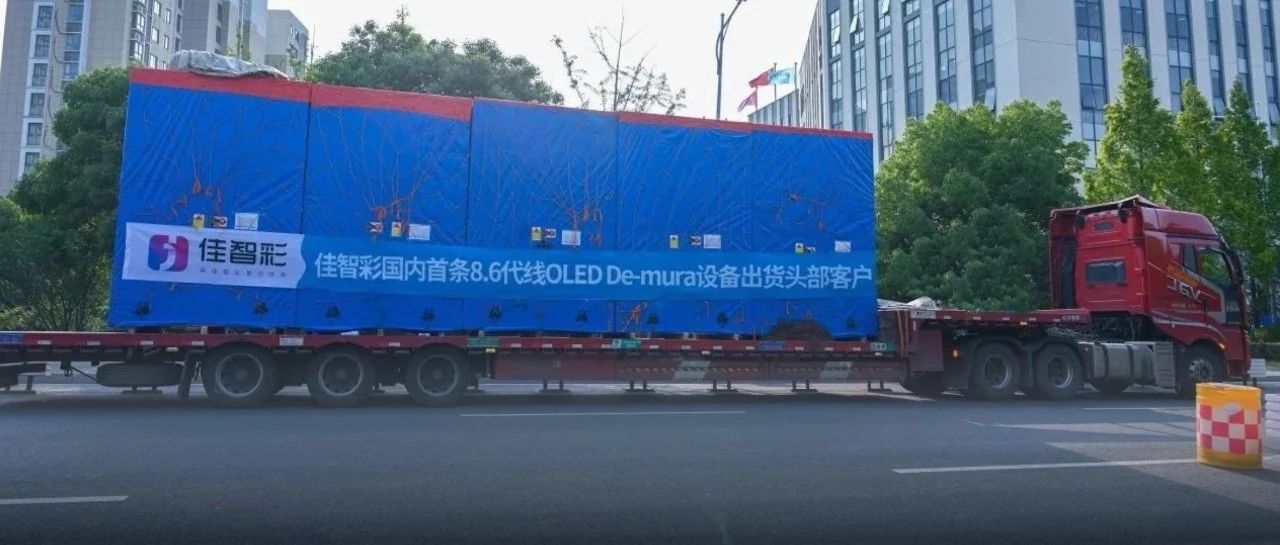
国内首条8.6代OLED产线用De-mura设备出货某头部面板厂
WitsView睿智显示· 2025-06-04 09:06
Core Viewpoint - The article highlights the successful delivery of the first domestically developed 8.6-generation OLED De-mura equipment by Karen Co., which is a significant advancement in the OLED panel manufacturing industry in China [1][3]. Group 1: Company Developments - Karen Co. announced the delivery of its self-developed 8.6-generation OLED De-mura equipment to a leading domestic panel manufacturer, marking a milestone in the OLED production process [1][3]. - The De-mura technology is crucial for OLED panel production, enhancing display uniformity and image quality through high-precision optical detection and compensation algorithms [3]. - The equipment delivered is part of the second global and first domestic 8.6-generation OLED panel manufacturing line, primarily targeting applications in tablets, laptops, and some televisions [3]. Group 2: Acquisition and Financial Performance - Karen Co. acquired a 51% stake in Suzhou Jiazhi Optoelectronics Technology Co., Ltd. (Jiazhi) for 48.32 million yuan, aiming to explore new growth opportunities in the display panel and semiconductor testing equipment sector [4]. - The acquisition includes performance commitments, with Jiazhi expected to achieve net profits of no less than 55 million yuan, 75 million yuan, and 110 million yuan for the years 2025, 2026, and 2027, respectively, totaling 240 million yuan [4]. - Jiazhi's projected net profits for 2022, 2023, and 2024 are 11.12 million yuan, 58.12 million yuan, and 46.40 million yuan, indicating a growth trajectory [4].

京东方推出首款集成AES 3.0协议的OLED笔电显示屏
WitsView睿智显示· 2025-06-04 09:06
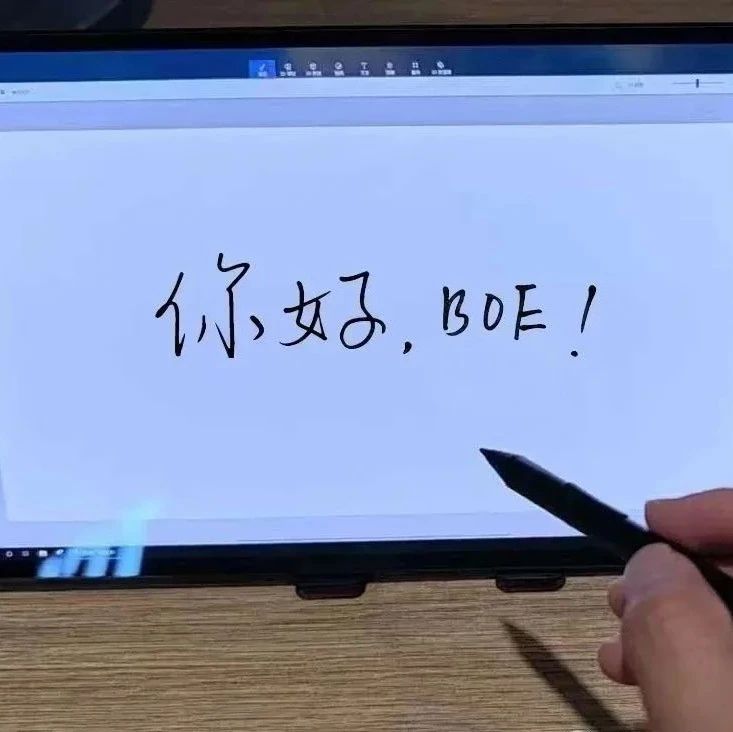
Core Viewpoint - BOE has launched the world's first 13.3-inch On-Cell Touch OLED display supporting AES 3.0 active pen protocol, enhancing writing and touch performance significantly [1][3]. Group 1: Product Features - The new OLED display features a signal-to-noise ratio (SNR) of ≥32dB, a 50% increase in reporting rate from 240Hz to 320Hz, and a 25% improvement in hover height for touch interactions [1][3]. - The AES 3.0 active pen OLED solution utilizes advanced active pen sensor design and On-Cell integrated touch technology, replacing traditional external touch solutions, which improves performance and allows for ultra-narrow bezel design [3]. - The active pen OLED employs active capacitive technology, enabling high-precision positioning through high-frequency signal transmission from the pen to the screen, capturing both position and pressure data [3]. Group 2: Technical Innovations - The module incorporates low dielectric materials, thickened metal mesh capacitive touch technology, and active pen frequency hopping technology, ensuring that display and touch functions do not interfere with each other [3]. - The self-developed noise reduction algorithm by BOE enhances the SNR to over 32dB, which is an 8% improvement compared to conventional products [3]. - The display supports 4096 levels of pressure sensitivity, simulating real writing strokes, and features low writing latency while resisting screen static and external electromagnetic noise [3].