创业邦

Search documents
十五运会火炬传递,机器人火炬手“夸父”亮相;我国航空制造装备领域取得重大突破,世界最大蒙皮拉伸机通过验收丨智能制造日报
创业邦· 2025-11-02 03:19
Group 1 - The Shenzhou 21 manned spacecraft successfully docked with the Tianhe core module of the space station, setting a record for the fastest docking process at approximately 3.5 hours [2] - The 15th National Games torch relay featured a humanoid robot named "Kua Fu" as a special torchbearer, marking the first time that smart technology was integrated into the relay format [2] Group 2 - China has achieved a significant breakthrough in the aviation manufacturing equipment sector with the world's largest skin stretching machine passing inspection, indicating progress in domestic production capabilities [4] - This equipment utilizes digital technology for innovative transformation from laboratory to production line, achieving a forming precision of 0.1 millimeters, surpassing traditional equipment standards [5] - The technology fills a critical gap in aviation manufacturing and positions China as the first country to master "dual-mode forming" technology, contributing to the high-quality development of the high-end equipment manufacturing industry [5]


去世7年后“遗产”史诗级爆发,他是香港最被低估的爱国巨商
创业邦· 2025-11-02 03:19
Core Viewpoint - The article highlights the transformative impact of AI on industries and the significant performance and market value growth of companies in the A-share market related to AI, particularly focusing on Shengyi Technology and Shengyi Electronics, which have both surpassed market capitalizations of 150 billion and 80 billion respectively, driven by the entrepreneurial spirit of Tang Xiangqian [5]. Company Background - Tang Xiangqian, known as the "Textile King," transitioned from the textile industry to electronics, founding Shengyi in 1985, focusing on copper-clad laminates, a core material for PCB manufacturing [8][9]. - The company faced initial challenges, including management inefficiencies, leading Tang to implement a contracting model to improve operations and profitability [9][10]. Quality Control and Management - Tang emphasized the importance of quality control, establishing an ISO9000 quality management system and enhancing internal communication and coordination, which significantly improved production capacity [12][14]. - Under his leadership, Shengyi's production capacity grew from 600,000 square meters in the first year to 1.3 million square meters by the third year, positioning the company among the top producers in China [14]. Technological Advancements - Shengyi established its R&D center in 1994, leading to significant technological innovations in the copper-clad laminate sector, allowing the company to close the gap with international competitors [18][19]. - By 2006, China became the world's largest producer of copper-clad laminates, with Shengyi ranking among the top five global companies in this field [21]. Strategic Growth and Market Position - In 2013, Shengyi acquired a majority stake in Shengyi Electronics, creating a synergistic effect between substrate and PCB production, which propelled both companies into a phase of high-quality development [22]. - Shengyi's production capacity expanded from 600,000 square meters at inception to an expected 140 million square meters by 2024, maintaining its position as the second-largest global supplier of rigid copper-clad laminates [23]. Legacy and Philosophy - Tang Xiangqian's philosophy of "dedication to industry" and his commitment to practical contributions to the country were central to his business approach, influencing the company's culture and operational strategies [25][26]. - His passing in 2018 marked the end of an era, but his legacy continues to inspire the company's mission to uphold the values of diligence and patriotism in the industrial sector [25][26].



东北首座万亿城市之争,尘埃落定?
创业邦· 2025-11-02 03:19
Core Viewpoint - The article discusses the contrasting economic performances of Dalian and Shenyang, two cities in Northeast China, as they approach the milestone of becoming trillion-yuan GDP cities, highlighting the potential emergence of the first trillion-yuan city in the Northeast region [6][22]. Economic Performance Comparison - Dalian's GDP reached 724.8 billion yuan with a growth rate of 6.0%, surpassing the annual target of 5.5% and showing resilience compared to other trillion-yuan cities [6][8]. - In contrast, Shenyang's GDP was 661.4 billion yuan with a growth rate of only 2.3%, facing declines in industrial output (-4.7%) and foreign trade (-9.8%) [6][11]. Industrial Structure and Challenges - Shenyang's economy is heavily reliant on the automotive industry, which accounts for 49.5% of its manufacturing revenue, leading to vulnerabilities when facing challenges from foreign brands like BMW [12][14]. - The automotive sector in Shenyang has seen significant declines, with production dropping by 45.2% and revenue by 42.1% in the first three quarters of the year [14][15]. - Dalian, on the other hand, has a more diversified industrial base, with the petrochemical industry driving growth, achieving an industrial output growth of 12.8% [17][18]. Strategic Initiatives and Future Outlook - Dalian is focusing on transforming its petrochemical industry through new projects and a three-year action plan aimed at enhancing its green petrochemical cluster [21][22]. - Shenyang is attempting to pivot towards new energy vehicles and has established an investment fund to support the automotive industry's transition, although progress has been slow [15][16]. - The contrasting paths of Dalian and Shenyang may provide insights into the broader industrial transformation efforts in Liaoning province, which is currently lagging behind other northeastern provinces in GDP growth [23][26].

自然语言简化查找专利流程,Perplexity推出新版AI检索工具;英特尔拟斥资50亿美元洽购SambaNova丨AIGC日报
创业邦· 2025-11-02 01:35
Group 1 - Hyundai Motor is collaborating with NVIDIA to build an AI factory, aiming to accelerate the development of the AI ecosystem in South Korea with an investment of approximately $3 billion [2] - Intel is reportedly in talks to acquire AI startup SambaNova for an estimated $5 billion, as part of its strategy to enhance its AI capabilities under the leadership of new CEO Lip-Bu Tan [2] - Perplexity has launched a new AI search tool that allows users to search for patents using natural language, simplifying the patent search process [3]


寒武纪回应原CTO索赔42.87亿元;泰州队夺得首届苏超冠军;王腾称将离开手机行业;段永平回应向一高校捐赠1万股茅台股票丨邦早报
创业邦· 2025-11-02 01:35
Group 1: New Energy Vehicle Deliveries - Xiaopeng Motors delivered 42,013 vehicles in October, setting a new monthly record and achieving a total of 355,209 deliveries from January to October, a year-on-year increase of 190% [1] - NIO delivered 40,397 vehicles in October, a year-on-year increase of 92.6%, with a total of 241,618 vehicles delivered year-to-date, up 41.9% [1] - Leap Motor delivered 17,342 vehicles in October, marking a year-on-year increase of 301.5% and a month-on-month increase of 13.7% [1] - Li Auto delivered 31,767 vehicles in October, with a cumulative total of 1,462,788 vehicles delivered as of October 31, 2025 [1] - Xiaomi Motors continued to deliver over 40,000 vehicles in October [1] - Zero Run delivered 70,289 vehicles in October, a year-on-year increase of over 84% [1] - Zeekr delivered 61,636 vehicles in October, a year-on-year increase of 9.8% [1] - BAIC New Energy sold 30,542 vehicles in October, with Arcfox sales exceeding 23,000 vehicles, a year-on-year increase of 110% [1] - Lantu delivered 17,218 vehicles in October, with a year-on-year increase of 82% for the January-October period [1] - Avita sold 13,506 vehicles in October [2] - Zhijie Motors surpassed 10,000 vehicle deliveries in October [2] Group 2: Xiaomi Automotive Developments - Xiaomi's vehicle delivery cycle has been shortened again, with the YU7 model expected to be delivered in 35-38 weeks, a reduction of 10 weeks from the original timeline [4][5] - The YU7 Pro is expected to be delivered in 34-37 weeks, shortened by 8 weeks, while the YU7 Max is expected in 32-35 weeks, shortened by 4 weeks [5] Group 3: Global Automotive Market Insights - By September 2025, China's share of the global automotive market is projected to reach 38%, with a total global sales volume of 8.55 million vehicles, a year-on-year increase of 10% [23] - From January to September 2025, global automotive sales reached 70.53 million units, a year-on-year increase of 6%, with China contributing 24.32 million units, up 13% [23] - The U.S. automotive market saw sales of 12.58 million units, an increase of 4%, while the Indian market grew by 2% to 4 million units [23]




FundPark完成7100万美元融资;三一重工登陆港交所,最新市值为2128.98亿港元丨全球投融资周报10.25-10.31
创业邦· 2025-11-02 01:35
Core Viewpoint - The article provides an overview of the latest trends in investment and financing activities in the domestic market, highlighting key sectors and significant financing events. Group 1: Investment Overview - This week, there were 109 disclosed financing events in the domestic primary market, an increase of 12 compared to the previous week. Among these, 36 events disclosed financing amounts, totaling 4.786 billion RMB, with an average financing amount of 133 million RMB [7]. - The most active sectors in terms of financing events were intelligent manufacturing, artificial intelligence, and healthcare, with 21, 16, and 13 events respectively [9]. Group 2: Sector Highlights - In terms of disclosed financing amounts, artificial intelligence led with a total financing scale of approximately 1.055 billion RMB. Notably, the bionic robot developer "Wubai Intelligent" secured nearly 500 million RMB in Series A financing [9][10]. - The healthcare sector followed with a disclosed financing total of 670 million RMB, where the medical isotope developer "Nuclear Element Innovation" received 430 million RMB in Series A financing [10]. Group 3: Regional Distribution - The disclosed financing events were primarily concentrated in Jiangsu, Zhejiang, and Guangdong, with Jiangsu reporting 24 events, Zhejiang 19 events, and Guangdong 18 events [14][17]. Group 4: Stage Distribution - The stage distribution of the disclosed financing events showed that 81 were early-stage, 24 were growth-stage, and 4 were late-stage [17]. Group 5: Major Financing Events - The article mentions significant financing events, including the acquisition of 70% of the semiconductor packaging materials manufacturer "Huawei Electronics" by Huahai Chengke for 1.12 billion RMB [35][37]. Group 6: Active Investment Institutions - The most active investment institutions this week included CRRC Capital with 4 investment events, Shenzhen Capital Group with 3, and Legend Capital with 2 [24]. Group 7: IPO Highlights - A total of 8 companies were monitored for IPOs this week, with the highest market capitalization being "Sany Heavy Industry" at 212.898 billion HKD. All listed companies had previously received VC/PE or CVC investments [28][29].

出海老人,“搞丢了”自己的上市公司
创业邦· 2025-11-01 10:06
Core Viewpoint - The article discusses the rise and fall of the cross-border e-commerce giant "Youkeshu," highlighting its rapid growth, subsequent financial struggles, and the implications for the industry as a whole. It emphasizes the shift from a reliance on platform traffic to the necessity of brand building and compliance in the evolving market landscape [6][8][24]. Group 1: Company Background and Growth - Youkeshu was founded by Xiao Siqing in 2010, capitalizing on the cross-border e-commerce boom, leveraging Shenzhen's supply chain advantages to sell high-quality products globally [11][12]. - The company experienced rapid expansion, reaching 200 employees by 2013 and becoming a sought-after investment target, completing multiple funding rounds that culminated in a peak valuation of 30 billion yuan in 2017 [10][13][14]. - In 2016, Youkeshu reported a revenue of 2.49 billion yuan, marking a 141% increase from the previous year, and became known as the "first stock" in cross-border e-commerce after listing on the New Third Board [14][18]. Group 2: Challenges and Decline - Following its acquisition by Tianze Information in 2018, Youkeshu faced stringent performance targets, which became increasingly difficult to meet due to external market pressures, including a crackdown on Chinese sellers by Amazon [19][20]. - The company suffered significant losses, reporting 2.705 billion yuan in 2021, 361 million yuan in 2022, and 491 million yuan in 2023, leading to a debt crisis and eventual bankruptcy restructuring in 2024 [21][24]. - Internal conflicts arose during the restructuring process, culminating in a complete overhaul of the board, with the original management team being replaced in 2025 [22][23]. Group 3: Industry Implications - The decline of Youkeshu reflects a broader shift in the cross-border e-commerce industry from a focus on traffic-driven growth to the importance of brand establishment and compliance with regulations [24]. - The article underscores the necessity for companies to adapt to stricter compliance requirements and to build sustainable business models that do not solely rely on platform traffic [24]. - Youkeshu's trajectory serves as a cautionary tale for other companies in the sector, illustrating that short-term gains from capital and traffic cannot substitute for robust governance and compliance practices [24].

崔东树:2025年9月中国占世界汽车份额38%;比亚迪在日本推出本地化定制车型丨汽车交通日报
创业邦· 2025-11-01 10:06
更多汽车出行资讯 …… 1. 【小米汽车交付周期再次缩短,部分车型有望较原定周期提前10周】记者从多位接近小米汽车人 士处获悉,小米汽车交付周期较原定周期再次缩短:YU7锁单后预计35~38周,较原定周期缩短10 周,YU7 Pro锁单后预计34~37周,较原定周期缩短8周,YU7 Max锁单后预计32~35周,较原定周 期缩短4周。前述人士表示,"本次交付周期大幅缩短,主要是产能提升所致。"(蓝鲸新闻) 2.【崔东树:2025年9月中国占世界汽车份额38%】乘联分会秘书长崔东树发文表示,2025年9月的 世界汽车销量达到855万台,同比增10%,环比8月增12%。随着中国和美国车市的持续走强,2025 年9月世界车市超越2017年9月峰值,处历年的峰值水平。2025年1-9月销量7053万台,同比增长 6%。 2025年1-9月的全球汽车销量增长6%,其中中国汽车销量2432万台、增长13%,美国销量1258万 台增4%,印度销量400万台增2%,日本销量346万台增5%,德国销量233万台降1%。目前看中国 市场最有活力,增速快。俄罗斯市场下滑严重,墨西哥的增速放缓,而南美的阿根廷等市场表现较 好。 中国 ...

全球首家女子体育酒吧:一个玩笑,做成百万美元生意
创业邦· 2025-11-01 10:06
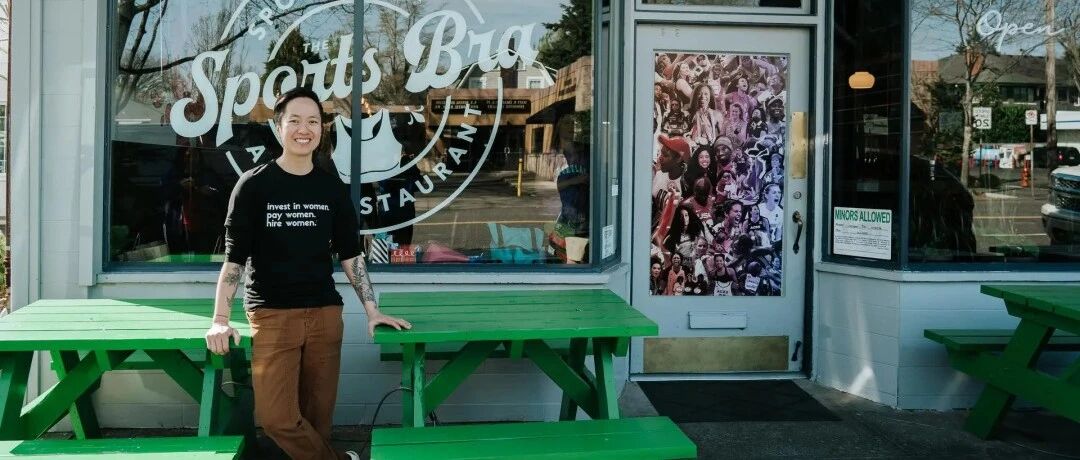
Core Insights - The Sports Bra is the world's first sports bar dedicated exclusively to women's sports, which opened in Portland, Oregon, in 2022 and achieved profitability within its first year [4][6]. - The bar plans to expand to four cities across the U.S. by 2026, funded by the 776 Foundation, founded by Alexis Ohanian, who is also known for his connection to tennis star Serena Williams [6][7]. - The women's sports market is projected to exceed $15 billion globally by 2030, indicating a growing commercial interest in women's sports [6]. Expansion Plans - The Sports Bra will open locations in Boston, Indianapolis, Las Vegas, and St. Louis, targeting cities with strong women's sports cultures [11]. - The initial investment for opening a franchise ranges from $310,000 to $950,000, including a franchise fee of $55,000 [8]. - The franchise model emphasizes selecting local operators who are familiar with their communities and can connect with local women's sports teams [9]. Operational Strategy - Each franchise will maintain 85% consistency with the original bar's branding, including decor, menu, and event content, while allowing for 15% local customization [9]. - The bar actively engages in local women's sports events, fostering a community centered around women's athletics [9]. Business Model and Revenue - The Sports Bra has generated revenues of approximately $1.08 million in 2023 and $1.09 million in 2024, demonstrating sustained profitability [19]. - The bar has diversified its revenue streams by launching its own merchandise and hosting significant events, including discussions on women's sports expansion [19]. Market Trends - The number of similar women's sports bars in the U.S. is expected to grow by 300% by the end of 2025, indicating a rising trend in this niche market [21]. - Successful operation of women's sports bars hinges on engaging local women's sports teams and creating a loyal customer base through community involvement [21][22]. Challenges and Considerations - Despite the success of The Sports Bra, challenges such as high operational costs and reliance on popular events remain prevalent in the industry [21][23]. - The sustainability of women's sports bars is uncertain, as evidenced by the short-lived existence of similar establishments in other regions [23].
比AI更懂老外的,可能是中国人
创业邦· 2025-11-01 03:18
Core Insights - The article highlights the rising popularity of AI applications, particularly in emotional companionship, driven by China's robust hardware supply chain and open-source large models, which have lowered the entry barriers for AI startups [6][7][8] - It emphasizes that the global AI application market is transitioning from conceptual hype to practical applications, with Chinese applications outperforming their American counterparts in various sectors [6][7][8] AI Application Market Trends - The user base for generative AI in China is projected to reach 515 million by June 2025, with a growth of 266 million users in just six months, indicating a penetration rate of 36.5% [7] - Chinese developers hold 22 spots in the top 50 mobile generative AI applications globally, showcasing the competitive landscape [8] - The market is dominated by low-threshold AI applications that cater to everyday needs, with practical guidance, information retrieval, and writing assistance accounting for nearly 80% of the market [8] Emotional Companion AI Applications - The emotional companion AI application Talkie has gained significant traction, achieving over 11 million monthly active users globally, primarily from the U.S. market, and generating $70 million in revenue in 2024 [9][11] - Talkie's success is attributed to its ability to provide personalized emotional support, appealing to the Z generation's desire for emotional connection [11][12] - The application employs a business model that combines advertising, in-app purchases, and subscriptions, enhancing user engagement [12] Education Sector AI Applications - The AI education sector has seen a remarkable rebound, with a 67.51% increase in monthly active users, reaching 105 million in Q3 2023 [14] - Chinese educational applications are filling gaps in overseas markets, particularly in real-time problem-solving tools, leveraging the country's strengths in exam-oriented education [15] - Gauthmath, an AI tool for education, has gained popularity, ranking first in the U.S. App Store's education category, with projected revenues exceeding $14 million this year [16] Challenges and Regulatory Environment - Despite the growth, companies face challenges such as compliance with local regulations and potential legal issues, as seen with Talkie's removal from the U.S. iOS market due to compliance conflicts [17][18] - The education sector is particularly sensitive to regulatory scrutiny, especially concerning data protection for minors, which could hinder the growth of Chinese AI companies in the U.S. [18][20] - Companies are advised to collaborate with local partners to navigate market entry and compliance challenges effectively [20]