腾讯研究院

Search documents
赛博沙盒:如何与AI共创未来丨1.4万字圆桌实录
腾讯研究院· 2025-08-05 09:03
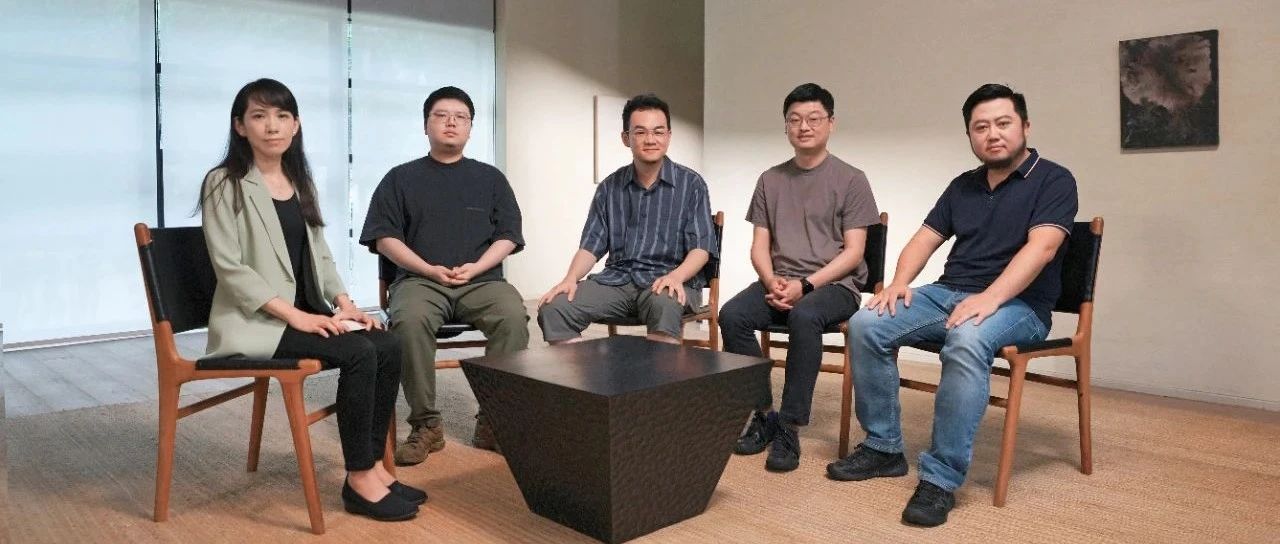
Group 1 - The core theme of the discussion revolves around the relationship between AI and gaming, exploring how games can serve as a sandbox for AI development and creativity [3][5][8] - AI's current limitations in creativity are highlighted, with a consensus that existing models struggle to generate truly novel knowledge due to their reliance on pre-existing data [6][7][10] - The concept of games as an "algorithmic womb" is introduced, suggesting that gaming environments have historically contributed to AI advancements and will continue to do so in the future [10][11][12] Group 2 - The discussion emphasizes the potential of low-code platforms to democratize game creation, allowing more individuals to become game developers [17][31] - AI's role in enhancing game development processes, such as improving NPC interactions and game mechanics, is explored [18][19][20] - The integration of AI into gaming is seen as a way to create more immersive and intelligent gaming experiences, with examples of future applications in RPGs and strategy games [21][22][23] Group 3 - The potential for games to serve as experimental environments for social science research is discussed, with examples of how gaming can simulate real-world scenarios for testing hypotheses [32][34] - The conversation touches on the use of gaming technology in training for real-world applications, such as autonomous driving and other professional fields [36][37] - The impact of gaming on technological advancements, particularly in hardware development like GPUs, is noted as a significant factor in the evolution of both industries [38][39] Group 4 - The unique characteristics of gaming as a medium are contrasted with traditional media like film, emphasizing interactivity and user engagement [41][42][43] - The current state of game research in China is described as nascent, with a need for greater integration between different academic perspectives on gaming [47][48]


论坛预告丨科技创新与良法善治的智识交汇!Day 2
腾讯研究院· 2025-08-05 09:03
Group 1 - The forum "CUHK LAW-Tencent Research Institute Cyberlaw Forum" aims to contribute to the interaction of values between technological innovation and good governance in the Greater Bay Area [1] - The forum will focus on topics such as global digital economy, internet public policy, and artificial intelligence governance, inviting experts from academia, industry, and public policy [1] - The event is expected to foster intellectual exchanges that can break knowledge boundaries and outline a brighter future through multidimensional discussions [1] Group 2 - Keynote speakers include Ms. Wang Yayuan, who will discuss legal responsibilities and compliance requirements related to online behavior under the Personal Data (Privacy) Ordinance [3] - Professor Zhang Ping will present on the thoughts and prospects of artificial intelligence legislation in China [3]
腾讯研究院AI速递 20250805
腾讯研究院· 2025-08-04 16:01
Group 1 - The core viewpoint of the article highlights the advancements in AI technologies and their implications across various sectors, including the introduction of new models and applications by major companies [1][2][3][4][5][6][7][8][9][10][11][12]. Group 2 - GPT-5 was showcased by Ultraman, indicating a shift towards a "SaaS fast fashion era" and utilizing the "universal verifier" technology from Ilya's super alignment team, facing challenges like insufficient high-quality training data [1]. - Apple has formed the "Answers, Knowledge and Information" (AKI) team to develop a ChatGPT-like search engine, amidst competitive pressure from concepts like "personal super intelligence" proposed by Zuckerberg [2]. - Tencent has open-sourced four small models that can run on mobile devices, with the Hunyuan 7B model outperforming OpenAI's models in mathematical tests and enhancing agent capabilities [3]. - The AI+ film "New World Loading" produced by Kuaishou and Keling AI has achieved over 1.97 billion views, showcasing the potential of AI in creative industries [4]. - Gaode Map 2025 has been launched as the world's first AI Native application, featuring an intelligent travel assistant capable of personalized travel planning [5]. - Xiaomi has open-sourced the MiDashengLM-7B model, achieving top scores in multimodal assessments and demonstrating significant efficiency in audio processing [6][7]. - The viral "Rabbit Trampoline" AI video has garnered over 500 million views, reflecting new social media interaction dynamics where users engage in a collective "pretend to believe" game [8]. - Zhongke Silicon Valley has released a series of intelligent dexterous hands and robots, aiming to bridge the gap in embodied intelligence commercialization [9]. - Musk's claim that researchers and scientists no longer exist, only engineers, was countered by LeCun, emphasizing the essential differences between research and engineering [10]. - Ai2 scientist Nathan Lambert discussed RLVR and the importance of open-source AI evolving from paper writing to product creation, stressing the need for skills, abstraction, strategy, and calibration in future AI development [11][12].


人形机器人的进化之路|2.5万字圆桌实录
腾讯研究院· 2025-08-04 09:23
Core Viewpoint - The article discusses the evolution of embodied intelligence in robotics, highlighting significant technological breakthroughs, challenges in practical applications, and the potential societal impacts of these advancements. Group 1: Technological Breakthroughs - Embodied intelligence has made notable progress in specific, closed environments, but struggles with complex tasks in open settings [6][10] - The advancement of end-to-end large models has transitioned from L2 to L4 levels, showcasing improved generalization capabilities [7][8] - Data collection techniques have significantly improved, with large-scale projects like AGI Bot World gathering millions of real-world data points [9] - Simulation technology has advanced, enhancing the realism of robotic interactions, although physical interaction simulations still require improvement [9][10] Group 2: Challenges and Limitations - The generalization ability of embodied intelligence is still limited, particularly in out-of-distribution scenarios [10][11] - Safety concerns arise from robots operating in uncontrolled environments, leading to potential hazards [6][10] - Ethical considerations become more prominent as technology matures and integrates into daily life [6][10] Group 3: Societal Impacts - The development of embodied intelligence may lead to a new industrial revolution, independent of traditional AI [5] - It could significantly alter economic structures and influence education and job transitions for humans [5] - The redefinition of human value in the context of advanced robotics and AI capabilities is a critical discussion point [5] Group 4: Future Directions - The integration of tactile feedback into embodied intelligence models is essential for enhancing real-time interaction with the environment [11][16] - The exploration of multi-modal data, including visual, tactile, and other sensory inputs, is crucial for improving predictive capabilities [29][30] - The industry is moving towards establishing standardized interfaces and protocols to facilitate collaboration and data sharing among different robotic systems [28][29]
论坛预告丨科技创新与良法善治的智识交汇!
腾讯研究院· 2025-08-04 09:23
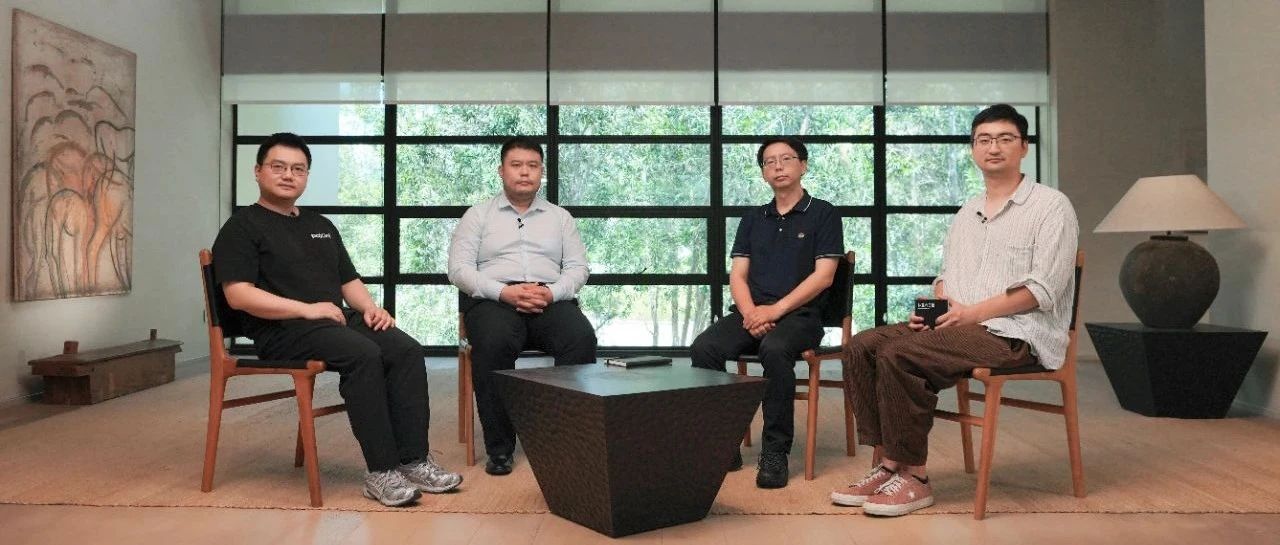
Core Viewpoint - The forum "CUHK LAW-Tencent Research Institute Cyberlaw Forum" aims to contribute to the interaction of values between technological innovation and good governance in the Greater Bay Area, focusing on topics such as the global digital economy, internet public policy, and AI governance [1]. Group 1: Forum Overview - The forum is co-hosted by the Chinese University of Hong Kong's Faculty of Law and Tencent Research Institute, emphasizing the importance of knowledge exchange in the context of technology and humanities [1]. - It invites experts from academia, industry, and public policy to explore new opportunities in the internet era [1]. Group 2: Keynote Speakers - Professor Meng Meiling from the Chinese University of Hong Kong will discuss "AI for an Empowered Future: Educating the Next Generation with Intelligence, Agency, and Integrity" [8]. - Professor Su Wenzao, also from the Chinese University of Hong Kong, will address "Ethical Dilemmas in AI" [9]. - Ms. Wang Yayuan from the Office of the Privacy Commissioner for Personal Data will explore legal responsibilities and compliance requirements in online behavior based on the Personal Data (Privacy) Ordinance [9]. - Professor Zhang Ping from Peking University will present on "Thoughts and Prospects of AI Legislation in China" [9].

腾讯研究院AI速递 20250804
腾讯研究院· 2025-08-03 16:01
Group 1: Anthropic vs OpenAI - Anthropic has cut off OpenAI's access to Claude API, accusing it of violating service terms by using Claude tools to develop the upcoming GPT-5 [1] - OpenAI is accused of using the API to evaluate Claude's programming capabilities and conduct safety tests, which OpenAI considers an industry norm and expressed disappointment [1] - This incident reflects that competition among AI giants has entered a "data and interface blockade" phase, with APIs becoming strategic resources crucial for market access and innovation [1] Group 2: Grok Imagine Launch - Elon Musk has updated the Grok App, launching the AI short video generation feature Grok Imagine, now available to all Grok Heavy users [2] - The new feature has gone viral on the X platform, allowing users to generate high-quality animated and realistic style short videos rapidly [2] - Several tech CEOs have praised the feature as "beyond imagination," with Musk hinting that it competes directly with Google's Veo 3, likening it to an AI version of Vine [2] Group 3: Google's Gemini Model - Google has released the Gemini 2.5 Deep Think model, which has won an IMO gold medal and is now available to Ultra subscribers in the Gemini App [3] - The new version is faster and more practical than its predecessor, achieving a performance level comparable to IMO bronze, with a subscription fee of $249.99 per month [3] - Performance tests indicate that it surpasses OpenAI's o3 and Musk's Grok 4 in coding, scientific, and reasoning capabilities by extending parallel "thinking time" [3] Group 4: Manus Update - Manus has launched the Wide Research feature, allowing the simultaneous operation of 100 agents to complete complex research tasks, now available to Pro users at $199 per month [4] - This feature can analyze numerous products or explore various design styles, with each sub-agent being a complete Manus instance capable of independent thought and result aggregation [4] - The functionality is based on large-scale virtualization infrastructure and the MapReduce paradigm, but users have criticized it for being too costly in terms of points, with the co-founder suggesting it is in a "very expensive but boundary-expanding" phase [4] Group 5: Open Source FLUX.1-Krea - Black Forest Labs and Krea have jointly open-sourced a new image model FLUX.1-Krea[dev], focusing on addressing the common "AI feel" in images, aiming for natural details and realistic textures [5] - The research team analyzed the causes of the "AI style" problem, which stem from over-optimizing benchmark metrics rather than real needs, leading to issues like overexposed highlights and waxy skin [5] - The model employs a two-stage training process: first, pre-training with diverse data, followed by supervised fine-tuning and reinforcement learning from human feedback to achieve targeted aesthetic improvements [5] Group 6: AI in Agriculture - A research team from Huazhong Agricultural University and the Chinese Academy of Sciences published a study in Nature proposing a new paradigm for crop breeding that integrates biotechnology and AI to overcome traditional breeding limitations [7] - The research combines omics technologies and gene editing, utilizing AI to analyze multimodal data to identify key genes for crop traits, enabling precise crop improvement [7] - The team has built an intelligent crop breeding platform that integrates agricultural knowledge through AI models to generate comprehensive improvement plans for target crops, promoting sustainable food security [7] Group 7: OpenAI's IMO Gold Medal Achievement - OpenAI developed an experimental model with a three-person team in two months, independently solving six IMO problems within 4.5 hours, achieving gold medal standards [8] - The team utilized general reinforcement learning techniques instead of formal verification tools, with the model demonstrating self-awareness and the ability to identify unsolvable problems, laying the groundwork for broader applications [8] - The breakthrough centers on extending computational testing and handling difficult-to-verify tasks with general techniques, although significant gaps remain between competition-level mathematics and true mathematical research breakthroughs [8] Group 8: AI and Evolutionary Systems - Demis Hassabis proposed that any naturally evolved system can be efficiently modeled by AI, with neural networks capable of extracting underlying logical structures, explaining breakthroughs in fields like protein folding and fluid dynamics [9] - DeepMind believes AI will reshape scientific research, from modeling cells to solving energy crises, but the real challenge lies in cultivating "research taste," as proposing good hypotheses is harder than solving them [9] - Hassabis holds a "cautiously optimistic" view on AGI, predicting a 50% chance of achieving AGI by 2030, with future societal changes expected to be ten times faster than the Industrial Revolution, necessitating proactive governance mechanisms [9] Group 9: Microsoft Research on AI Impact - Microsoft's latest research analyzed 200,000 AI conversations and 30,000 job tasks to establish an AI applicability scoring system, determining the extent of AI's impact on various professions [10] - Professions that require cognitive skills and verbal communication, such as translators, salespeople, and programmers, are most affected by AI, with coverage and success rates exceeding 80%, while physical labor jobs like nursing assistants and dishwashers are minimally impacted [10] - The study found weak correlations between AI applicability and salary levels or educational requirements, indicating that AI's influence primarily depends on whether the job falls within its strengths in "information processing," rather than implying complete job replacement [10] Group 10: Kevin Kelly on AI's Future - Kevin Kelly suggests abandoning the concept of "superintelligence" and viewing AI as "alien intelligence," which is not superior to humans but fundamentally different, with intelligence being a multidimensional space rather than a single ladder [11] - He predicts that by 2049, society will exist in a "mirror world," where a virtual world overlays the real one, with AI-supported three-dimensional spaces becoming the most social and collaborative creative platforms [11] - Kelly believes that human value will increase due to scarcity in the AI era, with the core skill being "learning how to learn" rather than pursuing specific knowledge [11]

腾讯研究院AI每周关键词Top50
腾讯研究院· 2025-08-02 02:33
Group 1: Core Insights - The article presents a weekly roundup of the top 50 keywords related to AI developments, highlighting significant trends and innovations in the industry [2][3][4]. Group 2: Keywords and Companies - AI inference chips are being advanced by CloudWalk Technology [3]. - AI performance enhancement is being driven by Wu Wen Qiong [3]. - OpenAI is testing the "Lobster" model [3]. - Step 3 is a new model introduced by Jie Yue Xing Chen [3]. - RockAI has launched the Yan 2.0 model [3]. - Zhiyu has released the GLM-4.5 model [3]. - Kunlun Wanwei has developed the Skywork UniPic model [3]. - Qunkex has introduced the InteriorGS dataset [3]. - DeepSeek is working on NSA technology [3]. - OpenAI is deploying GPT-5 [3]. - Tencent has created a comprehensive AI application landscape [4]. - Alibaba is developing AI glasses [4]. - Lovart has launched ChatCanvas [4]. - Tiandong Technology has introduced Navos [4]. - Coze is offering a no-code platform [4]. - Keling AI has developed Lingdong Canvas [4]. - Tencent and Lovart have collaborated on a 3D generation API [4]. - Alibaba has released Wan2.2 [4]. - SenseTime is working on the Wuneng Embodied Platform [4]. - Anthropic has implemented flow limits [4]. - Microsoft is advancing AI Edge technology [4]. - Jie Yue Xing Chen is conducting deep research [4]. - JD.com has introduced JoyAI [4]. - The University of California and others are collaborating on MIRIX [4]. - The National Satellite Meteorological Center is developing a space weather forecasting model [4]. - OpenAI is exploring learning modes [4]. - xAI has launched the Imagine video feature [4]. - Tazhu Technology has developed the Hunyuan 3D model [4]. - WPS is introducing the Lingxi Office intelligent agent [4]. - Volcano Engine has released SeedEdit 3.0 [4]. - Google is working on Video Overviews [4]. - Li Auto has developed the VLA driver model [4]. - Google is also advancing AlphaEarth [4]. - Moonvalley has introduced Sketch-to-Video [4]. - Ollama is working on a dialogue interface [4]. - Alibaba has launched the 1688 AI version [4]. - Yushutech has developed Unitree R1 [4]. - Shangzhi Institute and others are working on the Xinghe Qizhi platform [4]. - Shanghai AI Lab has introduced Shusheng Intern-S1 [4]. - Zhujidongli has developed LimX Oli [4]. Group 3: Perspectives - Geoffrey Hinton discusses the concept of "immortal large models" [4]. - Hinton and Zhou Bowen emphasize the importance of AI becoming smarter and kinder [4]. - Shopify advocates for a universal AI transformation [4]. - OpenAI warns about a potential AI market bubble [4]. - a16z discusses the competitive advantages in the AI era [4]. - Zhang Zhengyou highlights the trend of embodied intelligence [4]. - The former CEO of Google discusses the value of open weights [5]. - Meta addresses the changes brought by superintelligence and open-source [5]. - a16z outlines investment judgment criteria [5].

AI迁徙一代:跨越技术断层的中坚力量
腾讯研究院· 2025-08-01 08:33
Core Viewpoint - The article discusses the emergence of the "AI Migrant" generation, a group that navigates the complexities of life in an AI-dominated world, experiencing both disconnection and adaptation as they transition from pre-AI to post-AI realities [4][12]. Group 1: AI's Impact on Work and Education - AI is reshaping the nature of work, creating new job types while eliminating traditional roles, as highlighted in the World Economic Forum's 2023 report [4][17]. - The "AI Migrant" generation has experienced a significant shift in education from standardized teaching to personalized learning, influenced by AI technologies [7][16]. - The skills required in the workforce are evolving rapidly, with the skill update cycle shrinking from ten years to as short as three years, necessitating continuous learning and adaptation [18][19]. Group 2: Social and Cultural Dynamics - The distribution of the "AI Migrant" generation is uneven across urban and rural areas, with varying levels of AI penetration affecting their experiences [5][13]. - This generation embodies a mix of passive migration and active adaptation, reflecting a blend of old and new identities shaped by technological advancements [12][20]. - The cultural identity of the "AI Migrant" generation is characterized by a unique subculture that values efficiency, innovation, and freedom, while also facing challenges like anxiety and burnout [13][24]. Group 3: Ethical Considerations and Responsibilities - The "AI Migrant" generation is increasingly aware of ethical issues surrounding AI, such as algorithmic bias and data privacy, and they advocate for responsible AI development [21][23]. - Their ethical awakening emphasizes the importance of individual rights and the need for diverse perspectives in technology development to ensure fairness and inclusivity [22][23]. - The generation's commitment to ethical practices reflects a broader responsibility towards society and future generations, as they navigate the complexities of AI's impact on human life [25][27].

腾讯研究院AI速递 20250801
腾讯研究院· 2025-07-31 16:01
Group 1 - The article discusses the anticipated release of GPT-5, which is expected to unify the GPT series and the o series, enhancing multimodal and reasoning capabilities [1] - GPT-5 will feature a main model (codename "nectarine" or "o3-alpha"), a mini version (codename "lobster"), and a nano version (codename "starfish") [1] - Internal sources indicate that GPT-5 will support a context window of 1 million tokens and will include MCP protocol and parallel tool invocation, with the mini version particularly enhancing programming capabilities [1] Group 2 - DeepSeek's collaboration with Peking University resulted in a paper that won the ACL Best Paper Award, achieving an 11-fold speed increase in processing long texts [2] - The technology introduces a "native sparse attention" mechanism, enhancing efficiency without sacrificing performance [2] - The NSA technology has completed pre-training validation on a 27B MoE architecture, showcasing its potential as a core technology for the DeepSeek R2 model [2] Group 3 - Google DeepMind launched AlphaEarth Foundations, integrating multi-source Earth observation data for a unified digital representation with 10-meter precision [3] - The system combines satellite images, radar scans, and 3D laser mapping, requiring only 1/16 of the storage space compared to similar AI systems [3] - Innovations include adaptive decoding architecture and geographic text alignment, utilized by organizations like the UN Food and Agriculture Organization for custom map creation [3] Group 4 - Moonvalley announced its flagship model Marey now supports Sketch-to-Video functionality, allowing users to generate movie-quality videos from hand-drawn sketches [4][5] - This feature aligns with Marey's "mixed creation" concept, facilitating the definition of character movements and camera paths for coherent video generation [5] - The service currently supports 1080p at 24fps output, available to subscribers starting at $14.99 per month [5] Group 5 - Ollama released version 0.10.1 with a visual interface, making it easier for non-technical users to interact with the platform [6] - The new version includes a dialogue interface, model downloads, PDF interaction, and multi-modal capabilities [6] - A new multi-modal engine allows users to send images to large language models, provided the models support multi-modal inputs [6] Group 6 - Alibaba's 1688 platform launched an AI version app featuring a free enterprise query tool and a digital agent for merchants, focusing on AI-driven transformation [7] - The AI version integrates features like AI search, product selection, and enterprise checks, with plans for bi-weekly updates [7] - The CEO announced that AI products will be free, with 400,000 merchants already using the digital agent, contributing to an 18% increase in GMV and inquiries [7] Group 7 - Zhujidi Power introduced the LimX Oli humanoid robot, claiming it to be the most cost-effective general-purpose humanoid robot globally, priced at 158,000 yuan [8] - The robot features a modular design and an open SDK system, supporting secondary development and OTA upgrades [8] - Three versions are available: Lite, EDU, and Super, targeting research teams and AI/robotics companies [8] Group 8 - Meta CEO Mark Zuckerberg announced signs of self-improvement in AI systems, indicating the near development of superintelligence [9] - The company is changing its AI model release strategy, suggesting that not all models will be open-sourced [9] - Meta plans to invest up to $72 billion in AI infrastructure by 2025, with stock prices rising by 10% following the announcement [9] Group 9 - a16z partner Martin Casado stated that AI investment criteria are shifting from model performance to the platform's ability to deliver business results [10] - The three key factors for platform competition are organizational model, resource allocation, and product strategy, emphasizing governance efficiency and product capability [10] - AI valuation logic is returning to specific scenarios, focusing on clear catalysts like customer contract rhythms and infrastructure development speed [10]

AI时代如何把想象力变成一种竞争优势?|2万字圆桌实录
腾讯研究院· 2025-07-31 09:13
Core Viewpoint - The article discusses how to transform human imagination into a competitive advantage in the AI era, emphasizing the importance of imagination as AI capabilities expand [2][3]. Group 1: Future of AI Content - The next 3 to 5 years will see significant changes in the AI content landscape, with a focus on user-generated content (UGC) and the emergence of individual creators as major players [9][10]. - AI will enable everyone to express their imagination through content creation, leading to a shift in how entertainment is produced and consumed [14][15]. - The entertainment experience will evolve, allowing for more interactive and immersive forms of storytelling [14][15]. Group 2: AI in Business Services - AI tools will increasingly empower businesses to enhance their imaginative capabilities, transforming traditional workflows into more collaborative processes with AI acting as a co-pilot [17][18]. - The market for AI-driven tools will shift from merely improving efficiency to delivering results directly, leading to a rise in companies that provide intelligent agents [15][16]. - The integration of AI into business services will redefine the role of tools, making them more autonomous and capable of delivering outcomes [15][16]. Group 3: Human-AI Collaboration - The relationship between humans and AI will evolve, with AI becoming a collaborative partner in creative processes rather than just a tool [24][25]. - There is a concern about maintaining human agency and creativity in the face of increasing AI capabilities, as AI may take on more active roles in content creation [26][27]. - The potential for AI to influence cultural production raises questions about the balance of power between human creators and AI systems [34][35]. Group 4: Educational Implications - The rise of AI necessitates a rethinking of educational approaches to foster imagination and creativity in future generations [2][3]. - There is a need to cultivate the next generation's imaginative skills to prepare them for a world increasingly influenced by AI [2][3]. Group 5: Societal Impact - The integration of AI into daily life may lead to a reevaluation of work and leisure, blurring the lines between the two [40][41]. - Concerns exist regarding the potential loss of meaning and value in work as AI takes over more tasks, prompting a search for new sources of fulfillment [40][41]. - The discussion highlights the dual nature of technological advancement, where both opportunities and challenges arise in the context of human creativity and societal values [39][40].