腾讯研究院

Search documents
技术创新的性质
腾讯研究院· 2025-05-19 08:07
Group 1 - Demand is the fundamental driving force behind technological innovation, and the urgency and scale of demand determine the speed and level of innovation [1][3] - Historical examples illustrate that significant innovations often arise from pressing needs, such as the development of the steam engine and the internet, which were driven by specific demands [3] - The integration of technology with practical, widespread needs is essential for its successful implementation and growth [3] Group 2 - Innovation involves trial and error, which inherently requires costs; higher trial and error costs can slow technological progress [4][5] - The digital transformation of manufacturing industries faces high trial and error costs due to stringent requirements for product quality and production stability [6] - Sectors with lower trial and error costs, such as entertainment and digital services, can innovate more rapidly and serve as testing grounds for new technologies [6] Group 3 - Technological innovation is a gradual process rather than a sudden breakthrough, often built upon previous advancements and requiring long-term iteration [7][8] - Major inventions, like the steam engine and computers, have undergone extensive improvements over time rather than appearing fully formed [8][10] - The perception of innovation as revolutionary often overlooks the incremental efforts that lead to significant breakthroughs [10] Group 4 - Resource-rich environments may hinder innovation due to a phenomenon known as the "resource curse," while resource-scarce regions often exhibit stronger innovation capabilities [12][13] - Large organizations may struggle with innovation due to organizational inertia and path dependency, suggesting that smaller, more agile teams may be more successful in driving innovation [13][14] Group 5 - Innovation thrives in diverse environments where different ideas and perspectives can intersect, akin to "cross-pollination" [16][17] - The movement of talent across regions is a key indicator of innovation potential, as diverse backgrounds contribute to new ideas and solutions [17] Group 6 - While youth has historically been associated with innovation, the average age of significant innovators has been rising, with many breakthroughs occurring in the 30-50 age range [18][21] - Despite the trend of older innovators, the urgency to innovate remains, emphasizing the importance of timely action [21] Group 7 - Innovations often emerge simultaneously from different individuals or groups, reflecting the maturity of social conditions rather than individual genius [23][24] - Predictions about the timing and impact of innovations can be notoriously inaccurate, highlighting the unpredictable nature of technological advancement [24][26]


腾讯研究院AI速递 20250519
腾讯研究院· 2025-05-18 14:33
Group 1: OpenAI and AI Programming Tools - OpenAI launched a new AI programming tool Codex, powered by the codex-1 model, which generates clearer code and automatically iterates testing until successful [1] - Codex operates in a cloud sandbox environment, capable of handling multiple programming tasks simultaneously, and supports integration with GitHub for preloading code repositories [1] - The tool is currently available to paid users of ChatGPT Pro, with plans for rate limiting and options to purchase additional credits for more usage [1] Group 2: Image Generation Technologies - Tencent's Mix Yuan Image 2.0 achieves millisecond-level image generation, allowing users to see real-time changes as they input prompts, breaking the traditional 5-10 second generation time limit [2] - The new model supports both text-to-image and image-to-image functionalities, with adjustable reference strength for the image generation process [2] - Manus introduced an image generation feature that understands user intent and plans solutions, providing a one-stop service from brand design to website deployment, although complex tasks may take several minutes to complete [3] Group 3: Google and LightLab Project - Google launched the LightLab project, enabling precise control over light and shadow in images through diffusion models, allowing adjustments to light intensity and color [4][5] - The research team built a training dataset by combining real photo pairs with synthetic rendered images, achieving superior PSNR and SSIM metrics compared to existing methods [5] Group 4: Supermemory API - Supermemory released the Infinite Chat API, acting as a transparent proxy between applications and LLMs, maintaining dialogue context to overcome the 20,000 token limit of large models [6] - The API utilizes RAG technology to manage overflow context, claiming to save 90% of token consumption, and can be integrated into existing applications with just one line of code [6] - Pricing includes a fixed monthly fee of $20, with the first 20,000 tokens of each conversation free, and $1 per million tokens for any excess [6] Group 5: Grok AI Controversy - Grok AI assistant faced backlash for inserting controversial content related to "white genocide" in responses, attributed to unauthorized modifications of system prompts by an employee [7] - xAI publicly released Grok's prompts on GitHub and committed to enhancing review mechanisms and forming a monitoring team [7] - The incident highlighted security vulnerabilities in AI systems that heavily rely on prompts, with research indicating that mainstream models can be compromised through specific prompting techniques [7] Group 6: Windsurf and SWE-1 Model - Windsurf launched the SWE-1 model, focusing on optimizing the entire software engineering process rather than just coding functions, marking its first product release after being acquired by OpenAI for $3 billion [8] - SWE-1 performs comparably to models like GPT-4.1 in programming benchmarks but lags behind Claude 3.7 Sonnet, with a commitment to lower service costs than Claude 3.5 Sonnet [8] Group 7: Google TPU vs. OpenAI GPU - Google TPU offers AI cost efficiency at one-fifth the price of OpenAI's NVIDIA GPUs while maintaining comparable performance [10] - Google's API service Gemini 2.5 Pro is priced 4-8 times lower than OpenAI's o3 model, reflecting different market strategies [10] - Apple's decision to use Google TPU for training its AFM model may influence other companies to explore alternatives to NVIDIA GPUs [10] Group 8: Lovart's Design Philosophy - Lovart's founder emphasizes a three-stage evolution of AI image products, from single content generation to workflow tools, and now to AI-driven agents [11] - The design philosophy focuses on restoring the original essence of design, facilitating natural interaction between AI and users [11] - Lovart believes that general product managers will be replaced by designers with specialized knowledge, stating, "we have no product managers, only designers" [11] Group 9: Lilian Weng's Insights on Model Thinking - Lilian Weng discusses the importance of "thinking time" in large models, suggesting that increasing computational time during testing can enhance performance on complex tasks [12] - Current model thinking strategies include parallel sampling and sequential revision, requiring a balance between thinking time and computational costs [12] - Research indicates that optimizing thinking chains through reinforcement learning may lead to reward hacking issues, necessitating further investigation [12]


“探元计划2024” 数字仿真复原技术重现马王堆千年汉锦风华
腾讯研究院· 2025-05-16 15:15
Core Viewpoint - The "Exploration Yuan Plan 2024" aims to leverage digital technology to reconstruct historical contexts and address the common challenges in the digital restoration of fragile ancient silk artifacts, marking a new chapter in the integration of traditional culture and technology [1][2]. Group 1: Project Overview - The project focuses on the intelligent digital simulation and restoration of silk artifacts from the Mawangdui Han Tomb, utilizing AI technology to preserve and transmit traditional craftsmanship [2][4]. - The project is guided by the National Cultural Heritage Administration and involves collaboration with various organizations, including Tencent and Beijing Zhixin Technology Co., Ltd [1][4]. Group 2: Technological Innovations - The project achieved four major innovations in the restoration process: 1. The first millimeter-level restoration of the exquisite craftsmanship of Mawangdui silk artifacts using AI-assisted pattern generation, significantly reducing the time for generating accurate patterns to one-third of manual drawing time [7]. 2. The simultaneous realization of "restoration as new" and "restoration as old" concepts through AI-assisted damage feature extraction, enhancing efficiency by a hundred times compared to manual extraction [8]. 3. The integration of multiple cross-domain technologies for ultra-high-definition texture simulation, improving restoration accuracy [9][10]. 4. The realistic reproduction of the drape and dynamic effects of Han silk garments through the application of physical replication and motion capture technology [11]. Group 3: Data and Future Plans - The project aims to create three core digital assets that will facilitate the reuse of digital tools for the restoration and revitalization of similar artifacts, promoting a more mature industry solution [14]. - The project has completed a three-dimensional simulation model of the Mawangdui silk garment, with plans for a public display at the Hunan Museum by the end of June [16][18].

腾讯研究院AI每周关键词Top50
腾讯研究院· 2025-05-16 15:15
AI前沿每周关键词Top50 扫码加入ima知识库 ( 腾讯研究院ima AGI知识库二维码) | 类别 | Top关键词 | 主体 | | --- | --- | --- | | 芯片 | 地理追踪 | 英伟达、AMD | | 模型 | GPT-4.1上线 | OpenAI | | 模型 | 极限推理 | Anthropic | | 模型 | Seed1.5-VL | 字节 | | 模型 | UnifiedReward-Think | 腾讯 | | 模型 | 连续思维机器 | Sakana AI | | 模型 | FastVLM | 苹果 | | 模型 | Hunyuan T1-Vision | 腾讯 | | 模型 | Seed-Coder | 字节 | | 模型 | 强化微调上线 | OpenAI | | 应用 | 人格化语音 | MiniMax | | 应用 | 元宝浏览器插件 | 腾讯 | | 应用 | 离线音频生成 | Stability AI、 | | | | Arm | | 应用 | Wan2.1-VACE | 阿里 | | 应用 | 智能NPC | 腾讯 | | 应用 | 数学演化智能体 | ...


会议报名丨生成式AI进展:应用、治理与社会影响
腾讯研究院· 2025-05-16 06:53
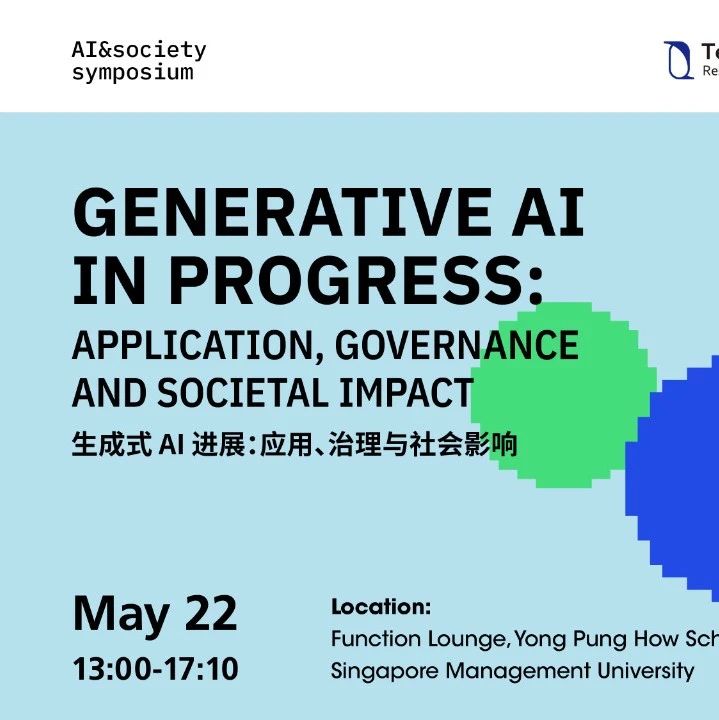
在以生成式AI为代表的新一轮技术浪潮推动下,算法与模型的突破正在以前所未有的速度重塑全球的产 业格局、治理结构与社会生态。从内容生产到产业创新,从监管实践到伦理治理,生成式AI的迅猛发展 为全球带来了前所未有的机遇与挑战。 2025年5月22日(周四)下午1点至5点 Driven by a new wave of technology represented by generative AI, breakthroughs in algorithms and models are reshaping the global industrial landscape, governance structure and social ecology at an unprecedented speed. From content production to industrial innovation, from regulatory practice to ethical governance, the rapid development of generative AI has brought unprecedent ...
青年和技术,如何改变了博物馆?|2025国际博物馆日
腾讯研究院· 2025-05-16 06:53
Core Viewpoint - The article emphasizes the evolving role of museums in a rapidly changing society, highlighting the need for museums to embrace digital technology while maintaining their cultural core values to foster social progress and inclusivity [1][4][24]. Group 1: Future of Museums - The theme for International Museum Day 2025 is "The Future of Museums in Rapidly Changing Communities," focusing on how museums can continue to exert influence amid social, technological, and environmental changes [1]. - Museums are transitioning from traditional roles of artifact collection and display to dynamic platforms that connect the past with the future, facilitating social dialogue and cultural transmission [4][7]. Group 2: Youth Engagement - The National Cultural Heritage Administration emphasizes the importance of engaging youth in museum activities, transforming museum spaces into platforms for cultural expression and social exploration [4]. - Youth audiences prioritize immersive and interactive experiences, prompting museums to adopt digital technologies and creative exhibition designs to enhance engagement [10][12]. Group 3: Technological Integration - Emerging technologies like AI, VR, and AR are reshaping museum operations, enhancing artifact management, and enriching visitor experiences [7][8]. - Museums are leveraging digital tools for high-precision digitization of collections, with the Palace Museum digitizing approximately 920,000 artifacts and creating a 3D model of the Forbidden City covering 720,000 square meters [8]. Group 4: Cultural Consumption Trends - The shift in cultural consumption habits among youth is evident, with a growing trend of sharing experiences on social media, leading museums to design "Instagram-friendly" spaces [10][12]. - Cultural products, such as the "Phoenix Crown" refrigerator magnet from the National Museum, have gained popularity, with sales exceeding 530,000 units since its launch, significantly boosting ticket reservations [12]. Group 5: Communication Evolution - The rise of short video platforms has transformed museum communication, allowing for rapid and engaging cultural expression that resonates with younger audiences [16][18]. - Museums are adapting content strategies to be more story-driven and engaging, utilizing social media to enhance cultural recognition and community cohesion [18][19]. Group 6: Global Cultural Exchange - Chinese youth, as digital natives, are pivotal in cultural production and dissemination, using new media to bridge cultural gaps and promote Chinese heritage globally [19][20]. - Successful examples, such as the game "Black Myth: Wukong," demonstrate how youth creativity can merge traditional culture with modern technology, enhancing China's cultural soft power [20][21]. Group 7: Balancing Change and Tradition - While technology offers innovative opportunities, museums must uphold their core mission of cultural preservation and education, ensuring that changes enhance rather than diminish their societal roles [23][24]. - The balance between innovation and tradition is crucial for museums to remain relevant and impactful in a rapidly evolving landscape [24].

腾讯研究院AI速递 20250516
腾讯研究院· 2025-05-15 14:38
Group 1: Regulatory Developments - The U.S. Senator proposed a bill requiring companies like NVIDIA and AMD to embed geolocation tracking in high-end GPUs and AI chips, effective in six months [1] - The regulation covers AI processors, high-performance servers, and high-end graphics cards like the RTX 5090, aimed at preventing strategic hardware from flowing to unauthorized countries [1] - Chip manufacturers will be responsible for product tracking, and the bill mandates annual assessments for three years, potentially leading to more restrictions [1] Group 2: AI Model Updates - OpenAI officially launched the GPT-4.1 model in ChatGPT, available for Plus, Pro, and Team users, with enterprise and education users to gain access in the coming weeks [2] - GPT-4.1 shows excellent performance in coding tasks and instruction adherence, with significantly improved generation speed, serving as an ideal replacement for previous models [2] - The context window for ChatGPT's GPT-4.1 is limited to 128k tokens, falling short of the promised 1 million tokens in the API version, disappointing users [2] Group 3: New AI Models and Features - Anthropic plans to release new versions of Claude Sonnet and Opus, featuring "extreme reasoning" capabilities that establish a dynamic loop between reasoning and tool usage [3] - The new models can autonomously pause, reassess problems, and adjust strategies, with capabilities to automatically test and correct errors in code generation tasks [3] - A new model, codenamed Neptune, is reportedly in testing, supporting a maximum context length of 128k tokens [3] Group 4: Advancements in Voice Technology - MiniMax's new voice model, Speech-02, surpasses OpenAI and ElevenLabs in metrics like word error rate and speaker similarity, achieving state-of-the-art levels [4][5] - Speech-02 enables true zero-shot voice cloning and employs an innovative Flow-VAE architecture, requiring only a few seconds of audio to replicate speaker characteristics [5] - The model supports 32 languages and allows flexible control over voice tone and emotional modulation, costing only a quarter of ElevenLabs' competitors, marking a shift towards personalized AI voice technology [5] Group 5: Browser and Audio Innovations - Tencent launched the Yuanbao browser plugin for Chrome, offering features like word highlighting for questions, content summarization, foreign webpage translation, and one-click bookmarking [6] - The plugin includes a floating ball and sidebar for easy access to screenshot questions, file uploads, and content searches, enhancing web browsing efficiency [6] - Stability AI partnered with Arm to introduce the Stable Audio Open Small model, the fastest audio generation model for mobile, capable of generating 11 seconds of audio in 8 seconds [7] - The model, with 341 million parameters, is designed for short audio and sound effect generation, using data from copyright-free sources, but currently only supports English prompts [7] Group 6: Video Generation and Gaming AI - Alibaba released the open-source Wan2.1-VACE video generation model, supporting multiple tasks like text-to-video and image reference generation, usable on consumer-grade graphics cards [8] - The model comes in two versions: 1.3B (supporting 480P) and 14B (supporting 720P), utilizing an innovative video condition unit for various input types [8] - Tencent's mixed Yuan model developed an intelligent NPC system for the game "BUD," enabling autonomous actions, personalized interactions, emotional expression, and memory reasoning [10] - The game achieved over 20 million AI dialogues within three months, with the upcoming release of mixed image version 2.0 aimed at enhancing the AI product matrix [10] Group 7: AI Opportunities and Challenges - Sequoia Capital detailed the "trillion-dollar AI opportunity," emphasizing that AI is disrupting both software and service profit pools, with the application layer being the most valuable [12] - The emerging economy of intelligent agents will not only convey information but also facilitate transactions, track relationships, and build trust, leading to a nested economic network of human-machine collaboration [12] - The industry faces three major technical challenges: persistent identity authentication for intelligent agents, seamless communication protocol development, and security assurance, entering a new era of "high leverage, low certainty" [12]
美国住房援助体系的历史、现状及启示
腾讯研究院· 2025-05-15 09:49
Core Viewpoint - The article discusses the U.S. housing assistance system, which primarily relies on the private housing market and has a low coverage of social security functions, benefiting only 2.7% of the total population. Despite its small scale, the system has nearly a century of history, undergoing multiple revisions and improvements, and has developed some equitable and efficient institutional arrangements worth studying and learning from [2][4][26]. Group 1: Overview of the U.S. Housing Assistance System - The U.S. housing assistance system is funded by the federal government and executed by state and local governments, providing support to low-income families through three main forms: public rental housing, project-based rental assistance, and housing vouchers [2][5][6]. - The system has evolved since the 1930s, with significant changes in the 1960s to incorporate the private sector, leading to a shift towards a model where private housing sources dominate, and public housing plays a supplementary role [6][9]. - As of 2023, approximately 5.13 million units are included in the housing assistance system, accounting for 3.6% of the total housing stock, with public housing making up only 17.3% of the assistance forms [9][12]. Group 2: Evaluation and Management of Public Housing - The federal government has established a multi-dimensional public housing evaluation system to monitor and assess local public housing agencies, ensuring efficiency and quality in operations [3][15]. - Local public housing agencies are responsible for managing applications and setting rent standards, with eligibility typically requiring income below 80% of the area median income [15][16]. - Due to insufficient funding and limited housing stock, many eligible families face long waiting times, averaging 25 months, to receive assistance [16]. Group 3: Financing Support for Homebuyers - Beyond public housing, the federal government has set up official or semi-official institutions to provide mortgage insurance and support mortgage securitization, helping homebuyers improve financing conditions and reduce costs [18][20]. - The establishment of the Home Owner's Loan Corporation in 1933 and the Federal Housing Administration in 1934 marked significant steps in providing long-term, fixed-rate mortgage products to stabilize the housing market [19][20]. - By 2023, the U.S. housing mortgage market has grown to nearly $14 trillion, with the mortgage-to-GDP ratio exceeding 50%, indicating a robust financing environment for homebuyers [20][23]. Group 4: Lessons and Insights - The U.S. housing assistance system, while limited in scope, has developed effective practices over nearly a century that balance equity and efficiency, such as the division of responsibilities between federal and local governments [26][30]. - The establishment of a comprehensive evaluation and incentive mechanism by the Department of Housing and Urban Development (HUD) helps prevent local agencies from neglecting management in favor of supply [31]. - The relationship between government and the market is crucial, as the system relies heavily on private housing resources while the government provides necessary support to facilitate homeownership [32].

腾讯研究院AI速递 20250515
腾讯研究院· 2025-05-14 13:51
Group 1: AI Product Developments - Notion launched three new AI features, including an AI meeting notes function that integrates seamlessly with calendar systems [1] - Tencent's CodeBuddy 3.0, a code assistant, is now available as a plugin that integrates with various IDEs and is deeply connected with WeChat developer tools [2] - Step1X-3D, an open-source 3D model by Jueyue Star, features 4.8 billion parameters and enhances 3D content generation with a 20% improvement in geometric conversion success rate [3] Group 2: AI Model Innovations - ByteDance introduced the lightweight multi-modal inference model Seed1.5-VL, which refreshes 38 benchmark tests with only 532 million visual encoder parameters [4][5] - Qwen's Deep Research assistant system automates complex research tasks, reducing hours of work to minutes and generating comprehensive reports with citations [6] - OpenMemory MCP allows for 100% local operation and memory sharing among different AI tools, addressing the issue of session memory loss [7] Group 3: AI in Education and User Engagement - Duolingo achieved significant progress by generating 148 courses in one year using AI, shifting its strategy to "All in AI" [8] - The platform's design encourages continuous learning, successfully maintaining over 10 million users with a 365-day learning streak [8] Group 4: AI and Brain-Computer Interfaces - Apple partnered with Synchron to develop a brain-computer interface that allows users to control iPhones using brain waves, targeting individuals with mobility impairments [10] - The technology utilizes a non-invasive method for electrode implantation, making it safer compared to other methods [10] Group 5: Robotics and AI Integration - Tesla showcased advancements in its Optimus robot, demonstrating "zero-shot transfer" capabilities for executing complex dance moves [11] - The training method used for the robot emphasizes efficiency and safety, although challenges remain in bridging the gap between simulation and real-world performance [11] Group 6: AI Usage Trends - Poe's report indicates a decline in DeepSeek usage from 7% to 3%, while OpenAI's GPT-4o surged due to new features [12] - The competition in image generation is intensifying, with GPT-Image-1 achieving a 17% usage rate within two weeks [12]
如何应对无聊,是后稀缺时代的最大挑战
腾讯研究院· 2025-05-14 08:35
Core Viewpoint - The book "Deep Utopia: Life and Meaning in a Solved World" by Nick Bostrom explores the potential for an ideal society in the context of rapid technological advancement, questioning how such a society could be achieved and what it would mean for humanity [3][4][14]. Summary by Sections Author Background - Nick Bostrom, born in 1973 in Sweden, has a diverse academic background including degrees in philosophy, physics, and computational neuroscience, and has focused on existential risks and the future of humanity [1][2]. Concept of Negative Entropy - Bostrom's engagement with "Extropianism" suggests that technology could eventually allow for infinite human life, leading to significant political and economic changes [2]. Shift in Focus - Unlike his previous work on the dangers of superintelligent AI, "Deep Utopia" revives discussions on ideal societies, drawing from historical philosophical traditions [3][4]. Technological Progress and Society - Bostrom acknowledges that technological advancements do not guarantee a better society, citing historical examples where progress led to increased oppression [3][4]. Imagining a Solved World - The book hypothesizes a world where technological issues are resolved, exploring the implications and desirability of such a scenario [4][5]. Structure of the Book - The narrative is structured around a series of lectures by Bostrom, interspersed with discussions from his audience and fictional correspondence, creating a philosophical dialogue [5][13]. Key Themes Discussed 1. The source of progress in a society with surplus wealth [5]. 2. The balance between leisure and productivity in a future society [5]. 3. The significance of meaningful living [5]. 4. Addressing boredom in a leisure-rich society [5]. Paradox of Equality and Progress - Bostrom identifies a paradox where a society that achieves equality may lose the motivation for progress, leading to a potential decline in innovation [6][7]. New Forms of Consumption - He proposes three potential new consumption forms to stimulate progress: 1. New products unaffected by diminishing returns [8]. 2. Public projects that absorb social capital [8]. 3. Status competition in an equal society [8]. Addressing Deep Redundancy - Bostrom outlines five mechanisms to counteract the loss of purpose in a post-work society, including pleasure, quality of experience, self-justifying activities, artificial purposes, and cultural engagement [9][10][11]. The Challenge of Boredom - The book emphasizes the need to create engaging experiences to combat boredom, which is seen as a significant challenge in a post-scarcity society [11][12]. Philosophical Implications - The discussions in the book reflect on the nature of happiness and fulfillment, suggesting that true enjoyment comes from deeper engagement with experiences [12][14]. Conclusion - Bostrom's work serves as a reflection on the potential paths humanity may take in the face of technological advancement, emphasizing the importance of choice and the ongoing nature of these discussions [14][15].