住房抵押贷款支持证券

Search documents
COMEX白银小幅上涨 特朗普购买住房抵押贷款
Jin Tou Wang· 2026-01-09 04:09
Group 1 - COMEX silver is currently trading below $77.05, with an opening price of $76.67 per ounce and a current price of $76.95, reflecting a 0.35% increase [1] - The highest price reached today was $77.30, while the lowest was $75.15, indicating a bearish short-term trend in COMEX silver [1] - Concerns have arisen regarding a potential bearish double top reversal pattern forming on the daily chart for March silver futures [4] Group 2 - The next upside price target for bulls is to close above the key technical resistance level of $82.67 per ounce, while bears aim for a close below the key support level of $69.225 per ounce [4] - The first resistance level is set at $75.00, followed by $76.00, while the next support levels are at $74.00 and $72.50 [4]
国际金融市场早知道:1月9日
Xin Hua Cai Jing· 2026-01-09 01:03
Group 1 - President Trump has ordered the purchase of $200 billion in mortgage-backed securities, aimed at reducing housing costs ahead of the midterm elections [1] - The Federal Reserve's interest rate is projected to decrease to 3.4% by the fourth quarter of 2026, according to the Congressional Budget Office [3] - The unemployment claims in the U.S. rose to 208,000, slightly below market expectations, remaining in a historically low range [2] Group 2 - The Bank of Japan maintained its economic assessment across all nine regions, with many companies indicating a need for significant wage increases in 2026 [4] - The CME Group has raised margin requirements for precious metals futures for the third time in a month, effective January 9 [5] - A survey by Goldman Sachs revealed that geopolitical factors have led institutional investors to hold the most pessimistic outlook on oil in nearly a decade [5] Group 3 - The Dow Jones Industrial Average increased by 270.03 points, closing at 49,266.11, a rise of 0.55% [6] - COMEX gold futures rose by 0.57% to $4,487.90 per ounce, while silver futures fell by 1.19% to $76.69 per ounce [6] - The U.S. 2-year Treasury yield rose by 1.86 basis points to 3.488% [6]

1月9日你需要知道的隔夜全球重要信息
Sou Hu Cai Jing· 2026-01-08 23:32
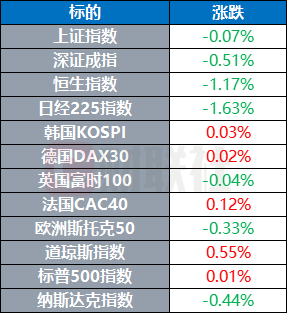
Market Performance - The three major U.S. stock indices closed mixed, with the Dow Jones up 0.55%, the S&P 500 slightly up, and the Nasdaq Composite down 0.44% [1] - The Nasdaq Golden Dragon China Index rose by 1.09%, with Alibaba increasing by 5.2% and Huya by 14.6% [1] - Defense stocks saw a broad increase, while storage concept stocks generally declined, with Nvidia dropping over 2% [1] Commodity Prices - WTI crude oil futures rose over 3%, closing at $58.65 per barrel; Brent crude oil futures also increased over 3%, closing at $63 per barrel [1] - Spot silver fell by 1.59%, closing at $76.94 per ounce, and spot platinum decreased by 1.29% [1] - New York gold futures surpassed $4,480 per ounce [1] Corporate Developments - Mining giants Glencore and Rio Tinto have resumed merger talks, potentially creating a mining giant valued over $260 billion, with a decision needed by Rio Tinto by February 5, 2026 [1] - General Motors reported a special charge of $7.1 billion in Q4, with $6 billion allocated for scaling back its electric vehicle business [1] - NIO's flagship ES9 SUV has completed its application, measuring over 5.3 meters in length [1] Financial Sector - U.S. President Trump directed the purchase of $200 billion in mortgage-backed securities, aiming to lower mortgage rates and monthly payments [1] - The Federal Reserve's GDPNow model from the Atlanta Fed forecasts a 5.4% GDP growth rate for Q4 2025, up from a previous estimate of 2.7% [1] - The 30-year mortgage rate in the U.S. was reported at 6.16% last week according to Freddie Mac [1] Technology and Innovation - Alphabet, Google's parent company, surpassed Apple in market capitalization, now ranking second globally, only behind Nvidia [1] - OpenAI launched a health feature for ChatGPT, entering the medical field, while Elon Musk's lawsuit against OpenAI for its transition to a for-profit model is set to proceed to trial [1] - The UK may consider banning the use of AI chatbots on Musk's social media platform X due to ongoing controversies [1]
特朗普称必须拥有整个格陵兰 芝商所再度上调贵金属期货保证金
Xin Lang Cai Jing· 2026-01-08 23:07
Market Overview - The U.S. stock market showed mixed results with the Dow Jones increasing by 0.55% and the Nasdaq decreasing by 0.44% [1] - The Chinese concept stocks saw a rise, with the Nasdaq China Golden Dragon Index up by 1.09% [1] - Market traders are factoring in expectations for at least two interest rate cuts by the Federal Reserve this year, despite previous signals indicating only one cut might occur in 2026 [1] Commodity Market - International crude oil futures saw significant increases, with WTI crude oil futures up by 3.16% and Brent crude oil futures up by 3.39% [2] - COMEX gold futures rose by 0.48%, while COMEX silver futures fell by 1.19% [2] Economic Forecasts - The U.S. Congressional Budget Office projects that the GDP growth rate will accelerate to 2.2% by 2026, with an expected unemployment rate of 4.6% [5] - The United Nations forecasts a global economic growth rate of 2.7% for 2026, slightly down from 2.8% in 2025, citing ongoing trade tensions and fiscal pressures [9] Corporate Developments - Glencore is in preliminary discussions with Rio Tinto regarding a potential merger, which may involve a full stock merger [9]

2025年结构融资:境外资产证券化市场回顾及热点洞察
Sou Hu Cai Jing· 2026-01-03 07:57
Group 1 - The report highlights the resilience and evolution of the international asset securitization market, despite experiencing cyclical fluctuations. It emphasizes that asset-backed securities remain a crucial component of the global capital market, with ongoing developments in structure, asset types, and regulatory frameworks [1][3]. - In the U.S. market, asset securitization products accounted for approximately 19% of the fixed income market issuance in 2024, down from a peak of 38% in 2021. The market is primarily divided into mortgage-backed securities (MBS) and asset-backed securities (ABS), covering various underlying assets such as housing loans, auto loans, credit card debt, student loans, and commercial real estate [1][7][9]. - The European market is showing steady recovery, with a year-on-year growth of about 15% in issuance scale for 2024. The adoption of the "Simple, Transparent, Standardized" (STS) framework has significantly increased the proportion of compliant products, reflecting a growing demand for standardized and high-transparency offerings [1][3][18]. Group 2 - The report discusses the rising popularity of asset-backed securities (ABS), which have reached a historical high in global issuance in 2023, with Europe leading the market. These securities have the potential to break through the sovereign rating "ceiling," allowing issuers in constrained sovereign rating markets to expand their financing options [2][26]. - The report also focuses on overseas real estate investment trusts (REITs) holding domestic real estate, particularly in Hong Kong and Singapore. These cross-border products enhance resilience against cyclical fluctuations through diversified asset portfolios and flexible management mechanisms [2][3]. - Looking ahead, the report identifies the emergence of innovative asset securitization products, including those linked to data centers, aircraft leasing, and container leasing. The integration of artificial intelligence, blockchain technology, and environmentally related financial products is becoming a new trend in market development [3][6].

结构融资:境外资产证券化市场回顾及热点洞察(一)
Sou Hu Cai Jing· 2025-12-25 01:02
Market Overview - The US asset securitization market's share of the overall fixed income market has decreased from a peak of 38% in 2021 to approximately 19% in 2024, yet it remains a crucial component of the capital market [7][9]. - The market is divided into two main categories: mortgage-backed securities (MBS) and asset-backed securities (ABS), with issuance volumes fluctuating significantly due to macroeconomic and policy factors [7][11]. - Following a historical high in issuance during 2021-2022, the market saw a decline due to interest rate hikes, but began to recover gradually in 2023 [17]. - The European asset securitization market has a substantial existing scale, with issuance recovering in 2023, and is characterized by placed and retained issuance types, with the former's share increasing [18][19]. Market Hotspots - Asset-backed securities are gaining attention as a debt instrument backed by a pool of assets, favored by investors due to their dual recourse feature, with over thirty countries having issued such securities globally [25]. - The issuance volume of asset-backed securities is expected to reach a historical high in 2024, with Europe being the primary market [27]. - The STS (Simple, Transparent, and Standardized) framework has been instrumental in increasing the share of related products in the European market, rising from 1-2% to approximately 25-30% in recent years [26]. Market Insights - Cross-border REITs in Hong Kong and Singapore, which hold domestic real estate, enhance risk resilience through diversified investment portfolios across geographic locations and asset types [2][45]. - The asset preferences of REITs in both regions differ, and they possess mature project acquisition exit mechanisms, flexible financing models, and dynamic asset operation risk management [2]. - Some REITs face challenges due to single asset types and poor location, reflecting the impact of these factors on performance [2]. Market Outlook - The offshore structured financing market is witnessing innovative development trends, driven by blockchain and digitalization, with emerging asset securitization products like data center financing and private credit becoming new growth points [2]. - Overall, the offshore asset securitization market is gradually recovering amidst fluctuations, with innovative products and mature operational mechanisms driving sustained industry growth [2].

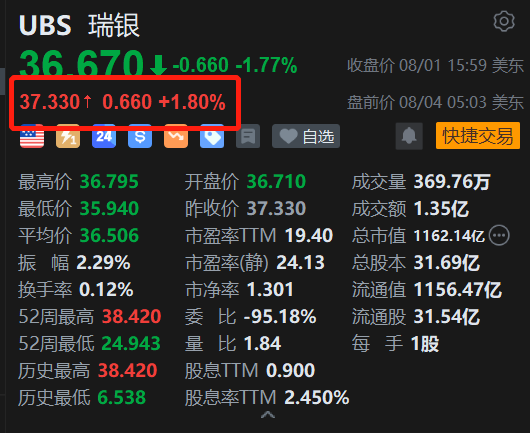
美股异动|瑞银盘前涨1.8% 3亿美元和解美司法部诉瑞信抵押债案
Ge Long Hui· 2025-08-04 09:13
Core Insights - UBS shares rose by 1.8% in pre-market trading following an agreement with the U.S. Department of Justice to resolve legacy issues related to Credit Suisse's sale of mortgage-backed securities in the U.S. [1] Group 1: Agreement Details - UBS Group announced that it has reached an agreement with the U.S. Department of Justice to address unresolved consumer relief obligations stemming from Credit Suisse's past activities [1] - Credit Suisse Securities (USA) LLC will pay $300 million to settle all outstanding consumer relief obligations under a 2017 settlement agreement [1] Group 2: Financial Implications - UBS expects to recognize credit income from non-core and legacy businesses, which will arise from the release of contingent liabilities established during the purchase price allocation process of acquiring Credit Suisse [1]

瑞银以3亿美元就瑞士信贷抵押债券案与美国司法部达成和解
news flash· 2025-08-04 05:31
Group 1 - UBS Group has reached an agreement with the U.S. Department of Justice to resolve legacy issues related to Credit Suisse's sale of residential mortgage-backed securities in the U.S. [1] - Credit Suisse Securities (USA) LLC will pay $300 million to settle all outstanding consumer relief obligations under a 2017 settlement agreement by August 1, 2025 [1]
美国住房援助体系的历史、现状及启示
3 6 Ke· 2025-05-15 10:39
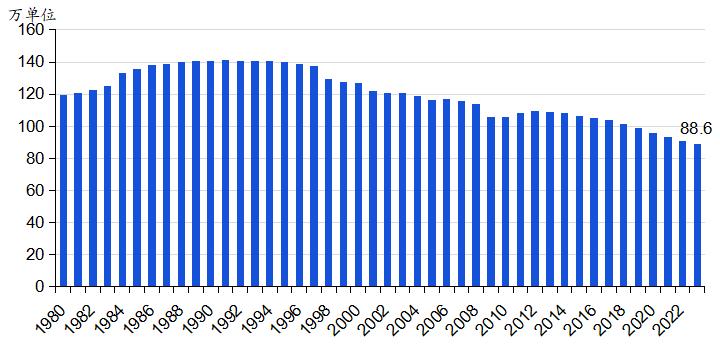
Group 1: Overview of the U.S. Housing Assistance System - The U.S. housing assistance system is primarily reliant on the private housing market, with only 2.7% of the total population benefiting from it, indicating a low coverage compared to other developed countries [3][7][23] - The system has evolved over nearly a century, undergoing multiple revisions and improvements, which have led to the establishment of fair and efficient institutional arrangements worth studying [3][23][26] Group 2: Structure and Functioning of the Housing Assistance System - The housing assistance system is funded by the federal government and executed by state and local governments, providing support to low-income families through three main forms: public rental housing, project-based rental assistance, and housing vouchers [4][5][7] - As of 2023, approximately 5.13 million units are included in the housing assistance system, accounting for 3.6% of the total housing stock in the U.S., with 9.05 million residents receiving assistance [7][14] Group 3: Historical Development and Current Status - The U.S. housing assistance system dates back to the 1930s, initially aimed at providing affordable housing during the Great Depression, but has faced challenges such as high costs and inefficiencies [4][5][14] - By 2023, the number of public rental housing units has decreased to 886,000, reflecting a shift towards a model that relies more on private housing sources [5][7] Group 4: Evaluation and Oversight Mechanisms - The U.S. Department of Housing and Urban Development (HUD) has established a multi-dimensional evaluation system to monitor and assess the performance of local public housing agencies, ensuring accountability and quality in service delivery [12][27] - Local public housing agencies are required to submit data to HUD for performance evaluation, which influences funding and operational oversight [12][14] Group 5: Financing Support for Homebuyers - In addition to housing assistance, the federal government has created official or semi-official institutions to provide mortgage insurance and support mortgage securitization, thereby improving financing conditions for homebuyers [15][17] - The U.S. mortgage market has grown significantly, with the total mortgage balance nearing $14 trillion by 2023, reflecting a robust financing environment for homeownership [17][19] Group 6: Lessons and Insights - The U.S. housing assistance system demonstrates the importance of a balanced relationship between federal oversight and local execution, ensuring efficiency while addressing local needs [26][27] - The evolution of the system highlights the necessity of effective incentive and constraint mechanisms to prevent mismanagement and ensure that assistance reaches those in need [27][28] - The reliance on private housing markets, coupled with government support, illustrates a model that could be beneficial for other countries to consider in their housing policies [28][29]
美国住房援助体系的历史、现状及启示
腾讯研究院· 2025-05-15 09:49
Core Viewpoint - The article discusses the U.S. housing assistance system, which primarily relies on the private housing market and has a low coverage of social security functions, benefiting only 2.7% of the total population. Despite its small scale, the system has nearly a century of history, undergoing multiple revisions and improvements, and has developed some equitable and efficient institutional arrangements worth studying and learning from [2][4][26]. Group 1: Overview of the U.S. Housing Assistance System - The U.S. housing assistance system is funded by the federal government and executed by state and local governments, providing support to low-income families through three main forms: public rental housing, project-based rental assistance, and housing vouchers [2][5][6]. - The system has evolved since the 1930s, with significant changes in the 1960s to incorporate the private sector, leading to a shift towards a model where private housing sources dominate, and public housing plays a supplementary role [6][9]. - As of 2023, approximately 5.13 million units are included in the housing assistance system, accounting for 3.6% of the total housing stock, with public housing making up only 17.3% of the assistance forms [9][12]. Group 2: Evaluation and Management of Public Housing - The federal government has established a multi-dimensional public housing evaluation system to monitor and assess local public housing agencies, ensuring efficiency and quality in operations [3][15]. - Local public housing agencies are responsible for managing applications and setting rent standards, with eligibility typically requiring income below 80% of the area median income [15][16]. - Due to insufficient funding and limited housing stock, many eligible families face long waiting times, averaging 25 months, to receive assistance [16]. Group 3: Financing Support for Homebuyers - Beyond public housing, the federal government has set up official or semi-official institutions to provide mortgage insurance and support mortgage securitization, helping homebuyers improve financing conditions and reduce costs [18][20]. - The establishment of the Home Owner's Loan Corporation in 1933 and the Federal Housing Administration in 1934 marked significant steps in providing long-term, fixed-rate mortgage products to stabilize the housing market [19][20]. - By 2023, the U.S. housing mortgage market has grown to nearly $14 trillion, with the mortgage-to-GDP ratio exceeding 50%, indicating a robust financing environment for homebuyers [20][23]. Group 4: Lessons and Insights - The U.S. housing assistance system, while limited in scope, has developed effective practices over nearly a century that balance equity and efficiency, such as the division of responsibilities between federal and local governments [26][30]. - The establishment of a comprehensive evaluation and incentive mechanism by the Department of Housing and Urban Development (HUD) helps prevent local agencies from neglecting management in favor of supply [31]. - The relationship between government and the market is crucial, as the system relies heavily on private housing resources while the government provides necessary support to facilitate homeownership [32].