具身智能之心

Search documents
刚刚,UCLA周博磊也加入了一家机器人公司
具身智能之心· 2025-10-16 00:03
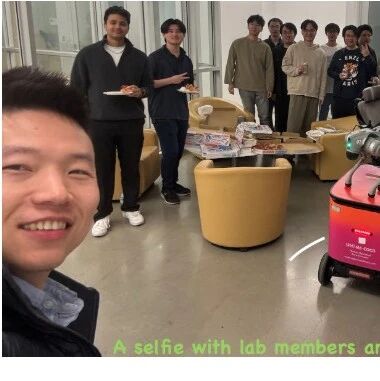
Core Insights - Coco Robotics has appointed Bolei Zhou, a UCLA associate professor, as the Chief AI Scientist to lead the newly established Physical AI Lab, focusing on autonomous sidewalk delivery solutions [2][3][5] - The company aims to achieve full automation in last-mile delivery, leveraging the extensive operational data collected over the past five years to enhance their robotic systems [4][5][7] - The Physical AI Lab is an independent research initiative, separate from Coco Robotics' collaboration with OpenAI, and will focus on improving the company's automation capabilities and operational efficiency [8][9] Group 1: Company Overview - Coco Robotics, founded in 2020, specializes in last-mile delivery robotics and initially relied on teleoperators to navigate obstacles [4] - The company has accumulated millions of miles of data in complex urban environments, which is crucial for training reliable AI systems [7] - The goal is to reduce overall delivery costs while improving service quality for businesses and consumers [9] Group 2: Leadership and Research Focus - Bolei Zhou's expertise in machine perception and intelligent decision-making aligns with Coco Robotics' objectives, particularly in micromobility [7][8] - Zhou has a strong academic background, having published over 100 papers with significant citations, particularly in explainable AI and scene understanding [12][14] - The Physical AI Lab will utilize the research findings to enhance Coco's local models and potentially share insights with operational cities to improve infrastructure [9] Group 3: Data Utilization and Future Plans - Coco Robotics plans to use the data collected to improve its automation levels and operational efficiency, rather than selling it to competitors [9] - The success of the Physical AI Lab will be measured by the company's ability to provide high-quality services at lower costs, which could drive significant growth in the ecosystem [9]

Google最新!Gemini Robotics 1.5:通用机器人领域的突破进展
具身智能之心· 2025-10-16 00:03
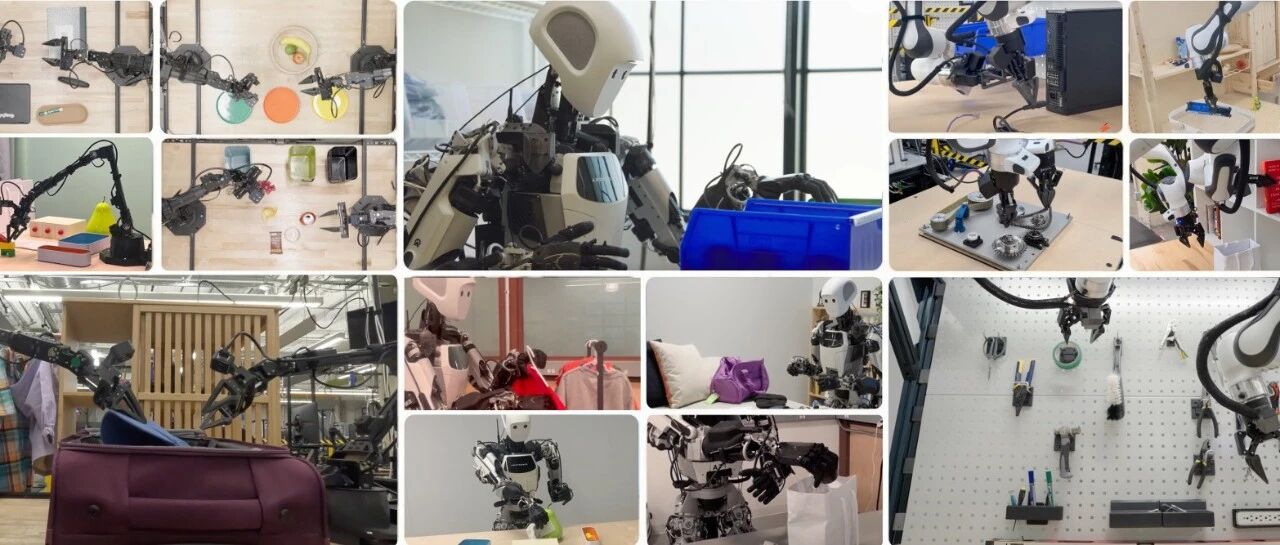
Core Insights - The article discusses the breakthrough advancements in the field of general robotics presented in the "Gemini Robotics 1.5" report by Google DeepMind, highlighting the innovative models and their capabilities in perception, reasoning, and action [1][39]. Technical Architecture - The core architecture of Gemini Robotics 1.5 consists of a "Coordinator + Action Model" framework, enabling a functional closed loop through multimodal data interaction [2]. - The Coordinator (Gemini Robotics-ER 1.5) processes user inputs and environmental feedback, controlling the overall task flow and breaking down complex tasks into executable sub-steps [2]. - The Action Model (Gemini Robotics 1.5) translates natural language sub-instructions into robot action trajectories, supporting direct control of various robot forms without additional adaptation [2][4]. Motion Transfer Mechanism - The Motion Transfer (MT) mechanism addresses the "data silo" issue in traditional robotics by enabling skill generalization across different robot forms, validated through experimental comparisons [5][7]. - The Gemini Robotics 1.5 model, utilizing mixed data from multiple robot types, demonstrated superior performance in skill transfer compared to single-form training approaches [7][8]. Performance Validation - The introduction of a "thinking VLA" mechanism allows for a two-step process in task execution, enhancing performance in multi-step tasks by breaking down complex instructions into manageable sub-steps [8][11]. - Quantitative results show a performance improvement of approximately 21.8% in task completion scores when the thinking mode is activated [11]. - The model's ability to generalize skills across different robot forms was evidenced by significant performance gains in scenarios with limited training data [13][28]. Safety Mechanisms - The ER model incorporates safety mechanisms that assess risks and provide intervention strategies in various scenarios, ensuring safe task execution [36][38]. - Performance comparisons indicate that ER 1.5 excels in risk identification and mitigation, demonstrating a high accuracy rate in predicting potential hazards [36][38]. Conclusion and Future Directions - The Gemini Robotics 1.5 model represents a significant advancement in universal control for multiple robots, reducing deployment costs and enhancing task execution capabilities [39]. - The integration of reasoning and action is identified as a critical factor for achieving complex task completion, emphasizing the importance of the ER and VLA collaboration [39].

大模型方向适合去工作还是读博?
具身智能之心· 2025-10-16 00:03
Core Insights - The article discusses the decision-making process for individuals in the large model field regarding whether to pursue a PhD or engage in entrepreneurial ventures related to agents [1][2] Group 1: Importance of Foundation in Large Models - A solid foundation in large models is crucial, as the field encompasses various directions such as generative models, multi-modal models, fine-tuning, and reinforcement learning [1] - Many mentors lack sufficient expertise in large models, leading to a misconception among students about their readiness for related positions [1] Group 2: Role of a Pioneer in Research - The suitability of an individual to take on the role of a "pioneer" in research is essential, especially in a field with many unexplored directions [2] - The ability to independently explore and endure failures is emphasized as a key trait for those aiming to innovate from scratch [2] Group 3: Community and Learning Resources - The "Large Model Heart Tech Knowledge Planet" community offers a comprehensive platform for beginners and advanced learners, featuring videos, articles, learning paths, and Q&A sections [2] - The community aims to provide a space for technical exchange and collaboration among peers in the large model domain [4] Group 4: Learning Pathways - The community has compiled detailed learning pathways for various aspects of large models, including RAG, AI Agents, and multi-modal training [4][9] - Each learning pathway includes clear technical summaries, making it suitable for systematic learning [4] Group 5: Benefits of Joining the Community - Members gain access to the latest academic advancements and industrial applications related to large models [7] - The community facilitates networking with industry leaders and provides job recommendations in the large model sector [7][68] Group 6: Future Plans and Engagement - The community plans to host live sessions with industry experts, allowing for repeated viewing of valuable content [65] - A focus on building a professional exchange community with contributions from over 40 experts from renowned institutions and companies is highlighted [66]

3个月,完成具身的大脑算法+小脑算法学习!
具身智能之心· 2025-10-16 00:03
Core Insights - The article discusses the evolution and current trends in the field of embodied intelligence, focusing on the development of brain and cerebellum modules in robots, which are essential for perception, understanding, and action [3][10]. Technical Evolution - The development of embodied intelligence has progressed through several stages, starting from grasp pose detection to behavior cloning, and now to diffusion policy and VLA models [7][10]. - The first stage focused on static object grasping using point clouds or images, but lacked context modeling for complex tasks [7]. - The second stage introduced behavior cloning, allowing robots to learn from expert demonstrations, but faced challenges in generalization and performance in multi-target scenarios [7]. - The third stage, emerging in 2023, introduced diffusion policy methods that enhance stability and generalization by modeling action sequences [8]. - The fourth stage, anticipated in 2024, emphasizes the integration of VLA models with reinforcement learning and world models, enhancing robots' predictive capabilities and multi-modal perception [9][10]. Current Trends and Applications - The integration of VLA with reinforcement learning improves robots' trial-and-error capabilities and self-improvement in long-term tasks [10]. - The combination of VLA with world models allows robots to predict environmental dynamics, enhancing planning and decision-making [10]. - The addition of tactile sensing to VLA expands the boundaries of embodied perception, enabling more precise and safer operations in complex environments [10]. Educational and Community Aspects - The article highlights the growing demand for engineering and system capabilities in the field, transitioning from theoretical research to practical deployment [14]. - A structured curriculum is proposed to cover various aspects of embodied intelligence, including simulation platforms and model training [14][11]. - The community aspect is emphasized, with active discussions and support for learners in the field [15].
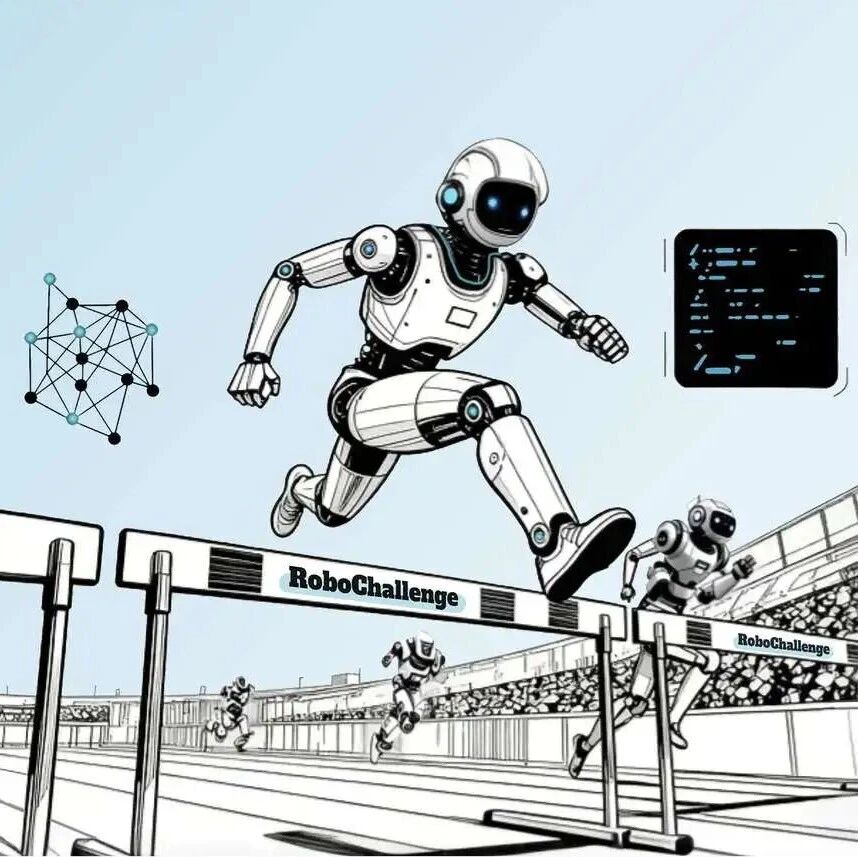
具身走向现实世界!RoboChallenge:从仿真到实体,全球首个大规模多任务真机任务基准
具身智能之心· 2025-10-15 11:03
Core Insights - The article discusses the launch of RoboChallenge, a large-scale, multi-task benchmark testing platform for embodied intelligence, initiated by Dexmal and Hugging Face, aimed at addressing the lack of real machine testing in the field [5][41]. Group 1: Challenges in the Embodied Intelligence Field - The embodied intelligence sector has seen rapid advancements, but the absence of real machine testing and limitations of existing evaluation systems have become significant bottlenecks [3][4]. - Current mainstream benchmarks primarily rely on simulation environments, leading to issues where algorithms that perform well in simulations fail in real-world applications [4][10]. Group 2: Introduction of RoboChallenge - RoboChallenge is the first large-scale benchmark testing platform that allows real robots to perform tasks in a physical environment, providing a more reliable and comparable evaluation standard for visual language action models (VLAs) [5][10]. - The platform aims to overcome challenges related to performance validation in real environments, standardized testing conditions, and accessibility [5][10]. Group 3: Features of RoboChallenge - RoboChallenge features a "remote robot" paradigm, allowing users to interact with real machines without needing hardware, thus lowering the entry barrier for researchers and developers [15][19]. - The platform supports a wide range of tasks, with an initial benchmark set (Table30) comprising 30 diverse tasks designed to evaluate core capabilities of VLA models [12][26]. Group 4: Evaluation Mechanism - The evaluation mechanism combines end-to-end task success rates with process scoring, ensuring a rigorous and transparent assessment of models [16][20]. - RoboChallenge employs a "visual input matching" method to ensure consistency in testing conditions, reducing variability caused by human testers [23][25]. Group 5: Open and Collaborative Ecosystem - RoboChallenge promotes an open ecosystem by providing free access to evaluation services, publicly sharing task demonstration data, and ensuring transparency in results [34][41]. - The platform encourages collaboration among researchers, developers, and industry professionals, fostering innovation in the field of embodied intelligence [38][41]. Group 6: Future Directions - RoboChallenge plans to expand its capabilities by introducing more robot types and challenging tasks, aiming to enhance the evaluation of embodied intelligence in real-world scenarios [42].
ROSCon China 2025 揭秘,具身智能的前沿技术,等你来看!
具身智能之心· 2025-10-15 11:03
Core Viewpoint - ROSCon China 2025 is set to take place from October 31 to November 1, 2025, in Shanghai, marking a significant event for the ROS ecosystem as it transitions from "technology integration" to "value explosion" [6][7]. Group 1: Event Overview - The event serves as a platform for researchers, developers, and students in the robotics field to connect and share insights, fostering community collaboration and industry connections [6][7]. - Participants can expect to engage in discussions on cutting-edge ideas, practical experiences, and mentorship opportunities [7]. Group 2: Participating Companies and Universities - A diverse range of companies will attend, including notable names such as Intel, NIO, Huawei, and Haikang Vision, among others [11][15]. - Several prestigious universities and research institutes are also participating, including Tsinghua University, Peking University, and the University of Science and Technology of China [14][16]. Group 3: Conference Agenda Highlights - The agenda features various topics related to embodied intelligence, with speakers from leading organizations discussing advancements in robotics technology [18][19]. - Key presentations include discussions on how large models can control robots, the application of VLA technology in embodied intelligence, and the integration of AI with robotics [18][19].

腾讯&上海交大等高校联合发布视觉空间推理综述.
具身智能之心· 2025-10-15 11:03
Core Insights - The article discusses the current state of visual spatial reasoning tasks and the importance of Vision Language Models (VLMs) in applications like autonomous driving and embodied intelligence [2][3]. - It highlights the need for a comprehensive evaluation of VLMs' spatial reasoning capabilities through improved methodologies and task settings [3]. Group 1: Current State of Visual Spatial Reasoning - The spatial reasoning capabilities of VLMs have gained significant attention, with research focusing on model structure improvements, training process optimization, and reasoning strategies [2]. - Existing benchmarks often fail to provide a comprehensive assessment of spatial reasoning tasks, necessitating a systematic review of methods and task settings [3]. Group 2: Contributions of the Article - The article categorizes existing improvements in visual spatial reasoning into four areas: input modalities, model structure, training strategies, and reasoning methods [6]. - It introduces a new benchmarking tool, SIBench, which consolidates 18 open-source benchmarks and covers three levels of tasks and various input forms [22][23]. Group 3: Task Classification - Tasks are classified into three levels: Basic Perception, Spatial Understanding, and Planning, each with specific characteristics and requirements [12][15]. - Basic Perception involves attributes of single targets, while Spatial Understanding deals with relationships between multiple targets and their environments [18][20]. - Planning requires understanding spatial constraints and task demands to provide satisfactory solutions [21]. Group 4: Findings from SIBench - The evaluation of mainstream VLMs using SIBench revealed significant deficiencies in four areas, particularly in basic perception capabilities, which are crucial for subsequent reasoning [27]. - Quantitative reasoning abilities were found to be lacking compared to qualitative tasks, indicating a need for improvement in tasks like counting and distance estimation [27]. - The models showed weak performance in processing dynamic information, especially with multi-view or video inputs [27].
Instant4D:分钟级单目视频的4D高斯泼溅重建(NeurIPS 2025)
具身智能之心· 2025-10-15 11:03
Core Insights - The article discusses the development of Instant4D, a modern automated process that can reconstruct any monocular video in minutes, achieving a 30-fold acceleration compared to existing methods [6][15]. Group 1: Technology Overview - Instant4D addresses the challenge of efficiently reconstructing dynamic scenes from uncalibrated video sequences, significantly improving the speed and feasibility of downstream applications like virtual and augmented reality [4][6]. - The method introduces a grid pruning strategy that reduces the number of Gaussian functions by 92% while preserving occlusion structures, making it scalable for long video sequences [6]. Group 2: Performance Metrics - Instant4D outperforms state-of-the-art methods by 29% on the Dycheck dataset, demonstrating superior optimization and rendering quality [6][15]. - In comparative tests on the NVIDIA dataset, Instant4D achieved an 8-fold acceleration and a 10-fold increase in real-time rendering speed compared to previous models [17]. Group 3: Technical Innovations - The approach utilizes a simplified, isotropic, motion-aware implementation of 4D Gaussian Splatting, which reduces parameter count by over 60% and enhances rendering quality [10][12]. - The method employs the latest differentiable SLAM technique, MegaSAM, to obtain camera poses and optimize depth consistently across video frames, resulting in approximately 30 million raw 3D points from a 4-second video [8][9]. Group 4: Results and Comparisons - In the Dycheck dataset, Instant4D achieved a runtime of just 0.12 hours with a memory usage of 8 GB, showcasing its efficiency compared to baseline methods [20]. - The performance metrics indicate that Instant4D not only improves rendering quality but also significantly reduces the time and resources required for video reconstruction [20].

NeurIPS 2025|清华团队分析RL将如何提升VLA泛化性
具身智能之心· 2025-10-15 04:00
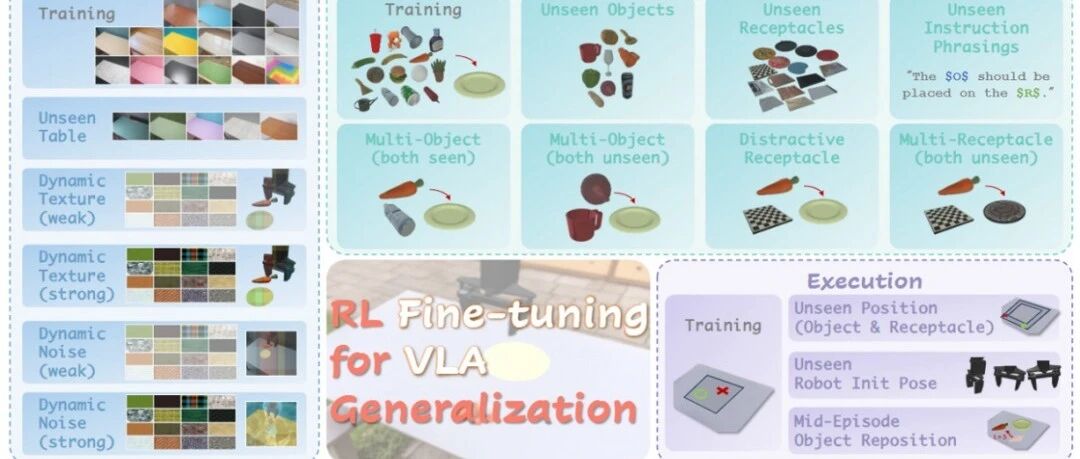
Core Insights - The article discusses the potential of Vision-Language-Action (VLA) models in embodied intelligence and highlights the limitations of current supervised fine-tuning (SFT) methods in achieving human-like generalization. It emphasizes the advantages of Reinforcement Learning (RL) in enhancing the generalization capabilities of VLA models [1][3]. Group 1: Research Findings - A new evaluation benchmark was created to address the limited generalization of VLA models, comparing the performance of RL and SFT in enhancing model robustness across various visual, semantic, and execution challenges [3][19]. - Experiments revealed that using RL algorithms like Proximal Policy Optimization (PPO) significantly improved the model's robustness in semantic understanding and task execution, while maintaining performance in visually varied scenarios comparable to SFT [3][12]. Group 2: Methodology - The research utilized the open-source OpenVLA model, which is fine-tuned from Llama2-7b, to conduct experiments involving RGB images and action tokens for robotic control [6]. - Three RL methods were tested: PPO, Direct Preference Optimization (DPO), and Group Relative Policy Optimization (GRPO), with PPO showing notable advantages in multi-step decision tasks [8][15]. Group 3: PPO Training Innovations - The research team proposed three key innovations for efficient PPO training: 1. A shared Actor-Critic architecture that reduced memory usage by 45% and improved training speed by 35% [12][14]. 2. A preheating strategy using 140 high-quality trajectories that enhanced convergence speed by 50% [14]. 3. Minimizing PPO training epochs to just one, which was sufficient for performance without increasing training time [14]. Group 4: Comparison of SFT and RL - The study found that while SFT performance plateaued with 16,000 demonstration trajectories, RL achieved a 42.6% performance improvement in out-of-distribution tasks, indicating superior generalization capabilities [17][18]. - A comprehensive evaluation benchmark was developed to dissect the differences in generalization capabilities between SFT and RL across visual, semantic, and execution dimensions [19][21]. Group 5: Practical Implications - The research underscores the core value of RL in building truly generalizable embodied agents, which is increasingly important as robotic applications become more complex and varied [25].
近70亿!9月具身机器人领域最新融资情况
具身智能之心· 2025-10-15 01:26
Core Insights - The article provides an overview of the investment landscape in the robotics and embodied intelligence sector for September, highlighting significant funding rounds and key players in the industry. Investment Highlights - Xingmai Innovation completed an A+ round of financing, focusing on high-end intelligent pool cleaning robots, led by Meituan Longzhu with participation from several notable investors [1]. - Zivariable Robotics secured nearly 1 billion yuan in an A+ round, led by Alibaba Cloud and Guoke Investment [2]. - Onestar, a developer of data-driven intelligent evolution robots, completed a seed round financing of several hundred million yuan, with investments from BV Baidu Ventures and other firms [3]. Detailed Financing List - A comprehensive list of companies and their financing details for September includes: - CV Anno Robotics: Angel round, several tens of millions [4] - JEBOT: A round, amount unspecified [4] - LINKHOU: A round, over 100 million yuan [4] - BrainCo: Pre-B round, 30 million USD [5] - Motorevo: A round, over 100 million yuan [5] - Beatbot: A+ round, 1 billion yuan [6] - Other companies also received funding across various rounds, indicating a robust investment environment in the robotics sector [4][5][6].