自动驾驶之心

Search documents
如何看待目前VLA的具身智能技术?VLA还算是弱智人?
自动驾驶之心· 2025-06-27 09:15
Core Viewpoint - The article critiques the VLA (Vision-Language-Action) framework, arguing that it is fundamentally flawed and overly simplistic, primarily focusing on trivial tasks that do not reflect real-world complexities [1][18]. Group 1: VLA Framework Limitations - VLA is essentially an upgraded version of BC (Behavior Cloning) with minimal innovation, leading to misleading success rates [1][2]. - The tasks selected for VLA are overly simplistic, often limited to basic pick-and-place actions, which do not demonstrate true versatility or effectiveness [3][4]. - The framework's reliance on 2D scenarios fails to account for the 3D nature of real-world environments, limiting its applicability [10][11]. Group 2: Data and Performance Issues - VLA requires an excessive amount of data for simple tasks, undermining its efficiency and practicality [14][15]. - The success rates reported for VLA tasks are artificially inflated due to the simplicity of the tasks chosen, with claims of 100% success being misleading [5][6]. - The framework lacks clarity on its capabilities, making it difficult to determine what tasks it can perform at various stages of development [16][17]. Group 3: Overall Critique - The article argues that VLA represents a superficial approach to AI, lacking depth in understanding and modeling real-world tasks and environments [18][19]. - The author expresses frustration with the lack of meaningful progress in VLA, suggesting that it is a product of laziness and opportunism within the AI community [18][20].

基于VLM的快慢双系统自动驾驶 - DriveVLM解析~
自动驾驶之心· 2025-06-27 09:15
Core Viewpoint - The article discusses the rapid advancements in large models and their applications in the autonomous driving sector, particularly focusing on the DriveVLM algorithm developed by Tsinghua University and Li Auto to address long-tail problems in real-world driving scenarios [2]. Group 1: DriveVLM Overview - DriveVLM aims to tackle the challenges faced in the transition from Level 2 (L2) to Level 4 (L4) autonomous driving, particularly the infinite long-tail problems that arise in real-world scenarios [2]. - The industry has recognized that data-driven approaches alone may not suffice to evolve towards true L4 autonomous driving, necessitating further exploration of next-generation solutions [2]. Group 2: Innovations of DriveVLM - DriveVLM introduces several innovations, including: - Chain-of-Thought (CoT) for scene description, analysis, and hierarchical planning [4]. - DriveVLM-Dual, which integrates DriveVLM with traditional modules for real-time planning and enhanced spatial reasoning capabilities [4]. - A comprehensive data mining and annotation process to construct the Corner Case dataset, SUP-AD [4]. Group 3: Course Structure and Content - The article outlines a course on multi-modal large models, covering: - Introduction to multi-modal large models, including foundational concepts and applications [21]. - Basic modules of multi-modal large models, explaining components like modality encoders and projectors [23]. - General multi-modal large models, focusing on algorithms for various tasks [25]. - Fine-tuning and reinforcement learning techniques essential for model development [28]. - Applications of multi-modal large models in autonomous driving, highlighting DriveVLM as a key algorithm [30]. - Job preparation related to multi-modal large models, addressing industry needs and interview preparation [32].
数据闭环的核心 - 静态元素自动标注方案分享(车道线及静态障碍物)
自动驾驶之心· 2025-06-26 13:33
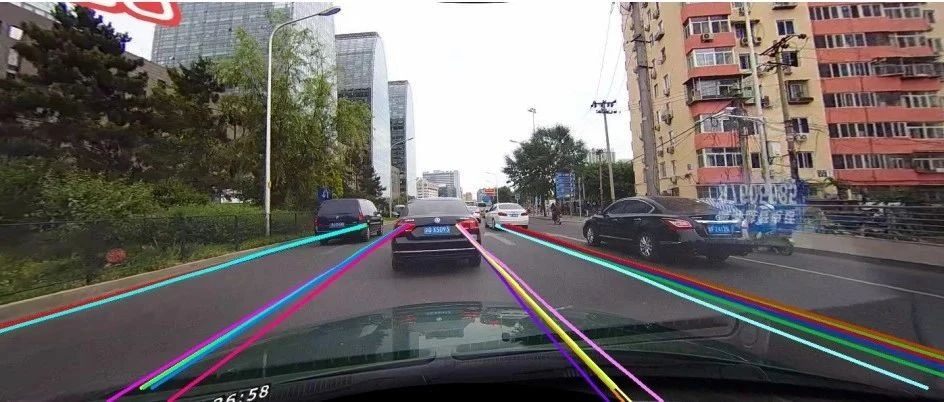
Core Viewpoint - The article emphasizes the importance of 4D automatic annotation in the autonomous driving industry, highlighting the shift from traditional 2D static element annotation to more efficient 3D scene reconstruction methods [2][3][4]. Group 1: Traditional 2D Annotation Deficiencies - Traditional 2D static element annotation is time-consuming and labor-intensive, requiring repeated work for each timestamp [2]. - The need for 3D scene reconstruction allows for static elements to be annotated only once, significantly improving efficiency [2][3]. Group 2: 4D Automatic Annotation Process - The process of 4D automatic annotation involves several steps, including converting 3D scenes to BEV views and training cloud-based models for automatic annotation [6]. - The cloud-based pipeline is distinct from the vehicle-end model, focusing on high-quality automated annotation that can be used for vehicle model training [6]. Group 3: Challenges in Automatic Annotation - Key challenges in 4D automatic annotation include high temporal consistency requirements, complex multi-modal data fusion, and the difficulty of generalizing dynamic scenes [7]. - The industry faces issues with annotation efficiency and cost, as high-precision 4D automatic annotation often requires manual verification, leading to long cycles and high costs [7]. Group 4: Course Offerings and Learning Opportunities - The article promotes a course on 4D automatic annotation, covering dynamic and static elements, OCC, and end-to-end automation processes [8][9]. - The course aims to provide a comprehensive understanding of the algorithms and practical applications in the field of autonomous driving [8][9]. Group 5: Course Structure and Target Audience - The course is structured into multiple chapters, each focusing on different aspects of 4D automatic annotation, including dynamic obstacle marking, SLAM reconstruction, and end-to-end truth generation [9][11][12][16]. - It is designed for a diverse audience, including researchers, students, and professionals looking to transition into the data loop field [22][24].
清华大学最新综述!当下智能驾驶中多传感器融合如何发展?
自动驾驶之心· 2025-06-26 12:56
Group 1: Importance of Embodied AI and Multi-Sensor Fusion Perception - Embodied AI is a crucial direction in AI development, enabling autonomous decision-making and action through real-time perception in dynamic environments, with applications in autonomous driving and robotics [2][3] - Multi-sensor fusion perception (MSFP) is essential for robust perception and accurate decision-making in embodied AI, integrating data from various sensors like cameras, LiDAR, and radar to achieve comprehensive environmental awareness [2][3] Group 2: Limitations of Current Research - Existing AI-based MSFP methods have shown success in fields like autonomous driving but face inherent challenges in embodied AI, such as the heterogeneity of cross-modal data and temporal asynchrony between different sensors [3][4] - Current reviews on MSFP often focus on single tasks or research areas, limiting their applicability to researchers in related fields [4] Group 3: Overview of MSFP Research - The paper discusses the background of MSFP, including various perception tasks, sensor data types, popular datasets, and evaluation standards [5] - It reviews multi-modal fusion methods at different levels, including point-level, voxel-level, region-level, and multi-level fusion [5] Group 4: Sensor Data and Datasets - Various sensor data types are critical for perception tasks, including camera data, LiDAR data, and radar data, each with unique advantages and limitations [7][10] - The paper presents several datasets used in MSFP research, such as KITTI, nuScenes, and Waymo Open, detailing their characteristics and the types of data they provide [12][13][14] Group 5: Perception Tasks - Key perception tasks include object detection, semantic segmentation, depth estimation, and occupancy prediction, each contributing to the overall understanding of the environment [16][17] Group 6: Multi-Modal Fusion Methods - Multi-modal fusion methods are categorized into point-level, voxel-level, region-level, and multi-level fusion, each with specific techniques to enhance perception robustness [20][21][22][27] Group 7: Multi-Agent Fusion Methods - Collaborative perception techniques integrate data from multiple agents and infrastructure, addressing challenges like occlusion and sensor failures in complex environments [32][34] Group 8: Time Series Fusion - Time series fusion is a key component of MSFP systems, enhancing perception continuity across time and space, with methods categorized into dense, sparse, and hybrid queries [40][41] Group 9: Multi-Modal Large Language Model (MM-LLM) Fusion - MM-LLM fusion combines visual and textual data for complex tasks, with various methods designed to enhance the integration of perception, reasoning, and planning capabilities [53][54][57][59]
等了十年,特斯拉Robotaxi终于上线!马斯克:仅需4.2美元一口价
自动驾驶之心· 2025-06-26 12:56
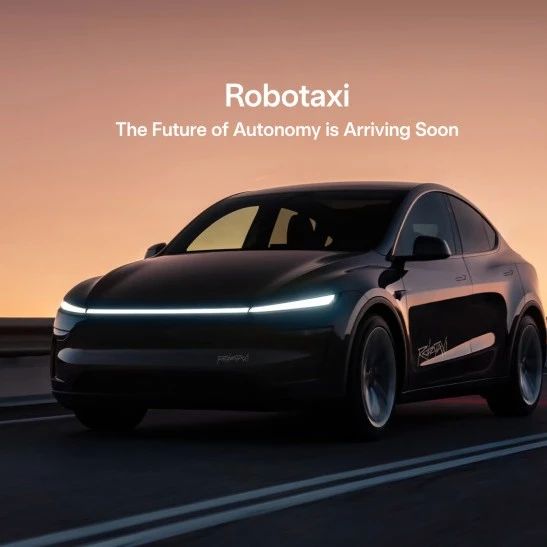
Core Viewpoint - Tesla has officially launched its Robotaxi service in Austin, Texas, fulfilling Elon Musk's long-standing promise of autonomous ride-hailing services, although the service is still in a limited trial phase and not fully open to the public [1][2][8]. Summary by Sections Launch and Pricing - The initial fare for the Robotaxi service is set at a fixed price of $4.20, with the option for passengers to leave tips [2][4]. - The service is currently limited to invited users, primarily supporters and influencers, raising questions about the objectivity of initial feedback [8]. Operational Details - Approximately 10 to 20 Model Y vehicles marked as "Robotaxi" are being used for this limited trial [8]. - The operational area is strictly confined to a mapped geofenced region, with specific boundaries defined [8]. - The service operates daily from 6 AM to midnight, avoiding complex scenarios such as bad weather and highways [8]. User Experience - Initial feedback indicates that the Robotaxi rides are generally smooth and capable of handling typical urban driving situations, maintaining speeds below 40 miles per hour [17][18]. - The app interface is similar to ride-hailing services like Uber, featuring a "start trip" button and music app integration [19]. - However, some users reported issues such as slow app notifications and unclear pickup point locations, indicating room for improvement in user experience [22]. Safety Measures - The current version of Robotaxi is not fully autonomous; it includes a safety monitor in the passenger seat to take control in emergencies [14]. - In certain situations, remote operators may also intervene, with an average response time of about two minutes [20]. - Tesla plans to enhance identity verification processes if the safety monitor is removed in the future [15]. Future Plans and Competition - Tesla aims to expand the Robotaxi fleet to thousands of vehicles within months and plans to extend the service to California and other regions with stricter regulations [25]. - In contrast, competitors like Waymo are already operating over 1,500 autonomous vehicles in multiple cities and plan to increase their fleet to 2,000 by 2026 [25][26].

自动驾驶之『多模态大模型』交流群成立了!
自动驾驶之心· 2025-06-26 12:56
Core Viewpoint - The article emphasizes the importance of a leading technology exchange platform in the field of autonomous driving, focusing on cutting-edge technologies and career development opportunities in the industry [1]. Group 1: Technologies and Research Areas - The platform covers a wide range of topics including embodied intelligence, visual large language models, world models, end-to-end autonomous driving, diffusion models, lane line detection, and 2D/3D object tracking [1]. - It also addresses advanced perception techniques such as BEV perception, multi-modal perception, occupancy detection, and multi-sensor fusion [1]. - Other areas of focus include transformer models, large models, point cloud processing, online mapping, SLAM, optical flow estimation, depth estimation, trajectory prediction, high-precision maps, NeRF, and Gaussian Splatting [1]. Group 2: Career Development and Community Engagement - The platform encourages discussions and exchanges among professionals and students interested in autonomous driving, AI job opportunities, and hardware configuration [1]. - It invites individuals to join the community by adding a WeChat assistant and providing their company/school, nickname, and research direction [1].
最近,一些自驾公司疯狂往一线『输送』人才。。。
自动驾驶之心· 2025-06-26 12:56
Core Viewpoint - The article discusses the current challenges in the autonomous driving industry, including layoffs and the shifting of roles from research and development to sales, indicating a significant pressure on revenue and the need for companies to adapt to market demands [2][3][4]. Group 1: Industry Challenges - Recent layoffs in the autonomous driving sector have affected not only existing employees but also recent graduates, highlighting the industry's struggle with revenue generation [2][4]. - Companies are increasingly moving employees from R&D roles to frontline sales positions as a strategy to cope with financial pressures, suggesting that sales roles are now prioritized for revenue generation [3][4]. - The article emphasizes that the pressure on sales performance is leading to a reevaluation of workforce allocation, with many companies facing the risk of further layoffs if sales targets are not met [3][4]. Group 2: Recommendations for Professionals - For those facing layoffs, it is advised to refine resumes and consider learning new technical skills, as the job market may become competitive with many individuals seeking new positions simultaneously [5][6]. - Individuals who are transitioned to sales roles are cautioned against fully committing to these positions, as it may limit their future opportunities in more technical roles, particularly in algorithm development [7]. - The article encourages professionals to use this period as a time for reflection and preparation for future job opportunities, suggesting that networking and skill development are crucial during this transitional phase [6][7]. Group 3: Community and Resources - The article promotes a community platform that offers resources for learning and job opportunities in the autonomous driving field, aiming to build a network of professionals and share industry insights [8]. - It highlights the availability of comprehensive learning materials, including courses and recruitment information, to support individuals in navigating their careers in the evolving landscape of autonomous driving [8].

硕士毕业论文写不出来了怎么办?
自动驾驶之心· 2025-06-26 12:56
Core Viewpoint - The article emphasizes the challenges faced by students in publishing academic papers in cutting-edge fields like autonomous driving, embodied intelligence, and robotics, and introduces a comprehensive tutoring service aimed at helping them navigate these challenges effectively [2][3]. Group 1: Company Overview - The company is described as the largest AI technology self-media platform in China, focusing on autonomous driving, embodied intelligence, and robotics, with a deep understanding of the challenges and opportunities in these interdisciplinary fields [3]. - The company has a team of over 300 dedicated instructors from globally recognized universities, with a high manuscript submission success rate of 96% over the past three years [3]. Group 2: Services Offered - The company provides a full range of tutoring services, including assistance with topic selection, experimental design, model optimization, and writing for undergraduate, master's, and doctoral students [4][12]. - Specific areas of tutoring include large models, end-to-end autonomous driving, multi-sensor fusion, and various advanced topics in AI and robotics [5][12]. Group 3: Tutoring Approach - The tutoring service is characterized by personalized, one-on-one guidance tailored to the specific research interests and backgrounds of students, ensuring a customized approach to each individual's needs [9][12]. - The instructors possess extensive experience in publishing in top-tier conferences and journals, familiar with the review processes and preferences of these venues [8][11]. Group 4: Problem-Solving Capabilities - The company aims to address common challenges faced by students, such as finding innovative research topics, conducting literature reviews, designing experiments, and improving writing quality [10][12]. - The service also focuses on enhancing the likelihood of acceptance in prestigious journals and conferences, thereby increasing the recognition and impact of students' research [15].

刚刚,何恺明官宣新动向~
自动驾驶之心· 2025-06-26 10:41
Core Viewpoint - The article highlights the significant impact of Kaiming He joining Google DeepMind as a distinguished scientist, emphasizing his dual role in academia and industry, which is expected to accelerate the development of Artificial General Intelligence (AGI) at DeepMind [1][5][8]. Group 1: Kaiming He's Background and Achievements - Kaiming He is renowned for his contributions to computer vision and deep learning, particularly for introducing ResNet, which has fundamentally transformed deep learning [4][18]. - He has held prestigious positions, including being a research scientist at Microsoft Research Asia and Meta's FAIR, focusing on deep learning and computer vision [12][32]. - His academic credentials include a tenure as a lifelong associate professor at MIT, where he has published influential papers with over 713,370 citations [18][19]. Group 2: Impact on Google DeepMind - Kaiming He's expertise in computer vision and deep learning is expected to enhance DeepMind's capabilities, particularly in achieving AGI within the next 5-10 years, as stated by Demis Hassabis [7][8]. - His arrival is seen as a significant boost for DeepMind, potentially accelerating the development of advanced AI models [5][39]. Group 3: Research Contributions - Kaiming He has published several highly cited papers, including works on Faster R-CNN and Mask R-CNN, which are among the most referenced in their fields [21][24]. - His recent research includes innovative concepts such as fractal generative models and efficient one-step generative modeling frameworks, showcasing his continuous contribution to advancing AI technology [36][38].


重磅分享!A0:首个基于空间可供性感知的通用机器人分层模型
自动驾驶之心· 2025-06-26 10:41
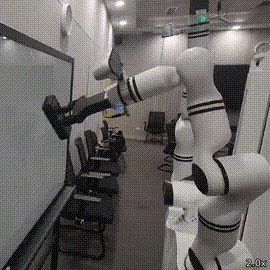
点击下方 卡片 ,关注" 具身智能之心 "公众号 >>直播和内容获取转到 → 具身智能之心知识星球 由无界智慧(Spatialtemporal AI)团队推出的A0模型,是首个基于空间可供性感知的通用机器人分层扩散 模型,通过具身无关的可供性表征 (Embodiment-Agnostic Affordance Representation) 实现了跨平台的通 用操作能力,模型框架和代码等已经开源。 论文链接:https://arxiv.org/abs/2504.12636 项目主页:https://a-embodied.github.io/A0/ 机器人操作面临的核心挑战 在机器人技术快速发展的今天,通用化操作能力始终是制约行业发展的关键瓶颈。想象一下,当你让机器 人"擦干净白板"时,它需要准确理解应该在何处施力("where"),以及如何移动抹布("how")。这正是 当前机器人操作面临的核心挑战——空间可供性感知理解不足。 现有方法主要分为两类:基于模块化的方法和端到端的视觉-语言-动作(VLA)大模型。前者虽然能利用视 觉基础模型进行空间理解,但对物体可供性的捕捉有限;后者虽能直接生成动作,却缺乏对空间 ...