
自动驾驶之心

Search documents
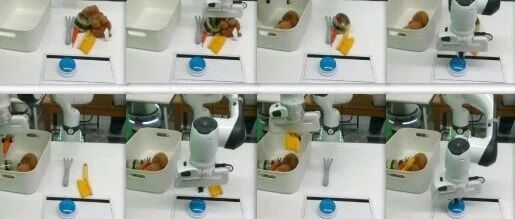
AI Day直播 | MemoryVLA:助力长时序机器人操作任务
自动驾驶之心· 2025-09-03 03:19
Core Viewpoint - The article discusses the development of MemoryVLA, a cognitive-memory-action framework inspired by human memory systems, aimed at improving the performance of Vision-Language-Action (VLA) models in long-term robotic manipulation tasks [3][7]. Group 1: VLA Challenges and Solutions - Existing VLA models primarily rely on current observations, leading to poor performance in long-term, time-dependent tasks [7]. - Cognitive science indicates that humans utilize a memory system involving neural activity and the hippocampus to manage tasks effectively, which serves as the inspiration for MemoryVLA [7]. Group 2: MemoryVLA Framework - MemoryVLA incorporates a pre-trained Vision-Language Model (VLM) that encodes observations into perceptual and cognitive tokens, facilitating the formation of working memory [3]. - A Perceptual-Cognitive Memory Bank is established to store consolidated low-level details and high-level semantics, allowing for adaptive retrieval of relevant entries for decision-making [3]. Group 3: Implications for Robotics - The framework aims to enhance the ability of robots to perform tasks that require temporal awareness and memory, addressing the inherent nature of robotic manipulation tasks [3][7]. - The article also touches on the importance of memory and reasoning within VLA models, suggesting a need for further exploration in these areas [7].

自动驾驶论文速递 | DriveQA、闭环仿真、AIGC、世界模型等~
自动驾驶之心· 2025-09-03 03:19
Core Insights - The article discusses the development of the DriveQA dataset, which integrates driving manuals from various U.S. states with visual scenarios from the CARLA simulation environment, creating a comprehensive driving rules question-answering benchmark with 474K samples [2][3] - It highlights the advantages of DriveQA over existing multimodal datasets in covering traffic rules and improving model generalization and reasoning capabilities [2][3] Contribution Summary DriveQA Multimodal Driving Knowledge Benchmark - DriveQA consists of two components: DriveQA-T with 26K QA pairs from 51 U.S. states covering 19 question categories, and DriveQA-V with 68K images and 448K QA pairs based on CARLA simulations, supporting various evaluation tasks [3] System Evaluation of SOTA Models - Testing on mainstream LLMs (e.g., GPT-4o, Llama-3.1) and MLLMs (e.g., LLaVA-1.5) revealed good performance on basic traffic rules but significant deficiencies in numerical reasoning, complex right-of-way scenarios, and understanding traffic sign variants [3] Model Optimization Value of DriveQA - Fine-tuning with LoRA on DriveQA significantly improved accuracy in recognizing regulatory signs and making intersection decisions, demonstrating effective generalization in downstream driving tasks [3] Analysis of Model Sensitivity and Generalization Limitations - The controlled variables in DriveQA-V revealed model sensitivity to environmental factors, and negative sampling exposed weaknesses in understanding complex rules, providing insights for optimizing rule reasoning in autonomous driving AI [3] Generative AI in Autonomous Driving Systems Testing - The article summarizes the application of generative AI in testing autonomous driving systems, categorizing existing research into six core tasks related to scenario-based testing [9][11] - It reviews various generative AI models used in testing, including LLMs, VLMs, diffusion models, GANs, and VAEs, detailing their mechanisms in different testing tasks [11][14] Evaluation Resources and Benchmark Integration - A comprehensive reference framework for datasets, simulators, ADS systems, evaluation metrics, and benchmark methods in the field of ADS testing is provided [14] Limitations and Future Directions - The article identifies 27 core limitations of generative AI in ADS testing, such as hallucination issues in LLMs and computational overhead in diffusion models, suggesting targeted improvement directions [14]

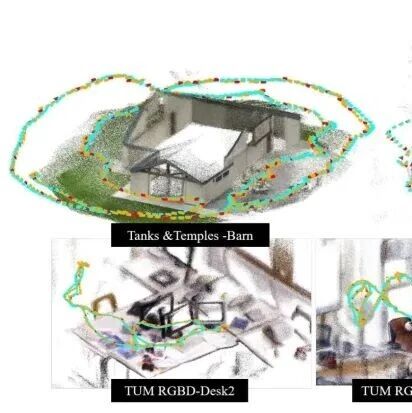
港科&地平线&浙大联手开源SAIL-Recon:三分钟重建一座城
自动驾驶之心· 2025-09-02 23:33
Core Insights - The article discusses the SAIL-Recon framework, which integrates scene regression with localization to achieve large-scale Structure from Motion (SfM) using thousands of images efficiently and accurately [7][10][34]. Group 1: Traditional SfM Limitations - Traditional SfM algorithms rely on feature extraction, matching, triangulation, and bundle adjustment, which can fail in low-texture, blurry, or repetitive texture scenes [5]. - Recent research has proposed an end-to-end learnable SfM pipeline that directly regresses scene structure and camera poses from images, but it is limited by GPU memory when handling large-scale scenes [5][10]. Group 2: SAIL-Recon Framework - SAIL-Recon is a multi-task framework that unifies reconstruction and localization without the need for scene-specific training, sampling a few anchor images from large image or video sequences to infer neural scene representations [7][10]. - The framework achieves state-of-the-art (SOTA) performance across multiple benchmarks, surpassing both traditional and learning-based methods in accuracy and efficiency [10][34]. Group 3: Methodology - The SAIL-Recon process involves selecting a small number of anchor images to extract neural scene representations, which are then used to jointly estimate scene coordinates and camera poses for all images [9][10]. - The method employs a transformer to compute scene representations and camera parameters, optimizing GPU memory usage through a key-value cache [11][12]. Group 4: Experimental Results - SAIL-Recon demonstrated superior performance in pose estimation and new view synthesis tasks, achieving the highest PSNR in the Tanks & Temples dataset and completing reconstructions significantly faster than traditional methods [26][32]. - The framework maintains good performance even when reducing the number of anchor images from 10 to 2, indicating robustness in various sampling strategies [32]. Group 5: Limitations and Future Work - The framework's reliance on a fixed global coordinate system may affect certain sequences, suggesting a need for improved anchor image selection strategies [36]. - Uniform sampling could overlook scene areas, indicating potential for research into coverage-aware sampling methods [36].
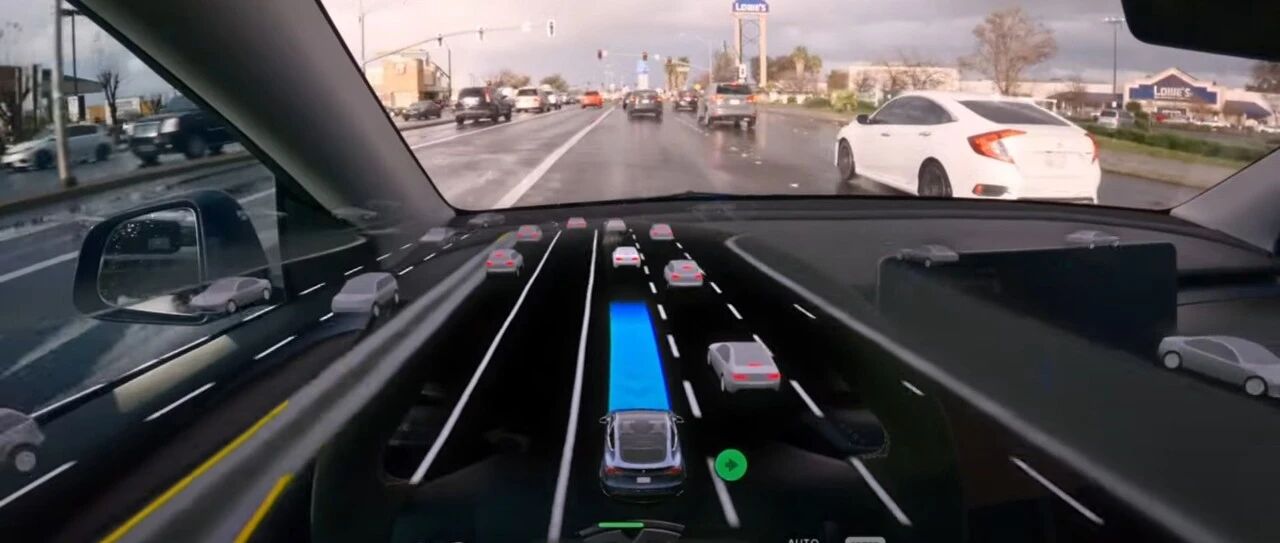
某头部智驾公司最快或11月美股上市,估值或超60亿美金
自动驾驶之心· 2025-09-02 23:33
Core Viewpoint - The article discusses the recent developments and future prospects of a leading autonomous driving company, referred to as "M," highlighting its financing activities, market positioning, and growth potential in the context of the autonomous driving industry [6][10][12]. Financing and Market Position - Company M has completed two rounds of financing this year, involving several billion USD, with investors including a state-owned fund and a Middle Eastern sovereign fund [6][10]. - M is expected to go public in the US by November 2025, with a projected valuation exceeding 6 billion USD [6][10]. - The company has been relatively slow in capital market activities compared to peers, which have already listed on various exchanges [9][10]. Revenue Growth and Profitability - M has maintained rapid revenue and gross profit growth for three consecutive years, despite currently operating at a loss, with expectations to achieve breakeven by 2026 [7][12]. - The revenue structure primarily consists of Non-Recurring Engineering (NRE) fees and licensing fees, with the latter showing high gross margins, potentially reaching over 90% [12][15]. Strategic Partnerships and Product Development - M has established partnerships with major automotive brands, increasing its production model collaborations to 130 [12][14]. - The company has launched a chip subsidiary, "X," which has attracted significant investment and is currently testing its first chip in real vehicles [12][14]. - M's strategic moves, including a partnership with Uber for autonomous vehicle operations in Europe, are seen as critical steps leading up to its IPO [12][14]. Market Dynamics and Competitive Landscape - M's ability to deliver quickly and adapt to customer needs has positioned it favorably among traditional automakers, leading to a strong demand for its services [14]. - The company is expected to achieve a delivery milestone of over 1 million vehicles by next year, reflecting its growing market presence [13][14]. - The competitive landscape in the autonomous driving sector is characterized by high stakes, with significant financial investments and the potential for consolidation among companies [16].
拿到offer了,却开心不起来。。。
自动驾驶之心· 2025-09-02 23:33
Group 1 - The article discusses the importance of the autumn recruitment season, highlighting a student's experience of receiving an offer from a tier 1 company but feeling unfulfilled due to a desire to transition to a more advanced algorithm position [1] - The article encourages perseverance and self-challenge, emphasizing that pushing oneself can reveal personal limits and potential [2] Group 2 - A significant learning package is introduced, including a 499 yuan discount card for a year of courses at a 30% discount, various course benefits, and hardware discounts [4][6] - The focus is on cutting-edge autonomous driving technologies for 2025, particularly end-to-end (E2E) and VLA autonomous driving systems, which are becoming central to the industry [7][8] Group 3 - The article outlines the development of end-to-end autonomous driving algorithms, emphasizing the need for knowledge in multimodal large models, BEV perception, reinforcement learning, and more [8] - It highlights the challenges faced by beginners in synthesizing knowledge from fragmented research papers and the lack of practical guidance in transitioning from theory to practice [8] Group 4 - The introduction of a 4D annotation algorithm course aims to address the increasing complexity of training data requirements for autonomous driving, emphasizing the importance of automated 4D annotation [11][12] - The course is designed to help newcomers navigate the challenges of entering the field and to optimize their learning paths [12] Group 5 - The article discusses the emergence of multimodal large models in autonomous driving, noting the rapid growth of job opportunities in this area and the need for systematic learning platforms [14] - It emphasizes the importance of practical experience and project involvement for job seekers in the autonomous driving sector [21] Group 6 - The article mentions various specialized courses available, including those focused on perception, model deployment, planning control, and simulation in autonomous driving [16][18][20] - It highlights the importance of community engagement and support through VIP groups for course participants, facilitating discussions and problem-solving [26]

小米汽车招聘云端大模型算法工程师(BEV/3DGS/OCC等)
自动驾驶之心· 2025-09-02 23:33
Group 1 - The article discusses a job position for a Cloud Model Algorithm Engineer at Xiaomi, focusing on data-driven algorithm development and optimization for autonomous driving [1][4] - Responsibilities include developing generative algorithm technologies for scene and label generation, such as 4D ground truth automation labeling and multimodal large models [4] - The role requires research and development of unsupervised/self-supervised algorithms based on massive production data to enhance semantic understanding and spatial perception capabilities of large models [4] Group 2 - The position demands solid knowledge of C++ or Python, along with a strong understanding of data structures and algorithms [4] - Candidates should have in-depth research experience in one or more areas of perception algorithms related to autonomous driving, including BEV perception, 3D detection, segmentation, and multi-sensor fusion [4] - Preference is given to candidates with experience in NeRF, 3D scene generation, and sensor simulation, as well as those with relevant project experience in autonomous driving [4]


自动驾驶之心开学季活动来了(超级折扣卡/课程/硬件/论文辅导福利放送)
自动驾驶之心· 2025-09-02 09:57
Core Viewpoint - The article reflects on the evolution of autonomous driving over the past decade, highlighting significant technological advancements and the ongoing need for innovation and talent in the industry [2][3][4]. Group 1: Evolution of Autonomous Driving - Autonomous driving has progressed from basic image classification to advanced perception systems, including 3D detection and end-to-end models [3]. - The industry has witnessed both failures and successes, with companies like Tesla, Huawei, and NIO establishing strong technological foundations [3]. - The journey of autonomous driving is characterized by continuous efforts rather than sudden breakthroughs, emphasizing the importance of sustained innovation [3]. Group 2: Importance of Talent and Innovation - The future of autonomous driving relies on a steady influx of talent dedicated to enhancing safety and performance [4]. - Innovation is identified as the core of sustainable business growth, with a focus on practical applications and real-world problem-solving [6]. - The article encourages a mindset of continuous learning and adaptation to keep pace with rapid technological changes [6]. Group 3: Educational Initiatives and Resources - The company has developed a series of educational resources, including video tutorials and courses covering nearly 40 subfields of autonomous driving [8][9]. - Collaborations with industry leaders and academic institutions are emphasized to bridge the gap between theory and practice [8]. - The article outlines various courses aimed at equipping learners with the necessary skills for careers in leading autonomous driving companies [9][10]. Group 4: Future Directions in Technology - Key technological directions for 2025 include end-to-end autonomous driving and the integration of large models [12][20]. - The article discusses the significance of multi-modal large models in enhancing the capabilities of autonomous systems [20]. - The need for advanced data annotation techniques, such as automated 4D labeling, is highlighted as crucial for improving training data quality [16].

自动驾驶多传感器融合感知1v6小班课来了(视觉/激光雷达/毫米波雷达)
自动驾驶之心· 2025-09-02 06:51
Core Insights - The article emphasizes the necessity of multi-modal sensor fusion in autonomous driving to overcome the limitations of single sensors like cameras, LiDAR, and millimeter-wave radar, enhancing robustness and safety in various environmental conditions [1][34]. Group 1: Multi-Modal Sensor Fusion - Multi-modal sensor fusion combines the strengths of different sensors: cameras provide semantic information, LiDAR offers high-precision 3D point clouds, and millimeter-wave radar excels in adverse weather conditions [1][34]. - Current mainstream fusion techniques include mid-level fusion based on Bird's Eye View (BEV) and end-to-end fusion using Transformer architectures, which significantly improve the performance of autonomous driving systems [2][34]. Group 2: Challenges in Sensor Fusion - Key challenges in multi-modal sensor fusion include sensor calibration, data synchronization, and the design of efficient algorithms to handle the heterogeneity and redundancy of sensor data [3][34]. - Ensuring high-precision spatial and temporal alignment of different sensors is critical for successful fusion [3]. Group 3: Course Structure and Content - The course outlined in the article spans 12 weeks of online group research, followed by 2 weeks of paper guidance and 10 weeks of paper maintenance, focusing on classic and cutting-edge papers, innovative ideas, and practical coding implementations [4][34]. - Participants will gain insights into research methodologies, experimental methods, and writing techniques, ultimately producing a draft paper [4][34].
业务合伙人招募来啦!模型部署/VLA/端到端方向~
自动驾驶之心· 2025-09-02 03:14
Group 1 - The article announces the recruitment of 10 partners for the autonomous driving sector, focusing on course development, research guidance, and hardware development [2][5] - The recruitment targets individuals with expertise in various advanced models and technologies related to autonomous driving, such as large models, multimodal models, and 3D target detection [3] - Candidates are preferred from QS top 200 universities with a master's degree or higher, especially those with significant conference contributions [4] Group 2 - The company offers benefits including resource sharing for job seeking, PhD recommendations, and study abroad opportunities, along with substantial cash incentives [5] - There are opportunities for collaboration on entrepreneurial projects [5] - Interested parties are encouraged to contact the company via WeChat for further inquiries [6]
4000人的自动驾驶社区,开学季招生了!!!
自动驾驶之心· 2025-09-02 03:14
Core Viewpoint - The article emphasizes the establishment of a comprehensive community focused on autonomous driving technology, aiming to provide valuable resources and networking opportunities for both beginners and advanced learners in the field [1][3][12]. Group 1: Community Structure and Offerings - The community has been focusing on nearly 40 cutting-edge technology directions in autonomous driving, including multimodal large models, VLM, VLA, closed-loop simulation, world models, and sensor fusion [1][3]. - The community consists of members from leading autonomous driving companies, top academic laboratories, and traditional robotics firms, creating a complementary dynamic between industry and academia [1][12]. - The community has over 4,000 members and aims to grow to nearly 10,000 within two years, serving as a hub for technical sharing and communication [3][12]. Group 2: Learning and Development Resources - The community provides a variety of resources, including video content, articles, learning paths, and Q&A sessions, to assist members in their learning journey [3][12]. - It has organized nearly 40 technical routes for members, covering various aspects of autonomous driving, from entry-level to advanced topics [3][12]. - Members can access practical solutions to common questions, such as how to start with end-to-end autonomous driving and the learning paths for multimodal large models [3][12]. Group 3: Networking and Career Opportunities - The community facilitates job referrals and connections with various autonomous driving companies, enhancing members' employment opportunities [8][12]. - Regular discussions with industry leaders and experts are held to explore trends, technological directions, and challenges in mass production [4][12]. - Members are encouraged to engage with each other to discuss academic and engineering-related questions, fostering a collaborative environment [12][54]. Group 4: Technical Focus Areas - The community has compiled extensive resources on various technical areas, including 3DGS, NeRF, world models, and VLA, providing insights into the latest research and applications [12][27][31]. - Specific learning paths are available for different aspects of autonomous driving, such as perception, simulation, and planning control [12][13]. - The community also offers a detailed overview of open-source projects and datasets relevant to autonomous driving, aiding members in practical applications [24][25].
