自动驾驶之心

Search documents
超高性价比3D扫描仪!点云/视觉全场景重建,高精厘米级重建
自动驾驶之心· 2025-08-27 23:33
Core Viewpoint - The article introduces the GeoScan S1, a highly cost-effective 3D laser scanner designed for industrial and research applications, emphasizing its lightweight design, ease of use, and advanced features for real-time 3D scene reconstruction. Group 1: Product Features - The GeoScan S1 offers centimeter-level precision in 3D scene reconstruction using a multi-modal sensor fusion algorithm, capable of generating point clouds at a rate of 200,000 points per second and covering distances up to 70 meters [1][29]. - It supports scanning areas exceeding 200,000 square meters and can be equipped with a 3D Gaussian data collection module for high-fidelity scene restoration [1][50]. - The device is designed for easy operation with a one-button start feature, allowing users to quickly initiate scanning tasks without complex setups [5][42]. Group 2: Technical Specifications - The GeoScan S1 integrates various sensors, including RTK, IMU, and dual wide-angle cameras, and features a compact design with dimensions of 14.2cm x 9.5cm x 45cm and a weight of 1.3kg (excluding battery) [22][12]. - It operates on a power input of 13.8V - 24V with a power consumption of 25W, and has a battery capacity of 88.8Wh, providing approximately 3 to 4 hours of operational time [22][26]. - The system supports multiple data export formats, including PCD, LAS, and PLV, and runs on Ubuntu 20.04, compatible with ROS [22][42]. Group 3: Market Positioning - The GeoScan S1 is positioned as the most cost-effective handheld 3D laser scanner in the market, with a starting price of 19,800 yuan for the basic version [9][57]. - The product is backed by extensive research and validation from teams at Tongji University and Northwestern Polytechnical University, with over a hundred projects demonstrating its capabilities [9][38]. - The device is designed to facilitate unmanned operations and can be integrated with various platforms such as drones and robotic vehicles, enhancing its versatility in different operational environments [44][46].


理想汽车智驾方案MindVLA方案详解
自动驾驶之心· 2025-08-27 23:33
Core Viewpoint - The article discusses the advancements in autonomous driving technology, particularly focusing on the MindVLA framework, which integrates spatial intelligence, linguistic intelligence, action policy, and reinforcement learning to enhance vehicle autonomy and interaction capabilities. Group 1: MindVLA Framework Overview - MindVLA consists of four main modules: spatial intelligence, linguistic intelligence, action policy, and reinforcement learning, each serving distinct functions in the autonomous driving process [5][6]. - The spatial intelligence module utilizes multi-modal sensor data and a 3D encoder to extract spatiotemporal features, merging sensor and semantic information into a unified representation [5]. - The linguistic intelligence module employs a large language model (MindGP) for joint reasoning between spatial and language inputs, facilitating human-vehicle interaction through voice commands [5]. - The action policy module generates future vehicle behavior trajectories using diffusion models, introducing noise to guide the generation process for diverse action planning [5]. - The reinforcement learning module simulates external environment responses to evaluate actions and optimize behavior through continuous learning [5]. Group 2: GaussianAD Framework - The GaussianAD framework addresses the limitations of traditional end-to-end autonomous driving by using Gaussian representations for 3D scene initialization and interaction [12][10]. - It employs a 4D sparse convolution approach to extract multi-scale features from panoramic images, optimizing Gaussian parameters to create a sparse 3D semantic Gaussian set [16][12]. - The advantages of Gaussian representation include reduced computational redundancy while maintaining fine-grained 3D structure, significantly enhancing downstream task performance [16][15]. Group 3: Linguistic Intelligence Module - The linguistic intelligence module is designed to create a customized large language model (LLM) that is specifically trained on relevant data for autonomous driving, enhancing its spatial reasoning and language capabilities [18][19]. - The model architecture incorporates sparse design to improve inference performance while reducing capacity [18]. Group 4: Action Policy and Trajectory Generation - The action policy utilizes a diffusion model to decode action tokens into trajectories, enhancing the model's ability to navigate complex traffic environments [22][24]. - TrajHF, a component of the action policy, generates diverse trajectories through multi-conditional denoising and reinforcement learning fine-tuning, aligning generated trajectories with human driving preferences [25][26]. - The model structure includes a generative trajectory model and reinforcement learning fine-tuning to maximize human preference rewards, addressing the challenges of traditional imitation learning [28][30]. Group 5: Preference Data Construction - The process of constructing preference data involves labeling driving data with different driving style tags, focusing on key frames where significant actions occur [31][33]. - The key frame annotation process is designed to ensure data quality through random manual checks, allowing for large-scale annotation of driving preferences [31][33].


InternVL 3.5来了!上海AI Lab最新开源:硬刚 GPT-5 还把效率玩明白
自动驾驶之心· 2025-08-27 23:33
Core Viewpoint - Shanghai AI Lab has launched the open-source multimodal model InternVL 3.5, which significantly advances the performance of the InternVL series in terms of generality, reasoning ability, and inference efficiency compared to its predecessors [2]. Model Architecture - InternVL 3.5 consists of three core components: a dynamic high-resolution text tokenizer, an InternViT visual encoder, and a connector that integrates visual and language modalities [5]. - The model employs a two-stage training paradigm, including a large-scale pre-training phase and a multi-stage post-training phase [5][6]. Training Objectives - The pre-training phase utilizes a large-scale multimodal corpus to learn general visual-language representations, with a total of approximately 1.16 billion samples corresponding to about 250 billion tokens [7]. - The post-training strategy includes three stages: Supervised Fine-Tuning (SFT), Cascade Reinforcement Learning (Cascade RL), and Visual Consistency Learning (ViCO) [9]. Performance Metrics - InternVL 3.5 has shown superior performance across various benchmarks, achieving notable scores in tasks such as MMStar, MMVet, and MMBench V1.1 [14]. - The model's performance is competitive with top commercial models like GPT-5, demonstrating significant improvements in multimodal reasoning and mathematical tasks [14][15]. Testing and Deployment - The model incorporates a test-time scaling method to enhance reasoning capabilities, particularly for complex tasks requiring multi-step reasoning [11]. - The Decoupled Vision-Language Deployment (DvD) framework optimizes hardware costs and facilitates seamless integration of new modules without modifying the language server deployment [12].
死磕技术的自动驾驶全栈学习社区,近40+方向技术路线~
自动驾驶之心· 2025-08-27 01:26
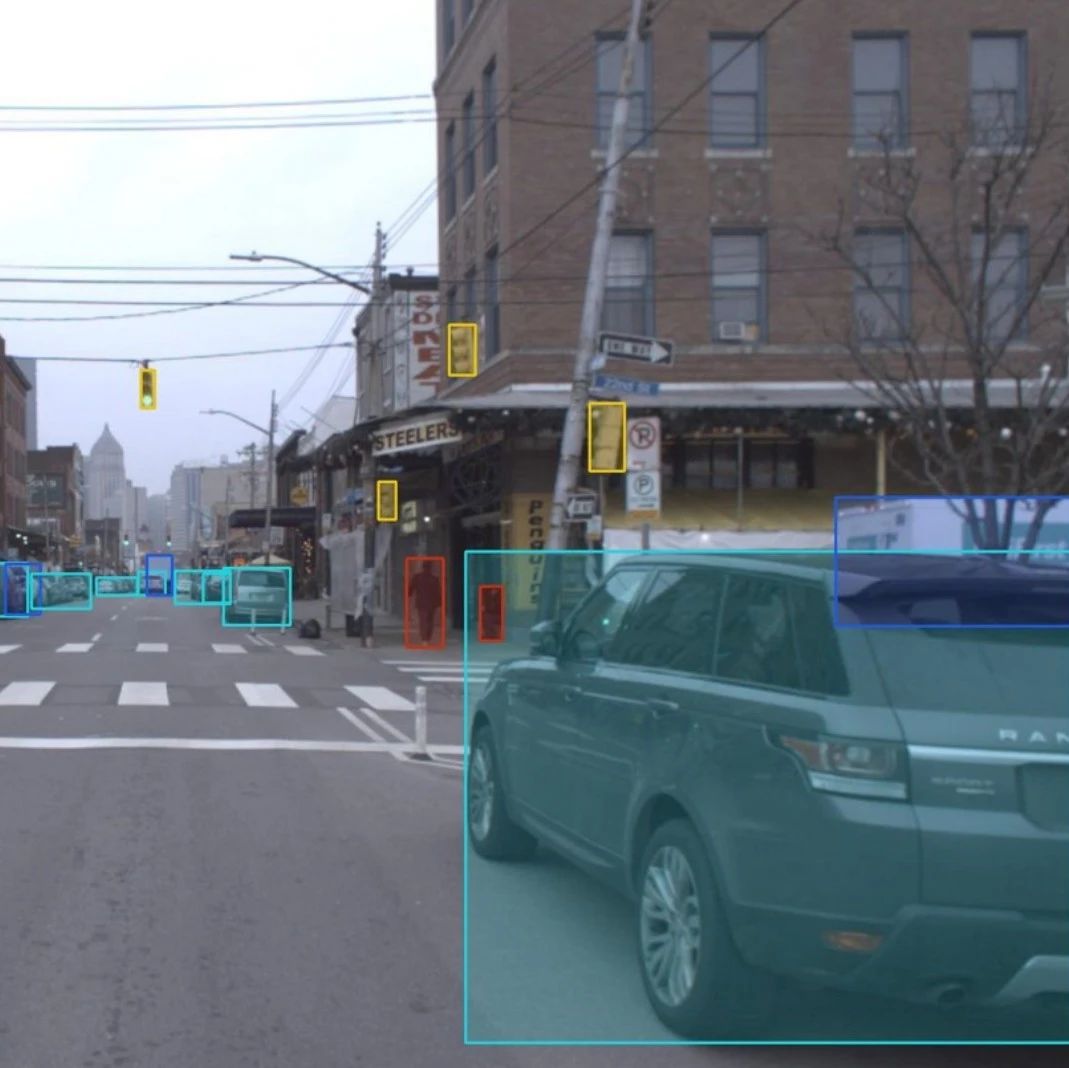
Core Viewpoint - The article emphasizes the establishment of a comprehensive community for autonomous driving enthusiasts, aiming to connect learners and professionals in the field, providing resources, networking opportunities, and industry insights. Group 1: Community and Resources - The "Autonomous Driving Heart Knowledge Planet" has over 4,000 members and aims to grow to nearly 10,000 in two years, serving as a hub for communication and technical sharing [1][12] - The community offers a variety of resources including video content, articles, learning paths, Q&A, and job exchange opportunities [1][2] - Nearly 40 technical routes have been organized within the community, catering to various interests such as industry applications and the latest benchmarks [2][5] Group 2: Learning and Development - The community provides structured learning paths for beginners, including full-stack courses suitable for those with no prior experience [7][9] - Members can access detailed information on end-to-end autonomous driving, multi-modal models, and various data sets for training and fine-tuning [3][26] - Regular discussions with industry leaders are held to explore trends, technological directions, and production challenges in autonomous driving [4][58] Group 3: Job Opportunities and Networking - The community has established internal referral mechanisms with multiple autonomous driving companies, facilitating job placements for members [9][11] - Members are encouraged to engage in discussions about career choices and research directions, receiving guidance from experienced professionals [55][60] - The platform aims to connect members with job openings and industry opportunities, enhancing their career prospects in the autonomous driving sector [1][62]
自动驾驶VLA技术交流群成立了(数据/模型/部署等方向)
自动驾驶之心· 2025-08-26 23:32
自动驾驶之心大模型VLA技术交流群成立了,欢迎大家加入一起交流VLA相关的内容:包括VLA数据集制 作、一段式VLA、分层VLA、基于大模型的端到端方案、基于VLM+DP的方案、量产落地、求职等内容。 感兴趣的同学欢迎添加小助理微信进群:AIDriver005, 备注:昵称+VLA加群。 ...
理想汽车MoE+Sparse Attention高效结构解析
自动驾驶之心· 2025-08-26 23:32
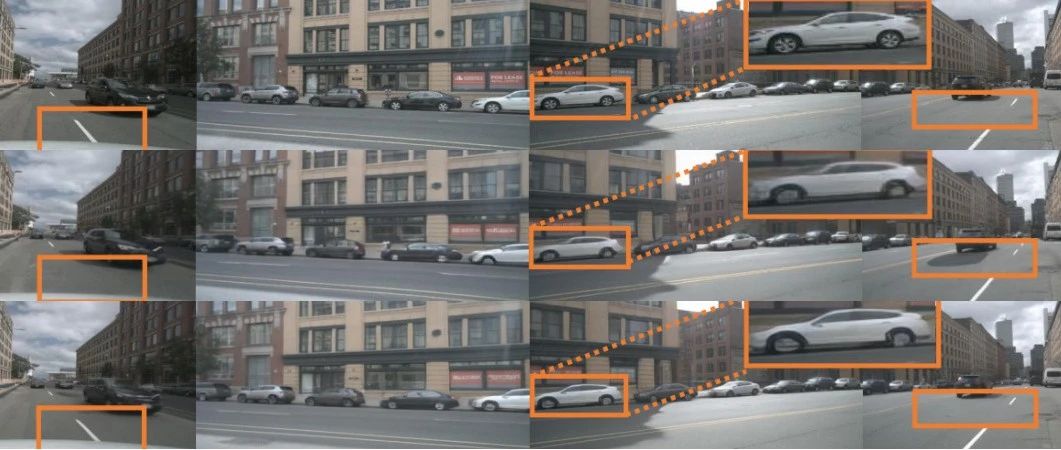
Core Viewpoint - The article discusses the advanced technologies used in Li Auto's autonomous driving solutions, specifically focusing on the "MoE + Sparse Attention" efficient structure that enhances the performance and efficiency of large models in 3D spatial understanding and reasoning [3][6]. Group 1: Introduction to Technologies - The article introduces a series of posts that delve deeper into the advanced technologies involved in Li Auto's VLM and VLA solutions, which were only briefly discussed in previous articles [3]. - The focus is on the "MoE + Sparse Attention" structure, which is crucial for improving the efficiency and performance of large models [3][6]. Group 2: Sparse Attention - Sparse Attention limits the complexity of the attention mechanism by focusing only on key input parts, rather than computing globally, which is particularly beneficial in 3D scenarios [6][10]. - The structure combines local attention and strided attention to create a sparse yet effective attention mechanism, ensuring that each token can quickly propagate information while maintaining local modeling capabilities [10][11]. Group 3: MoE (Mixture of Experts) - MoE architecture divides computations into multiple expert sub-networks, allowing only a subset of experts to be activated for each input, thus enhancing computational efficiency without significantly increasing inference costs [22][24]. - The article outlines the core components of MoE, including the Gate module for selecting experts, the Experts module as independent networks, and the Dispatcher for optimizing computation [24][25]. Group 4: Implementation and Communication - The article provides insights into the implementation of MoE using DeepSpeed, highlighting its flexibility and efficiency in handling large models [27][29]. - It discusses the communication mechanisms required for efficient data distribution across multiple GPUs, emphasizing the importance of the all-to-all communication strategy in distributed training [34][37].
一文尽览!2025年多篇VLA与RL融合的突破方向
自动驾驶之心· 2025-08-26 23:32
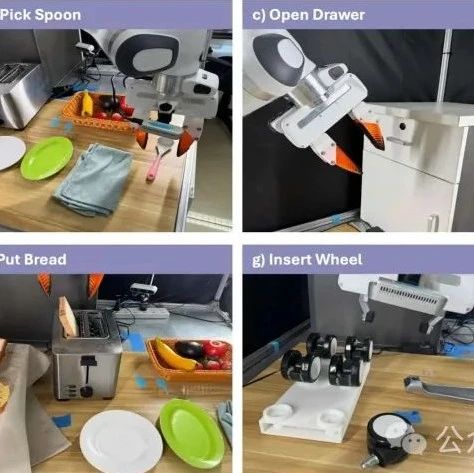
Core Viewpoint - The article discusses a significant revolution in the field of robotic embodiment intelligence, focusing on the integration of Vision-Language-Action (VLA) models with Reinforcement Learning (RL) to address core challenges in real-world robotic decision-making and task execution [2][58]. Summary by Sections GRAPE: Generalizing Robot Policy via Preference Alignment - The GRAPE framework enhances VLA model generalization and adaptability by aligning trajectories, decomposing tasks, and modeling preferences with flexible spatiotemporal constraints [5][6]. - GRAPE shows a 51.79% increase in success rates for seen tasks and a 58.20% increase for unseen tasks, while also reducing collision rates by 37.44% under safety objectives [8][9]. VLA-RL: Towards Masterful and General Robotic Manipulation - The VLA-RL framework addresses the failure of VLA models in out-of-distribution scenarios by utilizing trajectory-level RL expressions and fine-tuning reward models to handle sparse rewards [11][13]. - VLA-RL significantly improves performance on 40 challenging robotic tasks, demonstrating the potential for early reasoning expansion in robotic applications [15]. ReWiND: Language-Guided Rewards Teach Robot Policies without New Demonstrations - The ReWiND framework allows for task adaptation using pre-trained language-based reward functions, eliminating the need for new demonstrations for unseen tasks [18][19]. - ReWiND exhibits a 2.4 times improvement in reward generalization and a 5 times increase in new task adaptation efficiency compared to baseline methods [21]. ConRFT: A Reinforced Fine-tuning Method for VLA Models via Consistency Policy - ConRFT employs a two-phase reinforcement fine-tuning approach to stabilize VLA model performance during supervised learning [24][26]. - The method achieves a 96.3% success rate across eight practical tasks, improving performance by 144% compared to previous supervised learning methods [29]. RLDG: Robotic Generalist Policy Distillation via Reinforcement Learning - RLDG enhances generalist policies by generating high-quality training data through reinforcement learning, addressing performance and generalization issues [33][34]. - The method shows a 40% increase in success rates for precise operation tasks, demonstrating improved adaptability to new tasks [39]. TGRPO: Fine-tuning Vision-Language-Action Model via Trajectory-wise Group Relative Policy Optimization - TGRPO introduces online reinforcement learning to VLA models, enhancing robustness and efficiency in policy learning [40][42]. - The method outperforms various baseline approaches in ten operational tasks, validating its effectiveness in improving VLA model adaptability [44]. Improving Vision-Language-Action Model with Online Reinforcement Learning - The iRe-VLAd framework optimizes VLA models through iterative reinforcement and supervised learning, addressing stability and computational challenges [45][47]. - The framework demonstrates effective performance improvements in interactive scenarios, providing a viable path for optimizing large VLA models [51]. Interactive Post-Training for Vision-Language-Action Models - RIPT-VLA offers a scalable, reinforcement learning-based interactive post-training approach to enhance VLA models in low-data environments [52][53]. - The method achieves a 97% success rate with minimal supervision, showcasing its robustness and adaptability across various tasks [57]. Conclusion - The eight studies represent a significant advancement in robotic intelligence, focusing on overcoming industry challenges such as strategy generalization and dynamic environment adaptation, with practical applications in home tasks, industrial assembly, and robotic manipulation [58].
超越OmniRe!中科院DriveSplat:几何增强的神经高斯驾驶场景重建新SOTA
自动驾驶之心· 2025-08-26 23:32
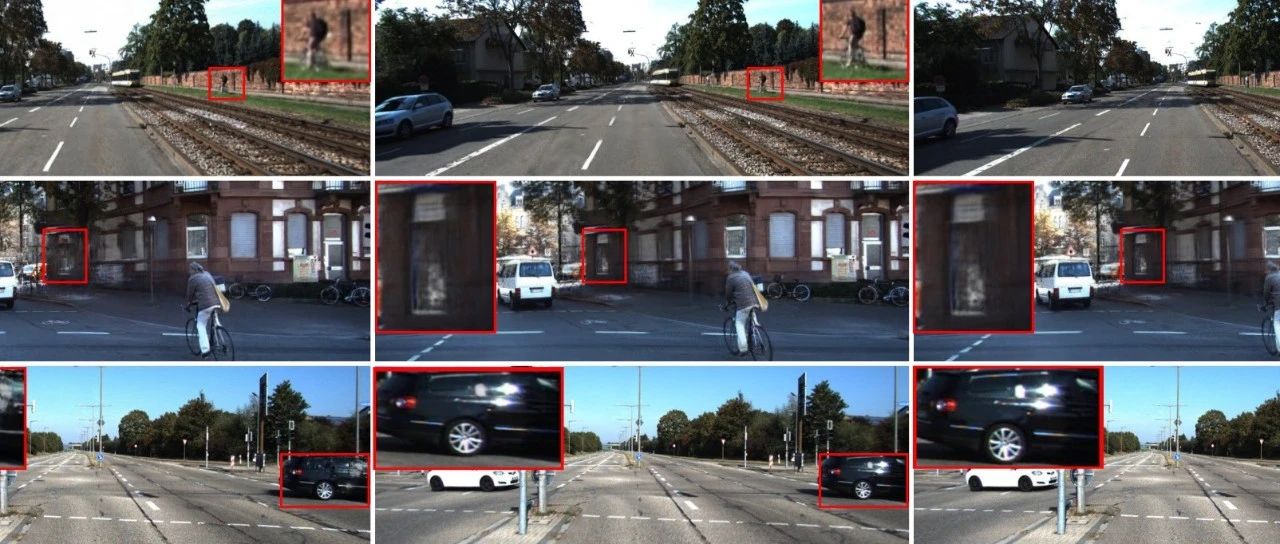
Core Viewpoint - The article discusses the introduction of DriveSplat, a new method for 3D reconstruction of driving scenes that significantly enhances the accuracy of both static and dynamic elements, achieving state-of-the-art performance in novel view synthesis tasks on two autonomous driving datasets [2][41]. Group 1: Background and Motivation - Realistic closed-loop simulation of driving scenes has become a major research focus in both academia and industry, addressing factors such as fast-moving vehicles and dynamic pedestrians [2][5]. - Traditional methods have struggled with motion blur and geometric accuracy in dynamic driving scenes, leading to the development of DriveSplat, which utilizes a decoupled approach for high-quality scene reconstruction [2][6][7]. Group 2: Methodology - DriveSplat employs a neural Gaussian representation with a decoupled strategy for dynamic and static elements, enhancing the representation of close-range details through a partitioned voxel initialization scheme [2][8][14]. - The framework incorporates deformable neural Gaussians to model non-rigid dynamic participants, with parameters adjusted over time using a learnable deformation network [2][8][21]. - The method leverages depth and normal priors from pre-trained models to improve geometric accuracy during the reconstruction process [2][23][41]. Group 3: Performance Evaluation - DriveSplat was evaluated on the Waymo and KITTI datasets, demonstrating superior performance in both scene reconstruction and novel view synthesis compared to existing methods [28][31]. - In the Waymo dataset, DriveSplat achieved a PSNR of 36.08, surpassing all baseline models, while also showing improvements in SSIM and LPIPS metrics [28][29]. - The method also outperformed competitors in the KITTI dataset, particularly in maintaining background detail and accurately rendering dynamic vehicles [31][32]. Group 4: Ablation Studies - Ablation studies indicated that the combination of SfM and LiDAR for point cloud initialization yielded the best rendering results, highlighting the importance of effective initialization methods [33][34]. - The background partition optimization module was shown to enhance performance, confirming its necessity in the reconstruction process [36]. - The introduction of a deformable module significantly improved the rendering quality of non-rigid participants, demonstrating the effectiveness of the dynamic optimization approach [39][40].
英伟达具身机器人“新大脑”即将揭晓
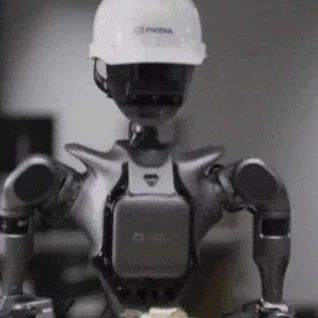
自动驾驶之心· 2025-08-25 23:34
Core Insights - Nvidia is preparing for a significant announcement related to robotics, scheduled for August 25, 2025, as indicated by a teaser post on their social media [1][3] - The company has recently introduced an open-source physical AI application and a robot vision reasoning model called Cosmos Reason, which enables robots to reason like humans and take actions in the real world [3][5] Group 1: Physical AI Development - Nvidia's CEO Jensen Huang has emphasized that the next wave of AI will be Physical AI, which involves using motion skills to understand and interact with the real world [5] - Physical AI models are typically embedded in autonomous machines such as robots and self-driving cars, allowing them to perceive, understand, and execute complex operations in real-world scenarios [5][6] Group 2: Market Potential and Industry Trends - At the 2025 World Robot Conference, Nvidia's VP highlighted that Physical AI could unlock a trillion-dollar market, with advancements in technology and industry standards driving growth in the robotics sector [6] - Major companies, both domestically and internationally, including Huawei, ByteDance, BYD, Xiaomi, and Tesla, are intensifying their focus on embodied intelligence, indicating a competitive landscape in the humanoid robot industry [6] Group 3: Humanoid Robot Applications - The humanoid robot industry is entering a phase of rapid development, with a clear trend towards commercialization and practical applications in industrial settings [6] - Analysts suggest that the emergence of companies like DeepSeek is facilitating the development of general-purpose humanoid robot models, leading to a flourishing ecosystem in the humanoid robotics sector [6]

2025年了,生成和理解多模态大模型发展到哪一步了?
自动驾驶之心· 2025-08-25 23:34
Core Viewpoint - The article discusses the development trends of unified multimodal large models, particularly focusing on image understanding and generation, up to mid-2025, highlighting significant advancements and challenges in this field [1][2]. Group 1: Overview of Multimodal Large Models - The term "unified multimodal large models" primarily refers to models that integrate both image understanding and generation, excluding other modalities like Omni-LLM due to fewer academic papers in that area [3]. - Several notable early works in this domain include Google's Unified-IO, Alibaba's OFA, and Fudan's AnyGPT, which have significantly influenced subsequent research [3]. Group 2: Key Research Directions - Research on "integrated generation and understanding" of multimodal large models focuses on two main aspects: the development of visual tokenizers and the construction of suitable model architectures [14]. - The TokenFlow model by ByteDance employs different visual encoders for understanding and generation tasks, utilizing high-level semantic features for understanding and low-level features for generation [16][17]. Group 3: Model Architectures and Techniques - The Semantic-Priority Codebook (SPC) approach was introduced to improve the quality of image reconstruction tasks, highlighting the importance of semantic features in the quantization process [19][23]. - The QLIP model from UT Austin and Nvidia optimizes the visual tokenizer by aligning visual features suitable for generation with semantic information, using a unified visual encoder for both tasks [28][30]. Group 4: Training Strategies - The training strategy for QLIP involves two phases: the first focuses on learning semantically rich feature representations, while the second emphasizes improving image reconstruction quality [30][32]. - The UniTok model employs multi-codebook quantization to enhance codebook utilization, integrating visual features for both understanding and generation tasks [35][36]. Group 5: Recent Innovations - The DualToken model utilizes a single visual encoder to extract features for both understanding and generation, employing different visual codebooks for semantic and pixel features [39][41]. - The TokLIP model from Tencent also adopts a single-encoder approach, focusing on the alignment of visual features with text features through various loss functions [42][44].