自动驾驶之心

Search documents
自动驾驶之心求职交流群来啦!!!
自动驾驶之心· 2025-07-24 04:07
自动驾驶之心求职与行业交流群成立了! 微信扫码添加小助理邀请进群,备注自驾+昵称+求职; 应广大粉丝的要求,我们开始正式运营求职与行业相关的社群了。社群内部主要讨论相关产业、公司、产品研 发、求职与跳槽相关内容。如果您想结交更多同行业的朋友,第一时间了解产业。欢迎加入我们! ...

端到端自动驾驶万字长文总结
自动驾驶之心· 2025-07-23 09:56
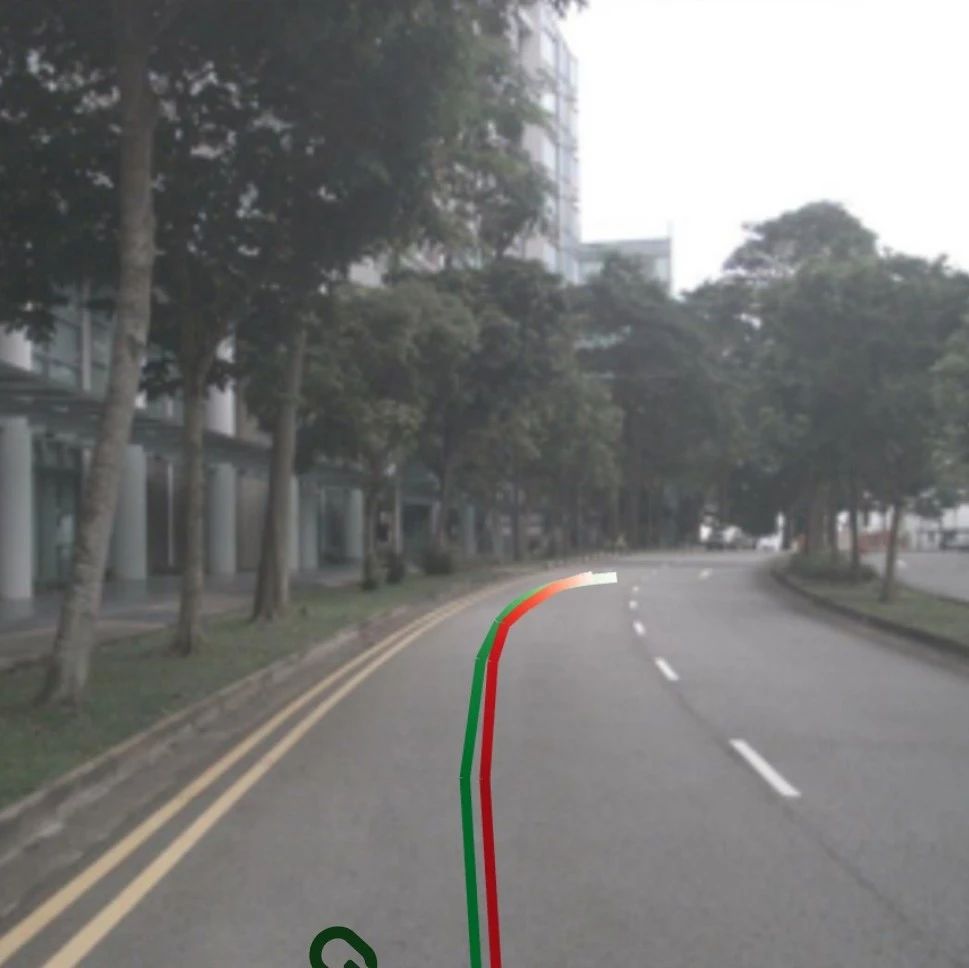
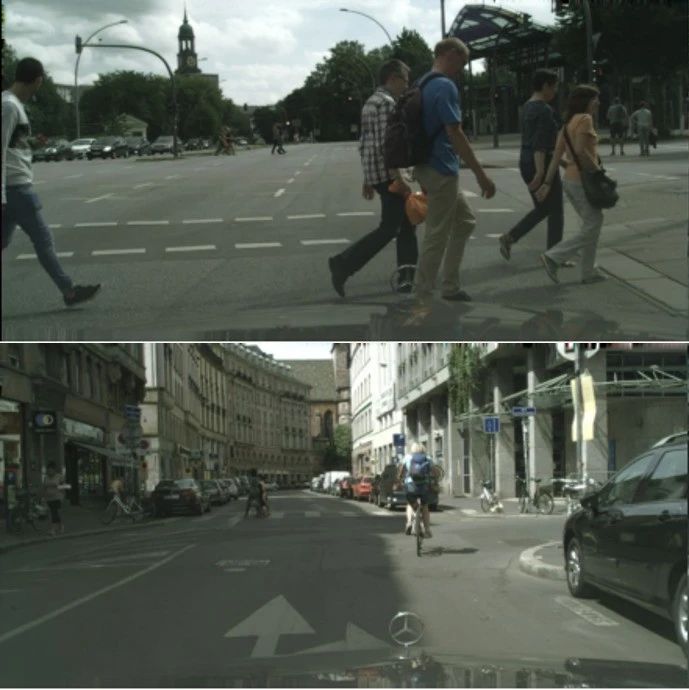
Core Viewpoint - The article discusses the current development status of end-to-end autonomous driving algorithms, comparing them with traditional algorithms and highlighting their advantages and limitations [1][3][53]. Summary by Sections Traditional vs. End-to-End Algorithms - Traditional autonomous driving algorithms follow a pipeline of perception, prediction, and planning, where each module has distinct inputs and outputs [3]. - End-to-end algorithms take raw sensor data as input and directly output path points, simplifying the process and reducing error accumulation [3][5]. - Traditional algorithms are easier to debug and have some level of interpretability, but they suffer from cumulative error issues due to the inability to ensure complete accuracy in perception and prediction modules [3][5]. Limitations of End-to-End Algorithms - End-to-end algorithms face challenges such as limited ability to handle corner cases, as they rely heavily on data-driven methods [7][8]. - The use of imitation learning in these algorithms can lead to difficulties in learning optimal ground truth and handling exceptional cases [53]. - Current end-to-end paradigms include imitation learning (behavior cloning and inverse reinforcement learning) and reinforcement learning, with evaluation methods categorized into open-loop and closed-loop [8]. Current Implementations - The ST-P3 algorithm is highlighted as an early work focusing on end-to-end autonomous driving, utilizing a framework that includes perception, prediction, and planning modules [10][11]. - Innovations in the ST-P3 algorithm include a perception module that uses a self-centered cumulative alignment technique and a prediction module that employs a dual-path prediction mechanism [11][13]. - The planning phase of ST-P3 optimizes predicted trajectories by incorporating traffic light information [14][15]. Advanced Techniques - The UniAD system employs a full Transformer framework for end-to-end autonomous driving, integrating multiple tasks to enhance performance [23][25]. - The TrackFormer framework focuses on the collaborative updating of track queries and detect queries to improve prediction accuracy [26]. - The VAD (Vectorized Autonomous Driving) method introduces vectorized representations for better structural information and faster computation in trajectory planning [32][33]. Future Directions - The article suggests that end-to-end algorithms still primarily rely on imitation learning frameworks, which have inherent limitations that need further exploration [53]. - The introduction of more constraints and multi-modal planning methods aims to address trajectory prediction instability and improve model performance [49][52].
全球第一企业的能力盲区?
自动驾驶之心· 2025-07-23 09:56
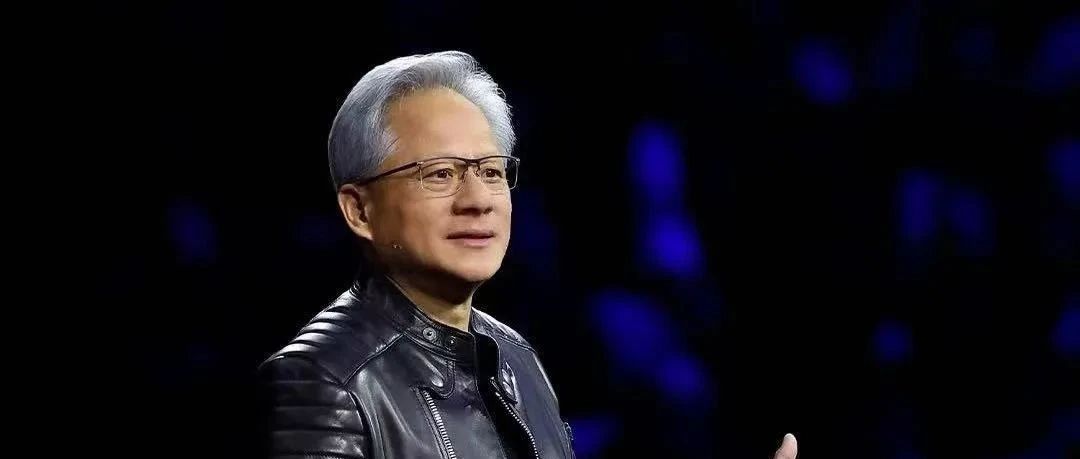
Core Viewpoint - The article discusses the competitive landscape of the autonomous driving industry, focusing on NVIDIA's challenges in maintaining its market position against emerging Chinese companies and the shift towards self-developed chips by major automakers [5][15][50]. Group 1: NVIDIA's Market Position - NVIDIA's market capitalization has reached $4 trillion, making it the world's most valuable company, but it faces increasing competition from Chinese automakers who are trying to reduce reliance on NVIDIA's technology [5][15]. - General Motors' executives have expressed concerns about NVIDIA's autonomous driving solutions, indicating potential issues in their collaboration [7][8]. - Other automakers, such as Mercedes-Benz, have also reported that NVIDIA's autonomous driving performance is lagging behind that of Chinese startups like Momenta [10][11]. Group 2: Challenges in Chip Delivery - NVIDIA's latest Thor chip has faced multiple delays, impacting key clients like Li Auto, which has resulted in significant sales losses estimated at around 6 billion yuan due to postponed vehicle launches [18][19]. - The delays in chip delivery have prompted companies like Xiaopeng to pivot towards self-developed chips, as they can no longer rely on NVIDIA's timelines [20][24]. - The challenges faced by NVIDIA in delivering the Thor chip are attributed to design flaws and the complexity of automotive-grade chip production, which differs from consumer electronics [34][42][46]. Group 3: Shift Towards Self-Developed Chips - Major Chinese automakers are increasingly investing in self-developed chips to reduce costs and enhance compatibility with their AI technologies, with companies like NIO and Xiaopeng already making significant progress [25][35][37]. - The self-development of chips is seen as a strategic necessity for automakers to maintain competitiveness in the rapidly evolving autonomous driving market [38][39]. - The article highlights that the development of self-developed chips is a long-term commitment, with significant investments and risks involved, but it is becoming essential due to supply chain uncertainties [26][27][30]. Group 4: Competitive Landscape - The competition in the autonomous driving software space is intensifying, with Chinese companies like Momenta and Qingtou Zhihang rapidly advancing their technologies, often outpacing NVIDIA's offerings [51][53]. - NVIDIA's corporate culture and operational structure may hinder its ability to adapt quickly to the demands of the automotive industry, contrasting with the agile approaches of Chinese startups [52][54]. - The article suggests that the future of autonomous driving will likely see a shift towards more localized solutions, with Chinese companies capturing a larger share of the market as they innovate faster and align more closely with automotive needs [55].

复旦最新BezierGS:贝塞尔曲线实现驾驶场景重建SOTA(ICCV'25)
自动驾驶之心· 2025-07-23 09:56
Core Insights - The article discusses the latest work from Fudan University on a method called BezierGS, which utilizes Bezier curves for dynamic urban scene reconstruction, crucial for developing closed-loop simulations in autonomous driving [5][6]. Group 1: Methodology and Contributions - BezierGS addresses the limitations of existing methods that rely on precise pose annotations for dynamic targets, which restricts large-scale scene reconstruction [5][8]. - The method employs learnable Bezier curves to represent the motion trajectories of dynamic targets, effectively utilizing temporal information and calibrating pose errors [5][9]. - Extensive experiments on the Waymo Open Dataset and nuPlan benchmark demonstrate that BezierGS outperforms state-of-the-art alternatives in both dynamic and static scene reconstruction [5][15]. Group 2: Advantages and Future Directions - The approach aims to build high-quality street scenes for training autonomous models, reducing data collection costs and reliance on bounding box accuracy [7][8]. - Future explorations will focus on creating a true autonomous driving world model, with current work limited to trajectory interpolation [7]. - The method enhances the realism of closed-loop evaluations by providing high-quality scene reconstructions, enabling safe and cost-effective simulations of critical extreme scenarios [8][9]. Group 3: Experimental Results - BezierGS achieved superior performance metrics compared to existing methods, with significant improvements in PSNR, SSIM, and Dyn-PSNR across both datasets [37][38]. - In the Waymo dataset, BezierGS showed a PSNR increase of 1.87 dB and a Dyn-PSNR improvement of 2.66 dB, indicating its effectiveness in rendering dynamic content [38][40]. - The nuPlan benchmark results also highlighted BezierGS's ability to correct pose errors automatically, leading to enhanced reconstruction quality [42][43].
一边是毕业等于失业,一边是企业招不到人,太难了。。。
自动驾驶之心· 2025-07-23 09:56
Core Insights - The automatic driving industry is experiencing a paradox where job openings are abundant, yet companies struggle to find suitable talent. This is attributed to a shift in market expectations and a focus on sustainable business models rather than rapid expansion [2][3]. Industry Overview - Companies in the automatic driving sector are now more cautious with their spending, prioritizing survival and the establishment of viable business models over aggressive hiring and expansion strategies. This shift is expected to lead to significant industry adjustments within the next 1-3 years [2][3]. Talent Demand - There is an unprecedented demand for "top talent" and "highly compatible talent" in the automatic driving field. Companies are not necessarily unwilling to hire, but they are looking for candidates with exceptional skills and relevant experience [4][3]. Community and Resources - The "Automatic Driving Heart Knowledge Planet" is the largest community focused on automatic driving technology in China, established to provide resources and networking opportunities for professionals in the field. It has nearly 4000 members and over 100 industry experts contributing to discussions and knowledge sharing [9][10]. Learning and Development - The community offers comprehensive learning pathways covering various subfields of automatic driving technology, including perception, mapping, and AI model deployment. This initiative aims to support both newcomers and experienced professionals in enhancing their skills [9][12][13]. Job Placement Support - The community has established a direct referral mechanism with numerous automatic driving companies, facilitating job placements for members. This service aims to streamline the hiring process and connect qualified candidates with potential employers [10][9].
分层VLA模型与完全端到端VLA哪个方向好发论文?
自动驾驶之心· 2025-07-23 07:32
Core Viewpoint - The article emphasizes the shift in academic research from traditional perception and planning tasks in autonomous driving to the exploration of Vision-Language-Action (VLA) models, suggesting that there are still many opportunities for research in this area [1][2]. Group 1: VLA Research Topics - The VLA model represents a new paradigm in autonomous driving, integrating vision, language, and action to enhance decision-making capabilities [2][3]. - The evolution of autonomous driving technology can be categorized into three phases: traditional modular architecture, pure visual end-to-end systems, and the emergence of VLA models [2][3]. - VLA models aim to improve interpretability and reliability by allowing the model to explain its decisions in natural language, thus increasing transparency and trust [3]. Group 2: Course Objectives and Structure - The course aims to help participants systematically master key theoretical knowledge in VLA and develop practical skills in model design and implementation [6][7]. - Participants will engage in a 12-week online group research followed by 2 weeks of paper guidance, culminating in a 10-week maintenance period for their research papers [6]. - The course will provide insights into classic and cutting-edge papers, coding implementations, and writing methodologies, ultimately assisting participants in producing a research paper draft [6][12]. Group 3: Enrollment and Requirements - The course is limited to 6-8 participants per session, targeting individuals with a foundational understanding of deep learning and basic programming skills [5][9]. - Participants are expected to have access to high-performance computing resources, ideally with multiple high-end GPUs, to facilitate their research [13][14]. - A preliminary assessment will be conducted to tailor the course content to the individual needs of participants, ensuring a focused learning experience [15]. Group 4: Course Highlights and Outcomes - The course features a "2+1" teaching model, providing comprehensive support from experienced instructors and research mentors [15]. - Participants will gain a thorough understanding of the research process, writing techniques, and submission strategies, enhancing their academic and professional profiles [15][20]. - The expected outcomes include a research paper draft, project completion certificates, and potential recommendation letters based on performance [15].
果然!秋招会惩罚每一个本末倒置的研究生!
自动驾驶之心· 2025-07-23 02:12
Core Viewpoint - The article emphasizes the importance of proactive engagement in research and the utilization of available resources to enhance academic and career prospects for students, particularly in the context of job hunting and academic publishing [1]. Group 1: Research Guidance and Support - The company offers a comprehensive research guidance program aimed at helping students produce high-quality academic papers, particularly in AI-related fields [3][11]. - A successful case is highlighted where a second-year graduate student completed an SCI paper in three months with the company's assistance [2]. - The program includes personalized mentoring from over 300 qualified instructors, with a high acceptance rate of 96% for students who have received guidance [3]. Group 2: Course Structure and Benefits - The structured course spans 12 weeks, covering topic selection, literature review, experimental design, drafting, and submission processes [5]. - Students can expect to gain practical skills, including coding and experimental design, which are essential for producing their own research papers [9][10]. - The program also offers additional benefits such as recommendations to prestigious institutions and companies for outstanding students [14]. Group 3: Target Audience and Accessibility - The services are tailored for graduate students, particularly those with limited guidance from their advisors, and those seeking to enhance their research capabilities [6][10]. - The company provides a matching system to ensure students are paired with suitable mentors based on their research interests and goals [13]. - The program is accessible to students with no prior research experience, with foundational courses available to support their learning [13].
一起做些有意思的事情!自动驾驶之心还缺几位合伙人
自动驾驶之心· 2025-07-23 02:12
Group 1 - The article discusses the recruitment of business partners for the "Autonomous Driving Heart" initiative, aiming to onboard 10 outstanding partners (individuals and enterprises) for various autonomous driving projects [2] - The main focus areas for potential partners include large models, multimodal models, diffusion models, and other advanced AI technologies related to autonomous driving [2] - The article outlines the requirements for applicants, emphasizing a master's degree or higher from universities ranked within QS200, with a preference for candidates with significant contributions to top conferences [2] Group 2 - The article highlights the benefits for partners, including resource sharing for job placements, PhD recommendations, and study abroad opportunities [3] - It mentions attractive cash incentives and opportunities for collaboration on entrepreneurial projects [3] - Contact information is provided for interested parties to inquire about collaboration in autonomous driving projects [3]

同济大学最新!GEMINUS:端到端MoE实现闭环新SOTA,性能大涨近8%~
自动驾驶之心· 2025-07-22 12:46
Core Viewpoint - The article presents GEMINUS, a novel end-to-end autonomous driving framework that integrates a dual-aware mixture of experts (MoE) architecture, achieving state-of-the-art performance in driving score and success rate using monocular vision input [1][2][49]. Summary by Sections Introduction - GEMINUS addresses the limitations of traditional single-modal planning methods in autonomous driving by introducing a framework that combines a global expert and a scene-adaptive experts group, along with a dual-aware router to enhance adaptability and robustness in diverse driving scenarios [1][6]. Background - The article discusses the evolution of end-to-end autonomous driving systems, highlighting the shift from modular approaches to unified models that directly map sensor inputs to control signals, thus reducing engineering workload and leveraging rich sensor information [4][8]. MoE Architecture - The MoE architecture has shown promise in handling complex data distributions, providing fine-grained scene adaptability and specialized behavior generation, which helps mitigate the mode averaging problem prevalent in existing models [5][11]. GEMINUS Framework - GEMINUS consists of a global expert trained on the overall dataset for robust performance and scene-adaptive experts trained on specific scene subsets for adaptability. The dual-aware router dynamically activates the appropriate expert based on scene features and routing uncertainty [6][18]. Experimental Results - GEMINUS outperformed existing methods in the Bench2Drive closed-loop benchmark, achieving a driving score improvement of 7.67% and a success rate increase of 22.06% compared to the original single-expert baseline model [2][36][49]. Ablation Studies - The ablation studies revealed that the scene-aware routing mechanism significantly enhances model performance, while the integration of uncertainty-aware routing and global experts further improves robustness and stability in ambiguous scenarios [40][41]. Conclusion - GEMINUS demonstrates a significant advancement in end-to-end autonomous driving, achieving state-of-the-art performance with monocular vision input and highlighting the importance of tailored MoE frameworks to address the complexities of real-world driving scenarios [49][50].
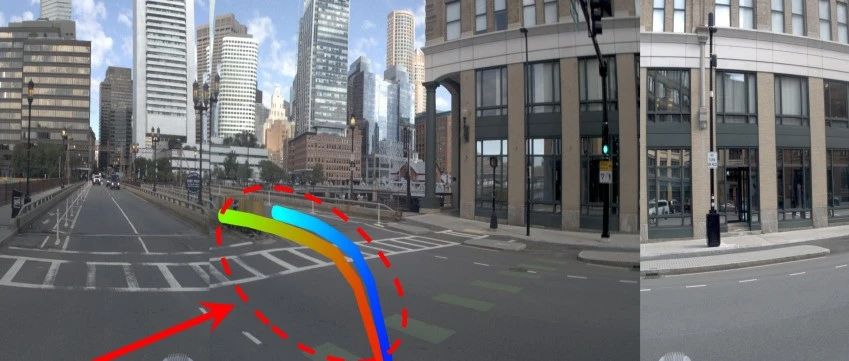
小米提出DriveMRP:合成难例数据+视觉提示事故识别率飙至88%!
自动驾驶之心· 2025-07-22 12:46
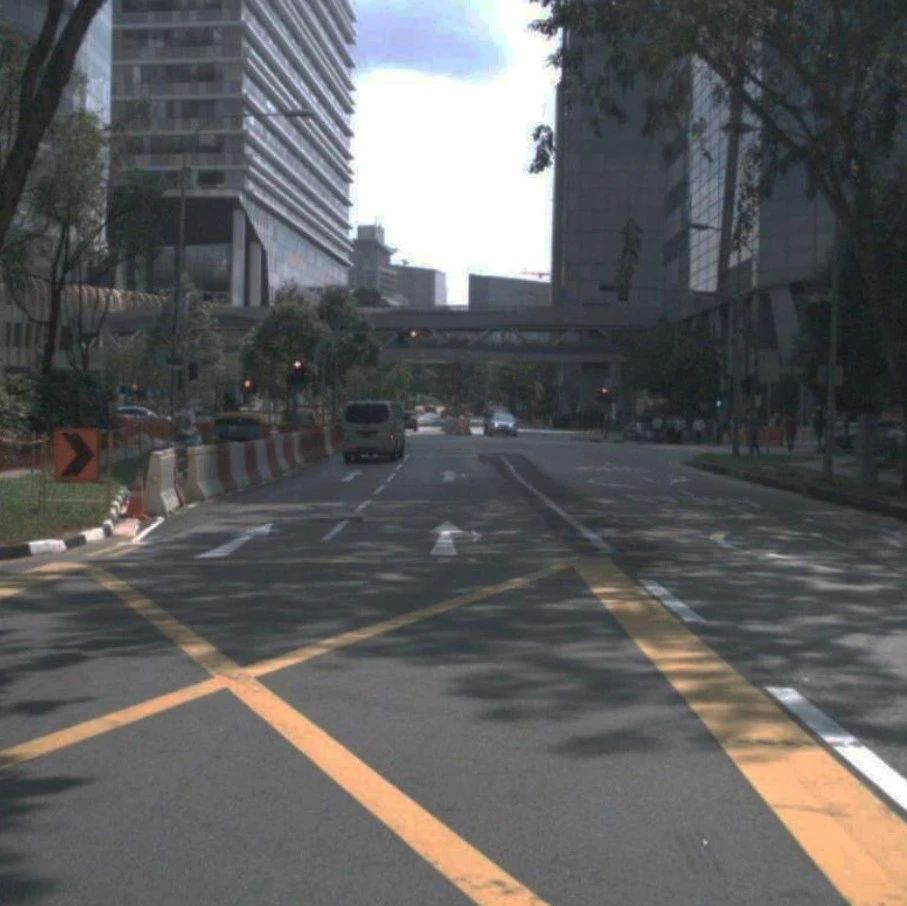
Core Viewpoint - The article discusses advancements in autonomous driving technology, specifically focusing on the DriveMRP framework, which synthesizes high-risk motion data to enhance the motion risk prediction capabilities of vision-language models (VLMs) [1][4]. Background and Core Objectives - Autonomous driving technology has rapidly developed, but accurately predicting the safety of ego vehicle movements in rare high-risk scenarios remains a significant challenge. Existing trajectory evaluation methods often provide a single reward score, lacking risk type explanation and decision-making support [1]. Limitations of Existing Methods - Rule-based methods rely heavily on external world models and are sensitive to perception errors, making them difficult to generalize to complex real-world scenarios, such as extreme weather conditions [2]. Core Innovative Solutions - **DriveMRP-10K**: A synthetic high-risk motion dataset containing 10,000 high-risk scenarios, generated through a "human-in-the-loop" mechanism, enhancing the VLM's motion risk prediction capabilities [4]. - **DriveMRP-Agent**: A VLM framework that improves risk reasoning by using inputs like BEV layout and scene images [5]. - **DriveMRP-Metric**: Evaluation metrics that assess model performance through high-risk trajectory synthesis and automatic labeling of motion attributes [5]. Performance Improvement - On the DriveMRP-10K dataset, the DriveMRP-Agent achieved a scene understanding metric (ROUGE-1-F1) of 69.08 and a motion risk prediction accuracy of 88.03%, significantly surpassing other VLMs. The accident identification accuracy improved from 27.13% to 88.03% [7][8]. Dataset Effectiveness - The DriveMRP-10K dataset significantly enhances the performance of various general VLMs, demonstrating its "plug-and-play" enhancement capability [10]. Key Component Ablation Experiments - The inclusion of global context in the model led to significant improvements in scene understanding and risk prediction metrics, highlighting the importance of global information for reasoning [12].