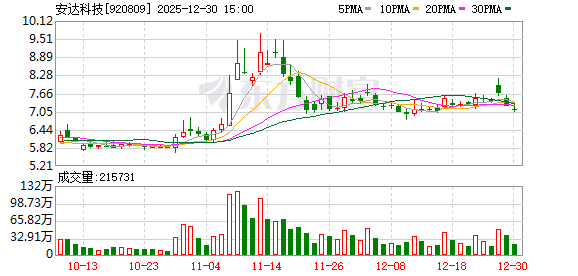
GUIZHOU ANDA ENERGY TECHNOLOGY CO.(830809)

Search documents
比亚迪新电池背后 这一锂电材料供应紧俏
Shang Hai Zheng Quan Bao· 2026-03-07 01:12
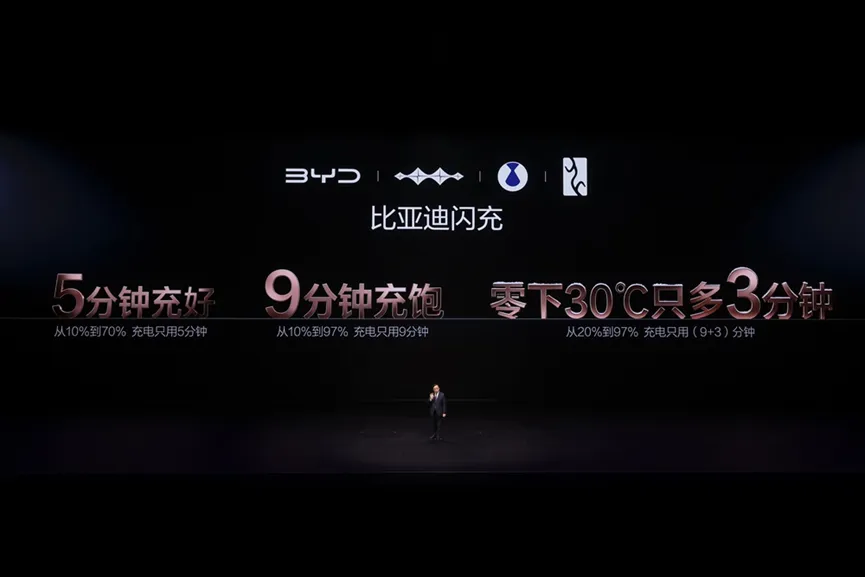
Group 1 - BYD's chairman Wang Chuanfu introduced the second-generation blade battery, which can charge from 10% to 70% in 5 minutes and from 10% to 97% in 9 minutes, showcasing breakthroughs in low-temperature charging performance [1] - The second-generation blade battery utilizes fourth-generation lithium iron phosphate (LFP) materials, which significantly enhance energy density, rate performance, and low-temperature performance [3] - The production capacity of fourth-generation LFP materials is currently below 2 million tons, leading to a supply shortage expected to persist until 2026, creating a first-mover advantage for companies with capacity [3][4] Group 2 - By 2025, only about 4-6 companies are expected to achieve stable production and bulk shipment of fourth-generation LFP materials, with an estimated market share of 10.3% [4] - In 2026, the production of fourth-generation LFP materials is projected to double, with a market share increase to 16%-20%, while actual demand is expected to reach 1.5 million tons against a supply of only 1-1.2 million tons, indicating a tight supply-demand situation [4] - Hunan Youneng has achieved bulk supply of fourth-generation LFP products, forecasting a net profit growth of 93.75% to 135.87% in 2025 due to the rapid development of the new energy vehicle and energy storage markets [5] Group 3 - Longpan Technology has successfully developed both single and double sintered fourth-generation products, with rapid demand growth since 2025 leading to a supply shortage [6] - Andar Technology is upgrading its existing 40,000 tons/year LFP project to meet the demand for higher density and better performance products, expected to complete by Q1 2026 [6] - Fulian Precision is expanding its market share in high-density LFP materials, focusing on the super-fast charging market, and has announced a capital increase with CATL for its subsidiary [6]




安达科技:2025年年度业绩快报公告
Zheng Quan Ri Bao· 2026-02-27 13:37
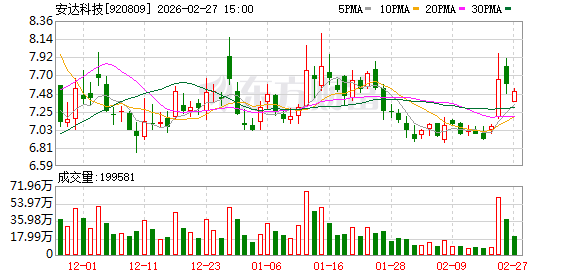
Group 1 - The core point of the article is that Andar Technology announced a projected revenue of 3,493,562,003.29 yuan for 2025, representing a year-on-year growth of 131.18% [2]
安达科技:关于董事会换届延期的公告
Zheng Quan Ri Bao· 2026-01-29 13:54
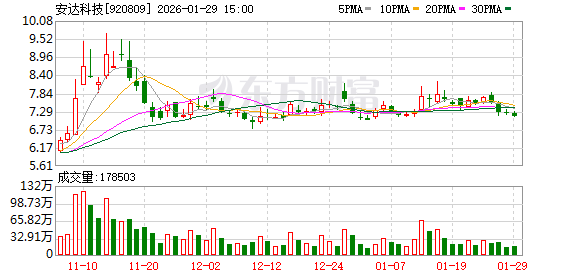
Group 1 - The company announced that its fourth board of directors will expire on January 29, 2026 [2] - Due to the ongoing preparations for the board election, the election process will be appropriately postponed to ensure continuity and stability in the board's operations [2] - The terms of the current board's specialized committees and senior management will also be extended accordingly [2]
安达科技:2026年第一次临时股东会决议公告
Zheng Quan Ri Bao· 2026-01-14 13:17
Core Viewpoint - The company announced that its wholly-owned subsidiary has applied for a bank loan, with the company providing a guarantee for this loan [2] Group 1 - The company held its first extraordinary general meeting of shareholders in 2026 [2] - The proposal regarding the bank loan application and the company's guarantee was approved during the meeting [2]
两家磷酸铁锂企业宣布提价 一家提价1500—2000元/吨 产线检修或加剧涨势
Xi Niu Cai Jing· 2026-01-13 08:45
Group 1 - The core point of the article is that lithium iron phosphate (LFP) companies have raised prices for downstream customers due to tight supply, driven by strong demand in energy storage and better-than-expected sales forecasts for electric vehicles [2] - One company has increased prices for major customers by 1500 to 2000 yuan per ton, indicating a significant price adjustment in the market [2] - Despite January typically being a slow season for the industry, recent positive developments in the lithium battery sector, including rising raw material prices and news of production halts, have stimulated market sentiment [2] Group 2 - Multiple LFP production companies, including Hunan Youneng, Deyang Nano, Wanrun New Energy, and Anda Technology, have announced production halts for maintenance, which is expected to have a short-term impact on supply and is interpreted as a contraction signal by the market [4] - Wanrun New Energy has stated that its LFP production lines have been operating beyond capacity since Q4 2025, and it will conduct maintenance starting December 28, 2025, which is expected to reduce LFP output by 5,000 to 20,000 tons [4] - Hunan Youneng's production capacity utilization exceeded 100% in 2025, and it will also conduct maintenance on some production lines starting January 1, 2026, with an expected reduction in output of 15,000 to 35,000 tons of phosphate cathode materials [4] - The first price increase for LFP has been accepted by most customers, with processing fees rising by 1,000 yuan per ton, although some major customers are still in negotiations [4]


碳酸锂涨停,铁锂提价,六氟停产
高工锂电· 2026-01-06 10:47
Group 1 - The core viewpoint of the article highlights the recent price increase of lithium iron phosphate (LFP) and the underlying uncertainties in the supply chain, particularly regarding the transmission of lithium carbonate prices to battery manufacturers [2][3] - Two LFP companies confirmed price hikes for downstream customers, with one company indicating an increase of approximately 1500 to 2000 yuan/ton for major clients, while most other customers accepted a processing fee increase of 1000 yuan/ton [2] - The article discusses the significant fluctuations in lithium carbonate futures, with the main contract closing at 137,940 yuan/ton on January 6, indicating a need for better alignment between upstream procurement and downstream pricing mechanisms [3][4] Group 2 - The term "point pricing" has become prevalent in negotiations, where a pricing window is established for both parties to agree on a specific point in time to set the price based on futures contracts [4][5] - Material companies are pushing for a higher proportion of customer-supplied lithium carbonate and shifting the pricing anchor from spot prices to futures-linked pricing to mitigate risks associated with price fluctuations [5] - Recent announcements from major companies indicate a simultaneous trend of production cuts and expansions, with several LFP manufacturers announcing reductions in production while also planning significant capacity expansions [9][10] Group 3 - Tianqi Lithium announced a reduction in its planned production of electrolyte and battery recycling projects due to changes in market conditions, adjusting its total investment to not exceed 600 million yuan [6][7] - The article notes that while short-term supply constraints and maintenance are occurring, there are also long-term capacity expansion plans in the pipeline, indicating a complex market dynamic [8] - The simultaneous occurrence of production cuts and expansion plans raises questions about whether price increases can translate into profit recovery, emphasizing the importance of navigating price risks and ensuring that processing fees are elevated before new capacities come online [11][12]

反内卷升级!磷酸铁锂5大上市公司减产检修
起点锂电· 2025-12-31 07:30
Core Viewpoint - The lithium iron phosphate (LFP) industry is experiencing a strong willingness among upstream companies to maintain prices, with a continuous increase in production cuts and maintenance plans among major players [3][4][5]. Group 1: Production Cuts and Maintenance Plans - As of now, half of the top 10 companies in the LFP industry have announced production cuts and maintenance plans, with maintenance expected to last about one month [3]. - On December 25, Hunan Youneng and Wanrun New Energy announced production cuts of approximately 1.5-3.5 million tons and 0.5-2 million tons, respectively [3]. - On December 26, Defang Nano and Anda Technology also released annual maintenance plans, with Anda Technology estimating a reduction of 0.3-0.5 million tons [4]. - Longpan Technology announced that its subsidiary would reduce production by about 5,000 tons starting January 1, 2026, due to overloading [4]. Group 2: Financial Performance and Market Dynamics - Despite the increase in shipments of LFP batteries, the financial performance of LFP material manufacturers has been disappointing, with only Hunan Youneng achieving profitability in the first three quarters of 2025, while the other four companies reported losses [7]. - The market believes that the disconnect between performance and market conditions is due to several factors, including an oversupply of LFP capacity initiated by a production expansion wave starting in 2020, leading to price stagnation [7]. - Increased competition has resulted in some companies lowering prices to capture market share, shifting bargaining power to battery manufacturers [7]. Group 3: Raw Material Price Dynamics - The price of lithium carbonate, a key raw material for LFP, has seen a significant increase, rising over 110% from its lowest point to exceed 130,000 yuan per ton in December [8]. - In contrast, the price of LFP has only increased by over 30% from its mid-year low, leading to increased cost pressures for LFP manufacturers [8]. - The price of sulfur, another important raw material, has also risen sharply, further exacerbating cost pressures on LFP producers [8]. Group 4: Industry Trends and Future Outlook - The industry is experiencing a strong sentiment against internal competition, with price increases becoming imminent [9]. - In the second half of the year, LFP companies have initiated actions to counter internal competition, including discussions on profitability solutions and raising processing fees from approximately 8,000 yuan per ton to 9,500-10,000 yuan per ton [9]. - Despite the current losses, the demand for LFP is expected to grow, and with price increases, the financial performance of LFP companies is anticipated to improve and potentially turn positive in the coming year [9].

传递“挺价”信号 多家磷酸铁锂龙头相继减产检修
Zheng Quan Ri Bao Zhi Sheng· 2025-12-30 16:13
Core Viewpoint - Several lithium iron phosphate (LFP) manufacturers, including Hunan YN Energy Battery Materials Co., Ltd. and Guizhou Anda Technology Energy Co., Ltd., announced production cuts for maintenance to ensure stable operations amid rising raw material costs and squeezed profit margins [1][2][3]. Group 1: Production Cuts and Maintenance - Multiple LFP manufacturers plan to reduce production and conduct maintenance from January 1, 2026, for one month, stating that this will not significantly impact their 2026 financial performance [1]. - Anda Technology expects a reduction of 3,000 to 5,000 tons in LFP output due to maintenance, attributing this decision partly to rising upstream raw material prices [2]. Group 2: Market Dynamics and Pricing Pressure - The LFP industry has seen a strong recovery since Q3 2025, driven by increased demand for energy storage, with many leading companies operating at full capacity and some even exceeding it [2]. - Despite the recovery, LFP manufacturers face significant pricing pressure due to high raw material costs and limited ability to pass these costs onto downstream customers, leading to squeezed profit margins [2][3]. Group 3: Strategic Responses and Industry Challenges - The collective decision to reduce production is seen as a strategy to signal price increases to reluctant downstream battery customers, aiming to reverse ongoing losses [3]. - The industry is characterized by weak bargaining power for LFP manufacturers, who are caught between fluctuating raw material prices and long-term contracts with major battery producers [3][4]. Group 4: Innovation and Industry Development - The China Chemical and Physical Power Industry Association has called for a shift in focus from price competition to enhancing technology, product performance, and manufacturing processes [5]. - Companies are encouraged to invest in research and development to improve key performance indicators such as energy density and safety, aiming to build a high-quality industry ecosystem driven by innovation [5].
安达科技:2025年第三次临时股东会决议公告
Zheng Quan Ri Bao· 2025-12-30 14:14
Core Viewpoint - The company, Andar Technology, announced the approval of two significant proposals during its third extraordinary shareholders' meeting for 2025, including the change of its accounting firm and a guarantee provided by its wholly-owned subsidiary [2] Group 1 - The company held its third extraordinary shareholders' meeting for 2025 on December 30 [2] - The shareholders approved a proposal to change the accounting firm [2] - A proposal for the wholly-owned subsidiary to provide guarantees for the company was also approved [2]
安达科技:第四届董事会第二十二次会议决议公告
Zheng Quan Ri Bao· 2025-12-30 13:14
Group 1 - The company announced that its fourth board meeting approved a proposal for its wholly-owned subsidiary to apply for a bank loan, with the company providing a guarantee [2] - The board also approved a proposal to convene the company's first extraordinary general meeting of shareholders in 2026 [2]