digihuman(835670)

Search documents
硅基智能递交港股IPO,8万个数字人今年开始赚钱了
2 1 Shi Ji Jing Ji Bao Dao· 2025-11-07 00:09
Core Insights - The article discusses the IPO submission of Nanjing Silicon Intelligence Technology Group, the first player in the digital human sector to go public in Hong Kong, highlighting its transition from a novel AI application to a profitable business [1][2] - The company has achieved a revenue of 326 million yuan in the first half of 2023, marking its first profit after three years of losses [3][4] Company Overview - Founded in 2017, Silicon Intelligence is the leading provider of digital human solutions in China, with over 80,000 "Silicon Labor Forces" delivered to various industries including telecommunications and finance [1][3] - The company has received significant investments from notable firms such as Tencent and Sequoia China, achieving a valuation of 3.15 billion yuan after its D-round financing [2][3] Financial Performance - Revenue has grown from 223 million yuan in 2022 to a projected 655 million yuan in 2024, with losses of 46.22 million yuan, 29.41 million yuan, and 35.24 million yuan in the previous three years [3][4] - The company reported a net profit of 5.29 million yuan in the first half of 2025, attributed to a strategic focus on large clients and reduced investment in less stable customers [3][4] Client Dependency and Risks - The company faces significant revenue concentration risk, with the top five clients contributing 87.5% of total revenue, and the largest client accounting for over 64.4% [2][4] - New customer acquisition has declined sharply, with only 145 new clients added in the first half of 2023 compared to 890 the previous year [4] Pricing Strategy and Profitability - The pricing for digital human solutions varies significantly, with standard products priced between 5,500 to 25,000 yuan, but competitive pricing for large clients has led to a decrease in gross margin from 45.8% in 2023 to 31.6% in the first half of 2025 [5] - The shift towards a direct sales model has reduced the contribution from distributors, with revenue from distributors dropping from 20 million yuan in 2023 to 5 million yuan in the first half of 2025 [5] Industry Challenges and Compliance - The digital human industry faces regulatory scrutiny, particularly regarding live streaming and ethical concerns surrounding AI-generated content, which have led to stricter guidelines from platforms like Douyin and Tencent [6][7] - The company acknowledges the potential reputational and operational risks associated with compliance failures and the immature state of AI technology [8][9] Future Outlook - The company plans to use IPO proceeds to enhance its multi-modal model development and expand into global markets, while also focusing on building intellectual property as a new growth engine [9][10]

百度数字人技术获2025世界互联网大会领先科技奖
Xin Hua Cai Jing· 2025-11-06 11:08
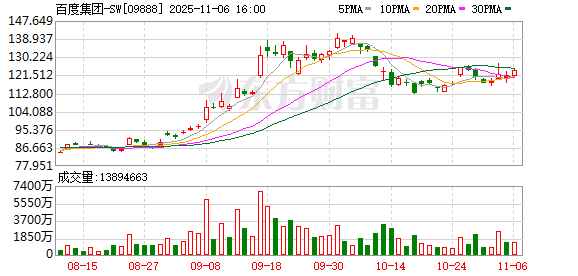
Core Points - Baidu's "script-driven multi-modal collaborative high-fidelity digital human technology" won the Leading Technology Award at the 2025 World Internet Conference [2] - The award aims to recognize the most forward-looking technological achievements in the global internet sector, with 424 submissions from 34 countries and regions [2] - The technology integrates multi-modal planning, real-time interaction, text-controlled voice synthesis, and ultra-realistic long video generation, overcoming challenges in multi-modal real-time collaboration and complex dynamic interactions [2] Company Achievements - Baidu has produced over 100,000 digital humans using its technology, applied across various industries such as e-commerce, education, and law [2] - The implementation of this technology has led to an 80% reduction in broadcasting costs and a 31% increase in live streaming conversion rates [2] - The technology is currently being utilized in Baidu's e-commerce scenarios, including celebrity, book, and health live broadcasts [2]


连续三年获领先科技奖,百度数字人技术亮相2025世界互联网大会
Yang Zi Wan Bao Wang· 2025-11-06 10:20
Core Insights - Baidu's "script-driven multimodal collaborative high-fidelity digital human technology" won the Leading Technology Award at the 2025 World Internet Conference, marking the third consecutive year Baidu has received this award, making it the only AI company to achieve this feat [1][2] Group 1: Award Recognition - The Leading Technology Award aims to recognize the most forward-looking technological achievements in the global internet sector, with 424 submissions from 34 countries and regions, ultimately selecting 17 award winners [1] - Baidu has won the Leading Technology Award seven times since 2016 for various innovations, including Baidu Brain, DuerOS, Apollo, PaddlePaddle, knowledge-enhanced large language models, Wenxin intelligent agents, and the latest digital human technology [2] Group 2: Technology Overview - The awarded technology includes innovations in script generation, real-time interaction with dynamic decision-making, text-controlled voice synthesis, and ultra-realistic long video generation of digital humans, overcoming challenges in multimodal real-time collaboration and complex dynamic interactions [1] - The digital human technology enhances the quality and interactivity of live content, characterized by high emotional intelligence, strong interaction, long endurance, and professionalism, outperforming real humans [1] Group 3: Market Impact - Over 100,000 digital humans have been produced using Baidu's technology, applied across various industries such as e-commerce, education, and law, reducing broadcasting costs by 80% and increasing live conversion rates by 31% [2] - A notable application was the live broadcast featuring digital humans Luo Yonghao and Zhu Xiaomu, which lasted 6 hours, attracted 13 million viewers, and generated over 55 million in GMV [2] - The technology has been implemented in Baidu's e-commerce scenarios, helping merchants expand sales channels, reduce live broadcasting costs, and improve operational efficiency, with digital humans capable of 24/7 broadcasting to enhance product exposure and sales opportunities [2]
三年揽入14亿,“数字人”这门生意赚钱吗?
Xin Lang Cai Jing· 2025-11-06 07:39
Core Insights - The article discusses the increasing application of digital humans in various industries, highlighting the business model of Nanjing Silicon-based Intelligent Technology Group Co., Ltd. (Silicon Intelligence), which has submitted its IPO prospectus to the Hong Kong Stock Exchange [3][4]. Group 1: Company Overview - Silicon Intelligence has created over 80,000 digital employees, generating revenue exceeding 600 million RMB in the past year [4]. - The company defines AI not just as a tool but as a new form of labor, coining the term "silicon-based labor" to differentiate it from human labor [3]. - The business model includes providing comprehensive silicon-based labor solutions, such as voice, video, live streaming, and intelligent interaction services [3]. Group 2: Financial Performance - Revenue projections for Silicon Intelligence are 220 million RMB, 530 million RMB, 660 million RMB, and 330 million RMB for the years 2022 to 2025, with gross margins of 38.5%, 45.8%, 34.3%, and 31.6% respectively [4]. - The company reported cumulative losses exceeding 300 million RMB over three and a half years, with adjusted losses of 46.2 million RMB, 29.4 million RMB, and 35.2 million RMB for 2022 to 2024, turning a profit of 5.3 million RMB in the first half of 2025 [4]. Group 3: Market Position - Silicon Intelligence ranks first among digital human solution providers in China, holding a market share of 32.2% [5]. - The pricing for their silicon-based labor solutions varies significantly, typically ranging from 5,500 RMB to over 25,000 RMB depending on the product type and client needs [6]. Group 4: Client Base and Revenue Contribution - The company primarily relies on direct sales, which accounted for 98.3% of sales in 2022 and 2023, with a slight decrease in new customer acquisition noted [6][7]. - The top five clients contributed 56.4%, 57.7%, 78.9%, and 87.5% of total revenue from 2022 to the first half of 2025, with the largest client accounting for 16.6%, 36.8%, and 64.4% of total revenue in the same period [7]. Group 5: Leadership and Future Plans - The founder and CEO, Si Mahua Peng, has been with the company since its inception in 2017 and has a background in electrical engineering [8]. - Silicon Intelligence plans to enter the fully automated content production field by mid-2025, enhancing its brand influence and developing the commercial value of its silicon-based labor solutions [9].

科大讯飞推出全新多模态数字人
3 6 Ke· 2025-11-06 04:00
Core Insights - The digital human guide "Xiao Fei" was officially launched at the iFlytek 1024 Developer Festival on November 6, showcasing advanced multimodal interaction capabilities [1] - "Xiao Fei" surpasses simple Q&A limitations, enabling free dialogue among multiple users and multilingual communication [1] - The digital guide possesses personalized memory capabilities, allowing it to remember visitor history and provide thoughtful reminders [1]

国内最大AI数字人公司申请上市,两年收入增长187%,却讲出了AI应用最难解的现实
3 6 Ke· 2025-11-06 00:16
Core Insights - Silicon-based Intelligence has submitted its prospectus to the Hong Kong Stock Exchange, aiming for an IPO as a leading player in the AI sector in China, with a revenue of 655 million yuan in 2024, capturing 32.2% of the domestic digital human market [2][4]. Group 1: Company Overview - Silicon-based Intelligence is the largest digital human company in China and ranks second globally, having delivered over 80,000 "Silicon-based labor forces" across various industries including telecommunications, finance, healthcare, education, and public services [4]. - The company’s revenue has grown significantly from 228 million yuan in 2022 to 655 million yuan in 2024, marking a 187% increase over two years [5]. Group 2: Revenue Sources - A substantial portion of the revenue growth is attributed to a single major client, China Unicom, which accounted for 90% of the revenue increase from 2022 to 2024, with its contribution rising from 36.9 million yuan in 2022 to 422 million yuan in 2024 [6][7]. - By the end of 2024, China Unicom is expected to represent 64.4% of Silicon-based Intelligence's total revenue [7]. Group 3: Client Strategy and Challenges - The company initially attempted to expand its client base by introducing a distribution model, increasing the number of distributors from 2 to 251 in 2023, but later reduced this number to 157 by the end of 2024 due to low retention rates among small clients [8][10]. - The average revenue per client, excluding China Unicom, was approximately 350,000 yuan, while the customer acquisition cost was 184,000 yuan, indicating a challenging profitability scenario [10][12]. Group 4: Market Dynamics - The company faces structural challenges in the AI B2B market, where small enterprises lack budgets for AI products, and large enterprises demand extensive customization, leading to compressed profit margins [17][18]. - The reliance on a few large clients limits pricing power and creates vulnerability in revenue streams, as evidenced by the declining gross margin from 45.8% in 2023 to 31.6% in the first half of 2025 [15][14]. Group 5: Broader Industry Implications - The situation of Silicon-based Intelligence reflects broader issues in the AI industry, where companies struggle to balance between serving small clients with high acquisition costs and large clients with demanding customization needs [18][19]. - The challenges faced by Silicon-based Intelligence highlight the difficulties in achieving sustainable profitability in the rapidly evolving AI landscape, despite being positioned in a high-growth sector [16][19].

腾讯红杉加持!这家数字人公司冲刺港股IPO
Sou Hu Cai Jing· 2025-11-05 13:05
Core Viewpoint - Silicon Intelligence, the largest digital human intelligence provider in China, has officially submitted its listing application to the Hong Kong Stock Exchange, indicating its intent to go public and expand its market presence [1] Group 1: Market Position and Financial Performance - Silicon Intelligence ranks first among all digital human intelligence providers in China, holding a market share of 32.2%, and is the second globally [1] - The company's revenue has shown significant growth, increasing from 223 million RMB in 2022 to an expected 655 million RMB in 2024. In the first half of 2024, revenue rose from 293 million RMB to 326 million RMB year-on-year [4] - Despite revenue growth, Silicon Intelligence has reported losses for three consecutive years, with total losses exceeding 318 million RMB [4] Group 2: Client Dependency - The company has a high dependency on a single client, referred to as Client A, which accounted for over 60% of its revenue in 2024 and the first half of 2025. The revenue contributions from Client A were 16.6%, 36.8%, and 64.4% for the years 2022, 2023, and 2024, respectively [6] Group 3: Technological Innovation and Offerings - Silicon Intelligence focuses on the research and commercialization of digital human intelligence and multimodal intelligent interaction technologies, covering areas such as voice recognition, natural language processing, and computer vision [3] - The company has developed a comprehensive AI architecture aimed at achieving full-stack technology coverage, transitioning from AI tools to outcome-oriented solutions [4] Group 4: Industry Growth and Investment - The global digital human industry is experiencing explosive growth, with the market size expected to increase from 1.3 billion RMB in 2021 to 4.1 billion RMB in 2024, reflecting a compound annual growth rate (CAGR) of 44.7% [8] - Silicon Intelligence has attracted significant investment from notable firms, including Tencent and Sequoia Capital, having completed eight rounds of financing since its establishment in 2017 [8]
数字人民币“暖”民生 山东中行“四进”服务零距离
Sou Hu Cai Jing· 2025-11-05 10:15
Core Viewpoint - Digital RMB is gradually changing payment habits in Shandong Province, with the Bank of China focusing on scenario-based services to promote digital financial knowledge among the public [1] Group 1: Promotion in Enterprises - The Bank of China in Jinan is providing customized services for construction companies, focusing on wage distribution for migrant workers and offering face-to-face explanations of digital RMB usage and anti-fraud techniques [2] - A "full-process follow-up" service model is introduced for large enterprises, helping employees quickly master the use of digital wallets through on-site demonstrations [2] Group 2: Promotion in Schools - The Bank of China in Jinan conducted a "Payment First Lesson" for new students at Shandong University, explaining the concept and safety of digital RMB in an engaging manner [3] - A campaign combining campus card services and anti-fraud education is also underway, aiming to enhance students' awareness of financial safety and protect personal information [3] Group 3: Promotion in Commercial Areas and Communities - The Bank of China Laiwu branch is promoting digital RMB in the core shopping area of Lai Steel Department Store through various promotional materials and direct engagement with citizens [5] - In community settings, the Jinan Licheng branch is conducting "Smart Assistance for the Elderly" lectures, helping older adults learn digital payment methods and internet safety [5] Group 4: Future Plans - The Bank of China plans to continue deepening the application of digital RMB with more diverse products and improved service experiences to support the high-quality development of the local digital economy [7]


“数字人刘邦”跨越两千年“现身”第三届汉文化论坛
Zhong Guo Xin Wen Wang· 2025-11-05 09:27
Core Viewpoint - The third Han Culture Forum showcased a digital representation of Liu Bang, the founder of the Han Dynasty, utilizing AI technology to create a lifelike image that transcends historical texts and artistic interpretations [1][2]. Group 1: AI Technology and Historical Reconstruction - The digital representation of Liu Bang was developed through rigorous examination by over ten experts in history, archaeology, and art history, ensuring the portrayal is as close to historical accuracy as possible [2]. - The reconstruction process involved extracting key features from historical texts and comparing them with artifacts such as terracotta warriors and murals to create a comprehensive database for AI learning [2]. - The AI utilized vast amounts of Han Dynasty imagery and textual instructions to generate a Liu Bang that embodies both historical accuracy and a vivid personality, moving away from the mythical "true dragon son of heaven" image [2]. Group 2: Presentation and Cultural Significance - The unveiling of the digital Liu Bang was not a static display but a dynamic reenactment, featuring him in a classic scene where he plays the zither and recites the ancient poem "Da Feng Ge" [3]. - The event highlighted the significance of cultural heritage and the innovative use of technology to bring historical figures to life, enhancing public engagement with Han culture [1][3][5].

【IPO前哨】靠电信巨头撑起64%收入,硅基智能的数字人难讲故事?
Sou Hu Cai Jing· 2025-11-05 04:09
Core Insights - The rapid development of artificial intelligence has led to the emergence of AI digital humans, creating a competitive and growing market [2] - Nanjing Silicon-based Intelligent Technology Group Co., Ltd. (Silicon Intelligence) has initiated its IPO process on the Hong Kong Stock Exchange, aiming to raise funds for enhancing R&D capabilities and marketing [2] - Silicon Intelligence has completed eight rounds of financing, with a valuation of 3.15 billion RMB after its D round in June 2023 [2][3] Company Positioning - As the largest provider of digital human intelligent agents in China, Silicon Intelligence holds a significant market share of 32.2% in the digital human intelligent agent solutions sector [3] - The company utilizes three core technologies: voice cloning, appearance cloning, and thought cloning, to create "Silicon-based Labor" [3] - Silicon Intelligence has delivered over 80,000 solutions across various industries, including telecommunications, finance, healthcare, and education [5] Financial Performance - The company has experienced continuous losses over the past three years, with net losses of 111 million RMB in 2022, 95.9 million RMB in 2023, and 112 million RMB in 2024 [8] - Revenue growth has slowed significantly, with a revenue of 32.6 million RMB in the first half of 2025, reflecting a year-on-year growth rate of only 11.15% [7][8] Market Dynamics - The global market for digital human intelligent agents is projected to grow from 1.3 billion RMB in 2021 to 4.1 billion RMB in 2024, with a compound annual growth rate (CAGR) of 44.7% [7] - Competition in the AI digital human sector is intensifying, with major players like Baidu, Tencent, and Alibaba entering the market, increasing pressure on Silicon Intelligence [9] - The company faces challenges in customer acquisition, with the average customer acquisition cost rising significantly, reaching 184,000 RMB in 2024 [10][11] Customer Dependency - Silicon Intelligence's revenue is highly concentrated, with the top five customers accounting for 87.5% of total revenue in the first half of 2025, and the largest customer contributing 64.4% [6] - The company has seen a decline in new customer acquisition, with the number of new customers dropping from 890 in 2023 to 461 in 2024 [10]