GUANGDONG INV(00270)

Search documents
粤海投资(00270) - 截至二零二五年八月三十一日止之股份发行人的证券变动月报表
2025-09-02 07:26
股份發行人及根據《上市規則》第十九B章上市的香港預託證券發行人的證券變動月報表 II. 已發行股份及/或庫存股份變動 | 1. 股份分類 | 普通股 | 股份類別 | 不適用 | | 於香港聯交所上市 (註1) | 是 | | | --- | --- | --- | --- | --- | --- | --- | --- | | 證券代號 (如上市) | 00270 | 說明 | 不適用 | | | | | | | | 已發行股份(不包括庫存股份)數目 | | 庫存股份數目 | | 已發行股份總數 | | | 上月底結存 | | | 6,537,821,440 | | 0 | | 6,537,821,440 | | 增加 / 減少 (-) | | | | | | | | | 本月底結存 | | | 6,537,821,440 | | 0 | | 6,537,821,440 | 第 2 頁 共 10 頁 v 1.1.1 FF301 | 截至月份: | 2025年8月31日 | 狀態: 新提交 | | --- | --- | --- | | 致:香港交易及結算所有限公司 | | | | 公司名稱: | 粤海投資有 ...
粤海投资(0270.HK):财务费用大幅节省 业绩超预期
Ge Long Hui· 2025-08-30 04:11
Core Viewpoint - The company reported a net profit of 2.682 billion HKD for H1 2025, representing an 11% year-on-year increase, primarily due to reduced financial expenses and a decrease in net losses from fair value adjustments of investment properties [1]. Financial Performance - The company achieved revenue of 9.428 billion HKD in H1 2025, a 1% decline year-on-year; however, net profit increased by 11% to 2.682 billion HKD [1]. - Financial expenses were significantly reduced by 201 million HKD to 188 million HKD, contributing to the profit increase [1]. - The fair value adjustment losses of investment properties decreased by 58 million HKD to 3 million HKD [1]. Dividend and Cash Flow - The company maintained a dividend payout ratio of 65%, with an interim dividend of 0.266 HKD per share [2]. - Net cash inflow from operating activities was 3.339 billion HKD, down from 4.876 billion HKD in the same period of 2024 [2]. - Capital expenditure increased to 566 million HKD from 445 million HKD in 2024 [2]. Business Segment Performance - Water supply projects generated revenue of 3.506 billion HKD, a 1% increase year-on-year, with a tax profit increase of 3% to 2.396 billion HKD [2]. - Other water resource businesses saw a 2% revenue increase to 3.680 billion HKD, but tax profit decreased by 6% to 1.079 billion HKD [2]. - Property management revenue rose by 4% to 822 million HKD, with a tax profit increase of 10% to 492 million HKD [2]. - Department store operations experienced a 44% revenue decline to 217 million HKD, while tax profit increased by 19% to 45.83 million HKD [3]. - Hotel management revenue grew by 7% to 337 million HKD, but tax profit fell by 20% to 51.06 million HKD [3]. - Energy business revenue decreased by 4% to 770 million HKD, while tax profit increased by 23% to 91.18 million HKD [3]. - Toll road business revenue declined by 7% to 290 million HKD, with tax profit down by 9% to 147 million HKD [3].
粤海投资(00270):财务费用大幅节省,业绩超预期
GUOTAI HAITONG SECURITIES· 2025-08-28 09:06
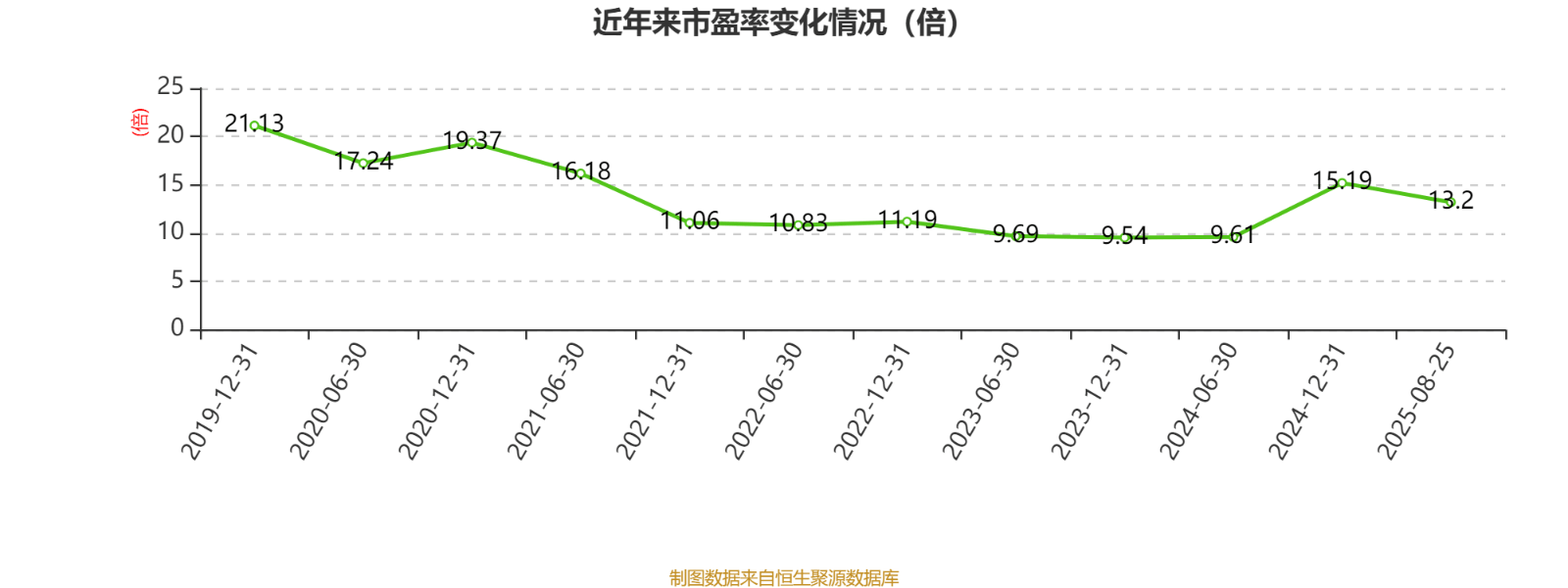
Investment Rating - The report maintains a rating of "Accumulate" for the company [7][11]. Core Insights - The company's net profit attributable to shareholders for H1 2025 was HKD 2.682 billion, representing a year-on-year increase of 11%. This profit growth was primarily driven by a reduction in financial expenses and a decrease in net losses from fair value adjustments of investment properties [2][11]. - The report forecasts net profits for 2025, 2026, and 2027 to be HKD 4.415 billion, HKD 4.533 billion, and HKD 4.663 billion, respectively, with corresponding EPS of HKD 0.68, HKD 0.69, and HKD 0.71 [11][12]. - The company achieved a revenue of HKD 9.428 billion in H1 2025, a slight decline of 1% year-on-year, while the net financial expenses decreased by HKD 201 million to HKD 188 million [11]. Financial Summary - Total revenue for 2023 was HKD 24.355 billion, with a projected decline to HKD 18.505 billion in 2024, followed by a slight decrease to HKD 18.080 billion in 2025. The revenue is expected to grow gradually to HKD 18.924 billion by 2027 [5][12]. - The gross profit for 2023 was HKD 10.075 billion, with projections of HKD 9.822 billion in 2024 and HKD 9.601 billion in 2025, indicating a steady gross margin [5][12]. - The company’s PE ratio is projected to be 10.5 in 2025, decreasing to 10.0 by 2027, while the PB ratio is expected to remain stable around 1.07 to 1.00 during the same period [5][12]. Business Performance - The water supply segment, particularly the Dongshen project, generated revenue of HKD 3.506 billion, a 1% increase year-on-year, while the water supply volume decreased by 1% [11]. - The property management segment saw a revenue increase of 4% to HKD 822 million, attributed to improved rental levels and occupancy rates [11]. - The retail operations experienced a significant decline, with revenue dropping 44% to HKD 217 million, although the pre-tax profit increased by 19% to HKD 45.83 million [11].
粤海投资(00270.HK):聚焦主业,持续加固竞争护城河
Ge Long Hui· 2025-08-28 01:48
Core Viewpoint - The article highlights that Yuehai Investment (00270.HK) has demonstrated strong growth and resilience in its mid-2025 financial report, focusing on its core business and enhancing its competitive moat despite a complex macroeconomic environment [1][15]. Financial Performance - In the first half of 2025, Yuehai Investment achieved an unaudited net profit attributable to shareholders of HKD 26.82 billion, representing a year-on-year growth of 11.2% [4]. - The company's diversified business model, including water resources, property investment, energy, and transportation, contributed to its stable performance [4][12]. Core Business Segments - **Water Resources**: The East Shenzhen Water Supply Project generated a pre-tax profit of HKD 23.96 billion, up 3.1% year-on-year. Other water projects also saw a revenue increase of 2.3% to HKD 36.80 billion, with a pre-tax profit of HKD 10.79 billion [6]. - **Property Investment**: The property investment segment, including Yuehai Tianhe City, reported a revenue increase of 3.6% to HKD 8.22 billion, with a pre-tax profit of HKD 4.92 billion, up 9.7% [8]. - **Energy Projects**: The energy segment maintained stable revenue, with a pre-tax profit of HKD 91.18 million, reflecting a growth of 22.7% [9]. - **Road Operations**: Yuehai Expressway generated toll revenue of HKD 290 million, with a pre-tax profit of HKD 147 million [10]. - **Hotel Business**: The hotel segment achieved revenue of HKD 337 million, a year-on-year increase of 6.8% [10]. - **Department Store Business**: Revenue reached HKD 217 million, with a pre-tax profit growth of 18.5% to HKD 45.83 million [11]. Strategic Moves - The strategic divestment of Yuehai Land on January 21, 2025, significantly improved the company's financial fundamentals, reducing the capital debt ratio to 24.70%, down 6.2 percentage points from the end of 2024 [13]. - The company's financial borrowings decreased from HKD 238.62 billion at the end of 2024 to HKD 211.77 billion by mid-2025, indicating a healthier financial position [13][14]. Market Position and Outlook - Yuehai Investment is positioned as a defensive asset with a high dividend strategy, offering a dividend of HKD 0.2666 per share, a year-on-year increase of 11.2%, resulting in a dividend yield close to 5% [18]. - The company benefits from a monopoly advantage in the water resources and public utilities sector, supported by favorable policies, enhancing its market position [20]. - The market's perception of the company's "de-real estate" strategy is strengthening, with improved financial fundamentals likely to catalyze valuation reassessment [20]. Conclusion - Overall, Yuehai Investment's mid-2025 financial report reflects its focus on core business, solid performance across key segments, and strategic asset optimization, establishing a robust foundation for future growth [25].

粤海投资(00270.HK):2025年中期财报深度解析,聚焦核心业务价值重塑
Ge Long Hui· 2025-08-28 01:24
Core Viewpoint - The mid-2025 financial report of Yuehai Investment (00270.HK) demonstrates strong growth momentum amid a complex macroeconomic environment, highlighting the company's unique value and long-term growth potential through key financial indicators and optimized business layout [1][3][25]. Financial Performance - Yuehai Investment achieved an unaudited net profit attributable to shareholders of HKD 2.682 billion, representing a year-on-year increase of 11.2%, driven by the collaborative performance of its core business segments [3][25]. - The company reported a significant improvement in its financial fundamentals following the spin-off of Yuehai Land, with a capital debt ratio of 24.7%, down 6.2 percentage points from the end of 2024 [14][15]. Core Business Segments - The water resources segment, a core business, generated stable revenue, with the Dongshen water supply project contributing a pre-tax profit of HKD 2.396 billion, up 3.1% year-on-year [5][6]. - The property investment segment saw a revenue increase of 3.6% to HKD 822 million, with a pre-tax profit of HKD 492 million, up 9.7% [7][13]. - The energy projects segment maintained stable revenue, achieving a pre-tax profit of HKD 91.177 million, a year-on-year increase of 22.7% [10][13]. - The highway operations generated toll revenue of HKD 290 million, with a pre-tax profit of HKD 147 million [11][13]. Strategic Developments - The strategic spin-off of Yuehai Land marks a significant adjustment in the company's business layout, allowing for a focused approach on core areas such as water resources [14][15]. - The optimization of the asset structure post-spin-off has led to a healthier financial status, enabling the company to better respond to market fluctuations and uncertainties [15]. Market Position and Outlook - Yuehai Investment is positioned as a defensive asset with a high dividend strategy, offering a dividend of HKD 0.2666 per share, a year-on-year increase of 11.2%, with a dividend yield close to 5% [18][26]. - The company benefits from a monopoly advantage in the water resources and public utilities sector, supported by favorable policies, enhancing its bargaining power and industry position [20][21]. - The market's perception of the company's "de-real estate" strategy is strengthening, with improved financial fundamentals likely to catalyze valuation reassessment [21][26].
粤海投资再涨超4% 公司水务主业稳定 剥离粤海置地后负债端改善
Zhi Tong Cai Jing· 2025-08-27 03:57
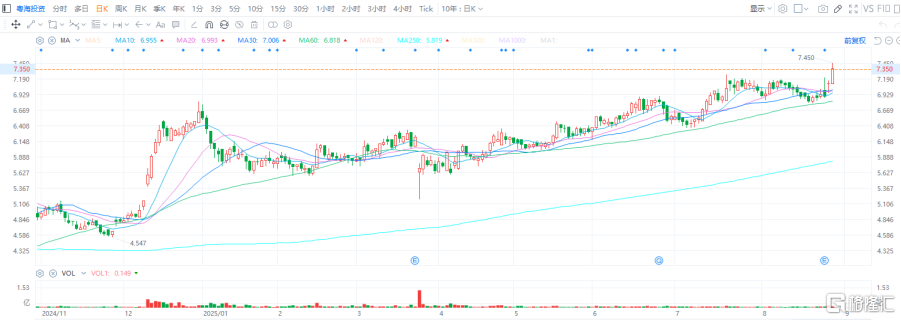
Core Viewpoint - Yuehai Investment (00270) experienced a stock price increase of over 4%, reaching HKD 7.4, with a trading volume of HKD 124 million, following the release of its interim results [1] Financial Performance - The revenue from continuing operations was HKD 9.428 billion, a year-on-year decrease of 0.6%, primarily due to declines in department store operations, road and bridge business, and power generation [1] - The profit attributable to owners was HKD 2.682 billion, reflecting a year-on-year increase of 11.2%, mainly due to savings in financial expenses and exchange gains from the appreciation of the Renminbi [1] - Basic earnings per share were HKD 0.4102, with an interim dividend proposed at HKD 0.2666 per share [1] Business Segments - The water resources business showed stable revenue growth, with the Dongshen water supply project contributing 68.95% of pre-tax profit, achieving both revenue and profit growth despite a slight decline in water supply volume, indicating a smooth market-based pricing mechanism and strong profitability [1] - Following the divestment of Yuehai Land, the company's capital liability ratio decreased to 24.70%, and financial expenses were reduced by HKD 201 million compared to the same period last year [1] Analyst Insights - Dongwu Securities noted the stable performance of the water segment and improvements in the liability side post-divestment, highlighting a stable dividend payout ratio and strong dividend certainty, maintaining a "buy" rating [1]
港股异动 | 粤海投资(00270)再涨超4% 公司水务主业稳定 剥离粤海置地后负债端改善
智通财经网· 2025-08-27 03:34
Core Viewpoint - Yuehai Investment (00270) experienced a stock price increase of over 4%, reaching HKD 7.4, with a trading volume of HKD 124 million, following the release of its interim results [1] Financial Performance - The revenue from continuing operations was HKD 9.428 billion, a year-on-year decrease of 0.6%, primarily due to declines in department store operations, road and bridge businesses, and power generation [1] - The profit attributable to owners was HKD 2.682 billion, reflecting a year-on-year increase of 11.2%, mainly due to savings in financial expenses and exchange gains from the appreciation of the RMB [1] - Basic earnings per share were HKD 0.4102, with an interim dividend proposed at HKD 0.2666 per share [1] Business Segments - The water resources business showed stable revenue growth, with the Dongshen water supply project contributing 68.95% of pre-tax profit, achieving both revenue and profit growth despite a slight decline in water supply volume, indicating a smooth market-based pricing mechanism and strong profitability [1] - Following the divestment of Yuehai Land, the company's capital liability ratio decreased to 24.70%, and financial expenses were reduced by HKD 201 million compared to the same period last year [1] Analyst Insights - Dongwu Securities noted the stable performance of the water segment and improvements in the liability side post-divestment, highlighting a stable dividend payout ratio and strong dividend certainty, maintaining a "buy" rating [1]
粤海投资(00270) - 2025 H1 - 电话会议演示
2025-08-27 00:00
August 2025 2025 FIRST HALF RESULTS REVIEW O U R B U S I N E S S 2025 First Half Results Review ~ Stock Code: 0270 F I N A N C I A L H I G H L I G H T S 1 The unaudited consolidated profit attributable to owners of the Company for 1H25 increased by 11.2% to HK$2,682 million and interim dividend per share increased by 11.2% to HK$26.66 cents. 2 The net finance costs from continuing operations was decreased by HK$201 million to HK$188 million and net loss arising from fair value adjustments for investment pro ...
粤海投资(00270.HK):水务主业稳定 归母净利润同增11.2%超预期
Ge Long Hui· 2025-08-26 20:07
Core Viewpoint - The company reported a slight decline in main business revenue but an increase in net profit, driven by growth in water resources and hotel businesses, alongside cost savings and currency exchange gains [1][4]. Revenue and Profit Summary - In H1 2025, the company achieved main business revenue of HKD 9.428 billion, a year-on-year decrease of 0.6%, while net profit attributable to shareholders was HKD 2.682 billion, an increase of 11.2% [1]. - The increase in net profit was primarily due to savings in financial expenses and exchange gains from the appreciation of the Renminbi [1]. Business Segment Performance - Water Resources Division: Contributed HKD 7.184 billion in revenue (up 0.6%), with mainland China water supply revenue at HKD 2.284 billion (up 3.7%) and Hong Kong water supply revenue at HKD 2.869 billion (up 2.4%) [1][2]. - Property Investment: Contributed HKD 124 million in revenue (up 10.6%) and segment profit of HKD 480 million (up 12.7%) [1]. - Department Store Operations: Revenue decreased by 45.5% to HKD 202 million, primarily due to a 49.4% drop in Tianhe City department store revenue [2]. - Hotel Division: Revenue increased by 7.4% to HKD 320 million, but segment profit decreased by 14.6% [2]. - Roads and Bridges Division: Revenue decreased by 6.9% to HKD 301 million, with segment profit down by 1.8% [2]. - Power Generation Division: Revenue decreased by 2.9% to HKD 611 million, while segment profit increased by 9.4% [2]. Water Resources Project Insights - The Dongshen Water Supply Project achieved revenue of HKD 3.506 billion (up 0.6%) and contributed a pre-tax profit of HKD 2.396 billion (up 3.1%) [2][3]. - Despite a slight decline in total water supply volume by 1.0% to 1.147 billion tons, the project demonstrated strong profitability due to effective market pricing mechanisms [3]. Financial Metrics and Dividends - The company maintained a dividend payout ratio of 65%, with an interim dividend of HKD 0.2666 per share, an increase of 11.22% [3]. - Operating cash flow decreased by 31.52% to HKD 3.339 billion, while capital expenditure increased by 27.19% to HKD 566 million [3]. - After the divestment of Yuehai Land, the capital debt ratio improved to 24.70%, with financial expenses reduced by HKD 201 million [4]. Profit Forecast and Investment Rating - The company maintains stable performance in the water sector and improved debt metrics post-divestment, with a forecasted net profit attributable to shareholders of HKD 4.274 billion, HKD 4.357 billion, and HKD 4.453 billion for 2025-2027, corresponding to PE ratios of 10.5, 10.3, and 10.1 times [4].
粤海投资:2025年中期净利润26.82亿港元 同比增长11.23% 拟每股派息0.2666港元
Sou Hu Cai Jing· 2025-08-26 10:53
Core Viewpoint - The company operates in water supply and sewage treatment, with multiple business segments contributing to its revenue, including water resources, property investment, retail, power generation, hotel management, and toll road operations [9]. Revenue and Profit Growth - The company has shown fluctuations in revenue and net profit growth rates over the years, with a notable increase in revenue in 2023 compared to previous years [11][14]. - The revenue composition for the first half of 2025 indicates that water resources remain the largest segment, contributing 71.531 billion HKD, followed by property investment and power generation [15]. Financial Ratios - As of the first half of 2025, the company's average return on equity was 6.4%, an increase of 0.72 percentage points from the previous year [19]. - The company’s asset turnover ratio has shown variations, with a notable increase in 2025 compared to previous years [21]. Asset and Liability Changes - Significant changes in assets include a 100% decrease in assets classified as held for sale, while intangible assets decreased by 0.71% [25]. - On the liabilities side, long-term borrowings decreased by 1.68%, while deferred tax liabilities increased by 4.67% [28]. Liquidity Ratios - The company reported a current ratio of 1.18 and a quick ratio of 1.15 in the first half of 2025, indicating a stable liquidity position [31].