CHINA UNICOM(00762)

Search documents
江苏联通:从中华优秀传统文化中汲取强企动能
Xin Hua Ri Bao· 2025-09-24 07:00
Core Viewpoint - Jiangsu Unicom is integrating traditional Chinese culture into its corporate culture and employee training to enhance moral values and promote high-quality development in party building and corporate culture [1][5][6]. Group 1: Integration of Traditional Culture - Jiangsu Unicom is conducting activities themed "Connecting the Past and Present, Civilizations Moving Together" to draw wisdom and strength from traditional Chinese culture for reform and progress [1]. - The company is incorporating traditional culture into its political education for employees, emphasizing a human-centered approach and enriching ideological work with cultural elements [2][3]. - Various cultural activities, such as photography exhibitions and traditional craft experiences, are being organized to promote local cultural heritage and enhance employee engagement [3][4]. Group 2: Moral and Ethical Development - Jiangsu Unicom is focusing on enhancing employees' moral qualities by integrating traditional cultural values into its corporate philosophy and training programs [3][4]. - The company is promoting virtues such as integrity and respect through activities that combine traditional culture with ethical education [4]. - Initiatives like establishing interest groups for calligraphy and reading are being implemented to foster a culturally rich environment for employees [4]. Group 3: Innovation and Corporate Governance - Jiangsu Unicom is applying traditional cultural principles like honesty and innovation to its management practices, aiming for a harmonious development between culture and corporate governance [5][6]. - The company is committed to enhancing its core competitiveness by embracing a spirit of responsibility and innovation in its operations [5]. - Jiangsu Unicom is actively engaging in social responsibility initiatives, leveraging technology to support rural revitalization and community service projects [6]. Group 4: Future Directions - Jiangsu Unicom plans to continue drawing from the profound wisdom of Chinese civilization to foster innovation and strengthen its corporate culture [6].

山东联通斩断诈骗黑手,守护通信安全
Qi Lu Wan Bao· 2025-09-23 09:38
Core Viewpoint - The article highlights the successful collaboration between Shandong Unicom and law enforcement in combating telecom network fraud through a targeted operation against illegal VOIP device installations, resulting in the dismantling of multiple criminal groups and the arrest of several suspects. Group 1: Action and Results - In September, Shandong Unicom actively supported police in a special operation named "打猫" (Operation Cat), focusing on illegal VOIP device installations in various locations, achieving significant results [1] - The operation led to the dismantling of multiple criminal gangs and the arrest of dozens of suspects, effectively curbing the high incidence of telecom network fraud [1] Group 2: Nature of the Threat - The illegal VOIP devices can disguise overseas scam calls as local fixed-line calls, significantly increasing the concealment of fraud activities [3] - Criminals remotely control these devices, creating a spatial separation between the perpetrator and the equipment, complicating investigation efforts [3] Group 3: Collaborative Mechanism - The success of the operation is attributed to the established police-enterprise collaboration mechanism, where an anti-fraud task force uses intelligent monitoring systems to detect abnormal numbers and initiate thorough investigations [4] - Precise leads are quickly relayed to law enforcement, aiding in targeted operations against criminal groups [4] Group 4: Preventive Measures - Alongside enforcement actions, Shandong Unicom has enhanced security and early warning measures for key clients, conducting inspections in high-risk areas such as hospitals and office buildings [5] - The company has delivered warning notices to key clients and assisted in improving fixed-line usage registration systems, thereby reducing fraud risks at the source [5] Group 5: Internal Capacity Building - The company places a strong emphasis on internal training, equipping installation and maintenance personnel with skills to identify VOIP devices and common concealment methods [6] - A notable incident involved an engineer who, upon receiving a tip about a VOIP installation, promptly assisted police in apprehending a suspect, demonstrating the effectiveness of the training [6] - The company plans to continue optimizing the police-enterprise collaboration mechanism and strengthen technical defense systems to further combat telecom network fraud [6]


数字技术助推产业升级,章丘乡村焕发勃勃生机
Qi Lu Wan Bao· 2025-09-23 09:37
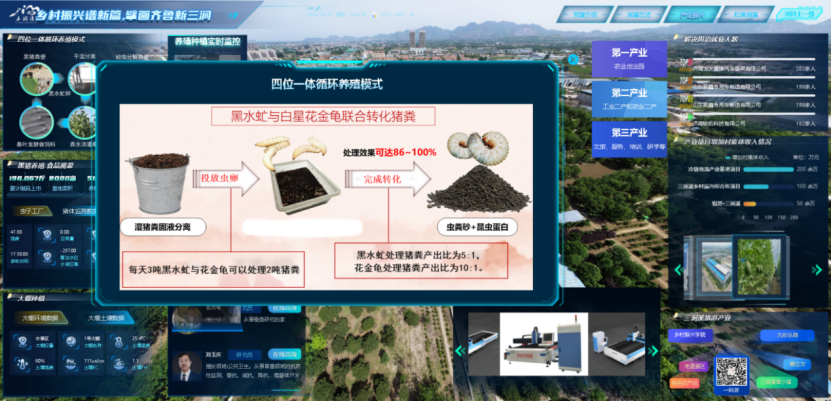
Core Viewpoint - The integration of digital technology in traditional agriculture has significantly transformed farming practices, enhancing efficiency and productivity through the use of IoT and big data [1][4]. Group 1: Digital Transformation in Agriculture - The collaboration between China Unicom and Sanjianxi Village has led to the implementation of a comprehensive IoT sensor system that monitors various agricultural processes, including black pig farming and organic planting [1][4]. - The "four-dimensional circular agriculture" model emphasizes the importance of data management in optimizing agricultural practices, with a focus on tracking the entire lifecycle from pig farming to vegetable cultivation [2][4]. Group 2: Cost Reduction and Efficiency - Digital management has resulted in a significant increase in black pig output, rising from approximately 3,000 to 10,000 heads annually, while also reducing labor costs through data monitoring [4][6]. - Enhanced product quality has been achieved through precision farming, leading to improved taste and higher market value for crops such as tomatoes and cucumbers [6]. Group 3: Skills Development and Community Engagement - China Unicom is actively providing digital skills training for local farmers and small business owners, covering areas such as IoT software, e-commerce, and digital content creation [6][8]. - The initiative aims to empower villagers to effectively utilize digital tools, likening the acquisition of data to driving on a highway, where understanding how to navigate is crucial [6]. Group 4: Integration of Industries - The digital initiatives not only support the primary agricultural sector but also promote the integration of secondary and tertiary industries, enhancing local economic development [8][9]. - The introduction of a digital rural platform and a "one-code tour" mini-program facilitates access to local tourism and culinary information, benefiting the community [8][9]. Group 5: Replicable Model for Future Development - The success of the Sanjianxi model is attributed to a collaborative ecosystem involving government, enterprises, and local communities, creating a sustainable and mutually beneficial environment [9]. - China Unicom plans to replicate this model in other rural areas by employing standardized modules tailored to local needs, focusing on AI governance and digital agriculture [9].

智慧文旅惠民生,数字乡村点亮村民新生活
Qi Lu Wan Bao· 2025-09-23 09:37
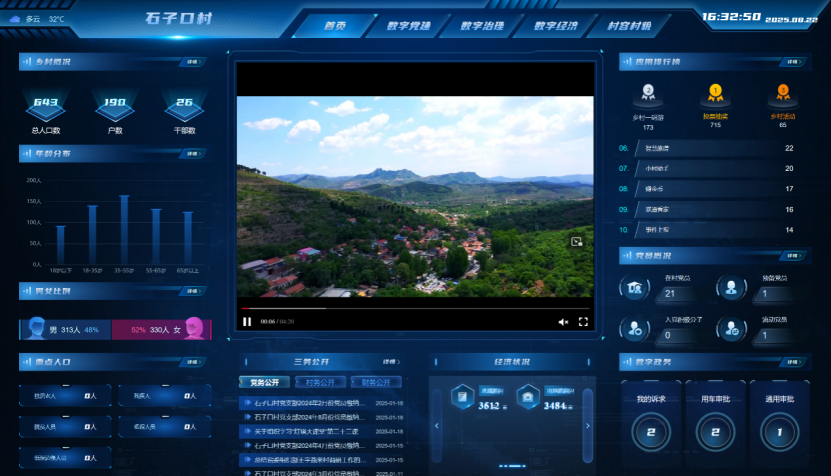
Core Insights - The implementation of the "Unicom Digital Village" platform in Shizikou Village has transformed the traditional village landscape, enhancing convenience for residents and providing a smart tourism experience for visitors [1][2] - The platform features a three-screen linkage system that allows real-time updates on village affairs and facilitates communication between villagers and local authorities [2][4] - The deployment of a digital loudspeaker system has modernized the way information is disseminated within the village, improving management efficiency and safety communication [4][6] Group 1: Digital Infrastructure - The "Unicom Digital Village" platform enables tourists to access detailed information about attractions, book tickets, and accommodations through a mobile app [1][2] - The platform includes a "Leadership Mailbox" feature that allows villagers to send suggestions directly to village leaders, promoting community engagement [2] - The construction of the digital infrastructure faced challenges such as difficult terrain and signal coverage, which were addressed through innovative solutions like drone transportation and careful site selection for 5G base stations [4][6] Group 2: Smart Tourism and Livelihood - The village has developed unique "smart homestays" using traditional stone houses, equipped with smart home technology for enhanced guest experience [6][8] - A dedicated live-streaming room has been established to support local product sales, leveraging social media influencers to promote agricultural products [6][8] - The integration of digital technology in tourism and agriculture aims to create a new ecosystem that enhances the quality of life for villagers and promotes economic development [8]
通信行业2025年二季度行业研究:技术和政策驱动行业变革升级,行业格局或向“强者恒强”演化
Da Gong Guo Ji· 2025-09-23 06:09
Investment Rating - The report indicates a positive outlook for the communication industry, suggesting a potential shift towards a "stronger gets stronger" dynamic due to technological and capital barriers [1]. Core Insights - The communication industry is experiencing a transformation driven by technology and policy support, with a shift in demand from traditional to emerging services [1][39]. - The industry is expected to enter a recovery phase in Q3 2025, with capital expenditure expansion driven by technological breakthroughs and new infrastructure initiatives [39]. - The demand for AI computing power, accelerated commercialization of 5G-A, breakthroughs in 6G technology, and the rise of the "low-altitude economy" are key factors driving the industry's upgrade [1][39]. Supply Capacity Analysis - The report highlights the growth in the optical communication sector, particularly in high-speed optical modules, driven by AI computing demand and increased capital expenditure from global cloud service providers [3][10]. - The domestic penetration rate of traditional optical fiber and cable is nearing saturation, prompting companies to accelerate international expansion [5][4]. - The communication equipment integration market is recovering, with the Asia-Pacific region leading in 5G system integration and services [6]. Demand Matching Capability Analysis - The demand for optical modules, especially high-speed products for data centers, is robust, with a projected shipment increase from 6.4 million units in 2023 to over 31.9 million units by 2025 [3]. - The communication equipment market is experiencing strong growth, with a year-on-year revenue increase of 18.9% in Q2 2025, despite a contraction in 5G investment [11]. - The telecommunications service sector is seeing a shift towards emerging businesses, with significant growth in AI computing and quantum communication services [15][30]. Industry Chain Position Analysis - The communication industry is characterized by a high degree of market concentration, particularly among leading companies in optical communication and equipment integration [24][27]. - The report notes that traditional communication services are facing saturation, with new business areas becoming the core of competitive differentiation [28]. Innovation Capability Analysis - The report emphasizes the importance of policy support for technological advancements, particularly in AI, 6G, and satellite communication [31][32]. - Significant R&D investments are being directed towards AI and 6G technologies, with major companies like China Mobile leading initiatives in these areas [34]. Credit Rating Situation Analysis - The communication industry is witnessing a favorable credit environment, with a total bond issuance of 17.35 billion yuan in Q2 2025, primarily from leading companies [36][37]. - The report indicates that the dual barriers of technology and capital for leading firms will become more pronounced, reinforcing the trend towards market consolidation [36]. Cycle Development Outlook - The communication industry is expected to see revenue and profit growth, with cash flow recovery anticipated in Q3 2025 [38]. - The report forecasts a transition to an expansion phase driven by new infrastructure investments and a focus on domestic demand [39]. Key Segment Development Trends - The optical communication sector is evolving towards ultra-high-speed, intelligent, and integrated solutions, supporting the AI computing network [40]. - The commercialization of 5G-A and advancements in 6G technology are expected to enhance the capabilities of communication equipment integrators [41]. - Telecommunications services are anticipated to diversify, with new opportunities arising from the low-altitude economy and satellite internet developments [42].




青年志愿者变身反诈先锋,“联通小福”打造校园安全新名片
Qi Lu Wan Bao· 2025-09-23 03:22
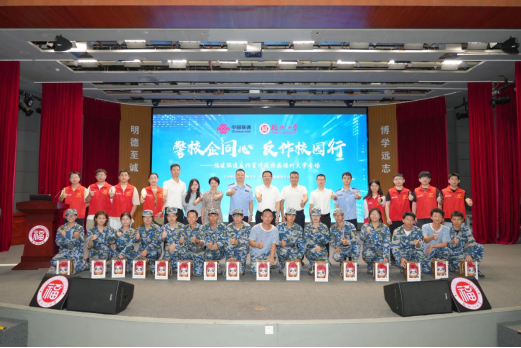
为积极响应国家关于打击治理电信网络诈骗犯罪的号召,深入践行企业社会责任,切实提升高校学生群 体防骗识诈能力,9月20日下午,福州大学旗山校区迎来一场特殊的"安全课"。由福建联通联合福建省 通信管理局、福建省公安厅、福州大学共同主办的"警校企同心·反诈校园行"反诈宣传进校园活动在福 州大学旗山校区图书馆博学厅成功举办。 本次活动核心环节为福州市公安局资深干警带来的反诈知识专题讲座。高警官结合大学校园内高发 的"兼职刷单"、"冒充客服"、"出租出售电话卡成为电诈工具人"等真实典型案例,以案说法,深入浅出 地揭露了诈骗分子的常用伎俩和话术,并传授了实用的防范技巧和止损措施,警示同学们务必保持警 惕,保护好个人隐私信息和财产安全,赢得了在场师生的阵阵掌声。 抢答热潮掀起反诈"知识风暴" 当前,电信网络诈骗手法迭代迅速,大学生群体已成为诈骗分子重点瞄准的目标。福建联通积极发挥自 身在网络信息安全领域的技术优势与平台触达能力,组建"联通小福"反诈宣传志愿服务队,主动携手警 方与校方,旨在构建"警、校、企"三位一体的反诈宣防新格局,共同守护莘莘学子的财产安全和校园的 和谐稳定。 真实案例揭开诈骗"画皮" "防范电信网络诈骗 ...
港股通央企红利ETF天弘(159281)跌1.71%,成交额4102.11万元
Xin Lang Cai Jing· 2025-09-22 13:31
Core Viewpoint - Tianhong CSI Hong Kong Stock Connect Central State-Owned Enterprises Dividend ETF (159281) experienced a decline of 1.71% in its closing price on September 22, with a trading volume of 41.02 million yuan [1] Fund Overview - The Tianhong CSI Hong Kong Stock Connect Central State-Owned Enterprises Dividend ETF was established on August 20, 2025, with an annual management fee of 0.50% and a custody fee of 0.10% [1] - The fund's performance benchmark is the CSI Hong Kong Stock Connect Central State-Owned Enterprises Dividend Index return (adjusted for valuation exchange rate) [1] Fund Size and Performance - As of September 19, the fund had a total of 344 million shares and a total size of 343 million yuan [1] - The current fund manager is He Yuxuan, who has managed the fund since its inception, with a return of -0.41% during the management period [1] Top Holdings - The latest report indicates that the top holdings of the fund include: - COSCO Shipping Holdings (0.85% holding, 2.9175 million yuan market value) - Orient Overseas International (0.40% holding, 1.3717 million yuan market value) - China National Offshore Oil Corporation (0.29% holding, 1.0041 million yuan market value) - Other significant holdings include China Petroleum, CITIC Bank, China Shenhua Energy, and Agricultural Bank of China, among others [2]


港股央企红利50ETF(520990)跌1.58%,成交额1.54亿元
Xin Lang Cai Jing· 2025-09-22 12:27
Group 1 - The Invesco Great Wall CSI National New Hong Kong Stock Connect Central Enterprise Dividend ETF (520990) closed down 1.58% on September 22, with a trading volume of 154 million yuan [1] - The fund was established on June 26, 2024, with a management fee of 0.50% and a custody fee of 0.10% [1] - As of September 19, 2024, the fund had 4.308 billion shares and a total size of 4.373 billion yuan, reflecting a 15.00% increase in shares and a 24.88% increase in size year-to-date [1] Group 2 - The current fund managers are Gong Lili and Wang Yang, with returns of 17.76% and 4.19% respectively during their management periods [2] - The fund's top holdings include China Mobile, China Petroleum, COSCO Shipping, CNOOC, China Shenhua, Sinopec, China Telecom, China Unicom, China Merchants Bank, and China Coal Energy, with varying holding percentages [2][3] Group 3 - The top holdings and their respective percentages are as follows: - China Mobile: 10.83% - China Petroleum: 10.55% - COSCO Shipping: 9.66% - CNOOC: 9.03% - China Shenhua: 8.09% - Sinopec: 7.66% - China Telecom: 4.85% - China Unicom: 3.68% - China Merchants Bank: 2.63% - China Coal Energy: 2.57% [3]


失约的iPhoneAir,焦急的运营商
Xin Lang Ke Ji· 2025-09-21 06:43
Core Viewpoint - The launch of Apple's iPhone Air in China has been delayed due to regulatory issues surrounding eSIM technology, which is not yet supported by local telecom operators [2][3][4]. Group 1: iPhone Air Launch - The iPhone Air, Apple's lightest flagship smartphone, is currently not available for sale in China, with its release status marked as "to be updated" on official platforms [2]. - The iPhone Air only supports eSIM, which requires regulatory approval for telecom operators in China to offer eSIM services [2][3]. - Apple has indicated that the iPhone Air will only be supported by China Unicom for eSIM activation, requiring users to visit physical stores for identity verification [5][6]. Group 2: eSIM Technology and Regulatory Environment - eSIM technology is seen as a future trend in the telecom industry, but its adoption in China is hindered by regulatory and compliance challenges [3][11]. - Chinese telecom operators are prepared to offer eSIM services but are awaiting formal approval from regulatory bodies [4][11]. - The complexity of eSIM activation processes and the need for stringent security measures have led to delays in service rollout [8][9][14]. Group 3: Industry Perspectives - Industry analysts believe that the widespread adoption of eSIM in China is inevitable, but it will follow a cautious and phased approach [3][11]. - The telecom sector is currently focused on enhancing security measures for eSIM technology to address concerns over user privacy and fraud [8][9][14]. - Companies like China Unicom are exploring advanced technologies, such as blockchain, to improve the security of eSIM services [14].



济南联通成功建成开通山东省内首个5G-A毫米波通感一体化基站
Qi Lu Wan Bao· 2025-09-21 03:10
近日,济南联通在市中区望岳智谷工业园区成功建成并开通山东省内首个5G-A毫米波通感一体化基站,顺利完成无人机感知验 证测试。这一突破标志着济南联通在5G-A"通信+感知"融合创新方面迈出了坚实一步,也为未来电力禁飞区域的商用感知与黑飞 管控提供了强有力的技术支撑。 (通讯员 张艺轩 刘璐) 经过多轮无人机试飞验证,济南联通已在园区范围内划定5条推荐飞行航线,实现飞行轨迹100%准确识别。测试结果显示,自研 AF平台在飞行目标识别、轨迹分析和数据回传等环节均表现稳定,能够满足电力禁飞区域的管控需求。这一成果不仅证明了5G- A通感一体化技术在无人机监测方面的可行性,更为未来大规模应用奠定了坚实基础。 随着无人机在物流配送、安防巡检、应急救援、交通管控等领域的广泛应用,低空经济正在成为推动数字经济和实体经济深度 融合的新引擎。济南联通依托5G-A通感一体化技术,为低空飞行器提供安全保障和数据支撑,有效防范"黑飞"风险,助力低空 经济实现安全、有序、可持续发展。 未来,济南联通将继续探索5G-A通感一体化应用,推动"通信+感知"在更多行业场景落地,同时加快与政企合作伙伴的深度协 作,打造低空经济全栈式解决方案,力争 ...