ZTE(00763)

Search documents
豆包AI手机引发“入口争夺战” 权限合规、数据主权成博弈焦点
Zheng Quan Shi Bao· 2025-12-10 20:28
图虫创意/供图 证券时报记者 安宇飞 在深圳华强北通天地通讯市场,有店铺老板表示,豆包AI手机线下全面缺货。 安宇飞/供图 同时,豆包AI手机的火热还催生出了"租赁手机"的业务,租一天豆包AI手机的价格普遍在70元到300元之间。一位卖家 称,豆包AI手机"租的比卖的更火",租一天价格是200元,"排期"已经排到了12月18日。该卖家表示:"我光租手机赚的 钱,都快赶上手机售价了。" 为何豆包AI手机在二手交易市场热度较高?苏商银行特约研究员高政扬接受证券时报记者采访时表示:"这种溢价是稀缺 性与情绪溢价的叠加效应。一方面,豆包AI手机用F码限量发售形成了人为的供给约束,强化市场的稀缺预期;另一方 面,AI手机概念尚处于产业发展早期,叠加公众对下一代终端形态的美好想象,'技术尝鲜权'的心理诉求推动了价格上 涨。" 港股100强研究中心顾问、经济学家余丰慧向证券时报记者表示,这种现象也表明在目前的手机消费大环境之下,部分消 费者依然愿意为获得前沿技术和独特体验而支付溢价。 一部原价3499元的AI手机,在二手市场最高被炒至3.6万元,却遭到微信、支付宝等多款主流APP的"围剿",AI时代的新 一轮"手机入口争夺 ...



实探深圳华强北二手手机市场:豆包AI手机引发“入口争夺战”权限合规、数据主权成博弈焦点
Zheng Quan Shi Bao· 2025-12-10 18:51
一部原价3499元的AI手机,在二手市场最高被炒至3.6万元,却遭到微信、支付宝等多款主流APP的"围 剿",AI时代的新一轮"手机入口争夺战"就此打响。 此前,豆包AI手机需要官方购机F码(优先购买资格)购买,最后购买期限为12月7日。这意味着,目 前豆包AI手机已经全面转入二手市场交易。证券时报记者来到华强北专门进行二手手机交易的通天地 通讯市场三楼了解情况,有店铺老板向记者表示,在今年二手手机市场普遍"刚开卖就破发"的情况下, 豆包AI手机的高溢价较为罕见。 上述店铺老板表示:"你说的豆包AI手机,前两天普遍加价2000元才能买到,而且线下市场全都没货, 你只能到线上平台去买。因为它只能通过F码购买,数量也不多,没有在线下市场大量流通。"记者询问 了多家店铺,均没有豆包AI手机现货。 在闲鱼等线上二手交易平台,记者发现豆包AI手机最高售价达3.6万元,不过大量店铺的标价已经回落 到3999元,较原价溢价500元。有卖家告诉记者:"前几天还卖六七千元,最近很多APP不让这手机用 了,溢价也降了不少,再卖不出去担心无法出手。" 同时,豆包AI手机的火热还催生出了"租赁手机"的业务,租一天豆包AI手机的价格普 ...

对“AI手机”爆火的几点思考
Zheng Quan Ri Bao· 2025-12-10 16:20
■苏向杲 "AI手机"获得消费者青睐,折射出传统行业与AI融合的巨大潜力。对于许多面临增长瓶颈或模式固化的 行业而言,AI的深度融入不仅能提升局部效率,更有望引发商业模式与产业逻辑的系统性变革。例 如,制造业可通过AI实现工艺参数实时优化与预测性维护;医疗领域则能通过AI辅助诊断提升服务效 率与质量。 近日,字节跳动与中兴通讯联合推出手机,因其深度集成豆包手机助手的AI(人工智能)系统,一经发布 便迅速引发市场热潮,首批3万台产品短时间内售罄,吸引了资本市场与科技界的广泛关注。 对比来看,传统手机的AI功能通常是需要手动触发的孤立应用,而上述手机则将AI深度融入系统底 层,使其能像"个人智能助理"一样主动理解并执行跨应用的复杂任务,比如通过语音指令点外卖等。因 此,该类手机也被市场称为"AI手机"。 当前,AI技术飞速发展,关于"AI泡沫"的讨论不绝于耳。上述"AI手机"的阶段性成功,为我们多维度审 视AI产业的现实走向与未来价值,提供了有益的切入视角。 其一,对股票投资者而言,技术与市场需求的真实交汇点值得关注。 "AI手机"被热捧折射出,一项技术能否成功,不仅取决于其是否前沿,更取决于能否与真实的市场需求 ...
智谱开源、豆包遇阻,AI手机竞赛白热化
2 1 Shi Ji Jing Ji Bao Dao· 2025-12-10 13:33
Core Viewpoint - The launch of AutoGLM by Zhipu Huazhang, claimed to be the world's first AI Agent with "Phone Use" capabilities, aims to create a public foundation for the industry while ensuring data privacy remains with users [1][4]. Group 1: Product Features and Capabilities - AutoGLM has been demonstrated to perform tasks such as sending mobile red packets and placing food orders, and it supports over 50 high-frequency applications including WeChat, Taobao, and Douyin [4]. - The open-source nature of AutoGLM is intended to transform its capabilities into a shared resource for the industry, allowing for collaborative development [4][5]. - The trend towards smaller, more efficient models is enabling mobile manufacturers to enhance on-device AI capabilities, which is crucial for data security [5]. Group 2: Industry Challenges - The mobile industry faces significant challenges regarding user privacy and data permissions, with existing standards failing to adapt to the needs of AI-driven automation [6][7]. - There is a lack of clear authorization standards for cross-application automation, which complicates the implementation of AI functionalities that users desire [6][7]. - The current competitive landscape among hardware manufacturers, app developers, and large model providers is creating barriers to collaboration and data sharing [7][9]. Group 3: Industry Responses and Future Directions - Companies like ZTE and Doubao are responding to the challenges by emphasizing openness and collaboration to enhance user experience [8]. - The industry is witnessing a trend where software companies are entering hardware markets, similar to historical moves by Microsoft and Google, indicating a shift towards integrated solutions [8]. - Despite the irreversible trend towards AI mobile agents, the industry must focus on lowering usage barriers and addressing real-world problems while ensuring privacy [9].
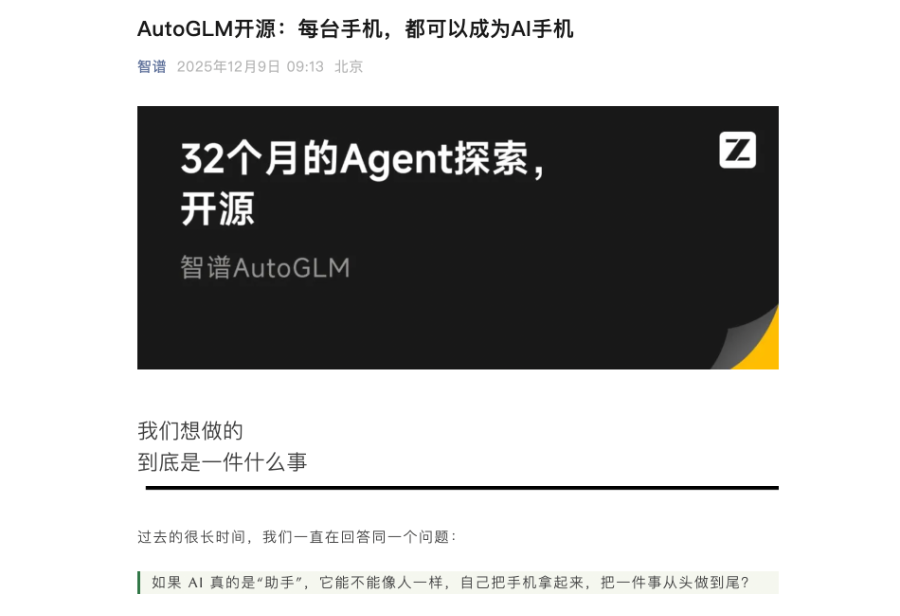
努比亚倪飞回应“豆包手机”争议:AI手机发展势不可逆
Nan Fang Du Shi Bao· 2025-12-10 09:41
Core Viewpoint - The collaboration between ByteDance's Doubao model and ZTE's Nubia has sparked significant industry discussion, particularly regarding the compatibility and security of the Nubia Z60 Ultra, which has been marketed as a revolutionary AI phone [1][5]. Group 1: Industry Response - ZTE's Nubia President Ni Fei acknowledged the challenges faced and emphasized the importance of open collaboration in the AI transformation era, comparing their strategy to successful models like "iPhone + ChatGPT" [1]. - Douyin Group Vice President Li Liang supported this view, stating that the exploration of AI technology is just the beginning, regardless of the immediate success of the collaboration [3]. Group 2: Market Dynamics - The Nubia Z60 Ultra, priced at 3,499 yuan, initially saw its market price soar to 12,000 yuan due to its advanced features, including the ability to perform cross-application operations [5]. - However, this capability has raised security concerns among app developers, leading to restrictions from major applications like WeChat and various financial apps that have blocked access to the phone's system-level operations [6][7]. Group 3: Legal and Compliance Considerations - The conflict between AI operating systems and super apps highlights the need for a balance between user access and data security, with legal experts suggesting that AI agents should operate under user authorization without competing with app services [8]. - Concerns have been raised about the potential risks of allowing an AI agent to control multiple applications, which could lead to systemic vulnerabilities if security breaches occur [8].
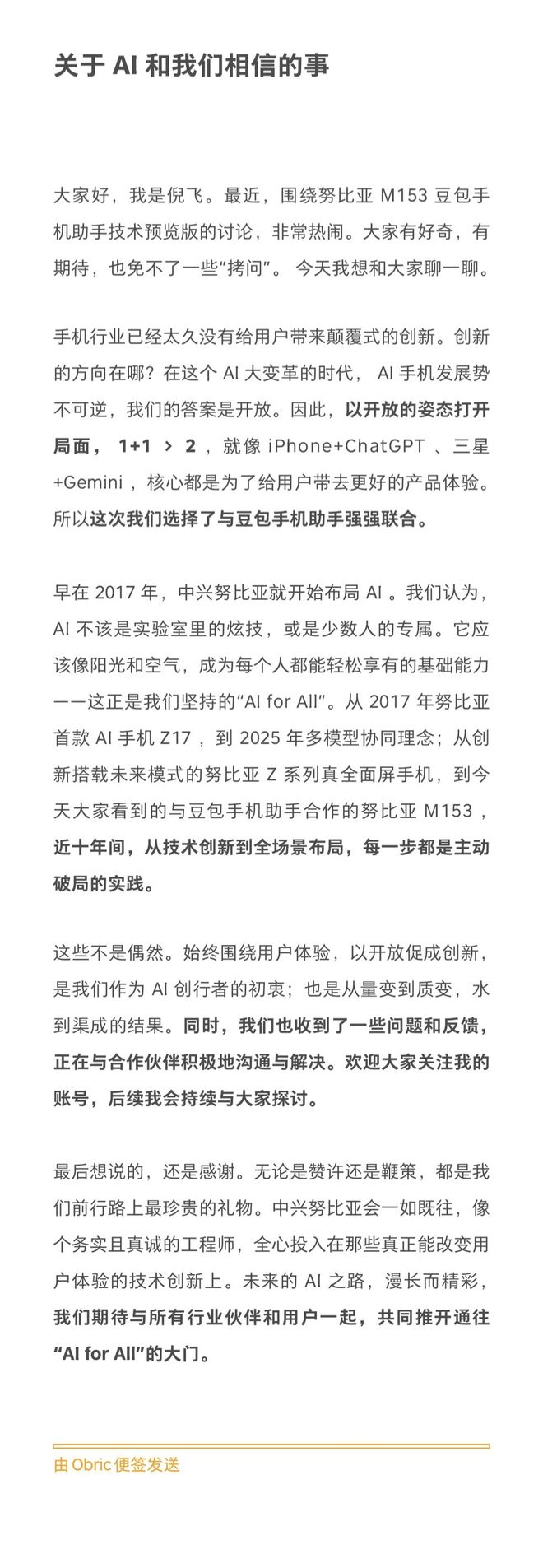
豆包手机二手价被炒到3.6万元
Di Yi Cai Jing· 2025-12-10 09:35
Group 1 - The Nubia M153 AI smartphone, developed in collaboration with Doubao and ZTE, has gained significant market attention following its technical preview release [1] - The official purchase qualification code (F code) for the Nubia M153 has been resold on second-hand platforms like Xianyu for prices ranging from 500 to 1000 yuan, and is now largely unavailable [1] - As the purchase deadline for the F code expired on December 7, demand has shifted entirely to the second-hand market, leading to a price surge on platforms like Xianyu, where new, unopened versions are listed between 3999 and 4999 yuan, with some listings reaching as high as 36000 yuan [1] Group 2 - On December 1, Doubao released the technical preview version of the Doubao Phone Assistant, with the Nubia M153 being sold in limited quantities, primarily targeting developers and tech enthusiasts [5] - The initial sale price of the Nubia M153 was set at 3499 yuan, with a limited stock of 30,000 units, all of which have sold out [5]
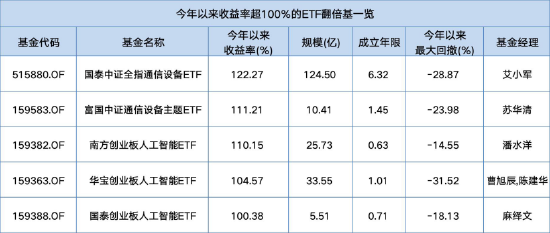
盘点年内翻倍ETF:富国中证通信设备主题ETF涨111%暂居第二,上季增持光迅科技、天孚通信等核心股超470%
Xin Lang Cai Jing· 2025-12-10 09:16
Core Insights - The ETF market has seen a resurgence with five products achieving over 100% annual returns as of December 9, 2025, particularly in the technology sector, including communication equipment and artificial intelligence [1][10]. Performance Overview - The top-performing ETFs with over 100% returns include: - Guotai CSI All-Share Communication Equipment ETF: 122.27% return, 12.45 billion in size, 6.32 years since inception, maximum drawdown of -28.87% [2][11]. - Fuguo CSI Communication Equipment Theme ETF: 111.21% return, 1.04 billion in size, 1.45 years since inception, maximum drawdown of -23.98% [2][11]. - Southern Growth Enterprise Board AI ETF: 110.15% return, 2.57 billion in size, 0.63 years since inception, maximum drawdown of -14.55% [2][11]. - Huabao Growth Enterprise Board AI ETF: 104.57% return, 3.36 billion in size, 1.01 years since inception, maximum drawdown of -31.52% [2][11]. - Guotai Growth Enterprise Board AI ETF: 100.38% return, 0.55 billion in size, 0.71 years since inception, maximum drawdown of -18.13% [2][11]. Fund Management Insights - The Fuguo CSI Communication Equipment Theme ETF, managed by Su Huaqing, has shown strong growth with a total return of 149.10% since inception and an annualized return of 87.49% [5][14]. - The fund's current size is 1.04 billion, and its investment strategy focuses on AI computing infrastructure [6][14]. Portfolio Composition - As of Q3 2025, the fund's top holdings include: - Xinyi Technology: 159.66 million, 436,500 shares, increased by 476.31% [7][15]. - Zhongji Xuchuang: 158.12 million, 391,700 shares, increased by 473.81% [7][15]. - ZTE Corporation: 64.58 million, 1,415,088 shares, increased by 472.91% [7][15]. - Other significant holdings include Tianfu Communication, Unisplendour, and AVIC Optoelectronics, with substantial increases in shareholding [8][16]. Market Trends - The market has responded positively to policies such as the commencement of major projects and the "anti-involution" strategy, leading to a recovery in undervalued cyclical sectors [8][16]. - The technology growth sector, particularly TMT (Technology, Media, and Telecommunications), has significantly outperformed the market, with a focus on AI and new energy sectors [8][16].


豆包手机二手价被炒到3.6万元
第一财经· 2025-12-10 09:16
Core Viewpoint - The collaboration between Doubao and Nubia to develop the AI phone Nubia M153 has generated significant market interest, leading to a surge in secondary market prices due to limited availability of the device [3][6]. Group 1: Product Launch and Market Response - The Nubia M153, equipped with Doubao's mobile assistant technology, was released in a limited quantity aimed at developers and tech enthusiasts, with an initial price of 3499 yuan and a stock of 30,000 units, which quickly sold out [6]. - Following the expiration of the official purchase eligibility (F code) on December 7, 2023, demand shifted entirely to the second-hand market, causing prices on platforms like Xianyu to rise significantly, with listings ranging from 3999 to 4999 yuan, and some reaching as high as 36,000 yuan [3][6]. Group 2: Secondary Market Dynamics - The scarcity of the Nubia M153 has led to a thriving secondary market, where the device's F code has become a sought-after item, previously selling for 500 to 1000 yuan but now largely unavailable [3]. - The emergence of short-term rental services for the Nubia M153, with rental prices between 50 to 79 yuan, indicates a growing interest in the device despite its limited availability [3].

豆包AI手机二手价最高3.6万元 还衍生出短租服务
Feng Huang Wang· 2025-12-10 07:17
凤凰网科技讯 12月10日,近日,豆包和中兴合作研发的努比亚m153手机(豆包AI手机)AI手机引发网 友关注。据了解,该手机官方购机F码(优先购买资格)最迟购买期限已于12月7日截止,如今已无法 通过购买F码在官方渠道购机,这也意味着所有购机需求全面转向二手机交易。 受此影响,该机型在二手平台上价格持续攀升。查询发现,这款手机大部分全新未拆封版本报价3700元 到4999元不等,最高报价36000元。平台上还衍生出短期租赁业务,出租该款手机使用。 ...
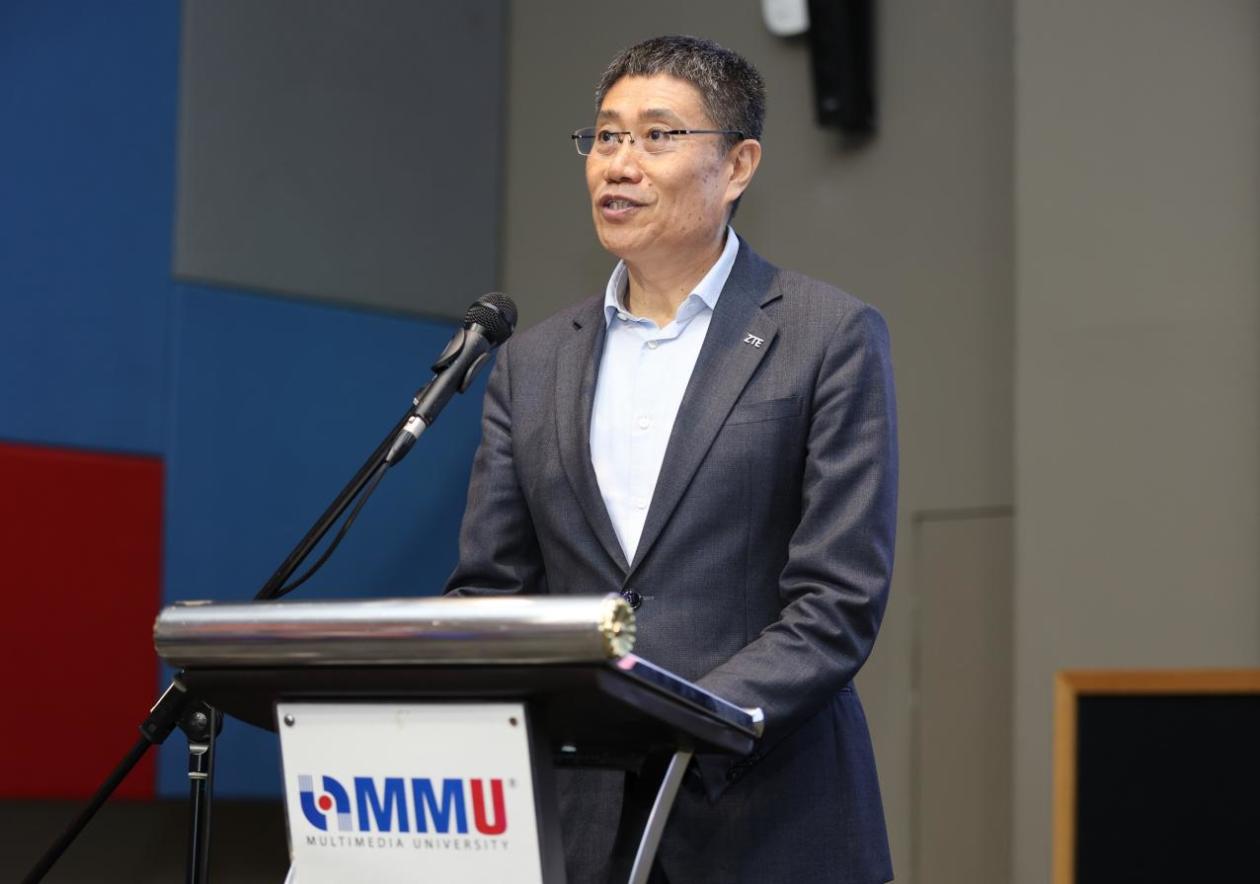
中兴通讯顾军营:携手MMU,构建马来西亚政产学研AI数智创新生态
Huan Qiu Wang· 2025-12-10 06:54
MMU校长拿督Mazliham、马来西亚公共事务部代表Yusri Bin Razalli出席结业典礼并发言,对中兴通讯长期以来在智慧政府和组织人才建设中的贡献表示感 谢,对中兴通讯AiCube平台助力MMU大学数智化教学升级、强化人才培养的重要意义表示肯定,并期待未来与中兴通讯开展更深层次的合作。 中兴通讯努力践行《中华人民共和国和马来西亚关于构建高水平战略性中马命运共同体的联合声明》最新文件精神,积极探讨与马来在科技创新、人才培养 等领域的交流合作。 近日,马来西亚政府"Shaping the future-fit public services with Cybersecurity in AI Landscape"暨"马来西亚政府官员来华培训项目二期"结业典礼在马来西亚多 媒体大学(MMU)隆重举行。中兴通讯高级副总裁顾军营专程出席典礼并致辞。 顾军营称,2025年是中马关系新"黄金50年"的启程之年,中兴通讯将继续支持马来西亚数智人才培养与智慧政府建设,并强调将以AI战略合作协议为新起 点,携手政产学研伙伴构建创新生态,为马来西亚及相关地区发展注入持久动能。期间,中兴通讯与MMU签署《AI合作伙伴协议》 ...