
LENOVO GROUP(00992)

Search documents
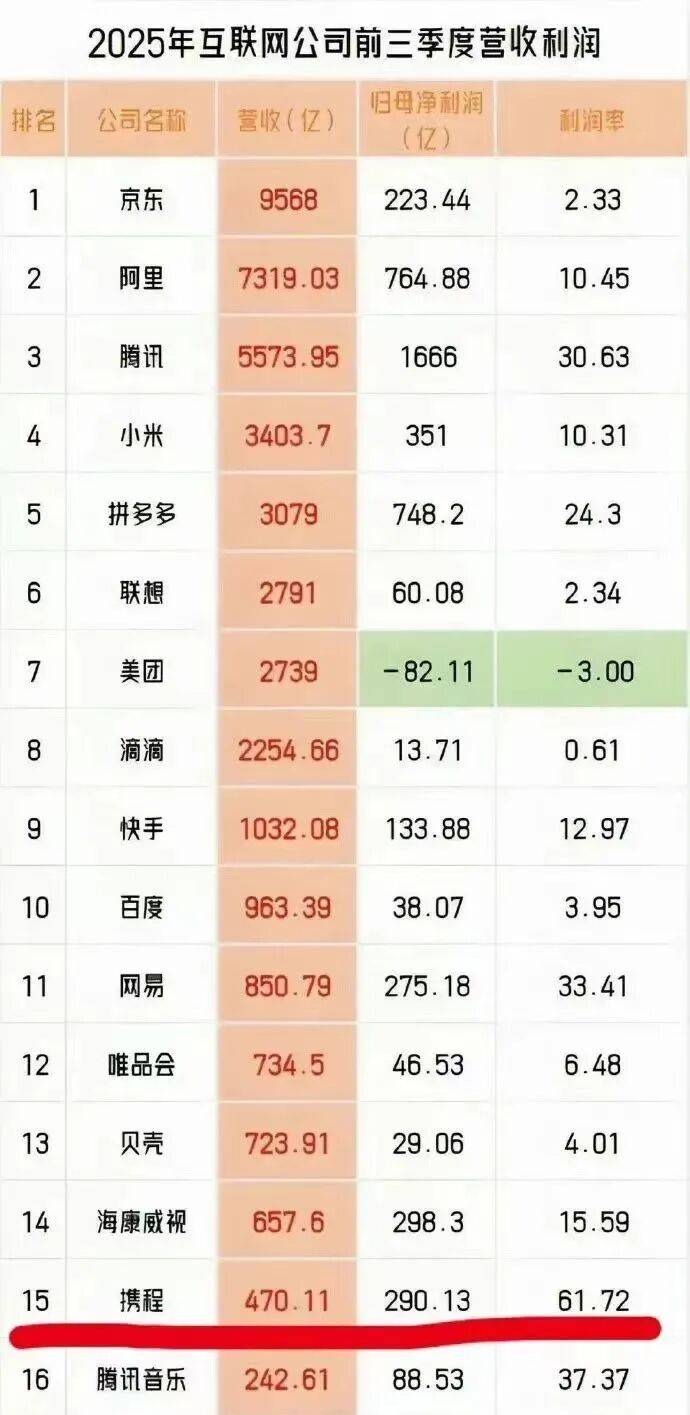
贾国龙再发声:“从来不存在两岁的西蓝花”;马斯克向OpenAI微软索赔千亿美元;欧盟多国考虑对930亿欧元美国商品加征关税...
Sou Hu Cai Jing· 2026-01-19 02:25
Group 1: Internet Company Revenue and Profit - JD.com leads the revenue chart with 956.8 billion, followed by Alibaba at 731.9 billion and Tencent at 557.4 billion [1] - Alibaba's net profit stands at 76.5 billion, significantly higher than JD.com's 22.3 billion, while Tencent shows a strong profit of 166.6 billion [1] - The profit margin for Tencent is notably high at 30.63%, compared to Alibaba's 10.45% and JD.com's 2.33% [1] Group 2: Market Trends and Insights - The data indicates a competitive landscape among major internet companies, with varying revenue and profit margins suggesting different business strategies and operational efficiencies [1] - The significant profit margins of Tencent may indicate a focus on high-margin services, while JD.com and Alibaba are still scaling their operations [1] Group 3: Financial Performance Overview - The overall financial performance of the top internet companies reflects a diverse range of growth strategies, with some companies prioritizing revenue growth while others focus on profitability [1] - The financial results for the third quarter of 2025 highlight the ongoing evolution of the internet sector in China, with implications for future investment opportunities [1]


联想申请一种启动方法及电子设备专利,基于目标数据执行电子设备的启动引导
Jin Rong Jie· 2026-01-17 08:19
Core Insights - Lenovo (Beijing) Co., Ltd. has applied for a patent titled "A Startup Method and Electronic Device," with publication number CN121326426A, filed on September 2025 [1] - The patent describes a startup method applicable to the first processing core of electronic devices, which includes determining whether a second processing core is activated during the power-on boot process [1] Company Overview - Lenovo (Beijing) Co., Ltd. was established in 1992 and is located in Beijing, primarily engaged in the manufacturing of computers, communications, and other electronic devices [1] - The company has a registered capital of 565 million Hong Kong dollars and has invested in 107 enterprises, participated in 5,000 bidding projects, and holds 1,744 trademark records and 5,000 patent records [1]

联想取得一种壳体及电子设备专利,可减少原材料堆积
Jin Rong Jie· 2026-01-17 06:37
声明:市场有风险,投资需谨慎。本文为AI基于第三方数据生成,仅供参考,不构成个人投资建议。 本文源自:市场资讯 作者:情报员 国家知识产权局信息显示,联想(北京)有限公司取得一项名为"一种壳体及电子设备"的专利,授权公 告号CN223809995U,申请日期为2024年12月。 专利摘要显示,本公开提供一种壳体及电子设备,所述壳体可以包括:第一结构件和目标件,所述第一 结构件的第一表面具有支撑部,所述支撑部与所述第一表面之间具有目标空间,所述目标空间用于减少 所述支撑部和所述第一表面之间的原材料堆积,以使所述第一结构件不同位置的成型时间满足一致条 件,且所述支撑部设置有相对所述目标空间的第一开孔;所述目标件与所述支撑部连接,至少部分位于 所述目标空间并设置有第二开孔,所述第二开孔用于提供连接空间或所述第二开孔和所述第一开孔配合 以用于提供连接空间;所述第二开孔或所述第二开孔配合所述第一开孔的长度为第一值,所述支撑部的 厚度为第二值,所述第一值大于所述第二值。 天眼查资料显示,联想(北京)有限公司,成立于1992年,位于北京市,是一家以从事计算机、通信和 其他电子设备制造业为主的企业。企业注册资本565000万 ...
联想申请电源电路及电子设备专利,提高从单个输入电压向多个不同输出电压的转换效率
Jin Rong Jie· 2026-01-17 05:01
作者:情报员 国家知识产权局信息显示,联想(新加坡)私人有限公司申请一项名为"电源电路以及电子设备"的专 利,公开号CN121333093A,申请日期为2025年6月。 专利摘要显示,本发明涉及电源电路以及电子设备。提高从单个输入电压向多个不同的输出电压的转换 效率。是将单个输入电压转换为多个阶段的输出电压的电源电路,具备:一个以上的开关电容器,能够 以一个阶段以上的变压比对上述输入电压进行变压,上述输入电压越高则应用越低的变压比;以及一个 以上的调节器,将基于来自上述开关电容器的输出功率的中间电压调整为上述输出电压。 声明:市场有风险,投资需谨慎。本文为AI基于第三方数据生成,仅供参考,不构成个人投资建议。 本文源自:市场资讯 ...
联想取得电子设备专利,辐射体设有镂空部用以避让目标器件
Jin Rong Jie· 2026-01-17 04:00
Group 1 - Lenovo (Beijing) Co., Ltd. has obtained a patent for an "electronic device" with authorization announcement number CN223809242U, applied on January 2025 [1] - The patent summary indicates that the electronic device includes a metal housing with a window area and a radiator positioned in the window area for external communication, featuring a hollow part to avoid target devices [1] - Lenovo (Beijing) Co., Ltd. was established in 1992 and is primarily engaged in the manufacturing of computers, communications, and other electronic devices, with a registered capital of 565 million HKD [1] Group 2 - According to Tianyancha data, Lenovo (Beijing) Co., Ltd. has invested in 107 companies, participated in 5,000 bidding projects, and has 1,744 trademark records and 5,000 patent records [1] - The company also holds 238 administrative licenses [1]
联想取得安装结构及电子设备专利,主体的第一侧基于第二侧转动
Jin Rong Jie· 2026-01-17 04:00
Group 1 - Lenovo (Beijing) Co., Ltd. has obtained a patent titled "Installation Structure and Electronic Equipment," with authorization announcement number CN223808731U, and the application date is December 2024 [1] - The patent abstract describes an installation structure that includes a main body and a rotating mechanism, where one side of the main body has an opening for hard disk installation, and the opposite side has a backplane for connecting the hard disk [1] - The rotating mechanism is connected to the second side of the main body, allowing the first side to rotate based on the second side [1] Group 2 - Lenovo (Beijing) Co., Ltd. was established in 1992 and is located in Beijing, primarily engaged in the manufacturing of computers, communications, and other electronic devices [1] - The company has a registered capital of 565 million Hong Kong dollars and has made investments in 107 enterprises, participated in 5,000 bidding projects, and holds 1,744 trademark records and 5,000 patent records [1] - Additionally, the company possesses 238 administrative licenses [1]
联想取得接地结构和电子设备专利,能为接地件连接提供目标作用力
Jin Rong Jie· 2026-01-17 04:00
Group 1 - Lenovo (Beijing) Co., Ltd. has obtained a patent titled "Grounding Structure and Electronic Device," with the authorization announcement number CN223809259U, and the application date is December 2024 [1] - The patent summary indicates that the application provides a grounding structure and electronic device, which includes a bracket with a receiving cavity and a conductive component that connects to a grounding element, sealing the receiving cavity [1] - The receiving cavity contains a target gas that can provide a target force to the conductive component, with the target force being greater than zero [1] Group 2 - Lenovo (Beijing) Co., Ltd. was established in 1992 and is located in Beijing, primarily engaged in the manufacturing of computers, communications, and other electronic devices [1] - The company has a registered capital of 565 million Hong Kong dollars and has invested in 107 enterprises, participated in 5,000 bidding projects, and holds 1,744 trademark records and 5,000 patent records [1] - Additionally, the company possesses 238 administrative licenses [1]
联想申请一种设备运行方法专利,第一模式下第一设备至少不响应部分访问请求
Jin Rong Jie· 2026-01-17 02:41
声明:市场有风险,投资需谨慎。本文为AI基于第三方数据生成,仅供参考,不构成个人投资建议。 本文源自:市场资讯 作者:情报员 国家知识产权局信息显示,联想(北京)有限公司申请一项名为"一种设备运行方法"的专利,公开号 CN121327835A,申请日期为2025年8月。 专利摘要显示,本申请提供了一种设备运行方法,应用于第一设备,包括:获得第一指令;所述第一指 令用于启动所述第一设备;响应于所述第一指令,运行第一系统;所述第一设备配置有第一系统和第二 系统,所述第一系统用于引导所述第二系统;在所述第一系统运行过程中,响应存在标识信息,进入第 一模式;所述标识信息是所述第一设备响应第二设备的第二指令设置的,所述第一模式下所述第一设备 至少不响应部分访问请求。 天眼查资料显示,联想(北京)有限公司,成立于1992年,位于北京市,是一家以从事计算机、通信和 其他电子设备制造业为主的企业。企业注册资本565000万港元。通过天眼查大数据分析,联想(北京) 有限公司共对外投资了107家企业,参与招投标项目5000次,财产线索方面有商标信息1636条,专利信 息5000条,此外企业还拥有行政许可238个。 ...
CES还是消费电子展吗?中企给出正确答案
Guan Cha Zhe Wang· 2026-01-17 01:40
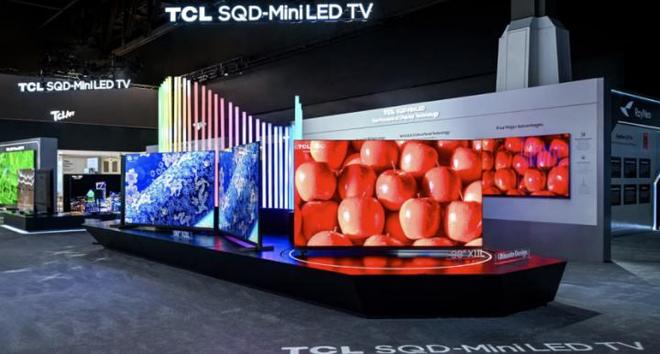
Core Insights - The CES 2026 has shifted from a consumer electronics showcase to a platform dominated by discussions on data centers and AI, primarily led by American tech giants like Nvidia and AMD, while Chinese companies focus on consumer-oriented products [1][2][13] - Nvidia's data center revenue reached $51.25 billion in Q3 2025, a 66% year-over-year increase, highlighting a structural imbalance in focus away from consumer needs [1][15] - Chinese companies like TCL and Hisense showcased tangible consumer products, emphasizing practical applications and user-friendly technology, contrasting with the abstract discussions of their American counterparts [3][4][6][15] Group 1: Industry Trends - The trend of "edge computing" is emphasized by Chinese firms, focusing on local processing power rather than cloud dependency, reflecting a deep understanding of consumer needs [13][14] - The evolution of product forms is evident, with innovations like the Honor ROBOT PHONE and the Stone G-Rover, which address real-life consumer challenges [13][14] - Chinese companies are showcasing products that are ready for mass production and purchase, unlike many Western firms that present conceptual prototypes [14][15] Group 2: Consumer Focus - Chinese enterprises are prioritizing consumer needs, as seen in TCL's and Hisense's product offerings that are accessible and understandable to the average user [3][4][6] - The consumer response to AI PCs has been lukewarm, with many users expressing confusion rather than excitement, indicating a disconnect between tech advancements and consumer expectations [2][12] - The success of products like the Stone G-Rover and the Lenovo Qira demonstrates a shift towards practical, user-friendly technology that resonates with everyday consumers [8][12][15] Group 3: Competitive Landscape - The disparity in focus between American and Chinese companies is evident, with the former leaning towards high-performance computing and the latter addressing everyday consumer problems [1][15] - The CES 2026 highlighted a potential future where American tech firms continue to dominate technical discussions while Chinese companies redefine consumer electronics with practical products [16][17] - The ongoing competition suggests that understanding consumer needs will be crucial for success in the evolving tech landscape, with Chinese firms currently leading in this regard [16][17]



联想取得一种电子设备专利,向电子设备提供不同的辅助功能
Jin Rong Jie· 2026-01-17 00:53
Group 1 - Lenovo (Beijing) Co., Ltd. has obtained a patent for an electronic device, with the authorization announcement number CN223808703U, applied on January 2025 [1] - The patent describes an electronic device consisting of a first body and a second body that are rotatably connected, allowing the device to have different forms [1] - The device includes a photoelectric conversion module that can move relative to the first body to change their positional relationship, providing different auxiliary functions depending on the device's form [1] Group 2 - Lenovo (Beijing) Co., Ltd. was established in 1992 and is located in Beijing, primarily engaged in the manufacturing of computers, communications, and other electronic devices [1] - The company has a registered capital of 565 million Hong Kong dollars and has invested in 107 enterprises, participated in 5,000 bidding projects, and holds 1,744 trademark records and 5,000 patent records [1] - Additionally, the company possesses 238 administrative licenses [1]