
LENOVO GROUP(00992)

Search documents
份额高达73.8%!联想领跑中央国家机关台式机集采
Ge Long Hui· 2026-02-27 03:32
Core Insights - Lenovo Beijing achieved a significant victory in the centralized procurement project for desktop computers, securing 1,434 units, which accounts for 73.8% of the total market share, far surpassing the second-place Softcom with 216 units and third-place Huawei with 114 units [1] - The procurement was based on the new configuration standards for desktop and portable computers (2025 version), implementing strict price limits and reliability assessments, leading to a substantial increase in the penetration of domestic CPUs and operating systems [1] - Lenovo's success is attributed to its Intel technology, mature supply chain, and strong government enterprise channel capabilities, highlighting its brand strength and trust within the government market [1] Desktop Computers - Lenovo Beijing's performance in the desktop computer segment reflects its technical strength, supply assurance, and brand trust in the high-end desktop market for government and public sectors [1] - The company’s leading position is further solidified by the accelerating trend of domestic CPU and operating system replacements, which enhances its product compatibility, performance, and cost advantages [1] Portable Computers - In the portable computer category, Lenovo's Kaitian notebook secured second place with 14 units, following Acer's 61 units, maintaining a stable presence in the government enterprise lightweight laptop market [1] Printers - Although Lenovo did not rank in the top three for printer procurement, the overall product portfolio in government enterprise channels remains advantageous for the company in the long term [1]

联想取得电源切换方法、装置及系统专利
Jin Rong Jie· 2026-02-27 02:14
Group 1 - Lenovo (Beijing) Co., Ltd. has obtained a patent for a "power switching method, device, and system," with the authorization announcement number CN114465345B, and the application date was March 2022 [1] - Lenovo (Beijing) Co., Ltd. was established in 1992 and is located in Beijing, primarily engaged in the manufacturing of computers, communications, and other electronic devices [1] - The registered capital of Lenovo (Beijing) Co., Ltd. is 565 million Hong Kong dollars [1] Group 2 - Lenovo (Beijing) Co., Ltd. has invested in 107 companies and participated in 5,000 bidding projects [1] - The company has 1,747 trademark information entries and 5,000 patent information entries, along with 238 administrative licenses [1]
联想取得数据处理方法及装置专利
Jin Rong Jie· 2026-02-27 01:21
本文源自:市场资讯 天眼查资料显示,联想(北京)有限公司,成立于1992年,位于北京市,是一家以从事计算机、通信和 其他电子设备制造业为主的企业。企业注册资本565000万港元。通过天眼查大数据分析,联想(北京) 有限公司共对外投资了107家企业,参与招投标项目5000次,财产线索方面有商标信息1747条,专利信 息5000条,此外企业还拥有行政许可238个。 声明:市场有风险,投资需谨慎。本文为AI基于第三方数据生成,仅供参考,不构成个人投资建议。 国家知识产权局信息显示,联想(北京)有限公司取得一项名为"一种数据处理方法以及装置"的专利, 授权公告号CN114882107B,申请日期为2022年4月。 作者:情报员 ...
联想申请刷新率配置方法专利,基于未来交互信息确定目标刷新率配置参数
Jin Rong Jie· 2026-02-27 00:39
国家知识产权局信息显示,联想(北京)有限公司申请一项名为"刷新率配置方法及电子设备"的专利, 公开号CN121565073A,申请日期为2025年11月。 本文源自:市场资讯 作者:情报员 天眼查资料显示,联想(北京)有限公司,成立于1992年,位于北京市,是一家以从事计算机、通信和 其他电子设备制造业为主的企业。企业注册资本565000万港元。通过天眼查大数据分析,联想(北京) 有限公司共对外投资了107家企业,参与招投标项目5000次,财产线索方面有商标信息1747条,专利信 息5000条,此外企业还拥有行政许可238个。 声明:市场有风险,投资需谨慎。本文为AI基于第三方数据生成,仅供参考,不构成个人投资建议。 专利摘要显示,本申请公开了一种刷新率配置方法及装置,所述方法包括:获取目标对象与显示屏之间 的第一交互信息;所述第一交互信息表征未来第一时段内所述目标对象与所述显示屏之间的交互信息; 响应于接收到目标交互事件,基于所述第一交互信息,确定目标刷新率配置参数;其中,所述目标刷新 率配置参数作用于所述显示屏的刷新率调整。 ...
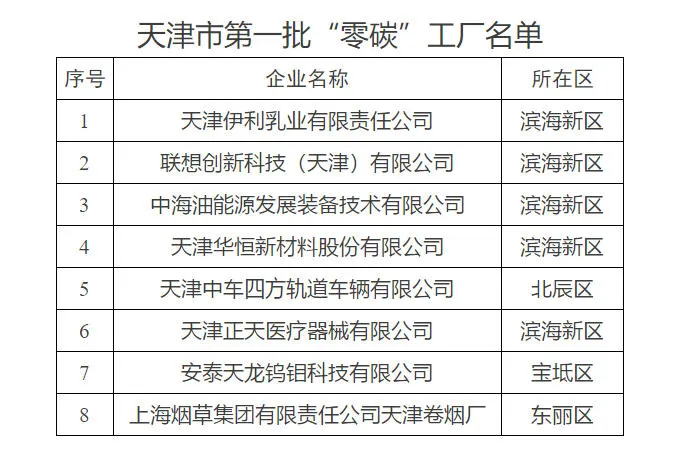
天津公布首批“零碳”工厂名单,8家企业入选
Cai Jing Wang· 2026-02-26 08:22
Group 1 - The Tianjin Municipal Bureau of Industry and Information Technology announced the first batch of "zero-carbon" factories in Tianjin, which includes eight companies [1] - The selected companies are Tianjin Yili Industrial Co., Ltd., Lenovo Innovation Technology (Tianjin) Co., Ltd., CNOOC Energy Development Equipment Technology Co., Ltd., and Tianjin Huaheng New Materials Co., Ltd. [1]



联想年销7000万台电脑,却搞砸了预算250元的活动
Xin Lang Cai Jing· 2026-02-26 08:15
Core Viewpoint - Lenovo has emerged as a leading player in the global PC market, achieving significant market share and growth, while facing challenges related to supply chain pressures and brand perception due to a recent marketing misstep [4][5][49][90]. Group 1: Market Position and Performance - In 2025, Lenovo's global PC shipment is projected to reach 73.57 million units, capturing a market share of 27.2%, significantly ahead of HP at 21.3% and Dell at 15.3% [4][49]. - Lenovo's year-on-year growth rate is expected to be 17.6%, outpacing the overall global PC market growth of approximately 9.6% [5][50]. - The company has maintained its position as the global leader in PC shipments for 13 consecutive years, reinforcing its dominance in the industry [90]. Group 2: Recent Marketing Controversy - Lenovo faced backlash due to a marketing campaign that encouraged cinema-goers to capture footage of its ThinkPad products in the film "Fast Life 3," which was perceived as promoting copyright infringement [11][60]. - The campaign was quickly retracted after just two hours due to public criticism and concerns over violating industry norms regarding film content [16][62]. - This incident highlights the sensitivity of copyright issues in the film industry and raises questions about Lenovo's understanding of market dynamics, especially given its global presence [67][90]. Group 3: Future Challenges - Lenovo's growth in 2025 is seen as a recovery phase, with potential challenges looming as supply chain issues persist, particularly with rising prices for DRAM and NAND Flash components [22][68]. - The company is expected to face pressure on PC shipments, with CEO Yang Yuanqing acknowledging the need to manage inventory effectively to mitigate these challenges [68][69]. - The introduction of AI PCs, such as the ThinkPad X1/X9 Aura Edition, aims to capture a younger audience, but the effectiveness of these products in meeting market demands remains uncertain [78][80].
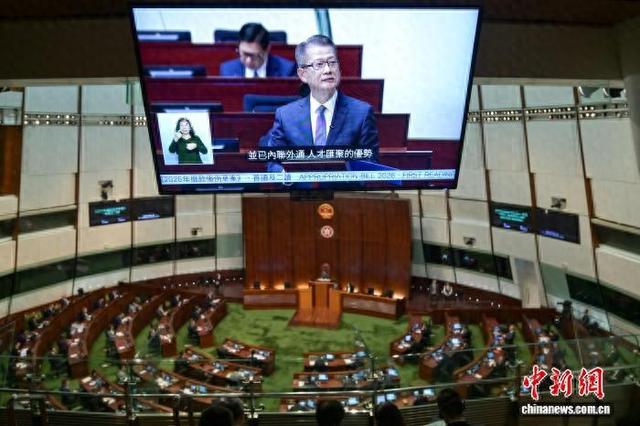
香港创科界:财政预算案为国际创科中心建设注入动能
Xin Lang Cai Jing· 2026-02-25 14:54
Group 1 - The Hong Kong government has announced a new budget focused on "innovation and technology" as a core theme, aiming to inject continuous momentum into the construction of an international innovation and technology center in Hong Kong [1][3] - The budget includes the establishment of an "Innovation and Technology Industry Guidance Fund," which is expected to effectively implement major initiatives outlined in the "Hong Kong Innovation and Technology Development Blueprint" [3] - The budget emphasizes the concept of "universal AI training," with the Hong Kong Generative AI Research Center committed to providing AI application services that meet the needs of citizens, promoting the vision of widespread AI utilization [3] Group 2 - The budget proposes accelerating the development of the Northern Metropolis area, with companies like Lenovo expressing their intention to actively participate, enhancing Hong Kong's integration into the Guangdong-Hong Kong-Macao Greater Bay Area innovation system [3] - Various organizations, including the Hong Kong Academy of Sciences and the Hong Kong Young Academy of Sciences, have noted that the budget's measures align with the national "14th Five-Year Plan," aiming to attract top global research teams and high-end technology talent to make innovation a new engine for Hong Kong's future development [3][4] - The chairman of the Hong Kong Science Park Company emphasized the importance of collaboration among government, industry, academia, research, and investment sectors to leverage Hong Kong's unique advantages under "One Country, Two Systems" and accelerate the cultivation of new productive forces [4]
氪星晚报|英特尔与SambaNova达成多年战略合作;宗馥莉任浙江娃哈哈管理咨询公司董事;特斯拉指控法国饮料公司恶意抢注Cybercab商标
3 6 Ke· 2026-02-25 10:39
Group 1: Company Updates - Hengdian Film's stock price has deviated by over 20% in the last two trading days, indicating abnormal volatility, but the company confirms no undisclosed significant information exists [1] - Maiwei Co. plans to invest 50 million yuan in Wenzhou Chaoquan Venture Capital Partnership to expand its business scope and enhance competitiveness [2] - SMIC's application to issue shares for acquiring a 49% stake in SMIC North has been accepted by the Shanghai Stock Exchange, pending further approvals [3] - The Arnault family has increased its stake in LVMH to 50.01% of capital and 65.94% of voting rights [4] - Lenovo's infrastructure business reported over 30% year-on-year revenue growth in Q3, with significant increases in various segments, including a 300% rise in liquid cooling solutions [5] Group 2: Market Movements - Tongyuan Petroleum's stock price has increased by over 30% in two consecutive trading days, with no significant changes in its operational environment [6] - DoorDash is exiting four markets, including Qatar and Singapore, as part of a strategic review [8] - WiseTech Global plans to reduce its workforce by nearly 30% while leveraging AI for cost savings [11] Group 3: Investment and Financing - Wuliangye Group has acquired a stake in Sanjiang Huihai Financing Leasing Company, increasing its registered capital by approximately 60% [9] - Warner Bros. is considering a new acquisition offer from Paramount, which may surpass its existing agreement with Netflix [10]




国海证券:维持联想集团“买入”评级 战略重组促进ISG业务加速重回盈利轨道
Zhi Tong Cai Jing· 2026-02-25 09:50
Core Viewpoint - The report from Guohai Securities indicates significant progress in Lenovo Group's hybrid AI, leading to an adjustment in the company's profit forecast, with expected revenues for FY2026-FY2028 at $80.144 billion, $87.6 billion, and $93.235 billion respectively, and non-HKFRS net profits at $1.796 billion, $1.973 billion, and $2.111 billion respectively, maintaining a "Buy" rating [1] Group Summaries - In FY2026 Q3, Lenovo achieved approximately $22.204 billion in revenue, representing an 18% year-over-year increase and an 8.6% quarter-over-quarter increase, with a gross margin of about 15% and a net profit of $546 million, reflecting a 60% quarter-over-quarter increase [1] - The adjusted net profit for FY2026 Q3 was approximately $589 million, a 36% year-over-year increase, with the growth rate being double that of revenue growth, and the adjusted net profit margin increased by 34 basis points to 2.7%, indicating improved operational leverage and efficiency [2] - The Intelligent Devices Group saw a 14% year-over-year revenue growth and a 15% increase in operating profit, driven by higher average selling prices and improved profit margins in high-end PCs and AI-related products [3] - The Infrastructure Solutions Group achieved a record revenue of $5.2 billion, a 31% year-over-year increase, benefiting from an expanded customer base in cloud infrastructure, and is undergoing a strategic restructuring to enhance profitability, with a one-time restructuring cost of $285 million [4] - The Solutions Services Group reported an 18% year-over-year revenue growth, marking 19 consecutive quarters of double-digit growth, with an operating profit margin of 22.5%, driven by increased revenue from operational services and project solutions [5]

国海证券:维持联想集团(00992)“买入”评级 战略重组促进ISG业务加速重回盈利轨道
智通财经网· 2026-02-25 09:49
Core Viewpoint - Lenovo Group has made significant progress in hybrid AI, leading to an adjustment in revenue and profit forecasts for FY2026-FY2028, with a maintained "Buy" rating from Guohai Securities [1] Group Summaries Financial Performance - For FY2026 Q3, Lenovo reported revenue of approximately $22.204 billion, representing an 18% year-on-year increase and an 8.6% quarter-on-quarter increase; gross margin was around 15%; net profit reached $546 million, a 60% quarter-on-quarter increase; non-HKFRS net profit was $589 million, a 36% year-on-year increase [1][2] AI and Efficiency Gains - The significant growth in adjusted net profit is primarily attributed to efficiency optimization and an increase in high-end product contributions; AI-related revenue grew by 72%, accounting for 32% of total revenue [2] Smart Devices Business Group - The Smart Devices Business Group saw a 14% year-on-year revenue increase and a 15% year-on-year operating profit increase, driven by higher average selling prices and improved profit margins in high-end personal computers and gaming PCs [3] Infrastructure Solutions Group - The Infrastructure Solutions Group achieved record revenue of $5.2 billion, a 31% year-on-year increase, supported by an expanding customer base in cloud infrastructure; a strategic restructuring plan was implemented, incurring a one-time cost of $285 million, aimed at optimizing cost structures and improving operational capabilities [4] Solutions Services Business Group - The Solutions Services Business Group reported an 18% year-on-year revenue increase, marking 19 consecutive quarters of double-digit growth; operating profit margin rose to 22.5%, nearing historical highs, with a focus on IT services in rapidly growing sectors, targeting a potential market size of $360 billion [5]