
LENOVO GROUP(00992)

Search documents
联想取得电子设备专利,第一本体与第二本体处于目标相对位置关系形成贯穿于电子设备全部侧面的一条缝隙
Jin Rong Jie· 2026-01-17 00:33
Group 1 - Lenovo (Beijing) Co., Ltd. has obtained a patent for an "electronic device," with authorization announcement number CN223808675U, applied on December 2024 [1] - The patent relates to the field of computers, specifically an electronic device that includes a first body, a second body, and a connecting mechanism, allowing the first body to be flip-connected to the second body [1] - The electronic device is designed to maintain a target relative position relationship between the first and second bodies, with the first body partially obscuring the second body to indicate the device is in a target posture [1] Group 2 - Lenovo (Beijing) Co., Ltd. was established in 1992 and is located in Beijing, primarily engaged in the manufacturing of computers, communications, and other electronic devices [1] - The company has a registered capital of 565 million Hong Kong dollars and has invested in 107 enterprises, participated in 5,000 bidding projects, and holds 1,744 trademark records and 5,000 patent records [1] - Additionally, Lenovo (Beijing) Co., Ltd. possesses 238 administrative licenses [1]

物理AI,联想先行
2 1 Shi Ji Jing Ji Bao Dao· 2026-01-16 14:32
Core Insights - The term "Physical AI" has become a hot topic in 2026, with significant discussions around the practical application of AI in real-world scenarios, particularly highlighted at CES where Huang Renxun mentioned it 17 times [1][2] - The challenge of implementing AI in practical settings, referred to as the "last mile," is being addressed more effectively in China compared to Silicon Valley, due to its rich application scenarios and mature AI infrastructure [2] Company Strategies - Lenovo has developed a "Human-Centric AI" strategy, focusing on personalized AI solutions for both individuals and enterprises, emphasizing that a one-size-fits-all approach is no longer viable [3][6] - The introduction of Lenovo's hybrid AI strategy aims to provide scalable AI solutions that can be industrially delivered, leveraging Lenovo's extensive computing device manufacturing capabilities [3][17] Product Innovations - Lenovo unveiled the personal AI super agent, Lenovo Qira, which connects various devices and learns user preferences to provide seamless task execution and privacy protection [6][9] - The Lenovo Personal AI Hub Concept Project Kubit allows users to run complex AI models locally, addressing concerns about computational power and data privacy [10] Industrial Applications - Lenovo's AI cloud super factory aims to streamline the deployment of AI infrastructure for enterprises, significantly reducing the time required for AI model implementation [17] - The company has developed liquid cooling technology to manage the energy consumption and heat generated by large AI models, positioning it as a potential industry standard [19] AI in Sports - Lenovo is collaborating with FIFA to introduce the Football AI Pro, an enterprise-level AI system that will provide data analysis and insights during the 2026 FIFA World Cup [20][21] - Various AI technologies, including 3D visualization and enhanced video systems, will be tested during the World Cup to improve decision-making and viewer experience [24][25] Conclusion - The ultimate goal of Physical AI is to enhance human experiences, making AI as accessible and essential as utilities like water and electricity, as emphasized by Lenovo's leadership [26]

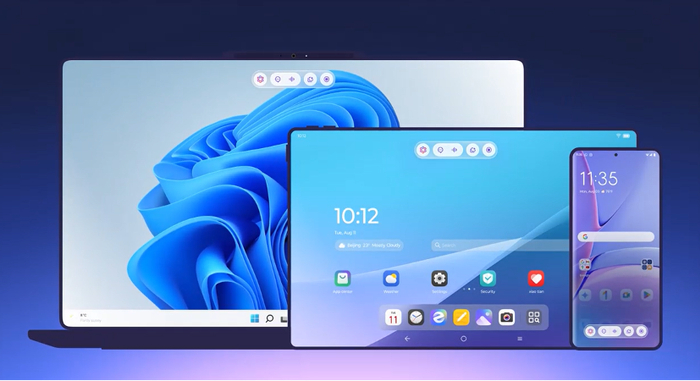
联想取得一种连接件及电子设备专利,实现结构件在杆体内外的可靠连接
Jin Rong Jie· 2026-01-16 13:10
Group 1 - Lenovo (Beijing) Co., Ltd. has obtained a patent titled "A Connector and Electronic Device," with authorization announcement number CN223806441U, and the application date is March 2025 [1] - The patent summary indicates that the connector includes a rod body, a first connection part, and a second connection part, with specific configurations for connecting structural components [1] - Lenovo (Beijing) Co., Ltd. was established in 1992 and is primarily engaged in the manufacturing of computers, communications, and other electronic devices, with a registered capital of 5.65 billion HKD [1] Group 2 - According to Tianyancha data, Lenovo (Beijing) Co., Ltd. has invested in 107 companies, participated in 5,000 bidding projects, and holds 1,744 trademark records and 5,000 patent records [1] - The company also possesses 238 administrative licenses, indicating a robust operational framework and regulatory compliance [1]
如何构建下一代AI生态?联想:个人AI与企业AI双轮驱动
Zhong Guo Jin Rong Xin Xi Wang· 2026-01-16 12:17
Core Viewpoint - The trend of hybrid AI is becoming inevitable, as it aims to create personalized and diverse AI solutions, accelerating the transition of AI into practical applications [1] Group 1: Hybrid AI Concept - Hybrid AI combines personal AI, enterprise AI, and public AI for collaborative and complementary use [2] - Lenovo has launched its first global personal super-intelligent agent, Lenovo Qira (known as "Tianxi Intelligent Agent" in China), along with new AI PCs, AI smartphones, and wearable devices [2] - Lenovo Qira enables seamless switching across various devices and has the capability to connect and coordinate multiple intelligent agents, remembering user preferences and predicting needs while ensuring privacy [2] Group 2: Market Insights and Projections - The Tianxi Intelligent Agent ecosystem in China has reached 10,000 developers and 5,000 intelligent agent partners, with plans to upgrade to version 4.0 by 2026 [2] - Research indicates that by 2025, AI PCs will account for over 30% of the PC business, with Lenovo aiming for over 50% by 2026 [2] Group 3: Enterprise AI Applications - Lenovo plans to collaborate with NVIDIA in 2025 to release a hybrid AI advantage set, providing essential capabilities for enterprise AI applications [2] - The core technology module, Qingtian Engine, will support the development of Lenovo xCloud Smart Cloud, Lenovo Baiying, Lenovo Qingtian Intelligent Agent solutions, and Lenovo's full-cycle AI services to meet the diverse AI application needs of government and enterprise clients in China [2] Group 4: Case Study and Internal Efficiency - Lenovo has assisted Yili Group in integrating AI into its production system, resulting in significant reductions in transportation costs and maintaining a 98% on-time delivery rate [3] - The company has developed an enterprise super-intelligent agent, Lenovo Lexiang, which has integrated over 200 intelligent agents into its internal processes, enhancing operational efficiency and achieving cost reduction [3]
联想取得输入设备以及电子设备专利,以使得盖体的第一端部能够沿第一方向的反方向动作
Jin Rong Jie· 2026-01-16 11:59
Group 1 - Lenovo (Beijing) Co., Ltd. has obtained a patent for "Input Devices and Electronic Devices," with the announcement number CN223808708U and an application date of December 2024 [1] - The patent describes an input device that includes a body, a cover, and a support component, indicating advancements in input device technology [1] - The company was established in 1992 and is primarily engaged in the manufacturing of computers, communications, and other electronic devices, with a registered capital of 565 million HKD [1] Group 2 - Lenovo (Beijing) Co., Ltd. has made investments in 107 companies and participated in 5,000 bidding projects [1] - The company holds 1,744 trademark records and 5,000 patent records, along with 238 administrative licenses [1]
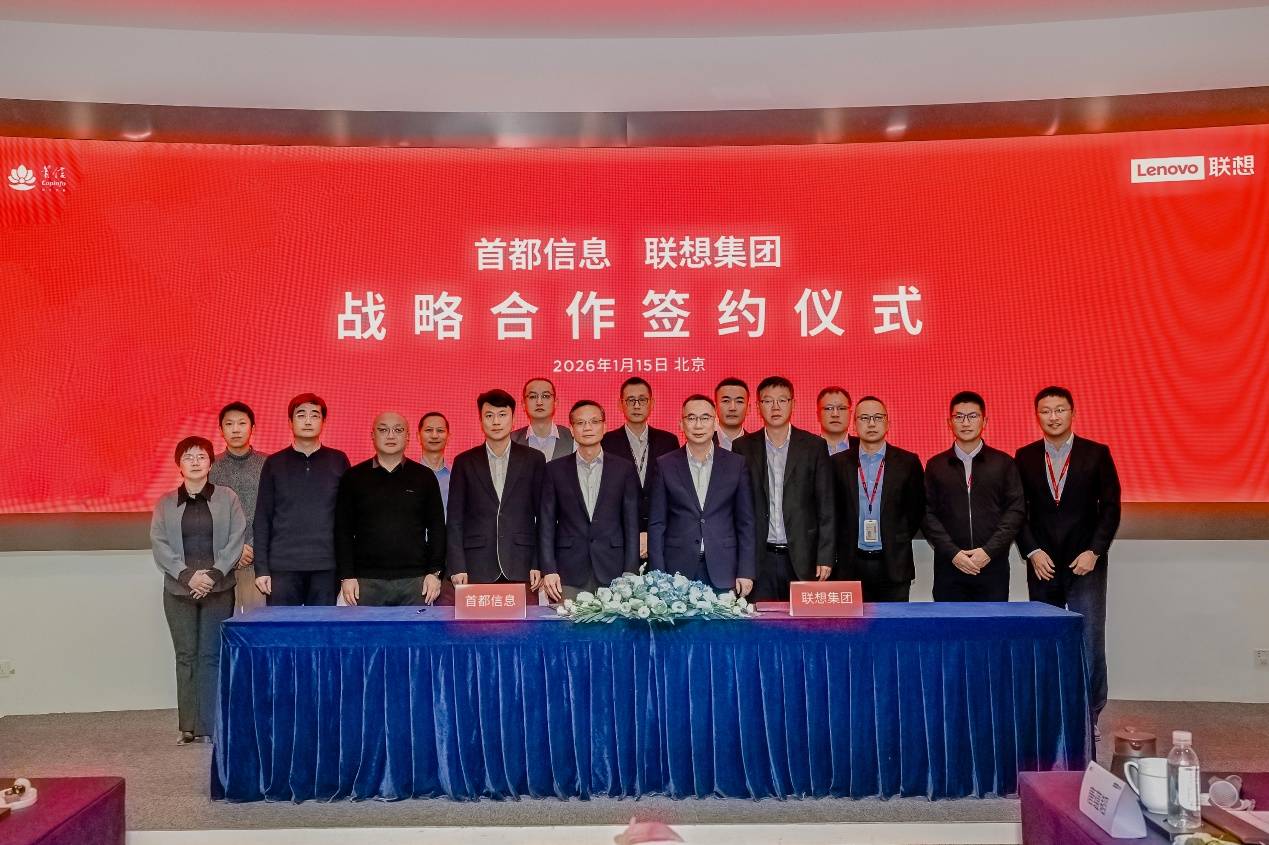
联想集团与首都信息签署战略合作协议 共同推动“人工智能+”行动落地
Sou Hu Cai Jing· 2026-01-16 10:46
Core Insights - Lenovo Group and Capital Information Development Co., Ltd. have established a strategic partnership to collaborate in big data, artificial intelligence, cloud computing, and enterprise digital transformation, aiming to promote China's "AI+" initiative and support national development [1][2][4]. Group 1 - The strategic cooperation will involve the formation of a strategic cooperation committee responsible for market information sharing, joint business execution plans, and market development [4]. - Capital Information's Chairman praised Lenovo's achievements in AI, highlighting Lenovo's role as a leader in market-oriented and globalized AI solutions [4]. - Lenovo's non-PC business has reached nearly 50% of its total revenue after eight years of transformation, with its enterprise business directly serving 90% of China's 260,000 key clients [4]. Group 2 - Both companies recognize the importance of collaborative innovation between state-owned enterprises and technology firms in driving China's innovation development [6]. - The partnership aims to integrate technological, data, and market resources to explore innovative applications of AI in governance, healthcare, and urban management [6]. - The collaboration is seen as a new starting point for mutual growth and social innovation development [4][6].
智通港股空仓持单统计|1月16日
智通财经网· 2026-01-16 10:37
Core Insights - The top three companies with the highest short positions as of January 9 are Vanke Enterprises (02202), Dongfang Electric (01072), and COSCO Shipping Holdings (01919), with short ratios of 18.74%, 17.39%, and 16.49% respectively [1][2] - The companies with the largest absolute increase in short positions are Goldwind Technology (02208), Zhaoyan New Drug (06127), and Jingtai Holdings (02228), with increases of 6.84%, 2.14%, and 1.85% respectively [1][2] - The companies with the largest absolute decrease in short positions are COSCO Shipping Energy (01138), Sanhua Intelligent Control (02050), and Huahong Semiconductor (01347), with decreases of -1.77%, -0.80%, and -0.71% respectively [1][3] Top 10 Short Positions - Vanke Enterprises (02202) has a short position of 413 million shares, representing a short ratio of 18.74% [2] - Dongfang Electric (01072) has a short position of 70.93 million shares, with a short ratio of 17.39% [2] - COSCO Shipping Holdings (01919) has a short position of 475 million shares, with a short ratio of 16.49% [2] - Other notable companies in the top 10 include Heng Rui Medicine (01276) at 15.19% and Ping An Insurance (02318) at 14.74% [2] Largest Increases in Short Positions - Goldwind Technology (02208) saw its short ratio increase from 4.35% to 11.18%, an increase of 6.84% [2] - Zhaoyan New Drug (06127) increased from 6.65% to 8.79%, an increase of 2.14% [2] - Jingtai Holdings (02228) increased from 3.34% to 5.19%, an increase of 1.85% [2] Largest Decreases in Short Positions - COSCO Shipping Energy (01138) decreased from 7.11% to 5.34%, a decrease of -1.77% [3] - Sanhua Intelligent Control (02050) decreased from 6.52% to 5.72%, a decrease of -0.80% [3] - Huahong Semiconductor (01347) decreased from 4.85% to 4.13%, a decrease of -0.71% [3]

联想申请界面显示方法专利,实现跨系统主题配置与界面显示
Jin Rong Jie· 2026-01-16 08:27
Group 1 - Lenovo (Beijing) Co., Ltd. has applied for a patent titled "Interface Display Method, Device, and Electronic Equipment," with publication number CN121326469A, and the application date is September 2025 [1] - The patent abstract reveals a method for interface display that applies to electronic devices, including a first system and a second system, which involves receiving an operation instruction to configure theme information for the second system while the first system is operational [1] - The method includes sending the corresponding theme configuration information to the second system and displaying the second system's interface on the terminal device's screen if the first storage space in the second system contains the theme configuration information during its power self-check [1] Group 2 - Lenovo (Beijing) Co., Ltd. was established in 1992 and is located in Beijing, primarily engaged in the manufacturing of computers, communications, and other electronic devices [1] - The company has a registered capital of 565 million Hong Kong dollars and has invested in 107 enterprises, participated in 5,000 bidding projects, and holds 1,744 trademark records and 5,000 patent records [1] - Additionally, Lenovo (Beijing) Co., Ltd. possesses 238 administrative licenses according to data analysis from Tianyancha [1]
联想申请数据处理方法及系统专利,能够根据电子设备运行状况动态确定主智能体与子智能体之间的通信方式
Jin Rong Jie· 2026-01-16 07:36
Group 1 - Lenovo (Beijing) Co., Ltd. has applied for a patent titled "Data Processing Method and System," with publication number CN121326517A, and the application date is September 2025 [1] - The patent abstract reveals a data processing method that includes determining task data for a target task and at least one target sub-agent for executing the target task [1] - The method involves establishing a communication mode between the main agent and the target sub-agents based on the first operational information, which characterizes the operational status of electronic devices deploying the target sub-agents [1] Group 2 - Lenovo (Beijing) Co., Ltd. was established in 1992 and is located in Beijing, primarily engaged in the manufacturing of computers, communications, and other electronic devices [1] - The company has a registered capital of 5.65 billion Hong Kong dollars and has invested in 107 enterprises, participated in 5,000 bidding projects, and holds 1,744 trademark records and 5,000 patent records [1] - Additionally, the company possesses 238 administrative licenses [1]
联想与阿里十余年合作启示,硬件巨头成为关键先生
Ge Long Hui· 2026-01-16 07:17
Core Insights - Alibaba has officially launched the latest version of Tongyi Qianwen, integrating over 400 AI functionalities into its core applications, marking a significant transition from a conversational model to a super AI capable of executing real-world tasks [1] - Lenovo plays a crucial role as a long-term partner, providing essential server infrastructure and AI terminal devices, which has led to significant growth in Lenovo's server business [1][3] - The collaboration between Alibaba and Lenovo has evolved from basic hardware supply to a deep integration of customized engineering capabilities for large-scale AI clusters, highlighting Lenovo's importance in Alibaba's AI ambitions [4] Alibaba's AI Development - The new version of Tongyi Qianwen demonstrates remarkable accuracy in complex financial data analysis and legal document generation, showcasing its advanced capabilities [1] - The deployment of AI is shifting from cloud-based solutions to edge devices, indicating a readiness for AI to be integrated into everyday technology [1] Lenovo's Role and Business Impact - Lenovo's ISG (Infrastructure Solutions Group) has become vital in supporting Alibaba's AI infrastructure, particularly through innovations like liquid cooling technology, which enhances energy efficiency in data centers [4] - Lenovo's global supply chain resilience has provided Alibaba with a buffer against geopolitical uncertainties, ensuring the continuity of critical computing power delivery [4] Financial Performance and Market Position - Lenovo's non-PC business revenue has reached 46%, with ISG revenue surging by 65%, driven by strong demand for AI computing infrastructure from cloud service providers [7] - The high demand for AI servers, which have significantly higher average prices and profit margins compared to traditional servers, has improved Lenovo's profitability structure [7] - Lenovo is leveraging its operational capabilities gained from supporting Alibaba to create solutions for traditional industries, enhancing its service business and overall profitability [8] Industry Collaboration and Future Outlook - The partnership between Alibaba and Lenovo reflects a maturation of the Chinese tech industry, moving from competition to deep collaboration [8] - As the AI landscape evolves, the integration of software and hardware becomes essential, positioning Lenovo as a key supplier in the AI era [8]
