ICBC(01398)

Search documents
掘金银行三季报:险资继续“扫货”
Jing Ji Wang· 2025-11-03 02:21
Core Insights - The A-share listed banking sector experienced a significant decline of over 13% in the third quarter of 2025, following a strong performance in the previous year, while insurance funds continued to increase their holdings in bank stocks [1][6] Group 1: New Shareholder Dynamics - In the third quarter, six insurance companies entered the top ten shareholders of six A-share listed banks, indicating a growing presence of insurance capital in the banking sector [1] - China Life Insurance Company entered the top ten shareholders of Industrial and Commercial Bank of China (ICBC) with 757 million shares, representing 0.21% of the bank's total shares [2] - Other banks such as Wuxi Bank, Nanjing Bank, and Changshu Bank also saw new insurance capital entering their top ten shareholder lists [2] Group 2: Continued Investment by Insurance Funds - Several insurance companies that had already entered the top ten shareholders of listed banks continued to increase their holdings in the third quarter, with some seeking board seats [4] - For instance, Dajia Life Insurance increased its stake in Industrial Bank by 62.12 million shares, raising its holding to 3.38% [4] - China Life Insurance and Guomin Pension Insurance also increased their stakes in Suzhou Bank, reaching 3.4% and 2.76% respectively by the end of September [4] Group 3: Major Shareholder Concentration - By the end of the third quarter, at least two insurance companies were listed among the top ten shareholders of 12 A-share listed banks, highlighting a trend of concentration of insurance capital [6] - Zheshang Bank had four insurance shareholders, while banks like Industrial Bank and Changsha Bank had three [6] - The top five shareholders of Industrial Bank collectively held over 50% of the bank's shares, indicating strong institutional support [6] Group 4: Investment Strategy Insights - Insurance asset management institutions are focusing on companies with strong fundamentals and stable dividend growth potential for their core holdings [7]



工商银行:关于暂停受理部分如意金积存业务申请的公告
Xin Lang Cai Jing· 2025-11-03 02:13
工商银行今日发布公告,受宏观政策影响,根据相关风险管理要求,自2025年11月3日起,工行暂停受 理如意金积存业务的开户、主动积存、新增定期积存计划以及提取实物的申请,存量客户处于有效期内 的定期积存计划的执行以及办理赎回、销户不受影响。相关业务恢复事宜,请关注后续公告。 ...
六大行前三季度赚多少?营收净利齐增长,邮储银行不良率上升
Xin Lang Cai Jing· 2025-11-03 02:11
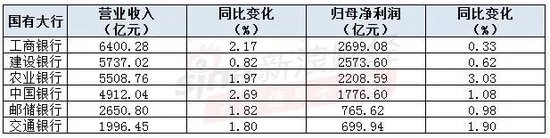
Core Insights - The six major state-owned banks in China reported a combined operating income of 2.72 trillion yuan for the first three quarters of 2025, representing a year-on-year growth of 1.87% [1][2] - The net profit attributable to shareholders reached 1.07 trillion yuan, with a year-on-year increase of 1.22%, averaging nearly 40 billion yuan per day [1][2] - All six banks achieved growth in both operating income and net profit, with the Bank of China showing the highest revenue growth rate at 2.69%, while Agricultural Bank of China led in net profit growth at 3.03% [1][3] Operating Income - Industrial and Commercial Bank of China (ICBC) maintained the highest operating income at 640.03 billion yuan, a 2.17% increase year-on-year [2] - Construction Bank and Agricultural Bank followed with operating incomes of 573.70 billion yuan (0.82% growth) and 550.88 billion yuan (1.97% growth) respectively [2] - The net interest income generally declined across the banks, with only the Bank of Communications reporting a positive growth of 1.46% [2] Net Profit - ICBC led in net profit with 269.91 billion yuan, followed by Construction Bank and Agricultural Bank with 257.36 billion yuan and 220.86 billion yuan respectively [3][4] - Agricultural Bank recorded the highest net profit growth rate at 3.03%, while other banks showed modest increases [4] Asset Quality - As of the end of Q3, the non-performing loan (NPL) ratio for five of the six banks decreased compared to the end of the previous year, with Postal Savings Bank being the only bank with a slight increase of 0.04 percentage points [6][7] - Postal Savings Bank remains the only bank with an NPL ratio below 1%, at 0.94% [6][7] Asset Scale - All six banks reported an increase in total assets compared to the end of the previous year, with ICBC's total assets nearing 53 trillion yuan [5] - Agricultural Bank and Construction Bank also showed significant growth rates of 11.33% and 11.83% respectively [5] Net Interest Margin - The net interest margin (NIM) for all major banks experienced a decline, with Postal Savings Bank having the highest NIM at 1.68%, down from 1.89% [10] - Construction Bank's NIM was 1.36%, while Agricultural Bank, ICBC, and Bank of China reported NIMs of 1.30%, 1.28%, and 1.26% respectively [10][11] Management Insights - Management from various banks indicated ongoing pressure on NIM due to the low interest rate environment, but expressed confidence in stabilizing net interest income through improved asset-liability management [11][12] - ICBC's management suggested that net interest income is expected to stabilize next year, with a potential turning point for NIM anticipated [12]



银行业周度追踪2025年第43周:保险资本三季度继续增持银行股-20251103
Changjiang Securities· 2025-11-02 23:30
Investment Rating - The report maintains a "Positive" investment rating for the banking sector [11] Core Insights - The banking index declined by 2.3% this week, underperforming the CSI 300 and ChiNext indices by 1.9% and 2.8% respectively, indicating a high volatility in market risk preference [2][18] - The report highlights the importance of focusing on large bank stocks for dividend allocation as more banks approach mid-term dividend stages [2][9] - The third quarter results showed a slight decline in revenue and profit growth for listed banks, which was in line with expectations, with interest income growth being a key highlight [6][36] Summary by Sections Banking Sector Performance - The banking sector experienced a decline in performance, with individual stocks showing significant variability based on quarterly results [2][9] - Notable outperformers included Standard Chartered Group and Xiamen Bank, while underperformers included Pudong Development Bank due to convertible bond expirations [18] Third Quarter Financial Results - The third quarter results indicated a marginal decline in revenue and profit growth, with state-owned banks showing a recovery trend [6][36] - Interest income growth is a core highlight, with most banks showing a quarter-on-quarter increase in net interest margins, suggesting a clearer turning point [7][36] Insurance Capital Involvement - Insurance capital has accelerated its investment in bank stocks, with significant purchases in Agricultural Bank and Postal Savings Bank [8][36] - Major insurance companies are diversifying their investments into city commercial banks, indicating a growing recognition of quality banks in the Jiangsu and Zhejiang regions [8][36] Market Dynamics - The report notes a shift in market dynamics with increased trading volumes in bank stocks, reflecting a change in short-term market risk preferences [30][32] - The average dividend yield for the six major state-owned banks is reported at 3.89%, with a significant spread of 210 basis points over the 10-year government bond yield [20][23]

前三季度六大行营收净利双增,资产质量持续改善
Bei Jing Ri Bao Ke Hu Duan· 2025-11-02 11:44
Core Viewpoint - The six major state-owned banks in China have reported stable financial performance for the first three quarters of 2025, with all major financial indicators showing positive growth and improved asset quality [1][2]. Financial Performance - The total profit of the six major banks reached 1.07 trillion yuan, with all banks achieving positive net profit growth. The Agricultural Bank of China had the fastest net profit growth rate at 3.03% [2][4]. - The net profits for each bank are as follows: Industrial and Commercial Bank of China (ICBC) 269.9 billion yuan, Agricultural Bank of China 220.9 billion yuan, China Construction Bank 257.4 billion yuan, Bank of China 177.7 billion yuan, Postal Savings Bank 76.6 billion yuan, and Bank of Communications 69.9 billion yuan [2][4]. Asset Quality Improvement - The asset quality of the six banks has improved, with non-performing loan (NPL) ratios decreasing compared to the end of the previous year. The NPL ratios are as follows: ICBC 1.33%, Agricultural Bank 1.27%, China Construction Bank 1.32%, Bank of China 1.24%, Postal Savings Bank 0.94%, and Bank of Communications 1.26% [5][6]. - Postal Savings Bank maintains the lowest NPL ratio among the six banks at 0.94%, reflecting a long-standing trend of low asset quality risk [5][6]. Net Interest Margin Challenges - The net interest margin (NIM) remains under pressure due to overall declining market interest rates and rigid deposit costs. The NIMs for the six banks are: Postal Savings Bank 1.68%, ICBC 1.28%, Agricultural Bank 1.30%, China Construction Bank 1.36%, Bank of China 1.26%, and Bank of Communications 1.20% [7][8]. - The Bank of China has shown a stable NIM trend, while Postal Savings Bank's NIM has decreased by 21 basis points compared to the same period last year [7][8].

一周快讯丨首期规模500亿,江苏社保科创基金成立;南京先进制造母基金招GP;东莞松山湖百亿产投母基金完成备案
FOFWEEKLY· 2025-11-02 07:20
Group 1 - The article highlights the establishment and recruitment of various mother funds across regions such as Sichuan, Guangxi, Jiangsu, Hunan, and Zhejiang, focusing on sectors like electronic information, equipment manufacturing, green food, aerospace, artificial intelligence, low-altitude economy, and new energy [2] - Chengdu's "Jiaozi Manyuan Industrial Development Fund" was launched with an initial scale of 1 billion yuan and a long-term goal of 5 billion yuan, aiming to support local industrial development [3][4] - The "Hechi Venture Capital Mother Fund" in Guangxi has completed registration with a total scale of 1 billion yuan, focusing on strategic emerging industries and traditional industry upgrades [6][7] - The "Nanjing Advanced Manufacturing Mother Fund" has been established with a scale of 5 billion yuan, targeting strategic emerging industries and optimizing the local industrial system [8][9] - The "Xingwang Mother Fund" in Hunan has been registered with a focus on advanced manufacturing and new energy sectors, employing a multi-layered investment model [12] - The "Dongguan Songshan Lake Industrial Investment Mother Fund" has been established with a total scale of 10 billion yuan, aiming to support strategic emerging industries and regional industrial upgrades [22][23] Group 2 - The "Central Enterprise Strategic Emerging Industry Development Fund" has been launched with an initial scale of 51 billion yuan, focusing on supporting state-owned enterprises in strategic emerging industries [24][25][26] - The "Zhejiang Social Security Science and Technology Innovation Fund" has been established with a scale of 50 billion yuan, aimed at supporting innovation-driven development in Zhejiang [27] - The "Jiangsu Social Security Science and Technology Innovation Fund" has also been launched with a scale of 50 billion yuan, focusing on strategic emerging industries and enhancing regional industrial resilience [28] - The "Wuxi High-Tech Investment Fund" has been registered with a scale of 2 billion yuan, focusing on the integrated circuit industry and supporting local enterprises [29][30] - The "Huatai New Energy Fund" has been established with a scale of 1 billion yuan, targeting new energy sectors and leveraging market-oriented operations [31] - The "Chengdu High-Level Talent Innovation and Entrepreneurship Fund" has been established to promote talent-driven industrial development [32] - The "Xiong'an Concept Verification Fund" has been set up with a scale of 20 million yuan, focusing on key industries such as artificial intelligence and biotechnology [33] - The "Zhuhai Zuguang New Intelligence Fund" has been registered, focusing on high-end intelligent manufacturing [34] - The "Nanning New Generation Information Technology Fund" has been established with a scale of 100 million yuan, focusing on artificial intelligence and regional economic development [35]


首单落地,光谷推出“科创金融小银团”,助力解决成长期科技企业“融资困境”
Sou Hu Cai Jing· 2025-11-02 07:19
Core Viewpoint - The successful implementation of the "Science and Innovation Financial Small Syndicate" mechanism in the East Lake High-tech Zone is marked by the first credit loan of 5 million yuan from Hankou Bank, indicating a new approach to financing for growth-oriented technology enterprises [1][2]. Group 1 - The first "Small Syndicate" involves a joint investment of 35 million yuan from five banks, including Industrial and Commercial Bank of China, Wuhan Rural Commercial Bank, Hankou Bank, Shanghai Pudong Development Bank, and Huaxia Bank, tailored for the enterprise Hanning Rail [1]. - The "Science and Innovation Financial Small Syndicate" model innovates on traditional syndicate loans by allowing banks to independently approve loans while sharing information and discussing credit limits, enhancing transparency and trust in financing [1][2]. - This financing model targets growth-stage technology enterprises with financing needs ranging from 20 million yuan to 500 million yuan, addressing common challenges such as insufficient credit limits from single banks and high communication costs among multiple banks [1]. Group 2 - Hubei Province Science and Technology Guarantee Company acts as the operational body, coordinating among banks based on their risk preferences and processes to ensure efficient operation of the mechanism [2]. - In case of operational disruptions for funded enterprises, the Hubei Province Science and Technology Guarantee Company will lead discussions among cooperating banks to stabilize loans, renew loans, or develop orderly exit plans, preventing risks associated with single bank withdrawals [2]. - The initial success of the "Science and Innovation Financial Small Syndicate" has attracted nine banks, with ten enterprise projects accelerating, and nearly 400 enterprises in the reserve pool, indicating strong future growth potential [2].


工商银行(601398)2025年三季报点评:收入利润均实现正增长
Ge Long Hui· 2025-11-01 12:49
Core Insights - The company achieved positive growth in both revenue and profit for the first three quarters of 2025, with operating income reaching 640 billion yuan, a year-on-year increase of 2.2%, and net profit attributable to shareholders at 269.9 billion yuan, up 0.3% [1][2] Financial Performance - Revenue and profit growth: Operating income for the first three quarters was 640 billion yuan, with a growth rate recovery of 0.6 percentage points compared to the first half of the year [1] - Net profit: The net profit attributable to shareholders was 269.9 billion yuan, with a decline in the rate of decrease by 1.76 percentage points compared to the first half of the year [1] - Annualized ROE: The annualized weighted average ROE was 9.3%, down 0.5 percentage points year-on-year [1] Asset Growth - Total assets: By the end of the third quarter, total assets grew by 9.2% year-on-year to 52.8 trillion yuan, with an 8.2% increase since the beginning of the year [1] - Deposits and loans: Deposits increased by 7.1% to 37.3 trillion yuan, while total loans rose by 7.3% to 30.5 trillion yuan [1] - Loan structure: Corporate general loans grew by 8.0%, retail loans by 1.6%, and bill discounting by 28.2% year-on-year [1] - Capital adequacy: The core Tier 1 capital adequacy ratio was 13.57%, down 0.53 percentage points from the beginning of the year [1] Interest Margin - Net interest margin: The average net interest margin for the first three quarters was 1.28%, a decrease of 15 basis points year-on-year, with a further decline of 3 basis points in the third quarter compared to the second quarter [1] - Impact on net interest income: The decline in net interest margin led to a 0.7% year-on-year decrease in net interest income, which was a major drag on performance [1] Non-Interest Income - Fee income: Net fee income grew by 0.6% year-on-year, indicating stabilization after years of decline [2] - Other non-interest income: Other non-interest income surged by 27.6%, primarily driven by significant growth in investment income, particularly from bond investments [2] Asset Quality - Asset quality indicators: The non-performing loan ratio was 1.33%, down 0.01 percentage points from the beginning of the year, remaining stable compared to the second quarter [2] - Provision coverage: The provision coverage ratio was 217%, up 2 percentage points year-on-year, but down 1 percentage point from the second quarter [2] Investment Outlook - Profit forecasts: The company maintains its profit forecasts, expecting net profits of 360.8 billion, 365.8 billion, and 384.1 billion yuan for 2025-2027, with year-on-year growth rates of -1.4%, 1.4%, and 5.0% respectively [2] - Valuation metrics: The current stock price corresponds to a PE ratio of 8.1, 8.0, and 7.6 times, and a PB ratio of 0.72, 0.68, and 0.64 times for the respective years [2]
江苏社保科创基金成立
Xin Hua Wang· 2025-11-01 12:09
Core Viewpoint - The Jiangsu Social Security Science and Technology Innovation Fund, with a scale of 50 billion yuan, has been officially established to facilitate the flow of financial resources into the real economy and support the integration of technological and industrial innovation [1] Group 1: Fund Establishment and Purpose - The fund aims to enhance effective investment in technology and industrial innovation, contributing to the construction of a strong technological nation and supporting the growth of science and technology enterprises [1] - The Jiangsu Social Security Science and Technology Innovation Fund is jointly funded by the Jiangsu provincial government, the National Social Security Fund Council, and the Industrial and Commercial Bank of China [1] Group 2: Investment Strategy - The fund will operate under principles of marketization, rule of law, and professionalism, leveraging the advantages of professional institutions that are close to the invested enterprises and rooted in market frontiers [1] - Investment focus will be on building a modern industrial system, emphasizing intelligent, green, and integrated development, while targeting future technological and industrial development high points [1] - The fund will strengthen support for major strategies, key areas, and weak links, actively promoting the use of new technologies to upgrade traditional industries [1] Group 3: Future Plans - The National Social Security Fund Council plans to increase its investment in the real economy, aiming for more proactive investment operations, effective resource allocation, and high-quality funding support for the integration of technological and industrial innovation [1]
营收、净利润均回到正增长 六大行三季报传“暖意”
Jing Ji Guan Cha Wang· 2025-11-01 08:36
Core Insights - The six major banks have reported a recovery in performance for the first three quarters of 2025, with both revenue and net profit showing positive year-on-year growth [2][3]. Revenue and Net Profit Growth - All six major banks achieved positive growth in net profit attributable to the parent company, with Agricultural Bank of China leading at over 3% growth [3]. - The net profit figures for the first three quarters are as follows: - Industrial and Commercial Bank of China (ICBC): 2699.08 billion yuan, up 0.3% - China Construction Bank (CCB): 2573.60 billion yuan, up 0.6% - Bank of China (BOC): 1776.60 billion yuan, up 1% - Postal Savings Bank: 765.62 billion yuan, up 0.5% - Bank of Communications: 699.94 billion yuan, up 1.5% - Agricultural Bank: 2208.59 billion yuan, up 3% [4]. Revenue Performance - All six banks reported an increase in revenue, with the following figures: - Bank of China: 4912.04 billion yuan, up 2.65% - Industrial and Commercial Bank: 6400.28 billion yuan, up 2.17% - Agricultural Bank: 4912.04 billion yuan, up 1.97% - Postal Savings Bank: 2650.80 billion yuan, up 1.82% - Bank of Communications: 1996.45 billion yuan, up 1.80% - China Construction Bank: 5737.02 billion yuan, up 0.82% [5]. Interest Income and Non-Interest Income - Interest income for most banks is in a declining trend, with only Bank of Communications showing an increase of 1.46% [5]. - Non-interest income is becoming a key growth driver, with significant contributions from: - ICBC: 1666.12 billion yuan, up 11.30% - CCB: 1460.96 billion yuan, up 13.95% - BOC: 1654.12 billion yuan, up 16.20% - Postal Savings Bank: 314.81 billion yuan, up 27.52% [6]. Asset Scale and Quality - All six banks have seen an increase in total assets compared to the end of the previous year, with CCB showing the highest growth at 11.83% [7]. - Non-performing loan ratios have generally decreased, with Postal Savings Bank maintaining the lowest ratio at 0.94% [7]. Net Interest Margin Trends - The narrowing of net interest margins remains a challenge, but the rate of decline has eased [8]. - As of the end of Q3, the net interest margins for the banks are as follows: - Postal Savings Bank: 1.68% - Agricultural Bank: 1.30% - Industrial and Commercial Bank: 1.28% - China Construction Bank: 1.36% - Bank of China: 1.26% - Bank of Communications: 1.20% [9]. Management Strategies - Banks are focusing on optimizing their asset-liability structures and enhancing pricing capabilities to stabilize net interest income [10][11].