
BANK OF TIANJIN(01578)

Search documents
丰富渠道优服务 畅通现金惠民生 ——天津银行多措并举构建现金支付新生态
Sou Hu Cai Jing· 2025-04-09 09:51
Core Viewpoint - Tianjin Bank is actively implementing the State Council's directives to optimize payment services and enhance payment convenience, focusing on creating a supportive environment for cash usage and promoting a positive cash payment ecosystem [1] Group 1: Cash Payment Initiatives - Tianjin Bank has upgraded its branches to serve as "warm stations" for cash services, introducing a "零钱包" (small change bag) service tailored to customer needs, with 33,900 bags distributed so far [2] - The bank's lobby managers conduct "micro-classes" to educate customers on cash management while distributing the small change bags, transforming waiting times into opportunities for financial knowledge dissemination [2] Group 2: Community Engagement and Support - The bank extends its cash services to local businesses, advocating for cash acceptance and providing educational resources, including over 1,000 "support cash payment" stickers and encouraging 1,400 merchants to sign a commitment against refusing cash [5] - Initiatives targeting the elderly and students include cash knowledge workshops in collaboration with local universities, aiming to educate these groups on cash handling and financial safety [5] Group 3: Future Plans - Tianjin Bank plans to continue its diverse cash promotion activities to enhance public awareness and confidence in financial services, contributing to a secure and harmonious cash payment environment [5]


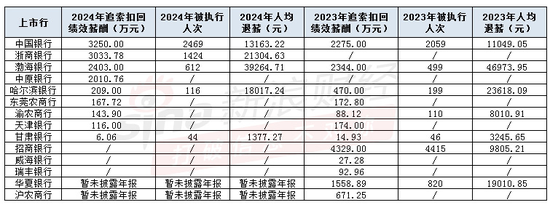
9家上市行“反向追薪”超1.13亿!渤海银行人均退薪3.93万,招商银行未再披露
Xin Lang Cai Jing· 2025-04-03 00:23
Core Viewpoint - The 2024 annual reports of listed banks reveal significant performance salary clawbacks, with a total amount exceeding 113 million yuan across nine banks, indicating a growing trend in enforcing accountability in executive compensation [1][4]. Summary by Category Performance Salary Clawbacks - Nine listed banks have disclosed their performance salary clawback situations in their 2024 annual reports, including major banks like Bank of China, Zhejiang Commercial Bank, and Bohai Bank [1][4]. - The total amount of clawbacks reported by these banks exceeds 113 million yuan, with Bank of China leading at 32.5 million yuan [1][4]. - The average clawback amount per person was highest at Bohai Bank, reaching 39,264.71 yuan, while Bank of China and Harbin Bank also reported significant average clawbacks exceeding 10,000 yuan [2][4]. Year-on-Year Comparison - Compared to 2023, several banks, including China Merchants Bank and Weihai Bank, did not disclose specific clawback amounts for 2024, despite having reported significant figures in the previous year [6]. - In 2023, China Merchants Bank had the highest clawback amount at 43.29 million yuan, affecting 4,415 employees with an average clawback of approximately 9,805 yuan [6]. Disclosure Trends - Zhejiang Commercial Bank and Zhongyuan Bank disclosed specific clawback amounts for the first time in 2024, indicating an improvement in transparency [7]. - Bohai Bank and Dongguan Rural Commercial Bank have consistently disclosed their clawback amounts for three consecutive years, showing a commitment to accountability [5][6]. Regulatory Context - The regulatory framework for performance salary clawbacks has been strengthened over the years, with guidelines established by the former China Banking Regulatory Commission and the China Banking and Insurance Regulatory Commission [10][11]. - As of 2023, over 95% of banking institutions have implemented performance salary clawback mechanisms, reflecting a significant shift towards more robust governance in the banking sector [11].


浦发银行发布“科技金融服务体系2.0”丨银行头条
Mei Ri Jing Ji Xin Wen· 2025-04-02 00:20
Group 1 - The first SPV (Special Purpose Vehicle) renewable energy equipment leasing project in China has been successfully implemented, supporting the private sector's role in promoting green and low-carbon development [1] - The project involves financing leasing for a photovoltaic power station by Huizhou TCL Photovoltaic Technology Co., Ltd., marking a significant step in the development of the green energy industry [1] Group 2 - SPD Bank launched its upgraded "Technology Financial Service System 2.0," focusing on seven high-frequency technology activity scenarios to provide comprehensive "financial + non-financial" services [2] - The system aims to create value for technology enterprises through industry research and AI insights [2] Group 3 - Zhejiang Commercial Bank actively participated in the trading of newly launched 3-year and 7-year standard bonds, contributing to the high-quality development of the RMB fixed income market [3] - The bank is committed to building FICC 3.0 to provide continuous and high-quality quotes for various market products [3] Group 4 - Tianjin Bank successfully issued the first green asset-backed commercial paper (ABCP) in the Beijing-Tianjin-Hebei region for 2025, with a total issuance amount of 1.16 billion and 2.38 billion [4] - The underlying assets for this ABCP include green financing leasing assets such as biomass energy thermal power equipment and waste power generation equipment [4] Group 5 - Hangzhou United Rural Commercial Bank has received approval to issue up to 2 billion RMB of perpetual capital bonds, with the issuance to be completed within 24 months [5] - The bank must adhere to relevant regulations and report the issuance status to the Zhejiang Regulatory Bureau within 10 working days after the completion of the bond issuance [5]

天津银行2024年业绩增长疲软,消费金融能否成为转型突破口?
Sou Hu Cai Jing· 2025-03-31 13:26
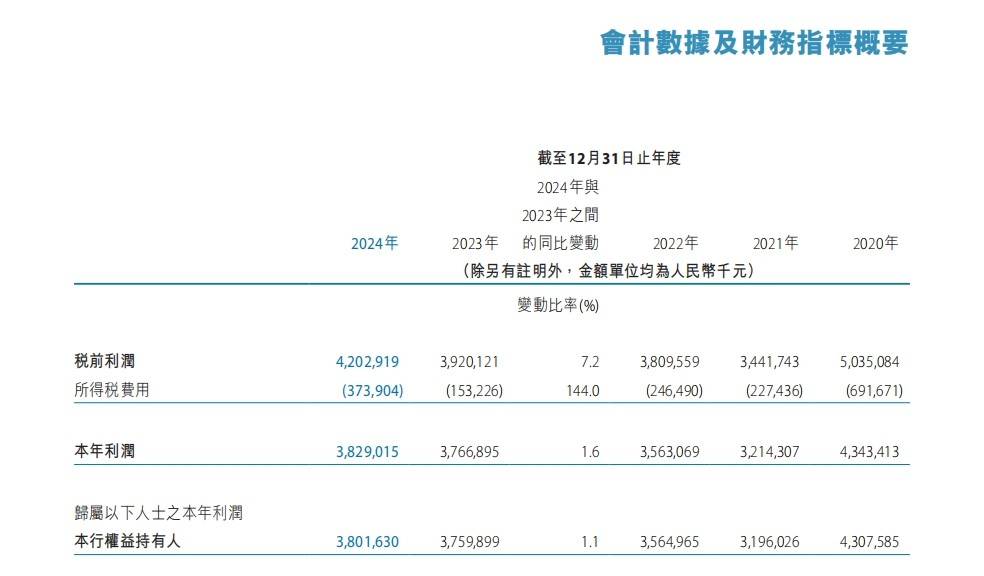
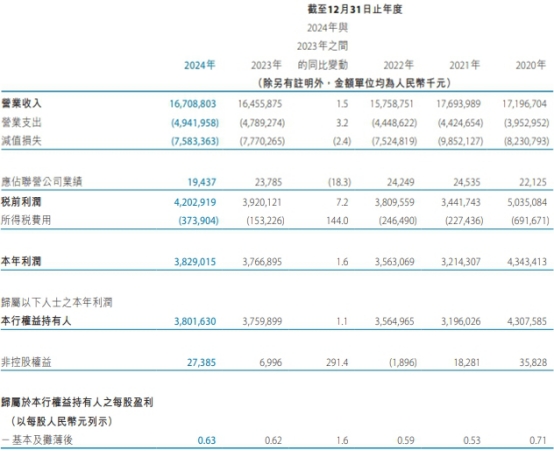
出品|WEMONEY研究室 林见微 作为中国四大直辖市城商行之一,天津银行近日发布2024年成绩单。从数据来看:其总资产和贷款规模分别增长了10.1%和11.3%,但营业收入增长1.5%, 归母净利润增长1.1%,至38亿元。 年报数据折射出这家区域性银行在利率市场化与数字化转型浪潮中的艰难突围。当传统存贷利差持续收窄,与京东集团联手押注消费金融,能否成为其突破 增长瓶颈的关键支点? 01 资产扩张与盈利疲软的剪刀差 | | | 截至12月31日止年度 | | | | | --- | --- | --- | --- | --- | --- | | | | 2024年頭 | | | | | | | 2023年之間 | | | | | | 2024年 2023年 | 的同比變動 | 2022年 | 2021年 | 2020年 | | | | (除另有註明外,金額單位均為人民幣千元) | | | | | | | 雙動比率(%) | | | | | 税前利潤 | 4,202,919 3,920,121 | 7.2 | 3,809,559 | 3,441,743 | 5,035,084 | | 所得税費用 | (373 ...
天津银行换帅后业绩2连升 2024净利增速仅2022十分之1
Zhong Guo Jing Ji Wang· 2025-03-28 07:27
中国经济网北京3月28日讯 天津银行(01578.HK)日前发布2024年度业绩公告。2024年,天津银行实现 营业收入167.09亿元,同比增长1.5%;归属于本行权益持有人的净利润38.02亿元,同比增长1.1%。 2022年和2023年,天津银行分别实现营业收入157.59亿元、164.56亿元,分别较上年同期变动-10.9%、 4.4%;归属于本行权益持有人的净利润分别为35.65亿元、37.60亿元,分别较上年同期增长11.5%、 5.5%。 2023年和2024年,天津银行的业绩连升两年,但天津银行2024年的净利增速仅为2022年的十分之一。 2023年5月11日,董事会收到孙利国的辞职申请,由于其到龄退休辞去该行董事长及执行董事、董事会 发展战略委员会主任委员、董事会提名与薪酬委员会委员、董事会普惠金融发展和消费者权益保护委员 会委员及根据香港上市规则第3.05条委任之授权代表等职务,其辞任自2023年5月11日生效。 于2023年7月24日,董事会选举于建忠为该行第七届董事会董事长,相关任职将自获得监管机构核准后 生效。于建忠担任该行董事长的任职资格已于2023年8月28日获国家金融监督管理 ...
天津银行(01578) - 2024 - 年度业绩
2025-03-26 08:55
Annual General Meeting Details - The annual general meeting of Bank of Tianjin is scheduled for April 17, 2025, at 9:30 AM[3] - The bank will suspend share transfer registration from April 11 to April 17, 2025, to determine eligible shareholders for the meeting[16] - Voting results from the annual general meeting will be published on the bank's website and the Hong Kong Stock Exchange website[17] Financial Statements and Plans - Shareholders will review and approve the 2024 financial statements and profit distribution plan[5] - The 2025 financial budget will be discussed and approved during the meeting[5] - The bank plans to appoint external auditors for the 2025 financial statements[5] - The bank will present its 2025 investment plan for shareholder approval[5] Board and Management Reports - The board of directors' work report for 2024 will be presented for approval[5] - The meeting will include a review of the performance evaluation reports for the board and senior management for 2024[11] - The meeting will address the re-election and appointment of directors for the eighth board[8]
天津银行(01578) - 2024 - 年度财报
2025-03-26 08:49
Financial Performance - As of the end of 2024, the total assets of Tianjin Bank amounted to RMB 925.99 billion, an increase of 10.1% compared to the previous year[7] - The total liabilities reached RMB 856.58 billion, reflecting a growth of 10.4% year-on-year[7] - Operating income for the year was RMB 16.71 billion, representing a year-on-year increase of 1.5%[7] - The total profit amounted to RMB 4.20 billion, which is a 7.2% increase compared to the previous year[7] - Net profit for the year was RMB 3.83 billion, showing a year-on-year growth of 1.6%[7] - Interest income for 2024 was RMB 30,985,203, a decrease of 0.7% compared to RMB 31,212,336 in 2023[40] - Net interest income decreased by 0.9% to RMB 11,314,309 from RMB 11,420,370 in 2023[40] - Investment income fell by 11.1% to RMB 2,601,463 from RMB 2,926,224 in 2023[40] - The bank's net interest margin decreased from 1.75% to 1.55%, and net interest yield fell from 1.65% to 1.47%[73] - The cost-to-income ratio (excluding taxes and surcharges) rose to 28.23%, an increase of 0.55 percentage points year-on-year[102] Market Position and Recognition - Tianjin Bank ranked 186th in the 2024 Global Bank Rankings by The Banker, improving by 5 positions from the previous year[6] - The bank was recognized as the top underwriter for credit bonds in Tianjin and ranked fourth nationally for asset-backed securities underwriting among city commercial banks[6] - The bank's social influence has increased, being selected for the State-owned Assets Supervision and Administration Commission's "Top 100 Social Responsibility Index (2024)" at 48th nationally and 3rd in Tianjin[6] - The company ranked 186th in the "Top 1000 World Banks" by The Banker magazine, improving by 5 places year-on-year[26] - The company received 134 external honors, including the "Financial Technology Development Award" from the People's Bank of China[54] Strategic Initiatives and Innovations - The bank aims to enhance its core competitiveness and service capabilities through strategic opportunities in the Beijing-Tianjin-Hebei coordinated development[13] - The company signed a strategic cooperation agreement with iFlytek on November 13, enhancing its technological capabilities[20] - The company established the "Tianjin Bank Postdoctoral Innovation and Entrepreneurship Fund" on December 24 to support innovation[24] - The company launched the "Smart Inclusive Finance" product, focusing on digital inclusive finance, with over 11 million daily transactions in the Tianjin area, enhancing urban economic activity[56] - The company plans to deepen reforms and enhance its "research gene" and "technology gene" to drive sustainable development and high-quality economic growth by 2025[59] Customer and Loan Growth - Customer loans and advances rose by 11.3% to RMB 440,779,383 from RMB 396,009,202 in 2023[43] - The bank's total customer loans and advances increased by 21.9% year-on-year, with corporate loans reaching RMB 333.99 billion[192] - The bank's personal banking revenue decreased by 18.0% year-on-year, totaling RMB 43.564 billion[191] - The bank's retail business saw a 19.2% increase in personal deposit scale compared to the beginning of the year[67] - Customer deposits reached RMB 500.96 billion, up RMB 50.27 billion or 11.2% year-over-year, driven by enhanced deposit marketing efforts[145] Risk Management and Asset Quality - The non-performing loan ratio remained stable at 1.70%[45] - The bank's non-performing loan ratio and risk management capabilities have shown continuous improvement[50] - The impairment losses decreased to RMB 7.58 billion, a reduction of RMB 0.19 billion or 2.4% compared to the same period last year, due to improved asset recovery efforts[113] - The bank's loan impairment loss provision at the end of the reporting period was RMB 12.88 billion, an increase of RMB 1.44 billion or 12.5% compared to the previous year[187] - The overdue loans totaled RMB 12.689 billion, representing 2.80% of the total customer loans, which is an increase of 42.0% from the previous year[186] Community and Social Responsibility - The company conducted over 6,000 online and offline financial education activities throughout the year, promoting consumer rights protection[59] - The company is focused on expanding its market presence and enhancing its product matrix in smart tourism, smart living, and smart community sectors[56] - The company deepened cooperation with local governments and institutions to support the development of elderly finance and digital healthcare systems[195] - The company was recognized as a "Pioneer in Social Responsibility" by the State-owned Assets Supervision and Administration Commission, ranking 48th[26] - The company’s credit commitments increased significantly to RMB 100.2 million, a rise of RMB 236.8 million or 173.4% compared to the previous year[112]
天津银行姗姗未至“万亿俱乐部”
Bei Jing Shang Bao· 2025-03-25 14:17
Core Viewpoint - Tianjin Bank is lagging behind its peers in the race to join the "trillion club," with its asset scale and profitability falling short compared to other city commercial banks in major municipalities [1][3]. Financial Performance - Tianjin Bank reported total assets of 925.99 billion yuan, a year-on-year increase of 10.1%, and total liabilities of 856.58 billion yuan, up 10.4% from the previous year [3]. - Operating income for 2024 was 16.71 billion yuan, a growth of 1.5%, while net profit attributable to shareholders was 3.80 billion yuan, up 1.1%, both showing a decline in growth rates compared to 2023 [3][4]. - Interest income decreased by 0.7% to 30.99 billion yuan, with net interest income also declining by 0.9% [3][4]. Industry Context - The banking sector is facing a general contraction in interest margins, with only 12 out of 42 A-share listed banks reporting an increase in net interest income in the first half of 2024 [4]. - Since its listing in 2016, Tianjin Bank has not surpassed its pre-listing net profit peak of 4.92 billion yuan, with significant fluctuations in profit growth rates from 2019 to 2023 [4]. Intermediate Business Performance - Tianjin Bank's net income from fees and commissions was 1.68 billion yuan, a 6.9% increase, primarily driven by growth in settlement and clearing fees [6]. - However, there was a significant decline in consulting fees (down 70.8%) and card fees (down 14.9%), indicating challenges in diversifying its intermediate business [6][7]. Asset Quality Concerns - The overall non-performing loan (NPL) ratio remained stable at 1.7%, but the amount of NPLs increased by 7.9 billion yuan to 7.61 billion yuan [7][8]. - The overdue loans for 1 to 3 years and over 3 years saw significant increases of 102.8% and 72.9%, respectively, raising concerns about asset quality [8]. Future Strategies - Tianjin Bank is pursuing a "dual five battle" strategy focusing on risk management, revenue growth, cost control, deposit mobilization, and litigation [9]. - The bank is also investing in the consumer finance sector through a partnership with several companies, aiming to enhance its retail business and financial inclusion efforts [10].
天津银行去年营收净利微增 投资收益下滑
Zhong Guo Jing Ji Wang· 2025-03-24 06:32
3月20日晚间,天津银行发布2024年度业绩公告。数据显示,截至2024年末,天津银行资产总额为 9259.9亿元,较上年末增长10.1%;负债总额为8565.8亿元,较上年末增长10.4%。盈利能力方面,2024 年,天津银行实现营业收入167.1亿元,同比增长1.5%;归属本行权益持有人的本年利润(以下简称"归 母净利润")为38.02亿元,同比增长1.1%。 从收入结构看,2024年,天津银行利息收入为309.9亿元,较上年同期减少2.3亿元,同比下降0.7%;生 息资产平均收益率4.03%,同比减少49个基点。天津银行表示,主要原因是该行坚持回归本源,响应国 家降低实体经济融资成本的政策导向,加大对实体经济重点领域信贷投放,提升对实体经济支持力度, 生息资产收益率下降。 非利息收入中,该行去年手续费及佣金净收入为16.8亿元,较上年同期增加1.1亿元,同比增加6.9%。 其中手续费及佣金收入为22.1亿元,同比增加5.9%,主要原因是结算及清算手续费增加;手续费及佣金 支出为5.3亿元,同比增加2.9%,基本保持稳定。 值得注意的是,天津银行的投资收益明显下滑。年报显示,2024年该行投资收益为26. ...
天津银行(01578) - 2024 - 年度业绩
2025-03-20 11:33
Financial Performance - As of the end of 2024, Bank of Tianjin's total assets reached RMB 926.99 billion, an increase of 10.1% compared to the previous year[9]. - The total liabilities amounted to RMB 856.58 billion, reflecting a growth of 10.4% year-on-year[9]. - The operating income for the year was RMB 16.71 billion, representing a year-on-year increase of 1.5%[9]. - The total profit reached RMB 4.20 billion, which is a 7.2% increase compared to the previous year[9]. - The net profit was RMB 3.83 billion, showing a year-on-year growth of 1.6%[9]. - Interest income for 2024 was RMB 30,985,203 thousand, a decrease of 0.7% compared to RMB 31,212,336 thousand in 2023[42]. - Net interest income decreased by 0.9% to RMB 11,314,309 thousand from RMB 11,420,370 thousand in 2023[42]. - Investment income fell by 11.1% to RMB 2,601,463 thousand compared to 2,926,224 thousand in 2023[42]. - Pre-tax profit rose by 7.2% to RMB 4,202,919 thousand from RMB 3,920,121 thousand in 2023[44]. - Net profit attributable to equity holders increased by 1.1% to RMB 3,801,630 thousand from RMB 3,759,899 thousand in 2023[44]. - Basic and diluted earnings per share for 2024 was RMB 0.63, up 1.6% from RMB 0.62 in 2023[44]. - The bank's total operating income for 2024 was RMB 16.71 billion, a 1.5% increase from RMB 16.46 billion in 2023[194]. Asset and Liability Management - Total assets increased by 10.1% to RMB 925,993,655,000 compared to RMB 840,771,460,000 in 2023[45]. - Total liabilities grew by 10.4% to RMB 856,583,512,000, up from RMB 775,741,804,000 in 2023[45]. - Customer loans and advances rose by 11.3% to RMB 440,779,383,000 from RMB 396,009,202,000 in 2023[45]. - Customer deposits increased by 11.2% to RMB 500,957,014,000 compared to RMB 450,686,381,000 in 2023[45]. - The liquidity ratio improved significantly to 60.54%, up from 50.03% in 2023[48]. - The bank's total equity reached RMB 69.41 billion, an increase of RMB 4.38 billion or 6.7% compared to the previous year, primarily due to an increase in undistributed profits[162]. Loan and Deposit Growth - Corporate loan balance increased by 21.9% to RMB 333.991 billion[68]. - Retail business saw a 19.2% growth in personal deposits compared to the beginning of the year[69]. - The balance of loans for technology innovation enterprises reached RMB 16.051 billion, an increase of 21.64% compared to the end of the previous year[71]. - The balance of green loans was RMB 34.406 billion, growing by 41.30% year-on-year, while green financing leasing reached RMB 3.819 billion, up 89.06%[71]. - The total amount of customer loans and advances reached RMB 453,655.5 million, reflecting an 11.3% increase from RMB 407,450.5 million in the previous year[166]. Risk Management and Asset Quality - Non-performing loan ratio remained stable at 1.70%, unchanged from 2023[47]. - The bank's risk management system was enhanced, focusing on asset lifecycle management and credit risk management, improving overall asset quality[59]. - The non-performing loan ratio at the end of 2024 was 1.68%, up from 1.67% at the end of 2023, with non-performing loans amounting to RMB 12.88 billion, reflecting a 12.5% increase[191]. - The bank's loan impairment loss provision at the end of the reporting period was RMB 12.88 billion, an increase of RMB 1.43 billion or 12.5% compared to the end of the previous year, due to increased provisioning efforts[190]. Awards and Recognition - Bank of Tianjin ranked 186th in the 2024 Global Bank Rankings by The Banker, improving by 5 positions from the previous year[8]. - The bank was recognized as the top in total deposits in Tianjin and ranked fourth in loan balances within the region[8]. - The bank has received 134 external honors, including awards for financial technology development and best mobile banking operations[8]. - The bank was awarded the "Best Supply Chain Financial Technology Innovation Bank" at the 2024 Future Transaction Banking International Summit[30]. - Tianjin Bank's wealth management product "Hongding Wealth - 15-Month Open Net Value Type 2" won the "Golden Bull Award" for bank wealth management products in 2024[30]. Strategic Initiatives - Bank of Tianjin actively promotes strategies for development, focusing on enhancing core competitiveness and expanding service capabilities[8]. - The bank signed a strategic cooperation agreement with 11 state-owned enterprises in Tianjin on April 10[19]. - The bank established the "Tianjin Bank Postdoctoral Innovation and Entrepreneurship Fund" on December 24[26]. - The bank's strategic cooperation with iFLYTEK was signed on November 13, enhancing its technological capabilities[22]. - The bank aims to strengthen its development resources and expand its service ecosystem in response to market trends[15]. Digital Transformation and Innovation - The bank achieved a significant increase in digital financial services, with over 11 million daily transactions in the "Tianjin Bank Collection" service[58]. - The corporate online banking customer base increased by 13.70% compared to the end of the previous year[200]. - The transaction amount for the year saw a year-on-year increase of 40.53%[200]. - The corporate mobile banking platform was awarded the "2024 Digital Finance Gold List - Best Operating Award for Corporate Mobile Banking"[200]. - The bank is actively developing value-added services for small and medium-sized enterprises, focusing on integrated financial and non-financial needs[200].