
CMBC(01988)

Search documents
民生银行潍坊临朐支行:莫信天上掉馅饼,守住你的钱袋子
Qi Lu Wan Bao· 2025-09-29 06:28
Core Viewpoint - The article highlights a financial knowledge promotion activity organized by Minsheng Bank's Weifang Linqu branch to enhance financial risk awareness among consumers, particularly the elderly, in response to national calls against illegal fundraising and financial fraud [1][2]. Group 1: Event Overview - On September 15, Minsheng Bank's Weifang Linqu branch conducted a financial knowledge promotion event at Linqu Hualu Supermarket, themed "Don't Believe in Free Lunches, Protect Your Wallet" [1]. - The event featured promotional displays, banners, and consultation booths, attracting many customers to engage and participate [1]. - Bank staff distributed informational brochures, explained typical fraud cases, and played short videos on preventing financial scams to educate the public [1]. Group 2: Target Audience and Content - The event specifically targeted the elderly demographic, advising them not to trust unknown phone calls, refrain from disclosing bank card information, and avoid transferring money to strangers [1]. - Staff demonstrated how to verify account information through official bank channels, addressing various financial inquiries from attendees to enhance their understanding of legitimate financial services [1]. Group 3: Impact and Future Plans - The promotional activity increased public vigilance against financial risks and strengthened the relationship between the bank and its customers [2]. - Participants reported a better understanding of illegal fundraising and telecom fraud, with one elderly attendee expressing newfound awareness of the various fraud tactics [2]. - Minsheng Bank plans to expand its outreach by conducting similar financial knowledge activities in communities, squares, and schools, while also utilizing online platforms like WeChat and SMS to share tips on preventing financial fraud [2].

民生银行潍坊昌邑支行:政银携手赶大集 金融知识暖民心
Qi Lu Wan Bao· 2025-09-29 06:28
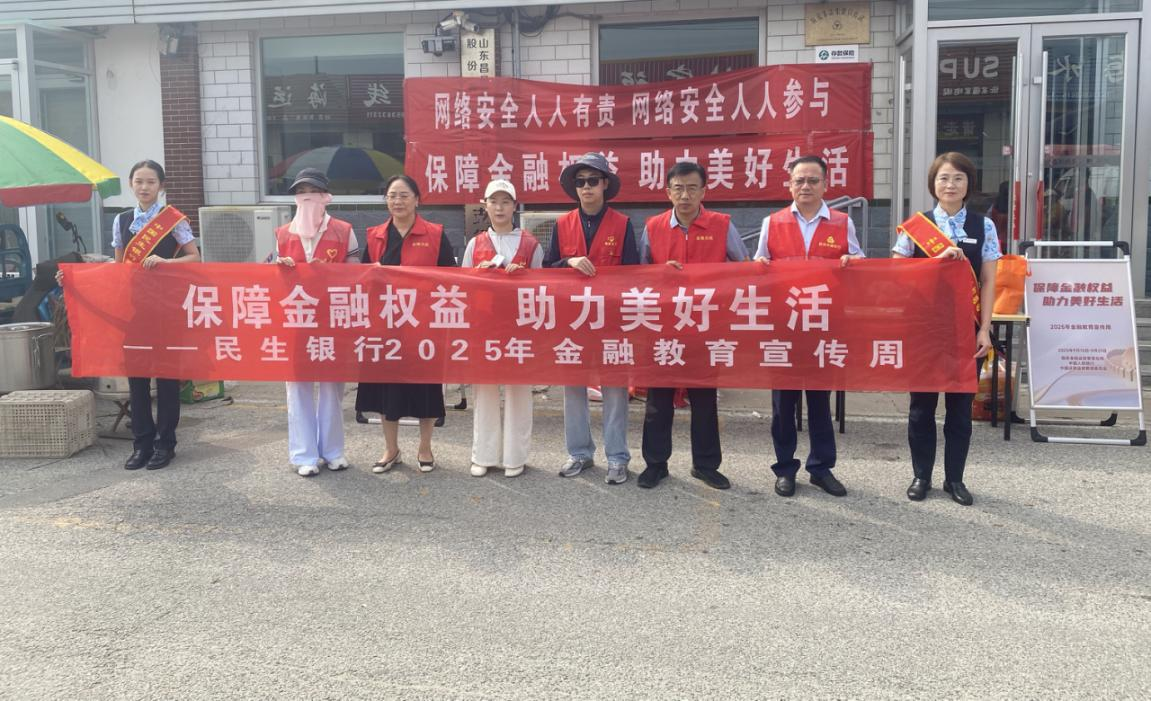
Core Points - The event organized by Minsheng Bank and the local financial supervision bureau aimed to enhance financial literacy among rural residents, focusing on practical and accessible financial knowledge [1][4] - The initiative included interactive activities such as financial knowledge quizzes, which engaged the community and reinforced learning through memorable phrases [3][4] Group 1 - The event took place on September 16 in Changyi City, featuring a theme of "Protecting Financial Rights to Support a Better Life" [1] - Promotional materials were distributed, covering topics like identifying illegal fundraising, preventing pension fraud, and protecting personal credit [3] - The event successfully reached nearly 1,000 villagers and local merchants, with over 800 promotional materials distributed and more than 200 consultations conducted [3] Group 2 - The activity exemplified a collaborative effort between government and banking institutions to promote financial knowledge [4] - Minsheng Bank plans to continue these educational initiatives regularly, utilizing rural markets and cultural events to deepen financial safety awareness [4]

民生银行潍坊青州支行:筑牢货币安全屏障 守护职工“钱袋子”
Qi Lu Wan Bao· 2025-09-29 06:27
Core Insights - The article highlights a financial literacy initiative by Minsheng Bank's Weifang Qingzhou branch aimed at enhancing employees' ability to identify counterfeit currency and improve their awareness of financial security [1][2] Group 1: Event Overview - The initiative, themed "Building a Currency Security Network, Protecting the People's Wallets," involved a targeted campaign called "Counterfeit Currency Knowledge into the Office," which brought financial education directly to employees [1] - The campaign included interactive sessions where bank staff provided hands-on demonstrations of counterfeit detection techniques, focusing on the security features of the fifth series of Renminbi [1] Group 2: Impact and Feedback - The event reached over 50 employees and distributed more than 30 informational materials, effectively matching financial knowledge with employee needs [2] - Feedback from the company's financial manager indicated that the initiative not only improved employees' counterfeit detection skills but also enhanced their awareness of cash management practices [2] Group 3: Future Plans - To reinforce the initiative's impact, Minsheng Bank plans to establish a long-term communication mechanism with the company, including regular "Financial Safety Small Classroom" sessions on topics like counterfeit prevention and account security [2] - The bank has also customized a "Counterfeit Currency Knowledge Manual" for the company's finance personnel to facilitate ongoing training and integration of financial safety knowledge into daily management processes [2]
民生信用卡中心:国庆八天假,消费市场能有多热?
Qi Lu Wan Bao· 2025-09-29 03:38
Core Viewpoint - The upcoming holidays, including the overlapping Mid-Autumn and National Day holidays, are expected to drive significant consumer spending growth, supported by government policies aimed at boosting consumption [1][4]. Group 1: Government Policies and Initiatives - The Ministry of Commerce and nine other departments have released 19 measures to expand service consumption, emphasizing the use of monetary and credit policies to support financial institutions in increasing credit for service consumption [1][2]. - The "Five Articles" initiative from the National Financial Supervision Administration focuses on technology finance, green finance, inclusive finance, pension finance, and digital finance, all of which are closely linked to consumer market stimulation [2]. Group 2: Financial Institutions' Role - Financial institutions are positioned as key players in the consumption recovery process, acting as both policy implementers and market participants, with a focus on understanding policy intentions and consumer needs [2][5]. - The Minsheng Bank Credit Card Center has launched various consumer incentive activities, such as partnerships with platforms like JD.com and Meituan, to enhance digital payment experiences and lower consumer usage barriers [3][5]. Group 3: Consumer Engagement and Spending Trends - Data from Nielsen indicates that consumer spending is expected to surge during major holidays, with sectors like tourism, shopping, and dining experiencing peak demand [4]. - The Minsheng Credit Card Center's initiatives aim to create a high-quality consumption service chain by offering discounts across multiple platforms and scenarios, thereby enhancing consumer engagement [4][5].
华宝基金关于旗下部分基金新增南京银行股份 有限公司为代销机构的公告
Zhong Guo Zheng Quan Bao - Zhong Zheng Wang· 2025-09-29 01:41
华宝基金关于旗下部分基金新增南京银行股份 有限公司为代销机构的公告 根据华宝基金管理有限公司(以下简称"本公司")与南京银行股份有限公司(以下简称"南京银行")签 署的《证券投资基金销售代理协议》,本公司自2025年09月29日起增加南京银行为以下适用基金的代销 机构。 一、适用基金如下: ■ 二、投资者可到南京银行办理上述基金的开户、认购、申赎及其他业务。投资者可以通过以下途径了解 或咨询相关情况: (1) 南京银行股份有限公司 客户服务电话: 95302 客户服务电话:400-820-5050、400-700-5588 公司网址:www.fsfund.com 风险提示:基金管理人承诺以诚实信用、勤勉尽责的原则管理和运用基金资产,但不保证基金一定盈 利,也不保证最低收益。投资者投资本公司旗下基金时应认真阅读基金的基金产品资料概要、《基金合 同》和《招募说明书》。敬请投资者注意投资风险。 特此公告。 华宝基金管理有限公司 2025年09月29日 华宝基金管理有限公司关于以通讯方式召开 华宝中证消费龙头指数证券投资基金(LOF) 基金份额持有人大会的公告 一、召开会议基本情况 根据《中华人民共和国证券投资基金法 ...

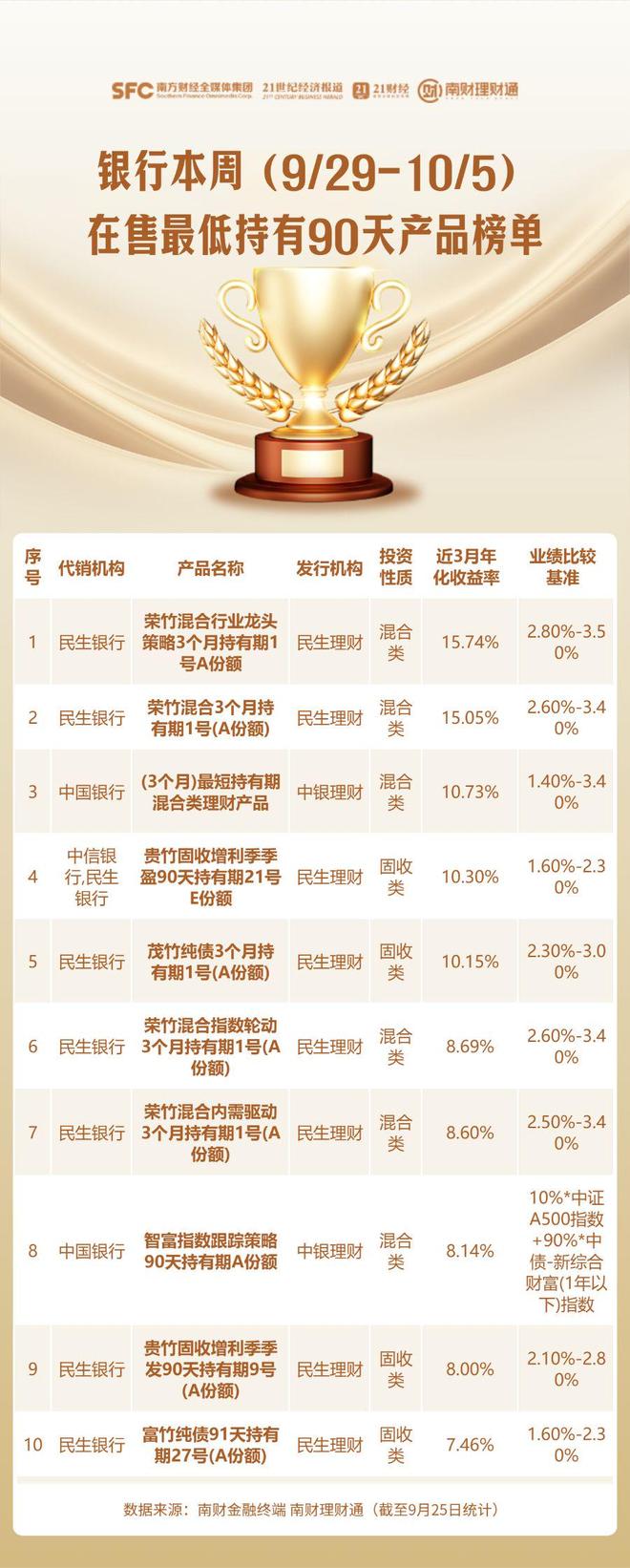
银行渠道本周在售最低持有期理财产品榜单(9/29-10/5)
2 1 Shi Ji Jing Ji Bao Dao· 2025-09-29 01:08
Core Insights - The article focuses on the performance of bank wealth management products with varying minimum holding periods, specifically highlighting the annualized returns of products with holding periods of 90 days, 180 days, and 365 days [1][5][8] Group 1: 90-Day Holding Period Products - The top-performing product is from Minsheng Bank, with an annualized return of 15.74% [4] - Other notable products include Minsheng Bank's Rongzhu Mixed Fund at 15.05% and Bank of China’s mixed product at 10.73% [4] Group 2: 180-Day Holding Period Products - Minsheng Bank's Kyoto is a unique product with a return of 9.19%, leading the 180-day category [6] - Other significant products include Minsheng Bank's Rongmen Mixed Anti-Inflation Fund at 9.04% and Bank of China's mixed product at 7.43% [6][7] Group 3: 365-Day Holding Period Products - The top product in this category is Minsheng Bank's Jinzhuhua FOF with an impressive return of 45.26% [9] - Other notable products include Bank of China's mixed product at 9.50% and another mixed product at 9.41% [9]

民生银行临沂营业部组织开展金融知识教育宣传活动
Qi Lu Wan Bao· 2025-09-29 00:45
下一步,民生银行临沂分行营业部将认真总结本次活动经验,继续探索更多元、更精准的教育宣传形 式,如开展线上微课堂、联合社区举办专题讲座等,推动金融知识普及常态化、长效化,切实为守护老 百姓的"钱袋子"、助力人民群众的美好生活贡献坚实金融力量。 活动期间,民生银行临沂分行营业部各参与网点精心布置教育宣传区域,通过设立金融知识咨询台、摆 放易拉宝、发放宣传折页、播放主题宣传片等多种形式,营造浓厚的教育宣传氛围。工作人员及经过专 业培训的金融知识宣传员主动为到行客户,特别是中老年群体、新市民、青年学生等重点人群,提供针 对性的咨询服务。教育宣传内容涵盖账户安全、防范电信网络诈骗、识别非法金融广告、理财知识普 及、个人征信重要性等多个与消费者权益密切相关的领域。为激发客户的参与热情,分行营业部创新设 置"有奖问答、案例讲解微沙龙"等互动环节,通过真实案例剖析,以通俗易懂的语言揭示常见诈骗手 法,有效增强教育宣传的趣味性和实效性。此外,营业部下辖4家社区网点,深入周边社区,积极开 展"风险提示送上门"行动,将金融知识和防非反诈常识送至家家户户。本次活动取得了良好的社会反 响,现场气氛热烈,吸引了大量客户驻足咨询和参与互动 ...
民生银行舜华北路支行开展普及人民币防伪知识宣传活动
Qi Lu Wan Bao· 2025-09-29 00:45
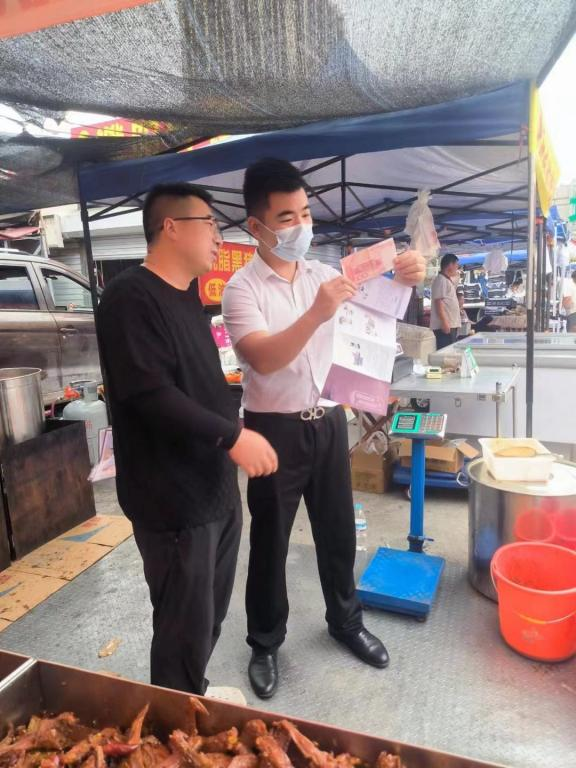
通过面对面的宣传和交流,广大商户和群众对假币的危害有了更深刻的认识,防伪意识和鉴别能力得到 了有效提升。许多商户表示,以后在日常经营中会更加谨慎,严格把关现金收付环节,防止假币流入。 人民币防伪工作是一项长期而艰巨的任务,关乎金融秩序的稳定和广大群众的切身利益。此次宣传活动 只是民生银行舜华北路支行反假工作的一部分。未来,支行将继续加大宣传力度,创新宣传方式,深入 社区、学校、企业等场所,开展形式多样的防伪宣传活动,让更多的人了解人民币防伪知识,共同守护 好大家的"钱袋子"。 除了讲解识别方法,宣传员还向商户们介绍了发现可疑币后的正确处理流程,提示不能因为怕麻烦就将 可疑币再次流通,应及时到银行进行鉴定或报警,从源头上遏制假币的流通。此外,为了增强宣传效 果,支行还在部分店铺设置了防伪知识咨询点,安排专业人员现场解答群众的疑问,为大家提供一对一 的指导服务。 为进一步提高公众的反假货币意识,维护金融秩序稳定,保护广大群众的财产安全,民生银行舜华北路 支行近期开展了一场全面且深入的人民币防伪宣传活动。此次活动以"守护您的财富安全,解读人民币 防伪奥秘"为主题,旨在将防伪知识送到群众身边,提升公众的识假、防假能力 ...
民生银行聊城分行进商圈开展金融教育宣传周活动
Qi Lu Wan Bao· 2025-09-29 00:45
Core Viewpoint - The Minsheng Bank Liaocheng Branch has launched a "Financial Education Promotion Week" to enhance financial security awareness among merchants and protect their funds [1][2] Group 1: Financial Education Activities - The event focused on preventing telecom fraud, illegal fundraising, and ensuring safe and compliant payment processing [1][2] - Various methods were employed, including presentations, on-site Q&A, and case analyses to deliver practical financial knowledge to merchants [1] Group 2: Telecom Fraud Prevention - The presentation team detailed common telecom fraud tactics such as impersonating customer service for refunds, fake orders, and false investment platforms [1] - Real case examples were used to illustrate how fraudsters exploit merchants' urgency to close deals and reduce costs, emphasizing the need for vigilance [1] Group 3: Illegal Fundraising Awareness - The team highlighted the characteristics, common forms, and legal consequences of illegal fundraising [2] - Merchants were warned against being lured by false advertising promising "high returns with zero risk," with specific examples like "investment rebates" and "virtual currency" discussed [2] Group 4: Compliance in Payment Processing - The team explained compliance requirements for payment processing, including the legal use of POS machines and transaction security [2] - Potential risks associated with non-compliant behaviors such as "multiple uses of one code" and "transaction rerouting" were addressed, along with guidance on proper procedures [2] Group 5: Future Initiatives - The Minsheng Bank Liaocheng Branch plans to continue its outreach in communities and businesses to expand financial knowledge dissemination [2] - The goal is to contribute to a safe, harmonious, and orderly financial environment through ongoing educational activities [2]
民生银行临沂城东支行:金融知识进社区 教育宣传暖人心
Qi Lu Wan Bao· 2025-09-29 00:45
Core Viewpoint - Minsheng Bank's Linyi Chengdong Branch is actively promoting financial literacy and risk awareness among local communities, focusing on consumer rights protection in finance [1] Group 1: Community Engagement Activities - The branch organized a series of financial consumer rights protection knowledge promotion activities under the theme "Protecting Financial Rights and Supporting a Better Life" [1] - The activities targeted financial hot topics of concern to the public, emphasizing financial product selection, risk identification, and prevention [1] - The branch designed educational content specifically for community residents, especially the elderly, using simple language and various formats such as brochures, on-site Q&A, and case explanations [1] Group 2: Focus on Financial Risks - Staff provided detailed explanations of common financial risks such as telecom fraud, illegal fundraising, and false advertising, using real local cases [1] - Residents were taught to recognize scam tactics and avoid investment traps through hands-on guidance [1] - The interactive approach ensured that the educational content was understandable, memorable, and applicable for the residents [1] Group 3: Impact and Outreach - The activities reached multiple communities, serving nearly 500 residents, with over 60% being elderly individuals [1] - There was a significant improvement in residents' ability to identify financial risks and their awareness of banking services [1] Group 4: Future Initiatives - The branch plans to continue fulfilling its social responsibility by conducting diverse and rich financial knowledge promotion activities tailored to different community needs [2] - The goal is to deepen the understanding of financial consumer rights protection knowledge at the grassroots level, ensuring the safety of every consumer's finances [2]