
LI AUTO-W(02015)

Search documents
理想旗下北京励鼎销售公司减资至16.4亿
Sou Hu Cai Jing· 2025-12-12 02:55
Group 1 - The core point of the article is that Beijing Leading Ideal Automotive Sales Co., Ltd. has reduced its registered capital from 2.5 billion RMB to 1.64 billion RMB, representing a decrease of approximately 34% [1] - The company was established in August 2019 and is legally represented by Liu Jie, with a business scope that includes automotive sales, retail and wholesale of auto parts, mechanical equipment sales, furniture sales, centralized fast charging stations, daily miscellaneous goods sales, home goods sales, and information consulting services [1] - The shareholder information indicates that the company is wholly owned by Leading Ideal HK Limited, a subsidiary of Li Auto [1]
科技巨头争“戴”AI眼镜
Shen Zhen Shang Bao· 2025-12-11 23:21
Core Insights - The AI glasses market is rapidly evolving, with major tech companies like Google, Meta, Xiaomi, and Li Auto launching new products, indicating a significant shift towards mainstream adoption of AI glasses [1][2][3] Group 1: Market Developments - Google plans to release two types of AI glasses by 2026, one being a screenless assistant type and the other featuring a display module for navigation and real-time translation [2] - Meta introduced the Meta Ray-Ban Display smart glasses, which are seen as a step towards their 2027 "Orion" glasses [2] - Xiaomi's AI glasses weigh 40 grams and are priced at 1999 yuan, while Li Auto's Livis glasses weigh 36 grams with a battery life of 18.8 hours [2] Group 2: Sales and Demand Trends - Global smart glasses shipments are projected to reach 1.487 million units in Q1 2025, marking an 82.3% year-on-year increase, with China's growth rate at 116.1% [3] - The Quark AI glasses S1 have seen high demand, often selling out quickly, with resale prices on second-hand markets reaching 4000 to 5000 yuan [4] - Rokid's new AI glasses sold 40,000 units within five days of launch, while Meta's Ray-Ban Meta series has shipped over 2 million units globally [4] Group 3: Industry Competition and Future Outlook - The entry of multiple companies into the AI glasses market is intensifying competition, driving innovation and optimization in product features, design, and pricing [5] - Industry experts predict that 2025 will be a pivotal year for AI glasses, transitioning from basic functionality to enhanced usability [5] - Ant Group's executive emphasized the need for standardized communication protocols and security measures to ensure seamless integration of AI glasses as a "super terminal" connecting various devices [6]



2026年国补政策再升级!5000亿红包来袭,这些领域将迎来爆发
Sou Hu Cai Jing· 2025-12-11 15:45
Core Insights - The 2026 "National Subsidy" policy will continue the "old-for-new" consumption initiative with an increased budget of 500 billion yuan, aimed at stimulating consumption and stabilizing economic growth [1][3][16] Group 1: Policy Overview - The "National Subsidy" policy has shown significant results since its launch in 2024, generating over 2.5 trillion yuan in sales and benefiting 360 million people [3] - The policy will focus on three main upgrades: increasing the subsidy amount, expanding coverage to new sectors, and optimizing the distribution process [4][10] Group 2: Sectoral Impacts - Traditional consumption sectors like home appliances and automobiles are expected to see a second wave of growth, with home appliance subsidies potentially increasing from 12.84 million units to 15 million units [6][8] - The service consumption sector, particularly in tourism and health, is anticipated to become a new focal point, with over 100 billion yuan in tourism vouchers expected to be issued [6][10] - Digital and green consumption will be enhanced, with subsidies for smartphones and energy-efficient appliances, benefiting companies like Apple and Huawei [8][10] Group 3: Economic Implications - The policy aims to boost domestic demand and counter economic pressures, with expectations for retail sales growth to rebound to 5%-6% in 2026 [10] - It promotes industrial upgrades by leading consumption upgrades, encouraging innovation in sectors like electric vehicles and smart home appliances [10][14] Group 4: Investment Opportunities - Key investment targets include essential consumer goods like dairy products and condiments, as well as discretionary items like home appliances and new energy vehicles [15] - The policy is seen as a long-term opportunity for investors, with potential for valuation recovery and growth in the consumer sector [16]





Li Auto: Deep-Value Buy Supported By Robust Backlog And Expanding Capacity (NASDAQ:LI)
Seeking Alpha· 2025-12-11 15:45
Core Viewpoint - The article emphasizes the importance of conducting thorough personal research and due diligence before making investment decisions, highlighting the inherent risks involved in trading [3]. Group 1 - The analysis is intended solely for informational purposes and should not be interpreted as professional investment advice [3]. - There is a clear disclaimer regarding the lack of any stock or derivative positions in the companies mentioned, indicating a neutral stance [2]. - The article expresses the author's personal opinions and does not reflect the views of Seeking Alpha as a whole [4].

Li Auto: Deep-Value Buy Supported By Robust Backlog And Expanding Capacity
Seeking Alpha· 2025-12-11 15:45
I am a full-time analyst interested in a wide range of stocks. With my unique insights and knowledge, I hope to provide other investors with a contrasting view of my portfolio, given my particular background.If you have any questions, feel free to reach out to me via a direct message on Seeking Alpha or leave a comment on one of my articles.Analyst’s Disclosure:I/we have no stock, option or similar derivative position in any of the companies mentioned, and no plans to initiate any such positions within the ...
Li Auto Inc. Sponsored ADR (LI) is Attracting Investor Attention: Here is What You Should Know
ZACKS· 2025-12-11 15:01
Core Viewpoint - Li Auto Inc. has experienced a significant decline in stock performance, returning -14% over the past month, while the Zacks S&P 500 composite increased by +0.9% [1] Earnings Estimates - Li Auto is expected to report earnings of $0.19 per share for the current quarter, reflecting a year-over-year decrease of -63.5% [4] - The consensus earnings estimate for the current fiscal year is $0.46, indicating a decline of -66.7% from the previous year, with a recent change of -14.6% [4] - For the next fiscal year, the consensus estimate is $1.14, suggesting a year-over-year increase of +148.3%, although this estimate has decreased by -6.9% over the past month [5] Revenue Growth - The consensus sales estimate for Li Auto is $4.2 billion for the current quarter, representing a year-over-year decline of -30.8% [8] - For the current fiscal year, the sales estimate is $16.46 billion, indicating a decrease of -18.1%, while the next fiscal year's estimate of $20.31 billion reflects an increase of +23.4% [8] Recent Performance and Surprises - In the last reported quarter, Li Auto generated revenues of $3.84 billion, down -37.1% year-over-year, with an EPS of -$0.09 compared to $0.52 a year ago [9] - The reported revenues exceeded the Zacks Consensus Estimate of $3.76 billion by +2.32%, but the EPS fell short by -325% [9] - Over the last four quarters, Li Auto has surpassed consensus EPS estimates three times and revenue estimates twice [10] Valuation - Li Auto is graded A in the Zacks Value Style Score, indicating it is trading at a discount compared to its peers [14]

月渗透率连超五成、桩车增量比1:1.9,新能源车上位卷“车链”
Bei Jing Shang Bao· 2025-12-11 13:48
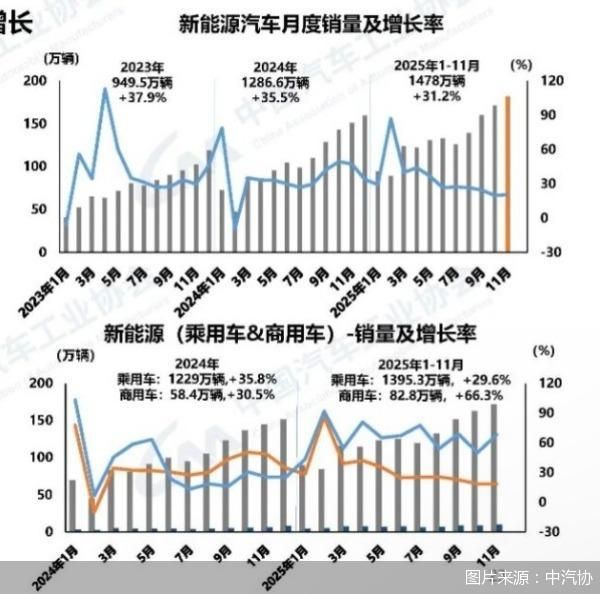
Core Insights - The Chinese automotive market has reported over 30 million vehicle sales this year, with new energy vehicles (NEVs) driving significant growth and influencing upstream and downstream sectors [1] - NEV sales reached 14.78 million units in the first 11 months, achieving a year-on-year growth of 31.2% and a market penetration rate exceeding 50% for two consecutive months [3][4] - Major automotive groups are increasingly dominating the NEV market, with the top 15 groups accounting for 95.2% of total NEV sales [5] Sales Performance - Total automotive sales in China for the first 11 months reached 31.12 million units, a year-on-year increase of 11.4% [1] - NEV sales for the same period were 14.78 million units, with a penetration rate of 47.5% [3] - In November alone, NEV sales surged to 188,000 units, achieving a market share of 53.2% [3] Market Dynamics - The growth in NEV sales is attributed to various vehicle types, with pure electric vehicles and plug-in hybrids showing significant year-on-year increases of 28.9% and 7.9%, respectively [4] - A and B segment vehicles are the primary focus, while A00 and A0 segments have seen remarkable growth rates of 56.9% and 65.1% [4] Competitive Landscape - BYD leads the NEV market with a sales volume of 4.18 million units, capturing 28.3% of the market share [5] - New entrants like Xiaomi and Hongmeng Zhixing have also reported impressive sales figures, with Hongmeng Zhixing delivering over 80,000 units in November, a 89.61% increase [6] Year-End Strategies - As the year-end approaches, automotive companies are intensifying their sales efforts, driven by expiring tax incentives and promotional activities [7][9] - Companies are adopting strategies such as offering existing stock vehicles to meet consumer demand and accelerate sales [8] Supply Chain Impact - The demand for NEVs is boosting the upstream battery market, with battery installation volumes reaching 578 GWh, a 42.4% increase year-on-year [10] - The construction of charging infrastructure is also accelerating, with a 77.2% increase in new charging facilities [10] Future Outlook - The Chinese government aims to enhance charging infrastructure significantly by 2027, targeting 28 million charging facilities to support over 80 million electric vehicles [10][11]



理想汽车:L4级自动驾驶实现,将是行业的“iPhone 4时刻”
Mei Ri Jing Ji Xin Wen· 2025-12-11 12:43
Core Insights - The global automotive industry is undergoing a profound transformation driven by artificial intelligence (AI) technology, reshaping every aspect from product forms to user experiences and business models [1][2]. Group 1: AI's Impact on the Automotive Industry - In the next 5 to 10 years, AI will fundamentally reshape the automotive industry, transitioning vehicles from traditional transportation tools to "space robots" in the AI era [2]. - The core of competition will shift from hardware manufacturing to software and AI technology, necessitating a comprehensive capability that includes models, computing power, operating systems, and hardware [2]. Group 2: User Experience Changes - AI will elevate the user experience from being an "assistive tool" to a "productive tool," allowing users to be completely liberated from driving tasks [3]. - Natural human-machine interaction will enable users to communicate with vehicles using natural language, making complex commands easily executable [3]. - AI aims to provide a safer and more comfortable experience than human drivers by aligning with human driving habits and values [3]. Group 3: Levels of Autonomous Driving - Level 3 (L3) autonomous driving is viewed as a necessary transitional phase towards Level 4 (L4) and is not considered a "pseudo-proposition" [3]. - Achieving L4 autonomy requires breakthroughs in core technologies, substantial investment in computing resources, and a large-scale data collection for continuous model training [4]. Group 4: Future Vehicle Design - The company plans to launch its first L4-level autonomous vehicle by around 2028, which will fundamentally change vehicle design by eliminating traditional driving components [6]. - This shift will transform cars from "driving machines" into pure "living" or "working spaces" [7]. Group 5: Challenges and Opportunities - Significant technical challenges remain for L4-level autonomous driving, including reliability, safety, redundancy design, and cybersecurity [8]. - Market acceptance, legal regulations, and insurance liability are critical factors that will influence the commercialization of fully autonomous vehicles [8]. Group 6: AI Model Generalization - The key to overcoming the limitations of point-to-point AI models lies in developing a universal AI foundational model that can be applied across various scenarios [9]. - The company is focused on developing a VLA foundational model to create a "world model" that can be applied in manufacturing and supply chain management [9]. Group 7: Talent and Organizational Structure - To adapt to the demands of the AI era, the company has restructured its human resources department to align talent strategy with overall business strategy [13]. - The organization is transitioning from a traditional functional structure to a more agile matrix structure to enhance collaboration and innovation [13].
AI眼镜大混战:大厂抢入口,“Rokid们”紧张?
3 6 Ke· 2025-12-11 04:22
市场越来越清楚,想做好一款AI智能眼镜,要先让产品可以被用户戴一整天;而不少企业本就已经拥有AI、显示等相关技术,似乎只要做好取舍、让产 品真正有用,就很容易拿到这个赛道的入场券。 在近期的AI智能眼镜市场中,大厂跨界的消息越来越多。 近日,谷歌宣布其正着手开发两种不同类别的AI眼镜:一类配备显示屏,另一类则主打音频功能。谷歌还表示,第一款合作开发的AI眼镜将于2026年上 市。另据智能涌现报道,腾讯内部已开始小范围研究AI眼镜方向;字节跳动在去年立项了两个AI眼镜项目…… 而大厂的发力也并不只停留在传出消息这一层面,近几日,单是拿出新产品的大厂就有两家。 11月27日,预热多时的夸克正式发布了旗下两个系列的AI眼镜产品;几天后的12月3日,理想汽车正式推出了旗下首款人工智能硬件产品——理想AI眼镜 Livis。 大厂们之所以对AI智能眼镜趋之若鹜,与这条赛道逐渐明晰的迭代方向以及软硬件技术的逐步落地有关。 当然,行业中的创业公司也都跟上了热潮。随着行业关注度的提升,以Rokid、雷鸟、XREAL等为代表的智能眼镜品牌纷纷加快了迭代速度,逐渐被更多 消费者熟知。 但挑战也接踵而至。在每一个新对手的实力都不容小 ...
财经观察:AI眼镜:巨头争抢的下一个“智能手机”?
Huan Qiu Wang Zi Xun· 2025-12-11 02:35
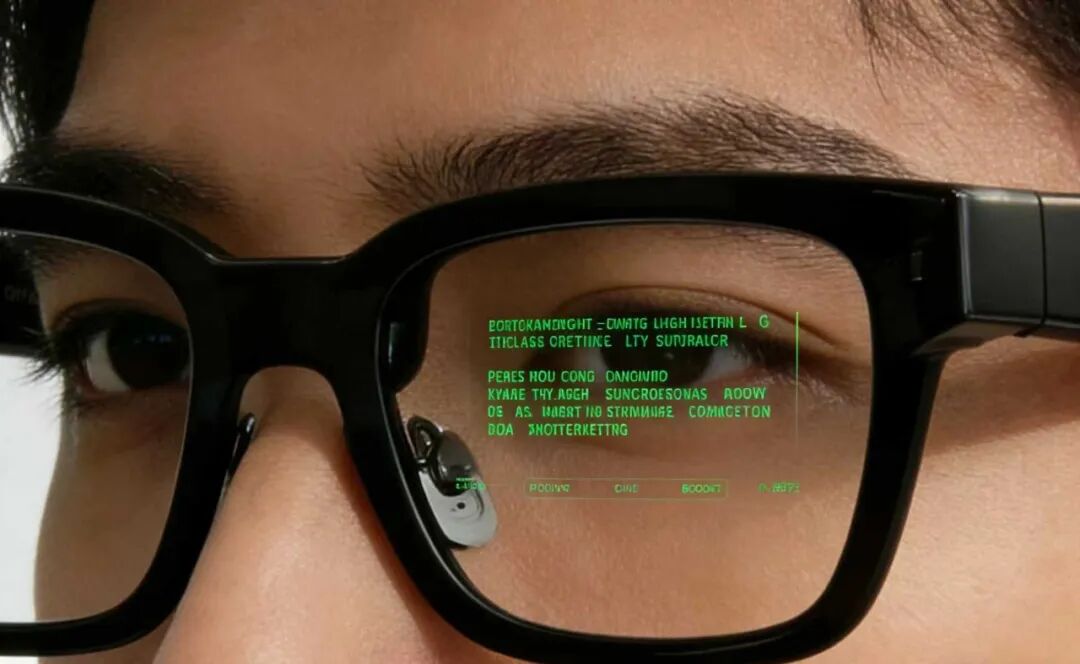
Core Insights - The global AI glasses market is experiencing a surge, with major companies like Google and Meta intensifying their efforts to capture market share. Google plans to launch its first AI-driven smart glasses by 2026, marking its return to a previously unsuccessful venture in this space [1][2]. Group 1: Market Dynamics - Google is re-entering the AI glasses market after learning from past failures, emphasizing advancements in AI technology and supply chain management that were lacking during its initial attempt [1][2]. - Meta's collaboration with EssilorLuxottica to produce Ray-Ban Meta glasses has seen remarkable success, capturing approximately 73% of the global smart glasses market in the first half of 2025, with a year-on-year shipment increase of 110% [2]. - The global smart glasses shipment is projected to reach 12.8 million units by 2025, with a 26% year-on-year growth, and China is expected to lead with over 2.75 million units, reflecting a 107% increase [3]. Group 2: Technological Advancements - Key breakthroughs in AI glasses development are attributed to advancements in large model technology and hardware upgrades, enhancing functionalities like real-time translation and voice assistance [3]. - The design of upcoming AI glasses is shifting towards a more user-friendly approach, with expectations for lighter models weighing between 20 to 30 grams, significantly improving comfort for prolonged use [4][7]. Group 3: Competitive Landscape - The AI glasses market is forming a competitive structure with three tiers: the first tier led by Meta, the second tier comprising Chinese companies like Quark and Xiaomi, and the third tier focusing on niche functionalities [4]. - Over 80% of the global smart glasses supply chain is based in China, indicating a significant role of Chinese manufacturers in the industry [5][6]. Group 4: Future Outlook - The potential for AI glasses to become a mainstream product hinges on factors such as weight reduction, battery life improvement, and the identification of unique use cases that differentiate them from existing devices like smartphones [6][7]. - The current pricing of AI glasses, typically between 3,000 to 4,000 yuan, suggests there is room for price reduction to enhance market penetration [7].

