
理想同学APP

Search documents
理想推AI眼镜Livis,车企低成本抢AI硬件入口的一次尝试
3 6 Ke· 2025-12-04 02:21
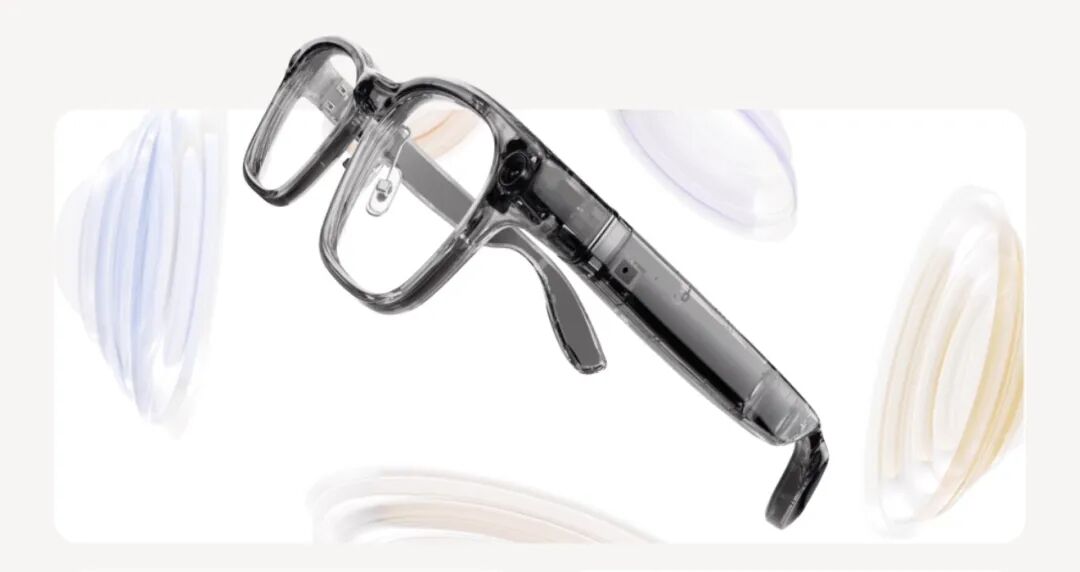
Core Viewpoint - Li Auto has launched its most affordable product, the AI glasses Livis, which reflects the company's ambition in the AI hardware space while avoiding the highly competitive smartphone market [1][3]. Group 1: Product Launch and Strategy - Livis is a low-cost attempt to expand into the AI hardware market, following the previous launch of the AI assistant app "Li Xiang Classmate" [3]. - The decision to focus on AI glasses instead of smartphones allows Li Auto to avoid competition in a saturated market, conserving valuable resources [3]. - The company aims to convert around 150,000 existing Li Auto vehicle owners into Livis users, while also hoping to attract users outside its current customer base [5]. Group 2: Market Dynamics and Competition - The current market for AI glasses is still in its early stages, with no clear winners, making hardware investment costs relatively controllable compared to smartphones [5]. - The wearable device market, including smart glasses, is seen as the next entry point for AI hardware, despite challenges such as battery life and performance [7][8]. - The smart watch market is also highly competitive, dominated by brands like Apple, Huawei, and Xiaomi, which may limit opportunities for new entrants [11]. Group 3: User Experience and Adoption Challenges - Smart glasses face significant challenges in user adoption due to concerns over weight and battery life, which can deter potential buyers [9]. - The weight of Livis is designed to be close to that of regular glasses (36g), but this compromises battery life, making it less appealing for users [9]. - In contrast, smart watches have evolved to meet daily usage needs, making them a more attractive option for consumers [9].


理想汽车入局“百镜大战”,李想称将发布智能眼镜
Xin Lang Cai Jing· 2025-11-26 01:38
Core Insights - Li Auto's CEO Li Xiang announced the upcoming launch of the "Li Auto AI Glasses," positioning it as the best AI accessory for the company [1] - The company aims to enhance its AI capabilities across various platforms, including cars, smartphones, and now smart glasses, targeting a user base of approximately 3 to 5 million people [1] - The AI glasses market is becoming increasingly competitive, with significant growth expected in the coming years, as indicated by research from RUNTO [1] Company Developments - Li Auto is not venturing into smartphone production but is focusing on enhancing its AI assistant app, "Li Xiang Classmate," which is already available on mobile devices [1] - The company has previously applied for a patent related to VR glasses, indicating its commitment to innovation in this space [1] Industry Trends - The AI glasses market is experiencing rapid growth, with projections indicating that global sales will reach 5.1 million units by 2025, with a growth rate exceeding 200% [1] - Major players in the AI glasses sector include tech giants like Xiaomi and Alibaba, who have recently launched their own AI glasses, highlighting the competitive landscape [2] - Xiaomi's AI glasses sold 31,000 units in the first week of launch, capturing 12% of the overall AI/AR market, while Alibaba's Quark AI glasses are set to be released soon [2]
对理想所有非共识本质是四点非共识
理想TOP2· 2025-11-16 09:27
Core Viewpoints - The article discusses four main areas of non-consensus regarding Li Auto, including perceptions of Li Xiang's capabilities, reasons for the company's poor sales this year, the direction and ultimate goals of smart vehicles, and the prospects of physical AI [1][2]. Group 1: Non-Consensus Areas - The first area of non-consensus revolves around how to evaluate Li Xiang's abilities and the implications of leadership errors [1]. - The second area focuses on differing opinions regarding the reasons behind Li Auto's disappointing sales performance this year [1]. - The third area addresses the advanced directions and ultimate goals of smart vehicles, highlighting two main schools of thought: one prioritizing high sales models and the other focusing on end goals [3][4]. - The fourth area concerns the future of physical AI, including its exploration necessity and potential pathways for realization [1]. Group 2: Bayesian Reasoning - The article emphasizes that differing beliefs about the future stem from individuals' Bayesian reasoning, where the strength of prior beliefs and the likelihood of new evidence vary among people [1]. - Those who "believe it to see it" tend to have strong priors that may lead to a higher tolerance for errors, while those who "see it to believe it" have weaker priors, making them more responsive to new evidence [2]. Group 3: Smart Vehicle Directions - Two main factions exist regarding the direction of smart vehicles: one that focuses on high sales models and another that starts with the end goal in mind [3][4]. - The "high sales model" faction emphasizes current successful vehicle features, while the "end goal" faction believes in a future defined by AI and automated driving [5]. Group 4: Evaluation of Li Auto's Strategy - The article notes that perceptions of Li Auto's long-term strategy and capabilities vary significantly, with some believing in the company's potential for recovery through iterative improvements, while others doubt Li Xiang's abilities due to repeated errors [6]. - The evaluation of Li Auto's products and strategies is influenced by whether individuals focus on immediate performance or the foundational principles guiding the company's design [5][6].

理想汽车-W(02015):专题报告:从汽车到人工智能,公司有望重估
Guohai Securities· 2025-03-13 01:14
Investment Rating - The report upgrades the investment rating for the company to "Buy" [1]. Core Views - The company is expected to transition from an electric smart vehicle manufacturer to an artificial intelligence (AI) company, with potential for reevaluation in both AI capabilities and automotive performance by 2025 [7][43]. - The AI upgrade strategy includes short-term advancements in high-level intelligent driving and the "Ideal Classmate" application, with long-term goals of embodied intelligence and the concept of a "Silicon-based Family" [7][30]. Summary by Sections 1. Automotive Business - The stability of the range-extended vehicle base and the potential success of new electric models may be underestimated. The market perceives excessive competition for models L6/L7/L8/L9, but the penetration rate of domestic brands in the 300,000 RMB and above market remains low, indicating significant growth potential [8][44]. - The report anticipates that the company will deliver over 500,000 vehicles in 2024, with all models priced above 250,000 RMB, positioning itself in the high-end family SUV segment [14]. 2. AI Upgrade - The company’s AI technology foundation includes a language model (Mind GPT) and a spatial model for intelligent driving, with plans for future integration into a unified model that can process language, images, and actions [32]. - The company has made significant advancements in intelligent driving technology, with multiple upgrades planned for 2024, aiming for L3 autonomous driving capabilities by 2025 and L4 in three years [35][36]. 3. Investment Recommendations - The combination of AI potential and the stability of the automotive base suggests that the company is likely to experience a reevaluation. The projected net profits for 2025 and 2026 are 13.35 billion RMB and 19.18 billion RMB, respectively, with a corresponding market capitalization of 225.4 billion RMB as of March 11, 2025, leading to a PE ratio of 17X and 12X for those years [6][44].
理想汽车(02015) - 自愿公告 2024年12月交付更新资料
2025-01-01 10:03
香港交易及結算所有限公司及香港聯合交易所有限公司對本公告的內容概不負責,對其準確性 或完整性亦不發表任何聲明,並明確表示概不會就本公告全部或任何部分內容而產生或因倚賴 該等內容而引致的任何損失承擔任何責任。 Li Auto Inc. 理想汽車 (於開曼群島註冊成立以不同投票權控制的有限責任公司) (股份代號:2015) 自願公告 2024年12月交付更新資料 股東及潛在投資者於買賣本公司證券時,務請謹慎行事。 承董事會命 理想汽車 董事長 李想 香港,2025年1月1日 12月,理想汽車交付量創月度新高。自開啟交付以來,本公司歷時五年創造了豪 華汽車品牌在中國市場達成超50萬台年交付量的最快紀錄。理想同學APP目前已 開放給移動端用戶下載,為更多的用戶創造價值。理想汽車OTA 7.0版本車機系 統將於1月開啟用戶推送,高速NOA升級為端到端技術架構,由此,理想汽車全 棧自研的端到端(E2E)+視覺語言模型(VLM)雙系統將打通城市NOA和高速NOA的 邊界,實現全場景端到端能力。此外,理想汽車還將推出首個智能推理可視化功 能,讓駕駛員理解智能系統的思考和執行過程,更安心地使用智能駕駛功能。 截至2024年12 ...