
LI AUTO-W(02015)

Search documents
理想汽车2025年营收1123亿元
Jing Ji Wang· 2026-03-23 06:31
Core Viewpoint - Li Auto reported a revenue of 112.3 billion yuan and a net profit of 1.1 billion yuan for the fourth quarter and the entire year of 2025, marking it as the only new force car company in China to achieve over 100 billion yuan in revenue and profitability for three consecutive years [1] Financial Performance - Revenue for 2025 reached 112.3 billion yuan, with a net profit of 1.1 billion yuan [1] - Cash reserves at the end of 2025 amounted to 101.2 billion yuan, the highest among Chinese electric vehicle companies [1] - R&D investment for the year was 11.3 billion yuan, a historical high, with 50% allocated to AI-related projects [1][3] Strategic Transition - 2025 is identified as a critical year for the company's transformation from an automotive enterprise to an embodied intelligence enterprise, with significant progress in restructuring the entire operational chain [1] - The company has focused on addressing operational pain points in its direct sales system to facilitate growth [1] R&D and Technological Advancements - Li Auto's R&D investment over the past three years totaled 33 billion yuan, averaging 1 billion yuan spent every three days, emphasizing a commitment to breakthroughs in embodied intelligence core technologies [3][5] - The self-developed Mach 100 chip is set to begin mass production in Q2 2025, offering three times the effective computing power of Nvidia's Thor-U chip [5] - The company has established a full-stack self-research capability in chips, compilers, operating systems, and foundational models, enhancing its ability to customize AI computing power [5] Product Development - The new generation Li Auto L9 Livis, priced at 559,800 yuan, is set to launch in Q2 2025, representing a significant upgrade in user experience and targeting the high-end market [6][8] - The L9 Livis features advanced 3D perception systems and is equipped with two self-developed Mach 100 chips, providing 5 to 6 times the computing power of competing chips [8] - The company aims to leverage its existing product recognition to drive growth through both extended-range and pure electric vehicles, with cumulative orders for the i6 and i8 surpassing 100,000 units [8][9] Future Outlook - The company is positioned to return to a growth trajectory in 2026, with a focus on realizing three years of technological accumulation [9] - The launch of the new generation L9, equipped with the Mach 100 chip, is expected to enhance the company's technological framework and mission to create better products and services for users [9]


别急着教AI开车,先让它看懂世界
虎嗅APP· 2026-03-21 10:10
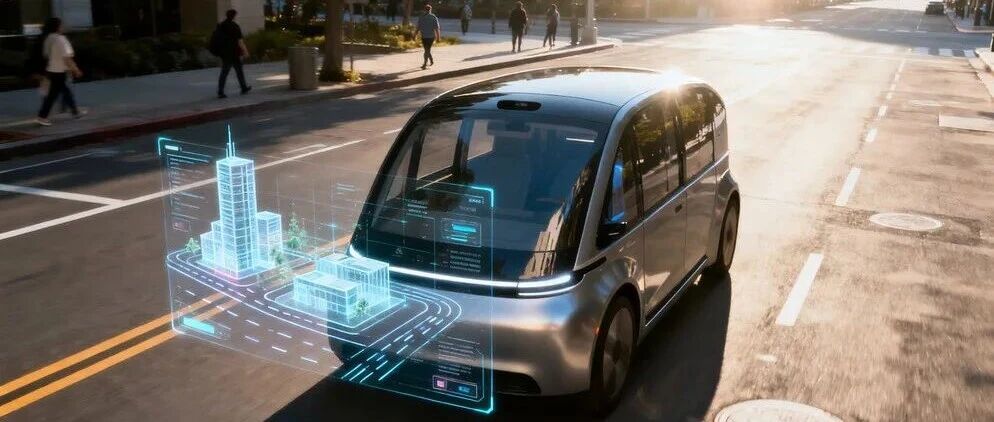
Core Viewpoint - The competition in China's autonomous driving is shifting from merely adding functionalities to focusing on system architecture and capability organization, as the industry approaches a limit in functional advancements [3][4][26]. Group 1: Shift in Competition Focus - The current competition is moving towards how well systems can organize and utilize their capabilities rather than just stacking functionalities [3][4]. - As the complexity of driving scenarios increases, the ability to recognize, judge, and act continuously becomes crucial, indicating that system architecture will determine future performance limits [3][11][26]. Group 2: Ideal's Strategic Response - For Ideal, the transition to architecture competition is critical, requiring the company to demonstrate its capability in defining the next generation of autonomous driving systems, not just in creating user-friendly vehicles [6][30]. - The introduction of MindVLA-o1 represents Ideal's answer to the architectural challenge, aiming to unify understanding, judgment, and action within a single "driving brain" framework [7][14]. Group 3: Technical Innovations and Challenges - MindVLA-o1 aims to address several key challenges: understanding the physical world, predicting changes in dynamic environments, and converting judgments into actions [15][19][20]. - The architecture integrates visual, language, and trajectory models into a unified framework, enhancing the system's ability to understand three-dimensional relationships and respond to real-time changes [14][18][21]. Group 4: Future Directions and Industry Implications - The future of autonomous driving is seen as a starting point for broader physical AI applications, with MindVLA-o1 serving as a foundational model for a unified intelligent system [30][31]. - The competition will evolve from functional capabilities to model capabilities, with a focus on who can continuously train and iterate on the "driving brain" [32][35].
理想汽车-W(02015.HK)2025年四季报点评:25Q4净利转正 后续新车型及管理改善有望迎来底部反转
Ge Long Hui· 2026-03-20 13:23
Core Viewpoint - Li Auto's Q4 2025 financial results show a significant decline in revenue and net profit year-on-year, but a slight improvement quarter-on-quarter, indicating potential recovery driven by new model launches and improved delivery capabilities [1][4]. Financial Performance - Q4 2025 revenue reached 28.8 billion yuan, down 35% year-on-year but up 5.2% quarter-on-quarter; full-year revenue for 2025 was 112.3 billion yuan, a 22% decrease [1]. - Q4 2025 net profit was 0.2 billion yuan, a decrease of 3.5 billion yuan year-on-year, but an increase of 0.64 billion yuan quarter-on-quarter; full-year net profit was 1.1 billion yuan, down 6.9 billion yuan [1]. - Q4 2025 vehicle sales were 109,000 units, down 31% year-on-year but up 17% quarter-on-quarter [1]. Product Development and Sales Strategy - The company plans to launch the next-generation L9 and L9 Livis in Q2 2026, with the L9 Livis priced at 559,800 yuan, featuring advanced technology and upgrades [2]. - The i6 model has entered stable delivery, with supply chain bottlenecks resolved, and monthly delivery capacity expected to increase to 20,000 units, contributing significantly to 2026 sales [2]. Organizational Changes - In January 2026, the company restructured its R&D organization to enhance collaboration and efficiency, reducing the iteration cycle for autonomous driving models from two weeks to one day [3]. - A new "store partner program" will be launched in March 2026 to improve terminal operation quality and enhance the efficiency of the direct sales system [3]. Investment Outlook - Despite facing pressures from rising raw material costs and model transitions, the company's management and R&D capabilities remain strong, with expectations for a sales and profit rebound starting in Q2 2026 [4]. - Sales forecasts for 2026-2027 have been adjusted downwards to 500,000 and 520,000 units, with revenue expectations revised to 131.3 billion and 140.2 billion yuan, and net profit estimates lowered to 0.96 billion and 3.81 billion yuan [4].
理想本轮战略与组织调整接近尾声,将迎战新产品周期
晚点Auto· 2026-03-20 02:59
Core Viewpoint - The article discusses Li Auto's strategic adjustments in response to a challenging market environment, focusing on organizational restructuring and sales channel management to enhance competitiveness and achieve a conservative sales growth target for 2026 [3][4]. Group 1: Market Environment and Sales Goals - Li Auto faces intense competition in the mid-to-high-end new energy vehicle market, with a decline in market share for range-extended models and a nascent position for pure electric products [3][4]. - The management has set a conservative sales target for 2026, aiming for over 20% year-on-year growth, while competitors like Leap Motor target a 76% increase [4]. - The year 2026 is significant as it marks the delivery of Li Auto's third-generation platform products and serves as a validation period for the organizational adjustments [4]. Group 2: Sales Channel Management - Li Auto is restructuring its sales channels by focusing on quality over quantity, concentrating sales personnel in high-traffic areas rather than spreading them thin across less frequented locations [5]. - The company has initiated a "store partner" program, empowering store managers with decision-making authority to enhance customer acquisition and team management, aiming to cultivate high-performing store managers with annual incomes exceeding one million yuan [5]. - Li Auto plans to improve its sales operations by the third quarter of this year, reflecting the effectiveness of these channel adjustments [5]. Group 3: R&D Organizational Restructuring - In January, Li Auto redefined its R&D structure based on the logic of embodied intelligence, marking a significant organizational upgrade [6]. - The new R&D framework is divided into four systems: organ system (chips, data sets, operating systems), brain system (perception, training), software body (system-level agents), and hardware body (energy, drive, control) [6]. - This restructuring aims to enhance departmental focus and efficiency, with improvements already noted in model training efficiency [6]. Group 4: Talent Management and Leadership Changes - Li Auto is experiencing a generational shift in management, with younger executives taking on key roles, supported by a foundation built by previous generations [7]. - CEO Li Xiang has returned to frontline responsibilities, directly overseeing talent management and strategic decisions [7]. Group 5: R&D Investment and Product Development - Despite revenue and profit declines, Li Auto plans to maintain R&D expenditures at around 12 billion yuan for 2026, with half allocated to AI-related projects [8]. - The company is preparing for a new product cycle with a "3+2 strategy" aimed at achieving over 20% sales growth, focusing on sales management, successful model transitions, and increasing pure electric vehicle sales [9]. - The new Li Auto L9 is positioned as a flagship model, featuring advanced technologies in perception and control systems, with a price point reflecting confidence in its competitive capabilities [10][11]. Group 6: Future Prospects and Challenges - The success of the new L9 and the ability to maintain growth in a competitive market will be critical indicators of the effectiveness of Li Auto's organizational changes [12].
【券商聚焦】兴业证券予理想汽车-W(02015)\"增持\"评级 预计公司交付量有望同比增长
Xin Lang Cai Jing· 2026-03-19 12:01
Core Viewpoint - The report from Industrial Securities indicates that Li Auto's vehicle deliveries and sales revenue have decreased significantly in Q4 2025, but there are expectations for recovery and growth in 2026 with new product launches and improved supply chains [1][3][4] Group 1: Q4 2025 Performance - Li Auto delivered 109,194 vehicles in Q4 2025, a year-on-year decrease of 31.2% but a quarter-on-quarter increase of 17.1% [1][3] - The automotive sales revenue for Q4 2025 was 27.25 billion RMB, down 36.1% year-on-year but up 5.4% quarter-on-quarter [1][3] - The company's automotive gross margin was 16.8%, a decline of 2.9 percentage points year-on-year but an increase of 1.3 percentage points quarter-on-quarter, primarily affected by the increased proportion of the i6 model and discounts on the L series [1][3] Group 2: Financial Metrics - Li Auto reported a GAAP net profit of 20 million RMB and a Non-GAAP net profit of 270 million RMB for Q4 2025 [1][3] - The company achieved positive free cash flow of 2.47 billion RMB [1][3] - As of December 31, 2025, Li Auto had cash and cash equivalents amounting to 101.2 billion RMB, indicating a strong cash reserve [1][3] Group 3: Q1 2026 Guidance - For Q1 2026, Li Auto projects vehicle deliveries between 85,000 and 90,000 units, representing a year-on-year decrease of 8.5% to 3.1% [1][3] - The total revenue forecast for Q1 2026 is between 20.4 billion and 21.6 billion RMB, reflecting a year-on-year decline of 21.3% to 16.7% [1][3] Group 4: 2026 Outlook - The launch of the new L series and pure electric models is expected to drive sales growth in 2026, with the new Li L9 set to debut in Q2 2026 [2][4] - The L9 will feature advanced technology, including the self-developed Mach 100 chip and an 800V active suspension system, aiming to regain leadership in the flagship SUV market [2][4] - The company anticipates achieving sales revenues of 110.6 billion, 129.3 billion, and 162.9 billion RMB for the years 2026, 2027, and 2028 respectively, with a rating of "Buy" from analysts [2][4]

前暗访记者用十个问题指出理想车主乱停车到底是怎么回事
理想TOP2· 2026-03-19 11:36
Core Viewpoint - The article discusses the organized smear campaigns against Li Auto and its owners, highlighting the psychological and social dynamics that contribute to the perception of Li Auto owners as irresponsible drivers. It emphasizes the role of "black water armies" in manipulating public opinion and spreading misinformation about the brand and its customers [18][19][30]. Group 1: Organized Smear Campaigns - There has been a significant increase in organized attacks against Li Auto and its owners, including the invasion of personal information and the fabrication of false information to damage the company's reputation [18]. - The black water army's tactics include collecting materials, malicious editing, and controlling thousands of accounts to disseminate negative content about specific automotive brands [19]. - The article notes that these smear campaigns are not random but are premeditated actions aimed at creating division among car owners and damaging the brand's image [18][30]. Group 2: Psychological Factors - The phenomenon known as the "pregnancy effect" is discussed, where individuals become more aware of certain behaviors or characteristics once they are focused on them, leading to a skewed perception of reality [15]. - The article suggests that the perception of Li Auto owners as irresponsible is influenced by this psychological bias, as people are more likely to notice and share negative behaviors associated with the brand [14][15]. Group 3: Response and Mitigation - Li Auto's legal department has been actively collecting evidence and reporting these smear campaigns to law enforcement, resulting in some arrests of individuals involved in these organized attacks [22]. - The company acknowledges the difficulty in combating these smear campaigns but emphasizes the importance of gathering evidence and raising awareness among its customer base [22][23]. - Li Auto encourages its owners to remain calm and to educate others about the tactics used in these smear campaigns, promoting adherence to traffic regulations as a universal principle [23].
理想汽车-W(02015.HK)2025年四季报点评
Huachuang Securities· 2026-03-19 10:30
Investment Rating - The report maintains a "Recommendation" rating for Li Auto-W (02015.HK) [1] Core Insights - Li Auto reported a net profit of 0.2 billion yuan in Q4 2025, marking a year-on-year decrease of 35 billion yuan but a quarter-on-quarter increase of 6.4 billion yuan. The total revenue for Q4 2025 was 28.8 billion yuan, down 35% year-on-year but up 5.2% quarter-on-quarter [1][7] - The company is expected to experience a turnaround in sales driven by new model launches and improved management efficiency. The i6 model is entering stable delivery phases, with monthly delivery capacity expected to reach 20,000 units [1][7] - Organizational restructuring is aimed at enhancing R&D and sales efficiency, with a focus on improving collaboration and operational quality [1][7] Financial Performance Summary - For the full year 2025, Li Auto achieved total revenue of 112.3 billion yuan, a year-on-year decline of 22%, and a net profit of 1.1 billion yuan, down 69 billion yuan year-on-year [1][3] - Key financial metrics for 2026E include total revenue projected at 131.3 billion yuan, with a year-on-year growth rate of 16.9%, and a net profit of 0.96 billion yuan, reflecting a decline of 14.3% [3][8] - The company’s gross margin for Q4 2025 was 17.8%, with a quarter-on-quarter increase of 1.5 percentage points [1][7] Sales and Production Outlook - The sales volume for Q4 2025 was 109,000 units, down 31% year-on-year but up 17% quarter-on-quarter. The average selling price (ASP) for vehicles was 250,000 yuan, showing a slight decline [1][7] - The company plans to launch the next-generation L9 and L9 Livis models in Q2 2026, with the L9 Livis priced at 559,800 yuan, featuring significant technological upgrades [1][7] Management and Strategy - Li Auto is implementing a "store partner plan" to enhance operational quality and efficiency in its direct sales system, which is expected to improve profitability [1][7] - The company’s management capabilities and forward-looking strategies are viewed as robust, positioning it well for recovery and growth in the AI era [1][7]
理想汽车-W:下调评级至“中性”,降目标价至74港元-20260319
Goldman Sachs· 2026-03-19 09:45
Investment Rating - The investment rating for Li Auto-W (02015) has been downgraded from "Buy" to "Neutral" by Goldman Sachs [1] Core Insights - Li Auto's Q4 2025 performance met expectations, but the guidance for Q1 2026 and the full year is below expectations in terms of sales and gross margin [1] - Goldman Sachs has lowered the target price for Li Auto from HKD 93 to HKD 74, anticipating a continuous expansion of net losses over the next two quarters due to weak sales growth and pressure on vehicle gross margins [1] - The decline in performance is attributed to a lack of new model launches, rising raw material and memory costs, and an increased proportion of low-margin models [1] Sales and Margin Forecasts - Sales forecasts for 2026 to 2028 have been reduced by 5% to 22%, based on management's lower-than-expected sales guidance for 2026 and a slowdown in the launch of refreshed models [1] - Gross margin forecasts have been adjusted downwards by 0.4 to 1.0 percentage points, reflecting the lower-than-expected guidance for Q1 2026 and the full year, along with decreased sales and revenue [1] - Consequently, net profit forecasts have been cut by 21% to 34% [1]
理想汽车-W(02015):2025年四季报点评:25Q4净利转正,后续新车型及管理改善有望迎来底部反转
Huachuang Securities· 2026-03-19 08:05
Investment Rating - The report maintains a "Recommendation" rating for Li Auto-W (02015.HK) [1] Core Views - Li Auto reported a net profit of 0.2 billion yuan in Q4 2025, marking a year-on-year decline of 35 billion yuan but a quarter-on-quarter increase of 6.4 billion yuan. The total revenue for Q4 2025 was 28.8 billion yuan, down 35% year-on-year but up 5.2% quarter-on-quarter. For the full year 2025, revenue was 112.3 billion yuan, a 22% decline year-on-year, with a net profit of 1.1 billion yuan, down 69 billion yuan year-on-year [1][7] Financial Performance Summary - **Revenue and Profitability**: - Q4 2025 revenue was 28.8 billion yuan, with a year-on-year decrease of 35% and a quarter-on-quarter increase of 5.2%. The full-year revenue for 2025 was 112.3 billion yuan, down 22% year-on-year. The net profit for Q4 2025 was 0.2 billion yuan, a decrease of 35 billion yuan year-on-year but an increase of 6.4 billion yuan quarter-on-quarter [1][7] - **Sales Volume**: - In Q4 2025, the sales volume was 109,000 vehicles, down 31% year-on-year but up 17% quarter-on-quarter. The average selling price (ASP) for vehicles was 250,000 yuan, down 19,000 yuan year-on-year and 28,000 yuan quarter-on-quarter [1][7] - **Gross Margin**: - The gross margin for Q4 2025 was 17.8%, a decrease of 2.4 percentage points year-on-year but an increase of 1.5 percentage points quarter-on-quarter. The vehicle gross margin was 16.8%, down 2.9 percentage points year-on-year but up 1.3 percentage points quarter-on-quarter [1][7] - **Cost and Expenses**: - R&D expense ratio was 10.5%, up 5.0 percentage points year-on-year, while SG&A expense ratio was 9.2%, up 2.2 percentage points year-on-year [1][7] Future Outlook - **New Model Launches**: - The company plans to launch a new generation of L9 and a new version of L9 Livis in Q2 2026, with the L9 Livis priced at 559,800 yuan. The i6 model is expected to contribute significantly to sales in 2026, with monthly delivery capacity projected to reach 20,000 units [1][7] - **Organizational Improvements**: - Li Auto has restructured its R&D organization to enhance efficiency and reduce the iteration cycle for AI model training from two weeks to one day. Sales channel reforms are also underway to improve operational quality [1][7] - **Sales and Revenue Forecasts**: - The sales forecasts for 2026-2027 have been adjusted down to 500,000 and 520,000 vehicles, respectively. Revenue forecasts for the same period have been revised to 131.3 billion and 140.2 billion yuan. Net profit forecasts have also been adjusted to 0.96 billion and 3.81 billion yuan for 2026 and 2027, respectively [1][7]
2026年春季汽车行业投资策略:科技赋能下的换道再提速
Shenwan Hongyuan Securities· 2026-03-19 06:06
Core Conclusions - The automotive industry is expected to embrace technological advancements, with a limited impact from policy changes on demand, particularly in the mid-to-high-end segments, which are anticipated to see a significant recovery in demand [3] - The globalization of Chinese smart electric vehicles is underway, with overseas sales projected to approach 10 million units in five years, driven by engineering advantages [3] - Key players in the technology sector include Xiaopeng, NIO, and Li Auto, while established brands like BYD, Great Wall, and Geely are expected to lead the market [3] - The automotive parts sector represents a typical example of "high-end manufacturing" in China, with new applications in robotics, low-altitude economy, and AIDC becoming essential for growth [3] - The focus on robotics, low-altitude economy, and AIDC is expected to drive new industry directions, with significant developments anticipated by 2026 [3] - The trend of globalization remains a long-term growth path for excellent automotive parts companies, particularly in Europe, as domestic market saturation increases [3] - The automotive industry is undergoing dual transformations of electrification and AI integration, with AI expected to enhance driving, cabin, chassis, and power systems [3] Market Review - The automotive sector's performance has slightly lagged behind the CSI 300 index, with a cumulative increase of 0.5% from the end of 2025 to March 11, 2026 [11] - The automotive service, commercial freight, and parts sectors have shown notable growth, with increases of 6.21%, 3.84%, and 2.15% respectively [11] - The overall fund holding in the automotive sector increased to 3.29% in Q4 2025, with the parts sector contributing significantly to this growth [12] Vehicle Sector - The impact of policy changes on vehicle demand is limited, with a focus on technological advancements to drive growth [5] - The wholesale sales of passenger vehicles reached 30.06 million units in 2025, reflecting a year-on-year increase of 9.10%, while the first two months of 2026 saw a decline of 10.75% [18] - The penetration rate of new energy vehicles reached 51.50% in 2025, with a slight decrease to 45.25% in early 2026 [18] Parts Sector - The automotive parts sector is focusing on technological spillover and globalization, with strong horizontal expansion capabilities [3] - The sector is expected to benefit from shared resources and cost optimization through advanced manufacturing capabilities [3] AI Industry Trends - The automotive industry is entering the "Token era," where AI integration will redefine vehicle functionalities and consumer experiences [3] - The integration of AI in vehicles is expected to enhance user experience and operational efficiency, marking a significant shift in the industry [3]


