
CISCO(04333)

Search documents
思科封小韵:加码中国,深耕大湾区数字化潜力丨跨国公司看中国
2 1 Shi Ji Jing Ji Bao Dao· 2025-09-28 11:39
Core Insights - Cisco is increasing its investment in the Chinese market, viewing it as a long-term opportunity due to its significant digitalization potential [2] Group 1: Company Strategy - Cisco has established partnerships in Hong Kong, including the creation of an AI laboratory with Cyberport and support for the Hong Kong University of Science and Technology in building an AI data center [2] - The company is deepening its presence in the Greater Bay Area, indicating a strategic focus on this region [2] Group 2: Market Environment - The business environment in the Greater Bay Area is improving, with enhanced infrastructure connectivity and deep integration of industrial chains, which boosts efficiency in the movement of people and goods [2] - These developments are creating favorable conditions for business growth and collaboration [2]


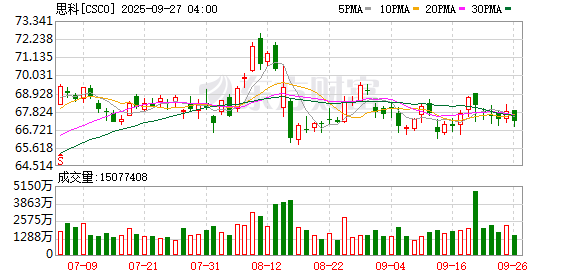
华尔街热议“AI闭环”:看多者“压制ASIC,英伟达长牛”,看空者“给客户贷款,和当年思科一样”
Hua Er Jie Jian Wen· 2025-09-24 06:28
Core Viewpoint - The $100 billion investment agreement between Nvidia and OpenAI is sparking intense debate on Wall Street regarding its implications for the AI sector and potential risks involved [1][3]. Group 1: Investment Structure and Market Reactions - Nvidia is investing up to $100 billion in OpenAI in exchange for non-voting shares, with OpenAI planning to use this capital to purchase Nvidia chips and deploy at least 10 GW of Nvidia systems [1]. - The "supplier financing" model, where a company invests in a customer who then purchases its products, is raising concerns among market veterans, drawing parallels to practices before the 2000 tech bubble burst [3][4]. - Critics liken this model to past practices of companies like Cisco, warning that it may conceal significant risks and could lead to negative outcomes for all parties involved [4][6]. Group 2: Strategic Implications for Nvidia - Proponents argue that this investment is a strategic move for Nvidia to solidify its dominance in the GPU market and suppress competition from ASICs [3][10]. - The transaction is seen as a strong signal to the market that companies must place orders for chips now to secure supply, reinforcing Nvidia's position [10]. - The deal is interpreted as OpenAI publicly aligning with Nvidia's GPU technology, potentially reducing or eliminating its use of customized ASIC chips, which supports Nvidia's long-term growth narrative [10]. Group 3: Energy Consumption Concerns - The scale of the project is staggering, with OpenAI planning to deploy at least 10 GW of Nvidia systems, which is equivalent to the power output of 10 nuclear reactors [12]. - Analysts highlight that the energy requirements for this project are significant, raising concerns about the sustainability and feasibility of such large-scale deployments [12].


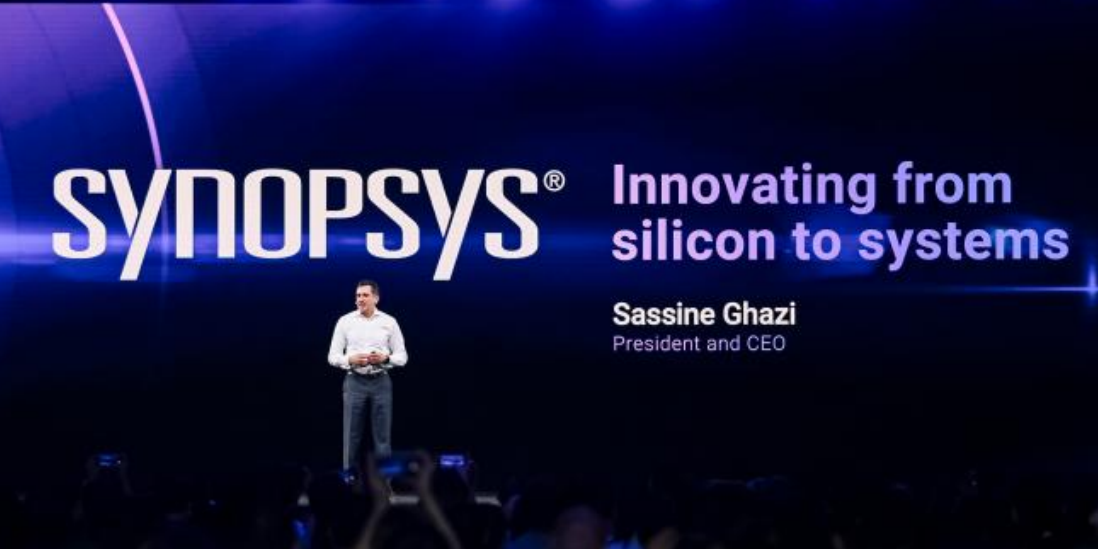
新思科技总裁盖思新:AI智能体正重塑芯片设计范式
2 1 Shi Ji Jing Ji Bao Dao· 2025-09-23 12:48
Core Viewpoint - The global EDA giant Synopsys is undergoing a strategic transformation amidst the AI wave and the complexities of the chip industry, focusing on the integration of AI and chip design [1][2]. Group 1: Company History and Market Development - Synopsys entered the Chinese market over 30 years ago, initially promoting EDA tools in academia, and has since grown alongside China's chip industry [1]. - The company made significant investments in China, including a donation of over one million USD worth of Design Compiler software to Tsinghua University in 1995 [1]. Group 2: Strategic Transformation - Synopsys has transitioned from a focus on "chips" to "systems" with the acquisition of Ansys, aiming to lead in the new wave of intelligent systems [2]. - The CEO emphasized that the integration of chip and system capabilities is essential to meet the demands of complex intelligent systems like robotics and autonomous vehicles [2]. Group 3: Technological Breakthroughs - Key areas of technological advancement include system-level design, chip design upgrades, and AI agents, which are reshaping chip engineering design paradigms [4]. - System-level design integrates various domains such as electrical, thermal, and mechanical insights to provide optimized solutions for intelligent systems [4]. - Chip technology upgrades involve combining EDA solutions with multi-physics analysis to address challenges in advanced processes, thereby accelerating chip development cycles [4]. Group 4: AI Integration and Future Vision - Synopsys is pioneering the use of AI as a core capability in modern chip design, developing a framework for intelligent systems that evolve from basic capabilities to advanced decision-making [5]. - The company collaborates with the industry to create differentiated intelligent systems that enhance developer productivity and innovation while addressing talent shortages [5]. - The future of engineering is envisioned as a collaborative effort between humans and intelligent agents, leading to faster, more precise, and higher-quality designs [5]. Group 5: Industry Trends - The shift towards digital twins is fundamentally transforming engineering innovation, with AI-driven systems expected to achieve self-optimization [6]. - The aerospace sector exemplifies the impact of digital twin technology, which can significantly enhance safety and reduce costs in a long-term investment environment [6]. - Semiconductor companies like Synopsys are exploring new solutions through AI and systems thinking to address the complexities and talent gaps in global chip design [7].
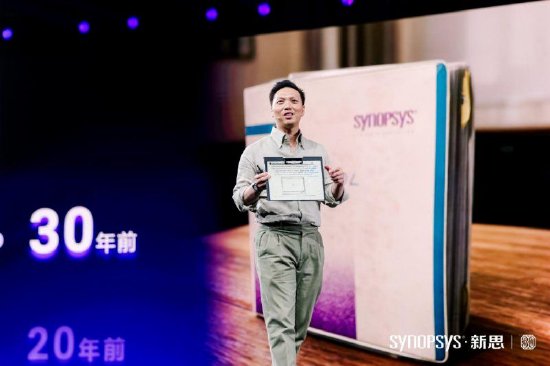
新思科技中国区董事长:从“芯片”迈向“系统”,新思主动塑造未来
Xin Lang Ke Ji· 2025-09-22 03:08
Core Insights - Synopsys celebrates its 30th anniversary in China and announces a strategic transformation from "chip" to "system" following the acquisition of Ansys [2] - The CEO emphasizes the need for integrated solutions across the entire technology chain to meet the demands of complex intelligent systems like robotics and autonomous vehicles [2] Key Areas of Technological Breakthrough - **System-Level Design**: Integration of simulation and chip design capabilities to provide optimization solutions across the entire lifecycle of intelligent systems, encompassing electronic, electrical, thermal, and mechanical domains [2] - **Chip Technology Upgrade**: Utilization of EDA solutions and IP products, combined with multi-physical field analysis technology, to address complex issues such as power consumption, heat dissipation, and electromagnetic compatibility in advanced processes, thereby accelerating chip development cycles [2] - **AI Agent Technology**: Introduction of AI as a core capability in modern chip design, with ongoing efforts to promote vertical applications of AI across the entire EDA stack [2] Future Engineering Vision - The company positions itself at the forefront of a "Re-engineering Engineering" revolution, advocating for a comprehensive, intelligent-driven approach from chips to systems [3]
新思科技总裁盖思新:三大技术突破正重塑芯片工程设计范式
Xin Hua Cai Jing· 2025-09-19 08:19
Group 1 - The core viewpoint of the articles highlights that Synopsys is achieving technological breakthroughs in three key areas: system-level design, chip design upgrades, and AI agents, which are reshaping the paradigm of chip engineering design [2] - In system-level design, Synopsys integrates analog and chip design capabilities to provide lifecycle optimization solutions for intelligent systems across various domains such as electronics, electrical, thermal, and mechanical [2] - For chip technology upgrades, Synopsys leverages electronic design automation (EDA) solutions and intellectual property (IP) products, combined with multi-physical field analysis technology, to address complex issues like power consumption, heat dissipation, and electromagnetic compatibility in advanced processes [2] Group 2 - The development framework for intelligent systems is outlined, resembling the automotive industry's evolution from advanced driver-assistance systems (ADAS) to fully autonomous driving, depicting the progression from basic capabilities to advanced decision-making and action capabilities in autonomous multi-agent systems [3] - Synopsys collaborates with various industry players to develop differentiated intelligent systems, which will enhance rather than replace developers, helping R&D teams accelerate innovation and alleviate developer shortages [3] - The future of chip engineering design is emphasized to be in adopting a comprehensive, intelligent-driven approach from chips to systems, with Synopsys positioned at the forefront of this "redesign engineering" transformation [3] Group 3 - In July 2023, under the leadership of Sassine Ghazi, Synopsys successfully completed the acquisition of Ansys, marking a strategic transition from "chip" to "system" [3] - The company asserts that as complex intelligent systems like robots and autonomous vehicles become mainstream, single-domain technical solutions will no longer suffice, necessitating a seamless capability from chips to systems to create greater value for future technological development [3]
新思科技总裁盖思新:未来人类将与智能体协作完成芯片设计
Xin Lang Cai Jing· 2025-09-19 03:41
Core Viewpoint - The future of engineering lies in adopting a comprehensive, intelligent-driven innovation approach that spans from chips to systems, as highlighted by the CEO of Synopsys, Sassine Ghazi, during the company's 30th anniversary in China and the 2025 Developer Conference [1] Group 1 - Complex intelligent systems like robots and autonomous vehicles are becoming mainstream, necessitating integrated technological solutions rather than single-domain approaches [1] - The ability to connect the entire chain from chips to systems is essential for creating greater value in future technological developments [1] - Human collaboration with intelligent systems will lead to faster speeds, higher precision, and better quality in design processes [1]
数字孪生+AI智能体技术突破 新思科技重塑芯片设计
Di Yi Cai Jing· 2025-09-19 03:08
Core Insights - Synopsys successfully acquired Ansys for $35 billion, marking a strategic shift from "chip" to "system" [4] - The company aims to optimize design across electronic, mechanical, and software fields through digital twin technology and AI agents [4] - Synopsys has achieved global leadership in EDA for advanced process design and multi-physics analysis technologies [6] Group 1: Strategic Developments - The acquisition of Ansys signifies a major transition in Synopsys' business model, focusing on system-level design rather than just chip design [4] - The integration of AI as a core capability in modern chip design is expected to enhance efficiency and support multi-domain optimization [4][5] - Synopsys plans to leverage EDA solutions and IP products to address complex issues in advanced processes, such as power consumption and thermal management [4] Group 2: Industry Context - The CEO of Synopsys emphasized the need for comprehensive solutions that span from chips to systems to meet the demands of complex intelligent systems like robots and autonomous vehicles [5] - TSMC's perspective on digital twins and AI highlights the dual role of supporting AI hardware and meeting customer expectations for integration and efficiency [5] - Synopsys has been active in the Chinese market for over 30 years, contributing to the growth of the semiconductor industry in the region [6]
数字孪生+AI智能体技术突破,新思科技重塑芯片设计
Di Yi Cai Jing· 2025-09-19 02:59
Core Insights - Synopsys is undergoing a strategic transformation from chip design to system-level solutions, highlighted by its $35 billion acquisition of Ansys, a leader in simulation and analysis software [3] - The company aims to optimize design processes across electronic, mechanical, and software domains by creating digital twins and enhancing AI capabilities to support specific workloads [3][4] - Synopsys emphasizes the importance of integrating chip design with system-level insights to create value in future technological developments, particularly as complex intelligent systems become mainstream [4] Company Strategy - The strategic shift includes three main capabilities: integrating simulation with chip design, providing lifecycle optimization for intelligent systems, and upgrading chip technology to address complex issues in advanced processes [3] - AI is positioned as a core capability in modern chip design, with ongoing development of AI agents for various engineering tasks [3] Industry Context - The CEO of Lingqiao Intelligent highlights the need for delivering entire systems rather than just hardware, emphasizing the importance of digital feedback from human knowledge and developer experience [4] - TSMC's vice president notes that digital twins and AI play a dual role in supporting AI hardware and meeting customer expectations for integration, computing power, and energy efficiency [4] Historical Perspective - Synopsys has established itself as a leader in EDA, simulation, and multi-physics analysis technologies, marking its 30th anniversary in China, where it has contributed significantly to the development of the semiconductor industry [5] - The company has a history of collaboration with Chinese academic institutions, including a donation of over $1 million in software to Tsinghua University [5]
Rosenblatt下调新思科技目标价至605美元

Ge Long Hui· 2025-09-12 03:19
Group 1 - Rosenblatt has lowered the target price for Synopsys from $650 to $605 [1] - The rating has been downgraded from "Buy" to "Neutral" [1]
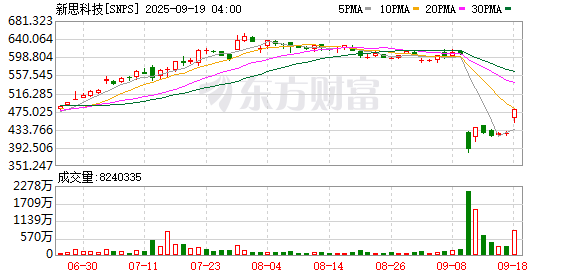
美股异动 | 新思科技(SNPS.US)反弹近10% 昨日暴跌35%
Xin Lang Cai Jing· 2025-09-11 15:13
Group 1 - After a significant drop of 35% on Wednesday, Synopsys (SNPS.US) rebounded nearly 10% on Thursday, closing at $425.49 [1] - Oracle's financial report released on September 10 indicated substantial growth in its AI business, with unfulfilled performance obligations reaching $455 billion, a year-on-year increase of 359%, which boosted the overall rise of AI-related stocks [1] - Synopsys is a leading provider of EDA and semiconductor IP, with its business covering the field of chip design automation [1] Group 2 - Morgan Stanley maintained a "buy" rating for Synopsys, despite a reduction in the target price, reflecting the institution's long-term confidence in the company [1]