
INTEL(04335)

Search documents
赌上美国半导体未来,英特尔能否重铸万亿帝国?
3 6 Ke· 2025-12-09 04:17
Core Insights - Intel's recovery has evolved into a geopolitical necessity, moving beyond a purely commercial narrative, with its foundry (IFS) seen as the last hope for advanced manufacturing in the U.S. Investing in Intel essentially means investing in its national security premium [1][2] - CEO Lip-Bu Tan is driving the IDM 2.0 strategy, focusing on Intel's 18A/14A nodes, which are critical for the company's survival. To achieve economies of scale, IFS must adopt "loss-leading pricing" to capture market share. NVIDIA's $5 billion investment marks the beginning of this high-risk, high-reward capital gamble [1][2] - Intel's success hinges on overcoming TSMC's "trust barrier" and cost advantages. If IFS can transition from a "cost center" to a profitable "manufacturing plant," Intel could transform from a declining CPU giant to a trillion-dollar company. Conversely, failure would mean a permanent loss of advanced manufacturing capabilities [1][2] Historical Context - Intel was once the dominant player in the semiconductor industry, but its vertically integrated IDM model has shown fatal weaknesses in the face of rapid technological changes and market dynamics [3] - The decline of Intel can be traced back to two major missteps: missing the mobile internet wave by refusing to produce chips for Apple’s iPhone and failing to develop a competitive GPU for AI, ceding a trillion-dollar market opportunity to NVIDIA [4][6] Current Financial Landscape - Intel is currently experiencing a historical inventory bottom rebound after a sharp decline following a peak revenue in 2021. The rebound is partly due to the end of deep inventory destocking in core businesses [6][7] - The current stock price recovery is not merely cyclical but reflects the market's recognition of Intel's aggressive strategic transformation under CEO Lip-Bu Tan and its potential national security premium [7] Geopolitical Implications - Intel's revival has transcended commercial competition, becoming a core element of U.S. national security and geopolitical strategy. The concentration of advanced chip production in TSMC and Samsung poses significant geopolitical risks for the U.S. [8] - The U.S. military and AI sectors rely heavily on chips produced by TSMC, highlighting the urgent need for a domestic, reliable supply chain for advanced chips [8][9] Strategic Initiatives - Intel has received substantial government support, including $8 billion from the CHIPS Act and $3 billion from the Department of Defense, affirming IFS's strategic importance for U.S. semiconductor independence [8][9] - The company is undergoing a cultural and managerial transformation under CEO Lip-Bu Tan, adopting a "Day 1 mentality" to foster agility and customer-centricity, moving away from its historically bureaucratic culture [11][12] Financial Restructuring - Tan has initiated aggressive financial measures, including laying off 15,000 employees and postponing major factory projects to address capital expenditure and cash flow pressures [15] - The company is also pursuing asset monetization strategies, such as selling stakes in its Altera and Mobileye businesses, and there are discussions about potentially spinning off its foundry business for value re-evaluation [15][16] Key Catalysts - External capital injections from clients are becoming a viable funding source, with NVIDIA's $5 billion investment signaling a shift towards customer-driven capital support [16] - Intel is focusing on critical process nodes (18A/14A) and reshaping its AI strategy, aiming to regain competitiveness in the semiconductor market [17][18] Conclusion - Intel's recent stock rebound reflects initial market confidence in its IDM 2.0 strategy, geopolitical value, and financial discipline under new leadership. However, the investment logic remains high-risk, high-reward [20] - If successful, Intel could emerge as one of the few companies capable of providing advanced foundry services, particularly within the U.S. supply chain, potentially leading to a significant increase in its overall valuation [20]


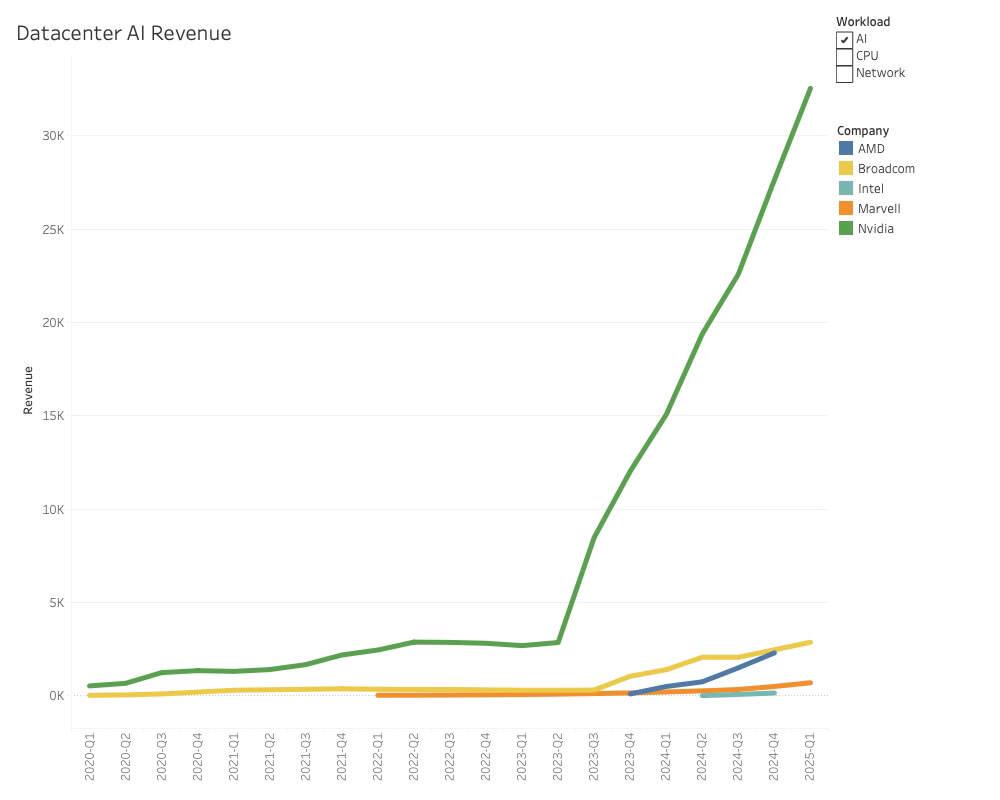
美国部分芯片股盘后走强,英伟达(NVDA.O)涨1.2%,AMD(AMD.O)涨近1%,英特尔(INTC.O)涨0.4%。
Jin Rong Jie· 2025-12-08 21:49
Group 1 - Key Point 1: Some U.S. chip stocks strengthened after hours, with Nvidia (NVDA.O) rising by 1.2% [1] - Key Point 2: AMD (AMD.O) increased by nearly 1% [1] - Key Point 3: Intel (INTC.O) saw a gain of 0.4% [1]
印度塔塔集团芯片业务迎来首个大客户英特尔
Xin Lang Cai Jing· 2025-12-08 13:51
Group 1 - Tata Electronics has finalized Intel (INTC) as the first potential customer for its semiconductor manufacturing plant, indicating Intel's recognition of India's ambitions in chip manufacturing [1][2] - Tata Group, with a history of 156 years and a diverse business portfolio, is investing approximately $14 billion to build India's first semiconductor manufacturing facility in Gujarat and a chip packaging and testing plant in Assam [1] - Indian Prime Minister Narendra Modi has been promoting the country to compete with global semiconductor giants like Taiwan, aiming to establish India as a global chip manufacturing hub despite initial setbacks [2] Group 2 - Intel and Tata Electronics will explore opportunities to rapidly expand AI personal computer solutions in both consumer and enterprise markets in India [2] - Both companies anticipate that by 2030, India will rank among the top five in the global AI personal computer market [2]
英特尔放弃出售网络业务部门NEX 终止与爱立信谈判
Xi Niu Cai Jing· 2025-12-08 07:56
Core Viewpoint - Intel has decided to suspend its plans to divest or sell part of its Network Business Unit (NEX) and has terminated acquisition talks with Ericsson, indicating a strategic shift to retain NEX within the company for better integration with silicon chips, software, and systems, particularly in AI, data centers, and edge computing [2]. Group 1 - Intel's decision to keep NEX is based on a comprehensive evaluation of strategic options, concluding that internal retention is most beneficial for success [2]. - The termination of talks with Ericsson was not abrupt, as discussions about acquiring part of NEX had been ongoing, and Intel had previously indicated plans for a potential spin-off [2]. - The departure of Sachin Katti, Intel's Chief Technology and AI Officer, after only six months, raises concerns about leadership stability, marking the second high-profile exit from the company this year [2]. Group 2 - In response to executive departures and the future of its AI business, Intel reaffirmed that AI remains one of its top strategic priorities, with CEO Pat Gelsinger personally taking over the AI business [3].

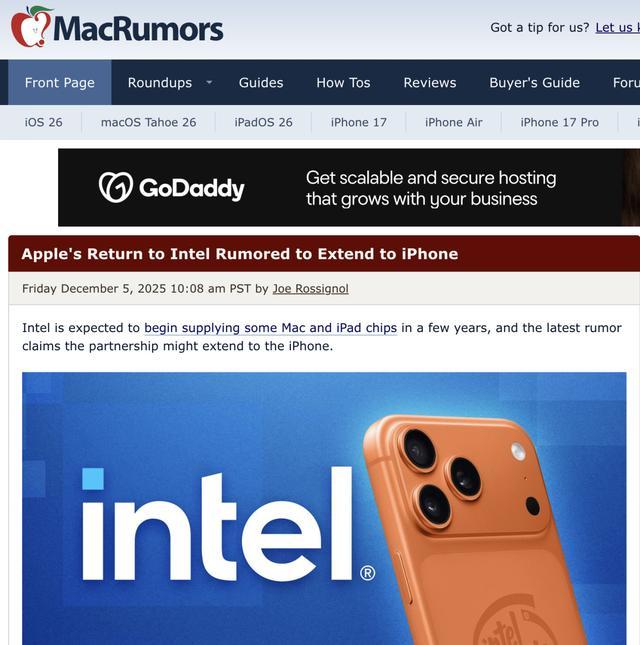
外媒:苹果产能再分散,英特尔将为iPhone供应芯片
Huan Qiu Wang Zi Xun· 2025-12-06 06:58
Group 1 - Intel is expected to re-enter Apple's iPhone supply chain starting in 2028, manufacturing A-series chips for non-Pro models [1][3] - The A22 chip, developed by Apple, will utilize Intel's advanced 14A (1.4 nm) process technology, potentially powering devices like iPhone 20 and iPhone 20e [1] - Intel will only serve as a wafer foundry and will not participate in chip design, while Apple retains control over the core architecture [3] Group 2 - Intel's production share is anticipated to be lower than TSMC, indicating a shift in the iPhone's main chip manufacturing landscape [3] - Previous predictions suggested that Intel would begin trial production of low-end M-series chips for Mac/iPad using 18A (below 2 nm) process technology by 2027, paving the way for the 14A process in mobile devices [3] - If successful, this would mark Intel's return to providing core processors for the iPhone after previously supplying baseband chips for iPhone 7 to 11 series [3]

英特尔周五早盘上涨4.4%
Xin Lang Cai Jing· 2025-12-05 16:32
Group 1 - Intel (INTC) shares rose by 4.4% in early trading on Friday [1] - The increase in stock price follows reports that the company will retain its networking business unit [1]
英特尔(INTC.US)涨逾3% 公司叫停NEX部门剥离计划
Zhi Tong Cai Jing· 2025-12-05 15:20
Core Viewpoint - Intel has decided to retain its Networking and Edge Computing (NEX) business unit, reversing previous plans for a spin-off, which is expected to enhance integration across silicon chips, software, and systems, particularly in AI, data centers, and edge computing solutions [1] Financial Performance - Intel's financial situation has significantly improved, contributing to the decision to keep the NEX unit [1] - The company's stock price has more than doubled this year, reflecting positive market sentiment and financial recovery [1] Strategic Investments - In August, the U.S. government purchased a 10% stake in Intel as part of a non-traditional deal facilitated by the Trump administration [1] - SoftBank Group invested $2 billion in Intel, while NVIDIA added an additional $5 billion investment [1]
美股异动 | 英特尔(INTC.US)涨逾3% 公司叫停NEX部门剥离计划
智通财经网· 2025-12-05 15:01
消息人士透露,英特尔战略转向的背后是公司财务状况的显著改善。今年8月,在一项由特朗普政府促 成的非传统交易中,美国政府购入了英特尔10%的股份。此外,软银集团向英特尔投资20亿美元,英伟 达也追加了50亿美元投资。在此背景下,英特尔股价今年以来已上涨逾一倍。 智通财经APP获悉,周五,英特尔(INTC.US)涨逾3%,报42.01美元。消息面上,周三,英特尔公司宣布 搁置此前剥离其网络与边缘计算业务部门(NEX)的计划,决定将该部门完全保留在公司内部运营。英特 尔在周三发布的官方声明中表示:"在对NEX的战略选项进行了全面评估后,包括潜在的独立运营路 径,我们认定该业务留在英特尔内部最有利于其实现成功。将NEX保留在公司内部,有助于实现硅芯 片、软件和系统之间的更紧密集成,从而增强我们在人工智能、数据中心和边缘计算领域的客户解决方 案。" ...
美股收盘:三大股指涨跌不一 英特尔跌超7%
Xin Lang Cai Jing· 2025-12-04 21:49
Market Overview - The U.S. stock market closed with mixed results, with the Dow Jones Industrial Average down by 0.07%, the S&P 500 up by 0.1%, and the Nasdaq Composite up by 0.2% [1] Company Performance - Oracle (ORCL.N) saw an increase in its stock price by 3% [1] - Intel (INTC.O) experienced a significant decline, with its stock price dropping by 7.4% [1] - Nvidia (NVDA.O) reported a stock price increase of 2% [1] - NIO Inc. (NIO.N) rose by 4% in stock price [1] Index Performance - The Nasdaq China Golden Dragon Index recorded a gain of 0.39% [1]
战略逆转!英特尔(INTC.US)叫停网络部门分拆计划 聚焦内部整合深化AI与边缘计算布局
Zhi Tong Cai Jing· 2025-12-04 02:08
Core Viewpoint - Intel has decided not to spin off or sell its networking division, believing that operating it as an internal business unit will lead to better development outcomes [1]. Group 1: Strategic Decisions - Intel's assessment of the NEX strategic options concluded that retaining the business within Intel is more beneficial for its growth [1]. - The integration of NEX into internal operations is expected to enhance the company's capabilities in AI, data centers, and edge computing solutions [1]. - As part of this strategic shift, Intel has terminated discussions with Ericsson regarding a potential acquisition of a stake in NEX [1]. Group 2: Financial Context - Since the summer, Intel has benefited from significant capital injections, including a 10% stake acquisition by the U.S. government and a $2 billion investment from SoftBank [2]. - Additionally, Nvidia has provided an extra $5 billion in funding, contributing to a more than 100% increase in Intel's stock price this year [2]. Group 3: Competitive Landscape - Intel has been lagging behind competitors like TSMC and Samsung in recent years, leading to significant changes in leadership and strategy [2]. - The previous CEO was forced to resign due to the slow progress of a costly foundry transformation plan, prompting Intel to cut costs and consider divesting non-core businesses [2].