
硅芯片

Search documents
片上天线实现高效太赫兹辐射 数据传输速率高出现有器件数百倍
Ke Ji Ri Bao· 2026-02-10 00:25
Core Insights - A research team from Singapore, France, and the USA has developed a compact on-chip antenna based on topological photonics, which significantly enhances data transmission rates for future 6G wireless communication [1][2] - The anticipated 6G network aims to achieve a data rate of 1 terabit per second, enabling the transmission of approximately half the storage capacity of a mid-range smartphone in one second [1] - Current challenges in antenna technology for terahertz frequencies include efficiency, coverage, and reliability, which must be addressed for successful deployment of 6G networks [1] Group 1 - The team designed a silicon chip with an array of holes of two different triangular sizes (99 micrometers and 264 micrometers) to control terahertz radiation [2] - This design allows for the creation of a conical radiation beam, making the chip itself function as an antenna, achieving over 30 times the coverage range of existing terahertz antennas [2] - The antenna's data transmission rate is hundreds of times higher than current state-of-the-art terahertz devices, with all functionalities achieved through passive structures embedded in the chip's geometric design [2] Group 2 - The next step for the research team is to integrate the transmission, reception, and signal processing functions of terahertz communication systems into a single chip [2] - If successful, this integration could enable future 6G networks to efficiently handle terahertz signals, similar to existing low-frequency communications, laying the groundwork for ultra-high-speed wireless communication [2]
OpenAI寻求美国供应商,推动机器人与AI设备计划
Hua Er Jie Jian Wen· 2026-01-15 16:07
Group 1 - OpenAI has issued a Request for Proposal (RFP) to companies in the U.S. for components including silicon chips, motors, packaging materials, and data center cooling equipment [1]

英特尔(INTC.US)涨逾3% 公司叫停NEX部门剥离计划
Zhi Tong Cai Jing· 2025-12-05 15:20
Core Viewpoint - Intel has decided to retain its Networking and Edge Computing (NEX) business unit, reversing previous plans for a spin-off, which is expected to enhance integration across silicon chips, software, and systems, particularly in AI, data centers, and edge computing solutions [1] Financial Performance - Intel's financial situation has significantly improved, contributing to the decision to keep the NEX unit [1] - The company's stock price has more than doubled this year, reflecting positive market sentiment and financial recovery [1] Strategic Investments - In August, the U.S. government purchased a 10% stake in Intel as part of a non-traditional deal facilitated by the Trump administration [1] - SoftBank Group invested $2 billion in Intel, while NVIDIA added an additional $5 billion investment [1]

美股异动 | 英特尔(INTC.US)涨逾3% 公司叫停NEX部门剥离计划
智通财经网· 2025-12-05 15:01
Core Viewpoint - Intel has decided to retain its Network and Edge Computing (NEX) business unit, reversing previous plans for divestiture, which is expected to enhance integration across silicon chips, software, and systems, particularly in AI, data centers, and edge computing [1] Financial Performance - Intel's financial situation has significantly improved, contributing to the decision to keep the NEX unit [1] - The company's stock price has more than doubled this year, reflecting positive market sentiment and financial recovery [1] Strategic Investments - In August, the U.S. government purchased a 10% stake in Intel as part of a non-traditional deal facilitated by the Trump administration [1] - SoftBank Group invested $2 billion in Intel, while NVIDIA increased its investment by $5 billion, indicating strong confidence from major investors [1]
台湾起诉日本设备巨头,涉台积电泄密案
半导体行业观察· 2025-12-03 00:44
Core Viewpoint - The Taiwanese prosecution has accused Tokyo Electron of failing to prevent its employees from stealing trade secrets from TSMC, seeking penalties under commercial secret and national security laws [1][2]. Group 1: Incident Overview - Tokyo Electron is being held responsible for a failed data theft incident involving TSMC's 2nm process technology, which is critical to TSMC's operations and competitive edge in the semiconductor industry [1]. - Three former and current TSMC employees were charged with attempting to steal sensitive data to assist Tokyo Electron in improving its etching equipment [1][2]. Group 2: Legal Actions and Company Response - The Taiwanese authorities are pursuing imprisonment for the individuals involved in the theft, while Tokyo Electron has stated it is cooperating with the investigation and has terminated one employee linked to the incident [2]. - Tokyo Electron claims to have strict policies in place to prevent employee misconduct and has not found evidence of sensitive data being leaked to third parties [2]. Group 3: Industry Implications - This incident marks the second significant legal action taken by TSMC against international companies attempting to acquire its key technologies, highlighting the ongoing challenges in protecting intellectual property within the semiconductor sector [2]. - The situation underscores the importance of TSMC and Taiwan in the global semiconductor supply chain, especially amid the rapid growth of the artificial intelligence industry [2].



又一座芯片工厂开建,投资过百亿
半导体行业观察· 2025-11-15 01:42
Core Viewpoint - Awz Investment Group announced plans to invest 5 billion new shekels (approximately 10 billion RMB) in building an advanced semiconductor manufacturing plant in Ashkelon, but key questions regarding funding and technology sources remain unanswered [2][5]. Group 1: Investment and Project Details - The planned factory will not produce silicon chips but will focus on III-V semiconductor technology, utilizing compounds from groups 13, 14, and 15 of the periodic table, such as gallium arsenide and gallium nitride [2][3]. - III-V semiconductors offer advantages over silicon, including higher electron mobility, better power efficiency, and superior light-emitting properties, making them valuable in defense, telecommunications, artificial intelligence, and quantum computing [3][4]. Group 2: Challenges and Concerns - Building a semiconductor manufacturing facility is complex and capital-intensive, requiring advanced technical expertise and years of experience, along with specialized and expensive equipment [3][4]. - Awz lacks a track record in developing or managing projects of this scale and complexity, raising concerns about the feasibility of the project [4][5]. - The company has not disclosed the identities or experience of the international advisory team that will oversee the project, nor the sources of funding for the 5 billion new shekels investment [5].
新型的3D芯片
半导体行业观察· 2025-06-19 00:50
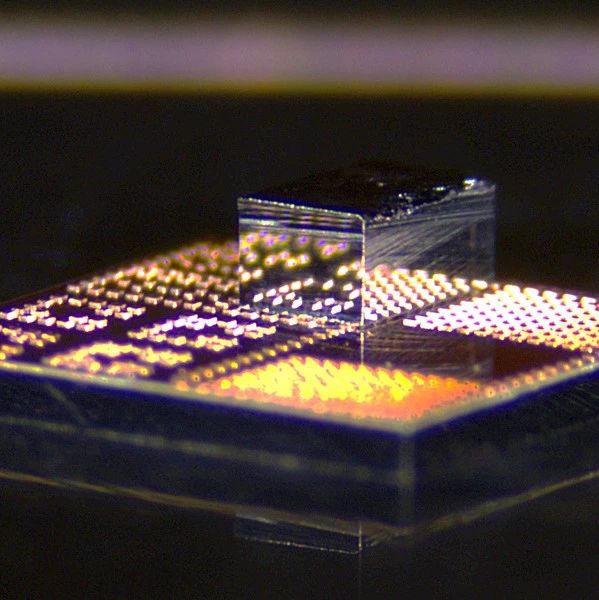
Core Viewpoint - Gallium Nitride (GaN) is poised to become a key component in next-generation high-speed communication systems and advanced data centers, but its high cost and integration challenges with traditional electronics have limited its commercial application [2][3]. Group 1: GaN Technology and Integration - Researchers at MIT have developed a new manufacturing method that allows for the integration of high-performance GaN transistors into standard silicon CMOS chips in a cost-effective and scalable manner [2][3]. - The new method involves constructing numerous micro-transistors on the surface of GaN chips, cutting them out, and then bonding them to silicon chips using a low-temperature process, preserving the functionality of both materials [2][3][4]. - This integration approach enables significant performance improvements while keeping costs low, as only a small amount of GaN material is added to the chip [2][3][4]. Group 2: Performance Enhancements - The new GaN-based power amplifiers demonstrate higher signal strength and efficiency compared to devices using silicon transistors, leading to improved call quality, increased wireless bandwidth, enhanced connectivity, and extended battery life in smartphones [2][3][4][8]. - The compact chips, measuring less than half a square millimeter, utilize advanced silicon processes, allowing for the integration of commonly used components like neutral capacitors, which significantly boosts amplifier gain [8]. Group 3: Manufacturing Process - The manufacturing process involves creating tightly packed micro-transistors on GaN wafers, which are then cut into "dielets" measuring 240 x 410 micrometers [5][7]. - A new tool has been developed to precisely integrate these tiny GaN transistors with silicon chips, utilizing vacuum adhesion and advanced microscopy for alignment [7]. - The bonding process uses copper instead of gold, allowing for lower temperature and cost, while also avoiding contamination issues associated with gold [5][7]. Group 4: Future Implications - The integration of GaN with silicon chips could lead to advancements in quantum applications, as GaN performs better than silicon under low-temperature conditions required for many types of quantum computing [3][4]. - This technology has the potential to revolutionize various commercial markets by combining the best characteristics of silicon with the superior properties of GaN electronic components [3][4].
英国芯片,谋求复苏
半导体行业观察· 2025-04-30 00:44
来源:内容 编译自 theconversation ,谢谢。 硅微芯片支撑着我们的现代生活。它们是我们智能手机和笔记本电脑的核心。它们也在电动汽车和 可再生能源技术中发挥着关键作用。 这使得 SiC 芯片的厚度比同等硅芯片薄九倍。这反过来又降低了其所用设备中的电流阻力,从而 提高了效率。 如果你知道手机或笔记本电脑充电器的发热有多大,你肯定经历过低效的电源转换。这种发热是由 于硅芯片每秒进行数千次切换,将一种电流(交流电)转换为另一种电流(直流电)造成的。 如今,超过四分之三的微芯片(也称为半导体)产自亚洲。但在20世纪90年代,芯片生产分布在 全球各地更为广泛,而英国的表现更是超乎寻常。 苏格兰中部地带是人口密度最高的地区,包括格拉斯哥、爱丁堡及其周边城镇,被称为"硅谷",在 鼎盛时期电子行业从业人员达 5 万人。 该地区出口从个人电脑到PlayStation芯片等各种产品。NEC、摩托罗拉和德州仪器等跨国公司都 在那里运营着重要的工厂。21世纪初,互联网泡沫破裂引发了整个行业的整合,并促使制造业向 东亚低成本工厂转移。英国国内产能几乎被摧毁。 但英国半导体行业正在悄然复苏。新一波公司正专注于清洁能源技术微 ...